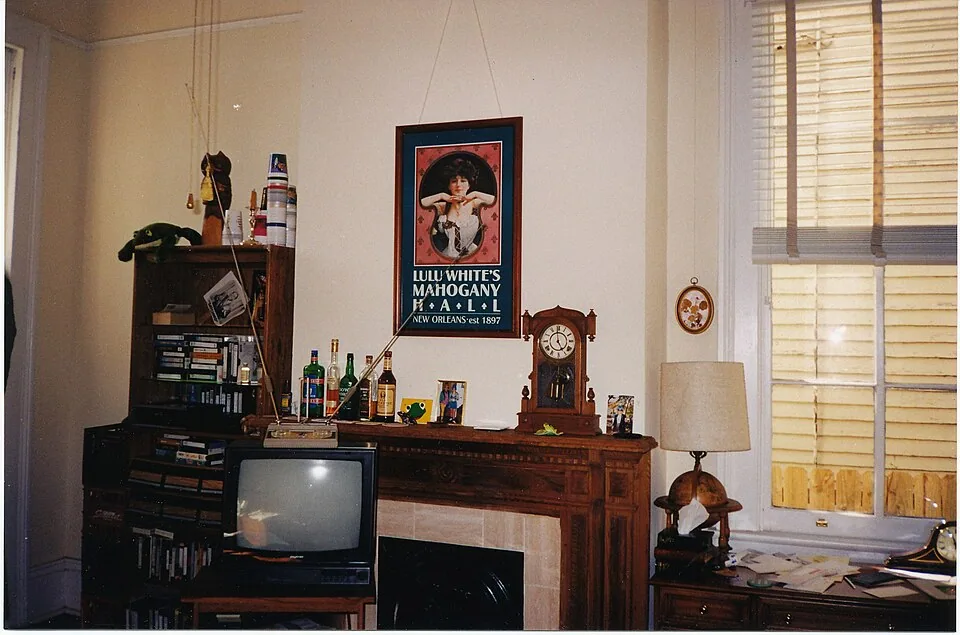
The fireplace is the focal point of many living rooms, and so is the television. Putting one above the other is the obvious way to give a room a single center of attention, and it appears in a large share of showroom photos. It is also one of the most criticized layouts in design and ergonomics, since the screen ends up higher than most people would choose to look at it.
The truth is more balanced than the slogan. Some fireplaces suit a TV above them, and some are a poor match. This guide covers the neck angle and how to calculate it, the heat and soot concerns, the wall and mantel limits, the wiring and mounting options, and the alternatives for rooms where the fireplace wall is the wrong place. It leaves you with a test you can do before you drill a single hole.
Why people do it
The first reason is geometry. In many living rooms the fireplace occupies the central wall, and the seating faces it. Hanging the screen elsewhere means turning the furniture, or placing the TV where it competes with the fire. A single focal wall keeps the room tidy and avoids a large black rectangle in a second position.
The second reason is space. A television on the wall above the mantel needs no stand, leaves the floor clear and frees the mantel for decoration. In a small room, that matters, as every console and stand takes depth. A slim mounted screen has almost no footprint, and the fire below remains visible when the TV is off.
The third is that the room reads as symmetrical and complete. A framed screen centered over a mantel, flanked by shelves or sconces, looks designed. When the screen is off, a frame style TV that displays art can disappear into the room, which many people consider the best solution of all. The question is whether looks justify the practical cost, and that depends on the details of your own room.
The neck angle problem
Comfortable viewing puts the center of the screen near the height of the eyes when seated, or slightly below, with the head level or tilted downward a few degrees. The eyes are happier looking slightly down, and the neck stays neutral. When a screen sits well above eye level, the head tilts back to see it, and the neck extensors work for the length of a film. Long viewing in that posture is a common cause of stiffness. Our guide to how high a TV should be mounted gives the seated eye height rule.
A typical fireplace opening is 30 to 40 inches tall, and the mantel sits at 50 to 60 inches above the floor. A TV hung just above the mantel has its center at around 65 to 80 inches, while a seated eye height is typically 40 to 44 inches on a standard sofa. That leaves a vertical offset of 25 to 40 inches. The angle depends on how far you sit: at 10 feet, a 30 inch offset is about 14 degrees upward, and at 7 feet it is nearly 20 degrees. Smaller angles are easier on the neck.
As a practical guide, many installers aim to keep the upward angle to the center of the screen below about 10 to 15 degrees, and the top edge of the screen is the part you will crane to see. If your calculation gives a larger angle, the position is a poor one, and the remedies are a lower mantel, a tilt, a pull-down mount, or a different wall. You can test this with a cardboard cut out the size of the screen, taped to the wall.
| Seating distance | Offset of 25 inches | Offset of 40 inches |
|---|---|---|
| 7 feet (84 inches) | About 17 degrees | About 26 degrees |
| 9 feet (108 inches) | About 13 degrees | About 20 degrees |
| 12 feet (144 inches) | About 10 degrees | About 16 degrees |
Heat, soot and the fire itself
A wood or gas fire sends heat and combustion products upward, and the wall above the opening gets hot. Televisions are designed for a limited operating temperature, usually listed in the manual, and a screen exposed to heat above that range can suffer shorter life, color shifts or failure. The warm air that rises along the wall is the problem, more than the radiant heat of the fire itself.
The honest advice is to measure. Run the fire for an hour at its normal level, then place a thermometer or your hand on the wall at the planned position of the TV. If the wall is warm to the touch, the set is at risk, and if it is merely room temperature, the position may be acceptable. Do not rely on the generic distance figures in forum posts, since the right clearance depends on the firebox, the flue, the mantel and how often you light the fire.
Wood fires add soot, smoke and fine ash, which can settle on the screen and the vents. A gas fire is cleaner, and an electric one gives off modest heat. If the fireplace is decorative and unused, there is no heat concern, but you may still want to block the chimney draft. Whatever the fuel, check the TV's manual, and consider a mantel as a heat deflector, since a deep mantel pushes rising air out and away from the screen.
Mantel depth, wall strength and clearance
A mantel projects from the wall, and the TV hangs above it. If the mantel is deep, the screen is pushed forward by the projection or must clear it, and a screen mounted flat to the wall can sit behind the mantel's overhang when viewed from a low angle. A deep mantel also blocks part of the lower screen from view if you are seated near. Measure the depth, and check that the TV and the mount clear it with several inches to spare.
The wall above a fireplace is often brick, stone or a tile surface over masonry, or a framed wall with a veneer. Each calls for a different fixing. Masonry takes sleeve anchors or masonry screws in the brick, not the mortar, and a stone veneer may be too thin to carry a load at all. For hollow frames, find the studs. Our guide on mounting a TV without studs covers the options, and the limits are firm.
Check that the surface is flat. Rough stone and uneven brick prevent a mount plate from sitting flush, so you may need shims or a backer board. Also check for hidden flues, gas lines and wiring, which sometimes run behind the wall near the chimney. If you are not sure, a professional can tell you what is safe to drill.
Wiring through masonry
The wiring is the least visible and often the hardest part. A television needs power and at least one video or network cable, and the outlet near a fireplace is usually at floor level. Running cables up the face of a brick surround is unsightly, and drilling through brick or stone for an in-wall run is hard. Options include a surface cable cover painted to match the wall, a recessed outlet and cable plate behind the screen fed from the side, or a wireless connection for video. For details, see hiding TV wires.
Never run mains cable inside a flue or against a hot surface, and use in-wall rated cable where it passes through a wall. An electrician can add an outlet behind the screen, and a low voltage run for HDMI can be handled by a competent installer. Where the chimney breast is thick masonry, a surface mounted conduit is often the only practical route.
Consider where the cable box, console and soundbar will sit. A TV above a fireplace leaves no shelf below it, so the source devices need a home elsewhere, with an IR repeater or a wireless link, and a long HDMI cable. Plan this before the screen goes up, since it is the part people forget until the first evening of use.
Ways to reduce the downsides
A pull-down or articulating mount for above fireplaces lets you tilt the screen down to a comfortable height when watching, and push it back flush when the fire is the focus. These are designed for the purpose, with a counterbalanced arm that lowers the screen by 15 to 30 inches. They cost more, and they need a strong fixing and a clear path for the arm. Our guide to TV mount types explains how they compare with fixed and tilting mounts.
A simple tilt mount angles the screen downward by 5 to 15 degrees, which helps with glare and the viewing angle, though it does not change the height. Combined with a smaller offset, it can be enough. Another remedy is to lower the screen as close to the mantel as safely possible, or to raise the seating a little, though that rarely works.
If the fire is a regular feature, a heat shield or a deep mantel helps, and so does a screen with a wide operating temperature. If you want the best of both, put the TV on a nearby wall and keep the fireplace wall for the fire. For a room with a corner, corner TV placement is a common solution.
Screen size, glare and the dark wall
Two other problems follow from the position. The first is glare. A fireplace wall is often opposite or beside a window, and a screen high on the wall catches reflections from daylight and from lamps that a lower screen would miss. A tilt mount that points the screen toward the seats reduces this, and so does a matte coated panel. Check at different times of day, and draw the curtains in a test to see how much of the problem comes from the window.
The second is scale. A fireplace wall is often a feature in itself, with stone, tile or paneling, and a large black rectangle in the middle can overpower it. Choose a screen that is in proportion to the opening and the mantel: a screen wider than the mantel looks heavy, and a smaller one looks lost. As a rule, the screen should be about the same width as the mantel or a little narrower, which keeps the composition calm.
If the screen is the main way you watch, size it to the seating distance, not only to the wall. The standard distance rules for screen size also apply here. A very large set on a high wall makes the neck problem worse, because the top edge sits even higher, and a slightly smaller set mounted lower is often the better answer for comfort.
Decorating around a mounted screen
A mantel under a TV invites decoration, but too much stuff can look cluttered. Keep it simple with a low group of objects, candles away from the screen and a few books or plants. Avoid anything that blocks the bottom of the picture from the sofa. Lamps or sconces at each side balance the screen and reduce the contrast between a bright picture and a dark wall, which tires the eyes. Our guide on decorating a mantel has more on layering.
One last practical step is to live with a mock up for a week. Tape the cardboard template to the wall, sit where you normally sit for an evening of viewing, and note whether your neck is comfortable. Ask other people in the house to try it, since a tall adult and a shorter one will feel different angles. A week of honest use tells you more than any formula, and if the template annoys you, the real screen will annoy you more.
Frequently asked questions
Is it bad to put a TV above a fireplace?
It is not always bad, but it often involves a high viewing angle and heat. If the center of the screen is below about 65 inches, the fire is rarely used and you sit far enough back, it can work well. Test the position with a cardboard template first.
How high should a TV be above a mantel?
As low as the mantel and any decorations allow, with a few inches of clearance above the mantel, so the screen's center stays as close to eye level as possible. A mantel at 52 inches with a 55 inch TV would put the screen center around 70 inches, which is high.
Can heat damage a TV over a working fireplace?
It can, if the wall gets hotter than the set's rated operating temperature. Measure the wall after a long fire, read the manual for the range, and use a mantel or shield to deflect rising air. A gas or electric fire is generally gentler than wood.
Does a TV over a fireplace cause neck pain?
Looking up at a screen for long periods strains the neck for many people, and the effect increases with the angle. If you get stiffness, lower the screen, use a pull-down mount or move the TV. See a professional if the pain persists or comes with numbness or headaches.
What is the best alternative?
Put the TV on a stand or a wall at eye level, away from the fireplace, and arrange seating so the room has two focal points. A swivel mount or a corner position lets you face either one.
The bottom line
Mount a TV above a fireplace only if the screen center will be within about 15 degrees of eye level from where you sit, the wall stays cool and the mount can be fixed to solid material. Use a pull-down arm when the height is a problem.
If the numbers fail, move the TV rather than force it. A stand or a second wall costs less than a stiff neck or a heat damaged screen, and the fireplace stays a feature in its own right.