The mantel is the one shelf in a living room that everyone looks at, and it often suffers from two opposite faults. Either it is bare because the owner is unsure what to put on it, or it is crowded with every candlestick and photo frame in the house. A good mantel sits between the two: a clear anchor, a few layered objects and enough empty space to let the arrangement read.
This guide gives a method that works for any mantel, from a deep wood shelf on a brick fireplace to a slim ledge over an electric insert. It covers the anchor, the layering rules, balance, color and texture, heights and spacing, safety around a real fire, mantels with a TV above them and a plan for changing the display through the year. It uses proportions you can measure, so that you are not relying on a good eye.
Start with an anchor piece
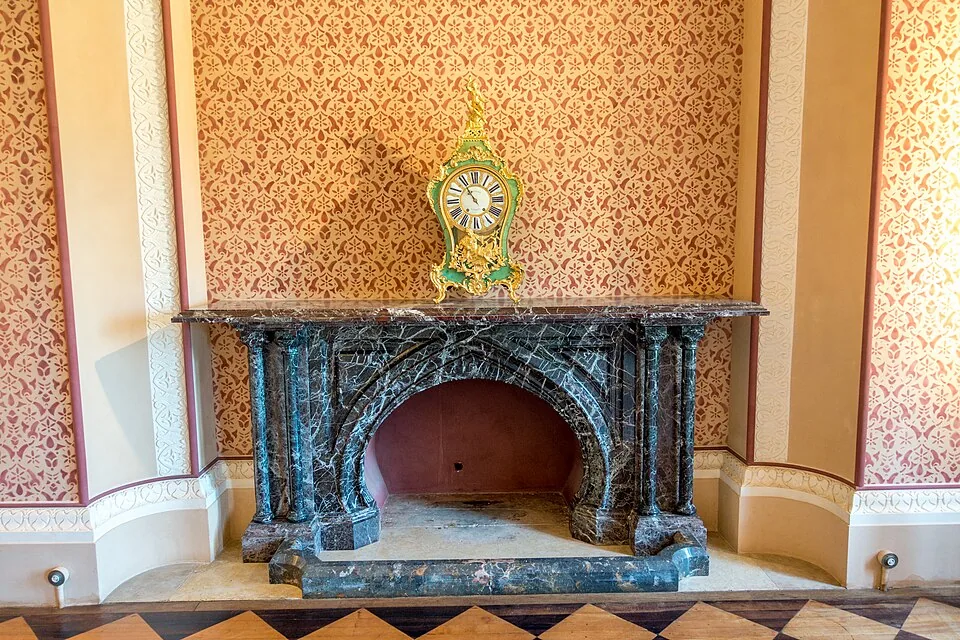
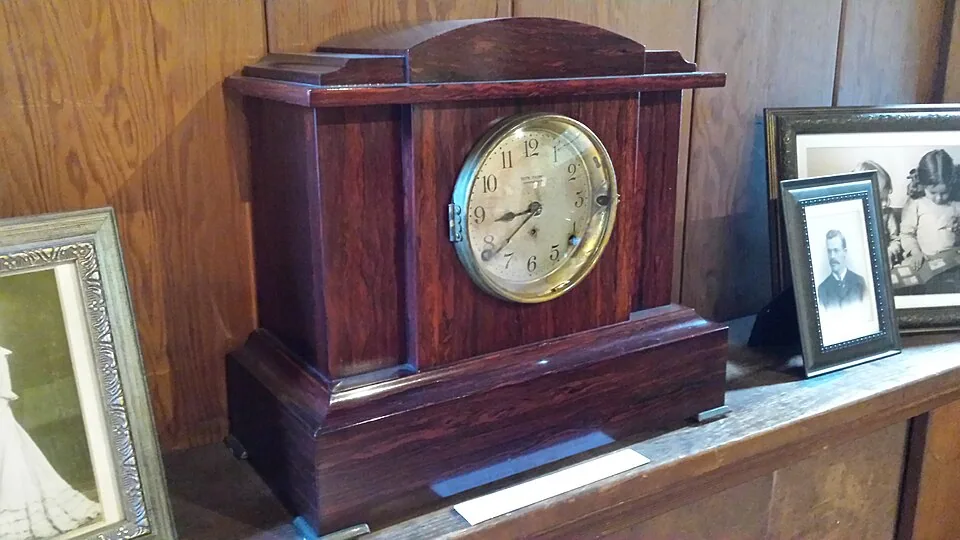
The anchor is the largest element, and everything else is arranged around it. A mirror, a large piece of art, a framed print, a set of three frames, a clock or a wood sculpture can all play this role. Its job is to define the center and the height, and to draw the eye to the fireplace. Without an anchor, the objects on the mantel have nothing to relate to and look scattered.
Choose the anchor for scale. It should be about two thirds to three quarters of the width of the mantel, and it should be big enough to be a focal point. A tiny picture on a long mantel looks lost, and a piece wider than the mantel feels top heavy. Hang it so that the bottom is 4 to 8 inches above the mantel, close enough to relate to the shelf and far enough to leave room for objects in front. Our guide to hanging art above a sofa explains the same relationship between art and the furniture below it.
A mirror is a classic choice because it reflects light and adds depth. For advice on choosing the size and style, see our mirror size guide. If the mantel is above a working fireplace, check that the mirror can withstand the heat, since a mirror that gets very warm can crack or damage its backing. A leaning anchor is another option: a large piece of art set on the mantel and leaned against the wall, which looks relaxed and can be changed easily.
Layer objects by height
After the anchor, add layers in front of it, from tall to short. Think of the mantel as a stage with three levels. The back level holds the tallest items, such as a vase with branches or a tall candlestick. The middle level holds medium items, such as a framed photo, a lamp or a bowl. The front level holds the smallest, such as a small sculpture, a stack of books or a candle in a short holder.
The aim is a gentle skyline, not a staircase. Vary the heights so the eye travels along the mantel, and avoid a row of objects all the same height. Overlapping is good: a small item in front of a taller one adds depth. Keep a few inches between groups so they read as separate, and leave gaps so the arrangement breathes.
Use odd numbers. A group of three objects of different heights looks natural, and groups of two or four look formal. A mantel might have a group of three on the left, the anchor in the center, and a group of three or a single large item on the right. A garland draped across the front can tie the groups together, though it should not hide the objects.
| Layer | Typical items | Height guide | Role |
|---|---|---|---|
| Anchor | Mirror, large art, clock | Largest piece, 2/3 to 3/4 of mantel width | Sets the center and scale |
| Back | Tall vase, branches, candlesticks | 12 to 24 inches | Adds height and frames the anchor |
| Middle | Lamp, frames, bowls, plants | 8 to 14 inches | Fills and links the groups |
| Front | Books, candles, small objects | 3 to 8 inches | Adds depth and detail |
Balance without matching
Symmetry is the easy route: a pair of identical candlesticks or vases on each side of a central mirror. It looks formal, and it suits traditional rooms. It works every time, but it can feel stiff. Asymmetric balance is more relaxed. Place a tall item on one side and a group of smaller items on the other, so that the visual weight is equal, even though the pieces differ.
To check balance, step back and squint. If one side feels heavier, add an item to the lighter side or move a large piece toward the center. Dark colors and large shapes weigh more than pale and small ones, so a small dark vase can balance a larger pale one. Keep the center of the arrangement near the center of the mantel, or near the center of the fireplace opening below.
Consider how the mantel relates to the rest of the wall. If a gallery wall, shelves or sconces flank the fireplace, the mantel is part of a larger composition. Keep objects simple if the wall around it is busy, and add more if the wall is plain. Our bookshelf styling guide uses the same principle of layered groups, so the mantel and the shelves can echo each other.
Color, texture and something living
Choose a limited palette, three or four colors, drawn from the room. The mantel is a good place to repeat the accent color from the pillows or the rug, and one or two neutrals to ground it. Metal tones add sparkle: brass, copper or black, and it is best to stick to one or two metals, so the display feels coordinated.
Texture adds interest to a small area. Combine smooth ceramic with rough wood, glass with linen, metal with stone. A mix of textures makes a simple palette look rich. Books bring a matte, paper texture and are useful for adding height under a small object. Natural materials such as wood, stone and dried grasses warm up a mantel without adding clutter.
Include something living or something that looks it. Fresh greenery, a small plant, a vase of branches or a pot of eucalyptus brings softness to hard materials. Make sure it suits the light and heat of the mantel, since a plant above a working fire will suffer. Faux greenery works if it is of good quality, and it is easy to keep in good shape through the year.
Spacing, depth and what to leave out
A common mistake is to cover the whole mantel. Aim to leave about a third of the surface visible, with gaps between groups. A cluttered mantel looks like storage, and a spare one looks designed. If you have too many objects, edit, keep the best and put the others in a cupboard to rotate in later.
Depth matters on a deep mantel. A shelf of 10 to 12 inches in depth holds several rows of objects, and one of 5 or 6 inches holds a single row with some objects leaning. On a shallow mantel, use leaning art and slim objects, and keep items near the front edge so they are stable. Avoid placing anything so close to the edge that a bump could knock it off.
Avoid items that clash with the room. Photographs in many different frames, tiny knick knacks and objects of every style look scattered. A group of frames in the same finish or color tidies the display, and a few larger objects look better than many small ones. Fresh candles in odd numbers and a few books complete the basic kit.
Safety with a working fireplace
If the fireplace is used, safety comes first. Keep flammable items such as paper, dried flowers, fabric and wax candles well away from the opening, and do not hang stockings or garlands where they can reach a flame. Heat rises and can damage art and mirrors, and a mantel above a roaring fire can get hot enough to crack glass or melt wax. Check the temperature after a long fire before you place valuable items.
Secure objects. Leaning art can fall if the mantel is bumped, so use museum putty or a small stopper. Tall candlesticks and vases should be stable, and delicate items should be kept away from where children and pets may reach. If there is any chance of an earthquake or a heavy door slam, use putty under small items.
For a gas or electric fireplace, heat is less of an issue, but check the manual. Some gas inserts radiate heat upward, and an electric insert produces warm air from the front. Keep items back from vents, and follow the clearance advice. Never place a TV above a hot fireplace without testing, as described in our guide on a TV above a fireplace.
When a TV hangs above the mantel
A television changes the rules, because it becomes the anchor. Keep the mantel decor low and light, with a few objects that do not block the screen from the seats. A long low garland, a row of small items and a pair of lamps or candles at each end frame the TV. Avoid tall objects that rise in front of the screen, and keep the arrangement asymmetric to reduce competition with the rectangle above.
Choose items that hide cables and devices. A tray of objects that disguises a streaming box, or a basket, keeps the mantel tidy. If the screen is high, the mantel decor may be the main thing visible to someone sitting down, so think about it from seated eye level. A frame style TV that displays art when off can double as the anchor.
If you plan to change the display often, avoid fixing objects in place, and use a mantel scarf or a low stand to give a base. The decor on a TV mantel should read as a foreground, with the screen behind it, and it should never force you to move things to watch.
Seasonal swaps and evening lighting
The easiest way to keep a mantel fresh is to leave the anchor and a few core items in place, and swap the rest. In spring, bring in fresh flowers and pale colors. In summer, use shells, light linen and bright greens. In autumn, add warm tones, small pumpkins and dried leaves. In winter, add evergreens, candles and metallic accents. Two or three changes are enough, and the whole thing takes ten minutes.
Store seasonal items in a labeled box, so they are easy to find. Keep one neutral base, such as a pair of candlesticks and a bowl, that works all year. If you decorate for a holiday, keep the display tidy and remove it afterward, since a mantel full of leftover decor looks tired. A simple routine, with the same layers and different objects, keeps the mantel looking considered.
A mantel is often the brightest feature of a living room after dark, because it is the wall that people face. Use it. A small lamp at one end, a few candles or a string of warm lights in a garland add a glow that makes the display feel intended. Keep the bulbs warm, around 2700K, and the brightness low, since the mantel is for atmosphere and not for reading.
If you have art or a mirror as the anchor, a picture light or a nearby sconce can show it off, as long as the fixture is rated for the heat. Avoid shining a bright spot at a mirror, which bounces glare into the room. A pair of lamps on each side of the fireplace, at the mantel height, are a classic way to frame the whole display and balance it.
Finally, take a photo of the mantel in the evening and look at it on a screen. A camera shows the balance more honestly than the eye, and it reveals clutter and gaps that you stop seeing after a few days. If something looks wrong in the photo, adjust it. A five minute check before guests arrive is the quickest way to make a mantel look professionally styled.
Frequently asked questions
How much of the mantel should be covered?
About two thirds, with a third left bare. The gaps let the objects read, and a crowded mantel looks like storage.
Should a mantel be symmetrical?
It can be, and a symmetrical mantel looks formal. An asymmetrical balance of a tall piece on one side and a group on the other looks relaxed. Choose by the style of the room.
What goes on a mantel with no mirror or art?
Use a large leaning piece, a clock, a tall vase or a pair of lamps as the anchor. A garland or a row of framed prints can also work.
Can I use candles on a mantel?
Yes, with care. Use stable holders, keep them away from flammable items, and never leave them burning unattended. Flameless candles give the look without the risk.
How do I decorate a mantel with a TV?
Keep the display low, avoid tall objects in front of the screen, use an asymmetric arrangement and add a lamp or a plant at one end. Our guide on gallery wall layout can help if you want art beside the TV.
The bottom line
Pick one anchor at two thirds the width of the mantel, layer objects in groups of three from tall to short, and add something living. Keep a third of the shelf empty, balance weight and not shapes, and keep flammable things away from an active fire.
Swap two or three items each season and leave the anchor alone. If a TV hangs above, keep the decor low and let the screen be the focus.