Amazon affiliate links - we earn a commission.Affiliate disclosure
Guide·12 min read

How High Should a TV Be Mounted? Start From Seated Eye Level

Mount a TV so the center of the screen sits at seated eye level, usually 40 to 45 inches from the floor, and learn when above a fireplace goes wrong.

By Elena Hart · Updated 2026-11-20

Quick answer

Mount the TV so the center of the screen is at seated eye level, usually 40 to 45 inches above the floor for a typical sofa. For a 55 inch screen that puts the bottom edge near 28 to 30 inches. Measure from your actual seat with your actual posture rather than copying a number, and use a tilting mount if the set must go higher, as over a fireplace, where the screen should be angled down about 10 to 15 degrees to reduce neck strain.

The most common TV mounting advice is to hang it at a height that looks good on the wall, and the most common result is a screen that is too high. A television is not a picture. You look at it for hours, from a fixed position, with your head still, so a few inches of height decides whether you finish a film comfortable or with a stiff neck. Mounting height should come from the person on the sofa, not from the wall.

This guide shows you how to measure seated eye level, turn it into a screen center height for any size of TV, handle the fireplace situation honestly, and decide when a tilting mount or a lower position is a better solution than a compromise. It also covers rooms where people watch while lying down or standing in a kitchen, which change the answer.

The rule: center of the screen at seated eye level

The target is simple. When you sit on the main seat in a normal relaxed posture and look straight ahead, your eyes should land near the center of the picture. For most adults on a standard sofa with a seat height of 17 to 19 inches, the eye line lies between 38 and 44 inches from the floor. That puts the screen center at roughly 40 to 45 inches, so a 55 inch TV, which is about 27 inches tall in its screen area, has a bottom edge near 27 to 31 inches and a top edge near 54 to 58 inches.

The reason eye level matters is the way the neck handles load. Looking up by even 15 degrees for a long film forces the muscles at the back of the neck to hold the head tilted, and the muscles that raise the chin tire in the same way a raised arm tires. A screen centered at eye level lets the head sit in a neutral position. A small downward gaze of about 5 to 15 degrees is more comfortable than any upward gaze, which is why a slightly low TV beats a slightly high one.

This is also why the common advice to mount the TV so the middle of the screen is level with the standing eye height, about 57 to 60 inches, is wrong for sitting rooms. It suits a gym or a bar, where people stand. In a living room, almost everyone is seated, so the sitting eye level is the number that counts.

Screen sizeScreen height (approx.)Bottom edge if center is at 42 in
43 in21 inAbout 31.5 in
55 in27 inAbout 28.5 in
65 in32 inAbout 26 in
75 in37 inAbout 23.5 in
85 in42 inAbout 21 in

The bottom edge becomes a practical check. If the bottom of a 75 inch set would hang only 23 inches off the floor, it may collide with a low console, so check the media furniture and the gap above it before drilling.

How to measure your own eye level

Sit on the sofa in the way you actually watch, not upright and rigid. Have someone hold a tape measure vertically from the floor to the corner of your eye and write the number down. Repeat from each major seat, since the eye height on a deep, low sofa differs from that on a firm armchair. A deep, soft sofa that sinks lowers the eye height by 2 or 3 inches, and the cushions compress further over the years.

Use the main seat's value as your target, but test it before cutting into the wall. Cut a cardboard rectangle the size of the TV or use painter's tape to mark the outline on the wall, and sit for a few minutes looking at it. If the tape outline feels slightly low when you first look at it, that is a good sign, because you will adapt to a lower screen more quickly than you will to a high one. Check from the secondary seats too, where a single mounting height must work for several people. Where heights vary widely, choose the average and use a tilt mount to adjust.
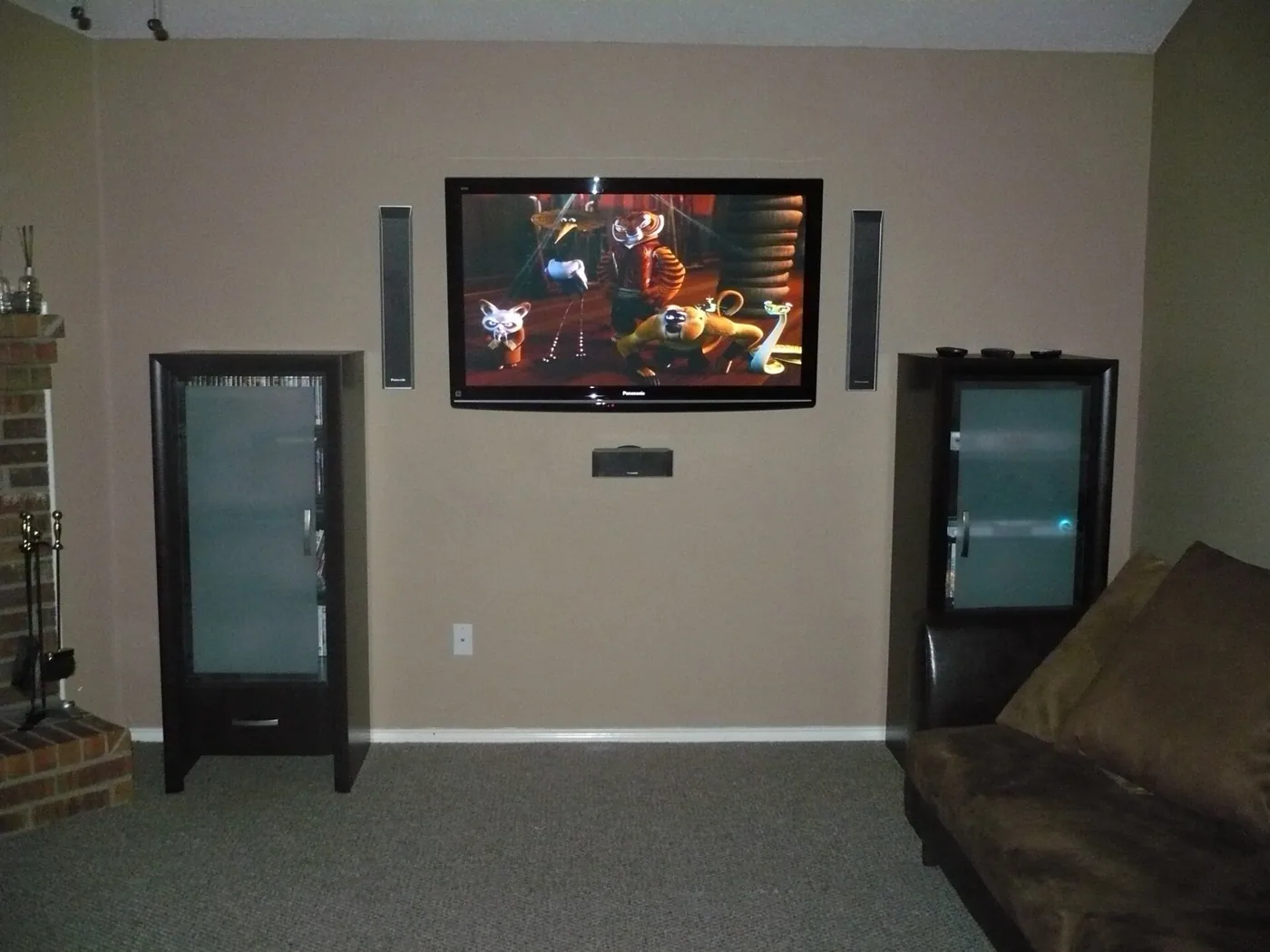
A flat-panel television mounted on a wall in a room with a sofa and speakers
A screen centered near seated eye level keeps the head in a neutral position through a long film.

Above the fireplace: why it causes trouble

A fireplace mantel is typically 52 to 58 inches off the floor, and placing a 55 inch TV above it puts the screen center at 65 to 75 inches, roughly 25 to 30 inches above the seated eye line. That requires an upward tilt of the head of 20 to 30 degrees. For a short film it is a nuisance, and for a long session it leads to the neck and shoulder tension that many owners complain about afterwards.

There are other drawbacks. The heat from a working fireplace rises and can shorten the life of electronics, and a mantel often leaves no room for the cabling. The viewing angle from the side seats is steeper as well, which reduces picture quality on LCD and some OLED panels, since colors and contrast shift with angle.

If the TV must go above a fireplace, there are mitigations. A pull-down mount lowers the set to eye level when in use and tucks back when not. A tilting mount angles the screen down about 10 to 15 degrees, which reduces the glare and makes the picture visible from a lower view point, though it does not cure the neck angle. A third approach is to treat the fireplace TV as the secondary screen for casual use and put the main viewing position closer to the wall, so the viewing angle upward is shallower. The best fix is to move the TV, but if the fireplace is the room's focal point and it cannot move, the pull-down mount is the most honest answer.

Height and distance work together

The sofa distance changes the angle of the neck. A seat 6 feet from the screen with the center 20 inches above the eye line puts the gaze up about 15 degrees, while a seat 10 feet away with the same height difference gives about 9 degrees. A longer viewing distance forgives a higher mount, which is one reason a big room tolerates a TV above the mantel better than a small one. Our guide to TV size for viewing distance explains how the screen size and seat distance relate.

Large screens also mean the top of the screen rises higher at the same center height, which can feel like looking up at the top of the image. For a 75 inch or larger set, drop the center a little, to about 38 to 42 inches, so the top edge stays within a reasonable angle. The bottom edge can then sit 20 to 24 inches off the floor, which is acceptable if nothing is in front of it.

Which mount helps with height

A fixed mount holds the TV flat on the wall and offers no adjustment, so its height must be correct from the start. A tilting mount adds a few degrees of downward angle, useful when the screen is slightly high or when light reflects off the glass. A full-motion mount extends away from the wall and swivels, letting you point the TV toward a different seat, and it can be lowered or angled slightly. If you are still deciding, TV mount types explained covers weight rating, VESA pattern and wall depth.

Whichever you choose, mount into studs, not the drywall alone. A 65 inch TV weighs 45 to 70 pounds, and the leverage of a full-motion arm multiplies the load on its screws. Use a stud finder, mark the stud centers, and fix the bracket with lag bolts of the length recommended by the mount's maker, usually at least 2.5 inches with 1.5 inches of penetration into the stud.

Cables and height

The mounting height decides where the power and signal cables must go. Plan a route before you attach the bracket, whether that is an in-wall kit, a raceway on the surface or a route down behind a console. A low outlet behind the media unit is easy to reach for a TV at 28 inches, while a high mount requires a longer run, and the cable cover gets visible on the wall. For the cable options, including what rules apply to in-wall wiring, see how to hide TV wires.

Glare, windows and the height of reflections

Height also decides what the glass reflects. A TV hung high and tilted down tends to mirror the floor and the lower part of the room, while a TV at eye level mirrors the opposite wall and the windows. If a window sits across from the screen, the best you can do is shift the TV, add curtains with a blackout layer or switch to a matte-finish panel, since glossy screens reflect a bright window almost like a mirror. A slight downward tilt of 5 degrees changes the reflected zone enough to push a lamp out of view, which is why a tilting mount is often the cheapest cure for glare.

Lamps behave the same way. A floor lamp beside the TV that was fine when the set sat on a low stand can show up as a bright smear after you mount the screen on the wall. Check from the main seat with the screen on a dark scene, then adjust shades and bulb direction. Light behind the screen, such as bias lighting, lowers the contrast between the bright panel and the dark wall and makes a slightly lower mount feel more natural, a trick covered in the LED strip lights guide.

Soundbars, speakers and the clearance below

The space below the screen is not wasted. A soundbar usually sits 2 to 3 inches under the bottom edge, so the mount height should allow for it, and a bar that blocks the infrared sensor on the TV can make the remote unreliable. If you plan to mount the bar on the wall under the TV, subtract its height of 2 to 3 inches from your bottom edge calculation, which pushes the TV up an inch or two, a fair trade. The soundbar placement guide explains the sensor and dialogue issues in detail.

Also think about the console below. A typical media console stands 20 to 26 inches tall. A TV with its bottom edge at 28 inches leaves only a 2 to 8 inch gap above it, which looks cramped if the console holds a plant or a speaker. If the gap is too small, either lower the console, choose a lower one or accept that the TV hangs higher by an inch or two. A gap of 4 to 6 inches usually looks intentional.

Special situations that change the answer

If people often watch lying on the sofa, the eye line drops to 24 to 30 inches, and a standard height can force them to look up. Choose a compromise, mount at a height that suits sitting, and then lower it by 2 to 3 inches, or use a tilting mount that can angle down. In a bedroom, where the viewer lies in bed propped on pillows, the eye height is around 36 to 40 inches, similar to a sofa.

In an open plan room where the TV is also visible from a kitchen counter or dining table, a high mount helps the standing viewer but hurts the seated one. A swivel mount can resolve both if it can angle and be repositioned. Another case is a TV in a room with a tall sofa back and a tall viewer, where the best answer is to measure and not to apply a number from a table.

Small children and pets are a final consideration. A low-mounted screen is within the reach of a toddler or a bouncing ball. Use the correct bolts and consider a low edge of at least 24 inches, or a lock for the swivel arm.
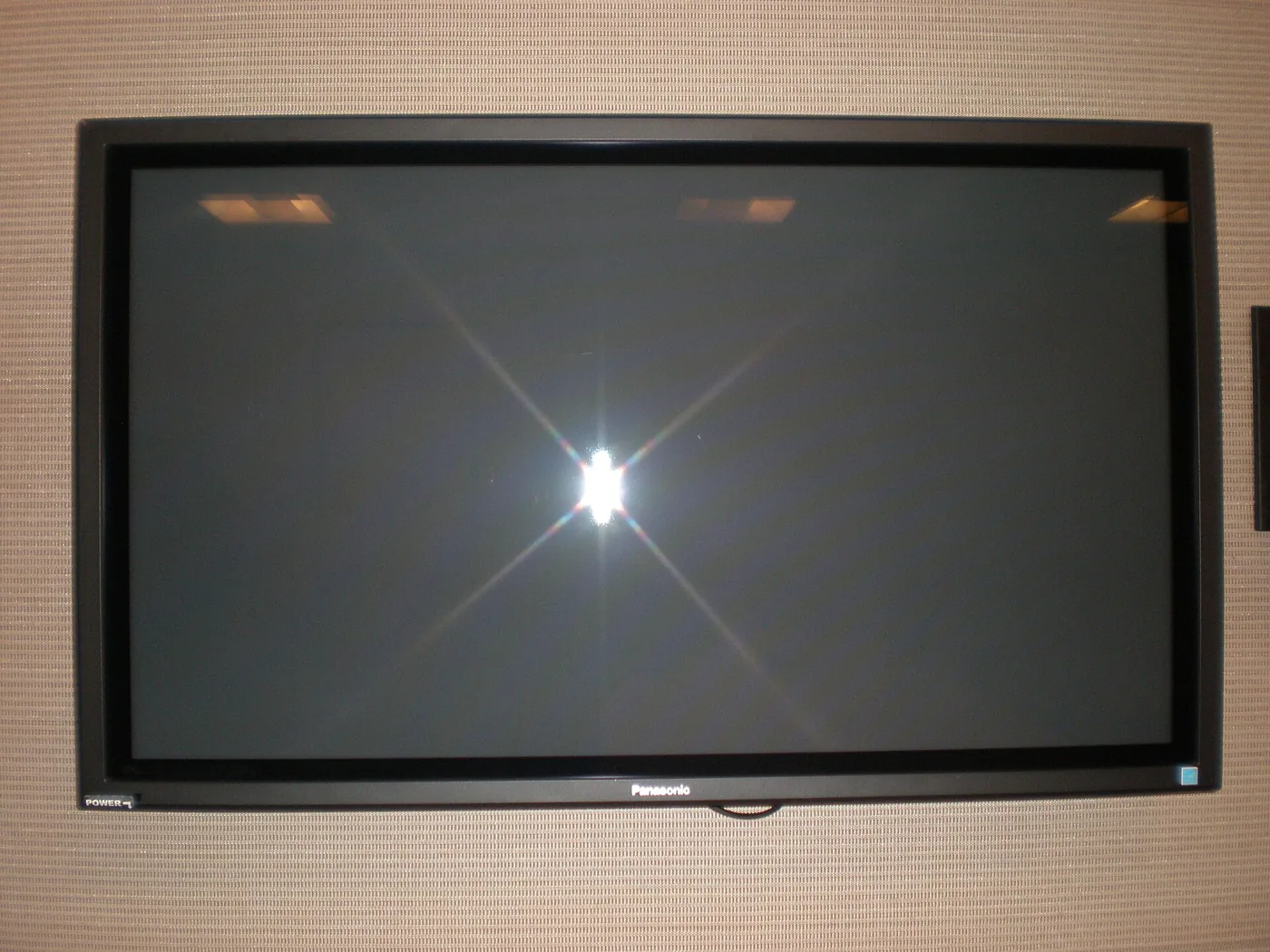
A large flat-panel television mounted flush to a wall
A flush wall mount keeps the set slim, but it allows no adjustment, so the height has to be right from the start.

Frequently asked questions

How high should a TV be above the floor?

Set the center of the screen at seated eye level, usually 40 to 45 inches above the floor. For a 55 inch set that puts the bottom edge at about 28 to 30 inches. Measure from your own seat to confirm.

Is it OK to mount a TV above a fireplace?

It is possible, but it is a compromise. The screen will sit 20 to 30 degrees above a seated eye line. A pull-down mount or a tilt mount helps, and a longer viewing distance makes the angle more comfortable.

Should I tilt a wall-mounted TV?

Tilt it down if it sits above eye level, since a downward angle of 10 to 15 degrees makes the picture easier to see and reduces reflections. If the TV is already at eye level, keep it flat.

How high should a TV be in a bedroom?

Use the eye line of someone lying propped up on pillows, usually 36 to 40 inches. A bedroom TV is often placed too high, so test with tape on the wall before drilling.

What if the people in the room have very different heights?

Mount for the person who sits there most and use a tilting mount to adjust. A seat cushion, or a different sofa depth, can also reduce differences between viewers.

Bottom line

Sit where you watch, measure your eye height, and put the center of the screen there. For most living rooms that means 40 to 45 inches from the floor, with the bottom edge of a 55 inch TV near 28 inches. Test the position with painter's tape before drilling, and live with the outline for a day.

If a fireplace or a corner forces the screen higher, choose a tilting or pull-down mount instead of accepting a fixed high position. A few degrees of tilt and a well-chosen height will do more for comfort than any change to the TV itself.

Image credits

  • accent-chair-desk-corner.webp: JohnLEE Brothers, CC0, source
  • accent-chair-green-velvet.webp: Shixart1985, CC BY 2.0, source
  • accent-chair-hero.webp: Shixart1985, CC BY 2.0, source
  • anchor-built-in-bookcases-room.webp: Carol M. Highsmith, Public domain, source
  • anchor-small-bookcase-hall.webp: Steven Pavlov, CC BY-SA 4.0, source
  • anchor-white-bookcase-wall.webp: Egilus, CC BY-SA 4.0, source
  • arrange-living-room-hero.webp: Kotivalo, CC BY-SA 4.0, source
  • arrange-living-room-seating-group.webp: Neoclassicism Enthusiast, CC0, source
  • arrange-living-room-sofa-wall.webp: Adele Berenstein, CC BY 2.0, source
  • artsofa-pictures-on-wall-room.webp: Tudor Washington Collins, CC BY 4.0, source
  • artsofa-sofa-corner-mural.webp: G�nter Seggeb�ing, Coesfeld, CC BY-SA 3.0, source
  • artsofa-sofa-mural-wall.webp: G�nter Seggeb�ing, Coesfeld, CC BY-SA 3.0, source
  • blackoutcurtain-floor-length-pair.webp: Ounfs Robmmy 238, CC0, source
  • blackoutcurtain-olive-heavy-fabric.webp: Easysayg, CC BY-SA 4.0, source
  • blackoutcurtain-white-sheer-hotel.webp: HuiDongXLW RMDa, CC0, source
  • ceilingfan-five-blade-light.webp: CommandProMC, CC BY-SA 4.0, source
  • ceilingfan-pull-chain-light.webp: Hans Olav Lien, CC BY-SA 3.0, source
  • clean-fabric-sofa-blanket.webp: Shixart1985, CC BY 2.0, source
  • clean-fabric-sofa-hero.webp: Lear 21, CC BY-SA 4.0, source
  • clean-fabric-sofa-slipcover.webp: Enric, CC BY-SA 4.0, source
  • clean-rug-fringe-pattern.webp: Sununa, CC BY-SA 4.0, source
  • clean-rug-runner-hall.webp: Sununa, CC BY-SA 4.0, source
  • coffeetable-round-yellow-sofa.webp: Vaibhavratnaparkhi, CC BY-SA 4.0, source
  • coffeetable-tan-sofa-dark-table.webp: Shixart1985, CC BY 2.0, source
  • coffeetable-two-wood-tables.webp: Sophia Baboolal, CC0, source
  • color-temp-bright-bulb.webp: Xzantiyamoloy, CC BY 4.0, source
  • color-temp-gu10-spot.webp: Dmitry G, CC BY-SA 3.0, source
  • color-temp-hero.webp: LoMit, CC BY-SA 4.0, source
  • color603010-paint-swatches-wall.webp: Chris Rycroft, CC BY 2.0, source
  • color603010-rainbow-swatch-range.webp: Joyful spherical creature, CC BY 4.0, source
  • color603010-swatch-cards-neutrals.webp: Clean Wal-Mart, CC BY 2.0, source
  • cornertv-1960s-room-tv-window.webp: Kotivalo, CC BY-SA 4.0, source
  • cornertv-budapest-sofa-room.webp: Justin Sch�ler, CC0, source
  • cornertv-white-room-console.webp: Oliur Rahman, CC0, source
  • curtainfabric-heavy-olive-folds.webp: Easysayg, CC BY-SA 4.0, source
  • curtainfabric-hotel-floor-length-pair.webp: Ounfs Robmmy 238, CC0, source
  • curtainfabric-white-light-filtering.webp: HuiDongXLW RMDa, CC0, source
  • curtains-hk-window-stacked-open.webp: YSSKACH WFAMOACSH TUNGA, CC BY-SA 4.0, source
  • curtains-hotel-living-zone-floor-length.webp: Ounfs Robmmy 238, CC0, source
  • cushion-fill-hero.webp: Dalton Scavassa, CC BY-SA 4.0, source
  • cushion-fill-pillows-leather.webp: Aaaatu, CC BY-SA 4.0, source
  • depth-grey-sofa-cushions.webp: Dalton Scavassa, CC BY-SA 4.0, source
  • depth-grey-sofa-hero.webp: Lear 21, CC BY-SA 4.0, source
  • depth-sectional-living-room.webp: Shixart1985, CC BY 2.0, source
  • dimmer-rotary-wall.webp: Paolomarco, CC BY-SA 4.0, source
  • dimmer-slide-wall.webp: BrokenSphere, CC BY-SA 3.0, source
  • dimmer-wiring-box.webp: Kurtkaiser, CC0, source
  • door-hotel-living-room.webp: Adele Berenstein, CC BY 2.0, source
  • door-orange-sofa-hero.webp: Shixart1985, CC BY 2.0, source
  • echo-1960s-room-soft-furnishings.webp: Kotivalo, CC BY-SA 4.0, source
  • echo-fabric-acoustic-panels-wall.webp: 36N63, CC BY-SA 4.0, source
  • echo-panel-mineral-wool-core.webp: JoraK, CC BY-SA 4.0, source
  • entcenter-low-stand-devices.webp: William Hook, CC BY-SA 2.0, source
  • entcenter-old-tv-setup.webp: William Hook, CC BY-SA 2.0, source
  • entcenter-wood-wall-unit-living-room.webp: Casey Fleser, CC BY 2.0, source
  • fabric-green-velvet-hero.webp: Neoclassicism Enthusiast, CC0, source
  • fabric-grey-sofa-cushions.webp: Lear 21, CC BY-SA 4.0, source
  • fabric-sofa-blanket.webp: Shixart1985, CC BY 2.0, source
  • floatshelf-mixed-books-rows.webp: Roman Eisele, CC BY-SA 4.0, source
  • floatshelf-steel-support.webp: Fructibus, CC0, source
  • floatshelf-white-bookcase-wall.webp: Egilus, CC BY-SA 4.0, source
  • floor-lamp-height-hero.webp: Agbarto, CC0, source
  • floor-lamp-height-stained-glass.webp: Louis Comfort Tiffany / Tiffany Studios, CC0, source
  • floor-lamp-height-white-reading-lamp.webp: FASTILY, CC BY-SA 4.0, source
  • frame-black-leather-sofa.webp: www.Pixel.la Free Stock Photos, CC0, source
  • frame-green-velvet-sofa.webp: Neoclassicism Enthusiast, CC0, source
  • frame-grey-sofa-hero.webp: Dalton Scavassa, CC BY-SA 4.0, source
  • gallerywall-frames-bookcase-lamp.webp: Personal Creations, CC BY 2.0, source
  • gallerywall-frames-floor-tape.webp: Personal Creations, CC BY 2.0, source
  • gallerywall-frames-on-wall-home.webp: Personal Creations, CC BY 2.0, source
  • hang-light-hero.webp: Martin Falbisoner, CC BY-SA 4.0, source
  • hang-light-lamp-with-shade.webp: LoMit, CC BY-SA 4.0, source
  • hang-light-red-drum-lamp.webp: Agbarto, CC0, source
  • jute-sisal-combing-fibre.webp: Uncredited for Keystone View Company, Public domain, source
  • jute-sisal-hero.webp: B.navez, CC BY-SA 3.0, source
  • jute-sisal-plantation.webp: Forest & Kim Starr, CC BY 3.0, source
  • knotted-rug-cut-pile-carpet.webp: Daderot, CC0, source
  • knotted-rug-hero.webp: Daderot, CC0, source
  • knotted-rug-prayer-wool.webp: Daderot, CC0, source
  • lampshade-cream-base.webp: LoMit, CC BY-SA 4.0, source
  • lampshade-empire-lamp.webp: J.Dncsn, CC BY-SA 3.0, source
  • lampshade-paper-rect-lamp.webp: Zeitlupe, CC BY-SA 4.0, source
  • layer-rugs-armchairs.webp: PattayaPatrol, CC BY-SA 4.0, source
  • layer-rugs-conversation-pit.webp: Marsh Davis; Indiana Landmarks, CC BY 4.0, source
  • layer-rugs-hero.webp: BusterD, CC BY-SA 4.0, source
  • layered-light-hero.webp: FASTILY, CC BY-SA 4.0, source
  • layered-light-red-shade-lamp.webp: Agbarto, CC0, source
  • layered-light-table-lamp.webp: LoMit, CC BY-SA 4.0, source
  • leather-care-black-sofa.webp: www.Pixel.la Free Stock Photos, CC0, source
  • leather-care-burgundy-set.webp: Dominic's pics, CC BY 2.0, source
  • leather-care-hero.webp: Thomas Quine, CC BY 2.0, source
  • ledstrip-cove-fireplace.webp: Andrey Gvrv, CC BY-SA 3.0, source
  • ledstrip-spool-driver.webp: Dmitry G, CC BY-SA 3.0, source
  • ledstrip-tv-back.webp: Stilfehler, CC BY-SA 4.0, source
  • loveseat-sofa-armchair-room.webp: Adele Berenstein, CC BY 2.0, source
  • loveseat-sofa-hero.webp: Aaaatu, CC BY-SA 4.0, source
  • loveseat-sofa-leather-pair.webp: Dominic's pics, CC BY 2.0, source
  • lowlight-snake-plant-corner-pot.webp: Enzo Rippa, CC BY-SA 4.0, source
  • lowlight-snake-plant-window-table.webp: Martin Olsson, CC BY-SA 3.0, source
  • lowlight-zz-plant-potted.webp: Jamshid Nurkulov, CC BY-SA 4.0, source
  • lumens-bulb-hero.webp: R. Henrik Nilsson, CC BY 4.0, source
  • lumens-led-bulbs-group.webp: Geoffrey.landis at English Wikipedia, CC BY 3.0, source
  • measure-cabin-sofa.webp: Shixart1985, CC BY 2.0, source
  • measure-room-depth.webp: Shixart1985, CC BY 2.0, source
  • measure-sofa-hero.webp: Shixart1985, CC BY 2.0, source
  • mirror-above-mantel-living-room.webp: Tudor Washington Collins, CC BY 4.0, source
  • mirror-round-blue-wall-window.webp: Ciara N� Riain, CC BY-SA 4.0, source
  • mirror-round-over-wood-console.webp: Shixart1985, CC BY 2.0, source
  • mixpatterns-armenian-patterned-pillows.webp: Ararat Trvants, CC BY-SA 4.0, source
  • mixpatterns-couch-pillows-set.webp: Dawid Skalec, CC BY-SA 4.0, source
  • mixpatterns-leather-sofa-pillows.webp: Aaaatu, CC BY-SA 4.0, source
  • no-overhead-hero.webp: Gotogo, CC BY-SA 4.0, source
  • no-overhead-red-shade-lamp.webp: Agbarto, CC0, source
  • no-overhead-white-floor-lamp.webp: FASTILY, CC BY-SA 4.0, source
  • nodrillcurtain-hk-window-open.webp: YSSKACH WFAMOACSH TUNGA, CC BY-SA 4.0, source
  • nodrillcurtain-olive-rail-folds.webp: Easysayg, CC BY-SA 4.0, source
  • nodrillcurtain-white-light-panel.webp: HuiDongXLW RMDa, CC0, source
  • open-plan-rug-armchairs.webp: PattayaPatrol, CC BY-SA 4.0, source
  • open-plan-rug-hero.webp: NPS Photo, Public domain, source
  • open-plan-rug-sunken-living.webp: Marsh Davis; Indiana Landmarks, CC BY 4.0, source
  • ottoman-coffee-table-pair.webp: Sophia Baboolal, CC0, source
  • ottoman-leather-round-pair.webp: Olugold, CC BY-SA 4.0, source
  • ottoman-round-stool-top.webp: Olugold, CC BY-SA 4.0, source
  • paintsheen-open-paint-cans.webp: United Soybean Board, CC BY 2.0, source
  • paintsheen-paint-can-brush.webp: Shixart1985, CC BY 2.0, source
  • paintsheen-swatch-cards-range.webp: Chris Rycroft, CC BY 2.0, source
  • pets-sofa-kitten-cushions.webp: Feliciano Guimar�es from Guimar�es, Portugal, CC BY 2.0, source
  • pets-sofa-slipcover.webp: Enric, CC BY-SA 4.0, source
  • pillows-decorative-couch-set.webp: Dawid Skalec, CC BY-SA 4.0, source
  • pillows-leather-sofa-group.webp: Aaaatu, CC BY-SA 4.0, source
  • pillows-wooden-sofa-red-cushions.webp: Zohasheikh, CC BY-SA 4.0, source
  • readinglamp-adjustable-torchiere.webp: Agbarto, CC0, source
  • readinglamp-armchair-corner-lamp.webp: Kotivalo, CC BY-SA 3.0, source
  • readinglamp-cozy-sunlit-corner.webp: Shixart1985, CC BY 2.0, source
  • recessed-gimbal-trim.webp: Stilfehler, CC BY-SA 4.0, source
  • recessed-housing-display.webp: Stilfehler, CC BY-SA 4.0, source
  • recessed-led-can-trim.webp: Stilfehler, CC BY-SA 4.0, source
  • recliner-buying-armchair-room.webp: Virginia State Parks staff, CC BY 2.0, source
  • recliner-buying-hero.webp: Laura Stoinski, CC0, source
  • recliner-buying-leather-sofa.webp: Aaaatu, CC BY-SA 4.0, source
  • rug-curl-fringe-rug.webp: Sununa, CC BY-SA 4.0, source
  • rug-curl-hero.webp: Sununa, CC BY-SA 4.0, source
  • rug-curl-runner-patterns.webp: Sununa, CC BY-SA 4.0, source
  • rug-dents-hero.webp: ProjectManhattan, CC BY-SA 3.0, source
  • rug-dents-wool-medallion.webp: Daderot, CC0, source
  • rug-on-carpet-armchairs.webp: PattayaPatrol, CC BY-SA 4.0, source
  • rug-on-carpet-flat-weave.webp: Mervat, CC BY 4.0, source
  • rug-on-carpet-hero.webp: NPS Photo, Public domain, source
  • rug-pad-dense-carpet.webp: ProjectManhattan, CC BY-SA 3.0, source
  • rug-pad-hero.webp: Sununa, CC BY-SA 4.0, source
  • rug-pile-flatweave-stack.webp: Mervat, CC BY 4.0, source
  • rug-pile-sarouk-wool.webp: Daderot, CC0, source
  • rug-shedding-pile-closeup.webp: ProjectManhattan, CC BY-SA 3.0, source
  • rug-shedding-wool-rugs.webp: Mervat, CC BY 4.0, source
  • rug-size-armchairs-on-rug.webp: PattayaPatrol, CC BY-SA 4.0, source
  • rug-size-conversation-area.webp: Marsh Davis; Indiana Landmarks, CC BY 4.0, source
  • rug-size-hero.webp: NPS Photo, Public domain, source
  • runner-size-hero.webp: Sununa, CC BY-SA 4.0, source
  • runner-size-red-runner.webp: Sununa, CC BY-SA 4.0, source
  • runner-size-three-runners.webp: Sununa, CC BY-SA 4.0, source
  • sag-cushions-hero.webp: Durova, CC BY-SA 3.0, source
  • sag-cushions-slipcover.webp: Enric, CC BY-SA 4.0, source
  • sag-cushions-sofa-deck.webp: Dalton Scavassa, CC BY-SA 4.0, source
  • sconce-above-tufted-chairs.webp: Jedodo756, CC0, source
  • sconce-brass-opal-shade.webp: unknown (see Commons page), CC BY-SA 4.0, source
  • sconce-wall-lamp-side-table.webp: Atilla Taskiran, CC0, source
  • sectional-dark-hero.webp: Shixart1985, CC BY 2.0, source
  • sectional-room-arrangement.webp: Kotivalo, CC BY-SA 4.0, source
  • sectional-white-corner.webp: GardenKings, CC BY-SA 3.0, source
  • shelfsag-mixed-books-shelf.webp: Roman Eisele, CC BY-SA 4.0, source
  • shelfsag-packed-bookshelf.webp: Csferrie, CC BY-SA 4.0, source
  • shelfsag-wood-shelf-rows.webp: PeaceSeekers, CC BY-SA 4.0, source
  • sidetable-cozy-sofa-room.webp: Breather, CC0, source
  • sidetable-kentwood-sofa.webp: Kari Shea, CC0, source
  • sidetable-round-wall-lamp.webp: Atilla Taskiran, CC0, source
  • sleeper-sofa-bed-made-up.webp: Maniago, Public domain, source
  • sleeper-sofa-open-hero.webp: N509FZ, CC BY-SA 4.0, source
  • sleeper-sofa-sofa-mode.webp: N509FZ, CC BY-SA 4.0, source
  • small-room-slim-arm-sofa.webp: Lear 21, CC BY-SA 4.0, source
  • small-room-sofa-hero.webp: Shixart1985, CC BY 2.0, source
  • small-room-two-seat-layout.webp: Adele Berenstein, CC BY 2.0, source
  • smallbigger-finland-studio-bright.webp: Aaaatu, CC BY-SA 4.0, source
  • smallbigger-hk-curtains-open-window.webp: YSSKACH WFAMOACSH TUNGA, CC BY-SA 4.0, source
  • smallbigger-white-room-console.webp: Oliur Rahman, CC0, source
  • smallstorage-finland-studio-room.webp: Aaaatu, CC BY-SA 4.0, source
  • smallstorage-leather-sofa-shelving.webp: Sabri Tuzcu, CC0, source
  • smallstorage-wall-shelves-books.webp: Roger W, CC BY-SA 2.0, source
  • smart-bulbs-bulb-in-hand.webp: Xzantiyamoloy, CC BY 4.0, source
  • smart-bulbs-led-internals.webp: Loadmaster, Bech, CC BY-SA 4.0, source
  • soundbar-below-lg-tv.webp: Dinkun Chen, CC BY-SA 4.0, source
  • soundbar-philips-front-grille.webp: Philips Communications, CC BY 2.0, source
  • soundbar-samsung-single-bar.webp: Dinkun Chen, CC BY-SA 4.0, source
  • stylebooks-packed-shelf-wall.webp: Csferrie, CC BY-SA 4.0, source
  • stylebooks-philosophers-shelf.webp: Roman Eisele, CC BY-SA 4.0, source
  • stylebooks-wall-shelves-bottles-books.webp: Roger W, CC BY-SA 2.0, source
  • styletable-book-stack-candle.webp: Gabbybratcher, CC BY-SA 4.0, source
  • styletable-two-tables-mugs.webp: Sophia Baboolal, CC0, source
  • styletable-yellow-sofa-cups-flowerpot.webp: Shixart1985, CC BY 2.0, source
  • surround-home-theater-tv-seating.webp: NPat318, CC BY-SA 4.0, source
  • surround-rear-view-seats.webp: NPat318, CC BY-SA 4.0, source
  • surround-sectional-media-room.webp: Derek Jensen (Tysto), Public domain, source
  • table-lamp-size-antique-shade.webp: Amitbalani, CC0, source
  • table-lamp-size-hero.webp: Tess Mattew, CC BY-SA 4.0, source
  • table-lamp-size-measured.webp: Tess Mattew, CC BY-SA 4.0, source
  • throwblanket-blue-throw-kitten.webp: TudorTulok, CC BY-SA 4.0, source
  • throwblanket-striped-couch-cat.webp: Roman Eisele, CC BY-SA 4.0, source
  • throwblanket-yellow-blue-couch.webp: Roman Eisele, CC BY-SA 4.0, source
  • tvheight-flat-panel-wall.webp: BrokenSphere, CC BY-SA 3.0, source
  • tvheight-plasma-wall-room.webp: Pkepneriv, CC BY-SA 3.0, source
  • tvheight-white-living-room.webp: Oliur Rahman, CC0, source
  • tvmount-articulating-arm.webp: Ben Scholzen, CC BY 2.0, source
  • tvmount-vesa-adapter-plate.webp: Tony Webster, CC BY 2.0, source
  • tvmount-wall-panel-room.webp: Pkepneriv, CC BY-SA 3.0, source
  • tvsize-dark-room-big-screen.webp: Christian Collins, CC BY 2.0, source
  • tvsize-media-room-screen.webp: NPat318, CC BY-SA 4.0, source
  • tvsize-tv-on-stand.webp: PhotoPicker13, CC BY-SA 4.0, source
  • tvstand-low-stand-devices.webp: William Hook, CC BY-SA 2.0, source
  • tvstand-wall-unit-living-room.webp: Casey Fleser, CC BY 2.0, source
  • tvwires-cable-box-wires.webp: Tony Webster, CC BY 2.0, source
  • tvwires-hdmi-connectors.webp: Kreuzschnabel, CC BY-SA 3.0, source
  • tvwires-wall-mounted-panel.webp: BrokenSphere, CC BY-SA 3.0, source
  • washable-rugs-flatweave-stack.webp: Mervat, CC BY 4.0, source
  • washable-rugs-hero.webp: Mervat, CC BY 4.0, source
  • washable-rugs-loomed-stripes.webp: Gcarrillog, CC0, source
  • wool-poly-hero.webp: Mervat, CC BY 4.0, source
  • wool-poly-oaxacan-wool.webp: Gcarrillog, CC0, source
  • wool-poly-prayer-rug.webp: Daderot, CC0, source

Related Guides