Most televisions sold today are thin, and the speakers in them are thinner. They fit the sound into a slim frame with small drivers facing down or backward, and the result is thin voices and almost no bass. The remedy is either a soundbar, a single long speaker that sits under the screen, or a home theater system, a set of separate speakers driven by a receiver. Both improve on the television by a large margin, and they differ in cost, space and ambition.
This guide compares them on the points that matter in a living room: the number of channels and what they can actually do, virtual versus real surround, subwoofers, cables and the TV connection, room size, and the paths for upgrading later. It ends with a clear rule for choosing, and a list of the mistakes that make people regret either option.
What each option is
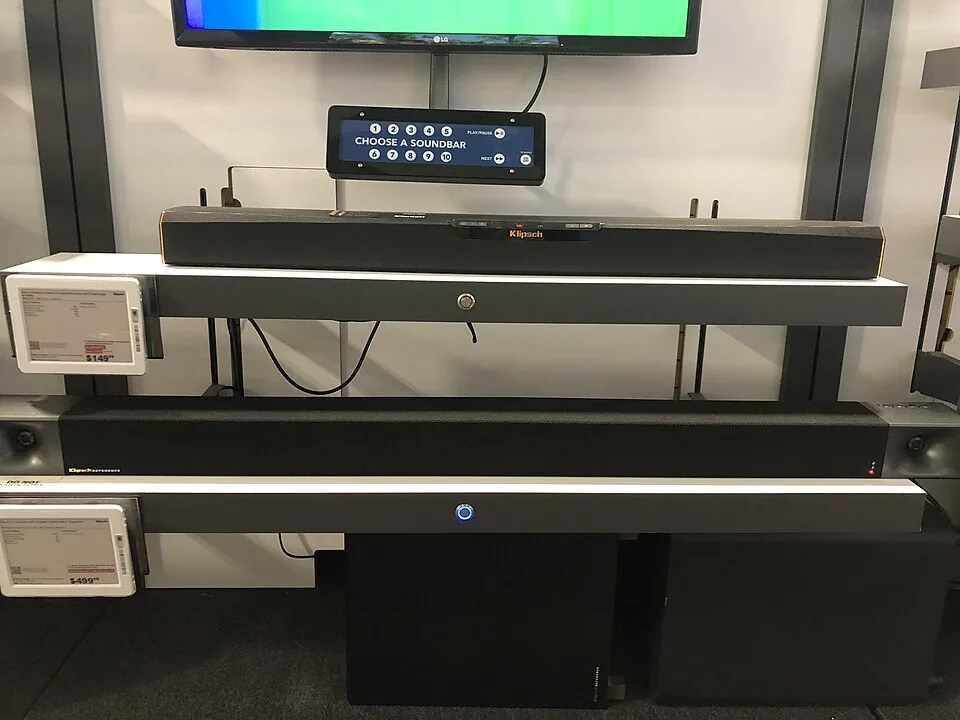
A soundbar is a speaker enclosure, usually 30 to 55 inches wide, that holds several small drivers in one cabinet. It connects to the TV by a single HDMI or optical cable, and it often comes with a separate subwoofer for bass. Basic bars have two channels, left and right, while more advanced ones have a center channel for dialogue, side firing drivers for width, and upward firing drivers for height effects.
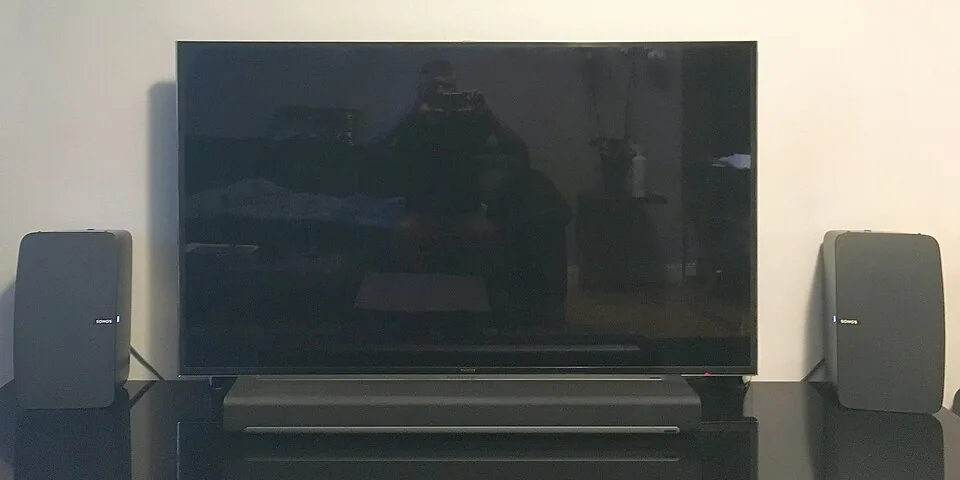
A home theater system uses a receiver, an amplifier with a set of inputs, to drive separate speakers placed around the room. A common layout is 5.1, five speakers and one subwoofer: left, center and right at the front, and two surround speakers at the sides or rear. Larger systems add more surrounds and height speakers, written as 7.1 or 5.1.2, where the last digit is the number of overhead channels. Each speaker is a separate piece, which allows better placement and better parts, but needs cables.
Between the two sits the soundbar with satellites, a bar plus wireless rear speakers and a subwoofer. It gives a surround effect from physical speakers behind you, without a receiver or long cable runs. It is a sensible compromise for a living room with a clear place for the rear speakers.
| Factor | Soundbar alone | Bar with sub and rears | Receiver and speakers |
|---|---|---|---|
| Setup | One cable, minutes | Cables to power rear speakers | Wiring across the room, calibration |
| Surround | Virtual, from reflections | Real rear speakers | Real, with the best control |
| Bass | Limited unless a sub is added | Dedicated subwoofer | Any subwoofer you choose |
| Best room size | Small to medium | Medium | Medium to large |
| Upgrade path | Replace the bar | Limited by the system | Swap any component |
Channels and what they mean in practice
A channel is a separate signal sent to a separate speaker. Stereo has two, and a film mix usually has five or seven, with a subwoofer channel for effects. A soundbar with only left and right channels cannot place a sound behind you, so it relies on psychoacoustic tricks, bouncing sound off the walls and processing the signal so that it seems to come from the sides. This works in a room with hard, flat side walls and a listener sitting near the center.
The center channel carries most dialogue in a film, which is why it matters for clarity. A bar with a dedicated center driver keeps voices anchored to the screen. A separate home theater system has a full size center speaker, and moving dialogue away from the television's own speakers is the biggest reason people say the sound has improved. If dialogue is your main complaint, a bar with a center driver or a dialogue enhancement mode may be all you need.
Height channels, marketed with Dolby Atmos or DTS:X, add sound from above. A bar with upward firing drivers bounces sound off the ceiling, and this works best with a flat ceiling about 8 to 10 feet high. A vaulted, sloped or very high ceiling weakens the effect. In a real system, in ceiling or on ceiling speakers give a clearer result, but they require wiring and planning.
Virtual surround versus real surround
Virtual surround uses signal processing to make a sound seem to come from places where there is no speaker. It can widen the soundstage, and in a small room with reflective walls, the effect can be impressive. It is fragile: a sofa pushed against the wall, a window with heavy curtains or an open plan layout can reduce it. It also depends on sitting in the sweet spot, since the effect fades as you move off center.
Real surround places speakers behind or beside the listener, and the sound comes from a real source. It is more precise, and more stable for the whole seating area. A rear effect, such as a helicopter passing overhead, gets a physical location. For a room where several people sit across a wide sofa, real surround is more consistent, and it is the strongest argument for a separate system or a bar with rear speakers.
Be honest about how you watch. If most viewing is news, streaming dramas and sport, front channels deliver most of what you hear, and surround is an occasional bonus. If you watch films with active surround mixes, play games or like loud action, real rears justify their cost and wiring. The cost of that is more cables and more things in the room, and the room's decor may not welcome them.
Subwoofers and bass
Bass is where small speakers struggle, and it is a large part of the sense of power in a film. A soundbar's built in drivers are too small to move much air, and the sound usually falls away below about 80 to 100 Hz. A subwoofer, a separate cabinet with a large driver, fills that gap. Most bars with a subwoofer connect it wirelessly, so only a power cable is needed.
Placement affects bass heavily. A subwoofer in a corner produces more output, and also more boom, while one along a wall gives a tighter result. Moving it a few feet changes the response across the room, and the best position is often found by trial. Putting it on a thick rug or a stand reduces floor vibration, and keeping it away from shelves and glass stops rattles.
If you live in an apartment or share walls, think about the neighbors. Low frequencies pass through floors and walls far more easily than higher ones, and a strong subwoofer can annoy people on the other side. Most systems have a night mode that compresses loud effects, and a bass level control. Use them, and consider a smaller subwoofer in a shared building. Our guide to reducing echo in a living room also covers soft furnishings that tame a boomy room.
Connection, wiring and the HDMI question
The cleanest connection is HDMI ARC or eARC, a feature on one HDMI port of the television that sends audio to the bar or receiver through the same cable that carries video. eARC supports higher quality formats, including lossless Dolby Atmos, while ARC is adequate for most compressed audio. Check which HDMI port on your TV is labeled ARC, and use it. An optical cable also works for most uses but does not support the latest formats.
A soundbar needs a power outlet and one cable, and it can sit on the TV stand or hang on the wall below the screen. A receiver system needs speaker wire to each speaker, which may mean routing cables along baseboards, under rugs or in the wall. Our guide on hiding TV wires covers the options, and in a rental, flat cable under a rug is the least invasive.
Remember the remote and the inputs. A receiver has its own remote and menu, and a family that is used to one remote may find the extra step annoying. A soundbar usually works with the TV remote through a feature called CEC. Check that the volume control works with your remote, and that the system turns on with the TV, since these small points decide whether people use it every day.
Room size and layout
In a small living room, up to about 12 by 14 feet, a soundbar is usually the right scale. The sound has little distance to travel, and the room does not need a lot of power. A large system in a small room is wasteful, and speakers close to the walls or the listener sound boomy and overbearing. In rooms from 14 by 18 feet and upward, or in open plan spaces, a larger system has the power to fill the room.
Look at where people sit. If the sofa is against the back wall, rear speakers can only go on the sides or behind, and a bar with rear satellites is easier than running cables to the back. If the sofa floats in the room, rear speakers on stands or on the wall behind the sofa are possible, but the cables need a path. A seating plan, in the manner of surround sound speaker placement, helps to decide.
Also consider the television stand. A bar must sit in front of the screen without blocking the remote sensor or the lower edge of the picture, and a stand that is too shallow will not hold it. Check the clearance with the guidance in our soundbar placement guide and the TV stand size guide.
Upgrade paths and cost over time
A soundbar is a closed system, and when you want more, you replace it. Some brands allow adding a subwoofer or rear speakers later, as long as they come from the same family, but the options are limited, and the products change often. A receiver system is modular, so you can add a better center speaker, a bigger subwoofer or new surrounds without throwing away the rest.
The receiver itself becomes outdated. New video standards and connections appear every few years, and a receiver that lacks them can limit the TV. Buy one with current HDMI features, and expect to replace it after a long period. Speakers, on the other hand, can last for decades.
On cost, a bar is cheaper to start, and a system costs more in parts and in cables, stands and installation. For a family that moves often or changes the room layout, a bar travels better. For someone who is settled and values sound, the extra cost of separates buys a better result per decade of use.
Mistakes people regret
The first is buying by the number of speakers in the box. A set that lists a dozen channels may use tiny drivers and a weak amplifier, and fewer, better speakers often sound more convincing. Look at the amplifier power, the driver sizes and the frequency range, and pay more attention to the center and the subwoofer than to the count.
The second is ignoring the room. A bar on a shelf recessed into a cabinet, a speaker hidden behind a curtain or a subwoofer under a table all lose clarity. Give every speaker a clear path to your ears, and keep tweeters near ear height when you sit. Soft furnishings help, but too much of them deadens the sound, so balance rugs and curtains with a few hard surfaces.
The third is skipping calibration. A receiver has a setup microphone and a menu that sets distances and levels, and a bar has a few sound modes. Spend an evening with them, then play material you know well. Most disappointing systems are poorly set up, not poorly built, and a small adjustment to the dialogue level often decides whether people like the result.
Frequently asked questions
Is a soundbar good enough for movies?
For most living rooms, yes, particularly with a subwoofer and a center channel. It will not match a well placed system with real surround, but it improves dialogue and bass greatly compared with TV speakers. The gap matters most in large rooms and for action films.
Do I need a receiver for a soundbar?
No. A soundbar has its own amplifier and takes the signal from the TV directly. A receiver is only needed for separate speakers. Some soundbars also accept other devices through their own HDMI inputs.
Can I add rear speakers to any soundbar?
Only if the maker sells compatible ones. Many bars are sold as sets with optional rears from the same line. Check the compatibility before buying, and expect that mixing brands is not supported.
What does Dolby Atmos add in a living room?
It adds height effects, from real overhead speakers or from upward firing drivers. The effect is clearest with a flat ceiling at a moderate height, and with content that is mixed in Atmos. In many rooms, the improvement from a good center and subwoofer is larger.
Is it worth buying a cheap home theater in a box?
Often not. These sets use small satellites and a weak receiver, and the sound can be worse than a good bar. If you want separate speakers, buy a modest receiver and a few better speakers, and expand over time.
The bottom line
For a small to medium living room, and a household that values simplicity, buy a soundbar with a subwoofer and a center channel, and connect it by HDMI ARC. Add rear speakers if the system supports them and the layout allows.
For a large room or a keen film fan, choose a receiver and separate speakers, and plan the wiring before you buy. In either case, place the equipment with care, use the night mode when others are sleeping and keep the upgrade path in mind.