A loveseat is not simply a small sofa. It is a different piece of furniture with its own proportions, its own uses and its own failure modes, and treating it as a scaled-down sofa leads to the two classic mistakes: a loveseat bought as the only seat in a family room, and a sofa wedged into a space that wanted a loveseat and a chair. The names are loose, and the length at which a loveseat becomes a sofa varies by maker.
This guide compares the two by seat counts that hold up in real use, by the length you can actually lie down, by the layouts each makes possible and by the situations where a pair of loveseats or a loveseat plus chairs does the job better than a single sofa. It uses dimensions rather than labels, because the labels change from listing to listing.
The numbers behind the names
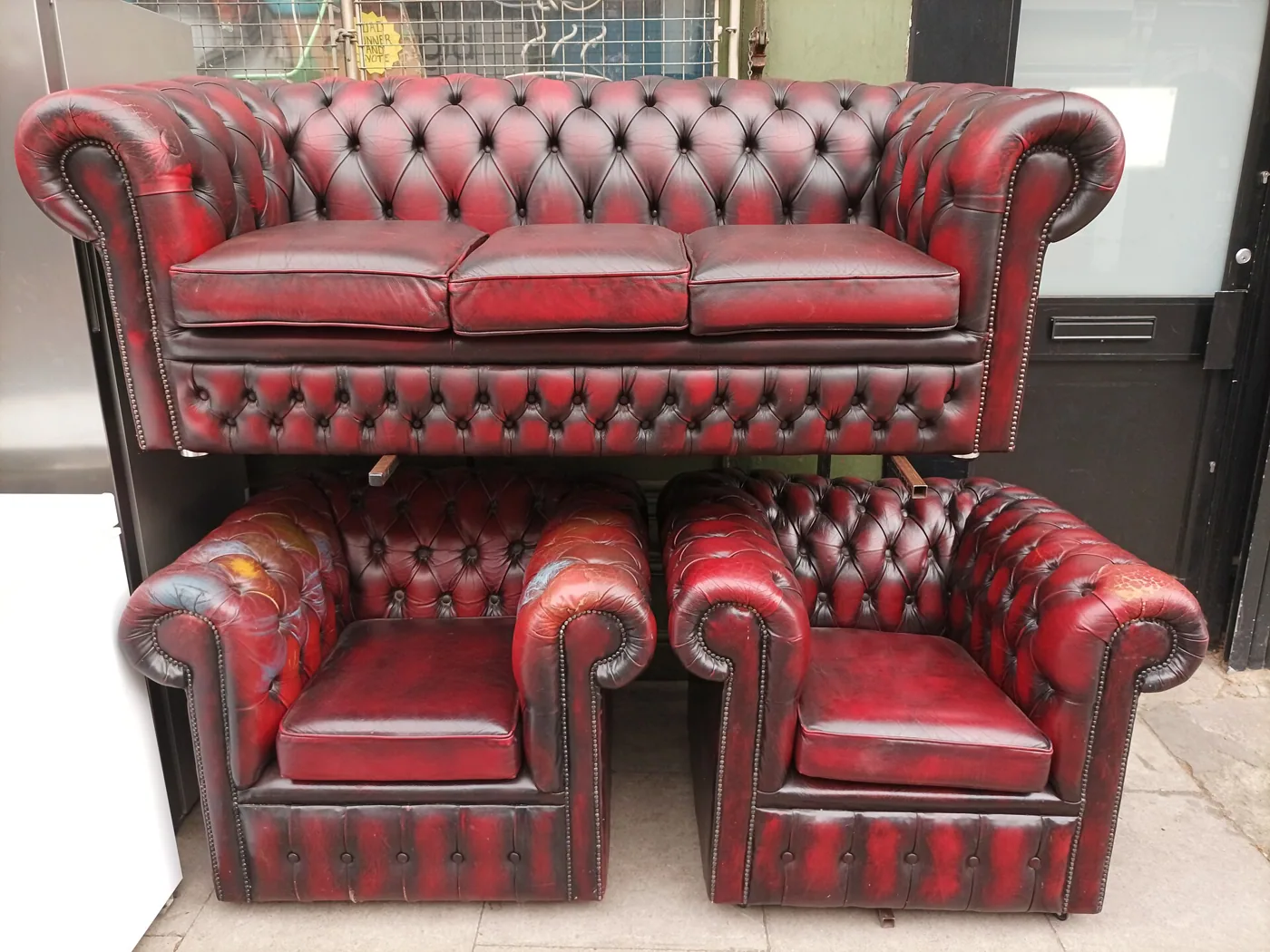
A loveseat, also called a two-seater or a settee, is usually 52 to 65 inches long, with a depth of 30 to 38 inches. A standard sofa runs 72 to 90 inches, and large sofas run to 96 inches or more. Between them, a 66 to 74 inch piece is variously called a small sofa, an apartment sofa or a large loveseat, depending on the maker's marketing.
The overall length includes the arms, and arms vary by 6 to 20 inches in total. A loveseat with thick rolled arms and a 58 inch overall length has a seat width of about 40 inches, which is tight for two adults. A loveseat with slim arms at 58 inches has a seat width of about 50 inches, which is comfortable. Always compare the seat width, not the headline length. A good working figure is 20 to 24 inches of seat width per person, so two people need at least 42 to 48 inches, and three need 63 to 72.
Seat counts that survive real life
Listings describe a loveseat as seating two and a sofa as seating three, and those counts assume everyone sits upright and close together. In practice, two adults are comfortable on a loveseat of 60 inches or more, and cramped on one of 52 to 56 inches. Three adults fit on a sofa of 78 to 84 inches without touching shoulders, and an 72 inch sofa seats three only if they are on friendly terms.
The cushion layout changes the count too. A sofa with two large seat cushions seats two comfortably and a third person in the join, while a three-cushion sofa has defined positions. A bench seat, a single long cushion, has no defined places and so seats as many as the length allows. For a household of two that rarely hosts, a loveseat is plenty. For a household of three or four that watches television together, the sofa is the minimum, and a sectional becomes worth a look, as our sectional versus sofa comparison explains.
Lying down: the length that matters
The question of whether you can lie down on it is a real purchase criterion, and it depends on the inside length of the seat, between the arms. An adult of 5 feet 10 inches needs about 70 inches from head to feet, and a sofa has to be 84 inches or more, with low arms, to allow a full stretch. A loveseat cannot offer this, and a person lying on one has to bend their knees or hang their feet over the arm.
If a lying-down seat is important, think about one of three options: a sofa of 84 inches or more with low arms, a chaise or a sectional, or an armchair with an ottoman. A loveseat with a footstool allows a half-reclined posture, and a deep loveseat of 36 inches or more provides a place to curl up sideways. Our guide to seat depth covers how depth changes the comfort of curling up and lounging.
Layouts that favor a loveseat
The loveseat is the right piece when the wall is short, the room is small, or the piece is a second seat. A wall of 6 to 8 feet takes a loveseat with space for side tables, where a sofa of 84 inches would fill it from end to end. A bedroom or a study with a corner reading area suits a loveseat, because it needs seating for one or two and a clear path.
A loveseat also works as a pair. Two loveseats facing each other across a coffee table create a symmetrical conversation area in a room of 12 to 14 feet, with a gap of 40 to 48 inches in between. The setup is better for conversation than a sofa with a chair, because everyone faces someone, and each loveseat can be moved or sold separately. The drawback is that nobody is looking at the television unless it sits at the end of the room, so it suits a room where talking comes first.
| Situation | Better piece | Reason |
|---|---|---|
| Wall of 6 to 8 feet | Loveseat | Leaves room for side tables and a path |
| Household of three or more | Sofa or sectional | Three real seats in one piece |
| Long room, 14 feet or more | Two loveseats facing | Two zones, better for conversation |
| Main television room | Sofa | One long row faces the screen |
| Secondary seat in a large room | Loveseat | Adds a seat without filling the room |
| Frequent moves, small doorways | Loveseat | Easier to carry through narrow routes |
When two loveseats beat one sofa
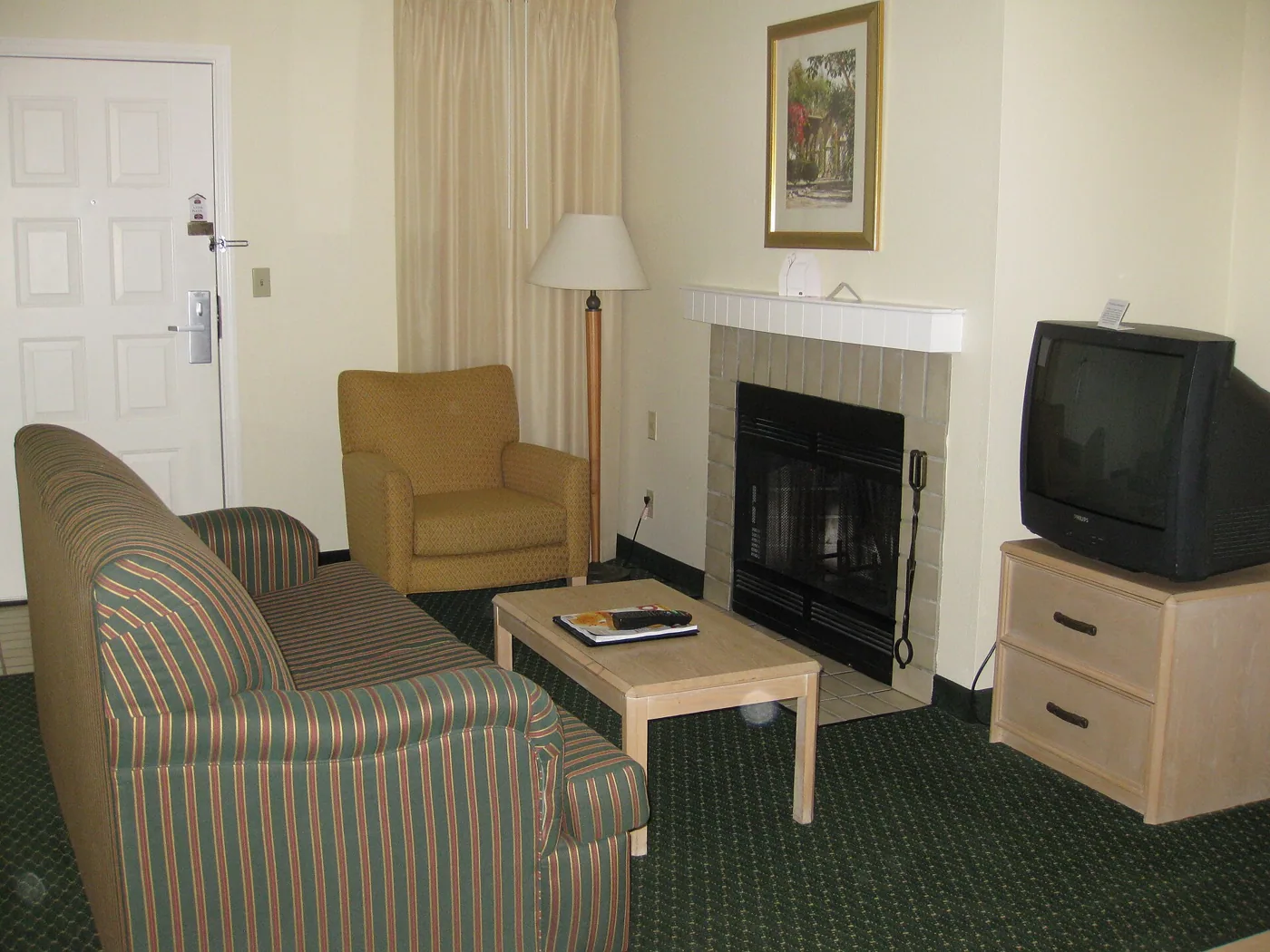
Two loveseats cost more per seat than one sofa, and they take more floor area, but they make sense in three conditions. The first is a long room where one sofa would look lost against a wall. Two pieces placed at right angles or across from each other create an arrangement in proportion with the room. The second is a room with a fireplace or a window as the focal point, where seating on both sides frames the feature, a layout we cover in our furniture arrangement guide.
The third is a hosting-heavy household. Four people on two loveseats can face each other, while four on one sofa all look at the same wall. If you have a delivery route with tight turns, two loveseats can be carried where a single 84 inch sofa cannot. The price is two sets of cushions to maintain and two frames to check, so apply the checks in our guide to frame materials to each one.
Loveseat plus chairs
A loveseat with one or two accent chairs is the most flexible small-room arrangement. The loveseat seats two, a chair adds a seat of a different character, and the chairs can be moved to the corner when you need floor space. In rooms of 10 to 12 feet, this combination seats three to four people at flexible angles, while keeping each piece under 40 inches wide.
The key is to match the heights and the arm styles, so the pieces read as a set. A chair with a seat height two inches higher than the loveseat looks accidental, and a chair with a different leg style looks like a leftover. Our guide to choosing an accent chair covers seat height, arm height and scale. If the room is the main family space, add a footstool or ottoman, which seats a child and serves as a table in a pinch.
Arms, backs and the details that change the count
Two loveseats of the same length can seat different numbers of people. A rolled arm of 9 inches takes 18 inches of the overall length, and a track arm of 3 inches takes only 6. A high back with a pronounced wing makes the corner seats feel enclosed and the middle position uncomfortable, while a low straight back leaves the sitters free to lean in any direction. For two people the arm style matters less, but for three on a small sofa it is the difference between friendly and awkward.
Check the seat height as well, which is typically 17 to 19 inches from the floor to the top of the cushion. A loveseat that sits low, at 15 inches, is hard to stand up from for anyone with stiff knees, while one that sits at 20 inches leaves shorter people with their feet dangling. This matters more on a loveseat that carries a daily load than on a sofa that is used for occasional seating, and a reader of ours who is buying for an older relative should favor the 18 to 19 inch range.
Delivery, stairs and moving house
A loveseat is easier to move than a sofa because it is shorter, lighter and passes through narrower openings. A 60 inch loveseat that is 33 inches deep and 34 inches high fits through a standard 30 inch doorway on its end, and it makes most stair turns without a fight. A pair of loveseats can be carried by two people up a narrow stair where a three-seat sofa would need a crew or a hoist.
This is a real reason to prefer two smaller pieces in a walk-up flat or an older building with a narrow stairwell. The method in our guide to fitting a sofa through the door applies equally to a loveseat, but it usually leaves more margin. For households that move every two or three years, two loveseats can also be split between rooms in the next home, while a single sofa is committed to one wall.
Visual balance and how the piece reads in the room
A loveseat has a different visual presence from a sofa. A single loveseat against a long wall looks small and can leave the wall feeling empty, so it needs company: a console, a pair of lamps, a piece of art that is wider than the loveseat. A sofa fills the wall and needs little help. In a room with a high ceiling or large windows, a loveseat can look undersized unless it has a taller back or sits between two other pieces.
The usual fix is to use the loveseat as one element in a group. Place it with a chair at a 90 degree angle, with a small table between them, or flank it with two matching tables. The group then reads as a seating area, and the loveseat becomes part of a composition. If you want a visually quiet room, a single sofa is easier to style, and if you want a flexible, layered look, the loveseat and chairs give you more to work with.
Cost, quality and where loveseats cut corners
A loveseat costs less than a sofa of the same quality, because it uses less frame and fabric, but the saving is not proportional to the length. A 58 inch loveseat does not cost two-thirds of an 84 inch sofa, because the arms, the legs and the labor are fixed costs. As a result, a loveseat is often a better value than it looks, and a poor loveseat is a worse value than it looks.
Watch for loveseats that borrow a sofa's cheaper cushion fill, where a small frame gets hard use as the only seat in a room. A loveseat in daily use carries more load per cushion than one seat of a long sofa, so check the foam density, as we discuss in the guide to cushion fill types, and the front rail, which has a shorter span and so is often sturdier on a loveseat.
Frequently asked questions
What is the difference between a loveseat and a sofa?
The difference is length and seating capacity. A loveseat runs roughly 52 to 65 inches and seats two, while a sofa runs 72 inches or more and seats three. There is no standard, so compare the seat width in inches.
Can a loveseat be the only seating in a living room?
For one or two people, yes. For a household of three or more, or one that hosts, it falls short, and you should add chairs or move to a sofa. A loveseat with two chairs seats four or five.
Is a loveseat comfortable for two adults?
A loveseat of 60 inches or more with slim arms is comfortable for two. Anything under 56 inches is tight for two adults, and rolled arms reduce the seat width further. Check the seat width and not the overall length.
Which is better for a small apartment?
A loveseat suits a wall under 8 feet, and an apartment-size sofa of 66 to 74 inches suits a wall of 8 to 10. If you must seat three regularly, take the apartment sofa. Our small living room guide covers the sizes in detail.
What if my room is awkward, with a window in the middle of the wall?
A loveseat on each side of a centered window is a good solution, but a single loveseat centered under the window works too. Measure the sill height, because a back that is higher than the sill blocks the view and the window handles.
Bottom line
Count the people who sit there daily, not the people you might host once a year, and measure the wall. Under about 8 feet, take a loveseat and add a chair. Between 8 and 11 feet, an apartment-size sofa of 72 to 80 inches is the best balance. Over 12 feet, a standard sofa, or two loveseats facing each other for a conversation room.
Check the seat width, not the label, and use tape on the floor to see how the piece sits in the room. For more on matching a seat count to a space, see our measuring guide and how we evaluate the pieces we recommend.