Two sofas can both be listed as 84 inches wide and 38 inches deep, and one can feel like a dining chair while the other feels like a bed. The difference is seat depth, a number most listings bury in a specifications table or skip entirely. It decides whether your lower back touches the backrest, whether your feet reach the floor, and whether the sofa is comfortable for a ten-minute chat or a three-hour film.
This guide explains what the common depths feel like in practice, who each suits, what the number does to the footprint of your room, and what you can do when you have already bought the wrong depth. The goal is a decision you can make from a listing, without having to sit on the sofa first.
What seat depth actually measures
Seat depth is measured on the horizontal plane, from the front edge of the seat cushion to the point where the seat meets the back cushion. It is not the overall depth of the sofa, which also includes the back cushion thickness, the frame behind it and the arm overhang. A sofa with a 22 inch seat can have an overall depth of 36 to 40 inches, depending on how thick the back is and how far the frame bulges.
The number you want is the one on the listing labeled seat depth, and if it is missing, you can estimate it: take the overall depth and subtract about 14 to 16 inches for a typical back cushion and frame. A figure within an inch is good enough to compare two sofas. Be wary of a listing that quotes only overall depth, because a 40 inch deep sofa can contain anything from a 22 inch to a 26 inch seat, and the two behave very differently.
Cushion compression also matters. A new foam cushion measures one thing flat on a table and another when you sit on it, because the front edge rolls forward and the seat compresses by an inch or more. Treat the stated depth as the unloaded dimension, and expect the effective, supported depth to be slightly shorter on a soft cushion.
21 inches: the upright seat
A 21 inch seat is the shallow end of mainstream sofas. It puts your back against the backrest while your thighs stay supported to just behind the knee, which is the posture of a dining chair with a softer cushion. People who are 5 feet 6 inches or shorter often find it the most natural, because their feet reach the floor and the front edge of the cushion does not press into the back of the calf.
The tradeoff is that it is a poor depth for sprawling. You cannot tuck a leg beneath you without twisting, and two adults cannot sit facing each other with feet up. The shallow seat does have real advantages in a small room, since it can cut 3 to 5 inches from the overall depth compared with a lounge model, and it suits formal or traditional layouts where people sit and talk. It is also the better choice for anyone with hip or back stiffness who struggles to stand up from a deep, soft seat.
23 inches: the all-round middle
Most sofas sold as standard sit between 22 and 24 inches. This is the depth that works for the widest range of heights and habits, and it is the one to choose when more than one person will use the sofa and nobody has strong preferences. A person of 5 feet 8 inches to 6 feet sits with a supported back and can still cross their legs, and a shorter person can use a small pillow behind the back to close the gap.
The middle depth is also the safest compromise for a room of 11 to 13 feet. It leaves the sofa overall depth around 36 to 38 inches, which keeps a walkway of 30 inches or more behind a typical coffee table. If you are unsure and cannot try the sofa, this is the default. When you plan the room, run it against the numbers in our guide to measuring a living room for a sofa.
26 inches and deeper: the lounge seat
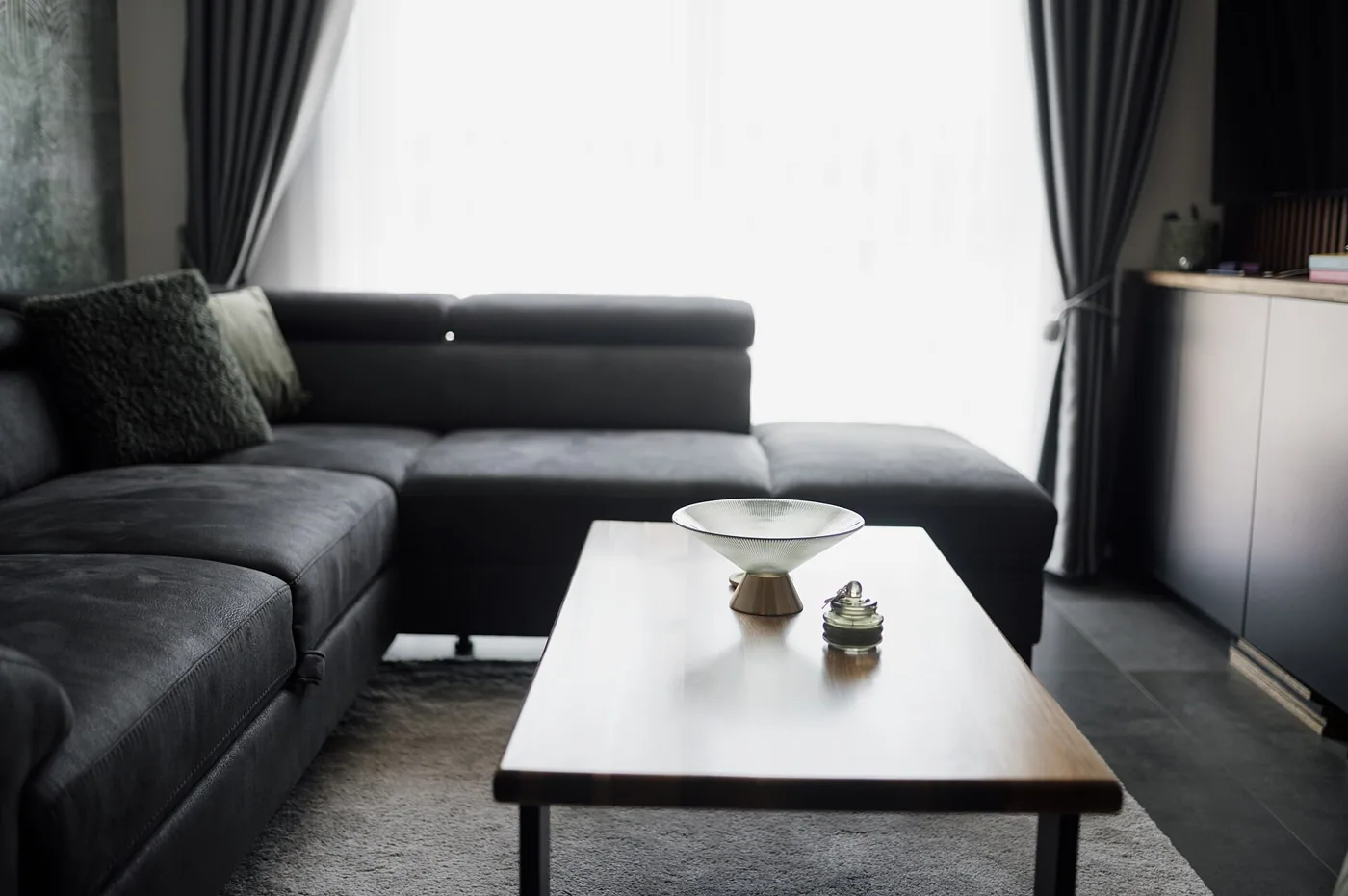
Seats of 25 to 28 inches are common on sectionals and on sofas marketed as cloud or lounge designs. They suit people over about 5 feet 11 inches, because the seat reaches closer to the back of the knee, and anyone who wants to sit cross-legged, curl up with a book or sprawl in a corner. Deep seats are also why two people can share a chaise comfortably.
The costs are real. A person of average height cannot reach the backrest without sliding forward, so they either sit upright on the edge, unsupported, or slump backward with their knees pointing upward and their feet not touching the floor. The lumbar region receives no support in either position. The partial fix is a firm pillow of about 16 to 20 inches square placed behind the lower back, which effectively shortens the seat by 4 to 6 inches. That works for casual use but is not as stable as a properly proportioned seat.
Deep seats also take a bigger share of the room. A 28 inch seat pushes the overall depth to around 42 to 46 inches, and in a room under 12 feet deep that eats the coffee table gap. This is the cost that most buyers forget until the sofa is in place.
| Seat depth | Suits | Typical overall depth | Watch for |
|---|---|---|---|
| 20 to 22 inches | Under 5 feet 6 inches, formal rooms, stiff hips | 33 to 37 inches | Cannot tuck legs or sprawl |
| 22 to 24 inches | 5 feet 6 inches to 6 feet, mixed households | 35 to 39 inches | Little; the safe default |
| 25 to 28 inches | Over 5 feet 11 inches, lounging, naps | 40 to 46 inches | Back unsupported for shorter people |
Matching depth to your legs
The best single predictor of comfort is the distance from the back of your pelvis to the back of your knee, which is close to your thigh length. For most adults that runs 17 to 22 inches. A seat is comfortable for upright sitting when its depth leaves 2 to 3 inches between the front edge and the back of the knee. A seat that is longer than your thigh pushes you forward off the backrest, and one that is shorter leaves your thighs unsupported.
You can measure this at home. Sit on a dining chair with your back against the backrest and measure from the backrest to the back of your knee, then add 2 to 3 inches. That number is your ideal seat depth for upright sitting. For lounging, add 2 to 3 inches more, since you will tilt back and your legs will rise. If the household has a wide range of heights, choose the middle depth and add a pillow for the shortest person, or choose a firm back cushion that can be pulled forward.
Why a deep seat ruins a small room
Every inch of seat depth is an inch of room depth, and the extras compound. A 26 inch seat increases the overall depth by about 4 inches over a 22 inch one. In a 10 foot room, that 4 inches comes straight from the walkway, taking it from 34 inches to 30, and it makes the coffee table sit closer than the 14 to 18 inches you want in front of the sofa. Over weeks, the effect is a room that feels cramped without anyone being able to say why.
Small rooms have three ways to get comfort without the footprint. A sofa with a shallow seat and a reclined back angle gives the same lean without extra depth. A sofa with a deep seat and a slim arm cuts footprint in the width instead. Or a loveseat with a 22 inch seat can be paired with a lounge chair of deeper proportions so that the person who wants to sprawl has a place. See our roundup of sectional sofas for small living rooms for compact frames.
Back angle, cushions and the lumbar fix
Seat depth never works alone. Back angle, measured as the lean of the backrest from vertical, controls how far you recline. A back angle of 100 to 105 degrees is upright, and 110 degrees or more is a lounge posture. A deep seat with an upright back forces you to sit forward, while a deep seat with a reclined back lets you lean into it, which is why lounge sofas pair the two.
Back cushions come in three common types: attached, loose and pillow-back. Attached backs hold their position and suit shallow seats. Loose back cushions can be moved forward to shorten a deep seat, which is the reason they are the most flexible choice if you are unsure of your depth. Pillow backs are soft and need frequent adjusting. The fill you choose changes how long they hold shape, and we explain that in our guide to cushion fill types.
Reading a listing for depth when it hides the number
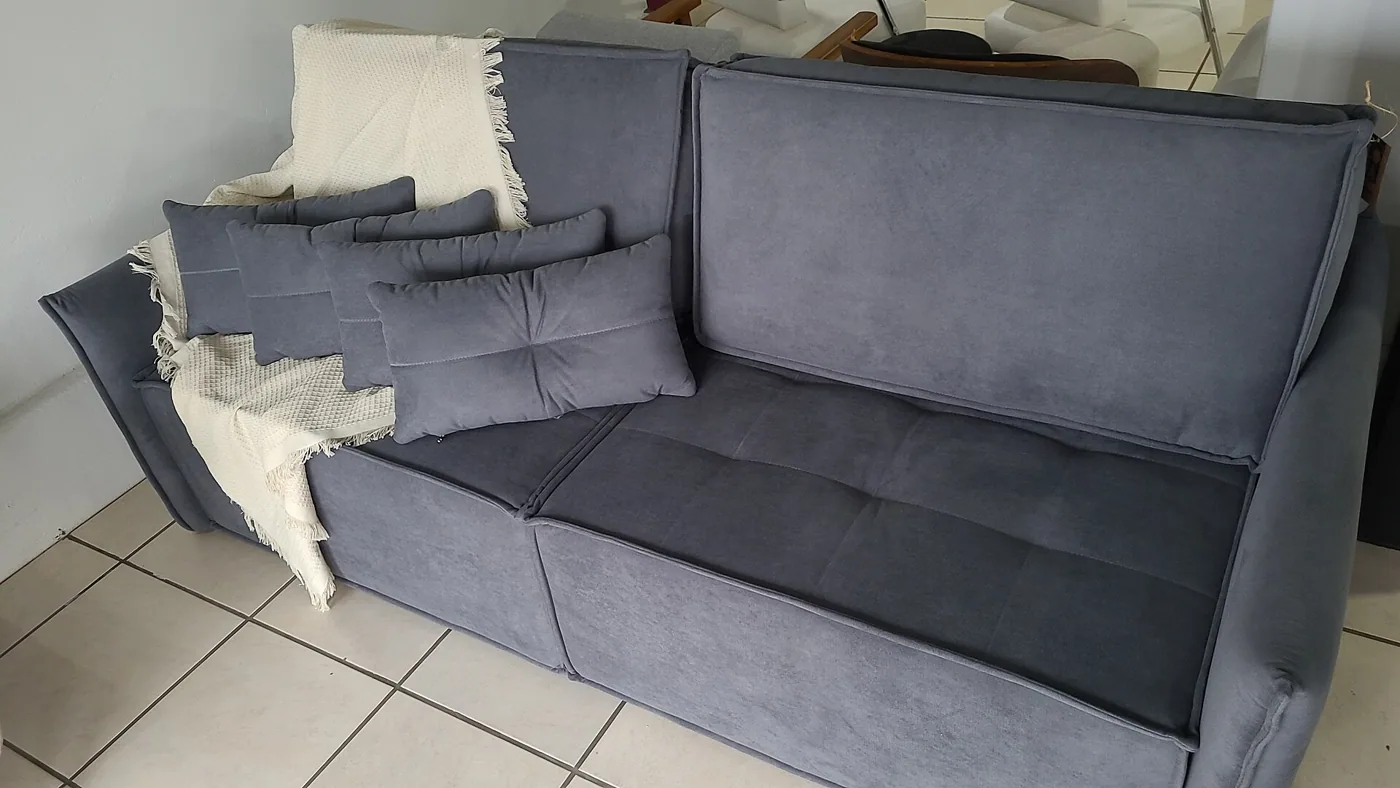
Many listings quote overall depth and omit the seat figure, and a few quote a number that includes the arms flaring outward. Photos help more than people expect. Look for a side-on photo with a person sitting in it: if the sitter's knees land well short of the front edge, the seat is deep, and if their calves press against the cushion front, it is shallow. A photo of a person with their feet flat and a clear gap behind the knee shows a depth in the right range for that person.
Customer photos and questions are worth reading for the same reason. Owners often comment that a sofa is deep for someone of average height, or that they needed a pillow, and that kind of remark is a reliable depth signal even without a number. Treat repeated remarks of this kind as more informative than a single glowing comment, and remember that an owner who is 6 feet 2 inches will judge a deep seat very differently from one who is 5 feet 3 inches.
Finally, check the cushion construction in the listing. A thick, high-resilience foam core holds its front edge up and keeps the usable depth close to the stated one, while a thin or soft core slumps and shortens the seat while making the front edge feel lower. A seat that is 24 inches on paper can feel like 22 once the front edge rolls, which is another reason to treat stated numbers as a starting point.
What to do if you already bought the wrong depth
If the seat is too deep, the quickest fix is a firm lumbar pillow, 16 to 20 inches square, set against the back cushion. A rolled towel or a purpose-made wedge works for a trial before you buy a pillow. If the seat is too shallow, there is no fix with accessories, but a throw ottoman or footstool placed in front extends the sitting surface for lounging.
Check the return policy before ordering. A sofa of the wrong seat depth is one of the most common reasons for a return, and some sellers charge a restocking fee that makes it expensive. If you can, visit a store and sit on a floor model with a similar listed depth, and sit for at least five minutes with your back against the cushion, not perched on the edge.
Frequently asked questions
What is a standard sofa seat depth?
Most mainstream sofas fall between 21 and 24 inches, with 22 to 23 inches the most common. Lounge and sectional models run 25 to 28 inches. If a listing does not state the seat depth, estimate it by subtracting about 14 to 16 inches from the overall depth.
Is a deeper seat more comfortable?
Only for people whose legs are long enough to use it. A deeper seat is better for sprawling, napping and sitting cross-legged, but it is worse for upright sitting unless you are tall. For a shorter person, a deep seat usually means sitting forward with no back support.
How does seat depth affect the price?
Not directly. Seat depth affects the amount of frame and cushion material, but a deep sofa is not necessarily a premium one. What drives cost in the category is frame construction and cushion quality, so compare those before the depth number.
What if two people in my household need different depths?
Choose the middle depth of 23 to 24 inches with loose back cushions. The shorter person can pull the cushions forward or add a pillow, while the taller person can push them back. A sectional with a chaise gives one person a deep seat and the other a standard one.
Does seat depth matter for a loveseat?
Yes, and more so than on a long sofa, because a loveseat is often used for single-person lounging. A deep seat on a loveseat gives you somewhere to curl up, but at the cost of a footprint that can overpower a small room.
Bottom line
Measure your thigh length on a dining chair, add 2 to 3 inches, and use that as your target seat depth. If you are between 5 feet 6 inches and 6 feet, aim for 22 to 24 inches. If you are shorter or want an upright seat, take 21 to 22 inches. If you are taller or want to lounge, 25 to 27 inches works, as long as your room is at least 12 feet deep.
Always check the depth against the room before the sofa, and let the room decide any tie. A deep seat in a cramped room is the most common sizing mistake in the category, and a lumbar pillow only partly fixes it. Read how we evaluate the pieces we recommend if you want to know how seat depth fits into our scoring.