Accent chairs are bought for their looks and used for their comfort, and the gap between the two is where most disappointments live. A chair that looked striking in a photograph sits two inches lower than the sofa beside it, has arms that collide with the side table, and is too deep for anyone under 5 feet 8 inches. It becomes the chair that nobody sits in and everyone uses to hold a coat.
The chair does not need to match the sofa, but it needs to cooperate with it. This guide covers the numbers that make a chair work in a living room: seat height, arm height and scale, then the jobs a chair can do, from reading to occasional seating to swiveling to face two directions, and the details of fabric, legs and weight that decide how it behaves over years.
Seat height: the number that matches the sofa
Seat height is measured from the floor to the top of the seat cushion, and it governs two things: how easy it is to stand up, and whether the chair looks right next to the sofa. Most sofas have a seat height of 17 to 19 inches, and an accent chair should land within 1 to 2 inches of that. A chair that is 3 or more inches lower looks like a mistake and is hard to climb out of, while one that sits 3 inches higher looks perched and leaves legs dangling.
Measure your sofa's seat height with the cushion compressed, because a soft sofa sinks. Then compare it with the chair's listed seat height, and allow for the cushion: a loose seat cushion may drop an inch or more under weight. For older adults and anyone with stiff knees, a seat height of 18 to 20 inches with firm cushioning and sturdy arms makes standing easier, a point we return to in the section on reading chairs.
Arm height and side tables
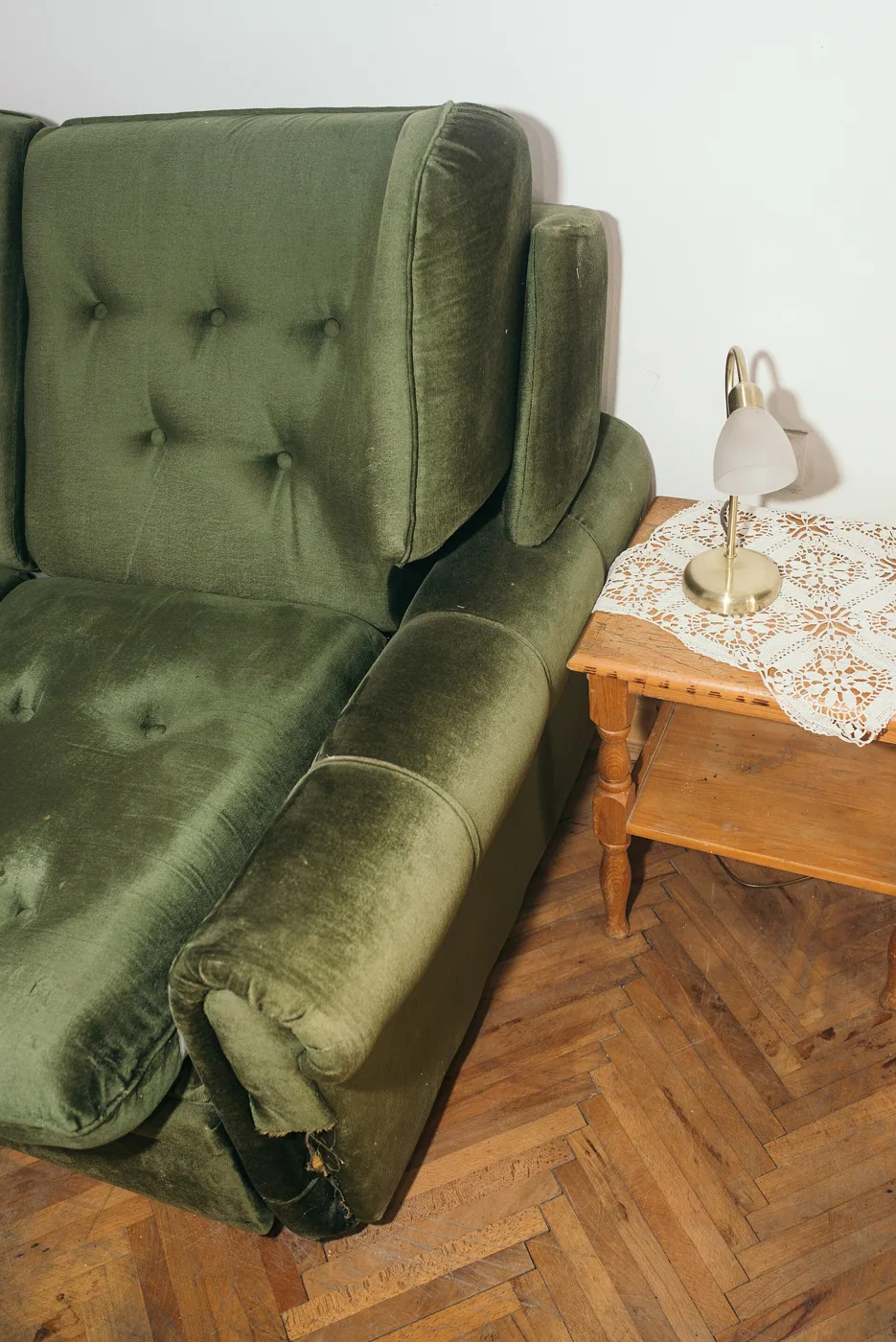
Arm height, from the floor to the top of the arm, affects both comfort and the choice of side table. A typical arm height is 24 to 27 inches. The side table beside the chair should be about 1 to 2 inches lower than the arm, so you can set a cup down without lifting your elbow, and so the table does not look as if it is hiding behind the chair.
If the chair is next to the sofa, the arms of the two pieces create a visual line. When one arm is 6 inches higher than the other, the line looks broken, and the side table that serves both ends up wrong for one of them. A chair with no arms, or a low arm, offers more flexibility, and it suits a space where the chair sits close to a table or a desk. A chair with high, wide arms suits a person who wants to rest their elbows, and it needs more width, which matters in a small room.
Scale: width, depth and how much room it takes
Accent chairs range from 24 to 40 inches wide and from 26 to 38 inches deep. The right size depends on the room and the sofa. In a room under 12 feet wide, a chair of 28 to 32 inches wide fits beside a sofa without crowding it. In a larger room, a chair of 34 to 38 inches wide carries more visual weight and balances a sectional or a long sofa.
The chair needs a pair of clearances. Leave 30 inches for the path next to it if it sits on a walking route, and 14 to 18 inches between its front edge and a coffee table. A swivel or a glider needs a circle of clear floor a few inches wider than the chair. Overall, think of the chair as a piece that fills one side of the seating group, and keep its visual weight lower than the sofa's. We cover the geometry of groups in our guide to arranging furniture.
The reading chair
A reading chair is a different object from an occasional chair. You sit in it for an hour or more, so it needs a supportive back, a seat depth that fits your legs and a slight recline of 100 to 105 degrees. The back should reach at least to the shoulders, and a wing or a high back supports the head. Arms of a medium height give a place to rest a book or a tablet.
Lighting matters as much as the chair. A reading chair needs a light source from behind or beside the shoulder, about 40 to 50 inches above the floor, which usually means a floor lamp with an adjustable head or a table lamp beside it. Our floor lamp height guide explains how to place the lamp so the beam falls on the page and not in your eyes. Add a small footstool or an ottoman if you like to put your feet up, and make sure the room has space for it.
The occasional chair
An occasional chair is the one that guests use, or that you use for a few minutes at a time. It can be lighter, narrower and more stylish than a reading chair, with a firmer seat and an upright back. Because it is moved around, weight matters: a chair of 15 to 25 pounds is easy to shift, while one of 50 pounds will stay where it is placed.
For this role, look at sturdy legs and a durable cover rather than deep cushioning. A chair that is occasionally used is also often sat on at the edge, with a person's weight on the front rail, so check the frame, as we explain in our guide to frame materials. A pair of occasional chairs can sit on the opposite side of a coffee table, and a single chair can serve as a corner accent with a plant or a lamp.
Swivel chairs
A swivel chair turns on a base so the sitter can face the television, the sofa or the window. It suits a room where the focal point changes, such as an open plan or a room with a fireplace and a television. The swivel base needs a flat floor and a solid plate, and it adds a few inches to the seat height, so check the listing.
The weaknesses are noise, wobble and floor wear. A cheap swivel mechanism squeaks and develops play, and a metal base can scratch hardwood. Look for a base with a steel plate and sealed bearings, and a rubber or felt ring around the foot. If the chair is a barrel or tub design, check that the arms do not hit the side table when it turns. A swivel is a good choice for anyone who wants to talk to people in two directions, and a poor choice if the chair sits in a tight corner.
| Job | Seat height | Back | Typical width | Watch for |
|---|---|---|---|---|
| Reading chair | 18 to 19 inches | High, supportive | 30 to 36 inches | Needs a lamp and footstool |
| Occasional chair | 17 to 19 inches | Medium, upright | 26 to 32 inches | Frame on the front rail |
| Swivel chair | 18 to 20 inches | Barrel or low | 28 to 34 inches | Base wobble, floor marks |
| Corner accent | 17 to 18 inches | Low, decorative | 24 to 30 inches | Comfort, if used daily |
Style, fabric and how much to match
An accent chair works best when it shares one quality with the sofa and differs in another. It can match the sofa's leg style and differ in color, or match the color and differ in texture. A pair of unrelated pieces, in a different material, color, shape and period, looks like a collection and can read as chaotic. One shared feature, such as the same wood tone in the legs or the same metal finish, ties the group together.
The fabric of an accent chair can be bolder than the sofa's, since it covers a smaller area. A patterned or textured fabric suits a chair that gets lighter use, but check the cleaning code and the abrasion rating, which our guide to sofa fabrics explains. If the chair will be a reading chair, choose a soft, breathable fabric, and if it is near a window, a fade-resistant one. Leather is a good choice for a chair that will get daily use.
Legs, weight and the visual lift
Legs set the chair's presence. Exposed, tapered legs of 6 to 8 inches lift the chair and let floor show beneath, which suits a small room. A skirted or plinth base has more mass and suits a larger room or a traditional style. Metal legs read as modern and light, and wooden legs as warm and classic.
Weight is a practical issue. A heavy chair, with a hardwood frame, stays put and lasts longer, but it is hard to move and can scratch the floor when dragged. A light chair is easy to rearrange but may tip if you lean back. Look for a weight capacity of 250 pounds or more, even if you are lighter, because the rating is a proxy for the strength of the frame and the joints.
Where the chair goes and how it faces
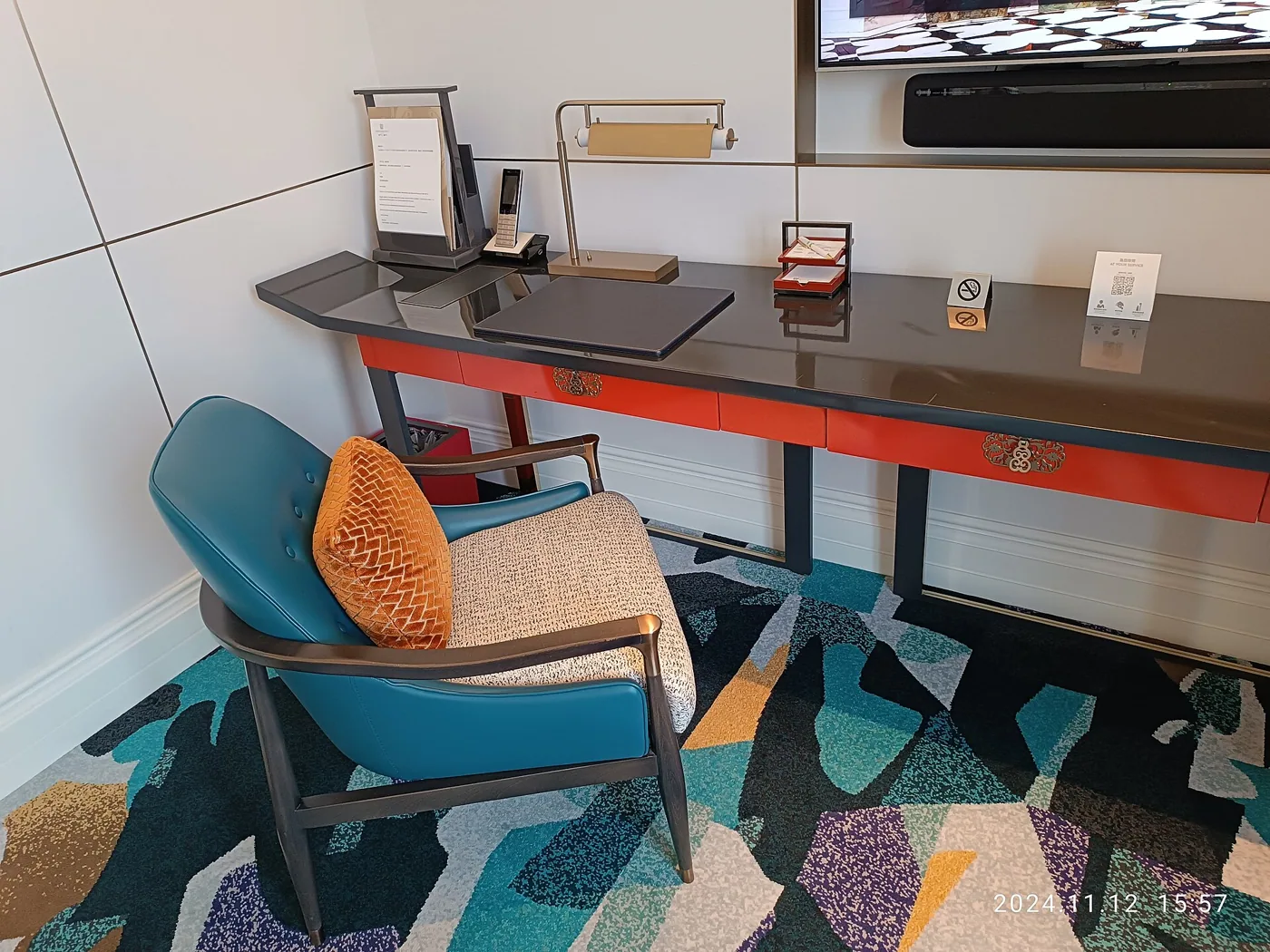
An accent chair that faces the sofa straight on can feel confrontational, and one that sits parallel to it can feel like an extension of the sofa. Angle it between 15 and 45 degrees toward the center of the seating group, so the sitter can see the television and the person on the sofa without turning the neck. In an L-shaped arrangement, the chair sits at the open end, with a side table between it and the sofa arm.
Corners are the traditional home for an accent chair, but a chair pushed hard into a corner is rarely used. Pull it out a foot or so and angle it, then anchor it with a rug that extends under its front legs. A chair that floats near a window can serve as a reading spot, provided the light falls over the shoulder, and a chair by the door can hold a bag and a coat, so make sure it is the kind of chair that tolerates that.
Testing comfort before you commit
If you cannot sit in the chair, rely on the numbers and on a comparison with a chair you know. Measure the seat depth of a chair you like and compare it with the listing. Measure the back height and the distance between the arms. A seat depth between 19 and 22 inches suits most adults for an upright chair, and 22 to 25 suits a lounging posture, which echoes the advice in our seat depth guide.
Look at the cushion and the frame. A thin seat of 3 inches over a webbing deck will feel hard and then sag, while a seat of 5 to 6 inches over a spring base lasts longer. Check whether the cushion is removable and whether it has a zipper, because a fixed cushion limits care. Finally, check the return policy: chairs are among the pieces most often returned for comfort, and a trial period is worth more than a discount.
Frequently asked questions
Should an accent chair match the sofa?
No, but it should relate. Match the seat height within 2 inches and share one feature, such as leg finish or color family. A chair in a totally different style from the sofa and the rest of the room looks like an afterthought.
How much space does an accent chair need?
Plan for the chair's footprint plus 30 inches of clear path beside it if it sits on a route. A swivel or glider also needs a clear circle around it. A chair of 30 inches wide fits a corner of about 4 by 4 feet comfortably.
What size accent chair suits a small living room?
One of 26 to 32 inches wide with a seat height of 17 to 19 inches and a depth under 32 inches. A compact frame with exposed legs keeps the room open. Avoid wide, high-backed designs in a room under 11 feet.
What if my situation is different, such as an elderly relative visiting?
Choose a seat height of 19 to 20 inches, sturdy arms that extend to the front of the seat and a firm cushion. A chair that is easy to stand up from matters more than a stylish silhouette. If standing is a real difficulty, our recliner buying guide covers lift chairs.
Is a pair of accent chairs better than one?
A pair gives symmetry and seats two more people, and it suits a formal room. A single chair feels more casual and takes less space. In a long room, a pair on one side of the coffee table balances a long sofa.
Bottom line
Decide the job first. For a reading chair, take a supportive back, a seat height of 18 to 19 inches and a lamp. For an occasional chair, take a lighter frame and a firm seat. For a swivel, check the base and the clearance. In every case, match the seat height to the sofa within 2 inches and match the arm height to the side table.
Measure the space, tape the footprint on the floor, and sit in the chair if you can. The best accent chair is the one that gets used, and that means it is comfortable, the right height and in the right place. For how we weigh comfort and construction in our picks, see how we evaluate our products.