Amazon affiliate links - we earn a commission.Affiliate disclosure
Guide·12 min read

Recliner Buying Guide: Fit, Clearance and Mechanisms

How to choose a recliner by wall clearance, power versus manual, rocker or glider motion and body fit, with lift chairs and outlet placement explained.

By Elena Hart · Updated 2026-11-20

Quick answer

Choose a recliner in this order: first measure the clearance it needs, since a standard recliner wants 12 to 18 inches behind it and a wall-hugger needs 4 to 6. Then pick the mechanism: manual is simple and cheap, power is smooth and adjustable but needs an outlet. Check seat height and depth against your own legs, and choose a rocker or glider only if you want motion. If standing up is hard, look at a lift chair, which tilts the whole seat forward.

A recliner is the only piece of living room furniture that changes shape when you use it. That is its appeal and its main source of buyer's remorse. A chair that fits the room closed can hit the wall when open, a mechanism that felt smooth in a showroom can stick after a year, and a seat that suits one person is too deep for another. Most regrets come from checking the closed footprint and ignoring everything that happens when the footrest rises.

This guide works through a recliner decision in the order that avoids those regrets: space first, then mechanism, then body fit, then the special cases of rockers, gliders and lift chairs, and finally the practical details, such as outlets, cords and delivery. Dimensions are typical ranges, so check the listing for the specific model.

Start with the clearance it needs

A traditional recliner moves backward as it reclines, because the seat and back tilt together and swing on a rear pivot. It needs 12 to 18 inches of free space behind it, and sometimes more for a large frame. A chair placed against a wall without that gap will hit the wall before it reaches full recline, or force the back to stay upright.

The alternative is a wall-hugger, also called a wall-saver or zero-clearance recliner. Its mechanism slides the seat forward as the back tilts, so the back moves a short distance rather than swinging, and it needs only 4 to 6 inches from the wall. Wall-huggers suit small rooms and layouts where the chair sits against a wall, at the cost of a slightly less natural recline and a deeper footprint. Measure the space behind the chair, and add the distance in front for the footrest, which commonly extends 20 to 28 inches beyond the closed position.

Check the clearance in front, too. With the footrest extended, a recliner may occupy 65 to 80 inches front to back. If a coffee table sits within that distance, the footrest will hit it. For the rest of the room, follow the path widths in our guide to arranging furniture, and leave at least 30 inches to walk past the extended chair.
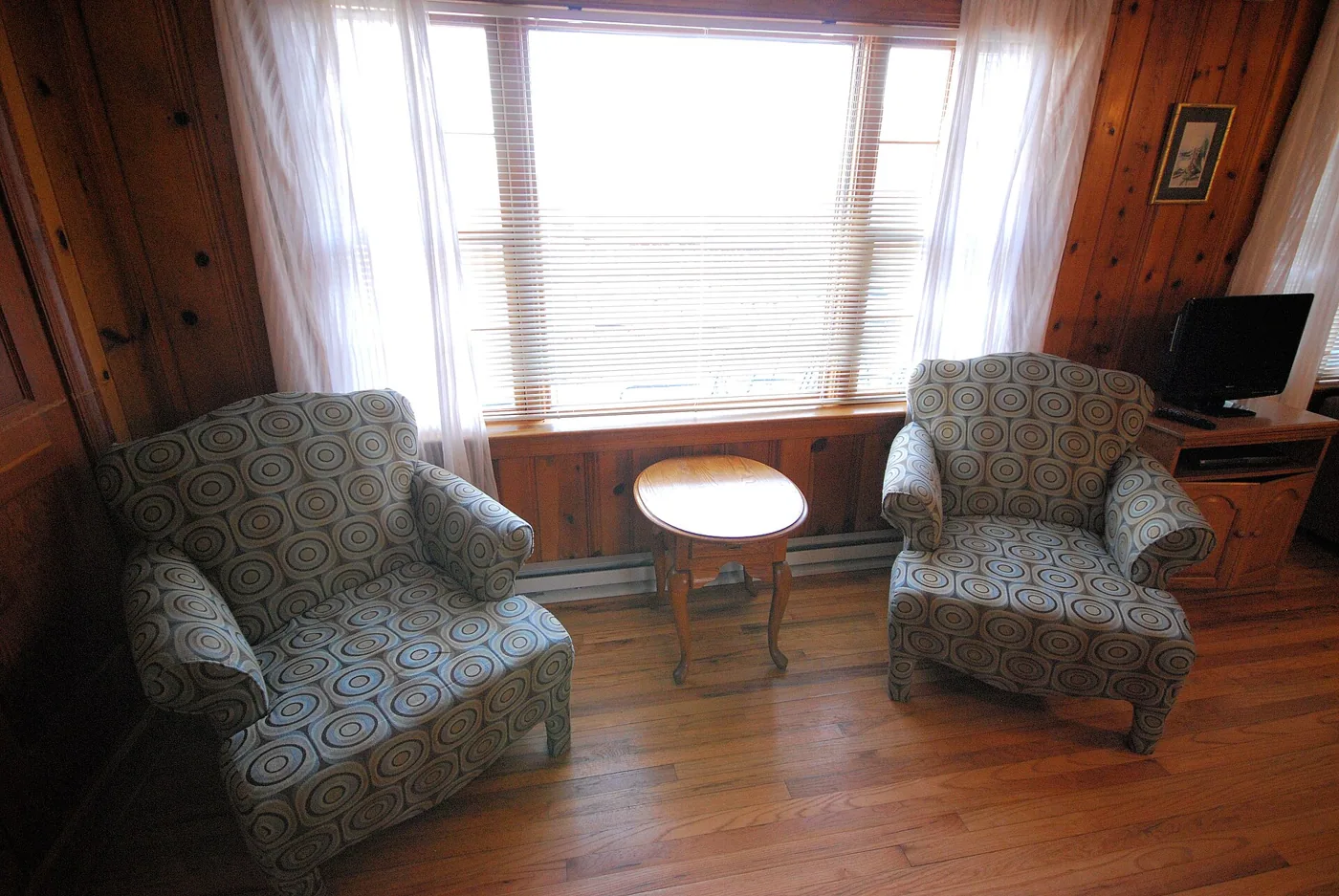
Two patterned armchairs by a window in a living room
A recliner sits in the seating group like any chair, but it needs space behind and in front when it opens.

Manual versus power

A manual recliner uses a lever or a push-back motion. Pull a handle or press back with your body, and the footrest rises while the back tilts. It has few parts to fail, needs no electricity and costs less. The downside is limited positions, usually closed, a middle position and fully reclined, and the effort needed for people with weak arms or a bad back.

A power recliner uses an electric motor controlled by a button or a switch. It offers infinite positions in many models, a smooth motion and often a separate control for the headrest and the lumbar support. The tradeoffs are cost, weight and dependence on an outlet. If the chair needs to sit in the middle of the room, an outlet near it is a prerequisite, and a cord across a walkway is a hazard. Battery packs and USB-powered models exist, but they add a recurring cost and a charging routine.

A practical rule is to choose manual if you plan to move the chair often, if you want simplicity or if the budget is tight. Choose power if you recline several times a day, if you have limited strength or if you want a fine-tuned angle. Check that the motor has a warranty of several years, because replacing a motor can cost a large part of a chair's value.

Body fit: seat height, depth and width

A recliner is a chair you sit in for hours, so fit matters more than in a decorative chair. Seat height, measured from the floor to the top of the cushion, runs from 17 to 21 inches. A shorter person wants 17 to 18 inches so their feet touch the floor and a taller one wants 19 to 21 so they can stand easily. Seat depth runs from 20 to 24 inches, and the same logic applies as in our guide to sofa seat depth: it should leave 2 to 3 inches between the front edge and the back of the knee.

Seat width inside the arms runs from 20 to 24 inches for a standard recliner and up to 28 inches or more for an oversized model. If you plan to share the chair with a child or a pet, or you prefer to sit sideways, a wider seat helps. Weight capacity is a real number to check: standard recliners are rated for roughly 250 to 350 pounds, and big-and-tall models go higher. A mechanism that is rated lower than your weight wears out early.

Pay attention to the headrest. A fixed, low back leaves taller sitters with no neck support when reclined, while an adjustable or tall back gives a supported position. A lumbar curve that fits the lower back is more important than a thick pad. If you read, work on a laptop or watch television in the chair, the upright position matters as much as the reclined one.

Rockers, gliders and swivels

A rocker recliner combines a reclining mechanism with a curved base, so the chair rocks forward and backward. A glider moves on a linkage that keeps the seat level as it slides, so there is no arc, and it is quieter and safer around small children. A swivel recliner rotates on a base, which helps in an open room where you face the television and a conversation in turn.

Each adds a footprint and a failure point. Rockers and gliders move about 6 to 10 inches in each direction, so they need clearance on every side. A swivel base needs a flat floor and a sturdy plate. If you want a nursery chair, a glider recliner with a lockable position is a good fit. If you have a small room, a fixed base is simpler and takes less space.

TypeSpace neededBest forWatch for
Standard recliner12 to 18 inches behindOpen rooms, large framesHits the wall if pushed back
Wall-hugger4 to 6 inches behindSmall rooms, chairs on a wallDeeper footprint, less natural recline
Rocker or gliderClearance on every sideNurseries, calm sittingFloor marks, a moving base
Swivel reclinerClear circle around chairOpen plan, multi-focus roomsBase wobble, weight limit
Lift chairSpace in front to standLimited mobilityNeeds outlet, heavy to move

Lift chairs

A lift chair is a power recliner with an additional motor that tilts the whole seat forward and upward, so the sitter is raised to a near-standing position. It is designed for people who find it hard to stand up from a low chair because of weak knees, hips or balance, and it is a mobility aid as much as a piece of furniture.

If you or a family member is considering one, the details to check are the lift angle, the seat height at the highest position, the weight capacity and the stability of the base. The footrest and the back often move independently, and a three-position or infinite-position model gives more comfort. Because a lift chair affects safety, a person with a medical condition should ask a physician or a physical therapist which type is appropriate, and have the chair fitted to the person's body, not to a standard size.

Outlets, cords and where the chair can go

A power recliner needs an outlet within the length of its cord, usually 5 to 7 feet, and the cord has to reach without crossing a path. Placing the chair next to a wall outlet, or adjacent to a side table with a surge-protected strip, solves most problems. If the chair is in the middle of the room, a cord cover or a floor plate can protect the route, but it is better to choose another position.

Some power recliners work with a rechargeable battery that plugs into the chair, so the cord is not needed during use. The pack needs to be charged every few weeks, depending on how often you recline, and replacement packs cost something. Make sure the chair also has a manual release or a backup in case of a power cut, so the footrest does not stay stuck in the raised position.

Build quality and what wears out

The parts that wear out are the mechanism, the cushion and the cover. A steel mechanism with welded joints and a solid pivot lasts longer than one with stamped parts and rivets. Listings often state the mechanism's rated cycles, and a figure of 25,000 or more is a reasonable sign of durability. The frame should be hardwood or multi-ply plywood, as we describe in our guide to frame materials.

Leather and performance fabric suit a recliner because it takes more wear on the arms and headrest than a normal chair. Bonded leather peels on the headrest and arms first, so a top-grain or a quality performance fabric is a better choice. Look for replaceable parts, as some makers sell spare handles and cushions, which extend the life of the chair.

Trying a recliner, in a store or at home

If you can sit in a model, do it properly. Sit with your back against the backrest and feet flat, then recline fully and note where your head lands. The headrest should support the base of the skull, not push the chin to the chest. Raise the footrest and check that your legs are supported from the knee to the heel, since a footrest that is too short leaves the calves unsupported and a footrest that is too long pushes the knees up.

Stay for ten minutes, not two. Pressure points and a poor lumbar fit show up gradually. Operate the mechanism several times, and listen for creaks, rubbing or a grinding motor. Stand up from the fully reclined position and see how much effort it takes, because that is the daily test. When ordering online, read the return policy carefully, since recliners are heavy and return freight can be costly, and look for a trial period.
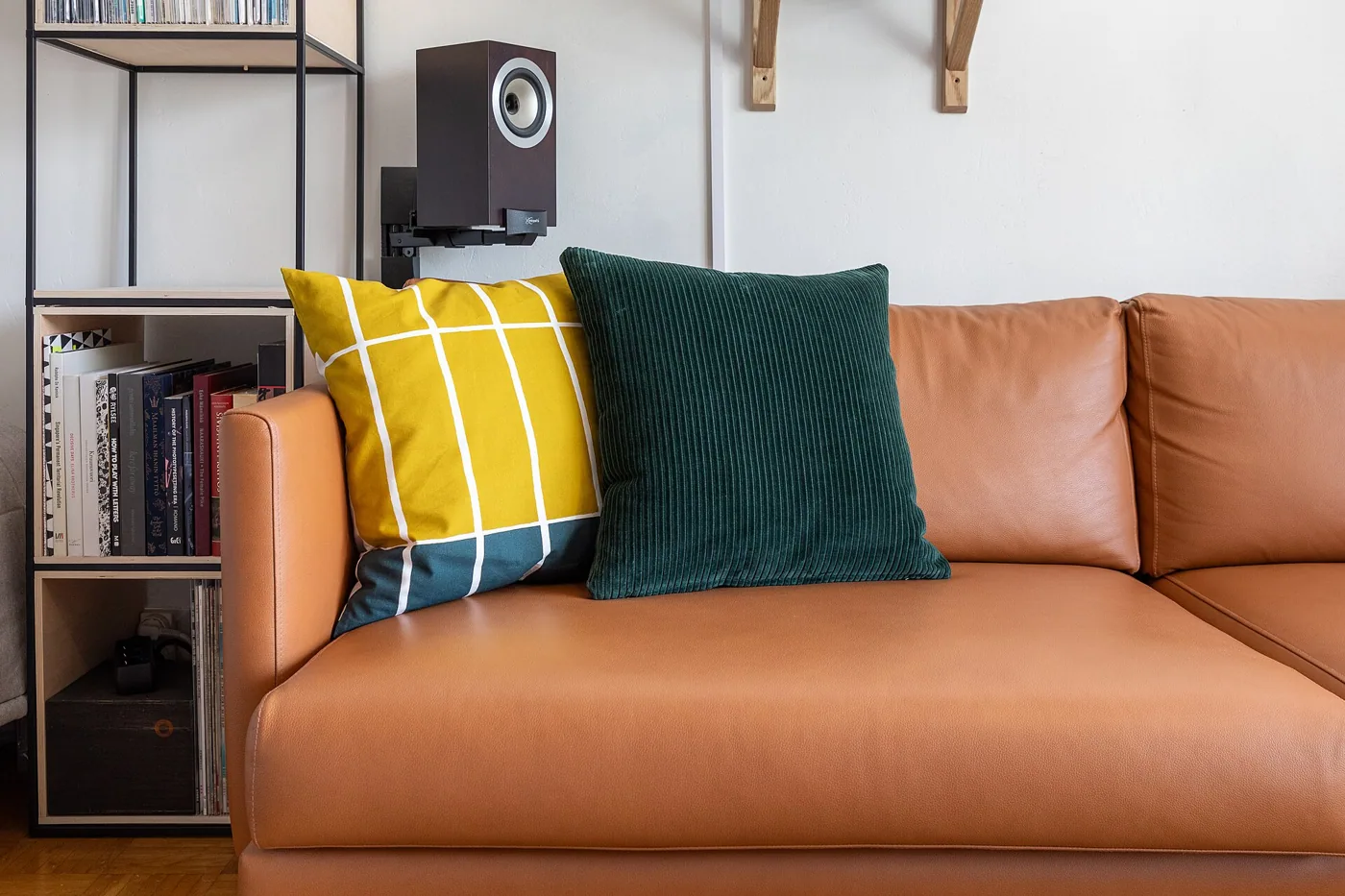
A tan leather sofa with cushions beside a shelf
Leather upholstery on a seat that moves needs a tough, flexible surface, because the arms and headrest take the wear.

Matching a recliner to the household

Think about who else will use the chair. A recliner shared by two people of different heights needs an adjustable headrest and a wide range of footrest positions, since a fixed setting that suits one will not suit the other. A household with small children or pets should avoid a mechanism with exposed pinch points between the footrest and the base, and favor a model with a covered linkage. Children can be hurt by a footrest closing, and a pet can be trapped under a rising one, so keep the area beneath clear.

Heat and noise matter in a bedroom or a shared room. A power recliner's motor hums briefly, and a heated or massage function adds a longer running noise and an extra load on the circuit. If the chair sits in a bedroom beside a bed, test how loudly the motor operates at night, and consider the position of the controller so it is easy to find in the dark. A chair that is used for sleeping needs a firm, flat recline position, because a deeply sunk seat strains the lower back.

One last household factor is floor type. A recliner with a rocking or gliding base can scuff hardwood and snag on rugs, so check for felt pads or a rubber foot and use a thin, low-pile mat beneath if the floor is soft.

Frequently asked questions

How much space does a recliner need?

A standard recliner needs 12 to 18 inches behind it and 20 to 28 inches in front for the footrest. A wall-hugger needs 4 to 6 inches behind. Measure the space with the chair open, not closed, and keep 30 inches clear to walk past.

Are power recliners reliable?

Many last for years, but they depend on the motor and the controls. Choose a model with a warranty of at least a few years on the motor and the electronics, and keep the cord and the control pad away from pets and liquids.

What size recliner should I buy for a small person?

Look for a seat height of 17 to 18 inches and a seat depth of 20 to 21 inches, and a petite or compact model if offered. A footstool or a pillow can also adjust the fit, but a chair that matches the body reduces the need for them.

What if my room has no outlet near the chair?

Choose a manual recliner or a battery-powered model. A cord running across the floor is a trip hazard, and an extension cord for a permanent installation is not a good idea.

Can a recliner go in a small room?

A wall-hugger of 30 to 33 inches wide can, provided you measure the footrest extension and keep a walking path. A recliner loveseat is much larger, so choose a single chair in a small room. See our accent chair guide for scale and room balance.

Bottom line

Measure the space behind and in front with the chair open, then choose a wall-hugger if the clearance is under 12 inches. Pick manual for simplicity and power for fine control, and check the seat height, depth and weight rating against your own body. Add a lift mechanism only if standing up is a real difficulty, and plan the outlet before you order.

The right recliner is the one you forget about because it fits: the mechanism moves freely, the footrest clears the table and the chair does not crowd the room. For more on how we weigh comfort and construction, see how we evaluate our picks.

Ready to buy?

Compare our top-rated picks side by side.

Image credits

  • accent-chair-desk-corner.webp: JohnLEE Brothers, CC0, source
  • accent-chair-green-velvet.webp: Shixart1985, CC BY 2.0, source
  • accent-chair-hero.webp: Shixart1985, CC BY 2.0, source
  • anchor-built-in-bookcases-room.webp: Carol M. Highsmith, Public domain, source
  • anchor-small-bookcase-hall.webp: Steven Pavlov, CC BY-SA 4.0, source
  • anchor-white-bookcase-wall.webp: Egilus, CC BY-SA 4.0, source
  • arrange-living-room-hero.webp: Kotivalo, CC BY-SA 4.0, source
  • arrange-living-room-seating-group.webp: Neoclassicism Enthusiast, CC0, source
  • arrange-living-room-sofa-wall.webp: Adele Berenstein, CC BY 2.0, source
  • artsofa-pictures-on-wall-room.webp: Tudor Washington Collins, CC BY 4.0, source
  • artsofa-sofa-corner-mural.webp: G�nter Seggeb�ing, Coesfeld, CC BY-SA 3.0, source
  • artsofa-sofa-mural-wall.webp: G�nter Seggeb�ing, Coesfeld, CC BY-SA 3.0, source
  • blackoutcurtain-floor-length-pair.webp: Ounfs Robmmy 238, CC0, source
  • blackoutcurtain-olive-heavy-fabric.webp: Easysayg, CC BY-SA 4.0, source
  • blackoutcurtain-white-sheer-hotel.webp: HuiDongXLW RMDa, CC0, source
  • ceilingfan-five-blade-light.webp: CommandProMC, CC BY-SA 4.0, source
  • ceilingfan-pull-chain-light.webp: Hans Olav Lien, CC BY-SA 3.0, source
  • clean-fabric-sofa-blanket.webp: Shixart1985, CC BY 2.0, source
  • clean-fabric-sofa-hero.webp: Lear 21, CC BY-SA 4.0, source
  • clean-fabric-sofa-slipcover.webp: Enric, CC BY-SA 4.0, source
  • clean-rug-fringe-pattern.webp: Sununa, CC BY-SA 4.0, source
  • clean-rug-runner-hall.webp: Sununa, CC BY-SA 4.0, source
  • coffeetable-round-yellow-sofa.webp: Vaibhavratnaparkhi, CC BY-SA 4.0, source
  • coffeetable-tan-sofa-dark-table.webp: Shixart1985, CC BY 2.0, source
  • coffeetable-two-wood-tables.webp: Sophia Baboolal, CC0, source
  • color-temp-bright-bulb.webp: Xzantiyamoloy, CC BY 4.0, source
  • color-temp-gu10-spot.webp: Dmitry G, CC BY-SA 3.0, source
  • color-temp-hero.webp: LoMit, CC BY-SA 4.0, source
  • color603010-paint-swatches-wall.webp: Chris Rycroft, CC BY 2.0, source
  • color603010-rainbow-swatch-range.webp: Joyful spherical creature, CC BY 4.0, source
  • color603010-swatch-cards-neutrals.webp: Clean Wal-Mart, CC BY 2.0, source
  • cornertv-1960s-room-tv-window.webp: Kotivalo, CC BY-SA 4.0, source
  • cornertv-budapest-sofa-room.webp: Justin Sch�ler, CC0, source
  • cornertv-white-room-console.webp: Oliur Rahman, CC0, source
  • curtainfabric-heavy-olive-folds.webp: Easysayg, CC BY-SA 4.0, source
  • curtainfabric-hotel-floor-length-pair.webp: Ounfs Robmmy 238, CC0, source
  • curtainfabric-white-light-filtering.webp: HuiDongXLW RMDa, CC0, source
  • curtains-hk-window-stacked-open.webp: YSSKACH WFAMOACSH TUNGA, CC BY-SA 4.0, source
  • curtains-hotel-living-zone-floor-length.webp: Ounfs Robmmy 238, CC0, source
  • cushion-fill-hero.webp: Dalton Scavassa, CC BY-SA 4.0, source
  • cushion-fill-pillows-leather.webp: Aaaatu, CC BY-SA 4.0, source
  • depth-grey-sofa-cushions.webp: Dalton Scavassa, CC BY-SA 4.0, source
  • depth-grey-sofa-hero.webp: Lear 21, CC BY-SA 4.0, source
  • depth-sectional-living-room.webp: Shixart1985, CC BY 2.0, source
  • dimmer-rotary-wall.webp: Paolomarco, CC BY-SA 4.0, source
  • dimmer-slide-wall.webp: BrokenSphere, CC BY-SA 3.0, source
  • dimmer-wiring-box.webp: Kurtkaiser, CC0, source
  • door-hotel-living-room.webp: Adele Berenstein, CC BY 2.0, source
  • door-orange-sofa-hero.webp: Shixart1985, CC BY 2.0, source
  • echo-1960s-room-soft-furnishings.webp: Kotivalo, CC BY-SA 4.0, source
  • echo-fabric-acoustic-panels-wall.webp: 36N63, CC BY-SA 4.0, source
  • echo-panel-mineral-wool-core.webp: JoraK, CC BY-SA 4.0, source
  • entcenter-low-stand-devices.webp: William Hook, CC BY-SA 2.0, source
  • entcenter-old-tv-setup.webp: William Hook, CC BY-SA 2.0, source
  • entcenter-wood-wall-unit-living-room.webp: Casey Fleser, CC BY 2.0, source
  • fabric-green-velvet-hero.webp: Neoclassicism Enthusiast, CC0, source
  • fabric-grey-sofa-cushions.webp: Lear 21, CC BY-SA 4.0, source
  • fabric-sofa-blanket.webp: Shixart1985, CC BY 2.0, source
  • floatshelf-mixed-books-rows.webp: Roman Eisele, CC BY-SA 4.0, source
  • floatshelf-steel-support.webp: Fructibus, CC0, source
  • floatshelf-white-bookcase-wall.webp: Egilus, CC BY-SA 4.0, source
  • floor-lamp-height-hero.webp: Agbarto, CC0, source
  • floor-lamp-height-stained-glass.webp: Louis Comfort Tiffany / Tiffany Studios, CC0, source
  • floor-lamp-height-white-reading-lamp.webp: FASTILY, CC BY-SA 4.0, source
  • frame-black-leather-sofa.webp: www.Pixel.la Free Stock Photos, CC0, source
  • frame-green-velvet-sofa.webp: Neoclassicism Enthusiast, CC0, source
  • frame-grey-sofa-hero.webp: Dalton Scavassa, CC BY-SA 4.0, source
  • gallerywall-frames-bookcase-lamp.webp: Personal Creations, CC BY 2.0, source
  • gallerywall-frames-floor-tape.webp: Personal Creations, CC BY 2.0, source
  • gallerywall-frames-on-wall-home.webp: Personal Creations, CC BY 2.0, source
  • hang-light-hero.webp: Martin Falbisoner, CC BY-SA 4.0, source
  • hang-light-lamp-with-shade.webp: LoMit, CC BY-SA 4.0, source
  • hang-light-red-drum-lamp.webp: Agbarto, CC0, source
  • jute-sisal-combing-fibre.webp: Uncredited for Keystone View Company, Public domain, source
  • jute-sisal-hero.webp: B.navez, CC BY-SA 3.0, source
  • jute-sisal-plantation.webp: Forest & Kim Starr, CC BY 3.0, source
  • knotted-rug-cut-pile-carpet.webp: Daderot, CC0, source
  • knotted-rug-hero.webp: Daderot, CC0, source
  • knotted-rug-prayer-wool.webp: Daderot, CC0, source
  • lampshade-cream-base.webp: LoMit, CC BY-SA 4.0, source
  • lampshade-empire-lamp.webp: J.Dncsn, CC BY-SA 3.0, source
  • lampshade-paper-rect-lamp.webp: Zeitlupe, CC BY-SA 4.0, source
  • layer-rugs-armchairs.webp: PattayaPatrol, CC BY-SA 4.0, source
  • layer-rugs-conversation-pit.webp: Marsh Davis; Indiana Landmarks, CC BY 4.0, source
  • layer-rugs-hero.webp: BusterD, CC BY-SA 4.0, source
  • layered-light-hero.webp: FASTILY, CC BY-SA 4.0, source
  • layered-light-red-shade-lamp.webp: Agbarto, CC0, source
  • layered-light-table-lamp.webp: LoMit, CC BY-SA 4.0, source
  • leather-care-black-sofa.webp: www.Pixel.la Free Stock Photos, CC0, source
  • leather-care-burgundy-set.webp: Dominic's pics, CC BY 2.0, source
  • leather-care-hero.webp: Thomas Quine, CC BY 2.0, source
  • ledstrip-cove-fireplace.webp: Andrey Gvrv, CC BY-SA 3.0, source
  • ledstrip-spool-driver.webp: Dmitry G, CC BY-SA 3.0, source
  • ledstrip-tv-back.webp: Stilfehler, CC BY-SA 4.0, source
  • loveseat-sofa-armchair-room.webp: Adele Berenstein, CC BY 2.0, source
  • loveseat-sofa-hero.webp: Aaaatu, CC BY-SA 4.0, source
  • loveseat-sofa-leather-pair.webp: Dominic's pics, CC BY 2.0, source
  • lowlight-snake-plant-corner-pot.webp: Enzo Rippa, CC BY-SA 4.0, source
  • lowlight-snake-plant-window-table.webp: Martin Olsson, CC BY-SA 3.0, source
  • lowlight-zz-plant-potted.webp: Jamshid Nurkulov, CC BY-SA 4.0, source
  • lumens-bulb-hero.webp: R. Henrik Nilsson, CC BY 4.0, source
  • lumens-led-bulbs-group.webp: Geoffrey.landis at English Wikipedia, CC BY 3.0, source
  • measure-cabin-sofa.webp: Shixart1985, CC BY 2.0, source
  • measure-room-depth.webp: Shixart1985, CC BY 2.0, source
  • measure-sofa-hero.webp: Shixart1985, CC BY 2.0, source
  • mirror-above-mantel-living-room.webp: Tudor Washington Collins, CC BY 4.0, source
  • mirror-round-blue-wall-window.webp: Ciara N� Riain, CC BY-SA 4.0, source
  • mirror-round-over-wood-console.webp: Shixart1985, CC BY 2.0, source
  • mixpatterns-armenian-patterned-pillows.webp: Ararat Trvants, CC BY-SA 4.0, source
  • mixpatterns-couch-pillows-set.webp: Dawid Skalec, CC BY-SA 4.0, source
  • mixpatterns-leather-sofa-pillows.webp: Aaaatu, CC BY-SA 4.0, source
  • no-overhead-hero.webp: Gotogo, CC BY-SA 4.0, source
  • no-overhead-red-shade-lamp.webp: Agbarto, CC0, source
  • no-overhead-white-floor-lamp.webp: FASTILY, CC BY-SA 4.0, source
  • nodrillcurtain-hk-window-open.webp: YSSKACH WFAMOACSH TUNGA, CC BY-SA 4.0, source
  • nodrillcurtain-olive-rail-folds.webp: Easysayg, CC BY-SA 4.0, source
  • nodrillcurtain-white-light-panel.webp: HuiDongXLW RMDa, CC0, source
  • open-plan-rug-armchairs.webp: PattayaPatrol, CC BY-SA 4.0, source
  • open-plan-rug-hero.webp: NPS Photo, Public domain, source
  • open-plan-rug-sunken-living.webp: Marsh Davis; Indiana Landmarks, CC BY 4.0, source
  • ottoman-coffee-table-pair.webp: Sophia Baboolal, CC0, source
  • ottoman-leather-round-pair.webp: Olugold, CC BY-SA 4.0, source
  • ottoman-round-stool-top.webp: Olugold, CC BY-SA 4.0, source
  • paintsheen-open-paint-cans.webp: United Soybean Board, CC BY 2.0, source
  • paintsheen-paint-can-brush.webp: Shixart1985, CC BY 2.0, source
  • paintsheen-swatch-cards-range.webp: Chris Rycroft, CC BY 2.0, source
  • pets-sofa-kitten-cushions.webp: Feliciano Guimar�es from Guimar�es, Portugal, CC BY 2.0, source
  • pets-sofa-slipcover.webp: Enric, CC BY-SA 4.0, source
  • pillows-decorative-couch-set.webp: Dawid Skalec, CC BY-SA 4.0, source
  • pillows-leather-sofa-group.webp: Aaaatu, CC BY-SA 4.0, source
  • pillows-wooden-sofa-red-cushions.webp: Zohasheikh, CC BY-SA 4.0, source
  • readinglamp-adjustable-torchiere.webp: Agbarto, CC0, source
  • readinglamp-armchair-corner-lamp.webp: Kotivalo, CC BY-SA 3.0, source
  • readinglamp-cozy-sunlit-corner.webp: Shixart1985, CC BY 2.0, source
  • recessed-gimbal-trim.webp: Stilfehler, CC BY-SA 4.0, source
  • recessed-housing-display.webp: Stilfehler, CC BY-SA 4.0, source
  • recessed-led-can-trim.webp: Stilfehler, CC BY-SA 4.0, source
  • recliner-buying-armchair-room.webp: Virginia State Parks staff, CC BY 2.0, source
  • recliner-buying-hero.webp: Laura Stoinski, CC0, source
  • recliner-buying-leather-sofa.webp: Aaaatu, CC BY-SA 4.0, source
  • rug-curl-fringe-rug.webp: Sununa, CC BY-SA 4.0, source
  • rug-curl-hero.webp: Sununa, CC BY-SA 4.0, source
  • rug-curl-runner-patterns.webp: Sununa, CC BY-SA 4.0, source
  • rug-dents-hero.webp: ProjectManhattan, CC BY-SA 3.0, source
  • rug-dents-wool-medallion.webp: Daderot, CC0, source
  • rug-on-carpet-armchairs.webp: PattayaPatrol, CC BY-SA 4.0, source
  • rug-on-carpet-flat-weave.webp: Mervat, CC BY 4.0, source
  • rug-on-carpet-hero.webp: NPS Photo, Public domain, source
  • rug-pad-dense-carpet.webp: ProjectManhattan, CC BY-SA 3.0, source
  • rug-pad-hero.webp: Sununa, CC BY-SA 4.0, source
  • rug-pile-flatweave-stack.webp: Mervat, CC BY 4.0, source
  • rug-pile-sarouk-wool.webp: Daderot, CC0, source
  • rug-shedding-pile-closeup.webp: ProjectManhattan, CC BY-SA 3.0, source
  • rug-shedding-wool-rugs.webp: Mervat, CC BY 4.0, source
  • rug-size-armchairs-on-rug.webp: PattayaPatrol, CC BY-SA 4.0, source
  • rug-size-conversation-area.webp: Marsh Davis; Indiana Landmarks, CC BY 4.0, source
  • rug-size-hero.webp: NPS Photo, Public domain, source
  • runner-size-hero.webp: Sununa, CC BY-SA 4.0, source
  • runner-size-red-runner.webp: Sununa, CC BY-SA 4.0, source
  • runner-size-three-runners.webp: Sununa, CC BY-SA 4.0, source
  • sag-cushions-hero.webp: Durova, CC BY-SA 3.0, source
  • sag-cushions-slipcover.webp: Enric, CC BY-SA 4.0, source
  • sag-cushions-sofa-deck.webp: Dalton Scavassa, CC BY-SA 4.0, source
  • sconce-above-tufted-chairs.webp: Jedodo756, CC0, source
  • sconce-brass-opal-shade.webp: unknown (see Commons page), CC BY-SA 4.0, source
  • sconce-wall-lamp-side-table.webp: Atilla Taskiran, CC0, source
  • sectional-dark-hero.webp: Shixart1985, CC BY 2.0, source
  • sectional-room-arrangement.webp: Kotivalo, CC BY-SA 4.0, source
  • sectional-white-corner.webp: GardenKings, CC BY-SA 3.0, source
  • shelfsag-mixed-books-shelf.webp: Roman Eisele, CC BY-SA 4.0, source
  • shelfsag-packed-bookshelf.webp: Csferrie, CC BY-SA 4.0, source
  • shelfsag-wood-shelf-rows.webp: PeaceSeekers, CC BY-SA 4.0, source
  • sidetable-cozy-sofa-room.webp: Breather, CC0, source
  • sidetable-kentwood-sofa.webp: Kari Shea, CC0, source
  • sidetable-round-wall-lamp.webp: Atilla Taskiran, CC0, source
  • sleeper-sofa-bed-made-up.webp: Maniago, Public domain, source
  • sleeper-sofa-open-hero.webp: N509FZ, CC BY-SA 4.0, source
  • sleeper-sofa-sofa-mode.webp: N509FZ, CC BY-SA 4.0, source
  • small-room-slim-arm-sofa.webp: Lear 21, CC BY-SA 4.0, source
  • small-room-sofa-hero.webp: Shixart1985, CC BY 2.0, source
  • small-room-two-seat-layout.webp: Adele Berenstein, CC BY 2.0, source
  • smallbigger-finland-studio-bright.webp: Aaaatu, CC BY-SA 4.0, source
  • smallbigger-hk-curtains-open-window.webp: YSSKACH WFAMOACSH TUNGA, CC BY-SA 4.0, source
  • smallbigger-white-room-console.webp: Oliur Rahman, CC0, source
  • smallstorage-finland-studio-room.webp: Aaaatu, CC BY-SA 4.0, source
  • smallstorage-leather-sofa-shelving.webp: Sabri Tuzcu, CC0, source
  • smallstorage-wall-shelves-books.webp: Roger W, CC BY-SA 2.0, source
  • smart-bulbs-bulb-in-hand.webp: Xzantiyamoloy, CC BY 4.0, source
  • smart-bulbs-led-internals.webp: Loadmaster, Bech, CC BY-SA 4.0, source
  • soundbar-below-lg-tv.webp: Dinkun Chen, CC BY-SA 4.0, source
  • soundbar-philips-front-grille.webp: Philips Communications, CC BY 2.0, source
  • soundbar-samsung-single-bar.webp: Dinkun Chen, CC BY-SA 4.0, source
  • stylebooks-packed-shelf-wall.webp: Csferrie, CC BY-SA 4.0, source
  • stylebooks-philosophers-shelf.webp: Roman Eisele, CC BY-SA 4.0, source
  • stylebooks-wall-shelves-bottles-books.webp: Roger W, CC BY-SA 2.0, source
  • styletable-book-stack-candle.webp: Gabbybratcher, CC BY-SA 4.0, source
  • styletable-two-tables-mugs.webp: Sophia Baboolal, CC0, source
  • styletable-yellow-sofa-cups-flowerpot.webp: Shixart1985, CC BY 2.0, source
  • surround-home-theater-tv-seating.webp: NPat318, CC BY-SA 4.0, source
  • surround-rear-view-seats.webp: NPat318, CC BY-SA 4.0, source
  • surround-sectional-media-room.webp: Derek Jensen (Tysto), Public domain, source
  • table-lamp-size-antique-shade.webp: Amitbalani, CC0, source
  • table-lamp-size-hero.webp: Tess Mattew, CC BY-SA 4.0, source
  • table-lamp-size-measured.webp: Tess Mattew, CC BY-SA 4.0, source
  • throwblanket-blue-throw-kitten.webp: TudorTulok, CC BY-SA 4.0, source
  • throwblanket-striped-couch-cat.webp: Roman Eisele, CC BY-SA 4.0, source
  • throwblanket-yellow-blue-couch.webp: Roman Eisele, CC BY-SA 4.0, source
  • tvheight-flat-panel-wall.webp: BrokenSphere, CC BY-SA 3.0, source
  • tvheight-plasma-wall-room.webp: Pkepneriv, CC BY-SA 3.0, source
  • tvheight-white-living-room.webp: Oliur Rahman, CC0, source
  • tvmount-articulating-arm.webp: Ben Scholzen, CC BY 2.0, source
  • tvmount-vesa-adapter-plate.webp: Tony Webster, CC BY 2.0, source
  • tvmount-wall-panel-room.webp: Pkepneriv, CC BY-SA 3.0, source
  • tvsize-dark-room-big-screen.webp: Christian Collins, CC BY 2.0, source
  • tvsize-media-room-screen.webp: NPat318, CC BY-SA 4.0, source
  • tvsize-tv-on-stand.webp: PhotoPicker13, CC BY-SA 4.0, source
  • tvstand-low-stand-devices.webp: William Hook, CC BY-SA 2.0, source
  • tvstand-wall-unit-living-room.webp: Casey Fleser, CC BY 2.0, source
  • tvwires-cable-box-wires.webp: Tony Webster, CC BY 2.0, source
  • tvwires-hdmi-connectors.webp: Kreuzschnabel, CC BY-SA 3.0, source
  • tvwires-wall-mounted-panel.webp: BrokenSphere, CC BY-SA 3.0, source
  • washable-rugs-flatweave-stack.webp: Mervat, CC BY 4.0, source
  • washable-rugs-hero.webp: Mervat, CC BY 4.0, source
  • washable-rugs-loomed-stripes.webp: Gcarrillog, CC0, source
  • wool-poly-hero.webp: Mervat, CC BY 4.0, source
  • wool-poly-oaxacan-wool.webp: Gcarrillog, CC0, source
  • wool-poly-prayer-rug.webp: Daderot, CC0, source

Related Guides