An LED bulb that flickers is more than an irritation. A pulsing lamp in the corner of your eye is tiring in an evening, a strobing ceiling light can trigger headaches in people who are sensitive to it, and a bulb that shimmers at the low end of the dimmer makes a lovely room feel cheap. The good news is that the causes are limited, and most of them can be found in a quarter of an hour with no tools more complicated than a replacement bulb.
This guide walks through the causes in the order you are most likely to meet them in a living room: the dimmer, the load, the bulb, the socket and fixture, and the wiring. Where a fix involves anything behind a wall or inside a breaker panel, it says plainly when to stop and call an electrician.
How LED flicker happens
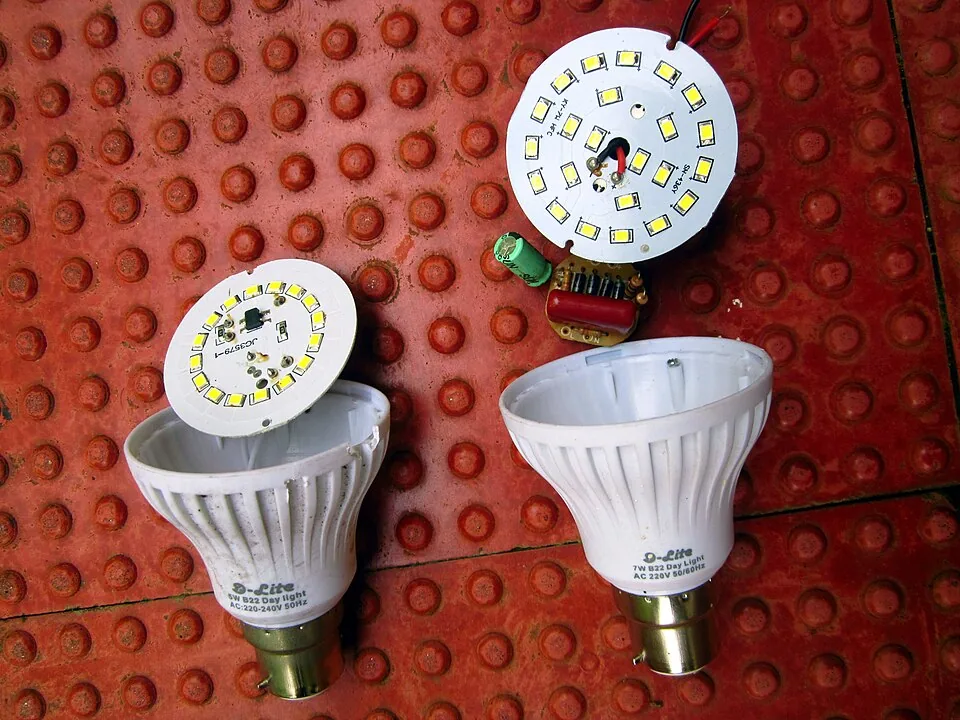
An LED bulb does not run directly on household current. A small driver inside the base converts alternating current to the low voltage direct current that the diodes need, and holds the output steady. When the supply to that driver is clean and the driver is well built, the light is steady. When the supply is chopped by a dimmer, sags when a large appliance starts, or is interrupted by a poor contact, the driver may not keep up, and the output pulses.
Not all flicker is visible. Many cheap bulbs modulate their output at 100 or 120 times a second, because they smooth the rectified supply poorly. You cannot see that directly, but a phone camera in slow motion mode shows banding, and some people feel eye strain or headaches under it. Visible flicker, the slow pulsing or flashing you can see, is a different and usually more fixable problem. This guide concentrates on that, while noting that a better quality bulb reduces the hidden kind as well.
Understanding the mechanism helps you diagnose. If the flicker happens only when the dimmer is lowered, the driver is struggling with the chopped signal. If it happens when the refrigerator or air conditioner starts, the supply voltage is dipping on the circuit. If it happens when you touch or bump the lamp, the cause is a connection. Matching the symptom to the likely cause saves swapping parts at random.
The dimmer mismatch
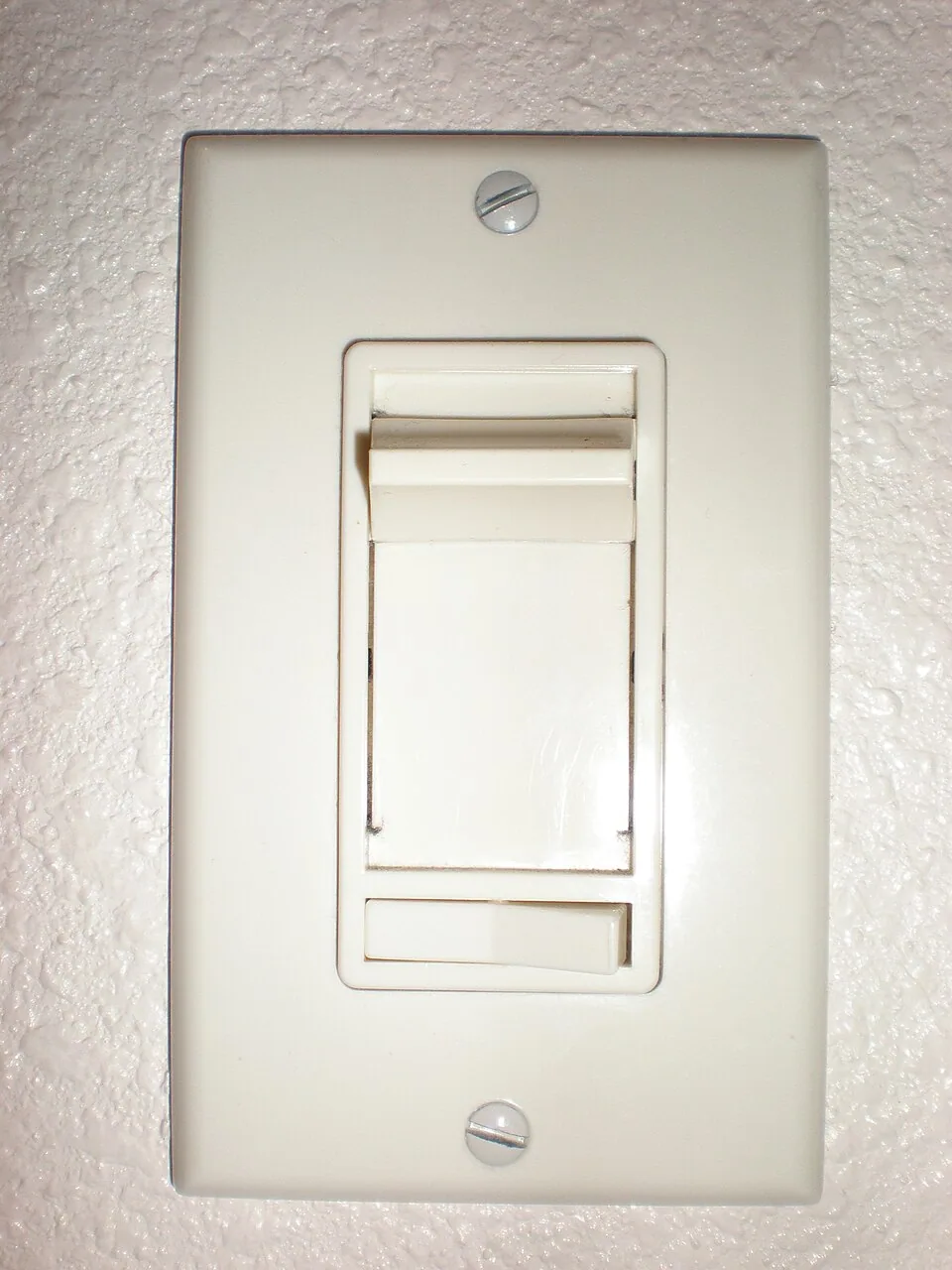
The single biggest cause in a living room is a dimmer that does not suit the bulbs. Older dimmers were built for incandescent bulbs drawing 40 watts or more, and they behave badly with the small current of an LED. The result is flicker across the dial, a dead zone at the bottom, or lights that glow faintly when the switch is off. Our guide to dimmer switch types explains leading edge and trailing edge designs in detail, and the short version is that an LED-rated trailing edge dimmer is the safest match.
The first test is simple. Set the dimmer to full brightness and see whether the flicker stops. If it does, the dimmer is involved. Lower it slowly and note where the flicker starts. A flicker that begins at about 30 to 50 percent usually means the minimum load is too high for the bulbs, whereas a flicker only at the very bottom is the bulb's limit, which you may simply accept or avoid by setting a floor on the dial.
Also check that every bulb on the dimmer is labelled dimmable. A non-dimmable LED on a dimmer will flicker, buzz and may fail early, and it is an easy error to make when a pack of bulbs from a different store is added to a lamp. Look at the base or the package for the word dimmable, and replace any bulb that lacks it. Mixing brands on one dimmer is another cause, because each driver reacts a little differently to the same signal.
| Symptom | Likely cause | First fix to try |
|---|---|---|
| Flicker only when dimmed | Dimmer type or low minimum load | LED-rated trailing edge dimmer, add load |
| Flicker at full brightness, all the time | Failing bulb or non-dimmable bulb on a dimmer | Swap in a known good bulb |
| Flicker when an appliance starts | Voltage dip on a shared circuit | Check circuit load, call an electrician if persistent |
| Flicker when the lamp is bumped | Loose bulb, socket tab or plug | Reseat the bulb, check the plug and cord |
| Glow when switched off | Leakage through a lighted switch or dimmer | Add a bypass load or change the switch |
Minimum load and the small bulb problem
Every dimmer has a rated minimum load below which it cannot operate stably. A legacy dimmer might require 40 watts, which was no trouble with a pair of old bulbs. A fixture with three 5 watt LEDs draws 15 watts, well below that, so the dimmer cannot latch cleanly each half cycle, and the lamps flicker. The fix is to choose a dimmer with a low minimum, usually 10 watts or less for an LED-specific model, or to increase the load by filling every socket in the fixture.
Use the actual LED wattage when you add up, not the equivalent figure printed in large type on the package. A bulb sold as a 60 watt equivalent draws roughly 8 to 10 watts, and that smaller number is what the dimmer feels. If the total on the circuit is less than the dimmer minimum, the problem will persist whatever the bulb brand.
A last variation of this issue is the ghost glow. If an LED lamp stays faintly lit or pulses when the switch is off, current is leaking through the dimmer or a lighted switch and trickling into the driver. The bulbs are not defective. A bypass or load resistor across the fixture can absorb it, but installing one means working in the fixture, so ask an electrician if you are not comfortable. Replacing the switch with an LED-compatible one is the cleaner fix.
The bulb itself
Cheap, unbranded bulbs are the next most likely cause, and the failure is almost always in the driver. A low cost driver smooths the supply with a small capacitor, and as that capacitor ages or runs hot, the smoothing weakens and the flicker appears or worsens. This explains why a bulb that was fine for a year starts to shimmer. It also explains why bulbs in enclosed fixtures, where heat is higher, fail first.
The test is to move the bulb to another lamp on a different circuit, with no dimmer. If it still flickers, the bulb is at fault and should be replaced. Replace it with the same type, or better, a better quality dimmable bulb with a stated flicker performance, and check the warranty length, which is a decent proxy for driver quality. When a whole pack of bulbs flickers, suspect the batch or the brand rather than every individual lamp.
Bulbs designed for a smart system have their own considerations. A smart bulb used behind a wall dimmer can flicker or drop off the network, because the dimmer cuts power to the bulb's radio. Leave a smart bulb's wall dimmer at full, and control brightness with the app, as discussed in our overview of smart bulbs for the living room.
Hidden flicker deserves a short note, because it is the kind a reader cannot find by looking. If a lamp gives you eye strain or a faint headache in the evening without any visible pulsing, try the phone test. Open the camera in slow motion mode, point it at the bulb, and look for dark bands rolling across the screen. Strong banding suggests a bulb with a weak driver, and replacing it with a better one, from a maker that mentions low flicker or a flicker index in its specifications, tends to help. Dimming makes the effect worse in cheap bulbs, so a bulb that is steady at full output may still strobe at 20 percent. If you are sensitive, choose fewer, better bulbs in the lamps you sit under for the longest hours.
Sockets, shades and fixtures
A loose bulb, a worn socket tab or a damaged plug can produce flicker that looks like an electronic fault. Switch the lamp off, let the bulb cool, and twist it firmly until it seats. The center contact at the bottom of the socket is a small metal tab, and over years it can flatten. With the lamp unplugged, lift it slightly with a plastic or wooden tool, so that it presses against the bulb. If the socket shows browning or the plastic is cracked, replace the socket or the lamp.
Heat can also cause trouble in an enclosed shade or glass globe. LEDs not rated for enclosed fixtures overheat, the driver throttles, and the light flickers or fades. Look for the enclosed fixture rating, and in a small shade, use a lower wattage bulb. For a sense of how the bulb and shade work together, see our lampshade size guide.
Check the plug and cord too. A plug that sits loosely in an outlet, or a lamp cord that has been pinched behind furniture, can interrupt power for a fraction of a second. If the lamp flickers when the cord is moved, replace the cord or the plug. Never keep using a lamp whose cord is frayed or warm to the touch, because that is a fire risk and not a lighting nuisance.
Circuit and wiring causes
If the flicker coincides with heavy appliances, the cause may lie in the wiring and not in the lamp. A refrigerator compressor, a microwave or a vacuum cleaner draws a surge when it starts, and on a shared circuit the voltage dips briefly. LED drivers react more visibly than old filaments, which stored enough heat to ride through the dip. A brief flicker as the fridge starts is common and harmless, while flicker that repeats or affects the entire house is a sign to call an electrician.
Loose neutral or hot connections are a more serious cause. A loose connection in a switch box, a ceiling box or at a breaker can arc, produce heat and cause flicker that varies with vibration, such as a door slamming. Warning signs include a buzzing switch, a warm or discolored wall plate, a burning smell and lights that flicker on only one circuit. These warrant switching that circuit off at the breaker and calling a licensed electrician, not further experiments.
Aluminum wiring in older homes and loose back-stab connections on receptacles are also known causes. Neither is a do-it-yourself fix for most people, and a qualified electrician can assess it quickly. Because the issue is a connection, not a bulb, no amount of bulb swapping will cure it.
A step-by-step diagnosis
- Note when it flickers: always, only when dimmed, only when something else starts, or only when the lamp is touched.
- Reseat the bulb and check that it is firmly in the socket and that the plug is fully in.
- Try a known good, dimmable bulb of the same type in the same socket.
- Move the suspect bulb to a lamp on a different circuit without a dimmer.
- Set the dimmer to full, then lower it slowly and note where flicker starts.
- Compare total bulb wattage with the dimmer minimum load, and replace the dimmer with an LED-rated trailing edge model if needed.
- If flicker follows large appliances, or the switch is warm or buzzing, switch off the circuit and call an electrician.
Frequently asked questions
Can flickering LED bulbs be dangerous?
The bulb itself rarely is, but the cause can be. A failing driver can overheat, and a loose connection in a socket or switch box can arc. If flicker comes with buzzing, heat, a burning smell or a discolored plate, turn the circuit off and have it checked. Ordinary dimmer flicker is a nuisance, not a hazard.
Why do my new LED bulbs flicker when old bulbs did not?
Because filaments store heat and ride through small supply changes, while LED drivers respond immediately. A dimmer or circuit that was fine for incandescent bulbs can reveal its limits with LEDs. Matching the dimmer to the bulbs, and using good quality bulbs, usually restores steady light.
Do I need to replace the bulb or the dimmer?
Test first. Put the bulb on a non-dimmed lamp. If it is steady, the dimmer or its load is the cause. If it still flickers, replace the bulb. If a good bulb flickers on your dimmer at a low setting, a different dimmer is the answer.
Is flicker different from buzzing?
They share causes, mainly a mismatch between dimmer and driver, but buzzing is mechanical vibration of a component while flicker is a change in light output. Both often disappear with an LED-rated dimmer. A buzzing dimmer at full brightness may also be overloaded.
Will a different color temperature help?
No. Color temperature is set by the diodes and phosphor, and it does not change how steady the driver is. If you are comparing options, see our guide to 2700K versus 3000K for color choices, and treat flicker as a separate electrical issue.
The bottom line
Start with the cheap tests: reseat the bulb, try a known good dimmable bulb and set the dimmer to full. Most flicker ends at one of those steps. If it ends only when the dimmer is at full, replace the dimmer with an LED-rated trailing edge model with a low minimum load.
Leave wiring faults to a licensed electrician, and do not tolerate any flicker that comes with heat, buzzing or a smell. Buy dimmable bulbs from a maker with a clear warranty, buy them as a matched set, and the problem is unlikely to come back.