Amazon affiliate links - we earn a commission.Affiliate disclosure
Guide·11 min read

Lampshade Size Guide: Proportion, Fitter Type and Shape

Pick a lampshade that fits the base: width and height proportions, spider, UNO and clip fitters, drum versus empire shapes, and how fabric changes light.

By Elena Hart · Updated 2026-11-20

Quick answer

A lampshade should be about as wide as the lamp base is tall, or slightly wider than the widest part of the base, and its height should be roughly three quarters of the base height. The bottom of the shade should cover the bulb socket so you do not see the hot spot from a seated position. Match the fitter to your lamp, spider, UNO or clip-on, because a shade that does not seat properly sits crooked. Light fabrics pass more light, dark or lined shades give a focused pool.

The most common lampshade mistake is not color or fabric. It is scale. A shade that is half an inch too narrow makes the lamp look top-heavy, and one that is too tall turns the whole lamp into a cartoon mushroom. Because the shade covers the bulb, it also decides how the light leaves the lamp, so a mismatched shade changes both how the lamp looks and what it does for the room.

This guide covers the measurements that make a shade look right, the three fitter systems that decide whether it will physically attach to your lamp, the real differences between drum and empire shapes, and how fabric and lining alter brightness. You can follow it with a tape measure and the old shade in your hand.

The proportion rules that work

Designers use a few simple ratios, and they hold up well across lamp styles. First, shade width. The bottom diameter of the shade should be about equal to the height of the lamp base, or at least one inch wider than the widest part of the base. If a base is 18 inches tall, a shade with a 16 to 18 inch bottom diameter looks balanced. If the base is wide and squat, such as a ginger jar, the shade should clear its widest point by about one to two inches on each side.

Second, shade height. The shade should measure roughly 50 to 75 percent of the base height, so an 18 inch base takes a shade between 9 and 13.5 inches tall. Tall, narrow bases can carry a slightly taller shade, while short squat bases look better with a shallow one. Third, the overall stack. The combined height of base and shade determines whether the lamp suits its table, a topic covered in the table lamp size guide.

Base heightShade bottom widthShade height
12 in12 to 14 in6 to 9 in
18 in16 to 18 in9 to 13 in
24 in18 to 22 in12 to 16 in
30 in20 to 24 in13 to 18 in

These ranges are a guide. If a base has a very slim neck, the shade can look correct at the narrower end, while a bulky base needs the larger figure. Hold a candidate shade up to the lamp, or cut a paper template, before ordering.

Measuring a shade correctly

Shade dimensions are given as top diameter by bottom diameter by slant height, in that order. A drum has equal top and bottom widths. A tapered empire or bell has a smaller top than bottom. Slant height is measured along the angled side, not straight up, so for a tapered shade the vertical height is slightly smaller than the slant figure. When a listing gives only one number, assume it may be the bottom diameter and check the rest.

When replacing a shade, measure the old one top width, bottom width and slant height, then measure the distance from the fitter to the top of the shade. That last figure matters because the fitter sits at a particular depth. If you only copy the outer dimensions you can still end up with a shade that rides too high or sits down over the socket.
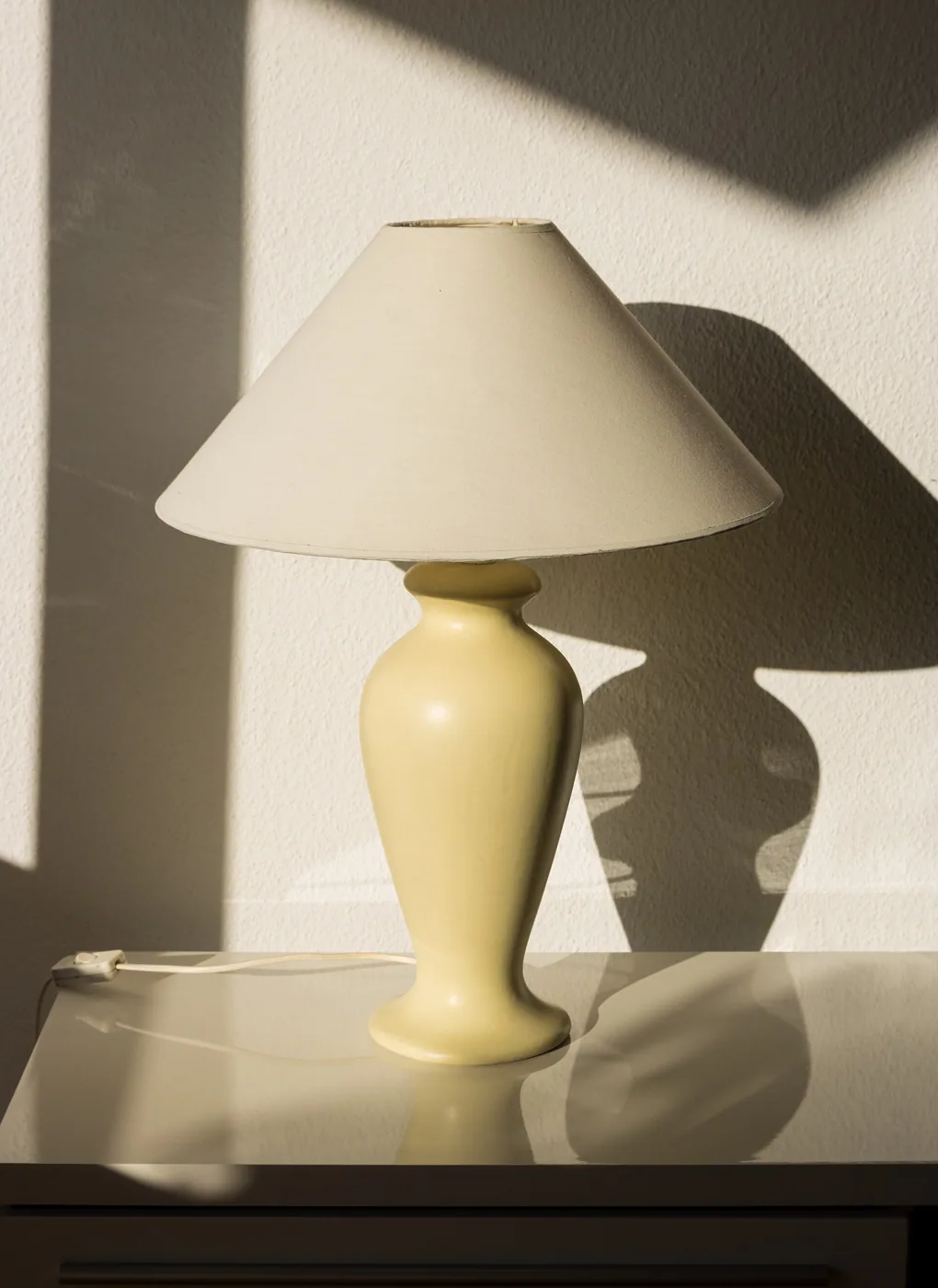
A cream table lamp with a white shade whose width is close to the base height
A shade roughly as wide as the base is tall reads as balanced. Listings quote top width, bottom width and slant height in that order.

Fitter types: spider, UNO and clip-on

The fitter is the hardware that attaches the shade to the lamp, and it is the part buyers forget about until the shade arrives and will not sit. Three types cover almost every table lamp.

  • Spider fitter: a metal cross of arms that rests on the harp, the U-shaped metal frame around the bulb, and is secured by a finial that screws on top. Common on traditional table lamps. The shade hangs from the top, so the finial height has to suit the shade.
  • UNO fitter: a ring that sits under the bulb socket and is held by the socket threads. The shade attaches below the bulb level, which is typical on floor lamps and many contemporary lamps with no harp. It sets the shade height by the position of the ring, so shades are sold with a specific UNO drop.
  • Clip-on: small wire clips that attach straight to the bulb. Used mainly for candelabra bulbs on chandeliers, sconces and small accent lamps. They only work with bulbs that stay cool, so LED candle bulbs are the safe choice.

Before you shop, identify which system your lamp uses. If you see a harp, it is a spider fitter. If the shade drops over the bulb from underneath with no harp, it is an UNO fitter. Mixing the types does not work. An adapter that turns a clip-on into an UNO exists, but it is better to buy the correct shade than to compromise.

Drum, empire, bell and other shapes

The silhouette has as much influence on the lamp as the fabric. A drum shade has straight vertical sides and equal top and bottom widths, producing a clean modern look and light that goes both up and down in a nearly even band. An empire shade tapers from a narrower top to a wider bottom, which gives more light directed downward and a traditional appearance. Bell and coolie shapes add curves or a steep taper, and a square or rectangular shade can look sharp but needs a base with matching lines.

For a living room, drum and empire shades cover most cases. Choose a drum when the base is geometric or the lamp sits on a modern console and you want light to wash the wall as well as the table. Choose an empire for reading lamps, since the wider bottom directs a better pool onto a book and the taper keeps the light off the wall behind. A very wide shade also blocks side glare for the seated person, which is worth thinking about at a chair or sofa arm.

Hiding the bulb and avoiding glare

Here is a rule that seems minor and is not. The bottom edge of the shade should sit at or just below the bottom of the bulb socket as seen from a seated eye height of about 38 to 42 inches. If you can see the bright bulb from the sofa, the shade is too high or too small. A bare bulb in the corner of vision creates glare and makes the eye contract, leaving the rest of the room looking darker.

To tune it, adjust the finial or harp height on a spider fitter. A longer finial lifts the shade, and a shorter one lowers it. Switch to a smaller LED bulb if the shade is a snug fit. Large globe LED bulbs can stick out below a shallow shade, whereas a candle or A19 shape sits lower and fits more neatly.

Fabric, lining and the light that comes out

Shade material controls how much light passes through and what color it becomes. A white linen or cotton shade passes a large share of the output and diffuses it softly, giving a glowing shade and a good general light. A dark shade, such as navy or black, absorbs most of the light and sends it out of the top and bottom openings, which makes a moody pool and a bright patch on the ceiling. A shade lined in white will glow evenly and hide the bulb. A gold or metallic lining pushes light downward and warms it.

Translucency matters for the job the lamp has. A reading lamp wants a lighter shade or a shade open at the bottom so the page receives enough light. An accent lamp on a bookshelf can use a dark shade. Warm white fabric adds a warmer tone to the bulb, so pair a 2700K LED with a cream shade and the result can feel closer to 2400K, which might be too orange for a room lit mainly with cooler sources. Our explainer on color temperature shows how to keep sources consistent.

Pleated paper and stiff plastic shades can look cheap and discolor with heat. Choose a heat-rated material, and use LED bulbs, which run much cooler than incandescents and extend the life of every fabric shade.

Floor lamps, sconces and small accent lamps

Floor lamps follow the same ratios with one adjustment: because the base is a slim pole, the shade usually dominates the silhouette. A common floor lamp shade measures 16 to 20 inches across the bottom and 10 to 12 inches high, which keeps a pole of 58 to 64 inches in balance. A wider shade over a narrow pole looks like an umbrella, and a shade too small leaves the bulb visible from the sofa. Because floor lamps stand beside seating, glare control matters more than on a table, so take the larger shade if you are between two sizes.

Wall sconces and small accent lamps use much smaller shades, often 5 to 8 inches across. Here the clip-on fitter is the most common, and the bulb must be a cool-running LED candle or small globe, since a clip sits close to the glass. Proportion is more forgiving at this scale, but the same bulb-hiding rule applies: look at the lamp from where people will sit, not from the shop floor.

Keep in mind that the smaller the shade, the hotter it runs around an incandescent, and the more it fades over time. An LED bulb of 8 or 9 watts equal to a 60 watt old bulb gives the same brightness at a fraction of the heat, so most of the old warnings about scorched shades no longer apply. Still, check the label for the maximum wattage on the socket, which is a safety limit and not a suggestion.

Failures people do not expect

A shade that wobbles is nearly always a fitter mismatch. A spider fitter with a short harp leaves the shade resting on the lamp neck, and an UNO fitter in the wrong drop height tilts it. Check the finial thread too: a standard finial uses a quarter inch thread, and some lamps use a different size.

Another trap is the shade that matches the lamp in the store and looks wrong at home. Store lighting is much brighter, so a dark shade looks inviting there and gloomy in a living room. Always view a shade lit, if possible, and consider the room it will live in. A light shade works in most rooms. A dark shade suits large rooms with several other lamps.
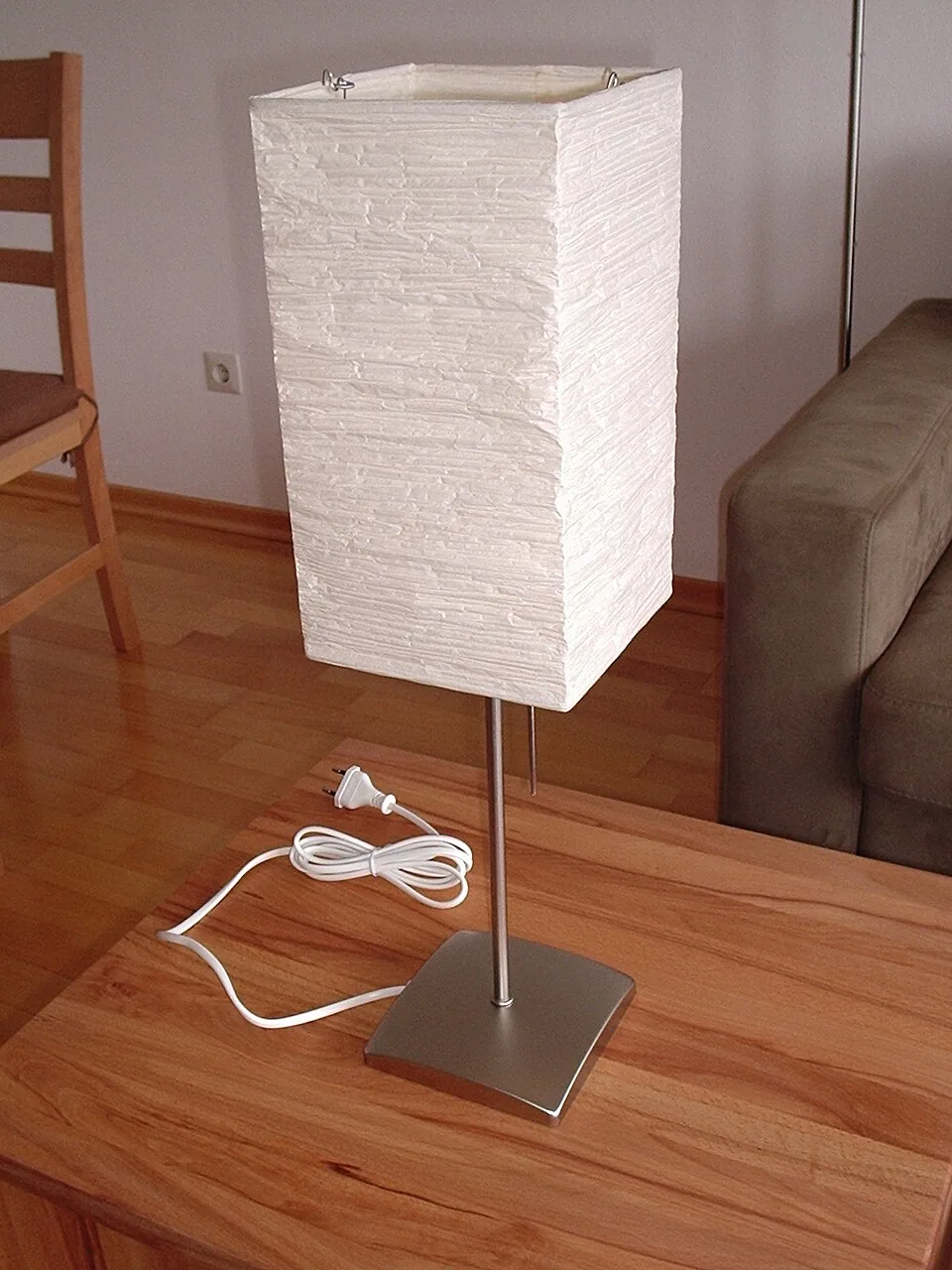
A table lamp with a tall rectangular paper shade in a living room
A straight-sided paper shade throws light evenly up and down, in contrast to a tapered shade that pushes more light downward.

Putting it together in a living room

Pair the lamp with its role first. For a side table next to a sofa, a medium base with a drum or gently tapered shade, light in color, serves as both a source and a decorative item. For a reading chair, choose a taller lamp or floor lamp with a shade wide enough to avoid glare, and see the floor lamp reading guide for positioning. For a console behind a sofa, a pair of identical lamps with matching shades gives symmetry, and the shades should be the same size to the quarter inch.

Pairs deserve one more check. When buying two lamps, hold both shades side by side, since small variation in a hand-made shade is visible when they flank a mantel or a console. For a deeper look at how lamps fit into the overall lighting plan, layered lighting for a living room explains the role of the table lamp layer.

Frequently asked questions

How wide should a lampshade be compared with the base?

The bottom diameter should be about the same as the height of the base, or at least one inch wider than the widest part. A shade much narrower than this looks like a hat on the lamp, while one much wider swallows the base.

Can I use any shade with any lamp?

Only if the fitter matches. A spider fitter shade needs a harp, an UNO shade needs a socket-mounted ring and clip-on shades need small bulbs. If the type is wrong, the shade will not sit straight. An adapter exists but a correct shade is the better choice.

Does a lampshade color change the light?

Yes. White and cream shades pass light and slightly warm it, while dark shades absorb most of it and cast pools above and below. Lined shades glow more evenly. Pair color with function: lighter for reading, darker for accent mood.

Is a drum or an empire shade better for reading?

An empire shade, because its wider bottom directs a larger pool downward and reduces light thrown onto the wall. A drum works well when you want ambient light and a clean modern look more than a focused page of light.

How do I stop a shade from tilting?

Check the fitter, harp height and finial thread. The shade may sit too low on the harp or the fitter may not be the right type. Choosing the correct drop for an UNO fitter or a longer finial for a spider usually corrects the tilt.

Bottom line

Measure the base height and the widest point, choose a shade whose bottom width matches that height, make it roughly three quarters as tall as the base, and make sure the bottom edge hides the socket from the sofa. Confirm the fitter before ordering, since a perfect shade that does not attach is the most common return.

Then match fabric to the job: light and translucent for reading and general light, dark for accent. Lined shades hide the bulb and look more polished. If you are unsure, a white drum shade in proportion is a safe choice that works with almost any base.

Image credits

  • accent-chair-desk-corner.webp: JohnLEE Brothers, CC0, source
  • accent-chair-green-velvet.webp: Shixart1985, CC BY 2.0, source
  • accent-chair-hero.webp: Shixart1985, CC BY 2.0, source
  • anchor-built-in-bookcases-room.webp: Carol M. Highsmith, Public domain, source
  • anchor-small-bookcase-hall.webp: Steven Pavlov, CC BY-SA 4.0, source
  • anchor-white-bookcase-wall.webp: Egilus, CC BY-SA 4.0, source
  • arrange-living-room-hero.webp: Kotivalo, CC BY-SA 4.0, source
  • arrange-living-room-seating-group.webp: Neoclassicism Enthusiast, CC0, source
  • arrange-living-room-sofa-wall.webp: Adele Berenstein, CC BY 2.0, source
  • artsofa-pictures-on-wall-room.webp: Tudor Washington Collins, CC BY 4.0, source
  • artsofa-sofa-corner-mural.webp: G�nter Seggeb�ing, Coesfeld, CC BY-SA 3.0, source
  • artsofa-sofa-mural-wall.webp: G�nter Seggeb�ing, Coesfeld, CC BY-SA 3.0, source
  • blackoutcurtain-floor-length-pair.webp: Ounfs Robmmy 238, CC0, source
  • blackoutcurtain-olive-heavy-fabric.webp: Easysayg, CC BY-SA 4.0, source
  • blackoutcurtain-white-sheer-hotel.webp: HuiDongXLW RMDa, CC0, source
  • ceilingfan-five-blade-light.webp: CommandProMC, CC BY-SA 4.0, source
  • ceilingfan-pull-chain-light.webp: Hans Olav Lien, CC BY-SA 3.0, source
  • clean-fabric-sofa-blanket.webp: Shixart1985, CC BY 2.0, source
  • clean-fabric-sofa-hero.webp: Lear 21, CC BY-SA 4.0, source
  • clean-fabric-sofa-slipcover.webp: Enric, CC BY-SA 4.0, source
  • clean-rug-fringe-pattern.webp: Sununa, CC BY-SA 4.0, source
  • clean-rug-runner-hall.webp: Sununa, CC BY-SA 4.0, source
  • coffeetable-round-yellow-sofa.webp: Vaibhavratnaparkhi, CC BY-SA 4.0, source
  • coffeetable-tan-sofa-dark-table.webp: Shixart1985, CC BY 2.0, source
  • coffeetable-two-wood-tables.webp: Sophia Baboolal, CC0, source
  • color-temp-bright-bulb.webp: Xzantiyamoloy, CC BY 4.0, source
  • color-temp-gu10-spot.webp: Dmitry G, CC BY-SA 3.0, source
  • color-temp-hero.webp: LoMit, CC BY-SA 4.0, source
  • color603010-paint-swatches-wall.webp: Chris Rycroft, CC BY 2.0, source
  • color603010-rainbow-swatch-range.webp: Joyful spherical creature, CC BY 4.0, source
  • color603010-swatch-cards-neutrals.webp: Clean Wal-Mart, CC BY 2.0, source
  • cornertv-1960s-room-tv-window.webp: Kotivalo, CC BY-SA 4.0, source
  • cornertv-budapest-sofa-room.webp: Justin Sch�ler, CC0, source
  • cornertv-white-room-console.webp: Oliur Rahman, CC0, source
  • curtainfabric-heavy-olive-folds.webp: Easysayg, CC BY-SA 4.0, source
  • curtainfabric-hotel-floor-length-pair.webp: Ounfs Robmmy 238, CC0, source
  • curtainfabric-white-light-filtering.webp: HuiDongXLW RMDa, CC0, source
  • curtains-hk-window-stacked-open.webp: YSSKACH WFAMOACSH TUNGA, CC BY-SA 4.0, source
  • curtains-hotel-living-zone-floor-length.webp: Ounfs Robmmy 238, CC0, source
  • cushion-fill-hero.webp: Dalton Scavassa, CC BY-SA 4.0, source
  • cushion-fill-pillows-leather.webp: Aaaatu, CC BY-SA 4.0, source
  • depth-grey-sofa-cushions.webp: Dalton Scavassa, CC BY-SA 4.0, source
  • depth-grey-sofa-hero.webp: Lear 21, CC BY-SA 4.0, source
  • depth-sectional-living-room.webp: Shixart1985, CC BY 2.0, source
  • dimmer-rotary-wall.webp: Paolomarco, CC BY-SA 4.0, source
  • dimmer-slide-wall.webp: BrokenSphere, CC BY-SA 3.0, source
  • dimmer-wiring-box.webp: Kurtkaiser, CC0, source
  • door-hotel-living-room.webp: Adele Berenstein, CC BY 2.0, source
  • door-orange-sofa-hero.webp: Shixart1985, CC BY 2.0, source
  • echo-1960s-room-soft-furnishings.webp: Kotivalo, CC BY-SA 4.0, source
  • echo-fabric-acoustic-panels-wall.webp: 36N63, CC BY-SA 4.0, source
  • echo-panel-mineral-wool-core.webp: JoraK, CC BY-SA 4.0, source
  • entcenter-low-stand-devices.webp: William Hook, CC BY-SA 2.0, source
  • entcenter-old-tv-setup.webp: William Hook, CC BY-SA 2.0, source
  • entcenter-wood-wall-unit-living-room.webp: Casey Fleser, CC BY 2.0, source
  • fabric-green-velvet-hero.webp: Neoclassicism Enthusiast, CC0, source
  • fabric-grey-sofa-cushions.webp: Lear 21, CC BY-SA 4.0, source
  • fabric-sofa-blanket.webp: Shixart1985, CC BY 2.0, source
  • floatshelf-mixed-books-rows.webp: Roman Eisele, CC BY-SA 4.0, source
  • floatshelf-steel-support.webp: Fructibus, CC0, source
  • floatshelf-white-bookcase-wall.webp: Egilus, CC BY-SA 4.0, source
  • floor-lamp-height-hero.webp: Agbarto, CC0, source
  • floor-lamp-height-stained-glass.webp: Louis Comfort Tiffany / Tiffany Studios, CC0, source
  • floor-lamp-height-white-reading-lamp.webp: FASTILY, CC BY-SA 4.0, source
  • frame-black-leather-sofa.webp: www.Pixel.la Free Stock Photos, CC0, source
  • frame-green-velvet-sofa.webp: Neoclassicism Enthusiast, CC0, source
  • frame-grey-sofa-hero.webp: Dalton Scavassa, CC BY-SA 4.0, source
  • gallerywall-frames-bookcase-lamp.webp: Personal Creations, CC BY 2.0, source
  • gallerywall-frames-floor-tape.webp: Personal Creations, CC BY 2.0, source
  • gallerywall-frames-on-wall-home.webp: Personal Creations, CC BY 2.0, source
  • hang-light-hero.webp: Martin Falbisoner, CC BY-SA 4.0, source
  • hang-light-lamp-with-shade.webp: LoMit, CC BY-SA 4.0, source
  • hang-light-red-drum-lamp.webp: Agbarto, CC0, source
  • jute-sisal-combing-fibre.webp: Uncredited for Keystone View Company, Public domain, source
  • jute-sisal-hero.webp: B.navez, CC BY-SA 3.0, source
  • jute-sisal-plantation.webp: Forest & Kim Starr, CC BY 3.0, source
  • knotted-rug-cut-pile-carpet.webp: Daderot, CC0, source
  • knotted-rug-hero.webp: Daderot, CC0, source
  • knotted-rug-prayer-wool.webp: Daderot, CC0, source
  • lampshade-cream-base.webp: LoMit, CC BY-SA 4.0, source
  • lampshade-empire-lamp.webp: J.Dncsn, CC BY-SA 3.0, source
  • lampshade-paper-rect-lamp.webp: Zeitlupe, CC BY-SA 4.0, source
  • layer-rugs-armchairs.webp: PattayaPatrol, CC BY-SA 4.0, source
  • layer-rugs-conversation-pit.webp: Marsh Davis; Indiana Landmarks, CC BY 4.0, source
  • layer-rugs-hero.webp: BusterD, CC BY-SA 4.0, source
  • layered-light-hero.webp: FASTILY, CC BY-SA 4.0, source
  • layered-light-red-shade-lamp.webp: Agbarto, CC0, source
  • layered-light-table-lamp.webp: LoMit, CC BY-SA 4.0, source
  • leather-care-black-sofa.webp: www.Pixel.la Free Stock Photos, CC0, source
  • leather-care-burgundy-set.webp: Dominic's pics, CC BY 2.0, source
  • leather-care-hero.webp: Thomas Quine, CC BY 2.0, source
  • ledstrip-cove-fireplace.webp: Andrey Gvrv, CC BY-SA 3.0, source
  • ledstrip-spool-driver.webp: Dmitry G, CC BY-SA 3.0, source
  • ledstrip-tv-back.webp: Stilfehler, CC BY-SA 4.0, source
  • loveseat-sofa-armchair-room.webp: Adele Berenstein, CC BY 2.0, source
  • loveseat-sofa-hero.webp: Aaaatu, CC BY-SA 4.0, source
  • loveseat-sofa-leather-pair.webp: Dominic's pics, CC BY 2.0, source
  • lowlight-snake-plant-corner-pot.webp: Enzo Rippa, CC BY-SA 4.0, source
  • lowlight-snake-plant-window-table.webp: Martin Olsson, CC BY-SA 3.0, source
  • lowlight-zz-plant-potted.webp: Jamshid Nurkulov, CC BY-SA 4.0, source
  • lumens-bulb-hero.webp: R. Henrik Nilsson, CC BY 4.0, source
  • lumens-led-bulbs-group.webp: Geoffrey.landis at English Wikipedia, CC BY 3.0, source
  • measure-cabin-sofa.webp: Shixart1985, CC BY 2.0, source
  • measure-room-depth.webp: Shixart1985, CC BY 2.0, source
  • measure-sofa-hero.webp: Shixart1985, CC BY 2.0, source
  • mirror-above-mantel-living-room.webp: Tudor Washington Collins, CC BY 4.0, source
  • mirror-round-blue-wall-window.webp: Ciara N� Riain, CC BY-SA 4.0, source
  • mirror-round-over-wood-console.webp: Shixart1985, CC BY 2.0, source
  • mixpatterns-armenian-patterned-pillows.webp: Ararat Trvants, CC BY-SA 4.0, source
  • mixpatterns-couch-pillows-set.webp: Dawid Skalec, CC BY-SA 4.0, source
  • mixpatterns-leather-sofa-pillows.webp: Aaaatu, CC BY-SA 4.0, source
  • no-overhead-hero.webp: Gotogo, CC BY-SA 4.0, source
  • no-overhead-red-shade-lamp.webp: Agbarto, CC0, source
  • no-overhead-white-floor-lamp.webp: FASTILY, CC BY-SA 4.0, source
  • nodrillcurtain-hk-window-open.webp: YSSKACH WFAMOACSH TUNGA, CC BY-SA 4.0, source
  • nodrillcurtain-olive-rail-folds.webp: Easysayg, CC BY-SA 4.0, source
  • nodrillcurtain-white-light-panel.webp: HuiDongXLW RMDa, CC0, source
  • open-plan-rug-armchairs.webp: PattayaPatrol, CC BY-SA 4.0, source
  • open-plan-rug-hero.webp: NPS Photo, Public domain, source
  • open-plan-rug-sunken-living.webp: Marsh Davis; Indiana Landmarks, CC BY 4.0, source
  • ottoman-coffee-table-pair.webp: Sophia Baboolal, CC0, source
  • ottoman-leather-round-pair.webp: Olugold, CC BY-SA 4.0, source
  • ottoman-round-stool-top.webp: Olugold, CC BY-SA 4.0, source
  • paintsheen-open-paint-cans.webp: United Soybean Board, CC BY 2.0, source
  • paintsheen-paint-can-brush.webp: Shixart1985, CC BY 2.0, source
  • paintsheen-swatch-cards-range.webp: Chris Rycroft, CC BY 2.0, source
  • pets-sofa-kitten-cushions.webp: Feliciano Guimar�es from Guimar�es, Portugal, CC BY 2.0, source
  • pets-sofa-slipcover.webp: Enric, CC BY-SA 4.0, source
  • pillows-decorative-couch-set.webp: Dawid Skalec, CC BY-SA 4.0, source
  • pillows-leather-sofa-group.webp: Aaaatu, CC BY-SA 4.0, source
  • pillows-wooden-sofa-red-cushions.webp: Zohasheikh, CC BY-SA 4.0, source
  • readinglamp-adjustable-torchiere.webp: Agbarto, CC0, source
  • readinglamp-armchair-corner-lamp.webp: Kotivalo, CC BY-SA 3.0, source
  • readinglamp-cozy-sunlit-corner.webp: Shixart1985, CC BY 2.0, source
  • recessed-gimbal-trim.webp: Stilfehler, CC BY-SA 4.0, source
  • recessed-housing-display.webp: Stilfehler, CC BY-SA 4.0, source
  • recessed-led-can-trim.webp: Stilfehler, CC BY-SA 4.0, source
  • recliner-buying-armchair-room.webp: Virginia State Parks staff, CC BY 2.0, source
  • recliner-buying-hero.webp: Laura Stoinski, CC0, source
  • recliner-buying-leather-sofa.webp: Aaaatu, CC BY-SA 4.0, source
  • rug-curl-fringe-rug.webp: Sununa, CC BY-SA 4.0, source
  • rug-curl-hero.webp: Sununa, CC BY-SA 4.0, source
  • rug-curl-runner-patterns.webp: Sununa, CC BY-SA 4.0, source
  • rug-dents-hero.webp: ProjectManhattan, CC BY-SA 3.0, source
  • rug-dents-wool-medallion.webp: Daderot, CC0, source
  • rug-on-carpet-armchairs.webp: PattayaPatrol, CC BY-SA 4.0, source
  • rug-on-carpet-flat-weave.webp: Mervat, CC BY 4.0, source
  • rug-on-carpet-hero.webp: NPS Photo, Public domain, source
  • rug-pad-dense-carpet.webp: ProjectManhattan, CC BY-SA 3.0, source
  • rug-pad-hero.webp: Sununa, CC BY-SA 4.0, source
  • rug-pile-flatweave-stack.webp: Mervat, CC BY 4.0, source
  • rug-pile-sarouk-wool.webp: Daderot, CC0, source
  • rug-shedding-pile-closeup.webp: ProjectManhattan, CC BY-SA 3.0, source
  • rug-shedding-wool-rugs.webp: Mervat, CC BY 4.0, source
  • rug-size-armchairs-on-rug.webp: PattayaPatrol, CC BY-SA 4.0, source
  • rug-size-conversation-area.webp: Marsh Davis; Indiana Landmarks, CC BY 4.0, source
  • rug-size-hero.webp: NPS Photo, Public domain, source
  • runner-size-hero.webp: Sununa, CC BY-SA 4.0, source
  • runner-size-red-runner.webp: Sununa, CC BY-SA 4.0, source
  • runner-size-three-runners.webp: Sununa, CC BY-SA 4.0, source
  • sag-cushions-hero.webp: Durova, CC BY-SA 3.0, source
  • sag-cushions-slipcover.webp: Enric, CC BY-SA 4.0, source
  • sag-cushions-sofa-deck.webp: Dalton Scavassa, CC BY-SA 4.0, source
  • sconce-above-tufted-chairs.webp: Jedodo756, CC0, source
  • sconce-brass-opal-shade.webp: unknown (see Commons page), CC BY-SA 4.0, source
  • sconce-wall-lamp-side-table.webp: Atilla Taskiran, CC0, source
  • sectional-dark-hero.webp: Shixart1985, CC BY 2.0, source
  • sectional-room-arrangement.webp: Kotivalo, CC BY-SA 4.0, source
  • sectional-white-corner.webp: GardenKings, CC BY-SA 3.0, source
  • shelfsag-mixed-books-shelf.webp: Roman Eisele, CC BY-SA 4.0, source
  • shelfsag-packed-bookshelf.webp: Csferrie, CC BY-SA 4.0, source
  • shelfsag-wood-shelf-rows.webp: PeaceSeekers, CC BY-SA 4.0, source
  • sidetable-cozy-sofa-room.webp: Breather, CC0, source
  • sidetable-kentwood-sofa.webp: Kari Shea, CC0, source
  • sidetable-round-wall-lamp.webp: Atilla Taskiran, CC0, source
  • sleeper-sofa-bed-made-up.webp: Maniago, Public domain, source
  • sleeper-sofa-open-hero.webp: N509FZ, CC BY-SA 4.0, source
  • sleeper-sofa-sofa-mode.webp: N509FZ, CC BY-SA 4.0, source
  • small-room-slim-arm-sofa.webp: Lear 21, CC BY-SA 4.0, source
  • small-room-sofa-hero.webp: Shixart1985, CC BY 2.0, source
  • small-room-two-seat-layout.webp: Adele Berenstein, CC BY 2.0, source
  • smallbigger-finland-studio-bright.webp: Aaaatu, CC BY-SA 4.0, source
  • smallbigger-hk-curtains-open-window.webp: YSSKACH WFAMOACSH TUNGA, CC BY-SA 4.0, source
  • smallbigger-white-room-console.webp: Oliur Rahman, CC0, source
  • smallstorage-finland-studio-room.webp: Aaaatu, CC BY-SA 4.0, source
  • smallstorage-leather-sofa-shelving.webp: Sabri Tuzcu, CC0, source
  • smallstorage-wall-shelves-books.webp: Roger W, CC BY-SA 2.0, source
  • smart-bulbs-bulb-in-hand.webp: Xzantiyamoloy, CC BY 4.0, source
  • smart-bulbs-led-internals.webp: Loadmaster, Bech, CC BY-SA 4.0, source
  • soundbar-below-lg-tv.webp: Dinkun Chen, CC BY-SA 4.0, source
  • soundbar-philips-front-grille.webp: Philips Communications, CC BY 2.0, source
  • soundbar-samsung-single-bar.webp: Dinkun Chen, CC BY-SA 4.0, source
  • stylebooks-packed-shelf-wall.webp: Csferrie, CC BY-SA 4.0, source
  • stylebooks-philosophers-shelf.webp: Roman Eisele, CC BY-SA 4.0, source
  • stylebooks-wall-shelves-bottles-books.webp: Roger W, CC BY-SA 2.0, source
  • styletable-book-stack-candle.webp: Gabbybratcher, CC BY-SA 4.0, source
  • styletable-two-tables-mugs.webp: Sophia Baboolal, CC0, source
  • styletable-yellow-sofa-cups-flowerpot.webp: Shixart1985, CC BY 2.0, source
  • surround-home-theater-tv-seating.webp: NPat318, CC BY-SA 4.0, source
  • surround-rear-view-seats.webp: NPat318, CC BY-SA 4.0, source
  • surround-sectional-media-room.webp: Derek Jensen (Tysto), Public domain, source
  • table-lamp-size-antique-shade.webp: Amitbalani, CC0, source
  • table-lamp-size-hero.webp: Tess Mattew, CC BY-SA 4.0, source
  • table-lamp-size-measured.webp: Tess Mattew, CC BY-SA 4.0, source
  • throwblanket-blue-throw-kitten.webp: TudorTulok, CC BY-SA 4.0, source
  • throwblanket-striped-couch-cat.webp: Roman Eisele, CC BY-SA 4.0, source
  • throwblanket-yellow-blue-couch.webp: Roman Eisele, CC BY-SA 4.0, source
  • tvheight-flat-panel-wall.webp: BrokenSphere, CC BY-SA 3.0, source
  • tvheight-plasma-wall-room.webp: Pkepneriv, CC BY-SA 3.0, source
  • tvheight-white-living-room.webp: Oliur Rahman, CC0, source
  • tvmount-articulating-arm.webp: Ben Scholzen, CC BY 2.0, source
  • tvmount-vesa-adapter-plate.webp: Tony Webster, CC BY 2.0, source
  • tvmount-wall-panel-room.webp: Pkepneriv, CC BY-SA 3.0, source
  • tvsize-dark-room-big-screen.webp: Christian Collins, CC BY 2.0, source
  • tvsize-media-room-screen.webp: NPat318, CC BY-SA 4.0, source
  • tvsize-tv-on-stand.webp: PhotoPicker13, CC BY-SA 4.0, source
  • tvstand-low-stand-devices.webp: William Hook, CC BY-SA 2.0, source
  • tvstand-wall-unit-living-room.webp: Casey Fleser, CC BY 2.0, source
  • tvwires-cable-box-wires.webp: Tony Webster, CC BY 2.0, source
  • tvwires-hdmi-connectors.webp: Kreuzschnabel, CC BY-SA 3.0, source
  • tvwires-wall-mounted-panel.webp: BrokenSphere, CC BY-SA 3.0, source
  • washable-rugs-flatweave-stack.webp: Mervat, CC BY 4.0, source
  • washable-rugs-hero.webp: Mervat, CC BY 4.0, source
  • washable-rugs-loomed-stripes.webp: Gcarrillog, CC0, source
  • wool-poly-hero.webp: Mervat, CC BY 4.0, source
  • wool-poly-oaxacan-wool.webp: Gcarrillog, CC0, source
  • wool-poly-prayer-rug.webp: Daderot, CC0, source

Related Guides