When you lower an old incandescent bulb, something quietly pleasant happens: the light does not only get dimmer, it gets warmer. A filament running at lower power glows more orange, and the room slides from bright white toward candlelight. Most LED bulbs do not do that. They dim by reducing current, and the color temperature stays at whatever number is printed on the box, so a 2700K bulb at 10 percent output is still 2700K, only fainter.
Warm dim bulbs, sometimes sold as dim to warm, sunset dimming or warm glow, were designed to bring that behavior back. This guide explains how they achieve it, how they differ from ordinary dimming and from tunable white bulbs, what dimmer they need, and the cases where they are worth choosing and the cases where they are not.
What a warm dim bulb actually does
A standard dimmable LED has one set of diodes at one color temperature, and a driver that lowers the current to them. A warm dim bulb contains two groups of diodes, a warmer group and a slightly cooler one, or a single group paired with different phosphor coatings. As the dimmer reduces the incoming signal, the driver changes the ratio between the groups. At full brightness the cooler group dominates and you see about 2700K. At the bottom of the range the warm group dominates and the light is closer to 2000K, similar to a candle or a dimmed filament.
The result is a gradual shift rather than a switch between modes. Typical specifications describe a range such as 2700K to 2000K, or 3000K to 2200K for a slightly brighter family. The extremes differ by product, so the packaging or datasheet is the place to confirm the actual endpoints. What does not vary is the intent: low light should look like low firelight, not a weak version of daylight.
Because the shift is built into the bulb, it works with a regular wall dimmer. That is the major difference from smart tunable bulbs, which achieve warm tones through an app, scene or remote. With a warm dim bulb the dimmer position is the only control, and that simplicity is a large part of its appeal in rooms where you do not want a phone involved in turning down the lamp.
Why the color shift feels more natural
Our eyes and our sense of ambience associate low light with warm color. Evening fire, candles and sunsets all lose blue content as the light drops. A fixed 2700K bulb at low output keeps its relatively blue-white balance in a dim room, and the eye reads it as thin or slightly clinical, particularly against warm wood and cream walls. Shifting toward 2200K at low output keeps the relationship the eye expects.
There is also a practical benefit. At low levels, light with less blue content is less stimulating in the evening, and many people simply find it more relaxing before bed. This is a comfort preference, not a medical claim, and you should not expect a bulb to change how you sleep. It is, however, a good reason to choose warm dim bulbs in lamps where you wind down, such as beside a reading chair or on a console behind the sofa.
The shift is most noticeable in a room that is otherwise dark. If the overhead light is on at the same time, the larger share of fixed color temperature light swamps the effect, and the warm dim lamp contributes mostly brightness. For the effect to read, dim the surrounding sources or leave them off, as described in our guide to layered lighting in a living room.
| Bulb type | Color as you dim | Control | Best use |
|---|---|---|---|
| Standard dimmable LED | Stays fixed, for example 2700K | Wall dimmer | General lighting, mixed rooms |
| Warm dim LED | Shifts warmer, about 2700K toward 2000K | Wall dimmer | Evening lamps, dining, ambient accents |
| Tunable white smart bulb | Any value in its range, set by app or voice | App, remote, hub | Rooms with changing tasks and schedules |
| Incandescent or halogen | Warms naturally as it dims | Wall dimmer | Where available, at higher energy use |
Dimmer compatibility, the part that goes wrong
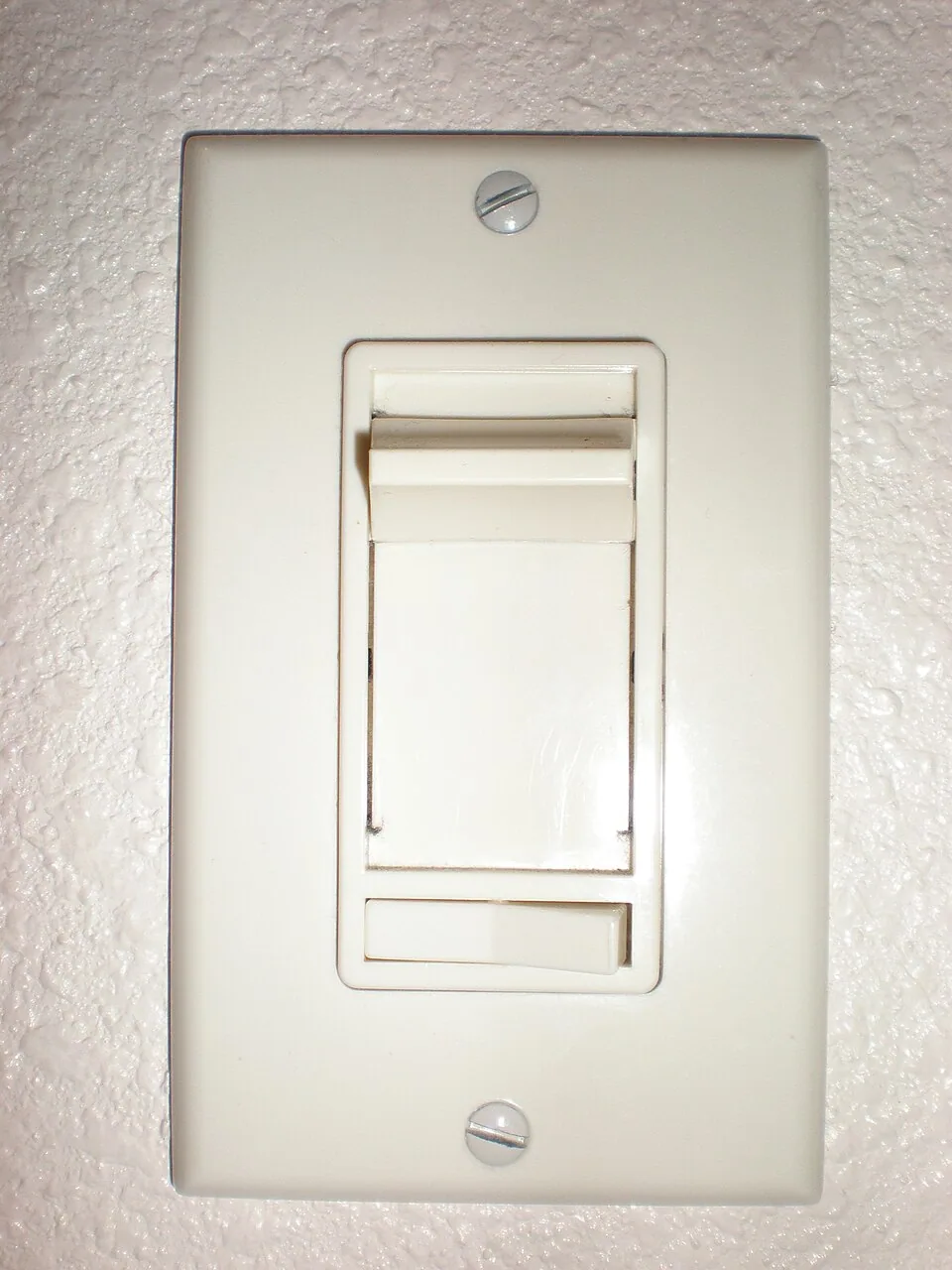
Warm dim bulbs read the dimmer signal to decide how warm to be, so they are more sensitive to a poor match than ordinary bulbs. A leading edge dimmer designed for incandescent loads can make them flicker, buzz or fail to reach the warm end of the range. The usual remedy is a trailing edge or purpose-built LED dimmer. Our guide to dimmer switch types explains the difference and how to check the minimum load, which for a single small bulb is often the thing that fails.
Manufacturers usually publish a compatibility list. Treat it as a requirement, not a suggestion, since warm dim performance is tuned to particular dimmer models. If the list names your dimmer, the shift should be smooth across the whole range. If it does not, buy a single bulb and test it before committing to a full set, particularly if the fixture has multiple sockets.
Be aware of one non-obvious point: the dimmer rating on the wall plate counts watts of load, and warm dim LEDs draw very little, often 5 to 9 watts each. A fixture with three of them presents a total of under 30 watts, which is below the minimum of many older dimmers. If the warm dim effect only works above a certain dial position, load is the first thing to check, not the bulb.
Where warm dim bulbs belong
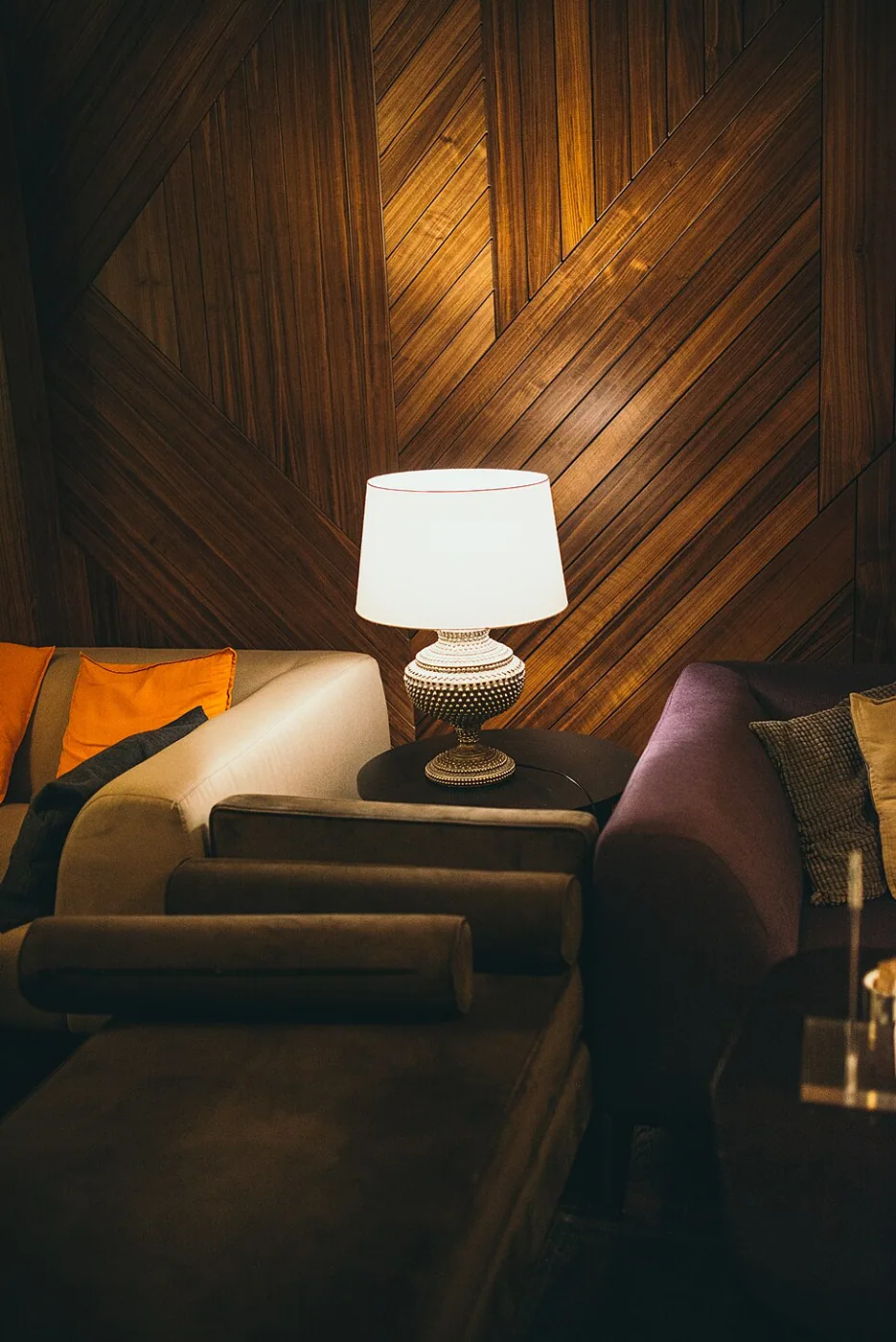
The sweet spot is a lamp whose job is atmosphere. A table lamp beside the sofa, a console lamp, a wall sconce flanking art, or a pendant over a dining nook all gain from the warm drift, since you will often run them at 20 to 50 percent. In these places the gradual warming gives a candle-like quality that a fixed color bulb cannot match without a second, separate warm bulb.
They are a poor choice where accuracy matters. A reading lamp wants steady light, ideally at a neutral or soft white color temperature and a high color rendering score, because shifting color changes how a page looks as you adjust. For tasks like sewing, crafts or checking fabric swatches, choose a fixed bulb and read our explanation of CRI for home lighting. Warm dim bulbs also tend to have a more modest CRI at the warm end, since it is hard to render every color well at 2000K.
The same logic applies to a ceiling fixture that doubles as your main light. If it is the lamp you switch on for cleaning, homework or guests, you will use it at full output most of the time and rarely see the shift. Put warm dim bulbs in the lamps you dim, and standard bulbs in the ones you do not.
Brightness and lumens at the warm end
A warm color at low output is not free. Moving the color toward 2000K means the light is dominated by deep amber diodes, which are less efficient, and many warm dim bulbs lose output at the warm end more steeply than a regular dimmable LED. A bulb that makes 800 lumens at full brightness may be well under 100 at its warmest setting. That is deliberate, since the goal is a glow, not a reading level, but it affects planning.
If a lamp needs to provide task light at times, look for a model with an 800 lumen or higher full output, and use the full-brightness end for tasks. A bulb rated at 450 lumens will feel dim even at its top setting in a large lamp with a dark shade. For the amount of light a seating area needs overall, see how many lumens a living room needs.
Another point worth knowing: a dark or heavy shade reduces light by more than you would expect, and combined with the warm dim reduction, a lamp can end up too faint to be useful at its lowest settings. If you cannot read at your chosen level, either raise the dimmer or accept that the lamp is for glow only, and add a separate source for tasks.
Setting one up and checking it works
Install the bulb, switch on the dimmer at full, and let it warm up for a minute. Then lower the dimmer in small steps and watch two things: whether the light changes smoothly or in visible jumps, and whether there is any hum from the wall plate or the lamp. A faint step in color at one point on the dial is normal for some products, since the driver changes its mix in stages. A flicker or pulse is not, and points to a dimmer mismatch.
Check the endpoints too. Turn the dial to the bottom and confirm the bulb stays lit instead of cutting out. A bulb that goes dark at 15 percent means the dimmer cannot hold the load or the bulb has a high turn-off threshold. Some dimmers have a small trim wheel behind the faceplate that sets the lowest level, and raising it a little can stop dropouts. Turn the power off at the breaker before touching that wheel.
Finally, view the lamp from your usual seat with the other lights off. The shade, the wall color and the finish of nearby furniture all change how warm the light reads, and a result that looks orange on the shelf can look just right across a cream room. Give it two evenings before you judge, since the eye adapts and first impressions of warm light often run stronger than they stay.
Heat, lifespan and enclosed fixtures
Warm dim bulbs are LEDs, and they share the weakness of every LED: heat shortens the life of the driver. In a fully enclosed glass fixture or a small shade with little airflow, the bulb runs hotter than it was designed for and may fade early or flicker as the electronics age. Check that the bulb is rated for enclosed fixtures if yours has a closed globe, and avoid pairing a high wattage bulb with a tight shade.
Most warm dim bulbs advertise a life of 15,000 to 25,000 hours, and in a living room used a few hours a day that stretches over many years. A bulb that is mostly dimmed also runs cooler and lasts longer than one run at full output. The practical advice is to buy a spare when you find a model you like, because product lines change and a replacement from a different batch may shift slightly in its warm endpoint.
When a smart bulb is the better answer
If you want more than one behavior, such as a cool bright setting for the morning and a warm low one for the evening, a tunable white smart bulb offers more range than a warm dim bulb. It lets you choose any value between roughly 2200K and 6500K, set schedules, and save scenes. The price is dependence on an app, a hub or a cloud service, and a wall switch that must stay on, which raises the issue of a person turning it off at the wall.
Warm dim bulbs make the opposite trade. They cannot be programmed and they cannot pick a cool daytime white, but they work from the wall dimmer for every guest and family member, with no setup and nothing to break when a router is replaced. For a household with children, older relatives or renters who lease the home to others, that reliability is worth more than flexibility.
A third route is to use warm dim bulbs on a smart dimmer. A smart dimmer can add schedules and voice control while the bulb handles the color shift. Confirm that the dimmer is trailing edge, supports a low minimum load, and states LED compatibility. Many smart dimmers also require a neutral wire in the box, a point that can be a surprise in older homes.
Frequently asked questions
Do warm dim bulbs cost more than regular LEDs?
Yes, typically they sit at a premium compared with a basic dimmable bulb, because of the extra diodes and a more complex driver. The difference is modest for one or two lamps. Over the life of the bulb the energy use is similar to other LEDs, so the cost is the purchase price alone.
Can I use a warm dim bulb on a non-dimmable switch?
You can, but the color will stay at the full-brightness value, usually around 2700K, and you lose the feature you paid for. If a lamp has an inline or plug-in dimmer, the bulb will work with it, provided the dimmer is rated for LED loads and the bulb draws enough power to meet its minimum.
Why does my warm dim bulb flicker at the lowest setting?
The usual cause is a dimmer whose minimum load is higher than the bulb draws. Check the dimmer rating against the bulb wattage, then look for a compatible model. If you have a multi-socket fixture, filling every socket often raises the load enough to stabilize the dimming.
Will it match my other bulbs at full brightness?
It should match a 2700K bulb at full output, but the two will drift apart as you dim, since only one of them warms. In a single fixture or a pair of matching lamps, use the same type in all of them so the light stays consistent across the room.
Is the warm color the same as a yellow bug light?
No. A warm dim bulb is white light with a very warm tint, around the color of a candle, and it is not a colored bulb. Rooms with cream or warm gray walls tend to look richer under it, while blue or cool gray walls can look muddy at the warmest setting.
The bottom line
Choose warm dim bulbs for lamps you run low in the evening, and pair them with a trailing edge or LED-rated dimmer that lists a minimum load below the total bulb wattage. Keep standard fixed-color bulbs in task lamps, kitchens and anywhere you judge color.
Buy one bulb first and test it at three levels: full, half and low. If the color shift is smooth and the dimmer is quiet, outfit the rest of the lamps. If it flickers, fix the dimmer before blaming the bulb, and keep the receipt until the room works the way you wanted.