Lighting designers talk about layers because a room needs more than one kind of light. A single bright source cannot read a book comfortably, light a wall of pictures and also create a soft mood for a film, and trying to make it do all three leaves it doing none well. The living room is the room where this shows most, because we use it for so many things at different hours.
This guide explains each layer, what it does for the room and what it needs, shows a minimum version for a rental with no ceiling fixture and a fuller version for a house, and gives the placement and switching rules that make the layers work together. The numbers are practical ranges that you can adjust to your own room.
Ambient light: the base layer
Ambient light is the general illumination that lets you move around the room and see everyone's face. It should be even and soft, with no strong shadows and no glare. Sources include ceiling fixtures, recessed lights, uplights, wall washers and large lamps with a diffusing shade. In a living room, the target is about 5 to 10 lumens per square foot for the ambient layer, and the rest comes from the task and accent layers.
Ambient light works best when it bounces. A torchiere or uplight directs light at the ceiling, which spreads it across the room without glare, and a lamp with a wide drum shade throws a soft pool. A bare overhead bulb is a poor ambient source, because it creates a hard, flat light and shadows under features. If the room has a ceiling fixture, put it on a dimmer, so it can be a gentle base and not a floodlight. We explain the total level in our guide to lumens for a living room.
Task light: where you read and work
Task light is focused brightness where you do something that needs to see detail: reading, knitting, working on a laptop, doing a jigsaw. It should be bright enough, 450 to 800 lumens, aimed at the activity and shielded from the eyes. A task lamp beside a chair, a floor lamp with an adjustable arm or a desk lamp on a side table all work.
The placement is the important part. For reading, the light should come from behind or beside the shoulder, about 40 to 50 inches above the floor, so it falls on the page and not on the eyes or the screen. A lamp in front of you causes glare, and a lamp that is too low shines up at the face. The position and height are explained in our guides to floor lamp height and table lamp size.
Accent light: depth and feature
Accent light draws attention to something: a painting, a bookshelf, a plant, a textured wall. It is typically three times brighter than the surrounding ambient light on the object, but in absolute terms it is modest, 100 to 400 lumens. It adds depth by creating contrast, and a room with only flat light looks flat.
Sources include picture lights, small spotlights, strip lights inside a bookcase, a plug-in sconce, a table lamp on a shelf and a candle-like bulb behind a plant. An uplight behind a plant casts shadows of leaves on the wall, an effect that adds interest at almost no cost. Use accent light with restraint, since a room with too many highlights looks busy, and keep a single accent for each wall that needs one.
| Layer | Job | Typical lumens | Height and position | Source examples |
|---|---|---|---|---|
| Ambient | General brightness | 5 to 10 per sq ft in total | High, spread across the room | Uplight, ceiling fixture on a dimmer |
| Task | Reading, close work | 450 to 800 at the seat | 40 to 50 inches, beside or behind | Floor lamp with arm, table lamp |
| Accent | Depth, art, features | 100 to 400 per feature | Aimed at the object | Picture light, shelf strip, small lamp |
| Mood | Evening glow | Under 300 in total | Low, below eye level | Table lamps, candles, smart bulbs |
The minimum viable setup in a rental
Many rentals have a single ceiling light, or none, and you cannot rewire. A workable layered scheme uses three or four plug-in lamps. A floor lamp with an upward-facing head gives ambient light, a table lamp beside the main seat gives task light and a small lamp or a plug-in strip on a shelf gives accent light. Each should be on its own switch or a smart plug, so you can control the layers separately.
Put the lamps at different heights: a floor lamp of 60 to 65 inches, a table lamp of 25 to 30 inches in total height and a small accent lamp of 12 to 18 inches. That variety of height is what makes the layers read. Place the lamps in a triangle around the seating, so light comes from several directions. If the room has no overhead light, our guide to lighting without overhead lighting goes further.
A fuller setup for a house
With a ceiling fixture, recessed lights and the freedom to add wiring, you can expand each layer. Recessed lights or a ceiling fixture on a dimmer provide the ambient base, and wall sconces beside the sofa or fireplace add a second ambient source at eye level. Task lamps sit by each chair, and a reading light is placed at the main seat. Picture lights, shelf lights and a dimmable cove light provide accent.
In a larger room, use zones. A conversation zone has a pair of table lamps on either side of the sofa and a floor lamp behind the chair. A reading zone has a task light and an uplight. A media zone has a dimmable ambient layer and a low accent light behind the screen. Each zone should be controllable, and all should share the same color temperature, as we explain in our guide to color temperature.
Switching and dimming each layer
Layers are useful only if you can control them separately. The simplest way is a switch or a smart plug for each lamp, or a switched outlet wired to a wall switch. A dimmer on the ambient layer lets you drop the level in the evening, and a lamp with its own touch dimmer gives the same effect at the source.
Group the controls so that you can set a scene in one move. A smart plug with a schedule, a remote for a set of lamps or a smart bulb group can turn on the evening layers at dusk. Place the switches where you enter the room and where you sit, so that you do not have to cross the room in the dark. If the room is also a path to the kitchen, leave one ambient light on a timer for safety.
Placing sources relative to the seating
The seat is the center of the plan. The ambient light should reach the seat without shining in the eyes, so keep bare bulbs out of the line of sight. Task light should come from behind the shoulder, and a lamp beside a sofa at the arm gives a good reading light, about 15 to 20 inches from the sitter's body. Accent light should be on the far walls, so that the eye travels past the seating.
Avoid putting a bright light behind the television, where it creates glare and reduces contrast, and avoid a bright source facing the seating, such as a lamp with an unshaded bulb on the opposite side. Place the lamps so that they do not cast shadows of the seating on the walls in an unflattering way. Test the arrangement by sitting in each seat and looking around, noting any glare and dark areas.
Mood and evening light
A fourth layer, mood, is not a separate fixture but a state. In the evening, switch off the bright layers and leave a few low sources: a table lamp or two at 200 to 300 lumens each, a candle or a string of warm lights. The effect is a cozy glow that feels different from the day. Low, warm light placed below eye level is the most relaxing, since the bright areas are away from the line of vision.
A dimmer is the main tool, and a smart bulb that can be set to a scene is a good one. Keep the color temperature at 2700K or below for the evening, and avoid bright overhead light after dark. Many people find that a living room lit by three or four low lamps is the most inviting, and that the brightness needed for cleaning or hosting is separate from the one for relaxing.
Shades, bulbs and how a lamp throws its light
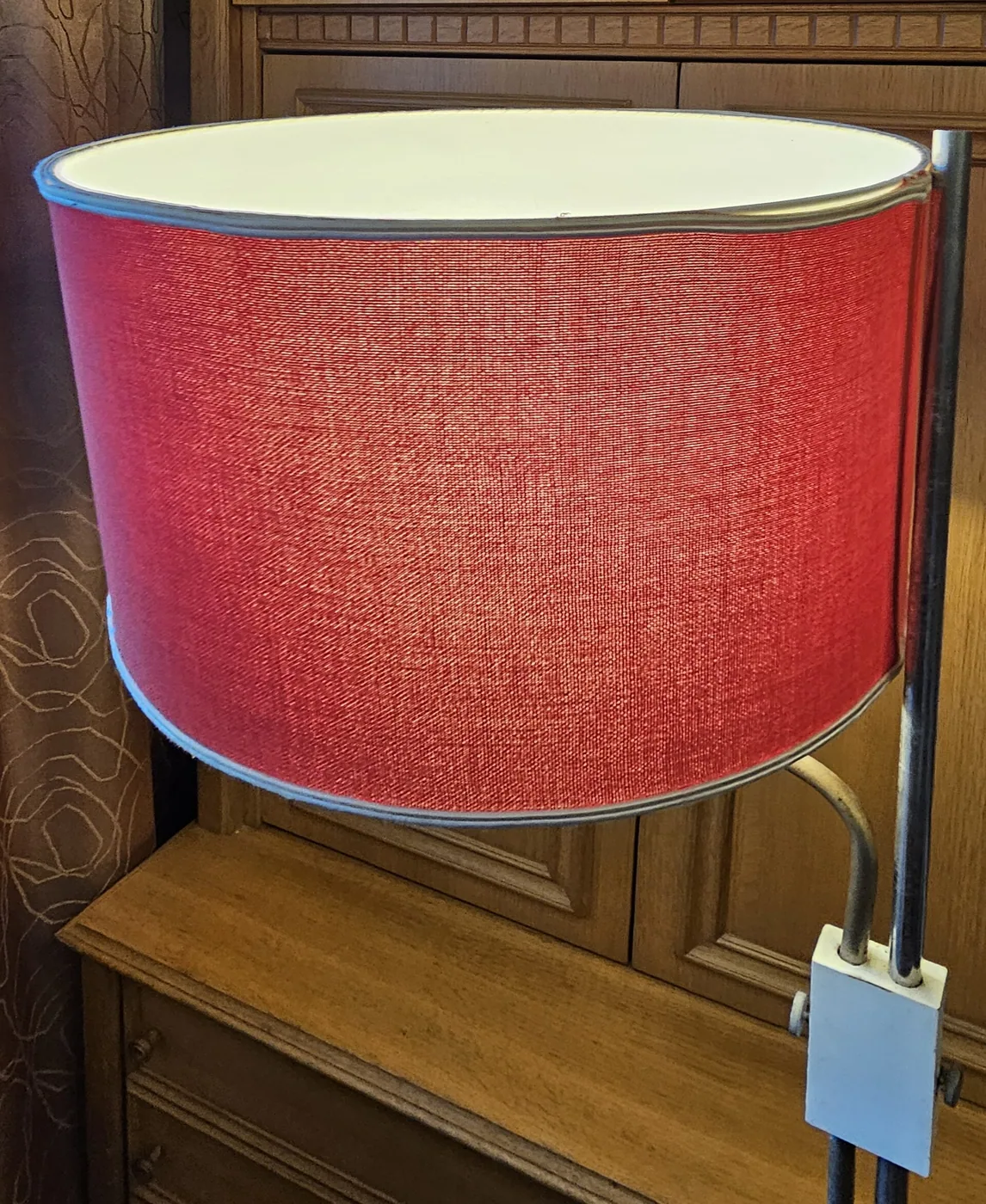
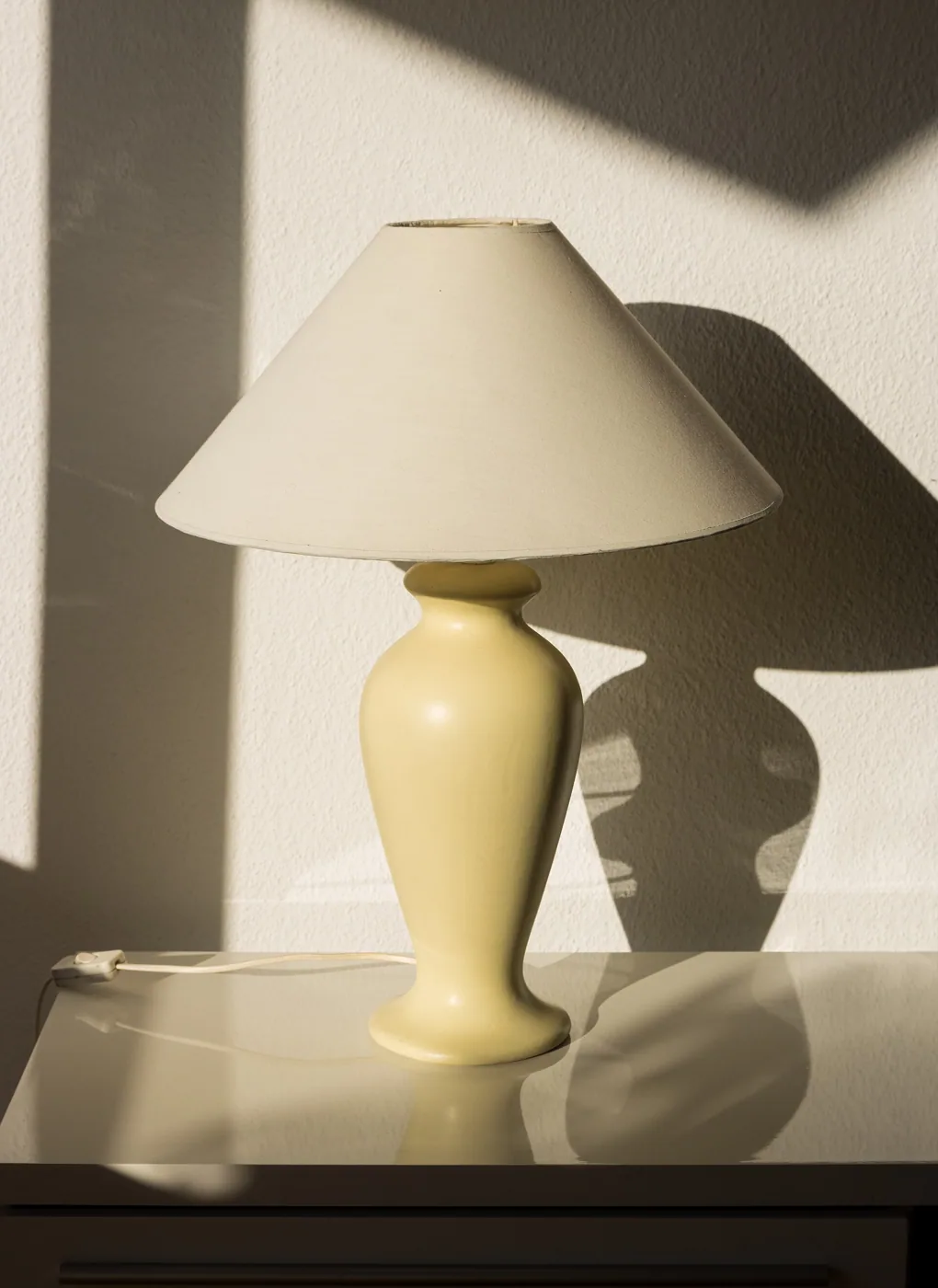
A lamp's shade decides what kind of layer it creates. A wide, pale drum shade with an open top and bottom throws light both up and down, and works well for ambient light. A narrow, opaque shade directs light mainly down, creating a tight pool for task or accent. A glass shade or a bare bulb produces glare and should be kept above or below eye level, or avoided.
The bulb inside matters too. A frosted or opal bulb diffuses the light and avoids a visible hot spot, and a clear bulb is sharper and more decorative. In a shaded lamp, a bulb whose top sits just below the top of the shade avoids glare from the side. Our guide to table lamp sizes shows how to match the shade width to the base and the table.
Layers in a small or awkward room
A small room does not need fewer layers, only smaller sources. Use a slim floor lamp that takes little floor, a compact table lamp on a shelf and a plug-in strip behind a bookcase, and avoid anything bulky. A room with a low ceiling suits uplights less than sideways light, since the ceiling is close, and wall-mounted or plug-in sconces keep the floor clear.
An awkward room, such as a long narrow space or one with an alcove, benefits from a light in each zone. Put a lamp at each end of a long room, and a small light in the alcove. A dark corner that has no light feels like a dead zone, so even one small lamp there brings it back into the room. Use accent light to emphasize features, such as a fireplace or a window seat.
Energy, bulb choice and cost
Several small lamps with LED bulbs use less energy than one large old fixture. A typical living room with five LED lamps of 8 to 10 watts each uses about 50 watts when everything is on, against 300 watts or more for a room lit by incandescent bulbs. The saving is a reason to add layers without worry, and the bulbs last for years.
The cost of a layered scheme is mostly the lamps, and these can be modest. Start with the ones you have, buy a good reading lamp for the main seat and add pieces over time. Spend where the effect is largest: the task light at the reading chair and a dimmer for the main ambient source. Cheap accent lights and smart plugs round out the set at a low price, and a thrifted lamp with a new shade can look as good as a new one.
Common layering mistakes
The first is every light at the same height, which gives a flat, even look. The second is putting all lights on one switch, so that you cannot change the mood. The third is a mixed color temperature, which makes the layers clash. The fourth is a task lamp in the wrong place, causing glare and shadows on the book. The fifth is relying on the ceiling light for everything.
Each is easy to fix with one or two lamps and a couple of smart plugs. Start with the seat where you read, and make it work well. Then add a lamp at a different height on the opposite side of the room, and an accent on a wall. Adjust until you can set the room to three different moods with a few switches.
Frequently asked questions
How many light sources should a living room have?
At least three to five, at different heights and in different places. A room of 150 to 250 square feet usually works with a floor lamp, two table lamps, an accent light and a dimmable ceiling fixture if there is one.
What is the difference between ambient and task lighting?
Ambient light fills the room with soft, general light. Task light is brighter and focused on an activity, such as reading. A room needs both, and the task light should not be the only source.
Can I do layered lighting without a ceiling fixture?
Yes, with plug-in lamps. A floor lamp for ambient, a table lamp for task and a small lamp for accent is a workable set, and smart plugs let you control them from one place.
What if my situation is different, such as a very small room?
Use two or three smaller lamps, such as a floor lamp in a corner and a table lamp on a shelf. Choose compact designs, and use the walls for accent. Even a small room benefits from more than one layer.
Should all the bulbs be the same?
The color temperature should match, within 300K, but the brightness and shape can differ. Use a lower brightness for accent and mood and a higher one for task and ambient.
Bottom line
Give the room at least three layers: a soft ambient base, a task light at each reading seat and an accent light on a wall or a feature. Place the sources at different heights, keep the color temperature consistent and put each layer on its own switch or plug. Dim the ambient layer in the evening for mood.
Start with the seat where you read most and add from there. A few lamps and a couple of smart plugs make a bigger difference than a new ceiling fixture. For how we weigh lighting in our picks, see how we evaluate products.