Amazon affiliate links - we earn a commission.Affiliate disclosure
Guide·12 min read

How Many Lumens Does a Living Room Need? Lumens, Not Watts

Work out living room brightness in lumens per square foot, see how layering changes the total and why three small sources beat one bright ceiling light.

By Elena Hart · Updated 2026-11-20

Quick answer

Most living rooms feel right at 10 to 20 lumens per square foot, so a 12 by 15 foot room of 180 square feet needs roughly 1,800 to 3,600 lumens in total. Spread it across layers instead of one source: ambient light for general use, task light for reading and accent light for depth. Three or four lamps of 450 to 800 lumens each, with a dimmer on the main one, read better than a single bright ceiling fixture, which creates glare and flat shadows.

For decades, buyers chose light bulbs by wattage, and wattage worked because an incandescent bulb turned a roughly fixed share of its power into light. A 60 watt bulb gave about 800 lumens, and everybody knew what that looked like. LED bulbs broke the link. A modern LED that gives the same 800 lumens uses 8 to 10 watts, and the number on the box tells you almost nothing about how bright the room will be.

Lumens measure the light a source emits, and they are the number to buy by. This guide explains how to turn a room into a target number of lumens, why the target is a range and not a rule, how layering changes the arithmetic and why the arrangement of the sources matters as much as the total. It also covers the common mistakes that leave a living room too bright, too dim or oddly flat.

Lumens, watts and what the box says

A lumen is a unit of light output, the visible light a source produces in all directions. A watt is a unit of electrical power. The relationship between them is efficiency, and for an LED it is about 80 to 110 lumens per watt, compared with 12 to 16 for an incandescent. That is why an 8 watt LED can replace a 60 watt incandescent.

The packaging of an LED bulb usually shows both, with the lumens in larger print: 450 lumens equals a 40 watt incandescent, 800 equals 60 watt, 1,100 equals 75 watt and 1,600 equals 100 watt. Use these equivalents to translate what you know, but plan by lumens. Check also the beam: a bulb in a deep, narrow shade delivers less light into the room than the same bulb in an open one.
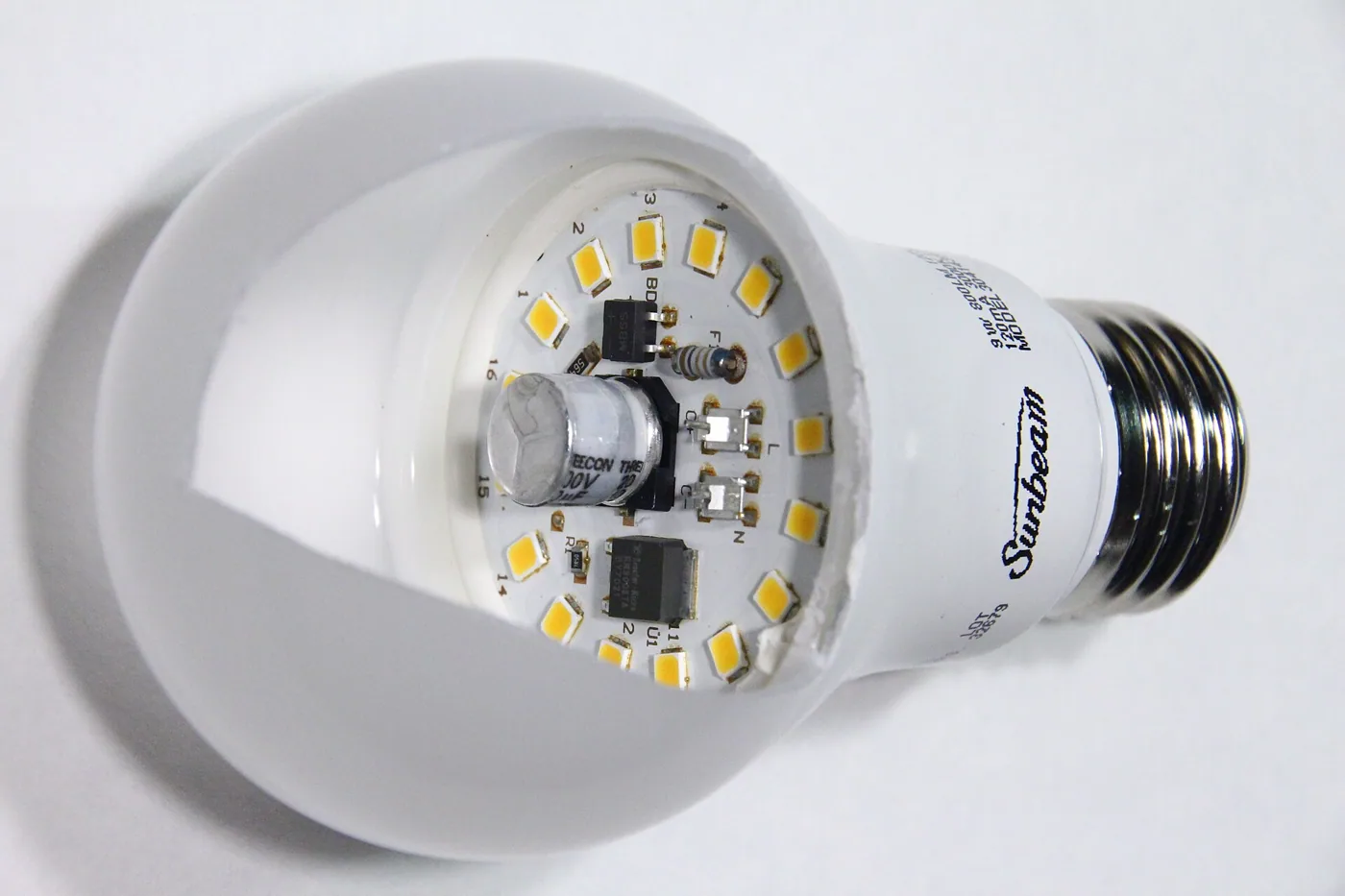
An LED bulb with its frosted cover cut away showing rows of small light chips
An LED bulb makes light with rows of small chips, so a few watts can produce the lumens an old 60 watt bulb did.

A rule of thumb: lumens per square foot

The simplest starting point is to multiply the floor area by a target. For a living room, 10 to 20 lumens per square foot covers most households. Use 10 to 12 for a room used mainly for watching television and relaxing, and 15 to 20 for a room where people read, work or host. A room of 12 by 15 feet is 180 square feet, so the range is 1,800 to 3,600 lumens.

These targets assume a room with an 8 foot ceiling, medium-toned walls and a moderate amount of daylight. A high ceiling needs more, because the light travels farther and spreads over a larger volume. Dark walls and floors absorb light and push the target toward the top of the range, and white walls reflect it and let you use the lower end. A room with large windows can use less during the day and the same at night.

Room sizeAreaRelaxed (10 to 12 lm/sq ft)Active (15 to 20 lm/sq ft)
10 by 12 feet120 sq ft1,200 to 1,4401,800 to 2,400
12 by 15 feet180 sq ft1,800 to 2,1602,700 to 3,600
14 by 18 feet252 sq ft2,520 to 3,0203,780 to 5,040
16 by 20 feet320 sq ft3,200 to 3,8404,800 to 6,400

Adjusting the number for your room

The per-square-foot figure is a starting point. Raise it by a quarter for dark wood floors, dark walls or a room with deep-colored furniture, and lower it for white walls and pale floors. Add 10 percent for every foot of ceiling height above 8 feet. A ceiling at 10 feet needs about 20 percent more light than one at 8 feet to deliver the same brightness at the sofa.

Think also about who uses the room. Eyes need more light as we age: a person of 60 needs roughly twice the light of a person of 20 to read the same page. If the room is shared by different ages, include a dimmer and a task lamp for the person who needs more. A room used for hobbies, such as sewing or jigsaw puzzles, needs task lighting of 800 to 1,500 lumens at the work surface, in addition to the general level.

Why layers change the arithmetic

The total lumens are only half the story, because where the light lands matters more than how much of it there is. A single 2,500 lumen ceiling fixture lights the floor and the tops of heads and leaves the walls and corners dim. Three or four lamps of 450 to 800 lumens, placed around the room at different heights, light the room from several directions, and the room feels brighter even if the total is the same or lower.

The principle is called layering. Ambient light provides general illumination, task light provides focused brightness where you read or work and accent light adds depth to walls, art and shelves. We cover the roles in our guide to layered lighting. In practice, aim for about half the lumens as ambient, a third as task and the rest as accent, adjusting to the room.

The problem with one bright ceiling fixture

A single overhead fixture is the usual default, and it is the usual cause of a room that feels harsh. A bright source in the middle of the ceiling lights the room from directly above, which flattens faces, casts hard shadows under eyebrows and creates glare on screens and glossy surfaces. To make the room bright enough for reading, you must turn up the whole fixture, which makes the rest of the room too bright for relaxing.

A room lit by three smaller sources at different heights avoids these issues. The light comes from the side and from below the eye line, so faces look natural, and you can switch off the sources you do not need. The ceiling fixture still has a role, as a base level on a dimmer, but it should not be the only source. See also our guide to hanging heights for ceiling lights.

Dimmers: lumens on demand

A dimmer lets you choose the lumens for the activity. A fixture of 2,000 lumens on a dimmer can serve as 400 lumens for a film, 1,000 for conversation and 2,000 for cleaning. This flexibility lets you plan for the brightest need without living with it at all times, and it extends bulb life.

Check that the bulbs and the dimmer are compatible, since many LEDs flicker or buzz on an old dimmer made for incandescent bulbs, a problem we cover in our smart bulb guide. Look for bulbs labeled dimmable and a dimmer rated for LEDs. A lamp with its own dimmer or a smart bulb gives control without rewiring, which suits a rental.

Task light: lumens where the work is

Reading and detailed work need more light at the page than the room provides, and that light should come from the side or behind the shoulder, not from the front. A reading lamp of 450 to 800 lumens, placed 30 to 40 inches from the page, gives a comfortable level of about 30 to 50 foot-candles. A task lamp with an adjustable arm lets you aim the light and avoid glare on glossy paper and tablets.

For the seat where someone reads daily, a floor or table lamp should be bright enough on its own, rather than relying on the room's general light. The height and position of the lamp matter as much as the lumens, and we explain them in our guides to floor lamp height and table lamp size. A bright lamp aimed at the eyes is worse than a dim one aimed at the page.

Accent and background light

Accent light is lower in lumens but important for the feel of a room. A picture light, a small uplight behind a plant or a shelf light of 100 to 300 lumens adds depth and draws attention to a feature. Light on the walls makes a room feel larger, because the eye reads the walls as the room's boundary.

Background light, such as a lamp in a corner or a low table lamp, fills the dark areas and reduces contrast. A room with a bright spot and dark corners looks smaller and tires the eyes. Keep the ratio between the brightest and darkest areas modest, about 3 to 1, and the room will feel comfortable. This is the main reason a few small lamps outperform one large light.

Light levels through the day and evening

A room needs different light at different hours. In the morning and afternoon, daylight does most of the work, and artificial light only fills the far corners. In the evening, the room relies entirely on lamps, and the level should fall as bedtime approaches. A level of 300 to 500 lumens in total feels cozy in the late evening, while 2,000 or more suits dinner or cleaning.

Plan the switching so the evening settings are easy to reach. A main dimmer at the door, lamps with their own switches and a couple of smart plugs give a range of scenes without much thought. Brighter, cooler light in the day and warmer, dimmer light at night follows the body's rhythms, and we explain the color side in our guide to color temperature.
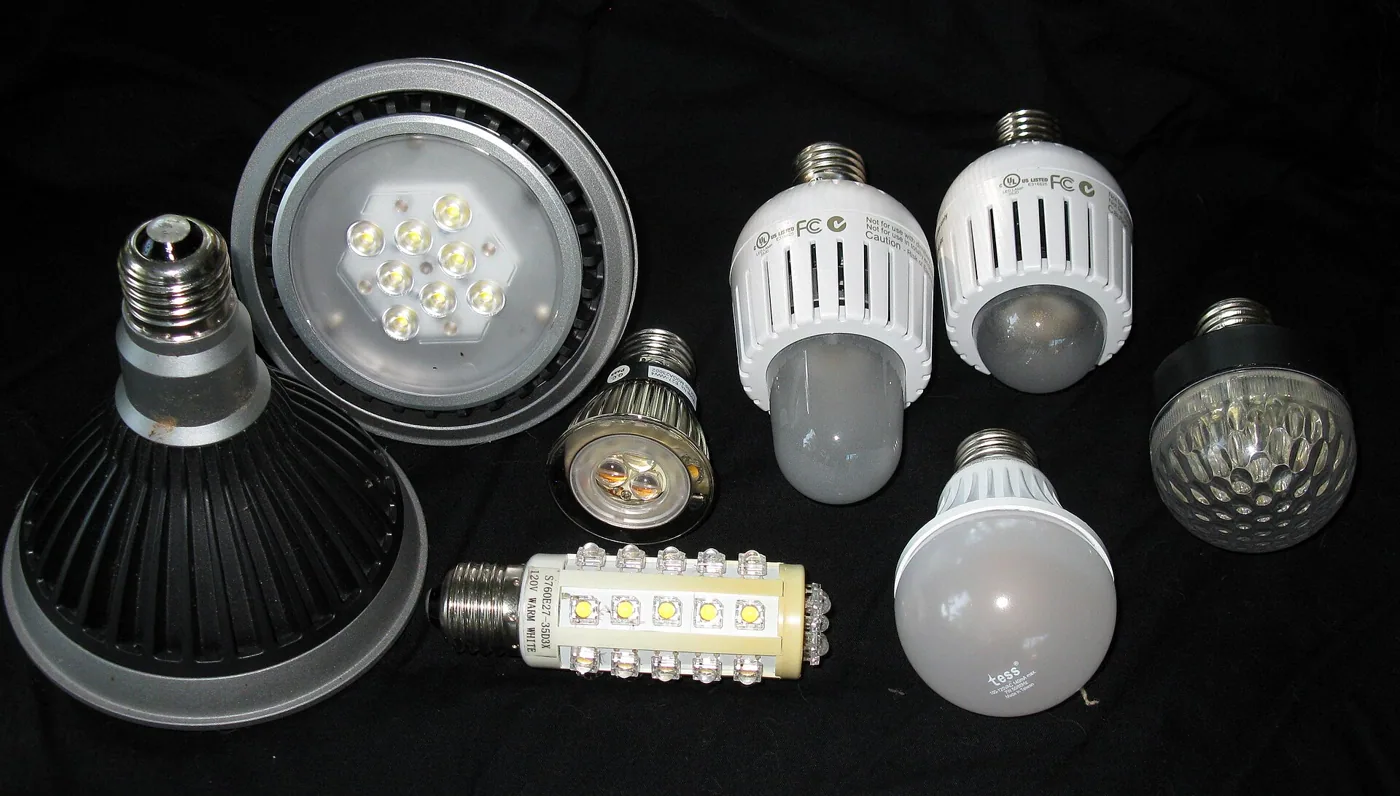
A group of different LED bulbs with various shapes and bases laid out on a dark surface
LED bulbs come in many shapes and bases, and the lumen rating on the box is the number to compare across them.

Common mistakes when sizing light

The most common mistake is buying by watts and getting a dim room. The second is relying on a single source, which gives glare and shadows. The third is ignoring the shade, so a bright bulb in a dark shade delivers a fraction of its rated output. The fourth is forgetting the walls and ceiling: a dark room absorbs most of the light, and a white ceiling lets an uplight do double duty.

The fifth mistake is chasing brightness when comfort is the real goal. A room lit to 30 lumens per square foot feels like an office, and a room at 8 feels like a cave. The right level is the one that suits the activity and the time, and the best lighting plans give you the choice. Check the finished room at night, with the curtains drawn, before deciding that it needs more light.

Reading a bulb box

The box carries more than lumens. Look for the color temperature in kelvins, the color rendering index, the beam angle, whether it is dimmable, the base type and the rated life. Lumens tell you the brightness, kelvins tell you the warmth and CRI tells you how natural colors look. A CRI of 90 or higher is worth seeking for a living room, where wood, fabric and skin tones matter.

Check the shape and the size, as a bulb that does not fit the fixture or protrudes from the shade is a waste. A globe or a candle shape has a different spread of light from a standard A-shape. For enclosed fixtures, check that the bulb is rated for enclosed use, since heat shortens the life of an LED. Buying a few different bulbs and testing them in place costs little and gives a better result than any chart.

How to count your room's lumens

List every source in the room and its bulb's lumens. A ceiling fixture with three 800 lumen bulbs gives 2,400. Two table lamps with 450 lumen bulbs add 900, and a floor lamp of 800 adds another 800, for a total of 4,100. If the room is 200 square feet, that is about 20 lumens per square foot, at the top of the range, and a dimmer lets you lower it.

Do not count the light that a shade absorbs. A dark or thick shade can absorb half the light, so a 800 lumen bulb in a thick shade may deliver only 400 to the room. Count about 60 to 70 percent of the bulb's output for a shaded lamp, and the full output for a bare bulb in a fixture with a clear or frosted glass. A white or pale shade lets more through, and a uplight directs the light off the ceiling for a soft glow.

Frequently asked questions

How many lumens do I need for a 12 by 12 living room?

A 144 square foot room needs about 1,440 to 2,900 lumens, depending on use and wall color. Plan for about 2,000, spread across three or four sources with a dimmer on the main one.

Is 800 lumens bright enough for a living room?

One 800 lumen bulb is not enough for the whole room, since it equals a single 60 watt bulb. Use it as one of several sources, or in a reading lamp, and add others to reach the target.

Are more lumens always better?

No. Too much light causes glare and makes the room feel harsh, and the best rooms have a variety of levels. A dimmer or several switchable lamps give you control, and the ideal level changes through the evening.

What if my situation is different, such as a room with a high ceiling?

Raise the target by 10 percent for each foot above 8 feet, and use fixtures that deliver light toward the seating, such as pendants and floor lamps. Uplights reflect off the ceiling and fill the volume, which suits high rooms.

Do lumens drop as a bulb ages?

Yes, slowly. An LED loses a few percent of its output each year, and its rated life, often 15,000 to 25,000 hours, is the time it takes to drop to 70 percent. For most living rooms this is a decade or more, so a drop in brightness is gradual.

Bottom line

Multiply the floor area by 10 to 20 to get the target in lumens, adjust for dark walls and high ceilings and split the total across several sources at different heights. Use three or four lamps of 450 to 800 lumens each, add a dimmer to the main fixture and give the reading chair its own task lamp.

Buy by lumens, not watts, and count what the shade lets through. The result is a room that feels comfortable at every hour, and not one that is merely bright. For how we weigh lighting details in our picks, see how we evaluate products.

Ready to buy?

Compare our top-rated picks side by side.

Image credits

  • accent-chair-desk-corner.webp: JohnLEE Brothers, CC0, source
  • accent-chair-green-velvet.webp: Shixart1985, CC BY 2.0, source
  • accent-chair-hero.webp: Shixart1985, CC BY 2.0, source
  • anchor-built-in-bookcases-room.webp: Carol M. Highsmith, Public domain, source
  • anchor-small-bookcase-hall.webp: Steven Pavlov, CC BY-SA 4.0, source
  • anchor-white-bookcase-wall.webp: Egilus, CC BY-SA 4.0, source
  • arrange-living-room-hero.webp: Kotivalo, CC BY-SA 4.0, source
  • arrange-living-room-seating-group.webp: Neoclassicism Enthusiast, CC0, source
  • arrange-living-room-sofa-wall.webp: Adele Berenstein, CC BY 2.0, source
  • artsofa-pictures-on-wall-room.webp: Tudor Washington Collins, CC BY 4.0, source
  • artsofa-sofa-corner-mural.webp: G�nter Seggeb�ing, Coesfeld, CC BY-SA 3.0, source
  • artsofa-sofa-mural-wall.webp: G�nter Seggeb�ing, Coesfeld, CC BY-SA 3.0, source
  • blackoutcurtain-floor-length-pair.webp: Ounfs Robmmy 238, CC0, source
  • blackoutcurtain-olive-heavy-fabric.webp: Easysayg, CC BY-SA 4.0, source
  • blackoutcurtain-white-sheer-hotel.webp: HuiDongXLW RMDa, CC0, source
  • ceilingfan-five-blade-light.webp: CommandProMC, CC BY-SA 4.0, source
  • ceilingfan-pull-chain-light.webp: Hans Olav Lien, CC BY-SA 3.0, source
  • clean-fabric-sofa-blanket.webp: Shixart1985, CC BY 2.0, source
  • clean-fabric-sofa-hero.webp: Lear 21, CC BY-SA 4.0, source
  • clean-fabric-sofa-slipcover.webp: Enric, CC BY-SA 4.0, source
  • clean-rug-fringe-pattern.webp: Sununa, CC BY-SA 4.0, source
  • clean-rug-runner-hall.webp: Sununa, CC BY-SA 4.0, source
  • coffeetable-round-yellow-sofa.webp: Vaibhavratnaparkhi, CC BY-SA 4.0, source
  • coffeetable-tan-sofa-dark-table.webp: Shixart1985, CC BY 2.0, source
  • coffeetable-two-wood-tables.webp: Sophia Baboolal, CC0, source
  • color-temp-bright-bulb.webp: Xzantiyamoloy, CC BY 4.0, source
  • color-temp-gu10-spot.webp: Dmitry G, CC BY-SA 3.0, source
  • color-temp-hero.webp: LoMit, CC BY-SA 4.0, source
  • color603010-paint-swatches-wall.webp: Chris Rycroft, CC BY 2.0, source
  • color603010-rainbow-swatch-range.webp: Joyful spherical creature, CC BY 4.0, source
  • color603010-swatch-cards-neutrals.webp: Clean Wal-Mart, CC BY 2.0, source
  • cornertv-1960s-room-tv-window.webp: Kotivalo, CC BY-SA 4.0, source
  • cornertv-budapest-sofa-room.webp: Justin Sch�ler, CC0, source
  • cornertv-white-room-console.webp: Oliur Rahman, CC0, source
  • curtainfabric-heavy-olive-folds.webp: Easysayg, CC BY-SA 4.0, source
  • curtainfabric-hotel-floor-length-pair.webp: Ounfs Robmmy 238, CC0, source
  • curtainfabric-white-light-filtering.webp: HuiDongXLW RMDa, CC0, source
  • curtains-hk-window-stacked-open.webp: YSSKACH WFAMOACSH TUNGA, CC BY-SA 4.0, source
  • curtains-hotel-living-zone-floor-length.webp: Ounfs Robmmy 238, CC0, source
  • cushion-fill-hero.webp: Dalton Scavassa, CC BY-SA 4.0, source
  • cushion-fill-pillows-leather.webp: Aaaatu, CC BY-SA 4.0, source
  • depth-grey-sofa-cushions.webp: Dalton Scavassa, CC BY-SA 4.0, source
  • depth-grey-sofa-hero.webp: Lear 21, CC BY-SA 4.0, source
  • depth-sectional-living-room.webp: Shixart1985, CC BY 2.0, source
  • dimmer-rotary-wall.webp: Paolomarco, CC BY-SA 4.0, source
  • dimmer-slide-wall.webp: BrokenSphere, CC BY-SA 3.0, source
  • dimmer-wiring-box.webp: Kurtkaiser, CC0, source
  • door-hotel-living-room.webp: Adele Berenstein, CC BY 2.0, source
  • door-orange-sofa-hero.webp: Shixart1985, CC BY 2.0, source
  • echo-1960s-room-soft-furnishings.webp: Kotivalo, CC BY-SA 4.0, source
  • echo-fabric-acoustic-panels-wall.webp: 36N63, CC BY-SA 4.0, source
  • echo-panel-mineral-wool-core.webp: JoraK, CC BY-SA 4.0, source
  • entcenter-low-stand-devices.webp: William Hook, CC BY-SA 2.0, source
  • entcenter-old-tv-setup.webp: William Hook, CC BY-SA 2.0, source
  • entcenter-wood-wall-unit-living-room.webp: Casey Fleser, CC BY 2.0, source
  • fabric-green-velvet-hero.webp: Neoclassicism Enthusiast, CC0, source
  • fabric-grey-sofa-cushions.webp: Lear 21, CC BY-SA 4.0, source
  • fabric-sofa-blanket.webp: Shixart1985, CC BY 2.0, source
  • floatshelf-mixed-books-rows.webp: Roman Eisele, CC BY-SA 4.0, source
  • floatshelf-steel-support.webp: Fructibus, CC0, source
  • floatshelf-white-bookcase-wall.webp: Egilus, CC BY-SA 4.0, source
  • floor-lamp-height-hero.webp: Agbarto, CC0, source
  • floor-lamp-height-stained-glass.webp: Louis Comfort Tiffany / Tiffany Studios, CC0, source
  • floor-lamp-height-white-reading-lamp.webp: FASTILY, CC BY-SA 4.0, source
  • frame-black-leather-sofa.webp: www.Pixel.la Free Stock Photos, CC0, source
  • frame-green-velvet-sofa.webp: Neoclassicism Enthusiast, CC0, source
  • frame-grey-sofa-hero.webp: Dalton Scavassa, CC BY-SA 4.0, source
  • gallerywall-frames-bookcase-lamp.webp: Personal Creations, CC BY 2.0, source
  • gallerywall-frames-floor-tape.webp: Personal Creations, CC BY 2.0, source
  • gallerywall-frames-on-wall-home.webp: Personal Creations, CC BY 2.0, source
  • hang-light-hero.webp: Martin Falbisoner, CC BY-SA 4.0, source
  • hang-light-lamp-with-shade.webp: LoMit, CC BY-SA 4.0, source
  • hang-light-red-drum-lamp.webp: Agbarto, CC0, source
  • jute-sisal-combing-fibre.webp: Uncredited for Keystone View Company, Public domain, source
  • jute-sisal-hero.webp: B.navez, CC BY-SA 3.0, source
  • jute-sisal-plantation.webp: Forest & Kim Starr, CC BY 3.0, source
  • knotted-rug-cut-pile-carpet.webp: Daderot, CC0, source
  • knotted-rug-hero.webp: Daderot, CC0, source
  • knotted-rug-prayer-wool.webp: Daderot, CC0, source
  • lampshade-cream-base.webp: LoMit, CC BY-SA 4.0, source
  • lampshade-empire-lamp.webp: J.Dncsn, CC BY-SA 3.0, source
  • lampshade-paper-rect-lamp.webp: Zeitlupe, CC BY-SA 4.0, source
  • layer-rugs-armchairs.webp: PattayaPatrol, CC BY-SA 4.0, source
  • layer-rugs-conversation-pit.webp: Marsh Davis; Indiana Landmarks, CC BY 4.0, source
  • layer-rugs-hero.webp: BusterD, CC BY-SA 4.0, source
  • layered-light-hero.webp: FASTILY, CC BY-SA 4.0, source
  • layered-light-red-shade-lamp.webp: Agbarto, CC0, source
  • layered-light-table-lamp.webp: LoMit, CC BY-SA 4.0, source
  • leather-care-black-sofa.webp: www.Pixel.la Free Stock Photos, CC0, source
  • leather-care-burgundy-set.webp: Dominic's pics, CC BY 2.0, source
  • leather-care-hero.webp: Thomas Quine, CC BY 2.0, source
  • ledstrip-cove-fireplace.webp: Andrey Gvrv, CC BY-SA 3.0, source
  • ledstrip-spool-driver.webp: Dmitry G, CC BY-SA 3.0, source
  • ledstrip-tv-back.webp: Stilfehler, CC BY-SA 4.0, source
  • loveseat-sofa-armchair-room.webp: Adele Berenstein, CC BY 2.0, source
  • loveseat-sofa-hero.webp: Aaaatu, CC BY-SA 4.0, source
  • loveseat-sofa-leather-pair.webp: Dominic's pics, CC BY 2.0, source
  • lowlight-snake-plant-corner-pot.webp: Enzo Rippa, CC BY-SA 4.0, source
  • lowlight-snake-plant-window-table.webp: Martin Olsson, CC BY-SA 3.0, source
  • lowlight-zz-plant-potted.webp: Jamshid Nurkulov, CC BY-SA 4.0, source
  • lumens-bulb-hero.webp: R. Henrik Nilsson, CC BY 4.0, source
  • lumens-led-bulbs-group.webp: Geoffrey.landis at English Wikipedia, CC BY 3.0, source
  • measure-cabin-sofa.webp: Shixart1985, CC BY 2.0, source
  • measure-room-depth.webp: Shixart1985, CC BY 2.0, source
  • measure-sofa-hero.webp: Shixart1985, CC BY 2.0, source
  • mirror-above-mantel-living-room.webp: Tudor Washington Collins, CC BY 4.0, source
  • mirror-round-blue-wall-window.webp: Ciara N� Riain, CC BY-SA 4.0, source
  • mirror-round-over-wood-console.webp: Shixart1985, CC BY 2.0, source
  • mixpatterns-armenian-patterned-pillows.webp: Ararat Trvants, CC BY-SA 4.0, source
  • mixpatterns-couch-pillows-set.webp: Dawid Skalec, CC BY-SA 4.0, source
  • mixpatterns-leather-sofa-pillows.webp: Aaaatu, CC BY-SA 4.0, source
  • no-overhead-hero.webp: Gotogo, CC BY-SA 4.0, source
  • no-overhead-red-shade-lamp.webp: Agbarto, CC0, source
  • no-overhead-white-floor-lamp.webp: FASTILY, CC BY-SA 4.0, source
  • nodrillcurtain-hk-window-open.webp: YSSKACH WFAMOACSH TUNGA, CC BY-SA 4.0, source
  • nodrillcurtain-olive-rail-folds.webp: Easysayg, CC BY-SA 4.0, source
  • nodrillcurtain-white-light-panel.webp: HuiDongXLW RMDa, CC0, source
  • open-plan-rug-armchairs.webp: PattayaPatrol, CC BY-SA 4.0, source
  • open-plan-rug-hero.webp: NPS Photo, Public domain, source
  • open-plan-rug-sunken-living.webp: Marsh Davis; Indiana Landmarks, CC BY 4.0, source
  • ottoman-coffee-table-pair.webp: Sophia Baboolal, CC0, source
  • ottoman-leather-round-pair.webp: Olugold, CC BY-SA 4.0, source
  • ottoman-round-stool-top.webp: Olugold, CC BY-SA 4.0, source
  • paintsheen-open-paint-cans.webp: United Soybean Board, CC BY 2.0, source
  • paintsheen-paint-can-brush.webp: Shixart1985, CC BY 2.0, source
  • paintsheen-swatch-cards-range.webp: Chris Rycroft, CC BY 2.0, source
  • pets-sofa-kitten-cushions.webp: Feliciano Guimar�es from Guimar�es, Portugal, CC BY 2.0, source
  • pets-sofa-slipcover.webp: Enric, CC BY-SA 4.0, source
  • pillows-decorative-couch-set.webp: Dawid Skalec, CC BY-SA 4.0, source
  • pillows-leather-sofa-group.webp: Aaaatu, CC BY-SA 4.0, source
  • pillows-wooden-sofa-red-cushions.webp: Zohasheikh, CC BY-SA 4.0, source
  • readinglamp-adjustable-torchiere.webp: Agbarto, CC0, source
  • readinglamp-armchair-corner-lamp.webp: Kotivalo, CC BY-SA 3.0, source
  • readinglamp-cozy-sunlit-corner.webp: Shixart1985, CC BY 2.0, source
  • recessed-gimbal-trim.webp: Stilfehler, CC BY-SA 4.0, source
  • recessed-housing-display.webp: Stilfehler, CC BY-SA 4.0, source
  • recessed-led-can-trim.webp: Stilfehler, CC BY-SA 4.0, source
  • recliner-buying-armchair-room.webp: Virginia State Parks staff, CC BY 2.0, source
  • recliner-buying-hero.webp: Laura Stoinski, CC0, source
  • recliner-buying-leather-sofa.webp: Aaaatu, CC BY-SA 4.0, source
  • rug-curl-fringe-rug.webp: Sununa, CC BY-SA 4.0, source
  • rug-curl-hero.webp: Sununa, CC BY-SA 4.0, source
  • rug-curl-runner-patterns.webp: Sununa, CC BY-SA 4.0, source
  • rug-dents-hero.webp: ProjectManhattan, CC BY-SA 3.0, source
  • rug-dents-wool-medallion.webp: Daderot, CC0, source
  • rug-on-carpet-armchairs.webp: PattayaPatrol, CC BY-SA 4.0, source
  • rug-on-carpet-flat-weave.webp: Mervat, CC BY 4.0, source
  • rug-on-carpet-hero.webp: NPS Photo, Public domain, source
  • rug-pad-dense-carpet.webp: ProjectManhattan, CC BY-SA 3.0, source
  • rug-pad-hero.webp: Sununa, CC BY-SA 4.0, source
  • rug-pile-flatweave-stack.webp: Mervat, CC BY 4.0, source
  • rug-pile-sarouk-wool.webp: Daderot, CC0, source
  • rug-shedding-pile-closeup.webp: ProjectManhattan, CC BY-SA 3.0, source
  • rug-shedding-wool-rugs.webp: Mervat, CC BY 4.0, source
  • rug-size-armchairs-on-rug.webp: PattayaPatrol, CC BY-SA 4.0, source
  • rug-size-conversation-area.webp: Marsh Davis; Indiana Landmarks, CC BY 4.0, source
  • rug-size-hero.webp: NPS Photo, Public domain, source
  • runner-size-hero.webp: Sununa, CC BY-SA 4.0, source
  • runner-size-red-runner.webp: Sununa, CC BY-SA 4.0, source
  • runner-size-three-runners.webp: Sununa, CC BY-SA 4.0, source
  • sag-cushions-hero.webp: Durova, CC BY-SA 3.0, source
  • sag-cushions-slipcover.webp: Enric, CC BY-SA 4.0, source
  • sag-cushions-sofa-deck.webp: Dalton Scavassa, CC BY-SA 4.0, source
  • sconce-above-tufted-chairs.webp: Jedodo756, CC0, source
  • sconce-brass-opal-shade.webp: unknown (see Commons page), CC BY-SA 4.0, source
  • sconce-wall-lamp-side-table.webp: Atilla Taskiran, CC0, source
  • sectional-dark-hero.webp: Shixart1985, CC BY 2.0, source
  • sectional-room-arrangement.webp: Kotivalo, CC BY-SA 4.0, source
  • sectional-white-corner.webp: GardenKings, CC BY-SA 3.0, source
  • shelfsag-mixed-books-shelf.webp: Roman Eisele, CC BY-SA 4.0, source
  • shelfsag-packed-bookshelf.webp: Csferrie, CC BY-SA 4.0, source
  • shelfsag-wood-shelf-rows.webp: PeaceSeekers, CC BY-SA 4.0, source
  • sidetable-cozy-sofa-room.webp: Breather, CC0, source
  • sidetable-kentwood-sofa.webp: Kari Shea, CC0, source
  • sidetable-round-wall-lamp.webp: Atilla Taskiran, CC0, source
  • sleeper-sofa-bed-made-up.webp: Maniago, Public domain, source
  • sleeper-sofa-open-hero.webp: N509FZ, CC BY-SA 4.0, source
  • sleeper-sofa-sofa-mode.webp: N509FZ, CC BY-SA 4.0, source
  • small-room-slim-arm-sofa.webp: Lear 21, CC BY-SA 4.0, source
  • small-room-sofa-hero.webp: Shixart1985, CC BY 2.0, source
  • small-room-two-seat-layout.webp: Adele Berenstein, CC BY 2.0, source
  • smallbigger-finland-studio-bright.webp: Aaaatu, CC BY-SA 4.0, source
  • smallbigger-hk-curtains-open-window.webp: YSSKACH WFAMOACSH TUNGA, CC BY-SA 4.0, source
  • smallbigger-white-room-console.webp: Oliur Rahman, CC0, source
  • smallstorage-finland-studio-room.webp: Aaaatu, CC BY-SA 4.0, source
  • smallstorage-leather-sofa-shelving.webp: Sabri Tuzcu, CC0, source
  • smallstorage-wall-shelves-books.webp: Roger W, CC BY-SA 2.0, source
  • smart-bulbs-bulb-in-hand.webp: Xzantiyamoloy, CC BY 4.0, source
  • smart-bulbs-led-internals.webp: Loadmaster, Bech, CC BY-SA 4.0, source
  • soundbar-below-lg-tv.webp: Dinkun Chen, CC BY-SA 4.0, source
  • soundbar-philips-front-grille.webp: Philips Communications, CC BY 2.0, source
  • soundbar-samsung-single-bar.webp: Dinkun Chen, CC BY-SA 4.0, source
  • stylebooks-packed-shelf-wall.webp: Csferrie, CC BY-SA 4.0, source
  • stylebooks-philosophers-shelf.webp: Roman Eisele, CC BY-SA 4.0, source
  • stylebooks-wall-shelves-bottles-books.webp: Roger W, CC BY-SA 2.0, source
  • styletable-book-stack-candle.webp: Gabbybratcher, CC BY-SA 4.0, source
  • styletable-two-tables-mugs.webp: Sophia Baboolal, CC0, source
  • styletable-yellow-sofa-cups-flowerpot.webp: Shixart1985, CC BY 2.0, source
  • surround-home-theater-tv-seating.webp: NPat318, CC BY-SA 4.0, source
  • surround-rear-view-seats.webp: NPat318, CC BY-SA 4.0, source
  • surround-sectional-media-room.webp: Derek Jensen (Tysto), Public domain, source
  • table-lamp-size-antique-shade.webp: Amitbalani, CC0, source
  • table-lamp-size-hero.webp: Tess Mattew, CC BY-SA 4.0, source
  • table-lamp-size-measured.webp: Tess Mattew, CC BY-SA 4.0, source
  • throwblanket-blue-throw-kitten.webp: TudorTulok, CC BY-SA 4.0, source
  • throwblanket-striped-couch-cat.webp: Roman Eisele, CC BY-SA 4.0, source
  • throwblanket-yellow-blue-couch.webp: Roman Eisele, CC BY-SA 4.0, source
  • tvheight-flat-panel-wall.webp: BrokenSphere, CC BY-SA 3.0, source
  • tvheight-plasma-wall-room.webp: Pkepneriv, CC BY-SA 3.0, source
  • tvheight-white-living-room.webp: Oliur Rahman, CC0, source
  • tvmount-articulating-arm.webp: Ben Scholzen, CC BY 2.0, source
  • tvmount-vesa-adapter-plate.webp: Tony Webster, CC BY 2.0, source
  • tvmount-wall-panel-room.webp: Pkepneriv, CC BY-SA 3.0, source
  • tvsize-dark-room-big-screen.webp: Christian Collins, CC BY 2.0, source
  • tvsize-media-room-screen.webp: NPat318, CC BY-SA 4.0, source
  • tvsize-tv-on-stand.webp: PhotoPicker13, CC BY-SA 4.0, source
  • tvstand-low-stand-devices.webp: William Hook, CC BY-SA 2.0, source
  • tvstand-wall-unit-living-room.webp: Casey Fleser, CC BY 2.0, source
  • tvwires-cable-box-wires.webp: Tony Webster, CC BY 2.0, source
  • tvwires-hdmi-connectors.webp: Kreuzschnabel, CC BY-SA 3.0, source
  • tvwires-wall-mounted-panel.webp: BrokenSphere, CC BY-SA 3.0, source
  • washable-rugs-flatweave-stack.webp: Mervat, CC BY 4.0, source
  • washable-rugs-hero.webp: Mervat, CC BY 4.0, source
  • washable-rugs-loomed-stripes.webp: Gcarrillog, CC0, source
  • wool-poly-hero.webp: Mervat, CC BY 4.0, source
  • wool-poly-oaxacan-wool.webp: Gcarrillog, CC0, source
  • wool-poly-prayer-rug.webp: Daderot, CC0, source

Related Guides