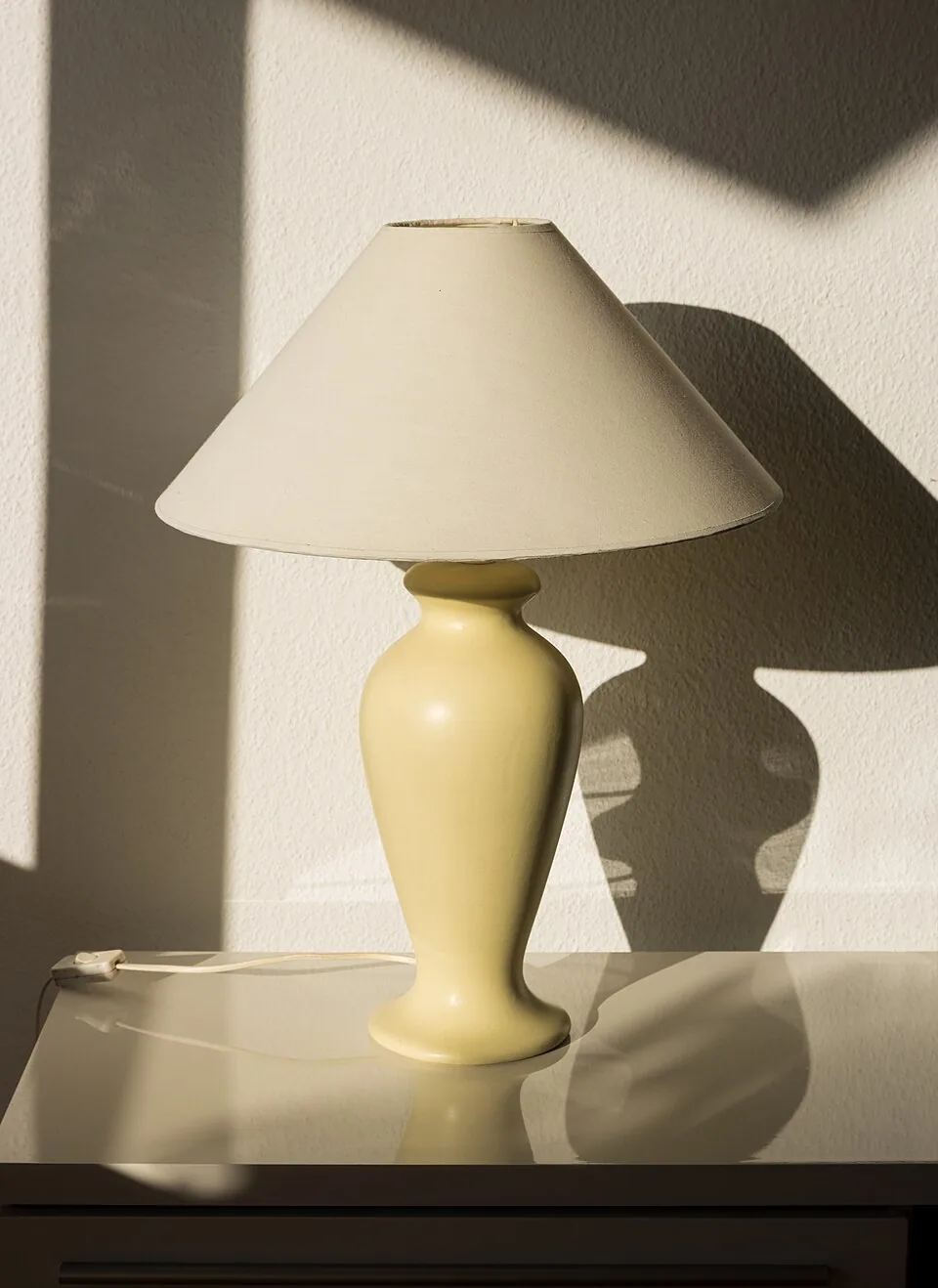
A three-way lamp is one of the most useful and least understood pieces of lighting. A single twist or click takes you from a soft glow for the television to a stronger light for conversation to full brightness for reading. Many living rooms have one, usually a table lamp beside a chair, and many owners have lost the ability to use it properly because the bulb was swapped for an ordinary one and the middle setting vanished.
This guide explains how the socket and the switch work together, what bulbs fit, how LED versions differ from the old filament type, and which repairs are reasonable at home. It also covers a handful of failures that mimic a bad lamp but are really a bulb problem, since those account for most calls to the repair shop.
How a three-way socket works
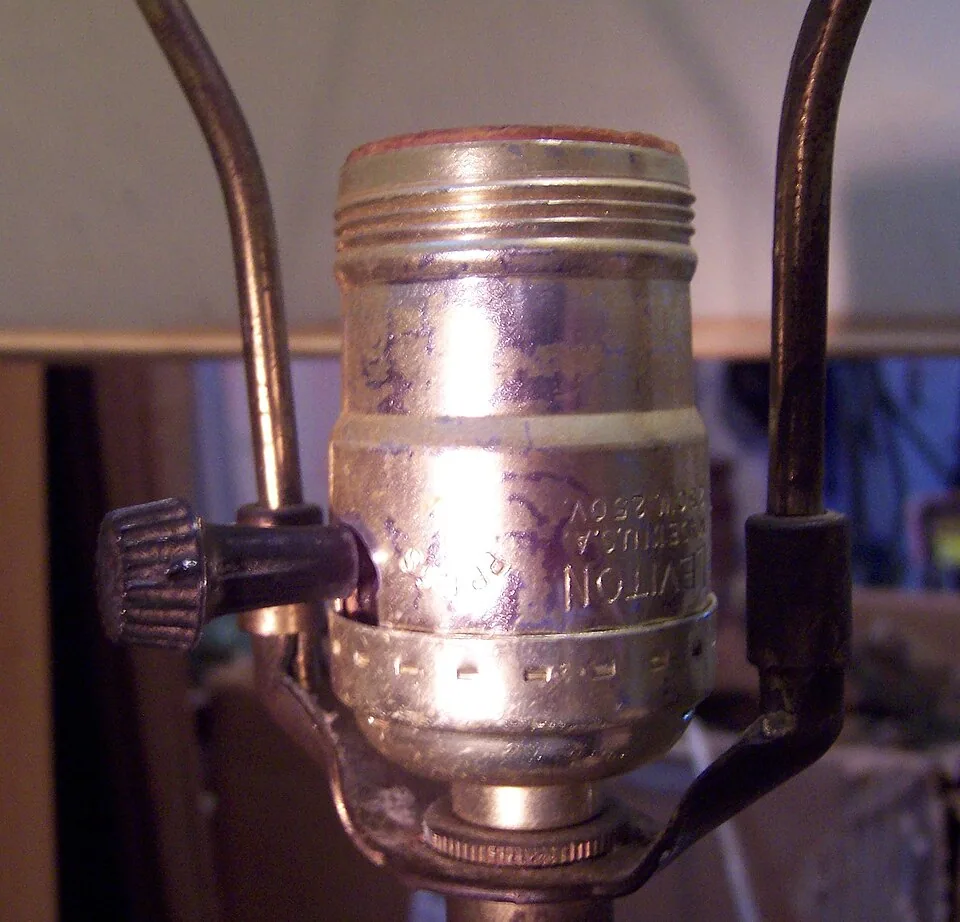
A normal socket has two electrical contacts: one at the bottom center and one at the threaded shell. A three-way socket adds a second contact, a ring around the center tab, so that the socket can feed power to two separate circuits in the bulb. The switch on the lamp has four positions that cycle with each click: off, low, medium, high. The electrical effect is simple. The first click powers the first circuit, the second click powers the second circuit, the third click powers both, and the fourth cuts power.
The classic three-way bulb has two filaments inside the glass. A 50, 100, 150 watt bulb, the most common, uses a 50 watt filament, a 100 watt filament, and both together for 150 watts. Other sets are 30, 70, 100 or 40, 60, 100. The base of the bulb has a center tip and a ring contact of its own, so it only makes proper contact in a three-way socket. In a normal socket it will fit and light, but only one filament receives power, and the other two settings do nothing.
The switch is not the same thing as the bulb. A socket can be three-way and have a switch that is stuck, which makes the lamp seem dead on two settings, and a good switch can be paired with a bulb in which one filament has burned out. This is why the first move when a three-way lamp misbehaves is to test with a new bulb, because a failed filament is by far the most common fault.
Which bulbs work
You need a bulb labelled three-way, which almost always has a medium E26 base, the same thread as a standard bulb. Packaging shows three numbers, for instance 50, 100, 150, or in LED form three lumen outputs. If the bulb shows only a single wattage, it is a standard bulb and it will give you one level of light in a three-way socket. The base of a true three-way bulb has a visible second contact ring that a normal bulb lacks.
LED three-way bulbs use the same principle with a different internal design. They typically offer settings such as 450, 800 and 1,100 lumens, which correspond to roughly 40, 60 and 75 watt incandescent equivalents, and they draw only a few watts. They run much cooler and last far longer than filament versions. The cost is that the quality of the three steps varies, and some LED three-way bulbs have more visible gaps between low and medium than the old filament types.
Some LED three-way bulbs are also dimmable, but a three-way lamp and a wall dimmer rarely mix. A three-way socket on a dimmer behaves unpredictably, and the dimmer can only affect the setting you have selected. If you want a lamp that dims smoothly, choose a lamp with a dimmer knob and a standard dimmable bulb, or add a smart bulb. Our guide to dimmer switch types covers the matching rules.
| Bulb type | Settings | Works in a three-way socket | Notes |
|---|---|---|---|
| Incandescent three-way | Two filaments, three levels | Yes | Hot, short life, mostly replaced by LED |
| LED three-way | Three lumen steps | Yes | Cool, long life, steps vary by model |
| Standard LED or incandescent | One level | Lights, but only on one click | Not recommended, wastes the switch |
| Standard dimmable LED on a dimmer | Continuous | Not applicable | Better for smooth control |
Choosing the right light levels
A three-way bulb is only as useful as the steps it offers. For a reading chair, the highest setting should deliver about 800 to 1,100 lumens at a reachable height, enough to read comfortably, while the lowest should sit around 200 to 300 lumens for ambient light. A 450, 800, 1,100 lumen LED set does this reasonably. A set with a very small first step, say 150 lumens, makes a gentle night glow, but it may be too faint to be useful in a larger room.
Think about where the lamp sits in the room's plan. If it is the main light beside a seat, favor the brighter set, and consider whether a high color rendering score matters for the page and for skin tones. Our guide to CRI for home lighting explains what to look for. If the lamp is an accent in a corner, a gentler set is better, and the steps are for adjusting mood.
The shade interacts with the bulb. A dense fabric shade absorbs a lot of light, so the bright setting can feel moderate, while a pale thin shade lets almost all of it through. Choose a bulb that gives enough light through your shade at the middle setting, because that is the one you will use most. The lampshade size guide covers shade proportions and bulb clearance.
Troubleshooting a lamp that skips settings
The most common complaint is that the lamp works on only one or two of the three levels. The usual cause is a burned out filament, so try a new three-way bulb before anything else. The second cause is a bulb that is not a true three-way, perhaps an ordinary bulb that was swapped in years ago. If a new bulb behaves the same, the culprit is the socket, and in particular the small contact ring inside it that may be dirty or bent.
With the lamp unplugged, look inside the socket. A three-way socket should have a metal tab at the bottom center and a short ring contact around it. If the ring contact is corroded or pushed down, the bulb cannot reach the second circuit. Clean it gently with a dry cloth or a little contact cleaner and a plastic tool, never anything metal while the lamp is plugged in. A bent tab can sometimes be lifted slightly with a wooden pick, but a socket that is cracked, scorched or loose in the lamp should be replaced.
If the lamp has the correct bulb and a clean socket but the switch skips positions, the switch inside the socket has worn. Sockets are cheap and standard, and replacing one is a task within reach of a careful home owner with the lamp unplugged. Buy a three-way replacement socket of the same size and style, take a photo of the wiring before you disconnect, and follow the instructions that come with it.
Rewiring: what is reasonable and what is not
Replacing a socket on a corded table lamp is a straightforward repair, but it involves handling mains wiring. Unplug the lamp completely, and never test with it plugged in. Check that the cord is intact along its length, since an old lamp often has brittle insulation at the socket end. In a polarized plug, the wider blade connects to the neutral side, which should go to the silver screw on the socket, and the narrower blade to the brass screw. Reversing them is a safety issue even if the lamp works.
Converting a standard lamp to a three-way is also possible with a conversion socket, but it adds little in practice and is often not worth the effort. A lamp that was built with a standard socket may have a cord, switch and wiring path not suited to three-way operation, and the three-way socket needs the correct two-conductor connection. If you are not sure what you are looking at, buy a lamp that is already three-way or use a smart bulb.
Stop and call a professional, or replace the lamp, when you see cracked insulation, a cord with exposed wire, scorch marks, a plug that is hot in use, a lamp that trips a breaker, or a fixture that is hard wired into a wall or ceiling. Those cases involve more than a bulb and a socket, and mistakes carry a real fire and shock risk. A new lamp is often cheaper than a repair after a certain point.
Buying a new three-way lamp
If you are shopping for a lamp and want the three-way feature, check the listing for the words three-way switch or three-way socket, and for the bulb that is included. Many listings show a three-way lamp in the photo but ship with a single standard bulb, which means the feature does not work until you buy a proper bulb. Plan to order an LED three-way bulb along with the lamp, and confirm the lumen steps suit the room before you set it up.
Look closely at the switch style. A rotary knob on the socket is the standard and the most durable, because it is a simple mechanical part you can replace. A touch sensor base gives the same four steps with a tap on the metal, which is convenient but depends on electronics that can fail, and the touch point may stop responding after years of use. A pull chain version is rare now but easy to repair. For a lamp you intend to keep a decade, the knob is the safer choice.
Weight and stability matter on a lamp that sits at elbow height beside a seat. A narrow base with a tall stem can be knocked over by a pet or a child, and a hot bulb against a fabric cushion is a hazard. Choose a base that is heavy enough to resist a brush with the sleeve, and keep the shade at least a hand's width away from curtains and upholstery. The table lamp size guide explains the proportions that keep a lamp stable and balanced.
Alternatives to a three-way lamp
The three-way system is a fixed set of steps. If you want finer control, a lamp with a dimmer knob and a dimmable bulb gives a continuous range, and a smart bulb adds schedules and color control, at the cost of an app and a wall switch that must stay on. Smart bulbs fit a standard socket, and our article on smart bulbs for the living room explains the tradeoffs.
A warm dim bulb is another option that changes color as you lower the dimmer, which a three-way lamp cannot do. A lamp with a plug-in inline dimmer can host it. For a household that likes simple controls, a three-way lamp remains hard to beat, since the switch is physical, the steps are predictable and everyone in the family knows how it works.
Heat, shades and safe placement
A three-way lamp spends much of its life at the middle or the high setting, and that matters for heat. An incandescent three-way bulb at its top setting can draw 150 watts, and the socket, the shade and the harp are all built around a stated maximum. Read the label on the socket shell and never exceed it, since a fabric shade held close to a hot bulb can scorch and discolor over time. LED three-way bulbs run far cooler and sidestep most of this, which is another reason to switch when a bulb burns out.
Shade fit also changes how the three steps look. A shade that sits low over the bulb hides the filament and gives a soft glow at every setting, while a shade set too high lets the bright setting dazzle someone who is sitting. When you change to a different bulb, check that its top does not poke above the harp or touch the inside of the shade. The bulb should sit with its brightest part roughly at the level of the shade's lower third, which is the position that lights both the page below and the ceiling above.
Placement rounds off the job. Keep the lamp on a stable surface, with the cord run to the back and out of the walking path, and keep fabrics, curtains and papers a hand's width from the shade. If a lamp feels warm to the touch at the base after an hour on its middle setting, move it to a better spot or lower the setting. A three-way lamp is meant to be turned down, and its middle step is there so you do not have to run it flat out.
Frequently asked questions
Can I put a regular LED bulb in a three-way lamp?
Yes, it will light, but only on one setting, usually the first or the last click. The other positions will leave the lamp dark or give the same light. If you only want one brightness, that works, but you waste the three-way switch and may find the lamp feels broken when it skips positions.
Do three-way bulbs fit regular lamps?
They screw into a standard E26 socket, but only one filament lights, so the lamp stays at a single level. LED three-way bulbs may behave differently, and some will not light at all in a standard socket. Use them in three-way sockets.
Why is my three-way bulb dim on the highest setting?
Check that the bulb is fully seated and that the socket's ring contact is clean. A bulb in which one filament has failed will look dim on the combined setting. If a new bulb is also dim, the socket contacts are likely worn, and a replacement socket is the fix.
Are LED three-way bulbs worth the cost?
For most lamps, yes. They draw a fraction of the power, run cool near fabric shades, and last far longer than the two-filament type, which tends to burn out one filament early. The steps may be less even, so read the lumen figures for each setting before you buy.
Can I use a three-way bulb with a dimmer?
Generally not. A dimmer is designed for a single circuit, and a three-way socket splits the load. Use the lamp's own switch for steps, or choose a lamp built for a dimmer. If you need to combine the two, look for a bulb that states it is compatible, and expect compromises.
The bottom line
Keep a true three-way bulb in a three-way lamp, and replace failed ones with an LED three-way set whose lumen steps match the use, about 800 to 1,100 lumens at the top for a reading chair. When the lamp skips a setting, test the bulb first, then inspect the socket contacts, and replace the socket only if you are comfortable working with the plug out.
Retire any lamp with a damaged cord, a hot plug or scorch marks, and do not try to rewire fixtures that are fixed to the building. If you want smoother control than three steps give you, a standard lamp with a dimmable or smart bulb is a better route than modifying the lamp you have.