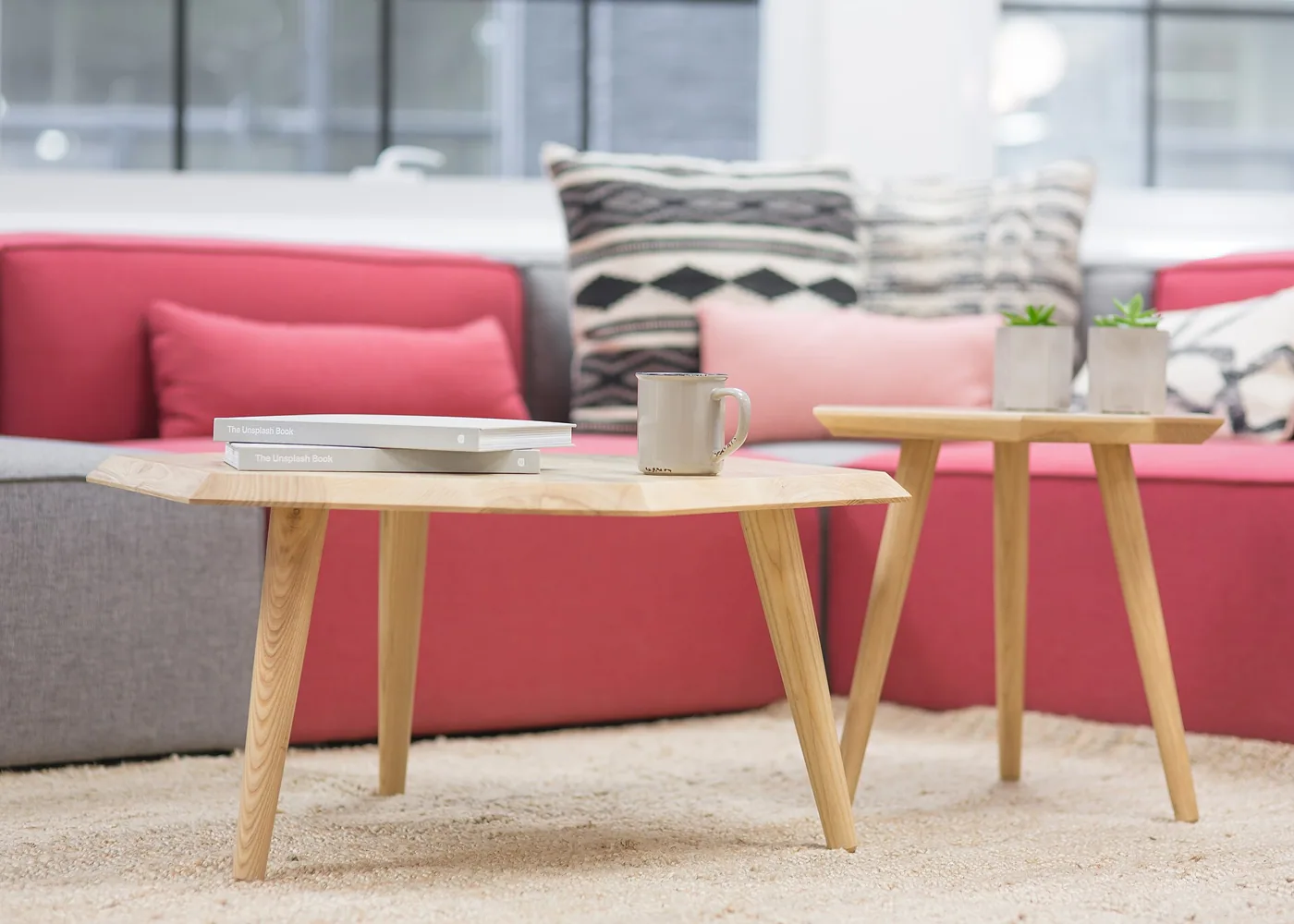
A styled coffee table in a magazine is a photograph, not a table. Nobody has put a mug on it. The candle has never been lit, the book has never been opened and the plant is conveniently in the exact spot where the remote needs to go. The version you can live with is a different thing: still arranged and still attractive, but with a clear area for the activities that justify owning a table.
This guide gives a method for styling a coffee table that works in a real living room. It covers the grouping logic, the heights and the sizes of the objects, the role of a tray, the question of how much of the surface to leave empty, and the adjustments for households with children, pets and a TV remote that always wanders. The advice is built around a few numbers that you can apply to any table.
Decide what the table has to do first
Before you add anything, list the table's jobs. Does it hold drinks and snacks? A laptop? A board game on Friday night? A remote and a phone charger? A place to put your feet? Each job needs space, and the styling has to leave it. A coffee table that holds only decor can be fully styled. A table that serves a family needs a clear zone, and the decor fits around it.
The usual rule is to leave one third to one half of the surface empty. On a 48 by 24 inch table, which is 1,152 square inches of surface, that means at least 400 square inches clear, about the size of a 20 by 20 inch zone. That is enough for two mugs and a book, or a laptop. If the table is smaller, leave more. The decor can then occupy a third of the table at one end or the center, and the rest remains functional.
If the table is used by many people, such as in a family room, treat the decor as movable. A tray can be lifted aside in a moment. A heavy bowl and a few books stay in place. Anything breakable or tall should go on a shelf instead. A table that is used daily will accumulate remotes, coasters and mugs whether you plan for them or not, so build those into the design with a box for remotes and a stack of coasters.
The tray: the most useful object
A tray is the simplest way to turn a handful of objects into an arrangement. It defines a boundary, so the group looks deliberate, and it makes the group movable. A tray of 12 by 18 inches or 14 by 20 inches suits most tables. It should be about a third to half the table's length. A tray that is too large leaves no room for use, and one that is too small looks like a saucer.
Choose a tray with a low rim, about an inch tall, and a non-slip or flat base. Wood, metal, leather and woven materials all work, and the finish should contrast a little with the table: a dark tray on a pale table, a light tray on a dark one. A mirrored tray looks glamorous but shows fingerprints, and a tray with a high rim can hold a drink at risk of tipping.
Put the tray off center, towards one end of the table, or at the center if the table is small. Centered trays look formal and symmetrical, and off-center ones look relaxed and leave room for use. A second small tray or a box holds the remotes and keeps them from spreading.
Mix heights: low, medium and tall
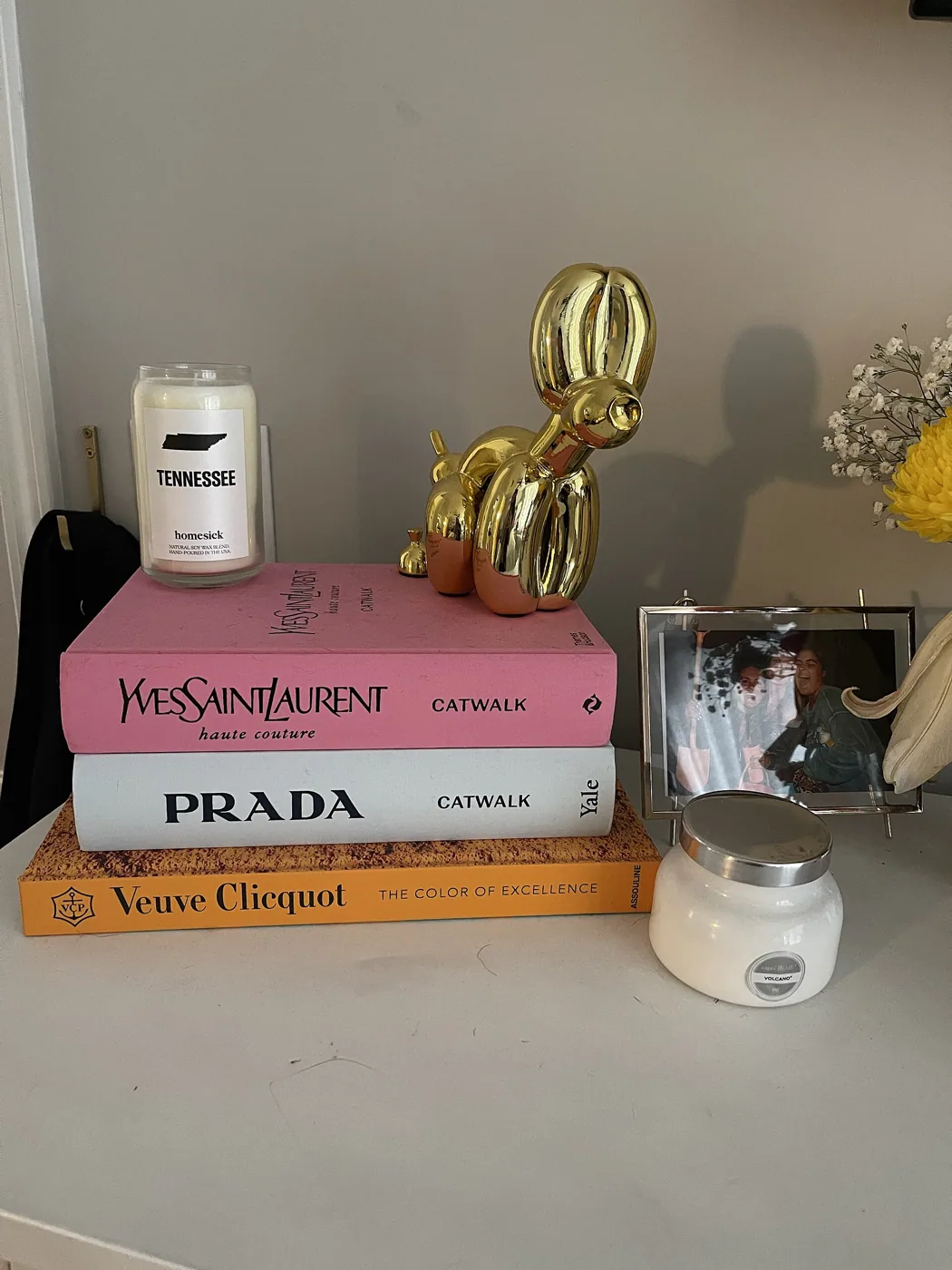
The eye likes variation in height, and a flat arrangement looks dull. The classic formula is three levels. A low element, such as a bowl, a tray or a stack of two or three books, forms the base, about 1 to 4 inches high. A medium element, such as a candle, a small box or a taller stack of books, reaches 4 to 8 inches. A tall element, such as a vase of branches, a plant or a lamp, reaches 10 to 12 inches. Place the tallest at the back or the end, and the lowest in front, closest to the sitter.
Keep the tallest object under about 12 inches on a standard coffee table. It should not block the view across the table to the person sitting opposite, or the TV from the sofa. A tall vase at 20 inches turns into a wall. For a table that sits in front of a TV, keep everything below the sightline, which on a typical setup means under 10 inches.
| Level | Height | Examples |
|---|---|---|
| Low | 1 to 4 in | Tray, bowl, one or two books |
| Medium | 4 to 8 in | Candle, box, stack of four books |
| Tall | 9 to 12 in | Vase, plant, sculpture |
Count and scale
Use odd numbers, usually three or five objects in total. Three is simple and works for a small table. Five gives more interest for a large table. Even numbers tend to look static or symmetrical, which can be good for a formal room, but odd groups look more natural. The tray counts as one item, and a stack of books counts as one.
Scale the objects to the table. A 48 inch table can carry an object about 8 to 12 inches wide at its widest point, with a few smaller ones. A tiny candle and a tiny vase on a large table look lost, and a very large bowl on a small round table looks crowded. As a guide, the whole group should occupy about a third of the table length and a bit more than half its depth, and the objects should vary in size: one large, one medium, one small.
Use books as a base. A stack of two or three large hardcovers, laid flat with the spines facing the same way, is a stable platform for a small object, and it adds height. Choose books with covers that fit the room, or wrap them in plain paper. Do not stack more than about 6 inches of books, and put the largest at the bottom.
What to put on it
Aim for variety in material and function. A book, a bowl or a dish, a plant and a candle are the staples, since they cover paper, ceramic, green and wax. A real plant adds life, and a low one such as a succulent or a small fern needs little light. A faux plant is a sound choice for a room with low light, though it should look convincing and be dusted. A small bowl holds keys or coins, a box holds remotes and a candle gives warmth.
Choose items that relate to the room's colors. The objects can match or contrast with the sofa and the rug, and repeating one color from the room across two objects ties the table to the scheme. The guide to the 60-30-10 color rule suggests keeping accent colors to three to five appearances across the room, which is a good guide for the table too.
Avoid clutter, such as a collection of small trinkets, which looks messy and is annoying to dust. One larger item is better than five tiny ones. Avoid scented candles that clash with the room, and use candles with a low flame that stay safe. Keep fragile glass out of reach of children and pets.
Matching the styling to the room
The same method gives different results depending on the objects you choose. In a modern room, with clean lines and a limited palette, use fewer pieces with simple shapes: a low ceramic bowl, a single large book and a sculptural object. Leave generous empty space, since the empty surface is part of the look. In a traditional room, a pair of matching candlesticks, a silver or wood tray and a floral arrangement fit the style, and a more symmetrical layout looks right. In a casual or bohemian room, mix textures: a woven tray, a stack of mismatched books, a plant in a clay pot and a small dish of found objects.
Scale the styling to the room as well. A small living room with a small table needs a smaller group, perhaps just a tray with a candle and a plant. A big room with a large table or a pair of tables can carry a bolder arrangement and a larger object. If the room already has a lot of pattern and color, keep the table calm, so it works as a resting place for the eye. If the room is plain, the table can carry more of the interest.
Candles, plants and the practical risks
Candles bring warmth, and they bring a fire risk when left unattended on a table that is used. Use a candle in a heavy, stable holder, keep it away from pillows and throws, and never leave it burning when you leave the room. A flameless LED candle gives the glow without the risk and is a good choice for a table within reach of children. If you like scent, choose one scent for the room and keep it mild, since a strong candle competes with food and drink.
Real plants need light. A table that sits away from a window may not support a living plant, and a plant that is struggling looks worse than a good faux one. Choose a plant that tolerates low light, such as a snake plant or a small ZZ plant, or use a vase of dried stems, which last for months and need no water. Check that the pot has a saucer to protect the table, and that the plant is not toxic to pets, as covered in the guide on low light plants for living rooms.
The photo test and finishing touches
When the table is arranged, take a photo from the main seat. A photo flattens the scene and shows problems that you do not notice in person: an object that is too tall, a group that is off balance or a patch of clutter. Look at the photo and ask three questions. Can you see the table surface? Does the eye land on one object first? Is the arrangement balanced, with no single item pulling too far to one side? Adjust and take another photo until the answers are yes.
Finish with a few functional details. Place a stack of coasters where guests can find them, keep a small tray for the remote, and tuck a charging cable under the edge or behind the sofa. A coffee table that makes the useful things easy to reach is a better styled table than one that hides them.
Kids, pets and busy households
If children and pets use the room, build the styling to survive. Choose a table with rounded corners and no glass, as discussed in coffee table height and clearance. Pick sturdy, unbreakable objects: wood, metal, resin and thick ceramic. Use a heavy tray with a rim and a lip, and use a bowl with a wide base. Put the arrangement at the center, away from the edges where small hands reach.
Use a basket or an ottoman nearby for the toys and the blankets that otherwise land on the table, as discussed in the storage ottoman guide. A lidded box on the table can hold remotes and cards. Keep candles and anything with a flame out of reach, or switch to a flameless candle. Cats like to push objects off tables, and a heavier base or a bit of museum putty under a vase stops the games.
Accept that the table will change through the day. A rotating pattern works well: a styled table for guests, an easy reset after the weekend and a tray that holds the daily items in between. The styling is not fragile if the pieces have a home.
Seasonal changes and the weekly reset
The base arrangement can stay the same while one or two items change with the season. Swap the plant for branches in autumn, a bowl of lemons in summer or a candle in a winter scent. Changing one object keeps the table fresh without a new purchase. Keep a small box of seasonal items in a closet and rotate them.
Once a week, take everything off, wipe the table and put it back. This takes two minutes and tells you which items you never move, which you remove and which you miss. Anything that you take off and do not put back is a candidate for removal. Over time the table settles into a set of objects that work for the household.
Frequently asked questions
How many items should I put on a coffee table?
Three to five, counting a tray or a stack of books as one. Leave at least a third of the surface empty for use.
What should I put on a coffee table?
A tray, a stack of books, a bowl, a plant and a candle cover the main materials and heights. Add a box for remotes if you need one.
How tall should decor on a coffee table be?
No taller than about 12 inches, and lower if the table sits in front of a TV. Tall objects block conversation and the view.
How do I style a coffee table with kids?
Use a rounded table, sturdy objects, a heavy tray with a rim and keep fragile items on a shelf. A basket nearby catches toys.
Should a coffee table be styled symmetrically?
Not necessarily. An off-center group looks relaxed and leaves room for use. Symmetry suits formal rooms.
Bottom line
Start with the table's jobs, leave a third of the surface clear, gather three to five objects on a tray and mix low, medium and tall heights. Keep the tallest piece under 12 inches and the pieces sturdy.
Reset the table weekly and change one object with the seasons. A table that is styled for use looks better after a week of living than a perfect one that nobody can touch.