Amazon affiliate links - we earn a commission.Affiliate disclosure
Guide·12 min read

Low Light Plants for Living Rooms: What Low Light Really Means

What low light means in foot-candles, how distance from a window cuts light, which plants cope, which are pet safe and why overwatering kills more than shade.

By Elena Hart · Updated 2026-11-20

Quick answer

Low light means roughly 25 to 75 foot-candles, about what you find 6 to 10 feet from an east or north window, and no plant lives in the dark. Reliable choices include snake plant, ZZ plant, cast iron plant, pothos and peace lily, with cast iron plant, parlor palm and spider plant safe for cats and dogs. Water only when the top inch or two of soil is dry, because overwatering in a dim room kills more plants than the low light does, and rotate the pot every couple of weeks.

Plant labels say low light, and buyers hear dark. They put a pot in the corner of a living room that is lit by a single lamp and a window across the room, and six weeks later the leaves are yellow and the soil smells. The plant did not die of darkness. It drowned, because a plant in dim light uses very little water and the owner kept watering on a schedule.

This guide explains what low light actually means in numbers, how to measure the light in your room with a phone or a cheap meter, how much light drops with distance from a window, which plants cope with the dim end and what trade-offs they bring. It also covers the question that matters in many homes, which is which of them are safe for pets, and the care habits that keep a low-light plant alive.

What low light means in numbers

Light for plants is measured in foot-candles or in lux, where one foot-candle is about 10.8 lux. A bright, sunny windowsill can reach 1,000 foot-candles or more at midday. A room lit by an ordinary window, a few feet away, may see 100 to 250. Deep in a room, away from windows, the figure falls to 5 to 25 foot-candles, and an office under fluorescent lights sees about 50 to 75. Plants care about the strength of the light and the hours of exposure, and both fall off quickly in a living room.

Horticulturists use rough bands. Low light is about 25 to 75 foot-candles, medium is 75 to 250, and bright indirect is 250 to 1,000 or more. A plant sold as low light tolerant can survive at the upper end of the low band and may grow slowly there. A plant at 10 foot-candles, as in a windowless corner lit only by a lamp, will decline, even if it is a tough species. That is the point most labels skip: low light tolerant means it will put up with less, not that it thrives in a dark room.

Light levelFoot-candlesWhere you see it
Very lowUnder 25Far corners, rooms with small north windows
Low25 to 756 to 10 ft from a bright window, north-facing room
Medium75 to 2503 to 6 ft from a window, east or west light
Bright indirect250 to 1,000Near a south or west window with a sheer curtain

Use a light meter app on a phone as a rough guide, but treat the numbers with care, since phone sensors are not calibrated for plants. A cheaper method is the shadow test. Hold your hand a foot above the spot at midday. A sharp shadow means bright light, a soft shadow with clear edges means medium and a faint, blurry shadow means low. If you cannot see a shadow at all, the spot is too dark for any plant without a grow light.

Distance from the window changes everything

Light falls off quickly as you move away from a window. Light intensity drops roughly with the square of the distance from the source, though a room's walls bounce some back. In practice, a plant at 3 feet from a window may get about a quarter of the light of one on the sill, and one at 10 feet gets a small fraction of it. A plant that thrives on a sill will struggle across the room, even if the room feels bright to you, because the human eye adapts to dim light and overstates what plants receive.

The direction of the window matters too. A south-facing window in the northern hemisphere gives the strongest light through the day, an east window gives gentle morning sun, a west window gives hot afternoon sun and a north window gives soft, steady light with no direct sun. A plant 6 feet from a south window may receive more than one right next to a north window. Check the compass direction of each window and think about the position of nearby buildings, trees and curtains, all of which reduce the light.

Move the plant to the light, not the other way around. If a corner of the living room is too dark, a table or a plant stand near a window is a better home than the corner. Rotate the pot a quarter turn every week or two so that all sides receive light, and the plant grows evenly instead of leaning toward the window.
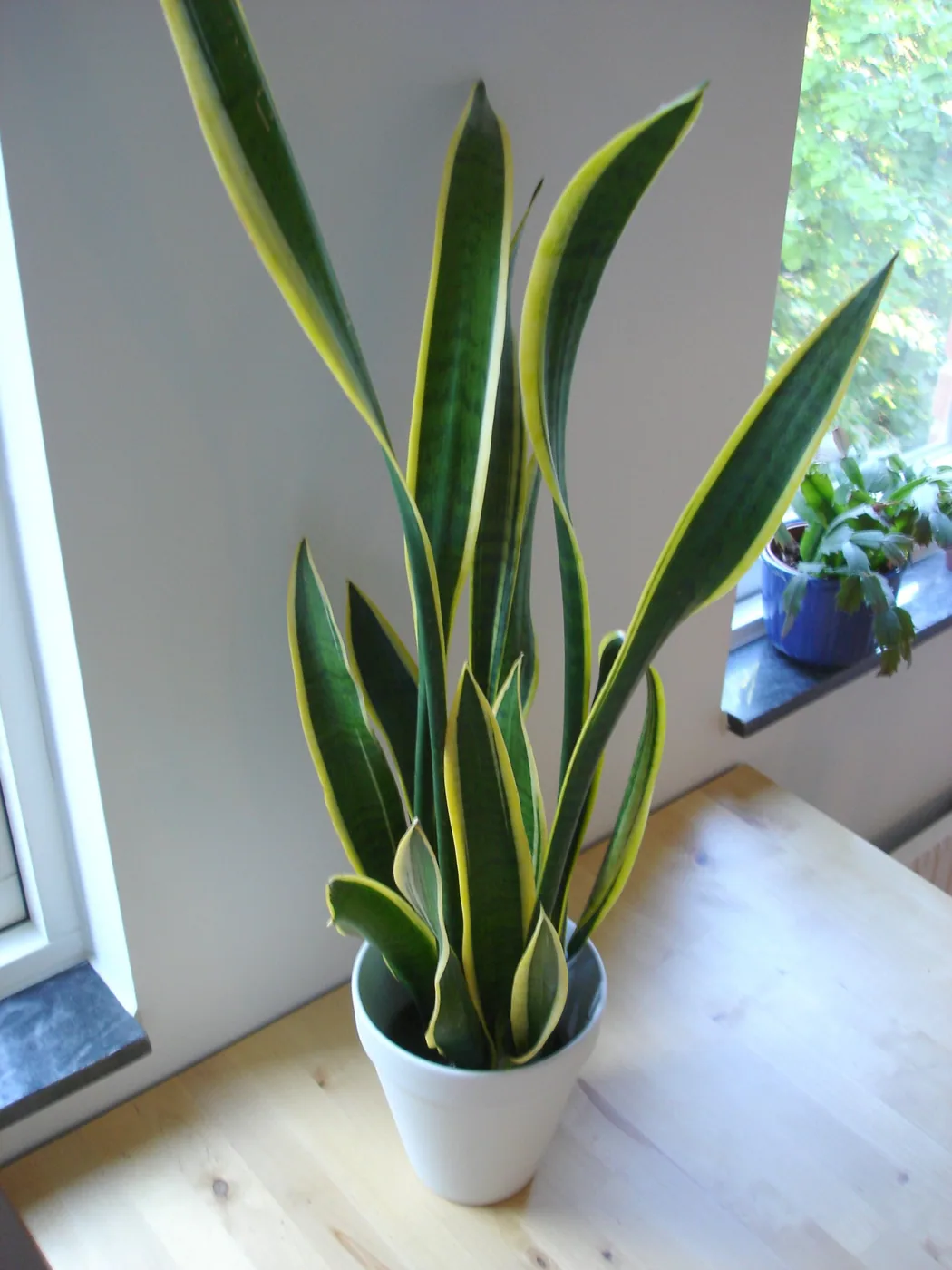
A snake plant in a white pot on a wooden table beside a window
A snake plant by a window grows far faster than one in the middle of a room, even though it tolerates both.

Plants that cope with low light

A few species have earned their reputation by tolerating the dim end of a living room. None of them is a miracle, but each can survive and look decent with modest care.

  • Snake plant (Sansevieria): upright, sword-shaped leaves, very drought tolerant and forgiving of neglect. It grows slowly in low light and rots if overwatered.
  • ZZ plant (Zamioculcas): glossy, dark green leaves on arching stems, stores water in its rhizomes and handles very infrequent watering.
  • Cast iron plant (Aspidistra): broad, dark leaves, a very slow grower that tolerates dim, drafty and cool spots, as its name suggests.
  • Pothos (Epipremnum): trailing vines in green or variegated forms, adaptable and fast in medium light, though the variegation fades in low light.
  • Peace lily (Spathiphyllum): dark leaves and white spathes, tolerates low light but flowers less, and droops visibly when thirsty.
  • Parlor palm (Chamaedorea): a delicate, feathery look, tolerant of low light and a good choice for a corner.
  • Spider plant (Chlorophytum): arching striped leaves and baby plantlets, adaptable and easy.

Variegated plants, with white or yellow patterns on the leaves, need more light than their plain green relatives, because the pale areas do not photosynthesize. A variegated pothos that is kept in low light will turn plain green as it tries to make more chlorophyll. If you want the pattern, place it nearer the window.

Pet safety: check before you buy

Many popular houseplants are toxic to cats and dogs. The ASPCA maintains a list of plants that are toxic and non-toxic to pets, and it is worth checking a plant by its botanical name before you bring it home. Among the plants above, pothos, peace lily, ZZ plant and snake plant are listed as toxic to cats and dogs, causing mouth irritation, drooling or an upset stomach if chewed. Cast iron plant, parlor palm and spider plant are listed as non-toxic.

If you have a pet that chews plants, choose the non-toxic ones, or keep toxic plants out of reach, on a high shelf or in a room that the pet cannot enter. Hanging planters help, though cats can climb. Be aware that non-toxic does not mean harmless: a cat that eats a lot of any leaf can vomit, and a spider plant is a favorite target that can end up shredded. If you suspect a pet has eaten a toxic plant, contact a veterinarian or a poison control service promptly and bring the name of the plant.

Why overwatering kills more plants than shade

A plant in low light uses water slowly. The leaves make less sugar, the roots take up less and the soil stays wet for longer. If you water on a fixed schedule, such as once a week, the soil can stay soggy, and the roots begin to rot. The signs are yellowing lower leaves, a sour smell, a soft base and, in the end, collapse. Many owners see a droopy plant and add water, which makes it worse.

The remedy is to water by the soil, not the calendar. Push a finger 1 to 2 inches into the soil: if it is dry, water thoroughly until water runs from the drainage hole, and empty the saucer. If it is damp, wait. In low light, this may mean watering every two to four weeks for a snake plant or a ZZ plant, and every one to two weeks for a pothos. A moisture meter helps if you are unsure, and a pot that feels light when lifted needs water.

Use a pot with a drainage hole and a well-draining mix. A pot without a drain turns into a bog, and a decorative cachepot that holds water around the inner pot has the same effect. Use a cachepot only as a cover, and lift the inner pot out to water. Choose a pot only a size or two larger than the root ball, since a big pot holds a lot of wet soil.

Supplementing with a grow light

If your living room is too dark for any plant, a grow light is an option. A modern LED grow bulb in a standard lamp socket, with a color temperature of 5000 to 6500K, provides enough light for low-light plants at a distance of about 1 to 2 feet, running 8 to 12 hours a day on a timer. A full-spectrum bulb looks white and can change the color of the room, so some people use a warm white one at a lower output as a compromise.

A grow light also helps in winter, when daylight is weaker and the days are short. A plant that loses vigor in January may recover with a timer-controlled light. Do not rely on ordinary room lamps, which are far too weak and too far away to help. Keep the light close, and watch for leaf scorch if it is too near. The effect on the room's look is described in the color temperature guide, which shows why a cool white grow bulb can clash with a warm lighting scheme.

Reading the plant: signs that the light is wrong

A plant tells you what it needs, if you know the signs. Long, pale, stretched stems with large gaps between the leaves mean the plant is reaching for light, and it needs a brighter spot. Leaves that turn yellow from the bottom up and drop usually point to too much water, or sometimes a very dim spot. Brown, crispy leaf tips often mean dry air or erratic watering rather than light. Leaves that lose their pattern, such as a variegated pothos turning green, show that the plant is making more chlorophyll in response to low light. Leaning toward the window is the plant's own vote for more sun.

Respond slowly. Move a struggling plant a foot or two closer to the window, not straight into the sun, since a plant that has adapted to dim light can scorch in a sudden blast of direct sun. Give it a few weeks before judging the change, since plants react slowly. Trim dead leaves with clean scissors, wipe dust off the leaves with a damp cloth every month, because a film of dust cuts the light that reaches the leaf, and hold off on fertilizer in low light, where a plant cannot use it. A light feed once in spring and once in summer is plenty.

Rotating, repotting and when to replace

Rotating the pot a quarter turn every week or two keeps growth even, and it spreads the light across the leaves. Repot only when roots circle the pot or come out of the drainage hole, typically every two to three years for slow growers like a snake plant or a cast iron plant, and use a pot only one size up. Do it in spring, when the plant is starting to grow, and use fresh potting mix with some perlite for drainage.

Accept that a plant may not suit a spot. If a plant declines for months in a position you cannot change, swap it for a more tolerant species or a good faux one, and move the struggling plant to a better place. A living room is a hard environment for plants in many homes, and a realistic choice looks better than a dying one. Preserved or dried stems in a vase offer greenery with no care at all, and a faux plant is a fair choice in the darkest corner, as long as it looks convincing and is dusted from time to time.

Placing and styling plants in the living room

Plants make a room feel alive, and the placement matters for looks as well as survival. A large floor plant, such as a snake plant or a cast iron plant in a floor pot, fills an empty corner and balances a tall piece of furniture. A trailing pothos on a bookshelf softens the line of the shelf, as discussed in how to style bookshelves. A small plant on a coffee table adds a green accent, though it should be a species that can cope with the light there, as noted in how to style a coffee table.

Group plants of similar needs together, with a taller one at the back and trailing ones at the edges, and keep a tray under each pot to protect the floor. Avoid placing plants directly in front of a heating vent or radiator, which dries them, or in the path of a cold draft from a door. In a small room, a few well-chosen plants have more impact than a crowd, and pots in a limited palette keep the look calm.
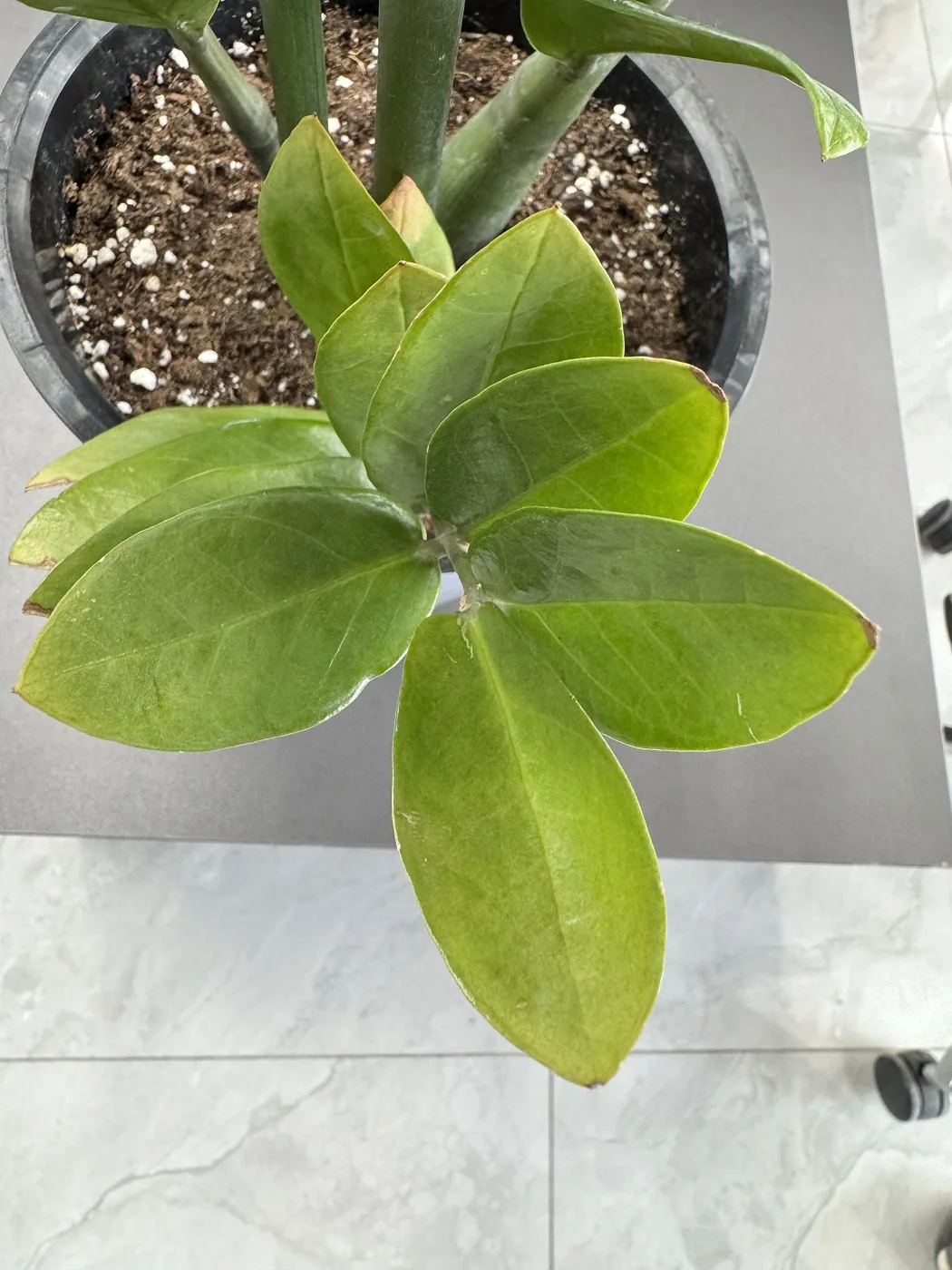
A ZZ plant with thick glossy leaves growing in a pot
A ZZ plant stores water in thick stems, which is why it forgives a missed watering better than most.

Frequently asked questions

What is the best plant for a dark living room?

Snake plant, ZZ plant and cast iron plant tolerate the least light. Even these need some natural light, and in a windowless room a grow light is the only reliable option.

How much light is low light?

About 25 to 75 foot-candles, roughly what you find 6 to 10 feet from a bright window or in a north-facing room.

Are low-light plants safe for cats and dogs?

Some are. Cast iron plant, parlor palm and spider plant are listed as non-toxic, while pothos, peace lily, ZZ plant and snake plant are toxic if chewed.

How often should I water a low-light plant?

Only when the top 1 to 2 inches of soil is dry. In low light that can be every two to four weeks for drought-tolerant species.

Can I use a lamp instead of a grow light?

Ordinary lamps are too weak and too far away. Use a full-spectrum LED grow bulb 1 to 2 feet from the plant, on a timer for 8 to 12 hours.

Bottom line

Measure the light before you buy, remembering that it falls quickly with distance from the window. Choose a plant that tolerates the level you have, check its pet safety and water by the soil, not the calendar.

Use a pot with drainage, rotate it every couple of weeks and add a grow light if the room is too dim. A few well-matched plants will do better in a living room than many that are not.

Image credits

  • accent-chair-desk-corner.webp: JohnLEE Brothers, CC0, source
  • accent-chair-green-velvet.webp: Shixart1985, CC BY 2.0, source
  • accent-chair-hero.webp: Shixart1985, CC BY 2.0, source
  • anchor-built-in-bookcases-room.webp: Carol M. Highsmith, Public domain, source
  • anchor-small-bookcase-hall.webp: Steven Pavlov, CC BY-SA 4.0, source
  • anchor-white-bookcase-wall.webp: Egilus, CC BY-SA 4.0, source
  • arrange-living-room-hero.webp: Kotivalo, CC BY-SA 4.0, source
  • arrange-living-room-seating-group.webp: Neoclassicism Enthusiast, CC0, source
  • arrange-living-room-sofa-wall.webp: Adele Berenstein, CC BY 2.0, source
  • artsofa-pictures-on-wall-room.webp: Tudor Washington Collins, CC BY 4.0, source
  • artsofa-sofa-corner-mural.webp: G�nter Seggeb�ing, Coesfeld, CC BY-SA 3.0, source
  • artsofa-sofa-mural-wall.webp: G�nter Seggeb�ing, Coesfeld, CC BY-SA 3.0, source
  • blackoutcurtain-floor-length-pair.webp: Ounfs Robmmy 238, CC0, source
  • blackoutcurtain-olive-heavy-fabric.webp: Easysayg, CC BY-SA 4.0, source
  • blackoutcurtain-white-sheer-hotel.webp: HuiDongXLW RMDa, CC0, source
  • ceilingfan-five-blade-light.webp: CommandProMC, CC BY-SA 4.0, source
  • ceilingfan-pull-chain-light.webp: Hans Olav Lien, CC BY-SA 3.0, source
  • clean-fabric-sofa-blanket.webp: Shixart1985, CC BY 2.0, source
  • clean-fabric-sofa-hero.webp: Lear 21, CC BY-SA 4.0, source
  • clean-fabric-sofa-slipcover.webp: Enric, CC BY-SA 4.0, source
  • clean-rug-fringe-pattern.webp: Sununa, CC BY-SA 4.0, source
  • clean-rug-runner-hall.webp: Sununa, CC BY-SA 4.0, source
  • coffeetable-round-yellow-sofa.webp: Vaibhavratnaparkhi, CC BY-SA 4.0, source
  • coffeetable-tan-sofa-dark-table.webp: Shixart1985, CC BY 2.0, source
  • coffeetable-two-wood-tables.webp: Sophia Baboolal, CC0, source
  • color-temp-bright-bulb.webp: Xzantiyamoloy, CC BY 4.0, source
  • color-temp-gu10-spot.webp: Dmitry G, CC BY-SA 3.0, source
  • color-temp-hero.webp: LoMit, CC BY-SA 4.0, source
  • color603010-paint-swatches-wall.webp: Chris Rycroft, CC BY 2.0, source
  • color603010-rainbow-swatch-range.webp: Joyful spherical creature, CC BY 4.0, source
  • color603010-swatch-cards-neutrals.webp: Clean Wal-Mart, CC BY 2.0, source
  • cornertv-1960s-room-tv-window.webp: Kotivalo, CC BY-SA 4.0, source
  • cornertv-budapest-sofa-room.webp: Justin Sch�ler, CC0, source
  • cornertv-white-room-console.webp: Oliur Rahman, CC0, source
  • curtainfabric-heavy-olive-folds.webp: Easysayg, CC BY-SA 4.0, source
  • curtainfabric-hotel-floor-length-pair.webp: Ounfs Robmmy 238, CC0, source
  • curtainfabric-white-light-filtering.webp: HuiDongXLW RMDa, CC0, source
  • curtains-hk-window-stacked-open.webp: YSSKACH WFAMOACSH TUNGA, CC BY-SA 4.0, source
  • curtains-hotel-living-zone-floor-length.webp: Ounfs Robmmy 238, CC0, source
  • cushion-fill-hero.webp: Dalton Scavassa, CC BY-SA 4.0, source
  • cushion-fill-pillows-leather.webp: Aaaatu, CC BY-SA 4.0, source
  • depth-grey-sofa-cushions.webp: Dalton Scavassa, CC BY-SA 4.0, source
  • depth-grey-sofa-hero.webp: Lear 21, CC BY-SA 4.0, source
  • depth-sectional-living-room.webp: Shixart1985, CC BY 2.0, source
  • dimmer-rotary-wall.webp: Paolomarco, CC BY-SA 4.0, source
  • dimmer-slide-wall.webp: BrokenSphere, CC BY-SA 3.0, source
  • dimmer-wiring-box.webp: Kurtkaiser, CC0, source
  • door-hotel-living-room.webp: Adele Berenstein, CC BY 2.0, source
  • door-orange-sofa-hero.webp: Shixart1985, CC BY 2.0, source
  • echo-1960s-room-soft-furnishings.webp: Kotivalo, CC BY-SA 4.0, source
  • echo-fabric-acoustic-panels-wall.webp: 36N63, CC BY-SA 4.0, source
  • echo-panel-mineral-wool-core.webp: JoraK, CC BY-SA 4.0, source
  • entcenter-low-stand-devices.webp: William Hook, CC BY-SA 2.0, source
  • entcenter-old-tv-setup.webp: William Hook, CC BY-SA 2.0, source
  • entcenter-wood-wall-unit-living-room.webp: Casey Fleser, CC BY 2.0, source
  • fabric-green-velvet-hero.webp: Neoclassicism Enthusiast, CC0, source
  • fabric-grey-sofa-cushions.webp: Lear 21, CC BY-SA 4.0, source
  • fabric-sofa-blanket.webp: Shixart1985, CC BY 2.0, source
  • floatshelf-mixed-books-rows.webp: Roman Eisele, CC BY-SA 4.0, source
  • floatshelf-steel-support.webp: Fructibus, CC0, source
  • floatshelf-white-bookcase-wall.webp: Egilus, CC BY-SA 4.0, source
  • floor-lamp-height-hero.webp: Agbarto, CC0, source
  • floor-lamp-height-stained-glass.webp: Louis Comfort Tiffany / Tiffany Studios, CC0, source
  • floor-lamp-height-white-reading-lamp.webp: FASTILY, CC BY-SA 4.0, source
  • frame-black-leather-sofa.webp: www.Pixel.la Free Stock Photos, CC0, source
  • frame-green-velvet-sofa.webp: Neoclassicism Enthusiast, CC0, source
  • frame-grey-sofa-hero.webp: Dalton Scavassa, CC BY-SA 4.0, source
  • gallerywall-frames-bookcase-lamp.webp: Personal Creations, CC BY 2.0, source
  • gallerywall-frames-floor-tape.webp: Personal Creations, CC BY 2.0, source
  • gallerywall-frames-on-wall-home.webp: Personal Creations, CC BY 2.0, source
  • hang-light-hero.webp: Martin Falbisoner, CC BY-SA 4.0, source
  • hang-light-lamp-with-shade.webp: LoMit, CC BY-SA 4.0, source
  • hang-light-red-drum-lamp.webp: Agbarto, CC0, source
  • jute-sisal-combing-fibre.webp: Uncredited for Keystone View Company, Public domain, source
  • jute-sisal-hero.webp: B.navez, CC BY-SA 3.0, source
  • jute-sisal-plantation.webp: Forest & Kim Starr, CC BY 3.0, source
  • knotted-rug-cut-pile-carpet.webp: Daderot, CC0, source
  • knotted-rug-hero.webp: Daderot, CC0, source
  • knotted-rug-prayer-wool.webp: Daderot, CC0, source
  • lampshade-cream-base.webp: LoMit, CC BY-SA 4.0, source
  • lampshade-empire-lamp.webp: J.Dncsn, CC BY-SA 3.0, source
  • lampshade-paper-rect-lamp.webp: Zeitlupe, CC BY-SA 4.0, source
  • layer-rugs-armchairs.webp: PattayaPatrol, CC BY-SA 4.0, source
  • layer-rugs-conversation-pit.webp: Marsh Davis; Indiana Landmarks, CC BY 4.0, source
  • layer-rugs-hero.webp: BusterD, CC BY-SA 4.0, source
  • layered-light-hero.webp: FASTILY, CC BY-SA 4.0, source
  • layered-light-red-shade-lamp.webp: Agbarto, CC0, source
  • layered-light-table-lamp.webp: LoMit, CC BY-SA 4.0, source
  • leather-care-black-sofa.webp: www.Pixel.la Free Stock Photos, CC0, source
  • leather-care-burgundy-set.webp: Dominic's pics, CC BY 2.0, source
  • leather-care-hero.webp: Thomas Quine, CC BY 2.0, source
  • ledstrip-cove-fireplace.webp: Andrey Gvrv, CC BY-SA 3.0, source
  • ledstrip-spool-driver.webp: Dmitry G, CC BY-SA 3.0, source
  • ledstrip-tv-back.webp: Stilfehler, CC BY-SA 4.0, source
  • loveseat-sofa-armchair-room.webp: Adele Berenstein, CC BY 2.0, source
  • loveseat-sofa-hero.webp: Aaaatu, CC BY-SA 4.0, source
  • loveseat-sofa-leather-pair.webp: Dominic's pics, CC BY 2.0, source
  • lowlight-snake-plant-corner-pot.webp: Enzo Rippa, CC BY-SA 4.0, source
  • lowlight-snake-plant-window-table.webp: Martin Olsson, CC BY-SA 3.0, source
  • lowlight-zz-plant-potted.webp: Jamshid Nurkulov, CC BY-SA 4.0, source
  • lumens-bulb-hero.webp: R. Henrik Nilsson, CC BY 4.0, source
  • lumens-led-bulbs-group.webp: Geoffrey.landis at English Wikipedia, CC BY 3.0, source
  • measure-cabin-sofa.webp: Shixart1985, CC BY 2.0, source
  • measure-room-depth.webp: Shixart1985, CC BY 2.0, source
  • measure-sofa-hero.webp: Shixart1985, CC BY 2.0, source
  • mirror-above-mantel-living-room.webp: Tudor Washington Collins, CC BY 4.0, source
  • mirror-round-blue-wall-window.webp: Ciara N� Riain, CC BY-SA 4.0, source
  • mirror-round-over-wood-console.webp: Shixart1985, CC BY 2.0, source
  • mixpatterns-armenian-patterned-pillows.webp: Ararat Trvants, CC BY-SA 4.0, source
  • mixpatterns-couch-pillows-set.webp: Dawid Skalec, CC BY-SA 4.0, source
  • mixpatterns-leather-sofa-pillows.webp: Aaaatu, CC BY-SA 4.0, source
  • no-overhead-hero.webp: Gotogo, CC BY-SA 4.0, source
  • no-overhead-red-shade-lamp.webp: Agbarto, CC0, source
  • no-overhead-white-floor-lamp.webp: FASTILY, CC BY-SA 4.0, source
  • nodrillcurtain-hk-window-open.webp: YSSKACH WFAMOACSH TUNGA, CC BY-SA 4.0, source
  • nodrillcurtain-olive-rail-folds.webp: Easysayg, CC BY-SA 4.0, source
  • nodrillcurtain-white-light-panel.webp: HuiDongXLW RMDa, CC0, source
  • open-plan-rug-armchairs.webp: PattayaPatrol, CC BY-SA 4.0, source
  • open-plan-rug-hero.webp: NPS Photo, Public domain, source
  • open-plan-rug-sunken-living.webp: Marsh Davis; Indiana Landmarks, CC BY 4.0, source
  • ottoman-coffee-table-pair.webp: Sophia Baboolal, CC0, source
  • ottoman-leather-round-pair.webp: Olugold, CC BY-SA 4.0, source
  • ottoman-round-stool-top.webp: Olugold, CC BY-SA 4.0, source
  • paintsheen-open-paint-cans.webp: United Soybean Board, CC BY 2.0, source
  • paintsheen-paint-can-brush.webp: Shixart1985, CC BY 2.0, source
  • paintsheen-swatch-cards-range.webp: Chris Rycroft, CC BY 2.0, source
  • pets-sofa-kitten-cushions.webp: Feliciano Guimar�es from Guimar�es, Portugal, CC BY 2.0, source
  • pets-sofa-slipcover.webp: Enric, CC BY-SA 4.0, source
  • pillows-decorative-couch-set.webp: Dawid Skalec, CC BY-SA 4.0, source
  • pillows-leather-sofa-group.webp: Aaaatu, CC BY-SA 4.0, source
  • pillows-wooden-sofa-red-cushions.webp: Zohasheikh, CC BY-SA 4.0, source
  • readinglamp-adjustable-torchiere.webp: Agbarto, CC0, source
  • readinglamp-armchair-corner-lamp.webp: Kotivalo, CC BY-SA 3.0, source
  • readinglamp-cozy-sunlit-corner.webp: Shixart1985, CC BY 2.0, source
  • recessed-gimbal-trim.webp: Stilfehler, CC BY-SA 4.0, source
  • recessed-housing-display.webp: Stilfehler, CC BY-SA 4.0, source
  • recessed-led-can-trim.webp: Stilfehler, CC BY-SA 4.0, source
  • recliner-buying-armchair-room.webp: Virginia State Parks staff, CC BY 2.0, source
  • recliner-buying-hero.webp: Laura Stoinski, CC0, source
  • recliner-buying-leather-sofa.webp: Aaaatu, CC BY-SA 4.0, source
  • rug-curl-fringe-rug.webp: Sununa, CC BY-SA 4.0, source
  • rug-curl-hero.webp: Sununa, CC BY-SA 4.0, source
  • rug-curl-runner-patterns.webp: Sununa, CC BY-SA 4.0, source
  • rug-dents-hero.webp: ProjectManhattan, CC BY-SA 3.0, source
  • rug-dents-wool-medallion.webp: Daderot, CC0, source
  • rug-on-carpet-armchairs.webp: PattayaPatrol, CC BY-SA 4.0, source
  • rug-on-carpet-flat-weave.webp: Mervat, CC BY 4.0, source
  • rug-on-carpet-hero.webp: NPS Photo, Public domain, source
  • rug-pad-dense-carpet.webp: ProjectManhattan, CC BY-SA 3.0, source
  • rug-pad-hero.webp: Sununa, CC BY-SA 4.0, source
  • rug-pile-flatweave-stack.webp: Mervat, CC BY 4.0, source
  • rug-pile-sarouk-wool.webp: Daderot, CC0, source
  • rug-shedding-pile-closeup.webp: ProjectManhattan, CC BY-SA 3.0, source
  • rug-shedding-wool-rugs.webp: Mervat, CC BY 4.0, source
  • rug-size-armchairs-on-rug.webp: PattayaPatrol, CC BY-SA 4.0, source
  • rug-size-conversation-area.webp: Marsh Davis; Indiana Landmarks, CC BY 4.0, source
  • rug-size-hero.webp: NPS Photo, Public domain, source
  • runner-size-hero.webp: Sununa, CC BY-SA 4.0, source
  • runner-size-red-runner.webp: Sununa, CC BY-SA 4.0, source
  • runner-size-three-runners.webp: Sununa, CC BY-SA 4.0, source
  • sag-cushions-hero.webp: Durova, CC BY-SA 3.0, source
  • sag-cushions-slipcover.webp: Enric, CC BY-SA 4.0, source
  • sag-cushions-sofa-deck.webp: Dalton Scavassa, CC BY-SA 4.0, source
  • sconce-above-tufted-chairs.webp: Jedodo756, CC0, source
  • sconce-brass-opal-shade.webp: unknown (see Commons page), CC BY-SA 4.0, source
  • sconce-wall-lamp-side-table.webp: Atilla Taskiran, CC0, source
  • sectional-dark-hero.webp: Shixart1985, CC BY 2.0, source
  • sectional-room-arrangement.webp: Kotivalo, CC BY-SA 4.0, source
  • sectional-white-corner.webp: GardenKings, CC BY-SA 3.0, source
  • shelfsag-mixed-books-shelf.webp: Roman Eisele, CC BY-SA 4.0, source
  • shelfsag-packed-bookshelf.webp: Csferrie, CC BY-SA 4.0, source
  • shelfsag-wood-shelf-rows.webp: PeaceSeekers, CC BY-SA 4.0, source
  • sidetable-cozy-sofa-room.webp: Breather, CC0, source
  • sidetable-kentwood-sofa.webp: Kari Shea, CC0, source
  • sidetable-round-wall-lamp.webp: Atilla Taskiran, CC0, source
  • sleeper-sofa-bed-made-up.webp: Maniago, Public domain, source
  • sleeper-sofa-open-hero.webp: N509FZ, CC BY-SA 4.0, source
  • sleeper-sofa-sofa-mode.webp: N509FZ, CC BY-SA 4.0, source
  • small-room-slim-arm-sofa.webp: Lear 21, CC BY-SA 4.0, source
  • small-room-sofa-hero.webp: Shixart1985, CC BY 2.0, source
  • small-room-two-seat-layout.webp: Adele Berenstein, CC BY 2.0, source
  • smallbigger-finland-studio-bright.webp: Aaaatu, CC BY-SA 4.0, source
  • smallbigger-hk-curtains-open-window.webp: YSSKACH WFAMOACSH TUNGA, CC BY-SA 4.0, source
  • smallbigger-white-room-console.webp: Oliur Rahman, CC0, source
  • smallstorage-finland-studio-room.webp: Aaaatu, CC BY-SA 4.0, source
  • smallstorage-leather-sofa-shelving.webp: Sabri Tuzcu, CC0, source
  • smallstorage-wall-shelves-books.webp: Roger W, CC BY-SA 2.0, source
  • smart-bulbs-bulb-in-hand.webp: Xzantiyamoloy, CC BY 4.0, source
  • smart-bulbs-led-internals.webp: Loadmaster, Bech, CC BY-SA 4.0, source
  • soundbar-below-lg-tv.webp: Dinkun Chen, CC BY-SA 4.0, source
  • soundbar-philips-front-grille.webp: Philips Communications, CC BY 2.0, source
  • soundbar-samsung-single-bar.webp: Dinkun Chen, CC BY-SA 4.0, source
  • stylebooks-packed-shelf-wall.webp: Csferrie, CC BY-SA 4.0, source
  • stylebooks-philosophers-shelf.webp: Roman Eisele, CC BY-SA 4.0, source
  • stylebooks-wall-shelves-bottles-books.webp: Roger W, CC BY-SA 2.0, source
  • styletable-book-stack-candle.webp: Gabbybratcher, CC BY-SA 4.0, source
  • styletable-two-tables-mugs.webp: Sophia Baboolal, CC0, source
  • styletable-yellow-sofa-cups-flowerpot.webp: Shixart1985, CC BY 2.0, source
  • surround-home-theater-tv-seating.webp: NPat318, CC BY-SA 4.0, source
  • surround-rear-view-seats.webp: NPat318, CC BY-SA 4.0, source
  • surround-sectional-media-room.webp: Derek Jensen (Tysto), Public domain, source
  • table-lamp-size-antique-shade.webp: Amitbalani, CC0, source
  • table-lamp-size-hero.webp: Tess Mattew, CC BY-SA 4.0, source
  • table-lamp-size-measured.webp: Tess Mattew, CC BY-SA 4.0, source
  • throwblanket-blue-throw-kitten.webp: TudorTulok, CC BY-SA 4.0, source
  • throwblanket-striped-couch-cat.webp: Roman Eisele, CC BY-SA 4.0, source
  • throwblanket-yellow-blue-couch.webp: Roman Eisele, CC BY-SA 4.0, source
  • tvheight-flat-panel-wall.webp: BrokenSphere, CC BY-SA 3.0, source
  • tvheight-plasma-wall-room.webp: Pkepneriv, CC BY-SA 3.0, source
  • tvheight-white-living-room.webp: Oliur Rahman, CC0, source
  • tvmount-articulating-arm.webp: Ben Scholzen, CC BY 2.0, source
  • tvmount-vesa-adapter-plate.webp: Tony Webster, CC BY 2.0, source
  • tvmount-wall-panel-room.webp: Pkepneriv, CC BY-SA 3.0, source
  • tvsize-dark-room-big-screen.webp: Christian Collins, CC BY 2.0, source
  • tvsize-media-room-screen.webp: NPat318, CC BY-SA 4.0, source
  • tvsize-tv-on-stand.webp: PhotoPicker13, CC BY-SA 4.0, source
  • tvstand-low-stand-devices.webp: William Hook, CC BY-SA 2.0, source
  • tvstand-wall-unit-living-room.webp: Casey Fleser, CC BY 2.0, source
  • tvwires-cable-box-wires.webp: Tony Webster, CC BY 2.0, source
  • tvwires-hdmi-connectors.webp: Kreuzschnabel, CC BY-SA 3.0, source
  • tvwires-wall-mounted-panel.webp: BrokenSphere, CC BY-SA 3.0, source
  • washable-rugs-flatweave-stack.webp: Mervat, CC BY 4.0, source
  • washable-rugs-hero.webp: Mervat, CC BY 4.0, source
  • washable-rugs-loomed-stripes.webp: Gcarrillog, CC0, source
  • wool-poly-hero.webp: Mervat, CC BY 4.0, source
  • wool-poly-oaxacan-wool.webp: Gcarrillog, CC0, source
  • wool-poly-prayer-rug.webp: Daderot, CC0, source

Related Guides