A single curtain asks you to choose between light and privacy. Open it and the room is bright and visible from the street. Close it and the room is private and dim. Layering two panels, a sheer behind and a heavier one in front, removes that choice. The sheer gives daytime privacy while letting light in, and the heavy layer gives darkness, warmth and a finished look when you need it.
The idea is simple, and the details decide whether it works. This guide covers the order of the layers, the rods and brackets, how wide and long each panel should be, how to choose fabrics that hang well together, how to control light leaks at the edges, and the mistakes that turn a layered window into a tangle. It also covers renter friendly versions that do not need heavy hardware.
Why layer at all
The main benefit is control over the day. In the morning and afternoon, a sheer panel softens direct sun, reduces glare on a television and hides the room from passers by, while a view and daylight still show through. In the evening, when the lights are on, the sheer becomes see through in the other direction, which is why a heavier layer is needed after dark.
The second benefit is comfort. Two layers with air between them reduce drafts and heat exchange a little, and a lined heavy panel adds some muffling. These are modest effects, since curtains are not insulation or soundproofing, but a layered window feels calmer than a bare one. The third is style, because two layers add depth and a sense of finish that a single flat panel lacks.
The cost is complexity. Two panels mean more fabric, more hardware, more cleaning and more depth in front of the window. If the window is small, the room is tight or the budget is limited, a single good curtain with a roller shade behind it can do much of the same job. For a living room window that you use daily, layers are worth it.
The order of the layers
The sheer goes closest to the glass, and the heavier panel goes in front. This order matters for three reasons. The sheer behind hides the back of the heavy fabric and the window frame when the drapes are open, the heavy layer in front blocks the light and shows its best side to the room, and the sheer is protected from the sun and from pulling when the drapes move.
The reverse order, heavy behind and sheer in front, is rare and usually a mistake. The sheer would be in view only when the drape is open, and the heavy fabric would hang in the window light, and it would block the sheer from doing its job at night. There are special cases, such as a decorative lace layered over a plain lining, but for a window, keep the heavy layer at the front.
Leave a small gap between the layers so they can move independently. A gap of about 2 to 3 inches, set by the bracket projection, keeps the sheer from snagging on the drape and allows each layer to hang without crushing the other. Too small a gap makes the layers rub, and the sheer wrinkles and picks up dust from the heavy fabric.
Rods and brackets
The standard method is a double rod, two bars on one set of brackets, with the sheer on the rear bar and the drape on the front. Brackets project further from the wall, typically 3 to 5 inches, and need strong fixing, since the weight of both layers acts at a greater distance. Our guide to curtain rod types explains double rods and the alternatives.
You can also use two separate single rods, one fixed inside the window recess for the sheer, and one outside for the drape. This gives full independence and lets you use different heights, and it is often the simplest way to add a sheer to an existing rod. A tension rod inside the window frame can hold a lightweight sheer, and it needs no drilling, which suits rentals.
For a ceiling mounted or recessed track, a double track holds both layers on one rail. This is common in modern homes and gives a clean line, but it needs planning in the ceiling and a careful measure of the stack. A traverse rod with a second track is another way to build the same effect with cords or wands to open and close.
| Setup | Good for | Drilling | Note |
|---|---|---|---|
| Double rod | Most living room windows | Yes | Deep brackets, strong fixing |
| Two single rods | Adding a sheer to an existing rod | Yes | Flexible heights |
| Tension rod inside, rod outside | Renters, light sheers | Outer rod only | Check the weight limit |
| Double track | Modern ceilings, wide windows | Yes | Plan the stack |
Width, length and mounting height
Both layers need fullness. A panel hung flat looks skimpy, so each should be 1.5 to 2.5 times the width of the window it covers. For a 60 inch window, that means a total panel width of 90 to 150 inches per layer. The sheer can be on the lower end of fullness and still look good, since the fabric is light, while a heavy panel looks richer at the upper end.
Mount the rods high and wide, as in our curtain length and width guide. The rod goes 4 to 6 inches above the window frame, or higher if the ceiling allows, and extends 3 to 6 inches beyond the frame at each side, so the panels stack off the glass. High and wide mounting makes the window look larger and lets in more light when the panels are open.
For length, both layers should reach the same point, either just above the floor or kissing it, and the sheer can hang a little shorter at the back if the layers touch the floor. Avoid a mismatch of an inch or two, which looks like an error. A floor length sheer pooling slightly on the ground, behind a drape that hovers, is a style but takes care. The simplest approach is to match the two lengths exactly, measured from the rod to the floor.
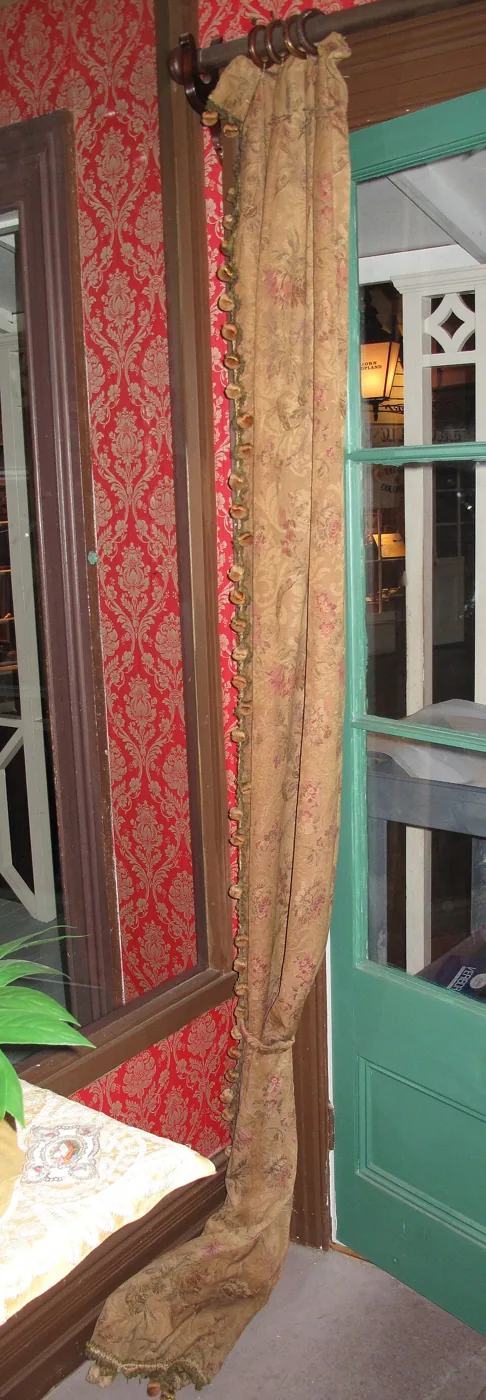
Choosing fabrics that work together
The sheer should be light and soft, such as voile, linen blend or fine polyester, and it should drape in loose folds. The heavy layer carries the weight: a lined cotton, a woven polyester, velvet or a blackout fabric. Choose fabrics of different weights, with the heavier one at the front, so each layer hangs on its own and the front does not cling to the rear. Our curtain fabric guide compares the options.
Blackout panels are a special case. A true blackout fabric uses a coating or a triple weave to block light, and a room darkening one blocks most but not all. The distinction, covered in our piece on blackout and room darkening curtains, decides whether the room gets truly dark. If you only need a calm evening, a thick lined drape is enough, and a full blackout is for bedrooms and media rooms.
Color and pattern need balance. A white or off white sheer pairs with almost any drape, and a patterned drape pairs well with a plain sheer. If the drape is plain, a sheer with a subtle texture adds interest. Keep the colors consistent with the room, and consider the view from outside, since the street side of the window shows the back of the drape and the sheer in whatever color they are.
Controlling light leaks and glare
Even a good blackout panel leaks light around the edges and over the top of the rod. The cure is width, mounting height and a return. A panel that is wide enough to overlap the window at each side, a rod close to the ceiling and a wraparound rod that closes the side gap all reduce the leaks. A valance or a pelmet above the rod blocks the top gap, and it hides the hardware.
The sheer behind a blackout panel is useful for another reason: it diffuses the light that does get past, so the leaks look softer. In a living room that faces a bright street light, a sheer between the glass and the drape can make the room feel less glaring, even when the drape is closed. For a television, closing the drape and leaving the sheer partly open can reduce reflections without making the room dark.
Be realistic about total darkness. If you need a room to be as dark as possible, add a blackout liner or choose a panel with a coating, and make sure the sides are covered. If you only want to reduce glare on the screen, a lighter drape or a sheer may be enough. The choice depends on how the room is used, and many living rooms never need full blackout.
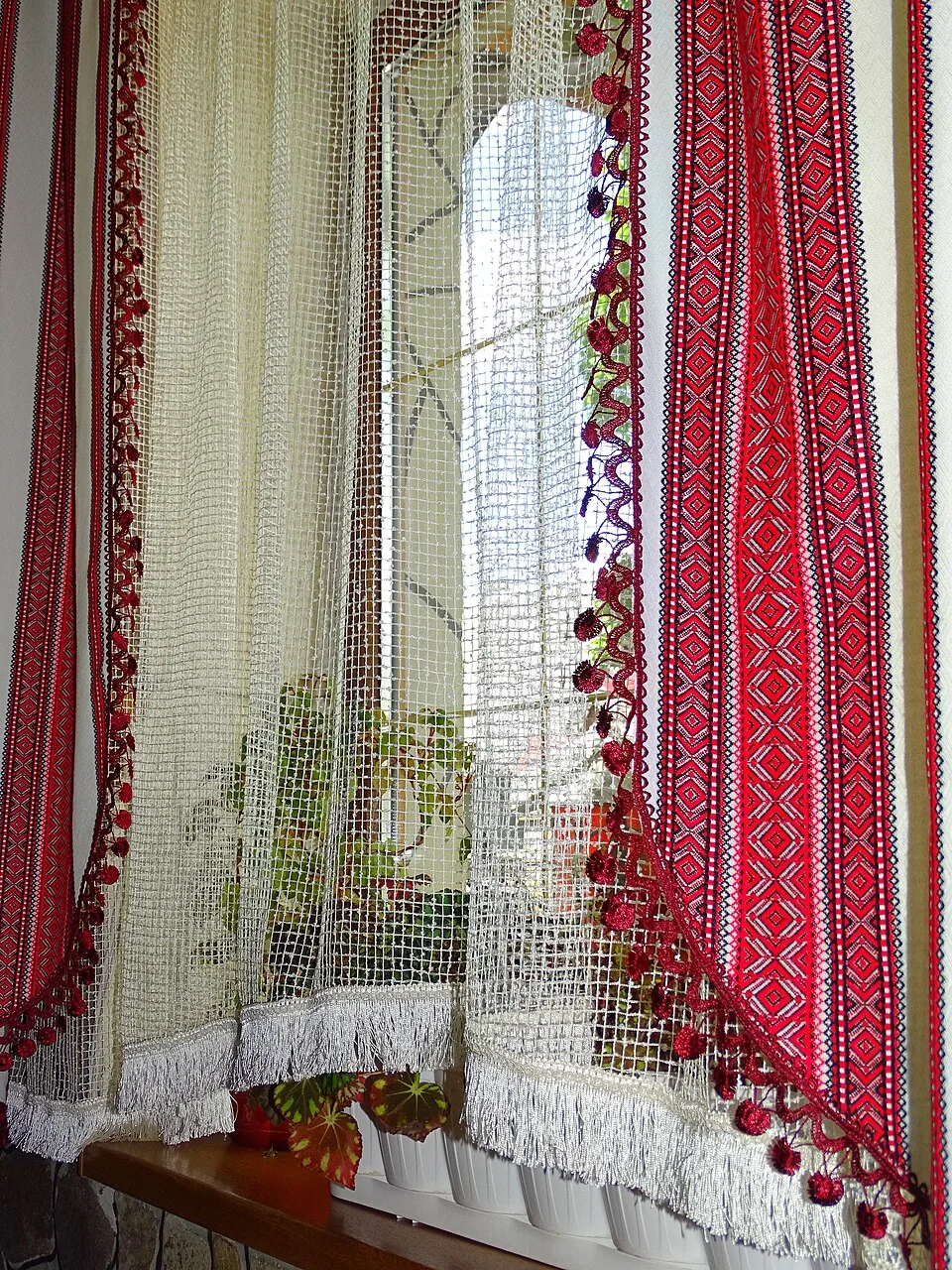
Common mistakes
The first is a rod that is too short. If the rod ends at the window frame, the panels cover the glass when open, and the light is blocked even with the curtains drawn back. Extend the rod beyond the frame at each side, and use finials that do not add much bulk.
The second is brackets that cannot carry the load. Two layers of fabric on a double rod weigh far more than one, and a bracket fixed in a drywall plug will pull out. Use studs or heavy anchors and a center bracket for any span over about 48 inches. The third is panels that are too narrow, which makes a window look like it is wearing a skimpy suit.
The fourth is forgetting clearance. A drape that hangs 4 to 5 inches from the wall may bump a radiator, a sofa back or a deep window sill. Measure the space, and if it is tight, use a sheer with a slimmer track or move the furniture a little. The fifth is neglecting laundry. Two layers mean two sets of care labels, and a coated blackout liner can crack if it is dried hot, so read the label and wash gently.
Care and daily use
Two layers mean two routines. The sheer collects dust and cooking smells faster than a heavy drape, because it hangs in the airflow near the glass, and it benefits from a gentle wash every few months. Most polyester and voile sheers wash well on a delicate cycle and hang dry, and a quick steam restores the folds. The heavy layer needs less frequent cleaning, with a vacuum brush along the top and the folds, and a wash or professional clean only when the label allows it.
Train the household on the order of operations. The sheer is the daytime layer and stays closed on a street facing window, and the heavy layer is drawn in the evening and opened in the morning. If both are drawn together every night, the sheer will wear against the heavy fabric. Use wands or tie backs so that panels are moved by a handle and not by grabbing the hem, which is the main cause of grubby edges and torn seams.
Check the hardware once a season. Rings loosen, brackets shift and screws work free under the weight of two layers. A few minutes with a screwdriver and a level keeps the rod straight and avoids a sudden drop. If a panel starts to hang unevenly, look at the brackets before the fabric, since a sagging rod makes a good curtain look wrong.
Frequently asked questions
Should sheers go in front of or behind curtains?
Behind, closest to the glass. The heavier panel goes in front, so it can close for privacy and darkness while the sheer works by day. The reverse order is unusual and rarely works well.
Can I layer curtains on one rod?
You can hang both on one rod with separate rings, but the layers will crowd and snag. A double rod or two rods give far better movement. If you must use one rod, use a slightly wider rod and keep the panels light.
How wide should layered curtains be?
Each layer should be 1.5 to 2.5 times the window width. The heavy layer looks best near 2 times or more, and the sheer can be a little less. Too little fullness makes the layers look flat.
Do I need blackout lining on the heavy layer?
Only if you want a dark room. A lined drape blocks much of the light and adds weight and warmth, and a full blackout lining blocks most of the rest. Think about how you use the room, and see our best sheer curtains roundup for the lighter layer.
Will layered curtains make the room hotter or cooler?
The effect is small. Two layers trap a little air and reduce drafts, so a room feels slightly more comfortable, but curtains are not insulation. In summer, closing a heavy layer on a sunny window reduces solar heat.
The bottom line
Put the sheer on the inner rod and the heavy panel on the outer one, use a double rod with strong brackets, and make both layers 1.5 to 2.5 times the window width. Mount them high and wide, and match the lengths.
Choose a heavier fabric for the front, add a return or a valance if you need darkness, and keep the sheer for daytime. If you rent, a tension rod for the sheer and a stud mounted outer rod for the drape gives the same effect with little damage.