A curtain fabric looks one way in a swatch, another way hanging at a window and a third way after two summers of sun and one wash. Photographs of curtains show the drape and the color on the day of the photo, and say nothing about shrinkage, light fading or how much dust a velvet panel collects. Choosing a fabric is a matter of weighing what you want the curtain to do against what each material does well and badly.
This guide compares the four fabrics most common in living rooms, linen, velvet, polyester and cotton, then covers the factors that cut across them: weight and drape, how much light passes through, sun damage and the role of a lining, how much fullness each needs and how to wash and care for them. It ends with a short decision guide, so you can match a fabric to a window.
What drape and weight mean
Drape is how a fabric hangs in folds, and it depends on the weight, the stiffness of the fibers and the weave. A heavy, supple fabric, such as velvet or a thick lined cotton, hangs in deep, regular folds and moves slowly. A light, crisp fabric, such as a loose linen or a sheer polyester, falls in soft, irregular folds and billows in a draft. A stiff fabric, such as a coated blackout, holds its shape and forms wide folds.
Weight is measured in grams per square meter, or in ounces per square yard. Light fabrics, under 150 gsm, are sheers and voiles. Mid-weight fabrics of 200 to 350 gsm cover most cotton, linen and polyester panels. Heavy fabrics above 400 gsm include velvet, lined drapes and thermal weaves. A heavier fabric needs a stronger rod and brackets, since a pair of lined velvet panels can weigh 10 pounds or more. The weight also affects the stack, the space the curtain takes when open, which is larger for heavy fabrics.
| Fabric | Typical weight | Drape | Light control |
|---|---|---|---|
| Linen, loose weave | 150 to 250 gsm | Soft, relaxed, irregular | Filters, glows |
| Cotton | 200 to 350 gsm | Crisp to soft, by weave | Moderate, more when lined |
| Polyester | 100 to 400 gsm | Varies, can be very fluid | Sheer to blackout |
| Velvet | 400 to 600 gsm | Heavy, rich, deep folds | High, blocks drafts too |
Linen: the relaxed classic
Linen, made from flax, is prized for its casual elegance. A linen curtain falls in soft, slightly irregular folds, and in sunlight it glows with a warm, textured light. A loose, open weave filters light without blocking it, which gives a bright, airy living room with privacy by day. Linen is strong, gets softer with washing and ages well. It is breathable and does not hold static, so it attracts little dust.
The drawbacks are wrinkling, shrinkage and weakness in sun. Linen creases easily, and the creases are part of the look, but some people find them untidy. Pre-washed or linen-blend fabrics, with polyester or cotton, wrinkle less. Linen can shrink by 3 to 5 percent in the first wash, so buy long or buy pre-washed, and hem after washing. Linen's fibers have little stretch, so a long curtain can sag at the top or bag at the hem in humid weather. Plain sheer linen lets a lot of light through and gives no real privacy at night, so it is often paired with a lining or a second layer.
Velvet: heavy, warm and dramatic
Velvet is a dense fabric with a soft pile, in cotton, polyester, silk or a blend. Its weight and thickness block light and noise, and give a strong thermal effect, which makes it a favorite for a TV room or a drafty window. Velvet hangs in deep, formal folds and its color looks rich, since the pile catches the light in different ways. It is a luxurious choice for a living room that is used mainly in the evening.
The costs are weight and care. A velvet panel can weigh 4 to 6 pounds, and a pair on a wide window needs a strong rod and a center bracket. Velvet attracts dust and pet hair, which show on dark colors, and needs regular vacuuming with a soft brush. It can crush, leaving marks where the pile is pressed, and the color can look different as the pile direction changes. Many velvets are dry clean only, though polyester velvet is often washable. Velvet in strong sun can fade unevenly, so line it and avoid a south-facing window if the color matters. Heavy velvet can also overwhelm a small room.
Polyester: the practical workhorse
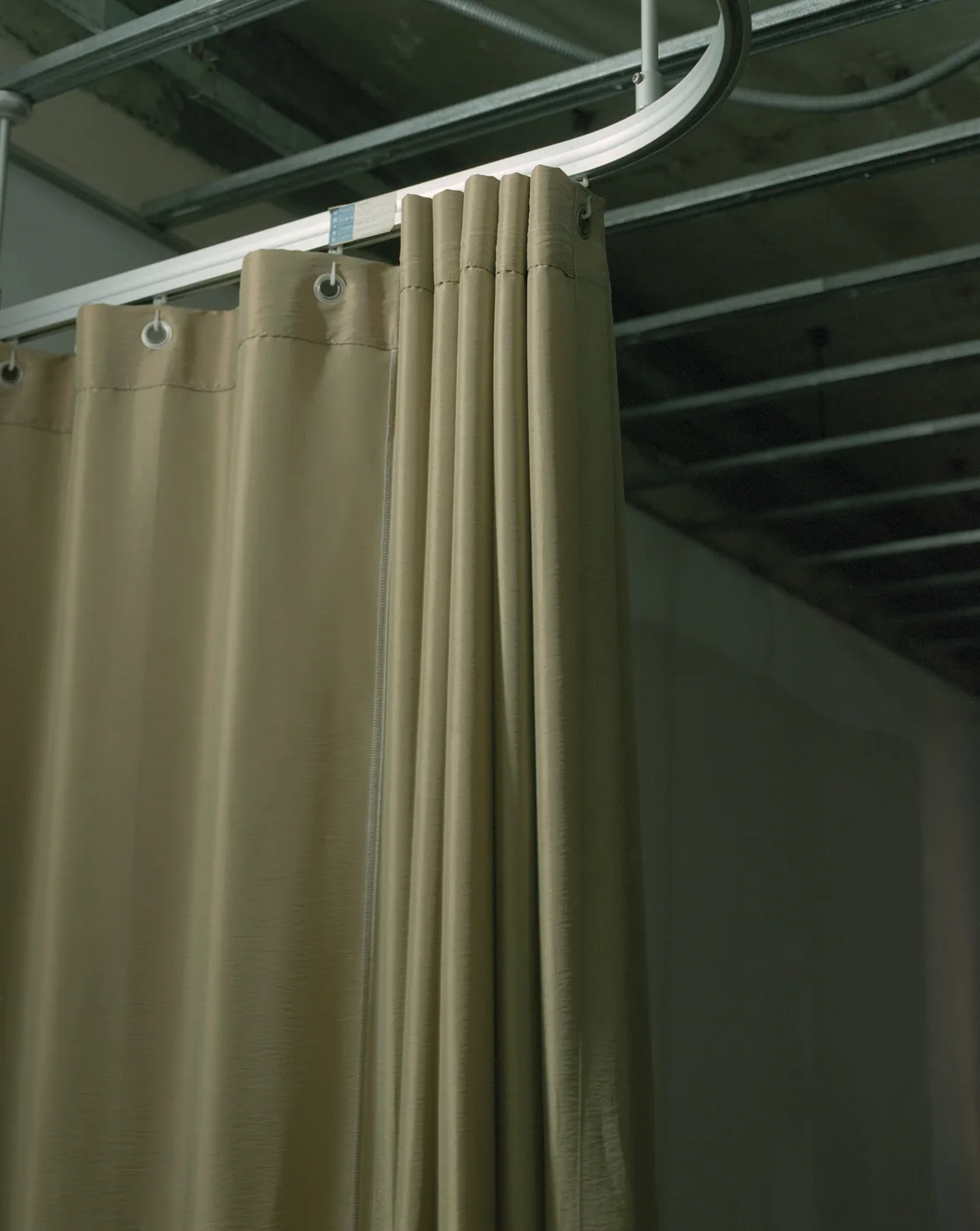
Polyester is a synthetic fiber, and it is by far the most common curtain fabric. It resists fading in sunlight, wrinkles and shrinks very little, and it is easy to wash. It is available in a huge range of weights, from sheer voile to blackout, and it can imitate linen, silk and velvet at a fraction of the cost. For a sunny window or a busy household, polyester is often the most sensible choice.
The downsides are feel and breathability. Polyester can feel less natural than cotton or linen, with a slight sheen that looks artificial in cheaper versions. It does not breathe, and it can hold static, which attracts dust. Poorly made polyester can look flat and have a plastic drape. A good polyester, in a textured weave and a mid-weight, looks excellent and lasts for years, and it is the best choice for rooms with strong sun, since its fibers resist ultraviolet damage better than natural fibers.
Check the weave and the weight, since polyester ranges from poor to excellent. A higher thread count and a textured weave give a richer look, and a lining adds body. Washable polyester is a major advantage for a family living room, and it is the usual fabric for blackout curtains, as covered in blackout versus room darkening curtains.
Cotton: soft, familiar and washable
Cotton is soft, takes dye well and comes in many weaves, from light voile to heavy canvas and duck. It is affordable, widely available and usually machine washable. It hangs in a crisp, tailored way when mid-weight, and a cotton sateen has a subtle sheen. Cotton prints, such as stripes and florals, are plentiful, and cotton suits casual and traditional rooms alike.
Cotton fades in strong sunlight, and the color can change, especially in darker shades. It shrinks, usually 3 to 5 percent in the first wash, and wrinkles unless blended with polyester. Cotton absorbs moisture, which can lead to mildew in a damp room, so avoid it in a bathroom. A cotton curtain with a lining holds its shape better and protects the face fabric from the sun. A cotton and polyester blend gives a balance of softness and durability and is common in ready-made panels.
Sun damage and why lining matters
Sunlight is the biggest enemy of curtains, and ultraviolet light weakens fibers and fades dyes. The damage is slow, and shows first at the folds and the edges that face the window. Silk is the most vulnerable, and can shatter in a few years of direct sun, a failure called sun rot. Natural fibers such as cotton and linen weaken over time, and the effect is worse for darker colors and for lighter weights. Synthetic fibers such as polyester and acrylic resist ultraviolet light much better.
A lining protects the face fabric. The lining takes the sun, so the face fabric stays strong and keeps its color. A lining of cotton sateen or polyester adds body, improves the drape, blocks more light and adds some insulation. A lined curtain lasts several times longer in a sunny window than an unlined one. For a south or west facing window, use a lining or a sun-resistant fabric such as polyester. If you want the light to show through a linen, use a light lining or a double layer and accept that the curtain will age faster.
Rotate or reverse panels if you can, and wash them according to the label. Dust and body oil can weaken fibers over time, so clean curtains every six months or so. Do not hang curtains right against hot glass in a summer window, and leave a few inches of gap for air.
Fullness and how each fabric behaves
As explained in the curtain length and width guide, fullness is the ratio of the fabric width to the rod width, usually 1.5 to 2.5. The fabric changes the best choice. A light, sheer linen or voile needs 2.5 times fullness to look full, since a thin fabric shows its transparency when stretched. A mid-weight cotton or polyester looks good at 2 times. A heavy velvet can look rich at 1.5 to 2 times, because its weight makes deep folds with less fabric, and more than 2 times can be bulky.
The heading changes the effect. A pleated heading needs a precise amount of fabric and creates a tailored look. A grommet heading uses more fabric to create wide folds. A tab or a rod pocket looks casual and suits light fabrics. A heavy fabric on a rod pocket can be hard to slide, and a ring and clip system is easier. Match the heading to the weight and the style.
Pairing curtain fabric with the rest of the room
The curtain is one of the larger fabric surfaces in a living room, so it should relate to the sofa and the rug. A rough, textured linen curtain suits a linen or a boucle sofa, and a velvet curtain looks at home with leather, wood and deep colors. A polyester sheen against a cotton sofa can look mismatched, so check the two together in daylight. The guide to sofa fabric types describes the textures and finishes that you are likely to have beside the curtains.
Use the curtains to add what the room lacks. A room full of hard surfaces gains from a heavy, soft curtain, which also helps with sound. A room with a lot of pattern needs a plain curtain to rest the eye. A dark room benefits from light, sheer fabric. The color should work with the wall color, and a curtain a shade or two darker than the wall is a safe choice that adds depth without a clash. Test samples at the window before ordering, in the morning light and in the evening.
Washing and care
Check the care label before buying. Cotton and polyester panels can usually be machine washed on a gentle cycle at 30 degrees Celsius and dried on low or hung damp to dry, which also removes wrinkles. Linen can be washed on a gentle cycle but shrinks, so air dry or tumble on low, and iron while damp. Velvet is often dry clean only, and polyester velvet can be washed on a cool, gentle cycle. Lined curtains, particularly those with a coated lining, are best dry cleaned unless the label says otherwise.
Between washes, vacuum the curtains with a soft brush attachment, or shake them outdoors, and steam out wrinkles in place. Dust builds up on top of the pleats and the rod, so wipe them. A lint roller works for pet hair on velvet. Keep curtains away from heaters and from kitchen grease. Take down curtains for washing in spring and autumn, and rehang while slightly damp so gravity pulls out creases.
Which fabric for which window
A short guide can settle most choices. For a sunny south-facing window, polyester or a lined cotton gives the best resistance to fading. For a north-facing or shaded window, linen or cotton in a light weight is a good choice, since the light is gentle. For a TV room or a drafty window, velvet or a thermal lined curtain gives light and heat control. For a small window or a light, airy room, a loose linen or a voile in white lets in light and gives a soft look. For a family room with pets, a washable polyester or a cotton blend is the easiest to care for, and for a formal room, velvet or a silk-look polyester gives drama.
If you cannot decide, use two layers: a sheer or a linen for daytime, and a heavier lined panel for the evening, on a double rod. The two layers give you a choice of light, and they spread the sun damage across two fabrics. Whatever you pick, take a sample home and hold it up to the window, then check its color, light and feel in the room.
Frequently asked questions
What is the best fabric for living room curtains?
It depends on the window and use. Polyester is the most practical, linen is the most relaxed, velvet is the warmest and cotton is the easiest. A lining improves any of them.
What is sun rot in curtains?
It is the breakdown of fibers by ultraviolet light, which makes the fabric brittle and torn. Silk and some cottons suffer most, and a lining or a synthetic fabric protects against it.
Do linen curtains shrink?
Yes, usually 3 to 5 percent in the first wash. Buy pre-washed linen, or buy long and hem after washing.
Are velvet curtains good for a living room?
Yes, for warmth, light control and a rich look, but they are heavy, collect dust and often need dry cleaning. Use a strong rod and brackets.
How much fullness do I need?
About 2 times the rod width for most fabrics, 2.5 times for sheer linen and 1.5 to 2 times for heavy velvet.
Bottom line
Match the fabric to the window and the way you live. Choose polyester for sun and ease, linen for a soft, airy look, velvet for warmth and drama and cotton for a familiar, washable choice. Add a lining for protection and body.
Allow the right fullness, check the care label and take a sample home. The best curtain fabric is the one that suits the light, the room and the effort you are willing to put into it.