A mirror is the one piece of decor that adds a second room. Hung well, it doubles a window, stretches a narrow space and throws daylight into the dark half of the room. Hung badly, it doubles the clutter, reflects the back of the television and makes people check their hair every time they sit down. The size matters, and the position matters more.
This guide shows how to size a mirror against the furniture below it, how to choose what it should reflect, how high to hang it, what changes with leaning floor mirrors and round or arched shapes and how to deal with weight and safety. The sizes are for a living room with a standard sofa, console or fireplace, and the logic carries to hallways and dining rooms.
Width: two thirds to three quarters of the furniture
The same rule that governs art above a sofa applies to mirrors. A mirror above a piece of furniture should be about two thirds to three quarters of its width. Above an 84 inch sofa, a mirror of 56 to 63 inches looks right. Above a 48 inch console, 32 to 36 inches suits it. A mirror narrower than half the furniture looks lost, and a mirror as wide as the furniture or wider looks heavy and crowds the wall.
The mirror does not have to be a single piece. A pair of mirrors side by side, or a group of small mirrors in a cluster, works as a single arrangement. Treat the group as one object, with a total width of two thirds to three quarters. The gap between mirrors should be 2 to 4 inches, and the group should be aligned to the furniture's center.
| Furniture below | Width | Mirror width |
|---|---|---|
| Loveseat | 60 to 72 in | 40 to 54 in |
| Sofa | 84 in | 56 to 63 in |
| Console or sideboard | 48 to 60 in | 32 to 45 in |
| Fireplace mantel | 50 to 60 in | 30 to 40 in, or taller and narrow |
| Entry table | 30 to 40 in | 20 to 30 in |
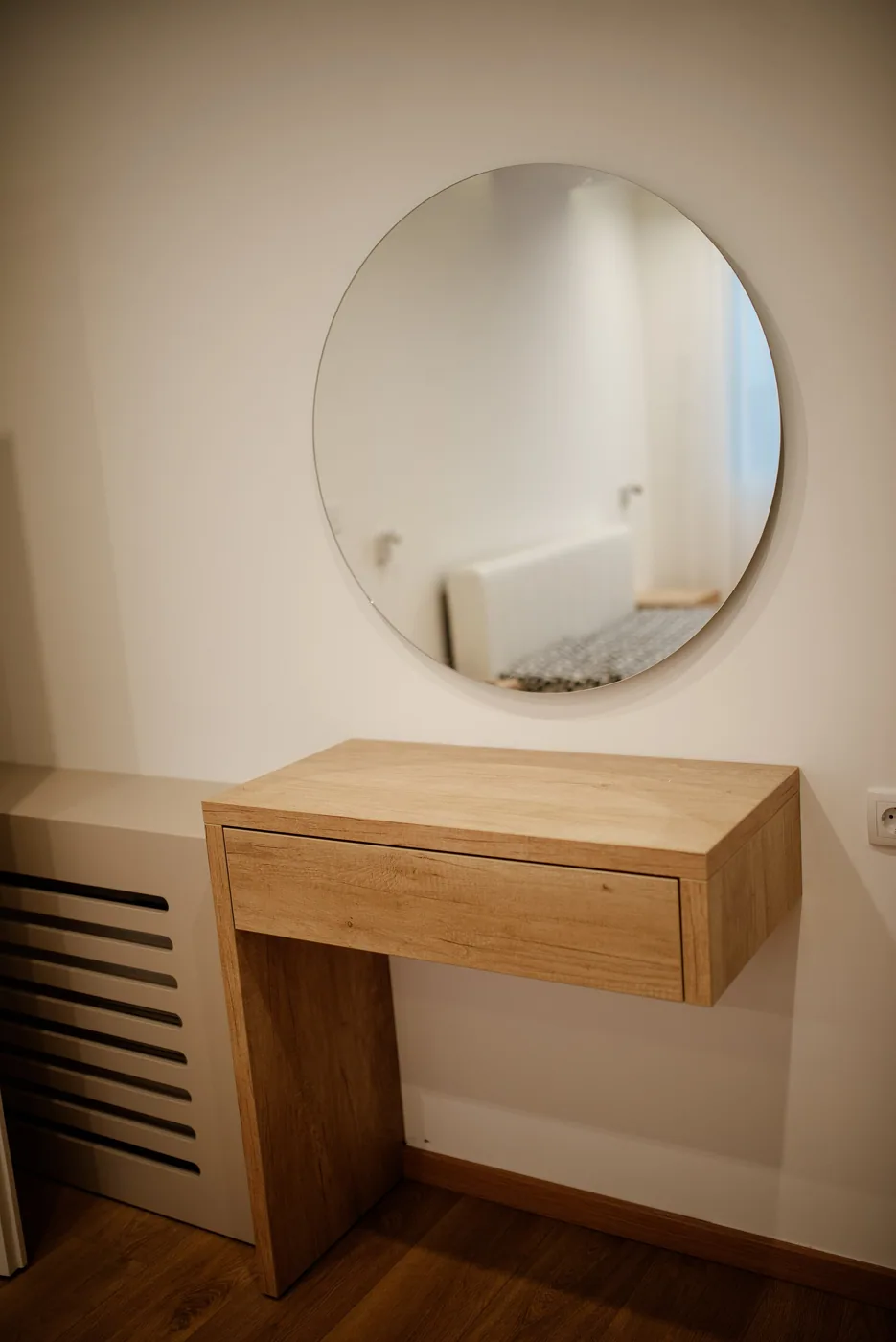
Height follows shape. A horizontal rectangle suits a sofa, a tall rectangle or oval suits a console or an entry table, and a round mirror suits a spot where you want a soft shape against square furniture. A round mirror of 30 to 36 inches over a console is a safe choice. If the wall above the furniture is short because of a low ceiling, choose a wide, shallow mirror. If it is tall, a vertical mirror draws the eye up.
Hanging height and the gap
As with art, the center of the mirror should be near 57 to 60 inches from the floor, which is average eye level, and the bottom edge should be 4 to 8 inches above the furniture it sits on. For a console of 30 inches height, a mirror of 36 inches in height with 6 inches of gap has its bottom edge at 36 inches and its center at 54 inches, a little low. Raise it slightly, to a 6 to 8 inch gap, so the center falls near 56 to 58 inches. The aim is to see your face, not your chest, when you stand in front of it.
Mirrors differ from art in one way: people use them. If the mirror is meant for a quick check on the way out, such as in an entry, the center should be at the eye level of the tallest person in the household, between 60 and 66 inches. In a living room, where the mirror is mostly decorative, hang it a little lower, so that a seated person can see into it. Check from the sofa. If you see only the ceiling in the reflection, lower the mirror a few inches or tilt it forward slightly with a bumper at the bottom.
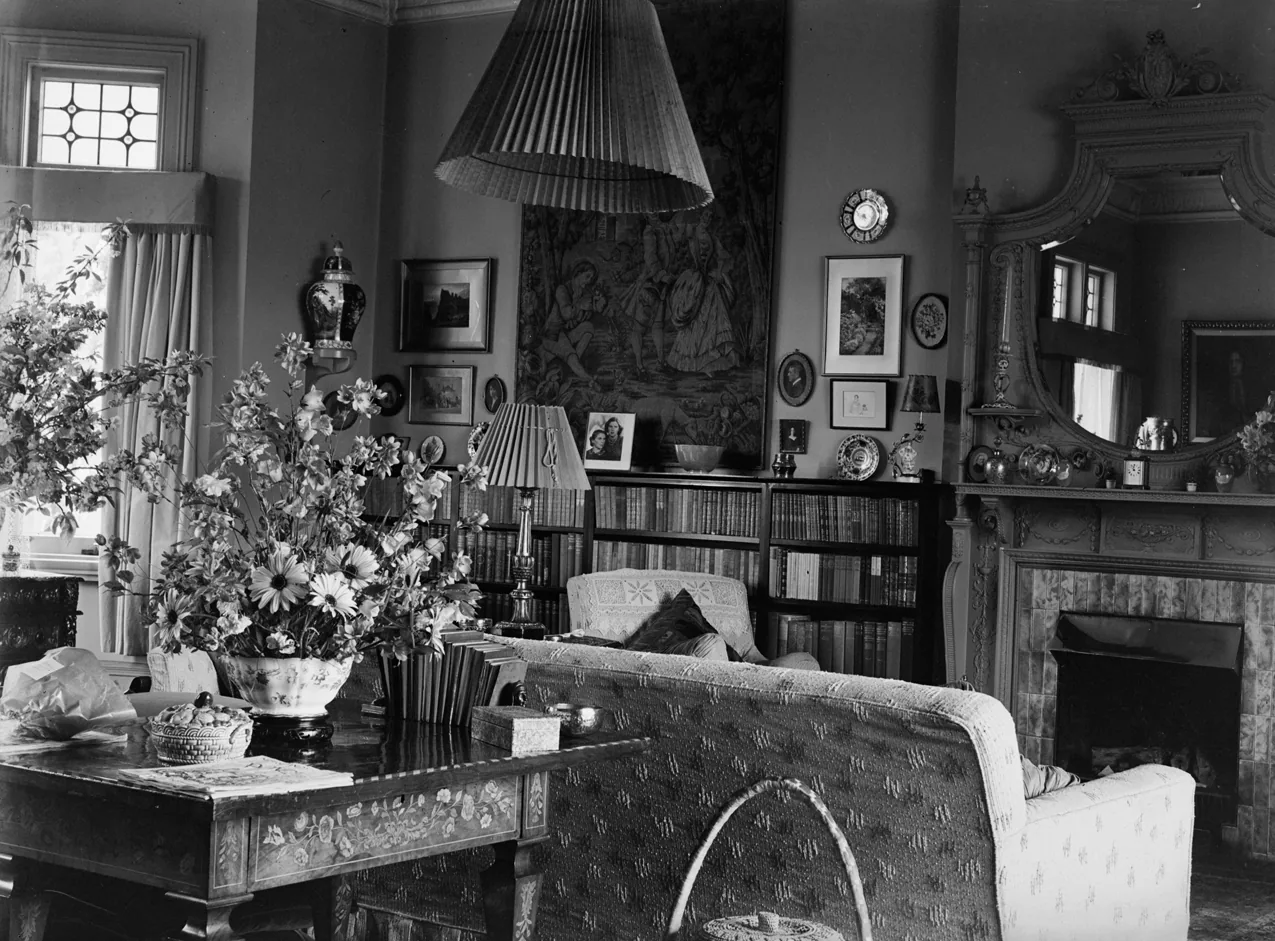
Over a fireplace, hang the mirror 4 to 6 inches above the mantel, and check the clearance rating of the fireplace if it burns wood, since heat can damage the silvering and the frame. A mirror above a fireplace that is used often should be rated for heat, or a few inches higher than the usual placement.
What the mirror reflects
The position of a mirror decides what it adds to the room. The best use is to reflect a window, which doubles the light and gives the impression of a second window, a trick that works best on a wall at right angles to the window or opposite it. A mirror opposite a window reflects the view and brightens the far side of the room. A mirror on the same wall as the window reflects the room but adds less light.
The second good target is a lamp or a pendant, which doubles the glow in the evening. The third is a pleasant view, such as a doorway to another room, a plant or a piece of art. The mirror should never reflect clutter, a messy corner, the back of a TV or the front door's shoe pile. A mirror shows everything, and a distracting reflection can make a room feel busier. Use a mirror to show the room at its best, and check the reflection from a few places.
Avoid reflecting the TV. A mirror opposite the screen produces a double image in the dark and adds glare in the day. Avoid placing a mirror where it can reflect the sun straight into the eye or onto a surface, since the beam can heat a sofa and fade fabrics. A mirror placed where the sun hits it directly can also focus light onto flammable materials in rare cases, so keep an eye on the angle during the year.
Mirrors in small rooms
A large mirror can make a small room feel bigger by extending the sightline, but only if it reflects something worth seeing. A mirror on the wall opposite a window will double the view and the light, while a mirror in a dark corner adds a dark rectangle. In a narrow living room, a tall mirror on the long wall, running from 12 inches above the floor to near the ceiling, gives depth and brightens the space, and it can be a leaning floor mirror or a set of panels.
The effect is described more fully in how to make a small living room look bigger. As a general rule, one large mirror in a small room is better than several small ones, since the latter create a busy pattern of reflections. Keep the frame thin and the color light to avoid adding visual weight.
Leaning floor mirrors and tip risk
A tall mirror that leans on a wall is popular, because it needs no drilling and adds height. It also has a real tip risk. A mirror of 60 inches tall and 20 inches wide can tip forward if a child pulls on it or a pet knocks it, and plate glass of a quarter inch weighs about 3 pounds per square foot, so a 60 by 20 inch mirror has about 25 pounds of glass plus the frame. A fall can break the glass and cause cuts.
The remedy is to anchor the mirror to the wall. Many leaning mirrors come with a strap or a bracket, and if yours does not, you can add a small L-bracket at the top edge fixed to a stud, or a safety strap through the back frame. Place the mirror at a slight angle of about 10 degrees from vertical, with a non-slip pad under the feet, so that it rests on the wall and not on the floor alone. Avoid placing it in a path where it can be bumped, and in a home with toddlers, hang the mirror instead. The same principles are discussed in anchoring furniture to the wall.
Weight and hanging safely
Mirrors are heavier than they look. A 30 by 40 inch mirror of quarter inch glass has about 8 square feet of surface and weighs around 27 pounds with the glass alone, plus the frame. Use two hooks or a French cleat rated for twice the weight, and fix into studs where possible. A wire hanging system with a single hook is not enough for heavy mirrors, as the wire can stretch or the hook can fail.
Use a level and a pencil to mark the hanging points, as described in the art hanging guide, and have a second person hold the mirror while you check the position. Use mirror mastic or heavy-duty hardware for frameless mirrors, and follow the maker's instructions. If you are renting, choose a lighter mirror of acrylic or thin glass, and use adhesive hangers rated for the weight with care. A mirror above a sofa or a bed should be fixed with extra care, because a fall would land on people.
Pairs, groups and mirrors beside windows
When one mirror is not enough, or you want to fill a wide wall, a pair or a group gives you more control. Two identical mirrors flanking a window, a doorway or a piece of art give a symmetrical, formal look, and each should be about a third of the width of the thing they flank. A cluster of three to five round mirrors in different sizes adds a playful, collected feel, and it needs a plan: lay the mirrors on the floor in the arrangement first, take a photo, then transfer the positions to the wall with paper templates, as with a gallery wall, which is explained in the gallery wall layout guide.
A mirror hung beside a window, on the same wall, catches light at a glancing angle and gives a warm glow without the glare that a direct reflection of the sun brings. A mirror hung at a right angle to a window, on the side wall, bounces light deep into the room and is the most effective position in a long, narrow space. Check the effect at different times of day before you drill, by holding the mirror in place for a few hours or leaning it against the wall.
Be aware of how a pair looks in the reflection. Two mirrors facing each other, even on opposite walls of a corridor, produce an infinite tunnel that can be disorienting, and a mirror opposite a front door sends the entry's energy straight back out, a belief in some design traditions and simply an awkward reflection in others. Use your eye, not a rule, and move the mirror if the reflection looks unsettling.
Care, cleaning and the edge that goes black
Mirrors need little care, but a few habits extend their life. Clean with a soft cloth and a glass cleaner sprayed on the cloth, not on the mirror, since liquid that runs behind the frame attacks the silvering at the edge and causes black spots and creeping dark lines. In humid places, such as a bathroom or a kitchen, mirrors age faster. A living room mirror is safer, but a mirror near a kitchen opening or a humidifier should be checked for dark edges once a year.
Keep a mirror away from heat sources. A mirror hung directly above a radiator or a wood stove can crack from uneven heating, and one above a fireplace that is used often should have a clearance of at least a few inches above the mantel, with the glass rated for heat. Do not hang a mirror where a door will bang against it, and use felt or rubber bumpers on the back corners so the frame does not mark the wall.
Frame, shape and style
The frame sets the style and the visual weight. A thin metal frame in black or brass suits a modern room, a wide wooden frame suits a traditional one and a frameless mirror suits a minimal one. The frame width adds to the overall size, so a mirror with a 3 inch frame is 6 inches wider than the glass. Check the stated dimensions to see whether they include the frame.
Shapes work differently. A round mirror softens a room full of straight lines and suits a console or a small wall. An arched mirror adds height and elegance, and works as a leaning floor mirror. A rectangular mirror is the most versatile. An oval is classic and suits a mantel. A sunburst or an irregular shape is a statement, so choose it only when you want the mirror to be the focus. Match the shape to the room and the other furniture so the mirror looks part of the plan.
Frequently asked questions
How big should a mirror be above a sofa?
Two thirds to three quarters of the sofa's width. For an 84 inch sofa, 56 to 63 inches. A group of mirrors can do the job if you treat it as one unit.
How high should I hang a mirror?
The center should be near 57 to 60 inches from the floor, with the bottom edge 4 to 8 inches above the furniture below. Lower it a little for a living room where people sit.
Where should a mirror go in a living room?
Opposite or beside a window to double the light, or where it reflects a lamp or a pleasant view. Avoid the TV and clutter.
Are leaning mirrors safe?
Only if anchored. Fix the top to a stud with a strap or a bracket, and use non-slip pads. In a home with small children, hang the mirror on the wall.
How heavy is a mirror?
Quarter inch glass weighs about 3 pounds per square foot, so a 30 by 40 inch mirror has about 27 pounds of glass. Use hardware rated for twice the weight.
Bottom line
Size the mirror to two thirds of the furniture below it, hang the center near 57 to 60 inches with a gap of 4 to 8 inches and point it at light or a pleasant view. Keep it away from the TV and from clutter.
Use proper hardware for the weight, and anchor any leaning mirror. A mirror that is the right size, in the right place and fixed securely adds light and space to a living room for years.