A sofa is the largest single block of color in a living room, and it is the one purchase that is expensive to reverse. A wall can be repainted over a weekend and a cushion replaced in a minute, but a sofa that turned out to be the wrong color tends to stay for years. That makes color a risk decision as much as a taste decision, and it deserves the same care as seat depth or frame construction.
This guide treats color as a set of practical trade-offs: how much each shade shows dirt and wear, how light in your room changes what you see, how a color behaves with your floor and rug, and how easily you can change the rest of the room around it. It is based on how fabrics and finishes behave in ordinary homes, not on trends, which date quickly.
Neutral or bold: the real trade-off
A neutral sofa gives you freedom. Gray, beige, oatmeal, taupe, charcoal and a muted brown all pair with nearly any wall color, rug and accent chair, so you can change everything around the sofa without changing the sofa. The cost is that a neutral does nothing by itself. In a room with white walls, a pale floor and a light rug, a beige sofa can disappear and leave the space feeling flat.
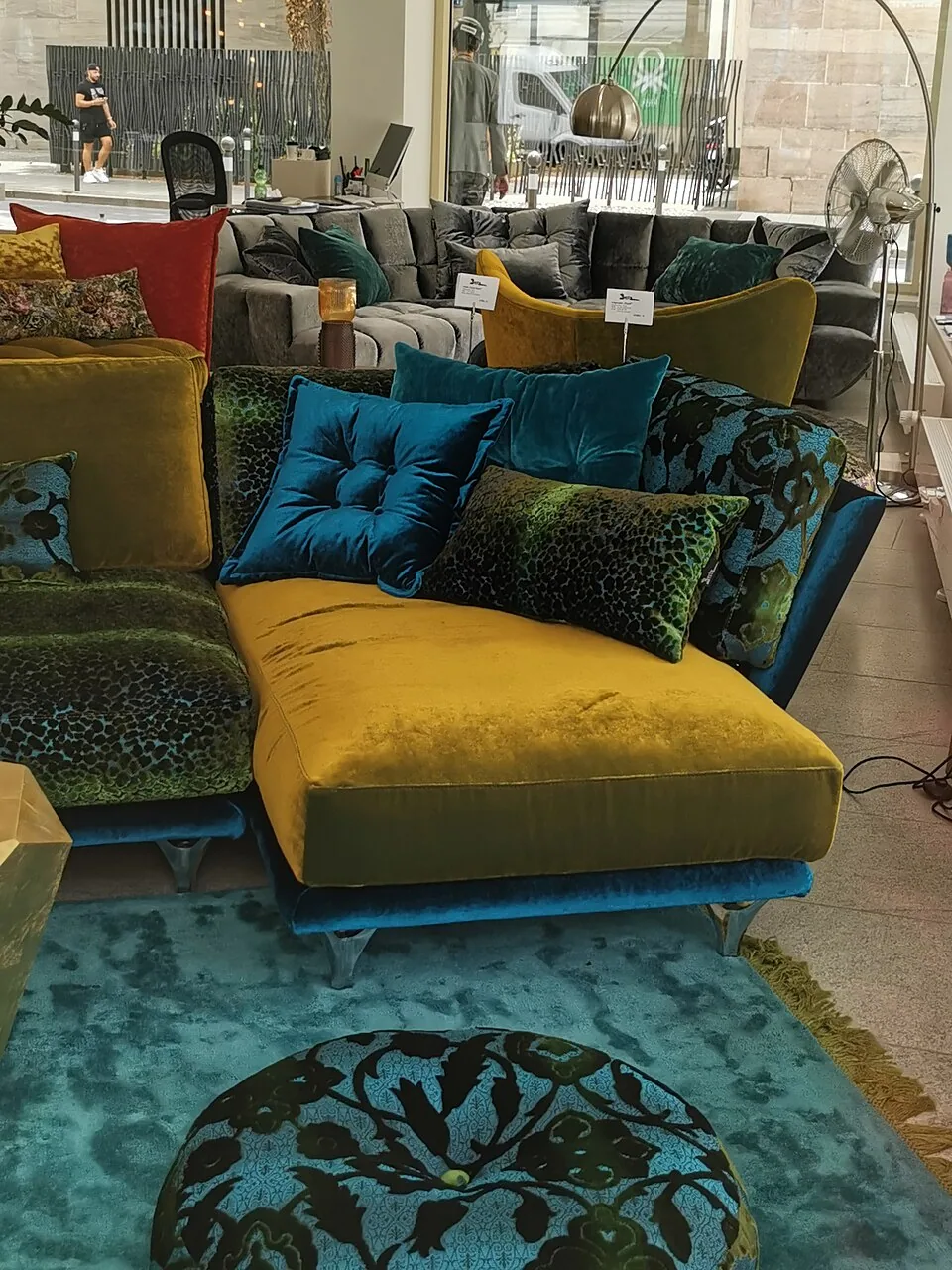
A bold sofa, such as deep green, rust, navy or a saturated blue, does the opposite. It anchors the room and gives you a clear starting point for the rug, pillows and art. The cost is commitment. Strong colors age in the mind faster than they age in the fabric, and a color that felt fresh at purchase may feel dated in four or five years. A reasonable rule is to go bold only if you already own and enjoy objects in that exact shade, such as a coat, a bowl or a chair, because that is evidence you can live with it.
A middle path works for many households: a deep or muted color with some gray or brown in it. Olive, slate blue, forest green and warm terracotta read as colors but behave more like neutrals, because they have low saturation and sit comfortably beside wood and stone.
How color hides, and shows, wear
Fabric color decides how much dirt, hair and wear the sofa advertises. The principle is contrast. A stain or a strand of hair is visible in proportion to how far it differs from the fabric around it, and wear shows where the fiber surface changes, because worn fiber reflects light differently.
Very light colors, including white and cream, show every spill, hair from a dark pet and the gradual gray of body oils on the arms and headrest. Very dark colors hide stains but show lint, dust, light pet hair and the pale scuff of fabric abrasion. The most forgiving colors are mid-tones with a slightly mottled or textured weave, such as heathered gray, oatmeal flecked with brown or a tweed-like blend, because the texture breaks up the outline of any mark.
Texture matters as much as shade. A flat, smooth fabric in a solid color shows a mark clearly, while a chenille, boucle or flecked weave scatters light and hides it. If your choice is between two similar colors, take the more textured one. For the fabric side of this decision, see our guide to sofa fabric types compared.
| Color family | Hides well | Shows easily | Best suited to |
|---|---|---|---|
| White and cream | Very little | Spills, body oil, dark hair, dye transfer from jeans | Adult households, slipcovers you can launder |
| Light gray and greige | Light pet hair, dust | Dark hair, coffee, denim dye | Most households with light-colored pets |
| Mid-tone gray, taupe, oatmeal | Most stains, most hair | Little in particular | The safest general choice |
| Charcoal and black | Stains, shadows | Lint, dust, light hair, scuffs | Homes with dark pets, low dust |
| Navy and forest green | Stains, shadows | Light hair, lint, sun fading | Rooms with controlled light |
| Rust, terracotta, mustard | Food and drink marks | Fading, color shift in sun | People who want a focal color |
Match the color to your pet or your children
Pet hair is the most predictable color problem. A sofa that matches your pet's coat hides the hair between cleanings, and a sofa that contrasts with it announces every strand. A golden retriever on a charcoal sofa and a black Labrador on a cream sofa are the two worst pairings. If you have more than one pet or a pet whose coat sheds heavily, pick a mid-tone with texture and plan on regular vacuuming, which matters more than color. Our guide to protecting a sofa from pets covers covers, claws and fabric choice.
Children change the equation differently. They produce food marks, drawing marks and dye transfer rather than hair. A medium color with a pattern or flecks hides food marks, while a very dark color hides them too but shows crumbs and pet hair. If your fabric is a performance weave, even a light color becomes a reasonable option, because stains lift more readily, though a light shade still shows what a dark one would hide.
One often-missed issue is dye transfer. New dark denim, dark leather bags and some printed throws can leave a blue or gray tint on a pale sofa, and that tint is hard to remove from some fabrics. If a pale sofa is the only color you like, keep a throw on the favorite seat for the first months.
Light, window direction and room size
Color on a screen and color in your room are different things. Light direction and temperature move a shade more than most buyers expect, so judge the swatch where the sofa will sit.
A north-facing room receives cooler, bluer light, which makes gray sofas look cold and flat and makes warm beige look slightly gray. A warm shade such as oatmeal, camel or a gray with a brown undertone corrects that. A south-facing room receives warmer, brighter light for most of the day, which can wash out a pale sofa and make a saturated color look more intense. East-facing rooms are bright and cool in the morning and flatter by afternoon, while west-facing rooms turn warm and orange in the evening, which can turn a cool gray green or beige yellowish.
Room size matters mainly through contrast. In a small room, a sofa close in tone to the walls recedes and the room feels larger, which is why many small-room guides suggest light or mid-tone sofas. A dark sofa in a small room is not wrong, but it will be the dominant visual mass, so keep the legs visible and the rug light. For a related decision, see our guide to choosing a sofa for a small living room.
Fit the sofa to the floor, the rug and the walls
The sofa sits on a rug that sits on a floor, and the three together set the tonal range of the room. A good starting rule is that the sofa should not be the same value, meaning the same lightness or darkness, as the rug. A mid-gray sofa on a mid-gray rug merges into a single block, while a mid-gray sofa on a lighter or patterned rug separates cleanly.
Wall color works the same way. A sofa that is slightly lighter or darker than the wall defines its edges, and a sofa that is a different hue provides contrast. A sofa the same color as the wall looks built in, which can be a deliberate choice in a calm, tonal room, but it removes the sofa as a focal point.
Wood tones add a variable. Warm wood floors suit sofas with warm undertones, such as oatmeal, camel, rust and olive, and can make a cool blue-gray sofa look slightly mismatched. Cool gray floors suit blue-gray, charcoal and white. If you are building a palette from scratch, our 60-30-10 color rule guide shows how to split the room between a dominant, a secondary and an accent color, and the sofa usually belongs in the dominant or secondary role.
Sun fading and undertones
Two color problems appear after purchase rather than before it. The first is fading. Direct sun breaks down dyes, and the colors that fade fastest are saturated reds, oranges, deep blues and dark greens in fabrics that were not solution dyed. A sofa placed in front of a south or west window can show a visible stripe on the side facing the glass within a year or two. If your sofa must sit in strong sun, choose a fabric labeled as solution dyed or fade resistant, choose a color that is already pale, or use sheer curtains or a UV film on the glass.
The second is undertone. Most neutrals are not neutral. A gray can lean blue, green, purple or brown, and a beige can lean pink, yellow or gray. Undertones are hard to see on a single swatch and obvious on a large sofa beside a white wall. Place the swatch beside something truly white, such as printer paper, and the lean becomes visible. Then compare it to your floor and wall, because a pink-leaning beige looks wrong beside a yellow-leaning wood, and a green-leaning gray looks muddy next to a warm cream wall.
Keep the room flexible
The best long-term strategy is to put the permanent color in the large, expensive pieces and the changeable color in the cheap ones. A neutral or low-saturation sofa, a neutral rug and neutral curtains let pillows, throws, art and a single accent chair carry the color. When your taste moves, you replace a few small items, not the room.
Some households want a bold sofa anyway. In that case, keep everything else quiet, avoid choosing a color in a trendy finish that dates the piece, and consider a sofa with removable covers. A slipcover can be replaced or laundered, and a sofa with a replaceable cover gives you a second chance on color.
For a rental or a first sofa, a mid-tone neutral is almost always the lower-risk choice. It moves between apartments, suits the next room, and does not constrain a future partner or roommate who has different taste.
How to test a color before you commit
Order a physical swatch, and if the retailer offers a larger sample, order that too. Look at it in the room where the sofa will sit, at three times of day: morning, mid-afternoon and evening with the lamps on. Lamp light is warm, so a gray that looks fine in daylight can turn beige or purple at night.
Lay the swatch on the floor beneath the rug and against the wall behind the sofa, then stand back at the distance you will actually sit. A swatch held at arm's length reads differently from a sofa seen from across the room. Rub the swatch with a damp cloth and a little dark coffee, then blot it, to see how the fabric handles a stain, which tells you more than the color alone.
If the sofa will be delivered in a box or in several modules, check that all parts come from the same dye lot, since two modules can differ slightly if they ship from different batches. A mismatch is more visible on a smooth fabric than on a textured one.
Frequently asked questions
Is gray still a safe sofa color?
Yes, gray remains one of the most flexible choices, but pick the undertone with care. Warm gray with a hint of brown suits wood floors and cream walls, while cool blue-gray suits white walls and gray floors. A mid-tone gray with a visible weave hides wear better than a flat light gray.
What sofa color hides dirt best?
A mid-tone, slightly textured fabric hides the widest range of dirt, hair and wear. Heathered gray, taupe, oatmeal with flecks and tweed blends all break up the outline of marks. The best choice for you depends on what you are hiding: match the fabric to your pet's coat and keep darker shades for homes with dark hair.
Should the sofa match the rug?
It should relate to the rug but not match it. A sofa and rug of the same shade merge into one block and lose definition. Choose a rug a step lighter or darker, or one with a pattern that includes the sofa color, so the pieces read separately while still looking intentional.
What if my room gets very little light?
Choose a warm mid-tone or lighter shade so the sofa does not turn into a dark mass. Very dark colors in a dim room absorb what light there is and make the space feel smaller. Warm neutrals, soft greens and light blues reflect more and keep the room from feeling cave-like.
Can I change the color later without replacing the sofa?
Sometimes. A sofa with removable cushion covers or a custom slipcover can be recolored, and a throw or a cover changes the look in minutes. A sofa with a fixed upholstered frame cannot be changed without professional reupholstery, which costs a meaningful fraction of a new sofa, so choose the base color as if it is permanent.
Bottom line
For most households, choose a mid-tone neutral with some texture: warm gray, oatmeal, taupe or a muted green-gray. It hides the widest range of wear, works with most floors and walls, and survives changes of taste because the color in the room can come from cheaper pieces. If your pet or children dominate your cleaning list, let their coat color and habits pick the shade within that range.
Go bold only if you have lived happily with that color before and your light supports it. In that case, keep the rug and curtains quiet, check the swatch at three times of day, and consider removable covers as insurance. Whatever you choose, judge the color in the room where it will live, not on a screen, since the room will decide how it looks.