Most advice for pet owners boils down to "don't let the dog on the sofa", which almost nobody follows. A more realistic goal is to let the animal share the furniture while controlling the damage: claws, hair, odor, drool and muddy paws. Each of those problems has a different cause and a different fix, and some sofas simply make them worse.
This guide covers the choice of fabric, the covers that work and the ones that slide, how to manage hair and smell, how to redirect scratching and the details that change from dog to cat. It assumes you want to keep the pet and the sofa, and that the sofa is not a throwaway.
Weave beats everything: what claws can and cannot hook
Claws damage fabric by hooking a loop of yarn and pulling it out, so the structure of the weave decides how much harm is done. A tight, flat weave has no loops for a claw to catch, and a claw simply slides across the surface. Microfiber, tightly woven polyester and performance fabrics sit in this group. Loop weaves, bouclé, chenille, tweed and loose linen have exposed yarn that snags, and one hook can pull a visible run.
Leather resists hooking but takes scratches, and the scratch may be permanent on aniline leather and fixable on pigmented leather, as explained in our leather sofa care guide. Velvet made of short polyester pile resists snagging well, though cats often knead it and flatten the nap. For a pet household, choose a fabric with a double rub count of 30,000 or more, and judge it by the weave first and the number second.
Color and pattern: hiding hair and marks
Hair shows most when it contrasts with the sofa, so choose a color close to the pet's coat. A grey dog on a grey sofa is nearly invisible, and a white cat on a charcoal sofa leaves a visible trail. Mid-tone, mottled and heathered fabrics hide hair, dust and small stains better than a solid pale or a solid dark color.
Pattern helps too. A small-scale pattern or a flecked weave breaks up the outline of hair and the shape of a muddy paw print, while a plain surface shows everything. If your pet has a mixed coat, a multi-tone fabric in a similar range is the safest choice. We discuss fabric and color together in our guide to sofa fabric types.
Covers that stay put
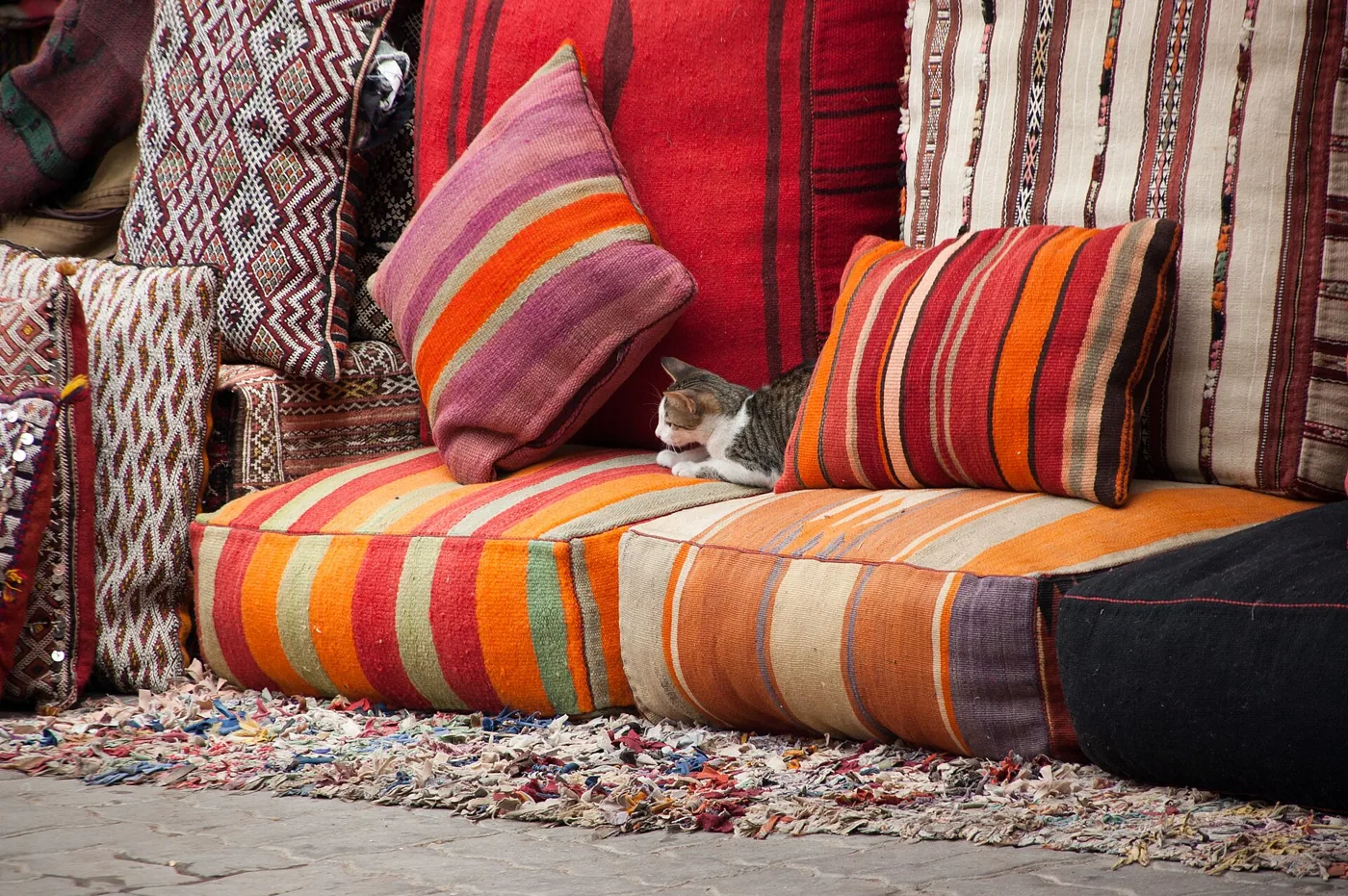
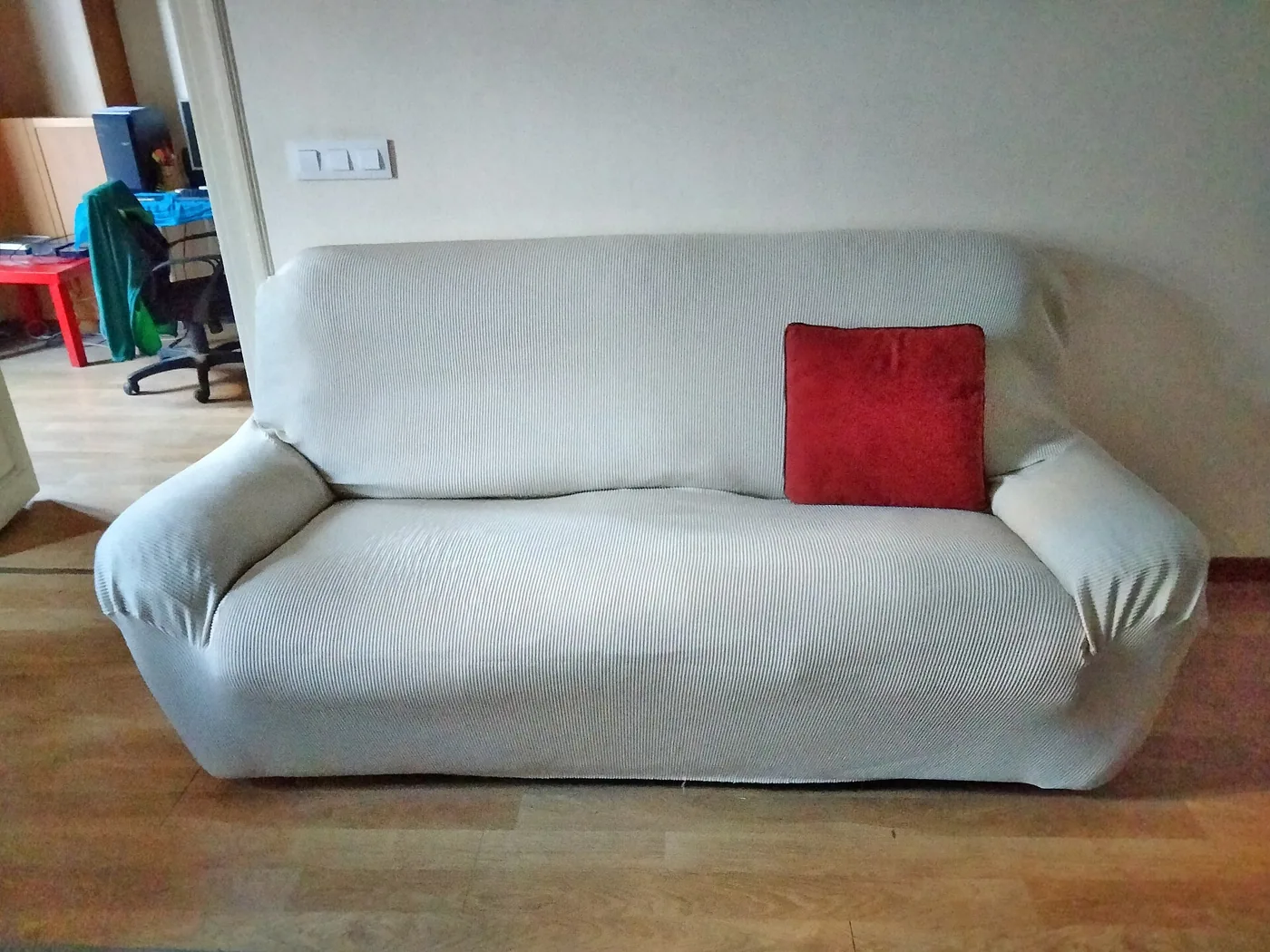
A cover is the cheapest protection, but a cover that slides or bunches is more annoying than the damage it prevents. Fitted stretch covers conform to the sofa, with pockets for the arms and the back, and stay in place for light use. They are thin, though, and a determined cat can claw through them. Quilted or heavier slipcovers with ties or elastic straps are more secure and more durable, and some have a non-slip backing.
The simplest option is a washable throw, tucked firmly into the crease between the seat and the back and secured with foam tubing or a pair of anchor sticks. This does not hide the sofa, and it moves with use, but it protects the main sitting area and goes into the washing machine weekly. Whatever you choose, wash it at the temperature the label states, and dry it fully before replacing it, because a damp cover grows an odor of its own.
Hair removal that works
A weekly routine keeps hair under control. Vacuum with an upholstery tool or a handheld unit, running along the seams where hair collects. A rubber glove, slightly damp, drawn across the surface lifts hair into rolls on most woven fabrics, and a squeegee works similarly. Lint rollers are fine for a quick tidy, but they are expensive for a daily habit and leave adhesive on some fabrics.
Static is the reason hair clings to synthetic fabrics. A light mist of water mixed with a little fabric softener, applied with a spray bottle and wiped, reduces the charge, and it is worth testing on a hidden patch. Brushing the pet outdoors or on a towel before it climbs up cuts the load by a large share. For a heavy shedder, a seasonal groom and a slipcover during the peak weeks are more effective than chasing hair after it has settled.
Odor, drool and accidents
Odor comes from oils, saliva, urine and the bacteria that feed on them, and it settles into foam and fabric over time. Regular washing of removable covers and a sprinkle of baking soda on the seat, left for several hours and then vacuumed, handles routine smells. For deeper odor, an enzyme cleaner breaks down the proteins that cause it, where ordinary soap only masks them.
Treat accidents quickly. Blot, do not rub, and then apply an enzyme cleaner according to the label, and let it dry. Check the cleaning code on the tag first, as we describe in our guide to cleaning a fabric sofa, since a water-based enzyme product can mark an S-coded fabric. Urine that reaches the foam is difficult to remove, which is a reason to use a waterproof liner under a cover for an incontinent or young animal.
Redirecting scratching
Cats scratch to stretch, mark territory and shed claw sheaths, and the sofa is attractive because it is stable and tall. Provide a scratching post at least 30 inches tall and sturdy enough not to wobble, placed next to the sofa, since cats scratch after waking and near where they sleep. Cover the corner they use with a plastic guard or double-sided tape while the habit changes, and reward use of the post.
Dogs damage sofas by digging, chewing and jumping, and the cure is exercise, a bed of their own and a rule about where they climb. A dog bed placed at the end of the sofa, with a familiar blanket, gives an alternative that has the same view. Training takes weeks, and a cover protects the sofa while the habit forms.
| Problem | Cause | Best fix | Where it fails |
|---|---|---|---|
| Snagged threads | Loop or loose weave | Tight flat weave, microfiber | Leather, which scratches instead |
| Hair on the surface | Static, rough texture | Rubber brush, mist, color match | Heavy shedding seasons |
| Odor in the cushions | Oils, saliva, urine | Washable covers, enzyme cleaner | Urine in the foam |
| Scratching | Marking, stretching | Post beside the sofa, guards | Bored or stressed animals |
| Muddy paws | Outdoor access | Paw wipe at the door, throw | Dogs that jump immediately |
Dogs and cats: different risks
A cat's damage is concentrated: claws on the arms and corners, and hair on the seat. A dog's damage is broader: weight and moisture on the seat, claws on the edge, drool and wet paws. Cats are generally cleaner in the sense of mud, and dogs generally heavier in the sense of the load on the seat springs and cushions. A large dog that jumps on and off the sofa daily adds impact to the front rail, which matters for the frame, as our frame guide explains.
Choose accordingly. For a cat household, look for the weave first and add a scratching post. For a dog household, look for a washable cover, a stain-resistant fabric and a firm seat that recovers from compression. If you have both, give each an alternative, and keep a throw on the shared spot.
Muddy paws, wet coats and the entrance routine
Much of the dirt on a sofa arrives on the animal. A towel and a paw-wipe station by the door, used every time, removes the bulk of mud and moisture before the pet reaches the furniture. For dogs that swim or roll in the garden, a quick rub with a dry towel before they come in cuts the transfer of dampness that leaves an odor in the cushions.
Wet fur is a particular problem because it carries moisture deep into the foam, where it dries slowly and grows a musty smell. If a wet dog jumps on, press the area with a dry towel and then aim a fan at it for a few hours. A waterproof liner under a removable cover is a worthwhile investment in a household with a water-loving dog, since it stops liquid reaching the cushion core.
A weekly routine that keeps it manageable
A short, regular routine is more effective than an occasional deep clean. On one day each week, take the throws off for washing, run a rubber brush or vacuum over the seats and arms, and fluff the cushions so they do not hold a single dent. Once a month, take the cushions off and vacuum the deck and the crevices, where hair and crumbs collect and attract insects. Every few months, spot-clean any marks following the care label.
Claw trimming is part of the routine. A cat's claws need a trim every two to three weeks, and a dog's whenever they click on the floor. Trimmed claws are the cheapest protection a sofa can have, and a pet that is used to handling tolerates it easily. If a cat is resistant, soft nail caps are an option, but they need replacing every month or so.
Repairing pet damage
Pulled threads on a woven fabric can often be repaired without a visible mark. Do not cut the loop, because that leaves a hole. Instead, use a needle or a small crochet hook to draw the pulled yarn back through to the underside, where it stays hidden. For a small tear, a fabric patch glued behind the hole and a dab of fabric adhesive on the edges holds it in place until a better fix is possible.
Large tears, chewed corners and shredded arms need an upholsterer. They can re-cover a single cushion or a panel for a fraction of the cost of a new sofa, and a matching fabric is possible if you keep the swatch that came with the sofa. Keep it in a labeled envelope, along with the cleaning code, because it will save you a long search later.
If you are buying a sofa with pets in mind
Prefer a sofa with removable, washable cushion covers, a performance or microfiber fabric and a frame built for hard use. Avoid white, bouclé, loose-weave linen and anything labeled dry-clean only. Leather with a pigmented finish suits some pet owners because hair does not stick to it and spills wipe off, although claw scratches show. A sofa with legs at least 6 inches high allows you to vacuum underneath, where hair collects.
Check the cleaning code before buying: W or WS makes accidents far easier than S or X. Read the cushion details too, since a plush down wrap is a magnet for nesting animals, and a firm foam cushion resists dents. Our sectional roundup points to frames and covers that handle everyday wear.
Allergies and the pet-friendly sofa
If someone in the household has a pet allergy, the sofa matters because dander settles into fabric and foam. Smooth surfaces such as leather and tightly woven synthetics hold less dander than deep-pile fabrics and can be wiped or vacuumed more thoroughly. Washable covers, laundered at 130 degrees Fahrenheit or higher where the label allows, remove the allergen far better than surface vacuuming alone.
Placing the pet's bed in another room and keeping the pet off the sofa during an allergic person's use reduces exposure, but cannot eliminate it. A sealed vacuum with a HEPA filter keeps the dander from being blown back into the room, and an air purifier near the seating area helps with airborne particles. These measures manage symptoms and are not a medical treatment, so a person with significant allergic reactions should talk to a doctor about the right plan.
Frequently asked questions
What is the best sofa fabric for cats?
A tight, flat weave such as microfiber or a performance polyester gives claws little to hook. Avoid bouclé, chenille and loose linen. Pair the sofa with a scratching post placed next to it, since the fabric choice alone will not stop the habit.
Are leather sofas good with dogs?
Pigmented leather handles dogs well: hair does not cling, and spills wipe off. Claws can leave marks, and an aniline finish will show scratches and stains. Keep claws trimmed and condition the leather regularly.
How can I stop my dog jumping on the sofa?
Give the dog a better place, such as a bed with the same view, and reward it for using it. A cover or a throw protects the sofa during training. Consistency matters more than the method, and every member of the household needs to follow the same rule.
What if my situation is different, such as a rental with a no-damage rule?
Use a heavy slipcover or throw and a post, keep claws trimmed and photograph the sofa's condition at the start. Choose a washable fabric if you are buying, and avoid a pale or delicate one. Check any lease terms about furniture.
Does a lint roller damage the fabric?
Not usually, but repeated use on delicate velvet or bouclé can disturb the pile and leave residue. A rubber brush or a vacuum with a soft tool is gentler and cheaper over time.
Bottom line
Choose the weave first, then the color, then the cover. A flat, tight fabric in a mid-tone close to your pet's coat, with a washable throw on the favorite spot and a scratching post beside it, handles most households. Add a weekly brush and an enzyme cleaner for accidents, and the sofa lasts years longer than it would without the routine.
If the sofa is old, it is cheaper to cover and repair than to replace, and if it is new, the fabric choice will decide how it ages. For how we weigh upholstery and care in our picks, see how we evaluate our products.