Most floor lamps are bought for how they look in the shop and judged on how they read in the chair. A lamp that is lovely against a wall can cast a bright patch on the carpet, a shadow of your own hand on the page and a glare spot on the glossy cover of the book. Reading is a demanding visual task. The eye needs steady light on the page, with no glare, from a direction that does not put your hand in the way.
This guide explains where the light should come from and why, how many lumens a page needs, what color of light is easiest on the eyes, which lamp features matter for reading and how to place the lamp beside a chair. It ends with how to tell if a lamp suits you, with a few tests you can do at home. It is written for an armchair or a sofa corner in a living room.
Where the light should come from
The most useful rule is to place the light source behind your shoulder on the side opposite your writing hand. For a right-handed person, that is the left side. The reason is shadows. A light on the same side as your hand casts the shadow of your hand across the page, which is irritating when you write and when you hold a pen over a book. Light from the opposite side keeps your hand out of the way. For reading only, either side works, but the habit of left-side lighting for right-handers is a good one.
The light should come from slightly behind you, not from the front. A source in front of you shines into your eyes, and a source directly above can create shine on a glossy page. A position about 15 to 20 inches to the side and slightly behind the shoulder lets the light fall over the shoulder onto the page. The light then reaches the book from the upper side and gives a soft, even illumination without glare, as long as the bulb is hidden from the eye by the shade or the arm.
The height matters. A common recommendation is that the bottom of the shade, or the light source, should be roughly at or just above the height of your head when you sit. For a typical armchair with a seat 17 inches high, the seated eye level is about 38 to 42 inches, so the light source at 45 to 50 inches shines down over the head and the shoulder onto the book. A light source lower than eye level is visible and glaring. A light that is too high, such as a floor lamp that is 7 feet tall, spreads the light over a wide area and has less effect on the page.
How bright the page should be
Light on a page is measured in lux or foot-candles, and a reading task is best at about 300 to 500 lux, which is 30 to 50 foot-candles, on the page. Small print and older eyes need more. A lamp's output is given in lumens, and the light on the page depends on how far away the lamp is and how the light is directed. As a rule, a reading lamp with a bulb of 450 to 800 lumens, which is about equal to a 40 to 60 watt incandescent, placed within 2 to 3 feet of the page, meets the need.
Brighter is not always better. A very bright bulb in a lamp that is close to the page produces glare off glossy paper and makes the contrast between the page and the dark room harsh, which tires the eyes. A dimmable lamp, or a lamp with several brightness steps, gives the best control. The relationship between the lamp and the other sources in the room is explained in the layered lighting guide. A reading lamp should be brighter than the room's background light, but the background should not be dark, since the contrast makes the eyes work harder.
Age changes the need. A person of 60 may need two to three times the light of a person of 20 to read the same text comfortably, since the eye's lens transmits less light with age. If you read for long periods or have trouble with fine print, choose a lamp with a stronger output, up to 1,000 lumens, with a dimmer.
| Need | Bulb output | Position |
|---|---|---|
| Casual reading, large print | 400 to 600 lm | 2 to 3 ft from the page |
| Long reading sessions | 600 to 800 lm | Over the shoulder, adjustable |
| Small print, older eyes | 800 to 1,000 lm, dimmable | Close, adjustable arm |
| Needlework, crafts | 800 lm or more, high CRI | Close, directed |
Color temperature and color rendering
For reading in the evening, a warm white of 2700K to 3000K is comfortable, as it matches the other lamps in a living room and is gentle on the eyes. A cooler 3500K to 4000K gives a crisper light and can be better for small print in the day, but it can feel harsh in the evening and disturb the transition to sleep. Many modern lamps have a switch for the color temperature, which is useful if the lamp is used for different tasks. See the color temperature guide for how the colors look in a room.
The color rendering index, CRI, shows how faithfully the light shows colors. For reading, a CRI of 80 is adequate, and 90 or more is better, since the text and illustrations look sharper and the paper looks natural. Cheap LED bulbs can have a low CRI, which makes the page look dull. Check the bulb's package for the CRI, and avoid bulbs that do not state it.
Flicker matters too. Some cheap LED lamps flicker at a high frequency that you cannot see, but which can cause eye strain and headaches in some people. Choose a lamp with a quality driver and a flicker-free rating if you are sensitive, and avoid dimming a lamp with an incompatible dimmer, which can cause flicker, as described in the dimmer guide.
Features that matter for reading
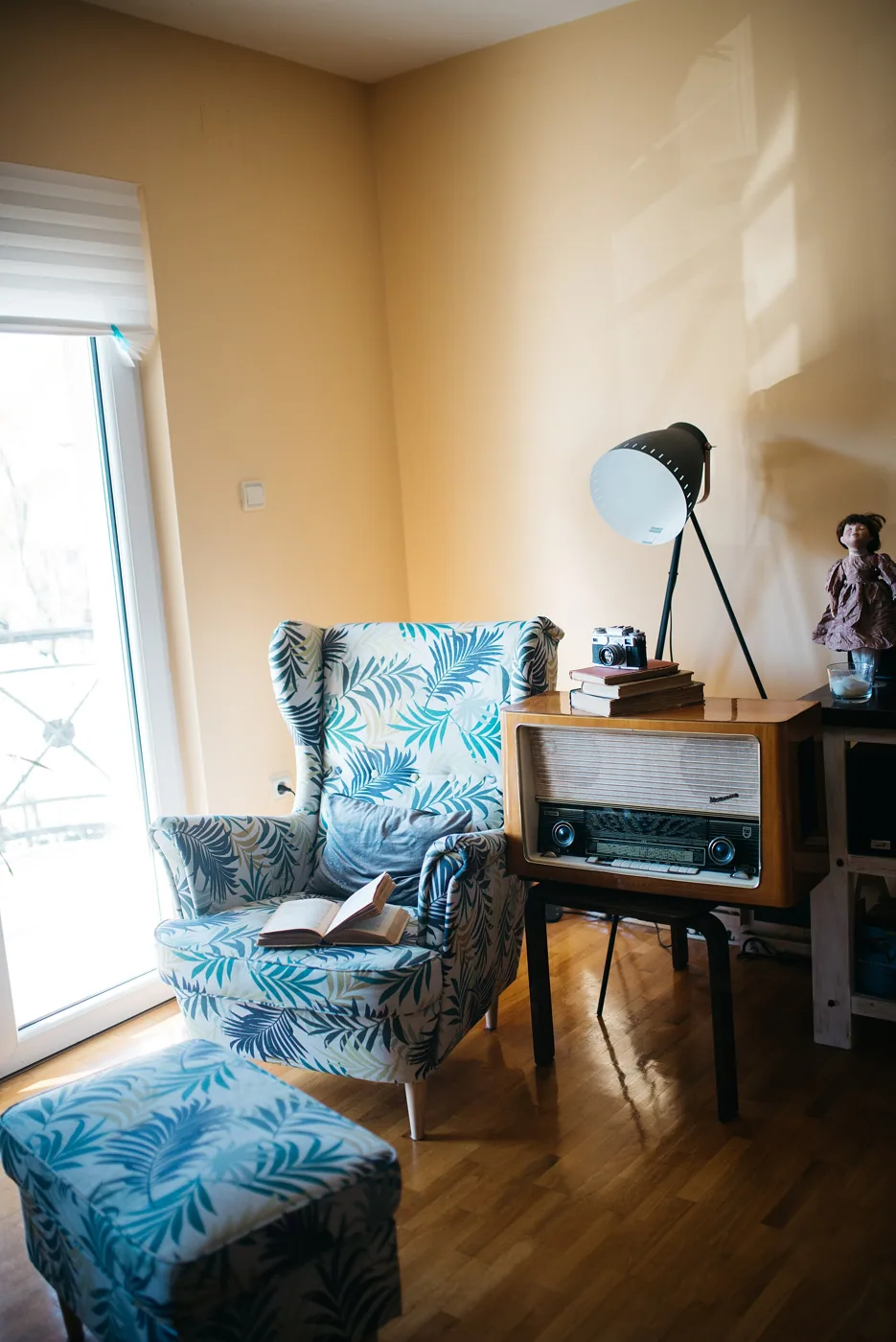
Several features make a floor lamp a better reading lamp. An adjustable head or arm, on a gooseneck or a swing arm, lets you point the light at the page and change it as you move. An arc lamp, with a long arm that curves over the chair, puts the light above and in front of the shoulder, though it needs a heavy base. A lamp with a pivoting shade lets you aim the light, and a lamp with a fixed shade is better for general light than for reading.
The shade should hide the bulb from your eyes. A shade that is open at the bottom directs light down onto the page, and a shade with a translucent fabric spreads the light softly. A metal shade with a downward opening gives a focused pool and reduces glare. A bare bulb or a clear glass shade is a poor choice for a reading chair, since it puts a bright point in your view. Choose a shade that is wide enough to hide the bulb from the seated position, as explained in the lampshade size guide.
Practical details help too. A dimmer on the lamp's stem or a foot switch lets you change the light without reaching up. A heavy, stable base avoids tipping, which matters for a tall lamp beside a chair that people lean against. A long cord that reaches the outlet without crossing a walkway is useful. Some lamps have a USB port in the base, handy for a phone or a reading light on a tablet, and a side table or a reading shelf attached to the lamp is an option in a small room.
Height, reach and style
A standard floor lamp is 58 to 64 inches tall, which suits most armchairs and sofas. The details of height are covered in the floor lamp height guide. For reading, the head of the lamp should be able to reach a position above and behind the shoulder, which means either a lamp of about 60 inches with an arm that bends forward or an arc lamp with an extended reach. A short, fixed lamp of 50 inches puts the bulb too low, and a very tall lamp of 70 inches has the light too far from the page unless the arm is adjustable.
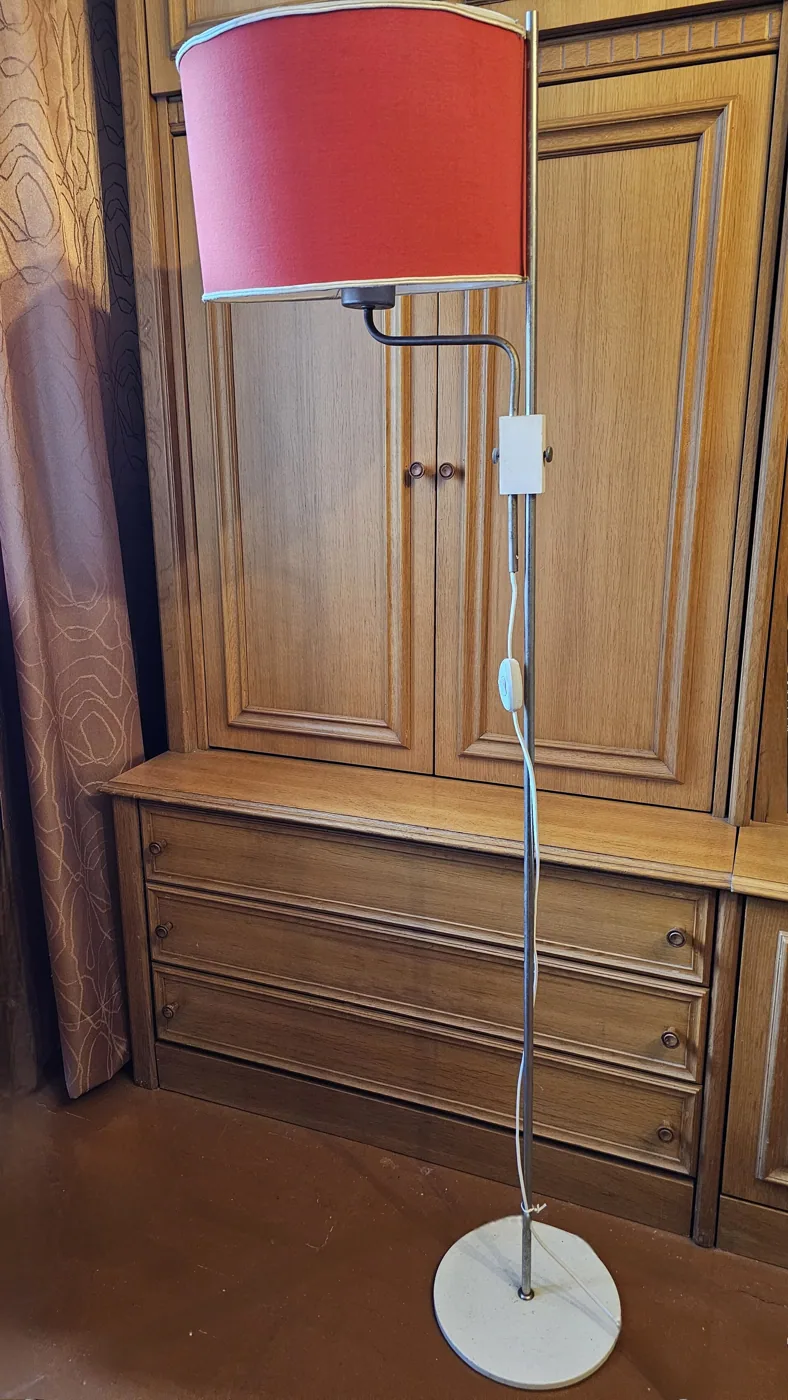
Choose a style that suits the room. A slim, tripod or a metal arc lamp suits a modern room and takes little floor space. A traditional lamp with a fabric shade suits a classic room and gives a warmer glow. A task-style lamp with an articulating arm looks functional and suits a corner used for work. If you read in a corner where a lamp could be knocked, a wall-mounted swing arm sconce, as discussed in the wall sconce height guide, is a good alternative that frees the floor.
Simple tests to see if a lamp works for you
You can check any lamp in ten minutes, at home or in a shop that lets you test. First, sit in the chair or on a chair of similar height, with a book or a magazine in your reading position. Switch on the lamp and look at the page, then at the bulb. If you see the bulb or its bright reflection on the page, the shade is too short or the position is wrong. Second, move your hand across the page as if turning it, and watch for the shadow of the hand and the arm. If a shadow falls across the text, move the lamp to the other side.
Third, read a paragraph of small print for a minute. If your eyes feel tired, or you tilt the book to find the best angle, the light is too weak, too glary or from the wrong direction. Fourth, look at the room around you. If the lamp is the only light on in a dark room, the contrast will strain your eyes, so add a dim background light or a second lamp across the room. Finally, try the dimmer, if there is one, at the lowest and highest settings, and check that the light does not flicker or buzz.
Mistakes people make with reading lamps
The most common mistake is buying a decorative lamp and expecting it to do the job of a task light. A tall lamp with a wide drum shade gives a lovely ambient glow, but the light spreads in all directions and the page gets little of it. The second is placing the lamp in front or beside the chair, level with the book, so the light shines into the eyes. The third is using a bulb that is too bright or too cool, which creates glare and a hard, clinical look. The fourth is a lamp that is unstable, a tall lamp with a light base that tips when someone leans on it.
Another is neglecting the cord. A cord that crosses a doorway or hangs across the seat is a trip hazard, and a cord that is too short forces the lamp into a bad position. A final mistake is ignoring the eyes' changes with age. If you find that you need more light than you used to, that is normal, and the answer is a lamp with a stronger bulb and a dimmer, not a squint. If you have persistent difficulty reading in good light, headaches or double vision, see an eye care professional, because no lamp can fix a vision problem.
Placing the lamp beside the chair
Set the lamp about 15 to 20 inches to the side of the chair, and a few inches behind the line of your shoulders. The light should hit the page from over your shoulder. Sit in the chair with a book and adjust the head until the page is evenly lit, with no shadow of your head and no glare on the paper. If the page looks shiny, move the light or tilt the book. If you see the bulb, lower the shade or move the lamp back.
Keep the lamp out of the traffic path, and make sure the cord does not cross where people walk. Place the lamp so that a side table is within reach, and so that the lamp does not cast a shadow on the table. If two people share a sofa, each reader needs their own light, with two lamps at each end, or one lamp with two adjustable heads. For a corner chair, the lamp can sit in the corner behind the chair, bouncing light off the walls, which gives a softer glow.
Frequently asked questions
Where should a reading lamp be placed?
Beside and slightly behind your shoulder, on the side opposite your writing hand, about 15 to 20 inches from the chair, so the light falls over the shoulder onto the page.
How many lumens do I need for reading?
Roughly 450 to 800 lumens in a lamp within 2 to 3 feet of the page, and up to 1,000 with a dimmer for small print or older eyes.
What color light is best for reading?
A warm white of 2700K to 3000K with a CRI of 90 or more is comfortable in the evening. A cooler 3500K to 4000K can help in the day with small print.
Is an arc lamp good for reading?
Yes, if the base is heavy and the arm reaches over the chair. It places the light above and behind the shoulder without a stand beside the seat.
How tall should a floor lamp for reading be?
About 58 to 64 inches, with an adjustable arm or head. The light source should be at or just above seated head height.
Bottom line
Put the lamp over your shoulder, opposite your writing hand, with the bulb hidden by the shade. Choose 450 to 800 lumens, warm light with a high CRI and an adjustable head, and a height of 58 to 64 inches.
Test it in the chair with a real book before you commit. A reading lamp that fits you and your chair will make a corner of the living room the place you want to be.