Amazon affiliate links - we earn a commission.Affiliate disclosure
Guide·12 min read

Floating Shelves Weight Capacity: What They Hold and Why They Fail

How much a floating shelf holds depends on the bracket, the stud or anchor, shelf depth and wall type. Learn the limits and the warning signs of overloading.

By Elena Hart · Updated 2026-11-20

Quick answer

A floating shelf is limited by its bracket and its wall fixing, not by the board. Screwed into studs with a steel rod or cleat bracket, a 10 inch deep shelf can hold 40 to 50 pounds or more, while one held by drywall anchors alone may be rated for only 10 to 20 pounds. Deeper shelves multiply the leverage on the bracket, so halve the load for each added few inches of depth. Check for a gap opening at the top, a front edge that droops or screws that pull out.

A floating shelf looks like magic: a plank apparently attached to the wall with no support, holding books and plants with nothing underneath. The trick is hidden in the wall. Behind the board sit steel rods or a metal cleat, fixed to the wall studs, and the board slides over them. Everything depends on that hidden hardware, which is why two shelves that look identical can hold 15 pounds or 60.

This guide explains how a floating shelf carries load, what the weight ratings on listings do and do not mean, how the wall material changes the capacity, how depth works against you and how to recognize overloading before the shelf comes down. It is written for living room shelves that hold books, frames, plants and a few heavier objects.

How a floating shelf carries its load

A floating shelf is a cantilever, a beam fixed at one end and free at the other. The load sits on the free end, and the shelf tries to rotate downward, pulling the top of the bracket away from the wall and pushing the bottom into it. The two forces are called tension at the top and compression at the bottom. The fixings at the top screws carry the pull, so the weight limit is mostly decided by how well they resist being pulled out.

The bracket takes one of three forms. A hidden metal bracket with horizontal rods slides into holes drilled in the back of the board. A cleat is a metal or wooden strip fixed to the wall, with the shelf board hollow at the back so it slides over it. A bracketless solid shelf, usually of thick wood, is fixed with a pair of screws through the back. All three transfer the load to the wall at a few points, and the strength is limited by these points and by the wall behind them.

Unlike a traditional shelf on visible brackets, the load on a floating shelf is not shared across the span. Each fixing carries a share of the turning force, and the leverage increases with the distance from the wall to the load. A book at the front edge of a 12 inch shelf puts roughly twice the pull on the top screws that the same book would at 6 inches.

Depth is the multiplier

The depth of the shelf is the single biggest factor under your control. A shelf rated for 40 pounds at 8 inches of depth might be rated for only 25 pounds at 12 inches and 15 at 16 inches. The reasoning is the lever arm: the force on the fixings is the weight times the distance from the wall to the center of the load, divided by the height of the bracket. Doubling the distance doubles the force.

For books, a depth of 8 to 10 inches suits most, with 11 to 12 inches for large hardbacks. For plants and decor, 6 to 8 inches is plenty, and a deeper shelf invites heavier things. A shelf that is deeper than the objects it carries wastes capacity, because the load sits near the front edge but the leverage is set by the depth of the board. Choose the shallowest shelf that holds what you need.

Shelf depthTypical capacity into studsTypical capacity into drywall anchors
6 in40 to 60 lb15 to 25 lb
8 to 10 in30 to 50 lb10 to 20 lb
12 in20 to 35 lb8 to 15 lb
16 in or more10 to 20 lbNot recommended

These are indicative ranges for good hardware, not guarantees. The only reliable number is the one on the product's specification, applied to the actual wall and fixings that you use. If it lists a load rating without saying how it was fixed, assume it applies to studs and best case.

Studs versus anchors

The wall is where most failures begin. Screws driven into wood studs hold well, since the threads bite into solid wood. A pair of lag screws of 2.5 to 3 inches into two studs is the standard for a shelf that carries books. Studs are typically 16 inches apart, which means a shelf wider than 32 inches usually catches at least two. If the stud does not line up where the shelf should go, use a wide cleat that spans two studs, and slide the shelf to hide the gap.

Drywall alone is much weaker. A screw or anchor in a half-inch drywall sheet depends on the crushing strength of gypsum, which is low. Heavy-duty anchors such as toggles and strap-type fixings can hold more than a plastic plug, but they rarely match a stud. Use them for light decorative shelves of 10 to 15 pounds and never for books. For anything that holds a collection, find the studs. The same principle applies to tall furniture, which is why anchoring furniture to the wall also stresses studs.

Use a stud finder and confirm by a small pilot hole. Where the stud is hidden by a tile or by plaster, a magnet that finds screw heads can help. If the shelf must go on a wall that has metal studs, use bolts designed for steel studs and check the rating, since metal studs flex under tension.

Plaster, masonry and other walls

Old plaster over wood lath is brittle, and screws that are driven too hard crack the plaster. Drill a pilot hole and, ideally, fix into the stud behind the lath, which is usually 16 inches on center as well. Toggle bolts spread the load behind the plaster, but they depend on the plaster's condition, and crumbling areas are best avoided.

Concrete and brick walls are strong but need the right method. Use a hammer drill and masonry bit, then fix with sleeve anchors or concrete screws, and match the anchor length to the wall. Hollow block needs anchors designed for hollow material. Thin tile on top of the wall adds a problem, because drilling through tile can crack it, so use a tile bit and drill slowly.

Exterior walls and wet areas also matter. Shelves in a living room generally avoid the problem, but if a shelf goes on an exterior wall with insulation behind it, the bolts must still reach the framing, so they may need to be longer. Check the length against the wall thickness and the depth of the stud.
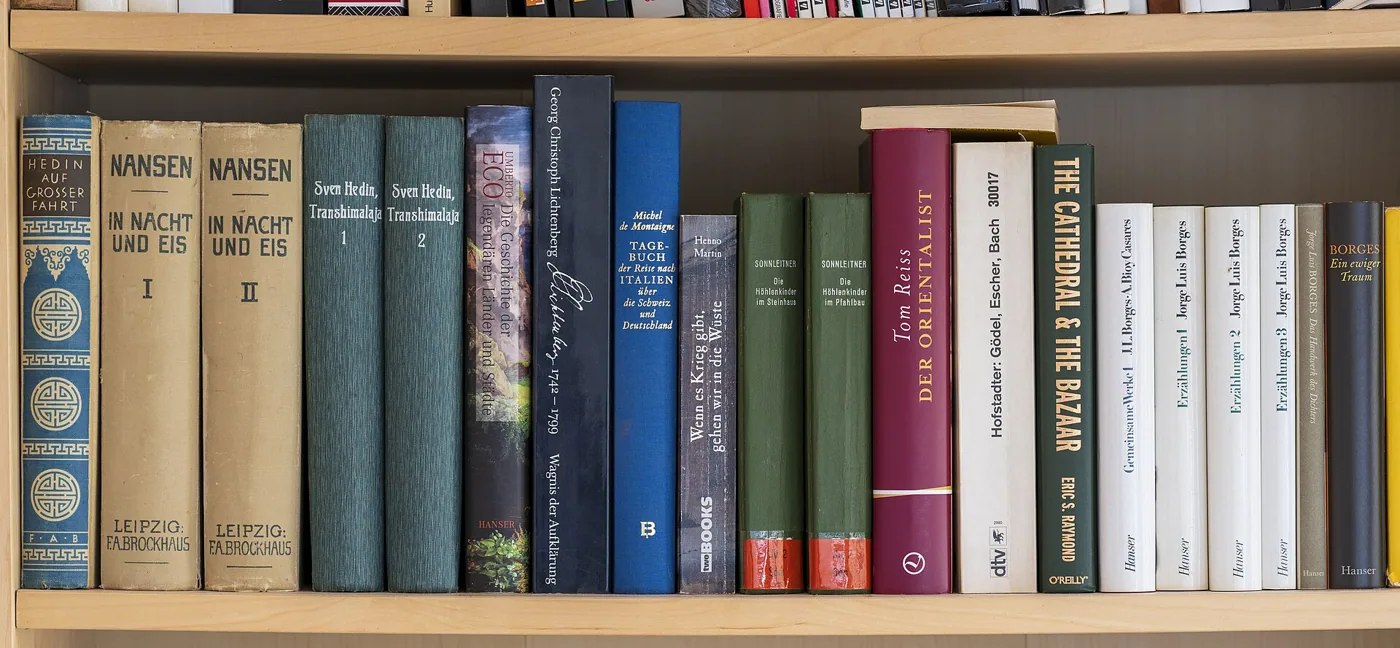
Shelves of mixed books standing edge to edge
A full row of books is the heaviest common shelf load, so it sets the capacity you need from a shelf.

Board material and span

The board has its own limits. A hollow-core floating shelf, made of a thin skin around a cardboard or foam honeycomb, is light and looks thick, but it has little strength and cannot hold more than a few pounds without crushing. A solid wood or plywood board is much stronger. A board 1.5 inches thick of pine or oak can span 36 inches with books with modest sag, while a hollow shelf of the same size sags quickly.

Longer shelves have two problems, sag and fixings. The board bends between the brackets, as explained in why bookshelves sag, and the center of a long shelf receives less support. A shelf wider than 36 inches needs at least three fixing points, or a continuous cleat, to keep the front edge level. Using a pair of brackets on a 60 inch shelf is a common cause of a droop in the middle.

What to put on a floating shelf

Match the load to the shelf. A frame, a vase and a trailing plant weigh a few pounds in total, so they suit almost any floating shelf. A row of hardback books can weigh 20 to 30 pounds per foot, so a 36 inch shelf of books may carry 60 to 90 pounds, which is beyond most floating shelves. If you want books, choose a shelf of 8 to 10 inches deep with steel rods into studs, keep the run to 24 inches and place the heaviest books near the wall and the ends, not the center.

Avoid putting a television, a heavy speaker or a stack of ceramics on a floating shelf. A soundbar of 10 pounds on a 12 inch shelf is acceptable if the shelf is rated for it, and the shelf needs to be level and sturdy, as explained in the soundbar placement guide. For display styling, the advice in how to style bookshelves helps you balance weight and looks.

Installing for the capacity on the box

A listed rating assumes the shelf is installed exactly as instructed, and most failures start with a shortcut. Locate the studs first, mark their centers and set the bracket so that at least two screws land in wood. Use the screws supplied only if they match the stud, since the thread in a stud needs length and diameter, and a 2.5 inch lag screw with a washer is the usual choice for a heavy bracket. Drill a pilot hole slightly smaller than the screw core so the wood does not split, and drive the screw until the head is snug, not until the wood crushes.

Level the bracket before the final tightening. A bracket that tilts down by a few degrees puts more of the load on the front screws, and one that tilts up looks fine but lets objects roll back. Check the bracket with a spirit level, and use a straight edge to confirm that it sits flat on the wall. On an uneven wall, a thin shim behind the bracket avoids a gap that could twist the board. Slide the shelf over the bracket, push it fully home and fix it with the small set screws that most designs include on the underside, since a shelf that can lift off the rods will do so when you take down a book.

Finally, test the shelf empty with a firm downward push, then load it in stages, starting with half the intended weight, and wait a day before adding the rest. If anything moves, remove the load and fix the cause before you trust it with books or glass.

Warning signs of overloading

A floating shelf rarely fails without notice. The first sign is a gap at the top between the shelf and the wall, which means the fixings are starting to lift. The second is a front edge that droops downward, since the bracket is bending or the screws are slipping out. The third is a creaking sound when you place an object, and a fourth is cracks in the paint or plaster around the bracket.

If you see any of these, take the load off immediately and inspect. Remove the shelf and check the holes. If the screws have enlarged the holes in drywall, they have no holding power left, and you need to move the position or fix to a stud. If the bracket is bent, replace it. Do not simply tighten the screws, since a tightened screw in a stripped hole only masks the problem.

Test a new shelf before you trust it. With the shelf empty, press down firmly on the front edge, and watch the wall for movement. Then load it gradually over a day and check again. A shelf that passes this test will usually keep going.

Placement and safety

Where you put the shelf matters for safety. Avoid mounting heavy shelves above seating, where a fall would land on someone's head, and keep them out of reach of small children if they hold anything fragile. A shelf above a sofa is best kept light and shallow. Position the shelf at least 12 inches above a sofa back and 6 inches from the nearest ceiling light. Also check the wall for hidden wiring and pipes before drilling, using a detector.
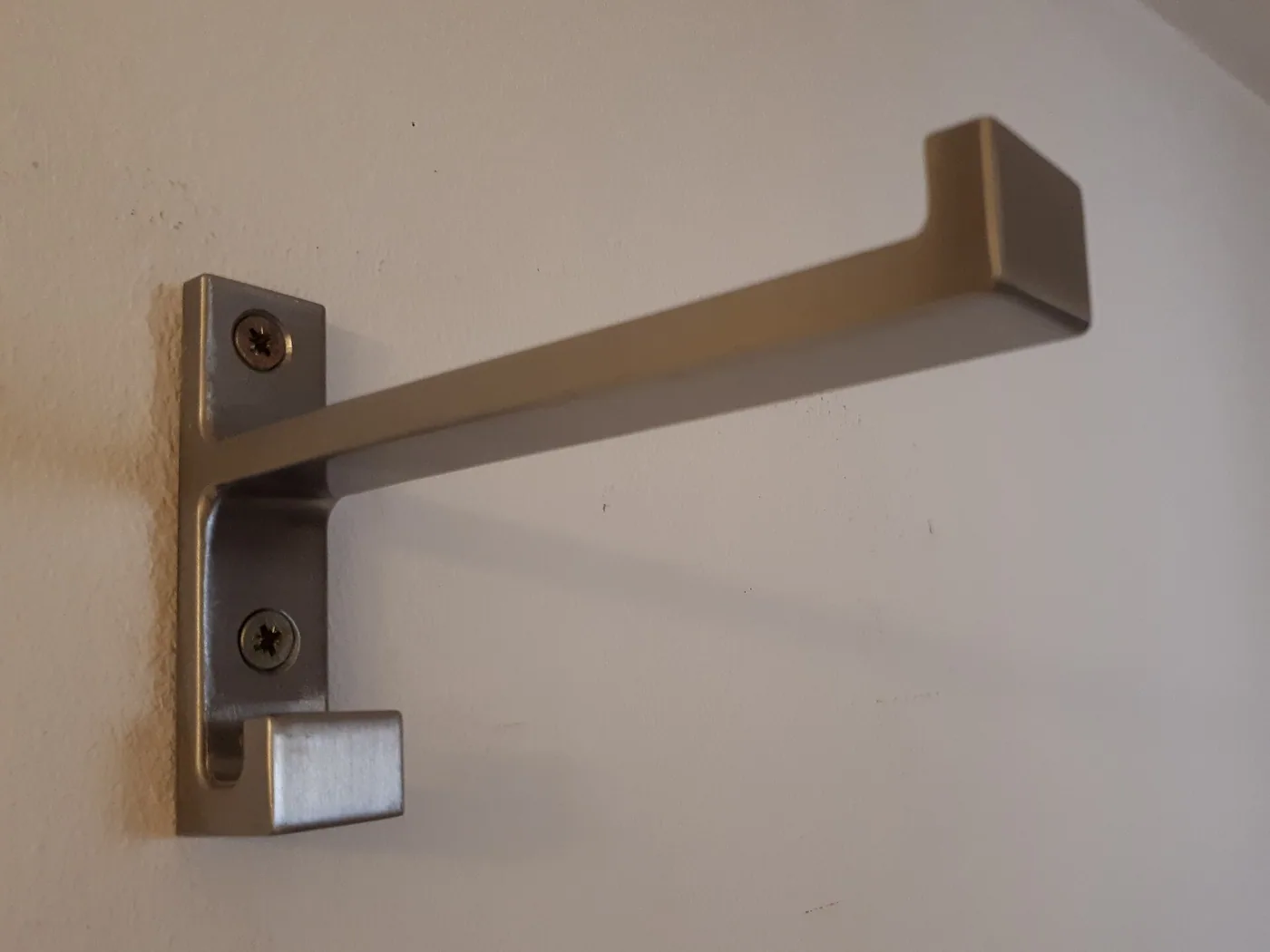
A stainless steel shelf support bracket photographed on a plain surface
Brackets carry the load, so their size and the number of screws set the real capacity.

Frequently asked questions

How much weight can a floating shelf hold?

It depends on the bracket, the fixings and the depth. A 10 inch deep shelf fixed to studs with steel rods commonly holds 30 to 50 pounds. The same shelf in drywall anchors may hold only 10 to 20 pounds.

Do floating shelves need studs?

For anything heavier than light decor, yes. Studs provide a solid wood fixing that anchors cannot match. If the stud does not line up, use a wide cleat that spans two studs.

Why does my floating shelf tilt forward?

The fixings are being pulled out, the bracket is bending or the shelf is overloaded for its depth. Remove the load, check the screws and the wall, and consider a shallower shelf or a stronger bracket.

Can I put books on a floating shelf?

Yes, on a shelf of 8 to 10 inches deep fixed to studs with steel rods. Keep the run short, since a foot of hardbacks weighs 20 to 30 pounds, and place the heaviest near the wall.

Are hollow floating shelves safe?

For light decor, yes. They crush and sag under heavy loads, so use a solid or plywood board for books and anything heavy.

Bottom line

Judge a floating shelf by its hardware and its wall, not by its board. Fix into studs with a steel rod or cleat bracket, choose the shallowest depth that works and halve your expectations when you can only reach drywall.

Load the shelf gradually, watch for a gap at the top or a drooping front edge, and keep heavy things low. A shelf with a plan behind it will hold what you ask for, and one without it will eventually let you know. When in doubt, add a second bracket, shorten the run or move the heaviest objects to a freestanding unit on the floor.

Image credits

  • accent-chair-desk-corner.webp: JohnLEE Brothers, CC0, source
  • accent-chair-green-velvet.webp: Shixart1985, CC BY 2.0, source
  • accent-chair-hero.webp: Shixart1985, CC BY 2.0, source
  • anchor-built-in-bookcases-room.webp: Carol M. Highsmith, Public domain, source
  • anchor-small-bookcase-hall.webp: Steven Pavlov, CC BY-SA 4.0, source
  • anchor-white-bookcase-wall.webp: Egilus, CC BY-SA 4.0, source
  • arrange-living-room-hero.webp: Kotivalo, CC BY-SA 4.0, source
  • arrange-living-room-seating-group.webp: Neoclassicism Enthusiast, CC0, source
  • arrange-living-room-sofa-wall.webp: Adele Berenstein, CC BY 2.0, source
  • artsofa-pictures-on-wall-room.webp: Tudor Washington Collins, CC BY 4.0, source
  • artsofa-sofa-corner-mural.webp: G�nter Seggeb�ing, Coesfeld, CC BY-SA 3.0, source
  • artsofa-sofa-mural-wall.webp: G�nter Seggeb�ing, Coesfeld, CC BY-SA 3.0, source
  • blackoutcurtain-floor-length-pair.webp: Ounfs Robmmy 238, CC0, source
  • blackoutcurtain-olive-heavy-fabric.webp: Easysayg, CC BY-SA 4.0, source
  • blackoutcurtain-white-sheer-hotel.webp: HuiDongXLW RMDa, CC0, source
  • ceilingfan-five-blade-light.webp: CommandProMC, CC BY-SA 4.0, source
  • ceilingfan-pull-chain-light.webp: Hans Olav Lien, CC BY-SA 3.0, source
  • clean-fabric-sofa-blanket.webp: Shixart1985, CC BY 2.0, source
  • clean-fabric-sofa-hero.webp: Lear 21, CC BY-SA 4.0, source
  • clean-fabric-sofa-slipcover.webp: Enric, CC BY-SA 4.0, source
  • clean-rug-fringe-pattern.webp: Sununa, CC BY-SA 4.0, source
  • clean-rug-runner-hall.webp: Sununa, CC BY-SA 4.0, source
  • coffeetable-round-yellow-sofa.webp: Vaibhavratnaparkhi, CC BY-SA 4.0, source
  • coffeetable-tan-sofa-dark-table.webp: Shixart1985, CC BY 2.0, source
  • coffeetable-two-wood-tables.webp: Sophia Baboolal, CC0, source
  • color-temp-bright-bulb.webp: Xzantiyamoloy, CC BY 4.0, source
  • color-temp-gu10-spot.webp: Dmitry G, CC BY-SA 3.0, source
  • color-temp-hero.webp: LoMit, CC BY-SA 4.0, source
  • color603010-paint-swatches-wall.webp: Chris Rycroft, CC BY 2.0, source
  • color603010-rainbow-swatch-range.webp: Joyful spherical creature, CC BY 4.0, source
  • color603010-swatch-cards-neutrals.webp: Clean Wal-Mart, CC BY 2.0, source
  • cornertv-1960s-room-tv-window.webp: Kotivalo, CC BY-SA 4.0, source
  • cornertv-budapest-sofa-room.webp: Justin Sch�ler, CC0, source
  • cornertv-white-room-console.webp: Oliur Rahman, CC0, source
  • curtainfabric-heavy-olive-folds.webp: Easysayg, CC BY-SA 4.0, source
  • curtainfabric-hotel-floor-length-pair.webp: Ounfs Robmmy 238, CC0, source
  • curtainfabric-white-light-filtering.webp: HuiDongXLW RMDa, CC0, source
  • curtains-hk-window-stacked-open.webp: YSSKACH WFAMOACSH TUNGA, CC BY-SA 4.0, source
  • curtains-hotel-living-zone-floor-length.webp: Ounfs Robmmy 238, CC0, source
  • cushion-fill-hero.webp: Dalton Scavassa, CC BY-SA 4.0, source
  • cushion-fill-pillows-leather.webp: Aaaatu, CC BY-SA 4.0, source
  • depth-grey-sofa-cushions.webp: Dalton Scavassa, CC BY-SA 4.0, source
  • depth-grey-sofa-hero.webp: Lear 21, CC BY-SA 4.0, source
  • depth-sectional-living-room.webp: Shixart1985, CC BY 2.0, source
  • dimmer-rotary-wall.webp: Paolomarco, CC BY-SA 4.0, source
  • dimmer-slide-wall.webp: BrokenSphere, CC BY-SA 3.0, source
  • dimmer-wiring-box.webp: Kurtkaiser, CC0, source
  • door-hotel-living-room.webp: Adele Berenstein, CC BY 2.0, source
  • door-orange-sofa-hero.webp: Shixart1985, CC BY 2.0, source
  • echo-1960s-room-soft-furnishings.webp: Kotivalo, CC BY-SA 4.0, source
  • echo-fabric-acoustic-panels-wall.webp: 36N63, CC BY-SA 4.0, source
  • echo-panel-mineral-wool-core.webp: JoraK, CC BY-SA 4.0, source
  • entcenter-low-stand-devices.webp: William Hook, CC BY-SA 2.0, source
  • entcenter-old-tv-setup.webp: William Hook, CC BY-SA 2.0, source
  • entcenter-wood-wall-unit-living-room.webp: Casey Fleser, CC BY 2.0, source
  • fabric-green-velvet-hero.webp: Neoclassicism Enthusiast, CC0, source
  • fabric-grey-sofa-cushions.webp: Lear 21, CC BY-SA 4.0, source
  • fabric-sofa-blanket.webp: Shixart1985, CC BY 2.0, source
  • floatshelf-mixed-books-rows.webp: Roman Eisele, CC BY-SA 4.0, source
  • floatshelf-steel-support.webp: Fructibus, CC0, source
  • floatshelf-white-bookcase-wall.webp: Egilus, CC BY-SA 4.0, source
  • floor-lamp-height-hero.webp: Agbarto, CC0, source
  • floor-lamp-height-stained-glass.webp: Louis Comfort Tiffany / Tiffany Studios, CC0, source
  • floor-lamp-height-white-reading-lamp.webp: FASTILY, CC BY-SA 4.0, source
  • frame-black-leather-sofa.webp: www.Pixel.la Free Stock Photos, CC0, source
  • frame-green-velvet-sofa.webp: Neoclassicism Enthusiast, CC0, source
  • frame-grey-sofa-hero.webp: Dalton Scavassa, CC BY-SA 4.0, source
  • gallerywall-frames-bookcase-lamp.webp: Personal Creations, CC BY 2.0, source
  • gallerywall-frames-floor-tape.webp: Personal Creations, CC BY 2.0, source
  • gallerywall-frames-on-wall-home.webp: Personal Creations, CC BY 2.0, source
  • hang-light-hero.webp: Martin Falbisoner, CC BY-SA 4.0, source
  • hang-light-lamp-with-shade.webp: LoMit, CC BY-SA 4.0, source
  • hang-light-red-drum-lamp.webp: Agbarto, CC0, source
  • jute-sisal-combing-fibre.webp: Uncredited for Keystone View Company, Public domain, source
  • jute-sisal-hero.webp: B.navez, CC BY-SA 3.0, source
  • jute-sisal-plantation.webp: Forest & Kim Starr, CC BY 3.0, source
  • knotted-rug-cut-pile-carpet.webp: Daderot, CC0, source
  • knotted-rug-hero.webp: Daderot, CC0, source
  • knotted-rug-prayer-wool.webp: Daderot, CC0, source
  • lampshade-cream-base.webp: LoMit, CC BY-SA 4.0, source
  • lampshade-empire-lamp.webp: J.Dncsn, CC BY-SA 3.0, source
  • lampshade-paper-rect-lamp.webp: Zeitlupe, CC BY-SA 4.0, source
  • layer-rugs-armchairs.webp: PattayaPatrol, CC BY-SA 4.0, source
  • layer-rugs-conversation-pit.webp: Marsh Davis; Indiana Landmarks, CC BY 4.0, source
  • layer-rugs-hero.webp: BusterD, CC BY-SA 4.0, source
  • layered-light-hero.webp: FASTILY, CC BY-SA 4.0, source
  • layered-light-red-shade-lamp.webp: Agbarto, CC0, source
  • layered-light-table-lamp.webp: LoMit, CC BY-SA 4.0, source
  • leather-care-black-sofa.webp: www.Pixel.la Free Stock Photos, CC0, source
  • leather-care-burgundy-set.webp: Dominic's pics, CC BY 2.0, source
  • leather-care-hero.webp: Thomas Quine, CC BY 2.0, source
  • ledstrip-cove-fireplace.webp: Andrey Gvrv, CC BY-SA 3.0, source
  • ledstrip-spool-driver.webp: Dmitry G, CC BY-SA 3.0, source
  • ledstrip-tv-back.webp: Stilfehler, CC BY-SA 4.0, source
  • loveseat-sofa-armchair-room.webp: Adele Berenstein, CC BY 2.0, source
  • loveseat-sofa-hero.webp: Aaaatu, CC BY-SA 4.0, source
  • loveseat-sofa-leather-pair.webp: Dominic's pics, CC BY 2.0, source
  • lowlight-snake-plant-corner-pot.webp: Enzo Rippa, CC BY-SA 4.0, source
  • lowlight-snake-plant-window-table.webp: Martin Olsson, CC BY-SA 3.0, source
  • lowlight-zz-plant-potted.webp: Jamshid Nurkulov, CC BY-SA 4.0, source
  • lumens-bulb-hero.webp: R. Henrik Nilsson, CC BY 4.0, source
  • lumens-led-bulbs-group.webp: Geoffrey.landis at English Wikipedia, CC BY 3.0, source
  • measure-cabin-sofa.webp: Shixart1985, CC BY 2.0, source
  • measure-room-depth.webp: Shixart1985, CC BY 2.0, source
  • measure-sofa-hero.webp: Shixart1985, CC BY 2.0, source
  • mirror-above-mantel-living-room.webp: Tudor Washington Collins, CC BY 4.0, source
  • mirror-round-blue-wall-window.webp: Ciara N� Riain, CC BY-SA 4.0, source
  • mirror-round-over-wood-console.webp: Shixart1985, CC BY 2.0, source
  • mixpatterns-armenian-patterned-pillows.webp: Ararat Trvants, CC BY-SA 4.0, source
  • mixpatterns-couch-pillows-set.webp: Dawid Skalec, CC BY-SA 4.0, source
  • mixpatterns-leather-sofa-pillows.webp: Aaaatu, CC BY-SA 4.0, source
  • no-overhead-hero.webp: Gotogo, CC BY-SA 4.0, source
  • no-overhead-red-shade-lamp.webp: Agbarto, CC0, source
  • no-overhead-white-floor-lamp.webp: FASTILY, CC BY-SA 4.0, source
  • nodrillcurtain-hk-window-open.webp: YSSKACH WFAMOACSH TUNGA, CC BY-SA 4.0, source
  • nodrillcurtain-olive-rail-folds.webp: Easysayg, CC BY-SA 4.0, source
  • nodrillcurtain-white-light-panel.webp: HuiDongXLW RMDa, CC0, source
  • open-plan-rug-armchairs.webp: PattayaPatrol, CC BY-SA 4.0, source
  • open-plan-rug-hero.webp: NPS Photo, Public domain, source
  • open-plan-rug-sunken-living.webp: Marsh Davis; Indiana Landmarks, CC BY 4.0, source
  • ottoman-coffee-table-pair.webp: Sophia Baboolal, CC0, source
  • ottoman-leather-round-pair.webp: Olugold, CC BY-SA 4.0, source
  • ottoman-round-stool-top.webp: Olugold, CC BY-SA 4.0, source
  • paintsheen-open-paint-cans.webp: United Soybean Board, CC BY 2.0, source
  • paintsheen-paint-can-brush.webp: Shixart1985, CC BY 2.0, source
  • paintsheen-swatch-cards-range.webp: Chris Rycroft, CC BY 2.0, source
  • pets-sofa-kitten-cushions.webp: Feliciano Guimar�es from Guimar�es, Portugal, CC BY 2.0, source
  • pets-sofa-slipcover.webp: Enric, CC BY-SA 4.0, source
  • pillows-decorative-couch-set.webp: Dawid Skalec, CC BY-SA 4.0, source
  • pillows-leather-sofa-group.webp: Aaaatu, CC BY-SA 4.0, source
  • pillows-wooden-sofa-red-cushions.webp: Zohasheikh, CC BY-SA 4.0, source
  • readinglamp-adjustable-torchiere.webp: Agbarto, CC0, source
  • readinglamp-armchair-corner-lamp.webp: Kotivalo, CC BY-SA 3.0, source
  • readinglamp-cozy-sunlit-corner.webp: Shixart1985, CC BY 2.0, source
  • recessed-gimbal-trim.webp: Stilfehler, CC BY-SA 4.0, source
  • recessed-housing-display.webp: Stilfehler, CC BY-SA 4.0, source
  • recessed-led-can-trim.webp: Stilfehler, CC BY-SA 4.0, source
  • recliner-buying-armchair-room.webp: Virginia State Parks staff, CC BY 2.0, source
  • recliner-buying-hero.webp: Laura Stoinski, CC0, source
  • recliner-buying-leather-sofa.webp: Aaaatu, CC BY-SA 4.0, source
  • rug-curl-fringe-rug.webp: Sununa, CC BY-SA 4.0, source
  • rug-curl-hero.webp: Sununa, CC BY-SA 4.0, source
  • rug-curl-runner-patterns.webp: Sununa, CC BY-SA 4.0, source
  • rug-dents-hero.webp: ProjectManhattan, CC BY-SA 3.0, source
  • rug-dents-wool-medallion.webp: Daderot, CC0, source
  • rug-on-carpet-armchairs.webp: PattayaPatrol, CC BY-SA 4.0, source
  • rug-on-carpet-flat-weave.webp: Mervat, CC BY 4.0, source
  • rug-on-carpet-hero.webp: NPS Photo, Public domain, source
  • rug-pad-dense-carpet.webp: ProjectManhattan, CC BY-SA 3.0, source
  • rug-pad-hero.webp: Sununa, CC BY-SA 4.0, source
  • rug-pile-flatweave-stack.webp: Mervat, CC BY 4.0, source
  • rug-pile-sarouk-wool.webp: Daderot, CC0, source
  • rug-shedding-pile-closeup.webp: ProjectManhattan, CC BY-SA 3.0, source
  • rug-shedding-wool-rugs.webp: Mervat, CC BY 4.0, source
  • rug-size-armchairs-on-rug.webp: PattayaPatrol, CC BY-SA 4.0, source
  • rug-size-conversation-area.webp: Marsh Davis; Indiana Landmarks, CC BY 4.0, source
  • rug-size-hero.webp: NPS Photo, Public domain, source
  • runner-size-hero.webp: Sununa, CC BY-SA 4.0, source
  • runner-size-red-runner.webp: Sununa, CC BY-SA 4.0, source
  • runner-size-three-runners.webp: Sununa, CC BY-SA 4.0, source
  • sag-cushions-hero.webp: Durova, CC BY-SA 3.0, source
  • sag-cushions-slipcover.webp: Enric, CC BY-SA 4.0, source
  • sag-cushions-sofa-deck.webp: Dalton Scavassa, CC BY-SA 4.0, source
  • sconce-above-tufted-chairs.webp: Jedodo756, CC0, source
  • sconce-brass-opal-shade.webp: unknown (see Commons page), CC BY-SA 4.0, source
  • sconce-wall-lamp-side-table.webp: Atilla Taskiran, CC0, source
  • sectional-dark-hero.webp: Shixart1985, CC BY 2.0, source
  • sectional-room-arrangement.webp: Kotivalo, CC BY-SA 4.0, source
  • sectional-white-corner.webp: GardenKings, CC BY-SA 3.0, source
  • shelfsag-mixed-books-shelf.webp: Roman Eisele, CC BY-SA 4.0, source
  • shelfsag-packed-bookshelf.webp: Csferrie, CC BY-SA 4.0, source
  • shelfsag-wood-shelf-rows.webp: PeaceSeekers, CC BY-SA 4.0, source
  • sidetable-cozy-sofa-room.webp: Breather, CC0, source
  • sidetable-kentwood-sofa.webp: Kari Shea, CC0, source
  • sidetable-round-wall-lamp.webp: Atilla Taskiran, CC0, source
  • sleeper-sofa-bed-made-up.webp: Maniago, Public domain, source
  • sleeper-sofa-open-hero.webp: N509FZ, CC BY-SA 4.0, source
  • sleeper-sofa-sofa-mode.webp: N509FZ, CC BY-SA 4.0, source
  • small-room-slim-arm-sofa.webp: Lear 21, CC BY-SA 4.0, source
  • small-room-sofa-hero.webp: Shixart1985, CC BY 2.0, source
  • small-room-two-seat-layout.webp: Adele Berenstein, CC BY 2.0, source
  • smallbigger-finland-studio-bright.webp: Aaaatu, CC BY-SA 4.0, source
  • smallbigger-hk-curtains-open-window.webp: YSSKACH WFAMOACSH TUNGA, CC BY-SA 4.0, source
  • smallbigger-white-room-console.webp: Oliur Rahman, CC0, source
  • smallstorage-finland-studio-room.webp: Aaaatu, CC BY-SA 4.0, source
  • smallstorage-leather-sofa-shelving.webp: Sabri Tuzcu, CC0, source
  • smallstorage-wall-shelves-books.webp: Roger W, CC BY-SA 2.0, source
  • smart-bulbs-bulb-in-hand.webp: Xzantiyamoloy, CC BY 4.0, source
  • smart-bulbs-led-internals.webp: Loadmaster, Bech, CC BY-SA 4.0, source
  • soundbar-below-lg-tv.webp: Dinkun Chen, CC BY-SA 4.0, source
  • soundbar-philips-front-grille.webp: Philips Communications, CC BY 2.0, source
  • soundbar-samsung-single-bar.webp: Dinkun Chen, CC BY-SA 4.0, source
  • stylebooks-packed-shelf-wall.webp: Csferrie, CC BY-SA 4.0, source
  • stylebooks-philosophers-shelf.webp: Roman Eisele, CC BY-SA 4.0, source
  • stylebooks-wall-shelves-bottles-books.webp: Roger W, CC BY-SA 2.0, source
  • styletable-book-stack-candle.webp: Gabbybratcher, CC BY-SA 4.0, source
  • styletable-two-tables-mugs.webp: Sophia Baboolal, CC0, source
  • styletable-yellow-sofa-cups-flowerpot.webp: Shixart1985, CC BY 2.0, source
  • surround-home-theater-tv-seating.webp: NPat318, CC BY-SA 4.0, source
  • surround-rear-view-seats.webp: NPat318, CC BY-SA 4.0, source
  • surround-sectional-media-room.webp: Derek Jensen (Tysto), Public domain, source
  • table-lamp-size-antique-shade.webp: Amitbalani, CC0, source
  • table-lamp-size-hero.webp: Tess Mattew, CC BY-SA 4.0, source
  • table-lamp-size-measured.webp: Tess Mattew, CC BY-SA 4.0, source
  • throwblanket-blue-throw-kitten.webp: TudorTulok, CC BY-SA 4.0, source
  • throwblanket-striped-couch-cat.webp: Roman Eisele, CC BY-SA 4.0, source
  • throwblanket-yellow-blue-couch.webp: Roman Eisele, CC BY-SA 4.0, source
  • tvheight-flat-panel-wall.webp: BrokenSphere, CC BY-SA 3.0, source
  • tvheight-plasma-wall-room.webp: Pkepneriv, CC BY-SA 3.0, source
  • tvheight-white-living-room.webp: Oliur Rahman, CC0, source
  • tvmount-articulating-arm.webp: Ben Scholzen, CC BY 2.0, source
  • tvmount-vesa-adapter-plate.webp: Tony Webster, CC BY 2.0, source
  • tvmount-wall-panel-room.webp: Pkepneriv, CC BY-SA 3.0, source
  • tvsize-dark-room-big-screen.webp: Christian Collins, CC BY 2.0, source
  • tvsize-media-room-screen.webp: NPat318, CC BY-SA 4.0, source
  • tvsize-tv-on-stand.webp: PhotoPicker13, CC BY-SA 4.0, source
  • tvstand-low-stand-devices.webp: William Hook, CC BY-SA 2.0, source
  • tvstand-wall-unit-living-room.webp: Casey Fleser, CC BY 2.0, source
  • tvwires-cable-box-wires.webp: Tony Webster, CC BY 2.0, source
  • tvwires-hdmi-connectors.webp: Kreuzschnabel, CC BY-SA 3.0, source
  • tvwires-wall-mounted-panel.webp: BrokenSphere, CC BY-SA 3.0, source
  • washable-rugs-flatweave-stack.webp: Mervat, CC BY 4.0, source
  • washable-rugs-hero.webp: Mervat, CC BY 4.0, source
  • washable-rugs-loomed-stripes.webp: Gcarrillog, CC0, source
  • wool-poly-hero.webp: Mervat, CC BY 4.0, source
  • wool-poly-oaxacan-wool.webp: Gcarrillog, CC0, source
  • wool-poly-prayer-rug.webp: Daderot, CC0, source

Related Guides