Amazon affiliate links - we earn a commission.Affiliate disclosure
Guide·13 min read

Anchoring Furniture to the Wall: How Tip-Over Protection Actually Works

Which pieces tip, how anti-tip anchors work, studs versus drywall anchors versus masonry, renter options and how to check an existing anchor.

By Elena Hart · Updated 2026-11-20

Quick answer

Anchor any tall or top-heavy piece, such as bookcases, dressers, media consoles and TV stands, to a wall stud with a strap or bracket and a screw long enough to bite 1 to 1.5 inches into the wood. Drywall anchors are a fallback that hold far less, masonry needs sleeve or concrete anchors, and renters can use through-the-top brackets or small holes that are easy to patch. Check existing anchors yearly, and treat households with children or pets as the case where anchoring is not optional.

Furniture tip-overs are one of the quiet household hazards, and they are not a rare event. A dresser with several drawers pulled open shifts its center of gravity forward, and a small child climbing a drawer front like a ladder can bring a hundred pounds of wood down. The same physics applies to a bookcase leaned on by a dog, or a TV stand that gets bumped during a move. Anchoring does not make furniture safe on its own, but it turns a dangerous failure into a minor one.

This guide explains which pieces tip and why, how anchors work, how to choose between a stud, a drywall anchor and a masonry fixing, what renters can do without losing a deposit, and how to check an anchor you already have. It speaks plainly about child and pet safety, since that is where it matters most.

Why furniture tips over

A piece of furniture stays upright as long as its center of gravity sits over its base. Tall narrow pieces have a high center and a small base, so a modest sideways or forward force can move the center past the edge of the base. The tipping angle of many tall dressers is only 10 to 15 degrees, and a pulled-out drawer, loaded with clothes, moves the center of gravity further forward.

Drawers are the usual trigger. Pull out the top two drawers of a dresser, and the weight sits in front of the legs. A child who pulls themselves up using open drawers adds their own weight at the same spot. Add a television on top, and the center of gravity rises while the load on the front increases. Even when a unit does not fall, anchors reduce the chance of a slow slide that could injure a toe.

Furniture that is not obviously tall can tip. A low media console carrying a heavy TV can tip if the screen is pushed forward or a child leans on it, since the load on the front edge is large compared with the base depth. Older cathode ray tube sets were the classic case, but a modern flat panel on a narrow stand is also vulnerable because its stand feet sit near the corners and the panel top-heavy.

Which pieces to anchor

As a guide, anchor anything that is more than about 30 inches tall and has a narrow base, or anything that holds weight above waist height. In a living room, that usually means these pieces.

  • Bookcases and shelving units: especially tall, narrow ones. Loaded top shelves are the risk.
  • Media consoles and TV stands: both the stand and, where possible, the television itself.
  • Dressers and chests: found in living rooms as storage, and especially at risk with open drawers.
  • Display cabinets and hutches: glass and heavy contents make failure more serious.
  • Tall plant stands and floor lamps: less weight, but a risk to small children.

Low sofas, coffee tables and low ottomans do not need anchors. A very heavy low item may be stable, but check anyway if it has a heavy top and narrow legs. The rule is about leverage, not weight alone.

How an anchor works

An anti-tip anchor is a connection between the top back of the furniture and the wall structure. It typically consists of a strap or bracket fixed to the furniture, a screw fixed to the wall and a connector between them. When the furniture starts to tip forward, the tension in the strap pulls on the wall fastening, and the strap and screw resist the pull until the furniture settles back.

The key is where the force goes. The most reliable place is a wall stud, a vertical piece of framing, usually wood at 16 inches centers in many homes. A screw driven into a stud's center holds against a pull of hundreds of pounds, since the thread bites into solid wood. A fastening that goes only into drywall is held by the thin gypsum board, which crumbles under tension, and the screw pulls out at a fraction of the load.

Anchors are best placed high on the back, where the leverage is greatest. A strap at the top of a 6 foot bookcase gets much more mechanical advantage than one halfway down, because the top is the part that moves furthest as the unit tips. Use two anchors on wide pieces, one near each side, to resist both a forward tip and a twist.
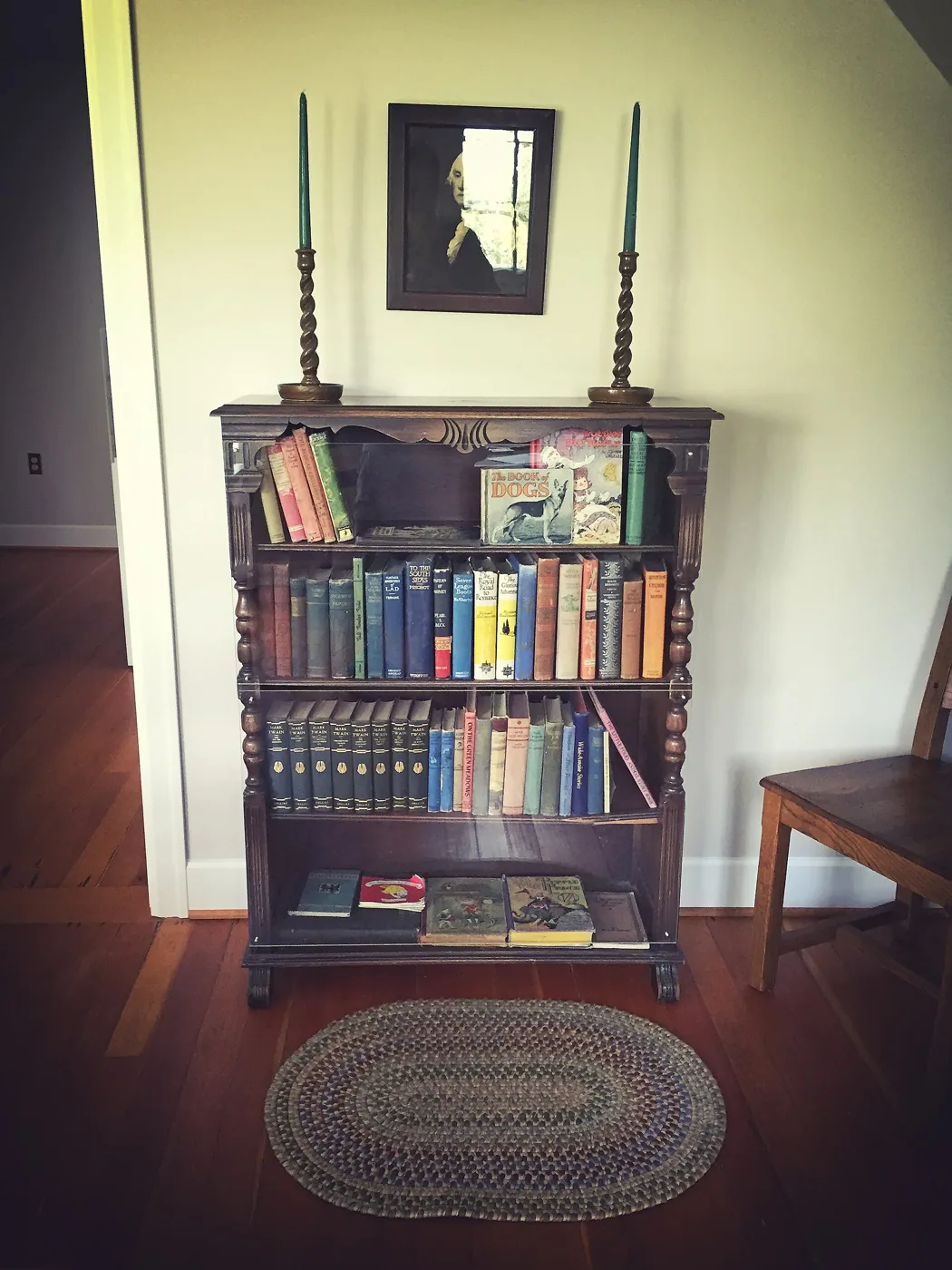
A narrow bookcase with an upright frame standing against a wall
A narrow bookcase on a small base is a typical tip-over candidate, and the top back rail is where a strap belongs.

Stud, drywall anchor or masonry

Wall typeFasteningNotes
Wood stud behind drywallWood screw, 2 to 2.5 in long, 1 to 1.5 in into studStrongest and simplest. Find studs with a finder and confirm with a small pilot hole
Metal studSelf-drilling screw rated for metal studs or toggle boltThin metal, so pull-out strength is lower. Use bolts that spread the load
Drywall onlyToggle bolt or strap-type anchor rated for the loadWeaker than a stud. Use as a fallback and pick rated hardware
Plaster over lathLong screw through plaster into the lath or stud, or toggleDrill a pilot hole to avoid cracking. Find the stud when possible
Brick, block or concreteSleeve anchor or concrete screw with a masonry bitUse a hammer drill and match the anchor to the wall material

Stud finders are good but not infallible. Use one to find the edges of a stud, mark the center and drill a very small hole at that point to confirm wood. Studs in most houses are at 16 inch centers, though 24 inch centers are common in some newer homes, and a stud may be doubled around a window or an outlet. A magnet that picks up drywall screws is a good second check.

If no stud lines up with where the furniture needs to be anchored, there are options. A strap with a flat plate that spans the gap to a stud can be run along the back of the piece. A mounting rail, a horizontal wood or metal plate screwed to two studs, offers a place to attach the furniture anywhere along its length. Only if neither is possible should you fall back to a rated toggle anchor in drywall, and understand its limits.

Loading and layout choices that lower the risk

Anchoring works best together with sensible loading. Put the heaviest items, such as large books, ceramics and a bulky speaker, on the lowest shelves so the center of gravity stays low. Keep the top shelf for light objects. A tall bookcase loaded evenly is more stable than one with a heavy top, and a shelf that sags under weight can change how the unit sits, which is why the shelf sag guide is worth reading if you are loading a long span.

Shopping decisions matter too. When you choose a TV stand, a deeper base with feet near the outer corners is more stable than a narrow stand with a center column, and the width should match the set, as explained in the TV stand size guide. For a tall unit, check whether the maker supplies an anti-tip kit in the box. Most reputable furniture sold today includes one, and the instructions will tell you the wall type it suits.

Not everything needs a strap. Wall-mounted shelves have their own failure mode, which is a pull-out from the wall under load, covered in floating shelves weight capacity. The point in both cases is the same: the attachment to the structure of the wall, not the wall surface, carries the load.

Choosing hardware that will hold

Anchor kits vary a great deal. A flat nylon strap with a screw at each end suits most wood furniture, and it allows some movement in the unit without wearing the wall. A metal L-bracket is stiffer and suits heavy pieces, but it needs a screw into a solid part of the furniture, such as a thick back rail or the top frame, not into thin hardboard back panels. The hardboard backs of cheap furniture are weak, and a strap screwed into one can pull straight through.

Look for a strap or kit that lists a load rating, and compare it to the weight of the loaded piece. A dresser carrying 80 pounds of clothes and a 40 pound television is a 120 pound load or more, so use hardware rated well above that. Use screws with a flat or pan head that will not pull through the strap's slot. Cable-style anchors with a steel cable are stronger than nylon and useful for heavy units, but they leave a visible cable and need a clear route behind the piece.

What renters can do

Renters often hesitate to put holes in the wall, and a small screw hole is far cheaper to patch than the damage from a toppled bookcase. Most leases allow small holes for safety, and a dab of spackle at move-out covers the screw. If you are unsure, ask the landlord in writing and mention that it is a safety measure.

For no-drill options, there are straps that adhere to the wall, but they are rated lower and fail on textured walls. Another option is a brace that fixes to the top of the furniture and presses against the ceiling, or an anchor that sits between the furniture and a heavy item that cannot move. Some units can be secured to each other, for example two bookcases screwed together at the top form a wider base. These measures reduce risk, but a screw into a stud is far stronger than any of them.

Another renter-friendly choice is to lower the risk by changing the arrangement. Place the heaviest items on the bottom shelves, keep the top shelf light and move a TV stand against a wall with a modest lean backward. A slight backward tilt, achieved by placing a thin shim under the front feet, makes a unit less likely to tip forward.

Children and pets: take it seriously

The households with the highest risk are those with toddlers, and the danger comes from how children interact with furniture. They climb, pull on drawers and hang on shelves. Anchor every tall piece in the rooms where children spend time, including the living room, and keep heavy items low. Do not put toys, candy or a remote on top of a dresser, since that invites a climb. Choose drawer stops where available and teach older children that furniture is not a ladder.

Pets matter too. A cat leaping onto a shelf can start a rocking motion, and a dog that bumps a stand at speed can shift the load. Large dogs lean on furniture, and tall pieces near a favorite sleeping spot should be anchored for the same reason. Never rely on weight alone, since a loaded bookcase that is stable on a flat floor can still move when it is bumped.

If a family member or visitor is unsteady on their feet, anchors also keep furniture from becoming a hazard if someone grabs it for support. It is not a substitute for safe furniture design, but it is a simple precaution.

Checking an anchor you already have

Anchors loosen over time, especially if the furniture is moved or if the wall expands and contracts. Once a year, test each anchor. Pull gently forward and outward on the top of the furniture, as a child might, and watch the fastening. If the strap tightens and the screw holds, it is fine. If the screw moves in the wall, the hole is stripped and the anchor needs a new location, a longer screw or a different type.

Check the strap itself. Nylon straps degrade with sunlight, and cheap plastic brackets can crack. A strap should have no frayed edges, and the buckle should lock. Look for a screw that has backed out, or a bracket whose screw holes have widened. If you move furniture for cleaning, always re-attach the anchor to the same wall position or create a new one.

When you are installing an anchor for the first time, test it before trusting it. With the furniture empty, pull the top forward with moderate force and see that the strap holds the unit upright, with no more than a slight movement. Then load the unit and pull again.

When to get help

If you cannot locate a stud, if the wall is old plaster that crumbles when drilled, or if the piece is very heavy, hire a handyperson for an hour. That is far cheaper than a repair after an accident. If a child has been hurt by furniture tipping, or if a piece has fallen without injury, treat it as a warning and anchor everything of similar size. For medical concerns after a tip-over, contact a doctor or emergency services, and do not wait for symptoms to develop.
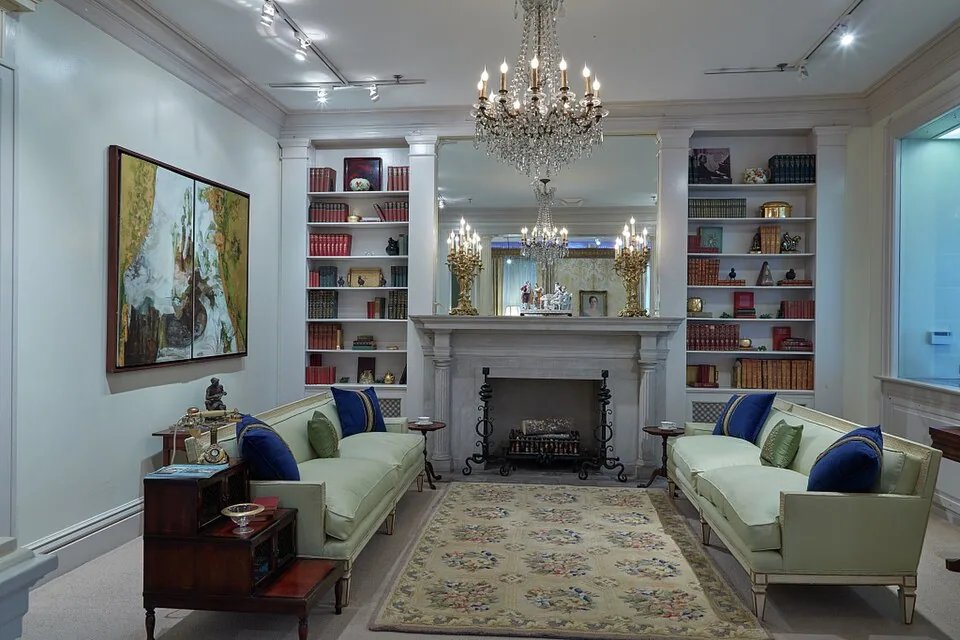
A living room with tall bookcases built in on both sides of a fireplace
A TV stand carrying a flat panel has a high center of gravity, so both the stand and the set deserve an anchor.

Frequently asked questions

Do I need to anchor a heavy bookcase?

Yes. Weight does not prevent tipping, and a tall loaded bookcase has a high center of gravity. A strap at the top into a stud costs little and removes the risk.

Can I anchor furniture into drywall alone?

You can use a rated toggle or strap-type anchor, but it holds much less than a stud. Treat drywall anchors as a fallback, and choose hardware rated for the load, ideally with a plate that spreads the force.

How long should the screw be?

Long enough to pass through the strap, the drywall (about half an inch) and 1 to 1.5 inches into the stud. A screw of 2 to 2.5 inches is typical. Use the screws supplied only if they meet this length.

Should I anchor the TV too?

Yes, if it sits on furniture. Use a TV strap that connects the back of the set to the stand or wall. A wall-mounted TV needs its own mounting rated for the weight and screwed into studs.

Are there anchors for renters?

Yes. Use a small screw into a stud and patch the hole at move-out. Adhesive straps and ceiling braces are weaker options. Lowering the weight and tilting the unit slightly back also help.

Bottom line

Anchor every tall or top-heavy piece, find the stud, and use a screw long enough to bite 1 to 1.5 inches into the wood. Put the anchor high on the back, use two on wide units and treat drywall anchors as a last resort. Renters should patch the holes at move-out and not skip the step.

Check every anchor once a year and after any move. If children or pets share the room, make it the first job rather than the last.

Image credits

  • accent-chair-desk-corner.webp: JohnLEE Brothers, CC0, source
  • accent-chair-green-velvet.webp: Shixart1985, CC BY 2.0, source
  • accent-chair-hero.webp: Shixart1985, CC BY 2.0, source
  • anchor-built-in-bookcases-room.webp: Carol M. Highsmith, Public domain, source
  • anchor-small-bookcase-hall.webp: Steven Pavlov, CC BY-SA 4.0, source
  • anchor-white-bookcase-wall.webp: Egilus, CC BY-SA 4.0, source
  • arrange-living-room-hero.webp: Kotivalo, CC BY-SA 4.0, source
  • arrange-living-room-seating-group.webp: Neoclassicism Enthusiast, CC0, source
  • arrange-living-room-sofa-wall.webp: Adele Berenstein, CC BY 2.0, source
  • artsofa-pictures-on-wall-room.webp: Tudor Washington Collins, CC BY 4.0, source
  • artsofa-sofa-corner-mural.webp: G�nter Seggeb�ing, Coesfeld, CC BY-SA 3.0, source
  • artsofa-sofa-mural-wall.webp: G�nter Seggeb�ing, Coesfeld, CC BY-SA 3.0, source
  • blackoutcurtain-floor-length-pair.webp: Ounfs Robmmy 238, CC0, source
  • blackoutcurtain-olive-heavy-fabric.webp: Easysayg, CC BY-SA 4.0, source
  • blackoutcurtain-white-sheer-hotel.webp: HuiDongXLW RMDa, CC0, source
  • ceilingfan-five-blade-light.webp: CommandProMC, CC BY-SA 4.0, source
  • ceilingfan-pull-chain-light.webp: Hans Olav Lien, CC BY-SA 3.0, source
  • clean-fabric-sofa-blanket.webp: Shixart1985, CC BY 2.0, source
  • clean-fabric-sofa-hero.webp: Lear 21, CC BY-SA 4.0, source
  • clean-fabric-sofa-slipcover.webp: Enric, CC BY-SA 4.0, source
  • clean-rug-fringe-pattern.webp: Sununa, CC BY-SA 4.0, source
  • clean-rug-runner-hall.webp: Sununa, CC BY-SA 4.0, source
  • coffeetable-round-yellow-sofa.webp: Vaibhavratnaparkhi, CC BY-SA 4.0, source
  • coffeetable-tan-sofa-dark-table.webp: Shixart1985, CC BY 2.0, source
  • coffeetable-two-wood-tables.webp: Sophia Baboolal, CC0, source
  • color-temp-bright-bulb.webp: Xzantiyamoloy, CC BY 4.0, source
  • color-temp-gu10-spot.webp: Dmitry G, CC BY-SA 3.0, source
  • color-temp-hero.webp: LoMit, CC BY-SA 4.0, source
  • color603010-paint-swatches-wall.webp: Chris Rycroft, CC BY 2.0, source
  • color603010-rainbow-swatch-range.webp: Joyful spherical creature, CC BY 4.0, source
  • color603010-swatch-cards-neutrals.webp: Clean Wal-Mart, CC BY 2.0, source
  • cornertv-1960s-room-tv-window.webp: Kotivalo, CC BY-SA 4.0, source
  • cornertv-budapest-sofa-room.webp: Justin Sch�ler, CC0, source
  • cornertv-white-room-console.webp: Oliur Rahman, CC0, source
  • curtainfabric-heavy-olive-folds.webp: Easysayg, CC BY-SA 4.0, source
  • curtainfabric-hotel-floor-length-pair.webp: Ounfs Robmmy 238, CC0, source
  • curtainfabric-white-light-filtering.webp: HuiDongXLW RMDa, CC0, source
  • curtains-hk-window-stacked-open.webp: YSSKACH WFAMOACSH TUNGA, CC BY-SA 4.0, source
  • curtains-hotel-living-zone-floor-length.webp: Ounfs Robmmy 238, CC0, source
  • cushion-fill-hero.webp: Dalton Scavassa, CC BY-SA 4.0, source
  • cushion-fill-pillows-leather.webp: Aaaatu, CC BY-SA 4.0, source
  • depth-grey-sofa-cushions.webp: Dalton Scavassa, CC BY-SA 4.0, source
  • depth-grey-sofa-hero.webp: Lear 21, CC BY-SA 4.0, source
  • depth-sectional-living-room.webp: Shixart1985, CC BY 2.0, source
  • dimmer-rotary-wall.webp: Paolomarco, CC BY-SA 4.0, source
  • dimmer-slide-wall.webp: BrokenSphere, CC BY-SA 3.0, source
  • dimmer-wiring-box.webp: Kurtkaiser, CC0, source
  • door-hotel-living-room.webp: Adele Berenstein, CC BY 2.0, source
  • door-orange-sofa-hero.webp: Shixart1985, CC BY 2.0, source
  • echo-1960s-room-soft-furnishings.webp: Kotivalo, CC BY-SA 4.0, source
  • echo-fabric-acoustic-panels-wall.webp: 36N63, CC BY-SA 4.0, source
  • echo-panel-mineral-wool-core.webp: JoraK, CC BY-SA 4.0, source
  • entcenter-low-stand-devices.webp: William Hook, CC BY-SA 2.0, source
  • entcenter-old-tv-setup.webp: William Hook, CC BY-SA 2.0, source
  • entcenter-wood-wall-unit-living-room.webp: Casey Fleser, CC BY 2.0, source
  • fabric-green-velvet-hero.webp: Neoclassicism Enthusiast, CC0, source
  • fabric-grey-sofa-cushions.webp: Lear 21, CC BY-SA 4.0, source
  • fabric-sofa-blanket.webp: Shixart1985, CC BY 2.0, source
  • floatshelf-mixed-books-rows.webp: Roman Eisele, CC BY-SA 4.0, source
  • floatshelf-steel-support.webp: Fructibus, CC0, source
  • floatshelf-white-bookcase-wall.webp: Egilus, CC BY-SA 4.0, source
  • floor-lamp-height-hero.webp: Agbarto, CC0, source
  • floor-lamp-height-stained-glass.webp: Louis Comfort Tiffany / Tiffany Studios, CC0, source
  • floor-lamp-height-white-reading-lamp.webp: FASTILY, CC BY-SA 4.0, source
  • frame-black-leather-sofa.webp: www.Pixel.la Free Stock Photos, CC0, source
  • frame-green-velvet-sofa.webp: Neoclassicism Enthusiast, CC0, source
  • frame-grey-sofa-hero.webp: Dalton Scavassa, CC BY-SA 4.0, source
  • gallerywall-frames-bookcase-lamp.webp: Personal Creations, CC BY 2.0, source
  • gallerywall-frames-floor-tape.webp: Personal Creations, CC BY 2.0, source
  • gallerywall-frames-on-wall-home.webp: Personal Creations, CC BY 2.0, source
  • hang-light-hero.webp: Martin Falbisoner, CC BY-SA 4.0, source
  • hang-light-lamp-with-shade.webp: LoMit, CC BY-SA 4.0, source
  • hang-light-red-drum-lamp.webp: Agbarto, CC0, source
  • jute-sisal-combing-fibre.webp: Uncredited for Keystone View Company, Public domain, source
  • jute-sisal-hero.webp: B.navez, CC BY-SA 3.0, source
  • jute-sisal-plantation.webp: Forest & Kim Starr, CC BY 3.0, source
  • knotted-rug-cut-pile-carpet.webp: Daderot, CC0, source
  • knotted-rug-hero.webp: Daderot, CC0, source
  • knotted-rug-prayer-wool.webp: Daderot, CC0, source
  • lampshade-cream-base.webp: LoMit, CC BY-SA 4.0, source
  • lampshade-empire-lamp.webp: J.Dncsn, CC BY-SA 3.0, source
  • lampshade-paper-rect-lamp.webp: Zeitlupe, CC BY-SA 4.0, source
  • layer-rugs-armchairs.webp: PattayaPatrol, CC BY-SA 4.0, source
  • layer-rugs-conversation-pit.webp: Marsh Davis; Indiana Landmarks, CC BY 4.0, source
  • layer-rugs-hero.webp: BusterD, CC BY-SA 4.0, source
  • layered-light-hero.webp: FASTILY, CC BY-SA 4.0, source
  • layered-light-red-shade-lamp.webp: Agbarto, CC0, source
  • layered-light-table-lamp.webp: LoMit, CC BY-SA 4.0, source
  • leather-care-black-sofa.webp: www.Pixel.la Free Stock Photos, CC0, source
  • leather-care-burgundy-set.webp: Dominic's pics, CC BY 2.0, source
  • leather-care-hero.webp: Thomas Quine, CC BY 2.0, source
  • ledstrip-cove-fireplace.webp: Andrey Gvrv, CC BY-SA 3.0, source
  • ledstrip-spool-driver.webp: Dmitry G, CC BY-SA 3.0, source
  • ledstrip-tv-back.webp: Stilfehler, CC BY-SA 4.0, source
  • loveseat-sofa-armchair-room.webp: Adele Berenstein, CC BY 2.0, source
  • loveseat-sofa-hero.webp: Aaaatu, CC BY-SA 4.0, source
  • loveseat-sofa-leather-pair.webp: Dominic's pics, CC BY 2.0, source
  • lowlight-snake-plant-corner-pot.webp: Enzo Rippa, CC BY-SA 4.0, source
  • lowlight-snake-plant-window-table.webp: Martin Olsson, CC BY-SA 3.0, source
  • lowlight-zz-plant-potted.webp: Jamshid Nurkulov, CC BY-SA 4.0, source
  • lumens-bulb-hero.webp: R. Henrik Nilsson, CC BY 4.0, source
  • lumens-led-bulbs-group.webp: Geoffrey.landis at English Wikipedia, CC BY 3.0, source
  • measure-cabin-sofa.webp: Shixart1985, CC BY 2.0, source
  • measure-room-depth.webp: Shixart1985, CC BY 2.0, source
  • measure-sofa-hero.webp: Shixart1985, CC BY 2.0, source
  • mirror-above-mantel-living-room.webp: Tudor Washington Collins, CC BY 4.0, source
  • mirror-round-blue-wall-window.webp: Ciara N� Riain, CC BY-SA 4.0, source
  • mirror-round-over-wood-console.webp: Shixart1985, CC BY 2.0, source
  • mixpatterns-armenian-patterned-pillows.webp: Ararat Trvants, CC BY-SA 4.0, source
  • mixpatterns-couch-pillows-set.webp: Dawid Skalec, CC BY-SA 4.0, source
  • mixpatterns-leather-sofa-pillows.webp: Aaaatu, CC BY-SA 4.0, source
  • no-overhead-hero.webp: Gotogo, CC BY-SA 4.0, source
  • no-overhead-red-shade-lamp.webp: Agbarto, CC0, source
  • no-overhead-white-floor-lamp.webp: FASTILY, CC BY-SA 4.0, source
  • nodrillcurtain-hk-window-open.webp: YSSKACH WFAMOACSH TUNGA, CC BY-SA 4.0, source
  • nodrillcurtain-olive-rail-folds.webp: Easysayg, CC BY-SA 4.0, source
  • nodrillcurtain-white-light-panel.webp: HuiDongXLW RMDa, CC0, source
  • open-plan-rug-armchairs.webp: PattayaPatrol, CC BY-SA 4.0, source
  • open-plan-rug-hero.webp: NPS Photo, Public domain, source
  • open-plan-rug-sunken-living.webp: Marsh Davis; Indiana Landmarks, CC BY 4.0, source
  • ottoman-coffee-table-pair.webp: Sophia Baboolal, CC0, source
  • ottoman-leather-round-pair.webp: Olugold, CC BY-SA 4.0, source
  • ottoman-round-stool-top.webp: Olugold, CC BY-SA 4.0, source
  • paintsheen-open-paint-cans.webp: United Soybean Board, CC BY 2.0, source
  • paintsheen-paint-can-brush.webp: Shixart1985, CC BY 2.0, source
  • paintsheen-swatch-cards-range.webp: Chris Rycroft, CC BY 2.0, source
  • pets-sofa-kitten-cushions.webp: Feliciano Guimar�es from Guimar�es, Portugal, CC BY 2.0, source
  • pets-sofa-slipcover.webp: Enric, CC BY-SA 4.0, source
  • pillows-decorative-couch-set.webp: Dawid Skalec, CC BY-SA 4.0, source
  • pillows-leather-sofa-group.webp: Aaaatu, CC BY-SA 4.0, source
  • pillows-wooden-sofa-red-cushions.webp: Zohasheikh, CC BY-SA 4.0, source
  • readinglamp-adjustable-torchiere.webp: Agbarto, CC0, source
  • readinglamp-armchair-corner-lamp.webp: Kotivalo, CC BY-SA 3.0, source
  • readinglamp-cozy-sunlit-corner.webp: Shixart1985, CC BY 2.0, source
  • recessed-gimbal-trim.webp: Stilfehler, CC BY-SA 4.0, source
  • recessed-housing-display.webp: Stilfehler, CC BY-SA 4.0, source
  • recessed-led-can-trim.webp: Stilfehler, CC BY-SA 4.0, source
  • recliner-buying-armchair-room.webp: Virginia State Parks staff, CC BY 2.0, source
  • recliner-buying-hero.webp: Laura Stoinski, CC0, source
  • recliner-buying-leather-sofa.webp: Aaaatu, CC BY-SA 4.0, source
  • rug-curl-fringe-rug.webp: Sununa, CC BY-SA 4.0, source
  • rug-curl-hero.webp: Sununa, CC BY-SA 4.0, source
  • rug-curl-runner-patterns.webp: Sununa, CC BY-SA 4.0, source
  • rug-dents-hero.webp: ProjectManhattan, CC BY-SA 3.0, source
  • rug-dents-wool-medallion.webp: Daderot, CC0, source
  • rug-on-carpet-armchairs.webp: PattayaPatrol, CC BY-SA 4.0, source
  • rug-on-carpet-flat-weave.webp: Mervat, CC BY 4.0, source
  • rug-on-carpet-hero.webp: NPS Photo, Public domain, source
  • rug-pad-dense-carpet.webp: ProjectManhattan, CC BY-SA 3.0, source
  • rug-pad-hero.webp: Sununa, CC BY-SA 4.0, source
  • rug-pile-flatweave-stack.webp: Mervat, CC BY 4.0, source
  • rug-pile-sarouk-wool.webp: Daderot, CC0, source
  • rug-shedding-pile-closeup.webp: ProjectManhattan, CC BY-SA 3.0, source
  • rug-shedding-wool-rugs.webp: Mervat, CC BY 4.0, source
  • rug-size-armchairs-on-rug.webp: PattayaPatrol, CC BY-SA 4.0, source
  • rug-size-conversation-area.webp: Marsh Davis; Indiana Landmarks, CC BY 4.0, source
  • rug-size-hero.webp: NPS Photo, Public domain, source
  • runner-size-hero.webp: Sununa, CC BY-SA 4.0, source
  • runner-size-red-runner.webp: Sununa, CC BY-SA 4.0, source
  • runner-size-three-runners.webp: Sununa, CC BY-SA 4.0, source
  • sag-cushions-hero.webp: Durova, CC BY-SA 3.0, source
  • sag-cushions-slipcover.webp: Enric, CC BY-SA 4.0, source
  • sag-cushions-sofa-deck.webp: Dalton Scavassa, CC BY-SA 4.0, source
  • sconce-above-tufted-chairs.webp: Jedodo756, CC0, source
  • sconce-brass-opal-shade.webp: unknown (see Commons page), CC BY-SA 4.0, source
  • sconce-wall-lamp-side-table.webp: Atilla Taskiran, CC0, source
  • sectional-dark-hero.webp: Shixart1985, CC BY 2.0, source
  • sectional-room-arrangement.webp: Kotivalo, CC BY-SA 4.0, source
  • sectional-white-corner.webp: GardenKings, CC BY-SA 3.0, source
  • shelfsag-mixed-books-shelf.webp: Roman Eisele, CC BY-SA 4.0, source
  • shelfsag-packed-bookshelf.webp: Csferrie, CC BY-SA 4.0, source
  • shelfsag-wood-shelf-rows.webp: PeaceSeekers, CC BY-SA 4.0, source
  • sidetable-cozy-sofa-room.webp: Breather, CC0, source
  • sidetable-kentwood-sofa.webp: Kari Shea, CC0, source
  • sidetable-round-wall-lamp.webp: Atilla Taskiran, CC0, source
  • sleeper-sofa-bed-made-up.webp: Maniago, Public domain, source
  • sleeper-sofa-open-hero.webp: N509FZ, CC BY-SA 4.0, source
  • sleeper-sofa-sofa-mode.webp: N509FZ, CC BY-SA 4.0, source
  • small-room-slim-arm-sofa.webp: Lear 21, CC BY-SA 4.0, source
  • small-room-sofa-hero.webp: Shixart1985, CC BY 2.0, source
  • small-room-two-seat-layout.webp: Adele Berenstein, CC BY 2.0, source
  • smallbigger-finland-studio-bright.webp: Aaaatu, CC BY-SA 4.0, source
  • smallbigger-hk-curtains-open-window.webp: YSSKACH WFAMOACSH TUNGA, CC BY-SA 4.0, source
  • smallbigger-white-room-console.webp: Oliur Rahman, CC0, source
  • smallstorage-finland-studio-room.webp: Aaaatu, CC BY-SA 4.0, source
  • smallstorage-leather-sofa-shelving.webp: Sabri Tuzcu, CC0, source
  • smallstorage-wall-shelves-books.webp: Roger W, CC BY-SA 2.0, source
  • smart-bulbs-bulb-in-hand.webp: Xzantiyamoloy, CC BY 4.0, source
  • smart-bulbs-led-internals.webp: Loadmaster, Bech, CC BY-SA 4.0, source
  • soundbar-below-lg-tv.webp: Dinkun Chen, CC BY-SA 4.0, source
  • soundbar-philips-front-grille.webp: Philips Communications, CC BY 2.0, source
  • soundbar-samsung-single-bar.webp: Dinkun Chen, CC BY-SA 4.0, source
  • stylebooks-packed-shelf-wall.webp: Csferrie, CC BY-SA 4.0, source
  • stylebooks-philosophers-shelf.webp: Roman Eisele, CC BY-SA 4.0, source
  • stylebooks-wall-shelves-bottles-books.webp: Roger W, CC BY-SA 2.0, source
  • styletable-book-stack-candle.webp: Gabbybratcher, CC BY-SA 4.0, source
  • styletable-two-tables-mugs.webp: Sophia Baboolal, CC0, source
  • styletable-yellow-sofa-cups-flowerpot.webp: Shixart1985, CC BY 2.0, source
  • surround-home-theater-tv-seating.webp: NPat318, CC BY-SA 4.0, source
  • surround-rear-view-seats.webp: NPat318, CC BY-SA 4.0, source
  • surround-sectional-media-room.webp: Derek Jensen (Tysto), Public domain, source
  • table-lamp-size-antique-shade.webp: Amitbalani, CC0, source
  • table-lamp-size-hero.webp: Tess Mattew, CC BY-SA 4.0, source
  • table-lamp-size-measured.webp: Tess Mattew, CC BY-SA 4.0, source
  • throwblanket-blue-throw-kitten.webp: TudorTulok, CC BY-SA 4.0, source
  • throwblanket-striped-couch-cat.webp: Roman Eisele, CC BY-SA 4.0, source
  • throwblanket-yellow-blue-couch.webp: Roman Eisele, CC BY-SA 4.0, source
  • tvheight-flat-panel-wall.webp: BrokenSphere, CC BY-SA 3.0, source
  • tvheight-plasma-wall-room.webp: Pkepneriv, CC BY-SA 3.0, source
  • tvheight-white-living-room.webp: Oliur Rahman, CC0, source
  • tvmount-articulating-arm.webp: Ben Scholzen, CC BY 2.0, source
  • tvmount-vesa-adapter-plate.webp: Tony Webster, CC BY 2.0, source
  • tvmount-wall-panel-room.webp: Pkepneriv, CC BY-SA 3.0, source
  • tvsize-dark-room-big-screen.webp: Christian Collins, CC BY 2.0, source
  • tvsize-media-room-screen.webp: NPat318, CC BY-SA 4.0, source
  • tvsize-tv-on-stand.webp: PhotoPicker13, CC BY-SA 4.0, source
  • tvstand-low-stand-devices.webp: William Hook, CC BY-SA 2.0, source
  • tvstand-wall-unit-living-room.webp: Casey Fleser, CC BY 2.0, source
  • tvwires-cable-box-wires.webp: Tony Webster, CC BY 2.0, source
  • tvwires-hdmi-connectors.webp: Kreuzschnabel, CC BY-SA 3.0, source
  • tvwires-wall-mounted-panel.webp: BrokenSphere, CC BY-SA 3.0, source
  • washable-rugs-flatweave-stack.webp: Mervat, CC BY 4.0, source
  • washable-rugs-hero.webp: Mervat, CC BY 4.0, source
  • washable-rugs-loomed-stripes.webp: Gcarrillog, CC0, source
  • wool-poly-hero.webp: Mervat, CC BY 4.0, source
  • wool-poly-oaxacan-wool.webp: Gcarrillog, CC0, source
  • wool-poly-prayer-rug.webp: Daderot, CC0, source

Related Guides