When two rugs in a listing look similar in a photo, the difference that matters is often not the color or the pattern but how the rug was made. A flatweave and a tufted rug can have the same design and the same fiber and still behave very differently on a floor: one lies flat and shrugs off traffic, the other is soft and sheds, one can be flipped and the other cannot. The construction decides how a rug feels, how long it lasts and how you clean it.
This guide explains how each type is made, how they compare on durability, shedding, reversibility, comfort and cleaning and which rooms and households each suits. It is based on how rugs are manufactured and on patterns in owner feedback, and it avoids brand claims. The aim is to let you read a listing and know what you are buying.
How a flatweave is made
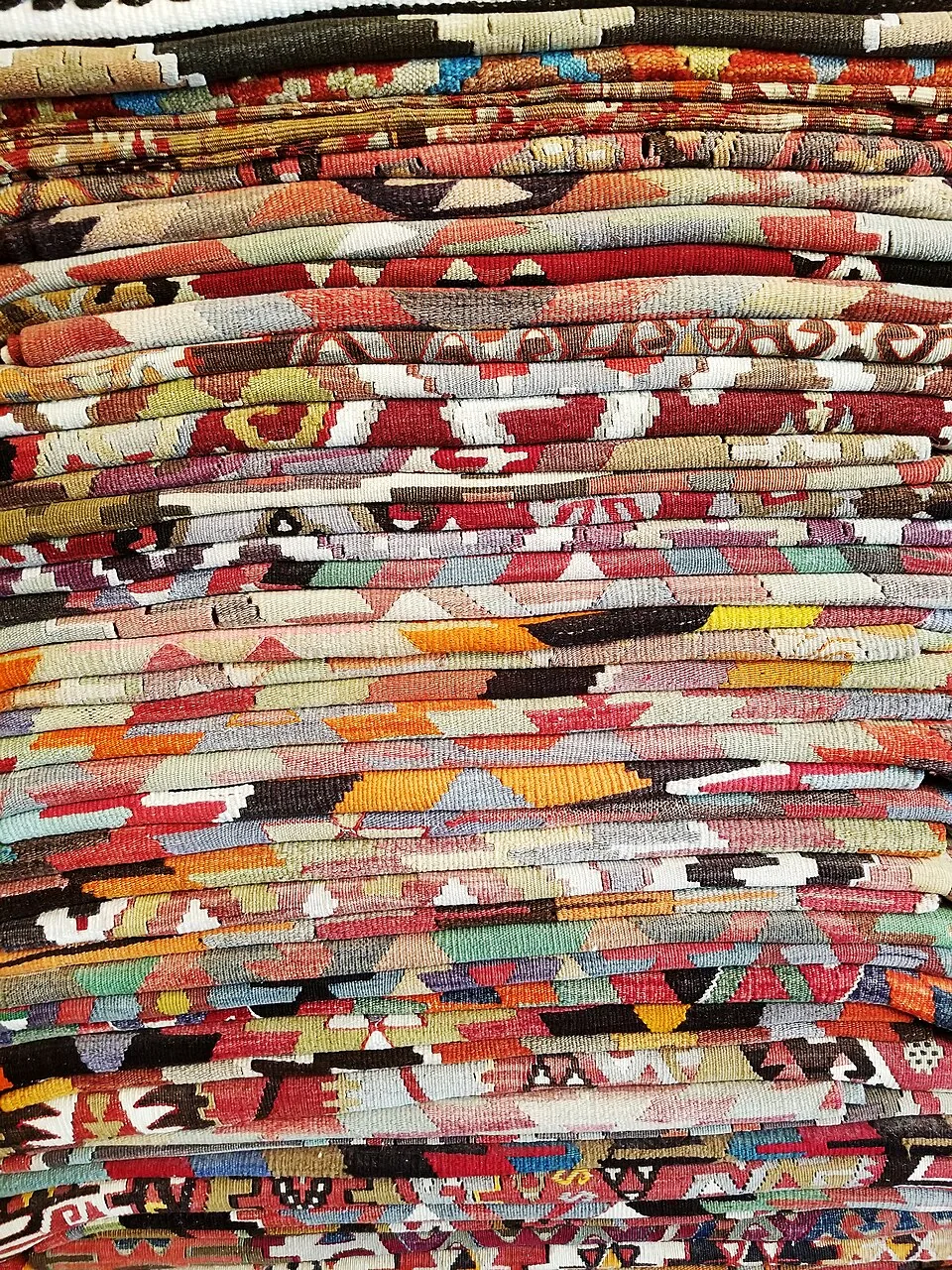
A flatweave rug is woven on a loom by interlacing two sets of threads, the warp running lengthwise and the weft running across. The pattern is created by the color of the weft threads, which pass over and under the warp, and the weaving is the structure: there is no separate backing and no pile standing up from the surface. The result is a flat, thin fabric, typically a fraction of an inch thick, with the same pattern on both sides.
The family includes kilims, dhurries, soumak and many modern woven rugs in cotton, wool, jute and synthetic fibers. Some are made by hand on a simple loom and some on a power loom. The look ranges from traditional geometric designs to stripes and solid weaves. Because the fibers are woven into the structure, they do not pull out or shed in the way that loose pile does, which is the source of many of the advantages below.
A flatweave is also light. A room-sized flatweave is much lighter than a pile rug of the same dimensions, which makes it easier to move, roll and clean. The thinness has a downside, since it offers little cushion, and a flatweave on a hard floor feels hard, which is why a pad matters. Our guide to rug pads explains the choices.
How a tufted rug is made
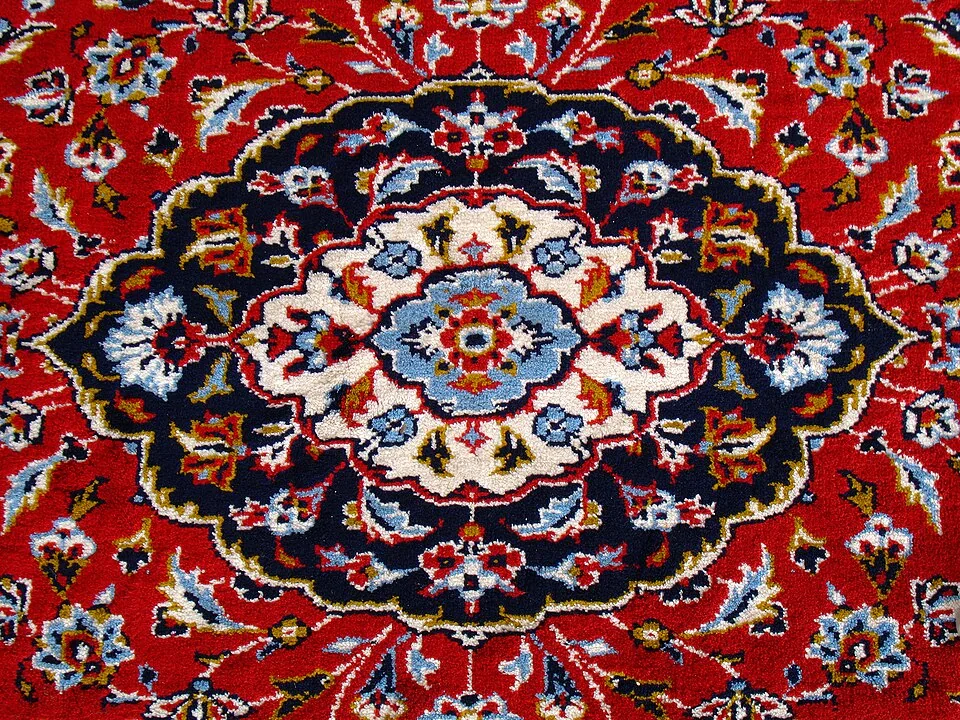
A tufted rug is made by punching yarn through a primary backing fabric with a tufting gun, which pushes loops or cut tufts through the cloth. The tufts are held by the friction of the weave, and a coating of latex is applied to the back to lock them in place. A secondary backing of fabric may be glued on to cover the latex and stabilize the rug. The pile is then sheared to the desired height, or left as loops.
Tufting is fast and flexible, so it is the usual method for rugs with a high pile, a carved pattern or an unusual shape. Hand-tufted rugs are made with a handheld gun, and machine-tufted rugs are made on a wide industrial machine. The surface is soft and dense, and the thickness ranges from low to very high pile. For more on pile, see our guide to rug pile height.
The method is also what creates the characteristic weaknesses. The tufts are held by the backing and the latex, not woven into the structure, so loose fibers can work free, the backing can wear and the latex can age. Our guide to rug backing types explains the backing in more detail.
| Factor | Flatweave | Tufted |
|---|---|---|
| Structure | Woven, no pile, no separate backing | Pile punched into a backing and glued |
| Thickness | Thin, a fraction of an inch | Low to very high pile |
| Feel underfoot | Firm, flat | Soft, cushioned |
| Shedding | Minimal | Common, especially at first |
| Reversible | Often yes | No |
| Vacuuming | Easy, can use a beater bar on most | Needs care, suction on high pile |
| Crushing under furniture | None | Possible, shows dents |
| Typical wear point | Edges, fringe, thin spots | Backing, latex, matted pile |
| Weight | Light | Heavier |
Durability and wear
Flatweaves are generally the more durable under traffic, for a structural reason. The fibers are woven into the fabric, so they cannot be pulled out and there is no pile to crush or mat. Dirt sits on the surface and can be removed, and the rug retains its look as it ages, often developing a softened patina. A good wool or cotton flatweave can last many years in a hallway or living room.
The weaknesses are thinness and edge wear. A thin flatweave can wrinkle, creep or catch, and a loosely woven one can fray at the edges or snag on a claw. Cheap synthetic flatweaves may be thin and flimsy, with a pattern that is printed and not woven in. Check the weight and the thickness in the listing, and look for bound or finished edges.
Tufted rugs wear differently. The pile is cushioned and recovers well at first, but with time it can flatten and mat in traffic paths, and the backing and latex can wear. A tufted rug in a heavy traffic area often shows a lane of crushed pile. The latex layer can degrade in sun and heat. A well-made tufted rug in a low or moderate traffic room lasts a long time, but it is more vulnerable than a flatweave in a hallway or an entry.
Shedding and fuzz
Tufted rugs shed, and it is the most common complaint. The cut ends of the yarn are loose and free until they are worked out, so a new tufted rug releases fibers for weeks or months, and wool sheds more than most synthetics. The shedding is normal and subsides, but it is noticeable. Our guide to stopping rug shedding explains why and how to manage it.
Flatweaves shed very little, because the fibers are woven in and the surface has no loose ends. A new flatweave may release a little lint, but it stops quickly. For households with allergies or sensitive vacuum filters, or for owners who dislike finding fiber on their clothes, this is a real advantage.
Pilling and snags are the flatweave's version of the problem. A loosely woven wool flatweave can pill or pull a thread, and a pulled thread should be trimmed, not tugged. A looped tufted rug can also snag on a claw or a vacuum, and a loop is cut or pulled out, which leaves a bald spot. If you have cats, look at the construction: a tight flatweave or a cut-pile tufted rug is safer than a loose loop.
Reversibility and cleaning
Many flatweaves are reversible, since the pattern is the same on both sides. You can flip the rug to even out wear, to hide a stain or to refresh the surface, and a reversible rug effectively doubles its life. Check the listing, since some flatweaves have a different back, and tufted rugs are never reversible, because the back is a latex coated fabric.
Cleaning is also easier. A flatweave can be vacuumed with a beater bar if it is a tight weave, shaken or beaten, and many cotton and synthetic flatweaves are machine washable, as we discuss in our guide to washable rugs. Spills sit on the surface and can be blotted. Wool and jute flatweaves need more care with water, but they are still easier to clean than a thick pile.
Tufted rugs are harder. A high pile traps soil in its depths and needs suction vacuuming, a beater bar can damage it, and wet cleaning can soak the backing and cause odors. Many cannot be washed at home. Spot cleaning is possible, but deeper cleaning often requires a professional. The more pile there is, the harder the job.
Comfort and feel underfoot
Comfort is where tufted rugs win. The pile gives a soft, cushioned surface, which suits a living room where you sit on the floor, a bedroom where you step out of bed or a nursery. A thick tufted rug also dampens sound and adds warmth, which is a benefit in an apartment or a room with a hard floor.
A flatweave is firm. It has little cushioning, so on a hard floor the feel is similar to bare floor with a layer of fabric. A pad adds some cushion, and a thick felt pad can make a flatweave feel much softer, but it will not feel like a plush rug. If you want to lounge on the floor, a flatweave is not the first choice.
Appearance differs too. Flatweaves have a crisp, graphic look, with clean lines and a matte surface, and they suit modern, bohemian and traditional styles. Tufted rugs can reproduce any pattern, including carved designs and abstract shapes, and have a plusher, richer look. A tufted rug photographed in a catalog may be a printed design on a flat pile, so check the construction in the details.
Where each one belongs
Use a flatweave in high-traffic rooms such as an entry, a hallway, a dining room, a kitchen or a home office with a rolling chair, where a pile would mat and a chair would crush it. It also suits a home with pets or children, because it is easy to clean, snag-resistant if tightly woven and does not shed. A flatweave layered on top of a larger rug is a popular way to add pattern, and our guide to layering rugs explains how.
Use a tufted rug in a living room seating area, a bedroom, a nursery or a media room, where people sit and walk slowly and want softness. Choose a lower pile and a dense construction for a living room under a coffee table, so that furniture and feet do not crush it. Keep it out of entryways and dining areas where soil and spills are frequent.
For rolling chairs, choose a flatweave or a low, dense pile. A rolling chair crushes a tufted pile and pulls it. For a home with a robotic vacuum, a flatweave with no fringe is easiest, as fringe and thick pile can jam the machine.
Buying tips for each type
For a flatweave, check the fiber, the weight and whether the pattern is woven or printed. A woven pattern appears on the back in reverse, while a print is faint or absent on the back. Look at the edges for binding, and ask whether the rug is reversible. Wool is durable and resilient, cotton is washable but wrinkles, and polyester and polypropylene are tough and affordable.
For a tufted rug, check the pile height, the density and the backing. A higher density means more yarn per square inch, which resists crushing and sheds less, and you can judge it by pressing the pile to feel the base. Look at the back for the latex and the secondary fabric, and check that the edges are bound. A very thin, sparse pile with a visible backing is a sign of a low-quality rug.
Whichever you choose, use a pad. It protects the floor, stops creep and prolongs the life of the rug. Check the return policy, as rugs are bulky and returns are costly, and order a sample if one is available, since the hand-feel is the main factor that photographs hide.
Budget and lifespan interact in a way that is easy to miss. A low-cost tufted rug is cheap to make, and it is often the first rug a household buys, but it may need replacing sooner than a flatweave of the same price, because the latex and the pile age together. A flatweave costs more to weave by hand, but a power-loomed flatweave in a durable fiber can be priced close to a tufted rug and last longer in a busy room. Compare the expected years of use, not only the cost on the day you buy, and remember that a worn flatweave can often be flipped or repaired, while a worn tufted rug usually cannot.
Frequently asked questions
Is a flatweave rug comfortable enough for a living room?
It can be, with a thick pad underneath. It will feel firmer than a pile rug. If you like to sit on the floor, a tufted or a thicker pile rug may be more comfortable, and a flatweave can be layered over one.
Do flatweave rugs slip?
Yes, because they are thin and light, and a smooth floor offers little resistance. A non-slip pad, cut a little smaller than the rug, solves it, and keeps the corners flat.
Why does my tufted rug keep shedding?
Loose fibers left from manufacturing come out in the first weeks or months, especially in wool. Vacuum with suction and do not pull strands. If shedding continues heavily after several months, or bare patches appear, contact the seller.
Can I flip a tufted rug?
No. The back is a latex coated fabric with no pattern, so it cannot be used as the top surface. Rotate it instead to even out wear.
Which is better for pets?
A tightly woven flatweave is usually better. It does not shed, resists claws, and is easy to clean. A dense, cut-pile tufted rug is a second choice, and a loop pile tufted rug is the riskiest.
Bottom line
Pick a flatweave when you need a rug that handles traffic, chairs, pets and cleaning, and accept a firm feel that a pad can soften. Pick a tufted rug when softness and a plush look matter more, and accept more shedding and more care. Both need a pad.
If you are unsure, use both: a flatweave for the rooms that take the hardest wear and a tufted rug where you want comfort. Check the construction in the listing, not the photo, since construction decides how the rug lives.