Rug listings are full of the words hand-knotted, hand-tufted, hand-woven and hand-made, and three of those four do not mean the same thing. A rug can be made largely by a person and still be tufted with a gun and glued to a backing, and a rug can be machine made and sold with an exotic place name on the label. The difference matters, because the construction determines how long the rug lasts, how it can be repaired and what it is worth over time.
This guide explains the three main constructions, shows how to identify them by looking at the back, the fringe and the edge, covers knot density, lifespan and value, and ends with practical advice for deciding whether a hand-knotted rug is right for your room or whether a good machine-made rug is the smarter choice.
The three constructions
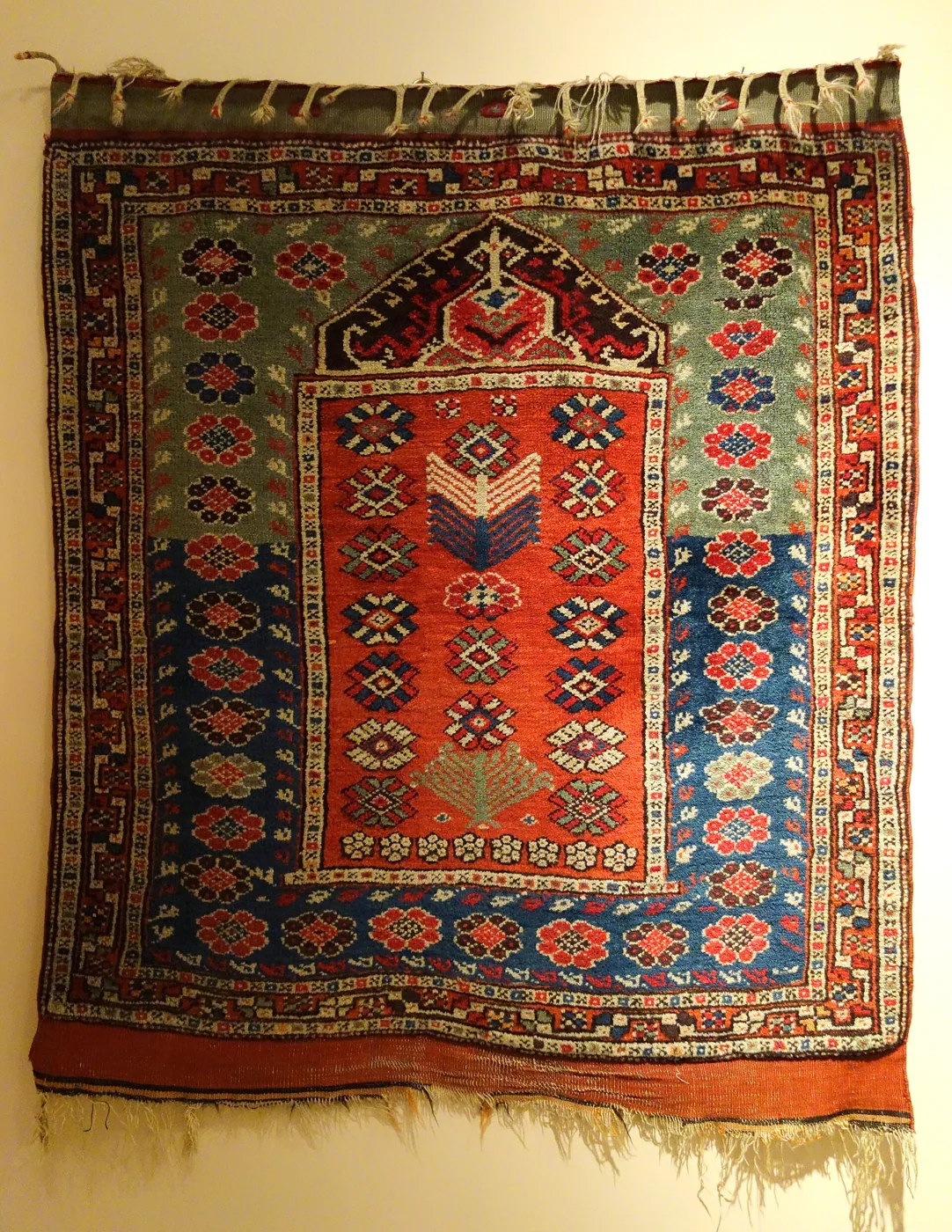
A hand-knotted rug is made on a loom, where a weaver ties each knot of yarn around the warp threads, row by row, and then locks the row with weft threads. The pile is the ends of the knots, and the pattern emerges knot by knot. A rug of 8 by 10 feet can take a team of weavers several months or more, which explains the price and the durability.
A hand-tufted rug is made by punching yarn through a cloth backing with a handheld tufting gun, following a pattern drawn on the cloth. The back is then coated with latex and covered with a second cloth to hold the tufts. The process is much faster than knotting and the result is cheaper, but the tufts are held by glue, not knots. A machine-made rug is woven or tufted on a power loom, with the pattern programmed in. Machine production is fast and uniform, and it produces everything from a cheap polypropylene rug to a fine wool Wilton.
How to tell: turn it over
The back of a rug tells the truth. On a hand-knotted rug, the design on the back is nearly a mirror of the front, with the knots visible as small bumps in rows, and the pattern is clear. The surface is slightly uneven, and the knots vary a little, because a human tied them. There is no glued backing.
On a hand-tufted rug, the back is covered with a layer of cloth, usually a cotton or synthetic fabric, glued on with latex. You cannot see the pattern on the back, and the surface is flat and uniform. On a machine-made rug, the back is often a regular grid of stitching or a woven pattern that is perfectly even, and the pattern, if visible, is crisp and repetitive. A rug with a smooth, perfectly regular back and no knots is machine made.
The fringe and the edge
The fringe is another tell. On a hand-knotted rug, the fringe is the ends of the warp threads, the foundation of the rug, and it runs through the whole rug. If you lift the edge, the fringe continues under the pile. On a machine-made or a tufted rug, the fringe is often sewn or glued onto the edge, and it ends where the rug ends. A fringe that looks too perfect and uniform may be added.
The edges also differ. A hand-knotted rug has a bound edge, made by wrapping yarn around the side warp threads, which gives a rounded edge with the same yarn color as the border. A machine-made rug has an overlocked or serged edge, a regular stitch along the side. A hand-tufted rug often has a bound edge, sewn on by hand or machine, with a visible seam. These details take a moment to check and distinguish quickly between the constructions.
Knot density and what it means
Knot density is the number of knots per square inch, or in some regions per square meter or per line. A hand-knotted rug with 100 knots per square inch is a coarse, sturdy rug. One with 200 to 300 is a good quality rug with fine detail, and rugs over 500 are very fine, found in silk and in antique pieces. More knots allow finer curves in the design and generally a denser, more durable pile.
Density is not the only measure of quality. The wool matters, as do the dyes and the foundation. A rug with a high knot count in poor wool can wear badly, and a lower count in good wool can last for generations. Ask the seller for the density and the materials, and be wary of a listing that quotes none. Our guide to wool and polypropylene explains what the fibers contribute on their own.
| Construction | How it is made | Back looks like | Typical lifespan |
|---|---|---|---|
| Hand-knotted | Knots tied on a loom | Pattern visible, knots in rows | 30 years or more, often generations |
| Hand-tufted | Yarn punched into cloth, latex backed | Cloth backing, no pattern | 5 to 15 years |
| Hand-woven flatweave | Woven on a loom, no pile | Pattern similar on both sides | 10 to 30 years |
| Machine-made | Power loom, programmed pattern | Uniform grid or woven backing | 3 to 20 years, by quality |
Hand-tufted: the middle ground
Hand-tufted rugs fill the gap between a hand-knotted rug and a machine-made one. They offer a handmade look at a fraction of the price, and they can be made in any size or design, including bespoke shapes. The pile is often thick and soft, and the colors can be rich, which is why they dominate mid-priced wool rugs.
The weak point is the latex that holds the tufts. Over time, and especially with water or heat, the latex can degrade and the tufts can loosen, which leads to shedding and bald patches. A tufted rug does not repair as well as a knotted one, and it is difficult to wash. If you choose a tufted rug, look for dense tufting, a high-quality wool or wool blend and a well-finished backing. Used with a pad and cared for, a good tufted rug can last a decade or more, as our guide to rug shedding explains.
Lifespan and how each wears
Hand-knotted rugs wear gradually. The pile flattens in traffic lanes, but the knots hold, and a worn rug can be repaired, rewoven and washed. Many survive a hundred years, and the wear adds character. They can also be restored professionally by patching holes, replacing fringes and rebinding edges.
Tufted and machine-made rugs wear differently. The pile can come out in a pull, the latex can crack and the backing can fail. Once the backing fails, the rug is hard to repair. A good machine-made rug in wool or nylon can last 10 to 20 years in a living room, and a cheap one may be tired in three. Choose by how long you want to keep the rug, and compare the cost per year, not the price at purchase.
Value: what you are paying for
A hand-knotted rug is priced for labor, materials and artistry. A new hand-knotted wool rug of 8 by 10 feet costs several times a good machine-made rug of the same size, and a very fine or antique piece can cost far more. The price reflects months of work, and the rug can hold its value or increase, though that is not a guarantee, and fashion matters.
For most households, the value question is practical. A hand-knotted rug in a room you keep for decades is cost-effective over its life. A hand-knotted rug in a rental or a room with children and pets may be too good for the use. A machine-made rug in a durable fiber, with a good pad, is a sound choice for a busy room, and you can replace it when the room changes. Do not buy a rug as an investment unless you know the market.
Origin, wool and dyes
Region influences the style and the standard. Rugs from Iran, Turkey, India, Pakistan, Nepal, Morocco and China have distinct traditions, with different knot types and patterns, and a skilled workshop in any of them can make an excellent rug. Rather than trusting a country name, look at the wool, which should feel springy and smell clean, and at the dyes, which should be even and not bleed when a damp white cloth is rubbed on the surface.
Wool grade varies. Long-staple, lanolin-rich wool makes a lustrous, durable pile, and short, brittle wool sheds and mats. Vegetable dyes produce soft, varied tones that age gracefully, and chemical dyes give consistent, bright colors that are generally colorfast in a good workshop. Neither is automatically better, but a rug whose colors bleed or fade quickly signals poor dyeing.
Repair and restoration
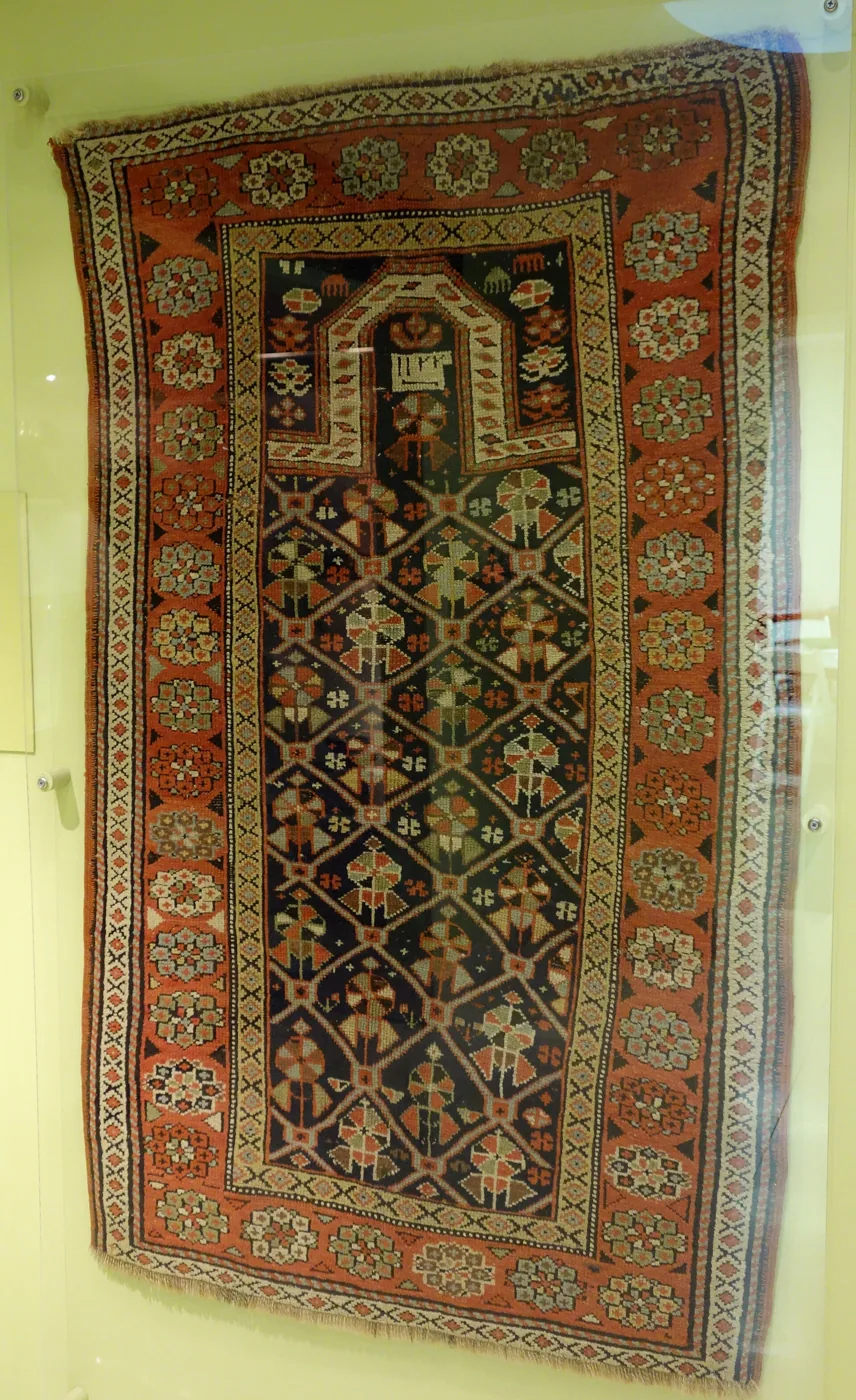
One of the strongest arguments for hand-knotted rugs is that they can be repaired. A restorer can reweave a hole by tying new knots into the foundation, replace a worn fringe, rebind a frayed edge and wash the rug to bring back the colors. A repair on a rug that has lived for twenty years can cost a modest amount compared with a new rug, and it can make the rug usable for another twenty.
Tufted and machine-made rugs are harder to repair, because the tufts are held by glue or by a power-loom structure that cannot be re-created by hand. A hole in a tufted rug can be patched, but the patch is often visible. Check any warranty, and ask a professional about the repair options before you buy. If you value longevity, a rug that can be restored is a rug that can be kept.
Matching the construction to the room
In a living room with moderate traffic and a rug you want to keep, a hand-knotted or a quality hand-tufted wool rug is a good match. In a dining room, a flat, durable machine-made or flatweave rug suits spills and chair movement better than a delicate pile. In an entry, a durable synthetic or a tough flatweave resists dirt, and a hand-knotted rug would take a beating.
In a bedroom, a soft hand-tufted or hand-knotted wool rug gives the best feel underfoot, and the low traffic protects it. In a home with a robot vacuum, a low-pile construction is the best choice, whichever way it is made. Think about the pad as well, as our guide to rug pads explains, since a good pad extends the life of every construction, and a handmade rug deserves one.
Red flags in listings
A few phrases deserve caution. Hand-made is not hand-knotted, and it can describe a tufted rug. Hand-woven can describe a flatweave, which is fine, but it is not a knotted pile rug. Persian style or Oriental design describes the pattern, not the origin or the construction, and a machine-made rug can carry the same name. A listing that gives a place of origin without a construction method should prompt a question.
Be wary of a price that seems too good, since a true hand-knotted rug in good wool cannot be made cheaply. Ask for pictures of the back, the fringe and the edge, and the knot count. Check the return policy, since an online listing cannot show the feel. And if a rug sheds heavily after the first weeks, or the colors bleed in a damp cloth test, treat it as a poor-quality piece, whatever the label says.
Caring for a handmade rug
Handmade rugs need gentle care. Vacuum with the beater bar off, and never on the fringe. Rotate the rug every six months, use a good felt pad, and keep it away from direct sun. Blot spills at once, as we describe in our guide to cleaning an area rug, and have it professionally washed every few years.
Look after the edges and the fringe, which are the weak points. Do not let a vacuum catch the fringe, and have a professional repair any unraveling before it spreads. A rug that is looked after can become a long-term possession, and a rug that is ignored can age quickly, whatever its construction.
Frequently asked questions
Is a hand-knotted rug worth the money?
If you plan to keep it for decades and you value the craft, yes, because it lasts and can be repaired. For a busy, short-term or rental space, a good machine-made or tufted rug often makes more sense.
How can I tell a hand-tufted rug from a hand-knotted one?
Look at the back. A tufted rug has a cloth backing glued over the yarn and no visible pattern, and a knotted rug shows the pattern and the rows of knots. The fringe on a tufted rug is sewn on, and on a knotted rug it is part of the rug.
Do hand-knotted rugs shed?
Yes, a little, in the first weeks, since loose wool works out. The shedding settles in a few months, as it does with any new wool rug. Heavy shedding that continues may indicate poor wool.
What if my situation is different, such as a rug for a home with pets?
A durable machine-made rug in nylon or a tight wool, or a flatweave, is more forgiving than a delicate hand-knotted piece. If you prefer a knotted rug, choose a dense, dark pattern, and clean accidents quickly.
How much knot density do I need?
For a living room, 100 to 200 knots per square inch is a good working range. Higher counts give finer detail, but wool quality and construction matter as much as the number.
Bottom line
Turn the rug over, check the fringe and the edge, and ask for the knot count and the materials. Choose hand-knotted for a room you will keep for years, hand-tufted for a handmade look at a moderate price and a good machine-made rug for busy rooms and shorter horizons.
Value is a function of how long the rug lasts and how well it suits the room, not of the label. Compare cost per year, check the details and ask for the back. For how we weigh construction in our picks, see how we evaluate products.