Amazon affiliate links - we earn a commission.Affiliate disclosure
Guide·11 min read

How to Stop a Rug From Shedding, and When It Means a Defect

Why new wool and tufted rugs shed, the vacuum method that works, how long shedding lasts and the signs that heavy fluff means a defective rug.

By Elena Hart · Updated 2026-11-20

Quick answer

New wool and tufted rugs shed because short loose fibers left from manufacturing work out of the pile. Vacuum with suction only or a light beater bar, in slow passes, once or twice a week, and do not pull loose tufts. Shedding settles in 2 to 6 months for wool, and it can continue lightly for years in shag. Heavy shedding that leaves bald patches, shows the backing or continues past a year signals a poor rug and justifies a return.

The first vacuum of a new wool rug is a shock. The canister fills with fluff, a pale halo of fibers collects on the floor and dark clothing picks up lint. Owners reasonably wonder whether the rug is defective, whether it will bald and whether they have been sold a bad product. In nearly every case, the answer is no. Shedding is a normal part of how a new pile rug settles, and it follows a predictable pattern.

This guide explains why rugs shed, which constructions shed most, how to vacuum a shedding rug without making it worse, how long the process lasts and, importantly, how to tell normal shedding from the kind that signals a poor rug. It also covers what not to do, since some well-meant habits cause damage.

Why new rugs shed

A rug is made of many short lengths of fiber twisted into yarn. During spinning, weaving and shearing, some fibers end up loose or only lightly held in the yarn, particularly the short staple fibers of wool. When the rug arrives and is walked on and vacuumed, those loose fibers work free and rise to the surface, where a vacuum collects them.

The effect is strongest in the first weeks, and it is a one-time clearing of loose material. Once the surplus fibers have left, the yarn is stable, and the shedding tapers off. It is not a sign that the rug is coming apart, since the fibers that shed are those that were not locked into the yarn. A rug that is worn out sheds in a different way, with long strands and bare patches, and the difference is clear after a few weeks.
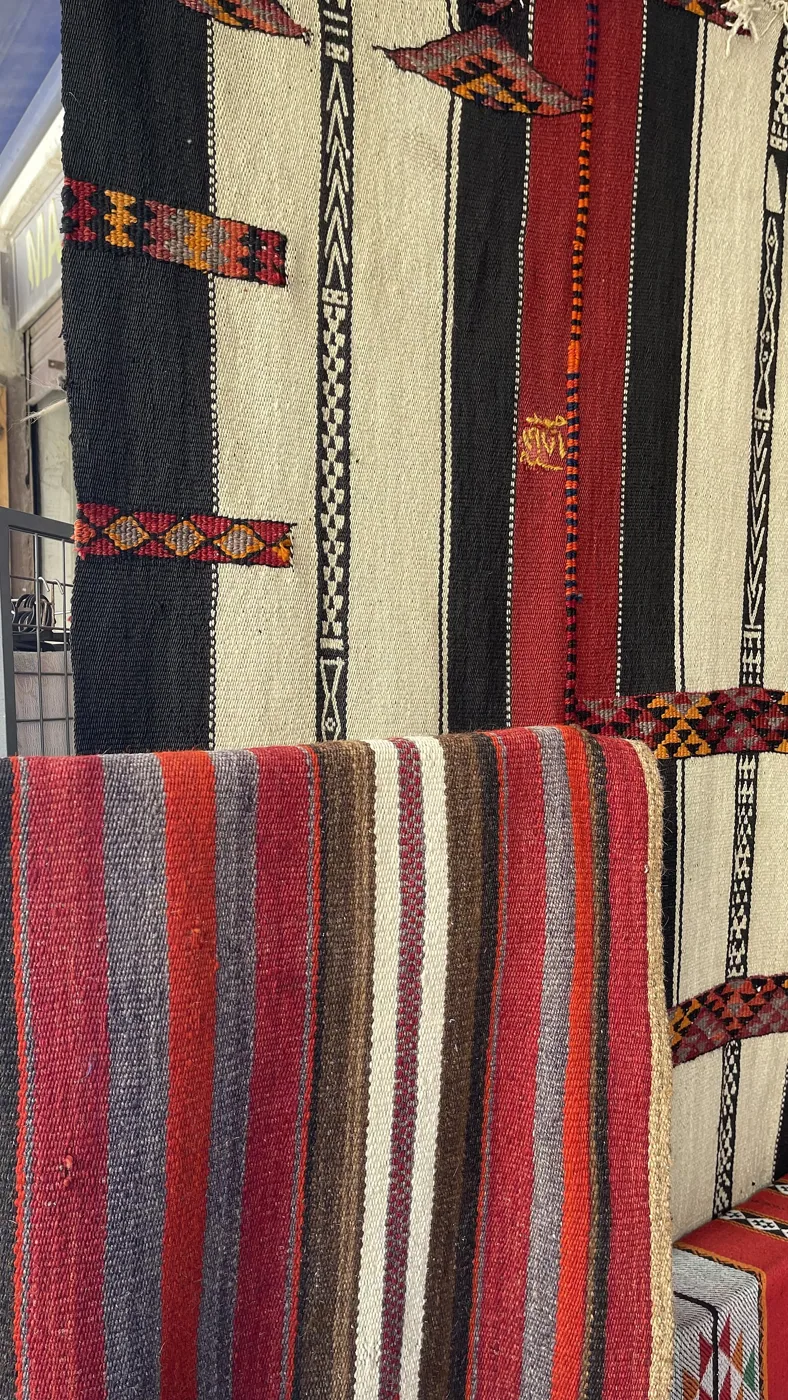
Hand-loomed wool rugs hanging in striped patterns beside a window
Wool rugs are made from spun staple fibers, and a few loose ends from that process are what you collect in the first weeks.

Which rugs shed most

Wool sheds more than synthetics, because the fibers are short staple lengths, not continuous filaments. Hand-tufted wool rugs shed the most of all, since the tufting process cuts the yarn and leaves many loose ends, and their latex backing does not trap loose fibers. Shag and high-pile rugs shed visibly, since the long pile has more loose fiber to lose, and a shag in wool can leave a trail for months.

Hand-knotted rugs shed less, because each knot locks the yarn in place, though a little fuzz is normal. Polypropylene and polyester rugs shed little, because the fibers are continuous, but a spun polyester can produce lint. Viscose sheds as it breaks down with wear. If you want a rug with minimal shedding, choose a flatweave, a low pile in a synthetic fiber or a dense hand-knotted wool. Our comparison of rug constructions shows how the weave affects this.

The vacuum method that works

Vacuuming is both the cause of the fluff you see and the cure. A vacuum removes the loose fibers that would otherwise work up over time, so it hastens the process. Use a vacuum with adjustable height and a suction-only setting, or a light beater bar if the rug allows it. A heavy beater bar can pull out fibers that are still anchored, and it can worsen shedding in a shag or a loop rug.

Go slowly, with one or two passes in each direction, and work in the direction of the pile first, then against it. Empty the bin or change the bag as it fills, since a full bin loses suction. Vacuum once or twice a week for the first two months, then once a week. Use a hose attachment around the edges and the fringe, and do not drag the vacuum over the fringe, which can catch and tear it. A rake or a soft brush can help to lift loose fibers in a shag.

How long shedding lasts

For a typical wool rug, the heaviest shedding lasts two to six weeks, then tapers over the next two to six months. By six months, most rugs have stabilized, and the vacuum collects only a light dusting. A very thick shag or a hand-tufted wool rug may shed lightly for a year or more, and some shedding continues for the life of any pile rug, as a modest amount of fiber is lost with normal wear.

Synthetic rugs may shed lightly for the first few weeks and then stop. A rug that is spun from low-quality fibers, or made with short fibers, can go on shedding indefinitely. If the amount of fluff does not decrease over several months, or if it increases, look for a defect. Keep a note of the date and the amount, which helps if you need to return the rug or make a claim.

Rug typeTypical sheddingUsual durationWhat to do
Hand-tufted woolHeavy at first3 to 12 monthsFrequent gentle vacuuming
Hand-knotted woolLight1 to 3 monthsVacuum, beater bar off
Wool shagHeavy6 to 12 months or moreSuction only, rake
PolypropyleneVery lightA few weeksNormal vacuuming
ViscoseModerate, ongoingThroughout lifeLight suction, avoid wet
JuteModerate, ongoingThroughout lifeSuction only, see jute guide

What not to do

Do not pull or cut loose tufts. A fiber that stands up from the surface may be a long strand, and tugging it can unravel a row. Trim it with sharp scissors, flush with the pile, and leave it at that. Do not use a rotating brush with stiff bristles on a delicate rug, as it can tear the pile and speed up shedding.

Do not overwet the rug to stop the fluff. Water does not reduce shedding, and wetting wool can bring up more loose fibers and cause color bleed. Do not wash a new rug in a machine, and avoid chemical treatments that claim to fix shedding, which may contain adhesives that harm the fibers. Patience and gentle vacuuming are the answer, and they cost nothing.

When shedding means a defect

Normal shedding produces fluff and short loose ends, and it decreases over time. A defect shows other signs. Look for long strands, tufts or loops that come out easily when you tug lightly, patches of backing visible through the pile, yarn that is thinning noticeably in traffic lanes or a rug that continues to shed heavily past a year. Latex that is crumbling on the back, and a backing that separates, are also signs of poor quality.

A simple test is to rub the pile with the palm of your hand and see how much comes away. A small amount of fluff is normal, and a handful of fibers is not. Another is to look at what the vacuum collects: short, fluffy lint is normal, and long, intact strands may mean the pile is pulling out. If you find a defect, photograph it, contact the seller within the return window and keep the packaging. Our guide to rug cleaning covers care that reduces wear in the meantime.

Shedding, pilling and sprouting: three different things

People use shedding as a catch-all, but three separate behaviors show up on a pile rug, and each has its own cause. Shedding is the release of loose, detached fibers, which end up in the vacuum. Pilling is the formation of small balls of tangled fiber on the surface, caused by friction, and it is common on soft knits and on some synthetic blends. Sprouting is the appearance of a single tuft or loop that stands above the pile, caused by a yarn end that has worked loose.

Sprouts should be snipped flush with the pile, never pulled. Pills can be removed with a fabric shaver or a sweater comb, used lightly, and they usually come off once, then stop. Shedding cannot be stopped, only completed. Knowing which one you have keeps you from applying the wrong fix, and from worrying about a problem that is cosmetic and temporary.
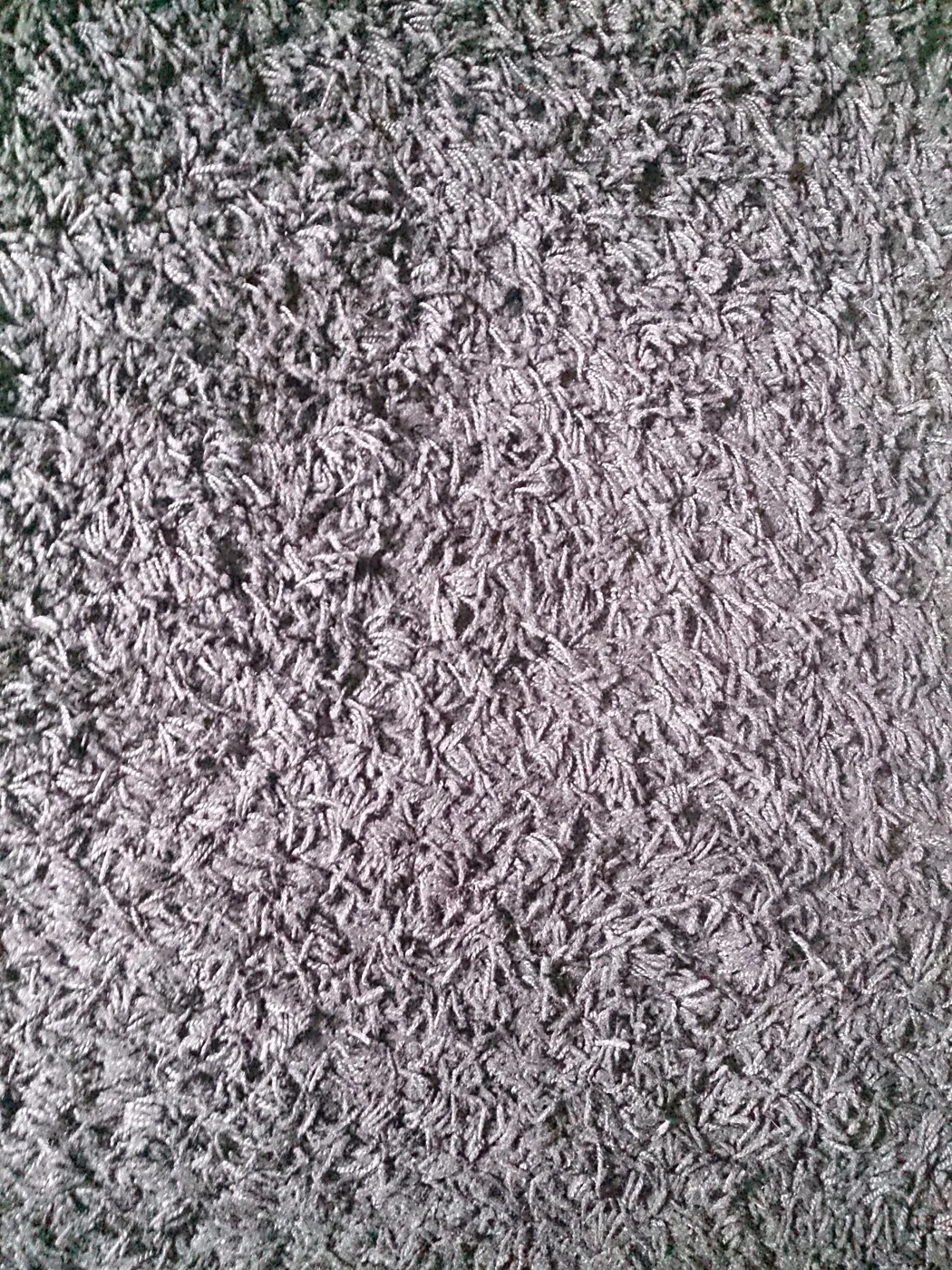
A close view of a dense grey carpet pile
On a dense pile, loose ends are short and sit between the tufts, which is why a vacuum clears them in stages.

Dust, air quality and sensitive households

Rug fluff is mostly fiber, but it can carry dust and skin cells, and in a sensitive household the first weeks of a new wool rug can be uncomfortable. If someone has asthma or an allergy to wool, a medical professional is the person to advise, and this guide does not diagnose or treat. In practice, a vacuum with a sealed system and a fine filter keeps loose fibers from being blown back into the air.

Airing a new rug in a ventilated room for a day, and vacuuming it before it takes its place, removes much of the first wave of loose fibers. A damp mop over the floor around the rug picks up what the vacuum misses. Keep the rug out of a nursery or bedroom until the heaviest shedding has passed, and if symptoms persist, choose a flatweave or a synthetic instead.

Pet hair and rug fibers

When a rug sheds in a home with pets, the two kinds of fluff mix, and it can be hard to know which is which. Pet hair is long, strong and often a single color, while rug fibers are short and match the rug. A rubber squeegee or a rubber glove drawn across the pile collects both into a ball, and a rake works on shag. A vacuum with a pet attachment is useful, but check that it does not pull out the rug's own fibers.

If a pet scratches or digs at the rug, the damage looks like shedding but it is not. Claws can pull loops and tufts out, and a dog that chews a rug can cause bald patches. Provide an alternative and trim claws, as we describe in our guide to protecting furniture from pets. If the pile is being pulled by a pet, a flatweave or a dense, low pile is a more suitable choice.

Placement, pads and foot traffic

How a rug is used affects how much it sheds. A rug in a high-traffic lane loses more fiber, because the pile is rubbed by feet. A rug with a pad underneath sheds less, because the pad reduces friction against the floor and the movement of the backing, a benefit we explain in our rug pad guide. A rug that slides and bunches is also being abraded, and the shedding increases.

Position a new rug away from the busiest path for the first few weeks, if you can, and give it time to settle. Avoid dragging furniture across it, and do not let heavy chairs with hard casters roll on it. A rug in a protected spot, with a pad, will shed less and age better than one in a doorway with nothing underneath.

Cleaning up the fluff on floors and furniture

Rug fluff travels, and it ends up on the floor around the rug, on socks and on dark furniture. A microfiber mop or a damp cloth picks up the loose fibers from a hard floor better than a dry broom, which pushes them around. A lint roller or a damp rubber glove clears upholstery and clothing. Run the vacuum along the baseboards, where the fluff collects.

If you have a robot vacuum, it will collect much of the fluff, but check the brush roll for wrapped fibers and clean it regularly, since a rug that sheds can clog it. A pause in the robot's use on a new rug for the first couple of weeks may be wise, as a heavy shedder can fill the dust bin quickly. These small habits turn a messy first month into a tolerable one.

Choosing a low-shedding rug

If shedding bothers you, or if someone in the household has respiratory sensitivity, choose accordingly. A flatweave in wool or cotton sheds little, since there is no loose pile. A dense, low pile in a continuous-filament synthetic is the lowest of all. A good hand-knotted wool rug is also a fairly low shedder once it has settled.

Consider the weight and density: a heavy, dense rug has a tighter structure and fewer loose fibers than a light, loose one. Ask the seller about the construction and shedding, and read reviews for mentions of shedding after a few months. For households with young children or allergies, our comparison of wool and polypropylene helps weigh the trade-offs, and a pad helps hold the rug steady so that the pile is not pulled by movement.

Frequently asked questions

Is a shedding rug bad quality?

Not necessarily. New wool rugs shed as part of settling, even good ones. Quality shows in how the shedding tapers over months. A rug that sheds heavily for over a year, or shows bare patches, is a poor one.

Should I vacuum a shedding rug or leave it alone?

Vacuum it gently. Removing the loose fibers is the way the shedding ends, and leaving them lets them work into the floor and the air. Use suction and slow passes.

Does shedding make a rug thinner?

Not in a noticeable way. The fibers that shed are surplus, and the rug's structure is unchanged. A rug that is shedding long strands and thinning in patches is wearing out, and that is a different problem.

What if my situation is different, such as a rug in a home with a baby?

Choose a low-shedding option, such as a flatweave or a synthetic, or keep a new wool rug away from the baby until the shedding has settled. Vacuum often, and wipe the area, as fluff can find its way into mouths.

Do I need a special vacuum for a shag rug?

A vacuum with an adjustable head and suction-only mode is best. A rake or a soft brush helps to lift the pile, and a canister with a hose attachment is gentle on loops. Avoid heavy beater bars.

Bottom line

Expect a new wool or tufted rug to shed, and vacuum it gently with suction twice a week for the first months. Leave loose tufts alone or snip them flush, and do not soak the rug or use chemical fixes. Most rugs settle in two to six months.

If the shedding is heavy after a year, long strands come out or the backing shows, treat it as a defect and return the rug. When buying, choose a dense construction if low shedding matters. For how we weigh these details in our picks, see how we evaluate products.

Ready to buy?

Compare our top-rated picks side by side.

Image credits

  • accent-chair-desk-corner.webp: JohnLEE Brothers, CC0, source
  • accent-chair-green-velvet.webp: Shixart1985, CC BY 2.0, source
  • accent-chair-hero.webp: Shixart1985, CC BY 2.0, source
  • anchor-built-in-bookcases-room.webp: Carol M. Highsmith, Public domain, source
  • anchor-small-bookcase-hall.webp: Steven Pavlov, CC BY-SA 4.0, source
  • anchor-white-bookcase-wall.webp: Egilus, CC BY-SA 4.0, source
  • arrange-living-room-hero.webp: Kotivalo, CC BY-SA 4.0, source
  • arrange-living-room-seating-group.webp: Neoclassicism Enthusiast, CC0, source
  • arrange-living-room-sofa-wall.webp: Adele Berenstein, CC BY 2.0, source
  • artsofa-pictures-on-wall-room.webp: Tudor Washington Collins, CC BY 4.0, source
  • artsofa-sofa-corner-mural.webp: G�nter Seggeb�ing, Coesfeld, CC BY-SA 3.0, source
  • artsofa-sofa-mural-wall.webp: G�nter Seggeb�ing, Coesfeld, CC BY-SA 3.0, source
  • blackoutcurtain-floor-length-pair.webp: Ounfs Robmmy 238, CC0, source
  • blackoutcurtain-olive-heavy-fabric.webp: Easysayg, CC BY-SA 4.0, source
  • blackoutcurtain-white-sheer-hotel.webp: HuiDongXLW RMDa, CC0, source
  • ceilingfan-five-blade-light.webp: CommandProMC, CC BY-SA 4.0, source
  • ceilingfan-pull-chain-light.webp: Hans Olav Lien, CC BY-SA 3.0, source
  • clean-fabric-sofa-blanket.webp: Shixart1985, CC BY 2.0, source
  • clean-fabric-sofa-hero.webp: Lear 21, CC BY-SA 4.0, source
  • clean-fabric-sofa-slipcover.webp: Enric, CC BY-SA 4.0, source
  • clean-rug-fringe-pattern.webp: Sununa, CC BY-SA 4.0, source
  • clean-rug-runner-hall.webp: Sununa, CC BY-SA 4.0, source
  • coffeetable-round-yellow-sofa.webp: Vaibhavratnaparkhi, CC BY-SA 4.0, source
  • coffeetable-tan-sofa-dark-table.webp: Shixart1985, CC BY 2.0, source
  • coffeetable-two-wood-tables.webp: Sophia Baboolal, CC0, source
  • color-temp-bright-bulb.webp: Xzantiyamoloy, CC BY 4.0, source
  • color-temp-gu10-spot.webp: Dmitry G, CC BY-SA 3.0, source
  • color-temp-hero.webp: LoMit, CC BY-SA 4.0, source
  • color603010-paint-swatches-wall.webp: Chris Rycroft, CC BY 2.0, source
  • color603010-rainbow-swatch-range.webp: Joyful spherical creature, CC BY 4.0, source
  • color603010-swatch-cards-neutrals.webp: Clean Wal-Mart, CC BY 2.0, source
  • cornertv-1960s-room-tv-window.webp: Kotivalo, CC BY-SA 4.0, source
  • cornertv-budapest-sofa-room.webp: Justin Sch�ler, CC0, source
  • cornertv-white-room-console.webp: Oliur Rahman, CC0, source
  • curtainfabric-heavy-olive-folds.webp: Easysayg, CC BY-SA 4.0, source
  • curtainfabric-hotel-floor-length-pair.webp: Ounfs Robmmy 238, CC0, source
  • curtainfabric-white-light-filtering.webp: HuiDongXLW RMDa, CC0, source
  • curtains-hk-window-stacked-open.webp: YSSKACH WFAMOACSH TUNGA, CC BY-SA 4.0, source
  • curtains-hotel-living-zone-floor-length.webp: Ounfs Robmmy 238, CC0, source
  • cushion-fill-hero.webp: Dalton Scavassa, CC BY-SA 4.0, source
  • cushion-fill-pillows-leather.webp: Aaaatu, CC BY-SA 4.0, source
  • depth-grey-sofa-cushions.webp: Dalton Scavassa, CC BY-SA 4.0, source
  • depth-grey-sofa-hero.webp: Lear 21, CC BY-SA 4.0, source
  • depth-sectional-living-room.webp: Shixart1985, CC BY 2.0, source
  • dimmer-rotary-wall.webp: Paolomarco, CC BY-SA 4.0, source
  • dimmer-slide-wall.webp: BrokenSphere, CC BY-SA 3.0, source
  • dimmer-wiring-box.webp: Kurtkaiser, CC0, source
  • door-hotel-living-room.webp: Adele Berenstein, CC BY 2.0, source
  • door-orange-sofa-hero.webp: Shixart1985, CC BY 2.0, source
  • echo-1960s-room-soft-furnishings.webp: Kotivalo, CC BY-SA 4.0, source
  • echo-fabric-acoustic-panels-wall.webp: 36N63, CC BY-SA 4.0, source
  • echo-panel-mineral-wool-core.webp: JoraK, CC BY-SA 4.0, source
  • entcenter-low-stand-devices.webp: William Hook, CC BY-SA 2.0, source
  • entcenter-old-tv-setup.webp: William Hook, CC BY-SA 2.0, source
  • entcenter-wood-wall-unit-living-room.webp: Casey Fleser, CC BY 2.0, source
  • fabric-green-velvet-hero.webp: Neoclassicism Enthusiast, CC0, source
  • fabric-grey-sofa-cushions.webp: Lear 21, CC BY-SA 4.0, source
  • fabric-sofa-blanket.webp: Shixart1985, CC BY 2.0, source
  • floatshelf-mixed-books-rows.webp: Roman Eisele, CC BY-SA 4.0, source
  • floatshelf-steel-support.webp: Fructibus, CC0, source
  • floatshelf-white-bookcase-wall.webp: Egilus, CC BY-SA 4.0, source
  • floor-lamp-height-hero.webp: Agbarto, CC0, source
  • floor-lamp-height-stained-glass.webp: Louis Comfort Tiffany / Tiffany Studios, CC0, source
  • floor-lamp-height-white-reading-lamp.webp: FASTILY, CC BY-SA 4.0, source
  • frame-black-leather-sofa.webp: www.Pixel.la Free Stock Photos, CC0, source
  • frame-green-velvet-sofa.webp: Neoclassicism Enthusiast, CC0, source
  • frame-grey-sofa-hero.webp: Dalton Scavassa, CC BY-SA 4.0, source
  • gallerywall-frames-bookcase-lamp.webp: Personal Creations, CC BY 2.0, source
  • gallerywall-frames-floor-tape.webp: Personal Creations, CC BY 2.0, source
  • gallerywall-frames-on-wall-home.webp: Personal Creations, CC BY 2.0, source
  • hang-light-hero.webp: Martin Falbisoner, CC BY-SA 4.0, source
  • hang-light-lamp-with-shade.webp: LoMit, CC BY-SA 4.0, source
  • hang-light-red-drum-lamp.webp: Agbarto, CC0, source
  • jute-sisal-combing-fibre.webp: Uncredited for Keystone View Company, Public domain, source
  • jute-sisal-hero.webp: B.navez, CC BY-SA 3.0, source
  • jute-sisal-plantation.webp: Forest & Kim Starr, CC BY 3.0, source
  • knotted-rug-cut-pile-carpet.webp: Daderot, CC0, source
  • knotted-rug-hero.webp: Daderot, CC0, source
  • knotted-rug-prayer-wool.webp: Daderot, CC0, source
  • lampshade-cream-base.webp: LoMit, CC BY-SA 4.0, source
  • lampshade-empire-lamp.webp: J.Dncsn, CC BY-SA 3.0, source
  • lampshade-paper-rect-lamp.webp: Zeitlupe, CC BY-SA 4.0, source
  • layer-rugs-armchairs.webp: PattayaPatrol, CC BY-SA 4.0, source
  • layer-rugs-conversation-pit.webp: Marsh Davis; Indiana Landmarks, CC BY 4.0, source
  • layer-rugs-hero.webp: BusterD, CC BY-SA 4.0, source
  • layered-light-hero.webp: FASTILY, CC BY-SA 4.0, source
  • layered-light-red-shade-lamp.webp: Agbarto, CC0, source
  • layered-light-table-lamp.webp: LoMit, CC BY-SA 4.0, source
  • leather-care-black-sofa.webp: www.Pixel.la Free Stock Photos, CC0, source
  • leather-care-burgundy-set.webp: Dominic's pics, CC BY 2.0, source
  • leather-care-hero.webp: Thomas Quine, CC BY 2.0, source
  • ledstrip-cove-fireplace.webp: Andrey Gvrv, CC BY-SA 3.0, source
  • ledstrip-spool-driver.webp: Dmitry G, CC BY-SA 3.0, source
  • ledstrip-tv-back.webp: Stilfehler, CC BY-SA 4.0, source
  • loveseat-sofa-armchair-room.webp: Adele Berenstein, CC BY 2.0, source
  • loveseat-sofa-hero.webp: Aaaatu, CC BY-SA 4.0, source
  • loveseat-sofa-leather-pair.webp: Dominic's pics, CC BY 2.0, source
  • lowlight-snake-plant-corner-pot.webp: Enzo Rippa, CC BY-SA 4.0, source
  • lowlight-snake-plant-window-table.webp: Martin Olsson, CC BY-SA 3.0, source
  • lowlight-zz-plant-potted.webp: Jamshid Nurkulov, CC BY-SA 4.0, source
  • lumens-bulb-hero.webp: R. Henrik Nilsson, CC BY 4.0, source
  • lumens-led-bulbs-group.webp: Geoffrey.landis at English Wikipedia, CC BY 3.0, source
  • measure-cabin-sofa.webp: Shixart1985, CC BY 2.0, source
  • measure-room-depth.webp: Shixart1985, CC BY 2.0, source
  • measure-sofa-hero.webp: Shixart1985, CC BY 2.0, source
  • mirror-above-mantel-living-room.webp: Tudor Washington Collins, CC BY 4.0, source
  • mirror-round-blue-wall-window.webp: Ciara N� Riain, CC BY-SA 4.0, source
  • mirror-round-over-wood-console.webp: Shixart1985, CC BY 2.0, source
  • mixpatterns-armenian-patterned-pillows.webp: Ararat Trvants, CC BY-SA 4.0, source
  • mixpatterns-couch-pillows-set.webp: Dawid Skalec, CC BY-SA 4.0, source
  • mixpatterns-leather-sofa-pillows.webp: Aaaatu, CC BY-SA 4.0, source
  • no-overhead-hero.webp: Gotogo, CC BY-SA 4.0, source
  • no-overhead-red-shade-lamp.webp: Agbarto, CC0, source
  • no-overhead-white-floor-lamp.webp: FASTILY, CC BY-SA 4.0, source
  • nodrillcurtain-hk-window-open.webp: YSSKACH WFAMOACSH TUNGA, CC BY-SA 4.0, source
  • nodrillcurtain-olive-rail-folds.webp: Easysayg, CC BY-SA 4.0, source
  • nodrillcurtain-white-light-panel.webp: HuiDongXLW RMDa, CC0, source
  • open-plan-rug-armchairs.webp: PattayaPatrol, CC BY-SA 4.0, source
  • open-plan-rug-hero.webp: NPS Photo, Public domain, source
  • open-plan-rug-sunken-living.webp: Marsh Davis; Indiana Landmarks, CC BY 4.0, source
  • ottoman-coffee-table-pair.webp: Sophia Baboolal, CC0, source
  • ottoman-leather-round-pair.webp: Olugold, CC BY-SA 4.0, source
  • ottoman-round-stool-top.webp: Olugold, CC BY-SA 4.0, source
  • paintsheen-open-paint-cans.webp: United Soybean Board, CC BY 2.0, source
  • paintsheen-paint-can-brush.webp: Shixart1985, CC BY 2.0, source
  • paintsheen-swatch-cards-range.webp: Chris Rycroft, CC BY 2.0, source
  • pets-sofa-kitten-cushions.webp: Feliciano Guimar�es from Guimar�es, Portugal, CC BY 2.0, source
  • pets-sofa-slipcover.webp: Enric, CC BY-SA 4.0, source
  • pillows-decorative-couch-set.webp: Dawid Skalec, CC BY-SA 4.0, source
  • pillows-leather-sofa-group.webp: Aaaatu, CC BY-SA 4.0, source
  • pillows-wooden-sofa-red-cushions.webp: Zohasheikh, CC BY-SA 4.0, source
  • readinglamp-adjustable-torchiere.webp: Agbarto, CC0, source
  • readinglamp-armchair-corner-lamp.webp: Kotivalo, CC BY-SA 3.0, source
  • readinglamp-cozy-sunlit-corner.webp: Shixart1985, CC BY 2.0, source
  • recessed-gimbal-trim.webp: Stilfehler, CC BY-SA 4.0, source
  • recessed-housing-display.webp: Stilfehler, CC BY-SA 4.0, source
  • recessed-led-can-trim.webp: Stilfehler, CC BY-SA 4.0, source
  • recliner-buying-armchair-room.webp: Virginia State Parks staff, CC BY 2.0, source
  • recliner-buying-hero.webp: Laura Stoinski, CC0, source
  • recliner-buying-leather-sofa.webp: Aaaatu, CC BY-SA 4.0, source
  • rug-curl-fringe-rug.webp: Sununa, CC BY-SA 4.0, source
  • rug-curl-hero.webp: Sununa, CC BY-SA 4.0, source
  • rug-curl-runner-patterns.webp: Sununa, CC BY-SA 4.0, source
  • rug-dents-hero.webp: ProjectManhattan, CC BY-SA 3.0, source
  • rug-dents-wool-medallion.webp: Daderot, CC0, source
  • rug-on-carpet-armchairs.webp: PattayaPatrol, CC BY-SA 4.0, source
  • rug-on-carpet-flat-weave.webp: Mervat, CC BY 4.0, source
  • rug-on-carpet-hero.webp: NPS Photo, Public domain, source
  • rug-pad-dense-carpet.webp: ProjectManhattan, CC BY-SA 3.0, source
  • rug-pad-hero.webp: Sununa, CC BY-SA 4.0, source
  • rug-pile-flatweave-stack.webp: Mervat, CC BY 4.0, source
  • rug-pile-sarouk-wool.webp: Daderot, CC0, source
  • rug-shedding-pile-closeup.webp: ProjectManhattan, CC BY-SA 3.0, source
  • rug-shedding-wool-rugs.webp: Mervat, CC BY 4.0, source
  • rug-size-armchairs-on-rug.webp: PattayaPatrol, CC BY-SA 4.0, source
  • rug-size-conversation-area.webp: Marsh Davis; Indiana Landmarks, CC BY 4.0, source
  • rug-size-hero.webp: NPS Photo, Public domain, source
  • runner-size-hero.webp: Sununa, CC BY-SA 4.0, source
  • runner-size-red-runner.webp: Sununa, CC BY-SA 4.0, source
  • runner-size-three-runners.webp: Sununa, CC BY-SA 4.0, source
  • sag-cushions-hero.webp: Durova, CC BY-SA 3.0, source
  • sag-cushions-slipcover.webp: Enric, CC BY-SA 4.0, source
  • sag-cushions-sofa-deck.webp: Dalton Scavassa, CC BY-SA 4.0, source
  • sconce-above-tufted-chairs.webp: Jedodo756, CC0, source
  • sconce-brass-opal-shade.webp: unknown (see Commons page), CC BY-SA 4.0, source
  • sconce-wall-lamp-side-table.webp: Atilla Taskiran, CC0, source
  • sectional-dark-hero.webp: Shixart1985, CC BY 2.0, source
  • sectional-room-arrangement.webp: Kotivalo, CC BY-SA 4.0, source
  • sectional-white-corner.webp: GardenKings, CC BY-SA 3.0, source
  • shelfsag-mixed-books-shelf.webp: Roman Eisele, CC BY-SA 4.0, source
  • shelfsag-packed-bookshelf.webp: Csferrie, CC BY-SA 4.0, source
  • shelfsag-wood-shelf-rows.webp: PeaceSeekers, CC BY-SA 4.0, source
  • sidetable-cozy-sofa-room.webp: Breather, CC0, source
  • sidetable-kentwood-sofa.webp: Kari Shea, CC0, source
  • sidetable-round-wall-lamp.webp: Atilla Taskiran, CC0, source
  • sleeper-sofa-bed-made-up.webp: Maniago, Public domain, source
  • sleeper-sofa-open-hero.webp: N509FZ, CC BY-SA 4.0, source
  • sleeper-sofa-sofa-mode.webp: N509FZ, CC BY-SA 4.0, source
  • small-room-slim-arm-sofa.webp: Lear 21, CC BY-SA 4.0, source
  • small-room-sofa-hero.webp: Shixart1985, CC BY 2.0, source
  • small-room-two-seat-layout.webp: Adele Berenstein, CC BY 2.0, source
  • smallbigger-finland-studio-bright.webp: Aaaatu, CC BY-SA 4.0, source
  • smallbigger-hk-curtains-open-window.webp: YSSKACH WFAMOACSH TUNGA, CC BY-SA 4.0, source
  • smallbigger-white-room-console.webp: Oliur Rahman, CC0, source
  • smallstorage-finland-studio-room.webp: Aaaatu, CC BY-SA 4.0, source
  • smallstorage-leather-sofa-shelving.webp: Sabri Tuzcu, CC0, source
  • smallstorage-wall-shelves-books.webp: Roger W, CC BY-SA 2.0, source
  • smart-bulbs-bulb-in-hand.webp: Xzantiyamoloy, CC BY 4.0, source
  • smart-bulbs-led-internals.webp: Loadmaster, Bech, CC BY-SA 4.0, source
  • soundbar-below-lg-tv.webp: Dinkun Chen, CC BY-SA 4.0, source
  • soundbar-philips-front-grille.webp: Philips Communications, CC BY 2.0, source
  • soundbar-samsung-single-bar.webp: Dinkun Chen, CC BY-SA 4.0, source
  • stylebooks-packed-shelf-wall.webp: Csferrie, CC BY-SA 4.0, source
  • stylebooks-philosophers-shelf.webp: Roman Eisele, CC BY-SA 4.0, source
  • stylebooks-wall-shelves-bottles-books.webp: Roger W, CC BY-SA 2.0, source
  • styletable-book-stack-candle.webp: Gabbybratcher, CC BY-SA 4.0, source
  • styletable-two-tables-mugs.webp: Sophia Baboolal, CC0, source
  • styletable-yellow-sofa-cups-flowerpot.webp: Shixart1985, CC BY 2.0, source
  • surround-home-theater-tv-seating.webp: NPat318, CC BY-SA 4.0, source
  • surround-rear-view-seats.webp: NPat318, CC BY-SA 4.0, source
  • surround-sectional-media-room.webp: Derek Jensen (Tysto), Public domain, source
  • table-lamp-size-antique-shade.webp: Amitbalani, CC0, source
  • table-lamp-size-hero.webp: Tess Mattew, CC BY-SA 4.0, source
  • table-lamp-size-measured.webp: Tess Mattew, CC BY-SA 4.0, source
  • throwblanket-blue-throw-kitten.webp: TudorTulok, CC BY-SA 4.0, source
  • throwblanket-striped-couch-cat.webp: Roman Eisele, CC BY-SA 4.0, source
  • throwblanket-yellow-blue-couch.webp: Roman Eisele, CC BY-SA 4.0, source
  • tvheight-flat-panel-wall.webp: BrokenSphere, CC BY-SA 3.0, source
  • tvheight-plasma-wall-room.webp: Pkepneriv, CC BY-SA 3.0, source
  • tvheight-white-living-room.webp: Oliur Rahman, CC0, source
  • tvmount-articulating-arm.webp: Ben Scholzen, CC BY 2.0, source
  • tvmount-vesa-adapter-plate.webp: Tony Webster, CC BY 2.0, source
  • tvmount-wall-panel-room.webp: Pkepneriv, CC BY-SA 3.0, source
  • tvsize-dark-room-big-screen.webp: Christian Collins, CC BY 2.0, source
  • tvsize-media-room-screen.webp: NPat318, CC BY-SA 4.0, source
  • tvsize-tv-on-stand.webp: PhotoPicker13, CC BY-SA 4.0, source
  • tvstand-low-stand-devices.webp: William Hook, CC BY-SA 2.0, source
  • tvstand-wall-unit-living-room.webp: Casey Fleser, CC BY 2.0, source
  • tvwires-cable-box-wires.webp: Tony Webster, CC BY 2.0, source
  • tvwires-hdmi-connectors.webp: Kreuzschnabel, CC BY-SA 3.0, source
  • tvwires-wall-mounted-panel.webp: BrokenSphere, CC BY-SA 3.0, source
  • washable-rugs-flatweave-stack.webp: Mervat, CC BY 4.0, source
  • washable-rugs-hero.webp: Mervat, CC BY 4.0, source
  • washable-rugs-loomed-stripes.webp: Gcarrillog, CC0, source
  • wool-poly-hero.webp: Mervat, CC BY 4.0, source
  • wool-poly-oaxacan-wool.webp: Gcarrillog, CC0, source
  • wool-poly-prayer-rug.webp: Daderot, CC0, source

Related Guides