Two curtains of the same fabric and length can look like different products, because of what happens at the top. The header, the heading that attaches the panel to the rod, decides whether the folds are loose or tailored, whether the rod shows, how well the panel slides and how much space it takes when it is open. It is also the detail most often chosen by accident, because the listing says only that a panel is a certain size.
This guide describes the five main header styles, what each does well and badly, how fullness and stack depth change with the heading, which rods and tracks they need, and how to choose between them for a living room. It also covers a few small points that make a large difference in daily use, such as the clearance above the rod and the way a header hides or shows hardware.
What the header does
The header is a mechanical choice and a visual one. Mechanically, it sets how the fabric is held on the rod: loops, rings, hooks, a sewn channel or a set of grommets. That determines whether the panel glides along the rod or drags, whether it needs rings and whether you can pull it by hand or need a wand or a cord. Visually, it shapes the folds from the top down, and those folds continue all the way to the floor.
Fullness is the key variable. Fullness is the ratio of the flat fabric width to the finished width of the curtain when it is closed. A panel with fullness of 2 has twice as much fabric as the window width. Each heading style has a typical range: grommets and tabs often work at 1.5 to 2 times, rod pockets at 2 to 2.5 times, and pleats at about 2 to 2.5 times. Too little fullness makes any heading look flat. Our curtain length and width guide covers the numbers.
The second variable is stack, how much space the open panel occupies at the side of the window. A heavily pleated panel stacks in a thick bundle, and a flat panel stacks thinner. If you want to leave the glass clear when the curtains are open, the rod must extend far enough to hold the stack, and the heading decides how big the stack is.
Grommet headers
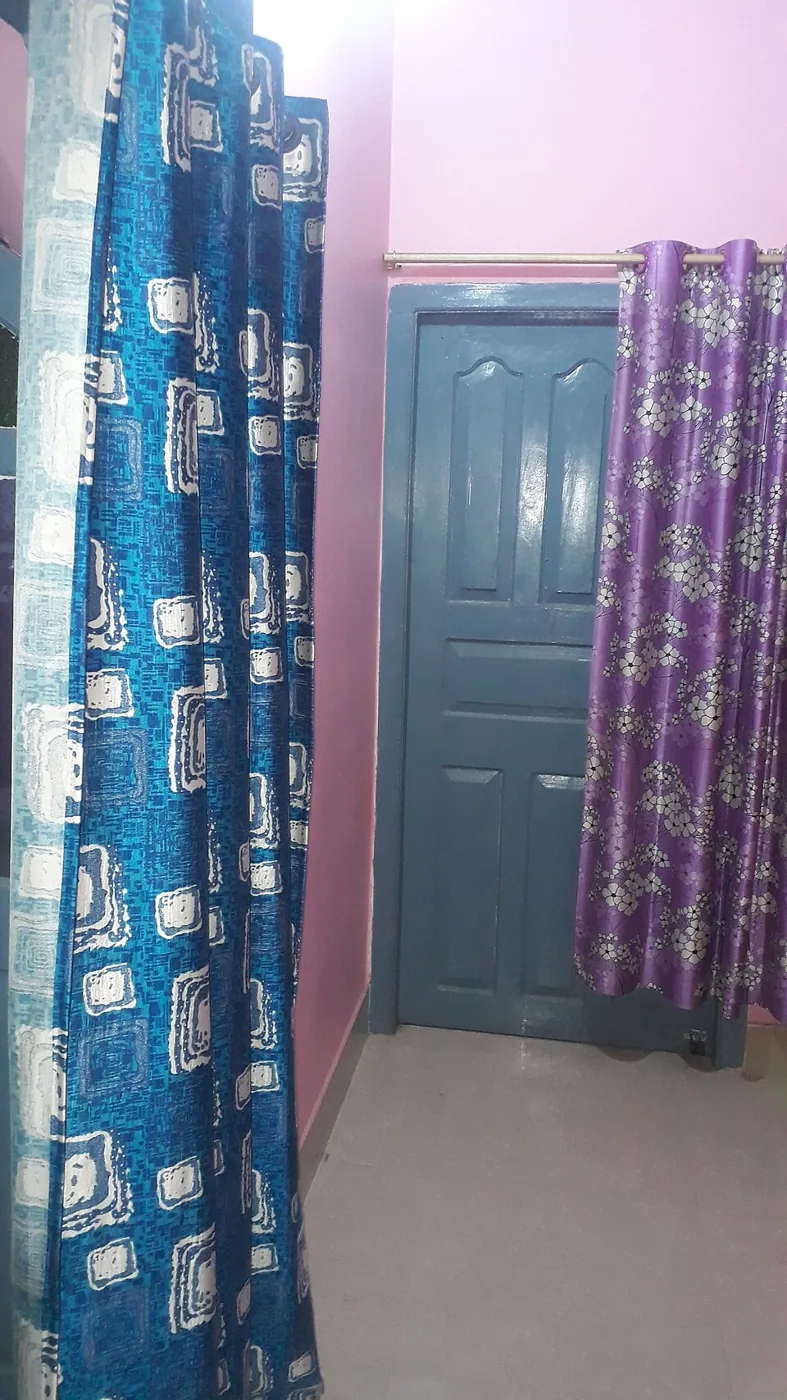
A grommet panel has metal or plastic rings set into the top edge, and the rod passes through them. The look is modern and tidy: the fabric falls in wide, regular folds, and the rings are visible along the top. Because the rod passes through smooth rings, the panel glides easily, which makes it a good choice for curtains you draw every day, such as those at a sliding door.
The limits are style and light leaks. The rod and rings are on display, so the finish should be a good one, and the gap between the grommets lets a small slit of light through above the fabric. Grommets also produce wide, deep folds which can look casual, and they suit a contemporary or relaxed room more than a formal one. They hold heavy fabrics less elegantly than pleats, because the weight hangs from small points along the top.
Grommet panels fit most standard rods, and a 1 inch rod is usual, though the inner diameter of the grommet should be wider than the rod, with a 1.5 inch ring on a 1 inch rod being typical. A finial must be removed or the rod must be threaded through, so check that the panel can be slid on before the brackets are fixed. They are the easiest header to install and live with, which explains their popularity.
| Header | Look | Slides | Stack | Typical rod |
|---|---|---|---|---|
| Grommet | Modern, even folds | Very easily | Medium | Single rod |
| Rod pocket | Soft, gathered | Drags | Medium to thick | Single rod, small diameter |
| Back tab | Clean, hides the rod | Poor | Thin | Single rod |
| Pinch pleat | Tailored, formal | Good with hooks and rings | Thick | Traverse or rings |
| Ripplefold | Even soft waves | Very smooth on track | Medium | Special track |
Rod pocket headers
A rod pocket is a sewn channel at the top of the panel, through which the rod is threaded. The fabric gathers directly on the rod, making soft, informal folds and a small ruffle above the pocket, called a heading, if the panel has one. It is a traditional look, and it suits cottage, farmhouse and casual rooms, and it works with light fabrics such as cotton and voile.
The drawback is movement. The fabric bunches on the rod and catches, so drawing the curtains is a tug, and the fabric can wear at the pocket over time. Rod pockets suit curtains that stay in place, such as sheers, or panels with a valance, and they are poor for daily use. A thin rod is needed, usually under an inch, and the rod tends to show through the heading when the pocket is shallow.
To fit a rod pocket panel, remove the finials or use a rod that comes apart, thread the panel and arrange the gathers evenly. A wide rod needs a wide pocket, so check that the pocket diameter suits the rod. If you like the soft look but need smooth movement, a panel with a rod pocket and a plastic glider or a slightly larger pocket helps, but a grommet or a pleated panel on rings is the better option.
Back tab and tab top headers
A back tab panel has fabric loops sewn on the back of the heading, so the rod slides through them and the front of the panel hangs flat, with no visible rings or rod. The look is clean and simple, the folds fall in a controlled pattern and the rod remains hidden behind the fabric. It gives a tailored effect at a modest cost.
The weakness is that the tabs grip the rod, so the panel does not slide well, and it is not meant to be opened and closed daily. Back tab panels are best on windows where the curtains stay mostly open or closed, or where a wand is used. The tabs can also wear at the contact point. A tab top has loops at the top edge, visible above the rod, and shows the rod as a feature, in a casual and slightly rustic style.
Both styles need a rod with a smooth surface, and a bracket projection that allows the fabric to clear the wall. Check that the rod is strong enough, since the tabs concentrate weight at a few points. Back tab panels are a good choice for a room where you want a calm, simple line and do not mind using a wand when you do move them.
Pinch pleat and other pleated headers
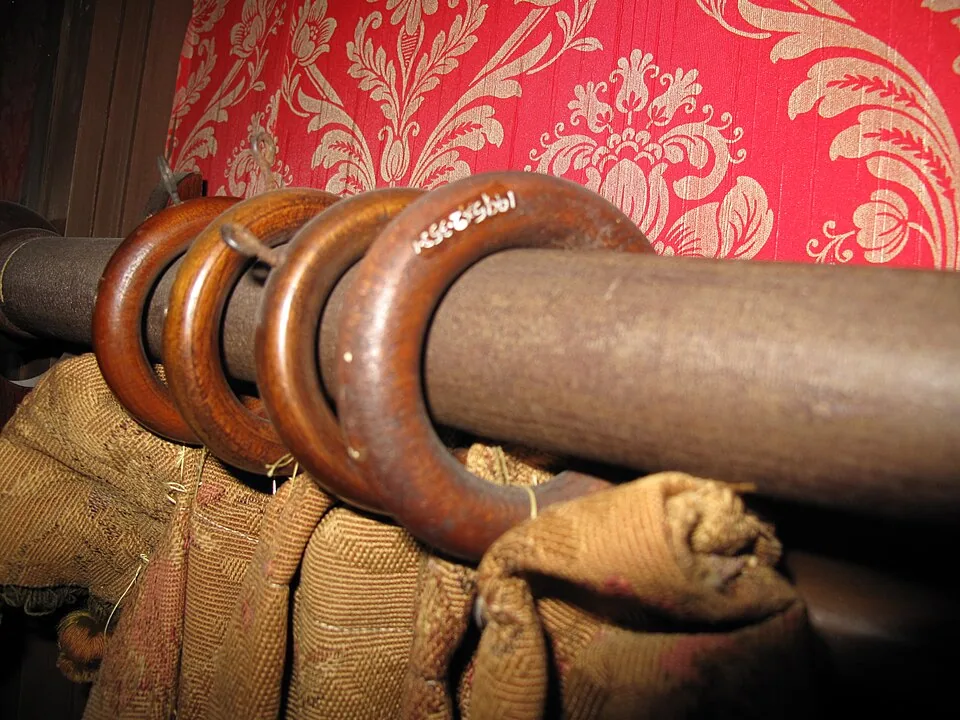
A pinch pleat panel has the fabric gathered into small groups of folds at regular intervals, held by stitching, and the pleats are attached to the rod or track by hooks. The result is a formal, structured look, with defined folds that hang straight to the floor and keep their shape when the curtain is open. Variations include the two finger, three finger, goblet and box pleats, each with its own character.
Pleated panels are best on traverse rods and tracks, where hooks fit into carriers and the panel moves smoothly. They can also be hung from rings, with a hook in each ring, on a plain rod. The stack is thick, since the pleats stay in the folds, so the rod must extend farther past the window to hold it. They need more fabric, usually 2 to 2.5 times the width, and they cost more, because of the work in making the pleats.
They suit traditional, formal and transitional rooms, and they are common on large windows and sliding doors with traverse hardware. They are less suited to a very casual room, where the tailored lines can look stiff. If you want the pleated look with a lighter touch, a soft pleat or an inverted pleat panel gives a calmer effect. These panels are also heavier, so brackets and rods must be strong, and our guide to curtain rod types covers support.
Ripplefold and wave headers
Ripplefold, also called wave fold, is a modern heading in which the fabric forms even, continuous waves along the track. The panel is attached to a track with snaps or hooks at regular intervals, and the waves stay uniform whether the curtain is open or closed. It looks clean and contemporary, and it glides smoothly on a cord or by hand.
It needs a special track and often a made to measure panel, so it costs more and is less common in ready made curtains. Because the waves are formed by the spacing of the carriers, the panel fullness is fixed to the track, and the panels have a consistent look. Ripplefold is popular in modern homes and in commercial spaces where a neat line is wanted along a long window wall.
If you like the look and have a long window, ask a supplier about track options and whether you can mount the track on the ceiling. A ceiling mount makes the curtain fall from the ceiling to the floor, which emphasizes height. For a rented home, this is rarely practical, and a grommet panel gives a similar modern look for less money.
Small details that change the result
Clearance above the rod matters for headings that show. A grommet or a tab top panel hangs so that the rod and the top of the panel are visible, and the space between the rod and the ceiling affects how tidy that looks. A rod mounted very close to the ceiling leaves almost no gap, and a rod far below it leaves a bare strip of wall. Aim for a consistent gap, and keep the rod level, since a tilt shows more with an exposed heading.
Hem and lining affect the way the heading hangs. An unlined panel hangs soft and light, and a lined panel hangs with more body and fuller folds. Interlining, an extra layer of padding between the fabric and the lining, adds weight and drape and suits pleated headers in formal rooms. If a ready made panel looks thin on the rod, the fix is more fullness or a lining, and not a different heading.
Installation order also counts. For rod pocket and grommet panels, thread the panel onto the rod before you mount it, since the finials often cannot pass through the opening. For pinch pleat panels, set the hooks at the same depth in each pleat, so the top line is straight. A few minutes with a ruler at this stage avoids a wavy top that no amount of steaming will cure.
Last, think about the way you will clean. Pleated headers and lined panels are often dry clean only, while grommet and rod pocket panels in polyester or cotton blends may be machine washable. If the room has pets or smokers, easy care is worth more than a tailored look, and a washable grommet panel will stay fresh with less effort. Check the label before you commit to a style that you will not be able to wash.
Choosing a header for your room
Start with use. If the curtains are drawn every day, choose a grommet, a pleat on a traverse rod or a ripplefold on a track, since they glide. If they stay in place, a rod pocket, a back tab or a tab top is fine. If the panels are a sheer layer, as in layering sheer and blackout curtains, a rod pocket or a grommet suits the light fabric.
Then consider the style of the room. Modern and minimal rooms suit grommets, back tabs and ripplefold. Traditional and formal rooms suit pinch pleats. Casual and cottage rooms suit rod pockets and tab tops. If you are unsure, grommet or back tab is the safe middle ground, and a pleated header is the one that adds the most visual value for the cost.
Finally, consider the fabric. Heavy fabrics hang best with pleats, which distribute the weight, and light fabrics suit grommets and rod pockets. For advice on choosing fabrics, see our curtain fabric guide. A heavy velvet on a rod pocket sags and drags, and a thin voile on a pinch pleat can look wrong without enough weight.
Frequently asked questions
Which curtain header is easiest to open and close?
Grommet panels on a smooth rod, pinch pleat panels on a traverse rod and ripplefold on a track all glide well. Rod pocket and back tab panels grip the rod, so they suit curtains that you do not move often.
Does a grommet curtain need rings?
No. The rod passes through the grommets directly, which is why the style has a clean look. You can still use a rod with finials, as long as one end can be removed to thread the panel.
Which header hides the rod?
Back tab panels hide it, because the tabs are on the reverse. A rod pocket with a deep heading can also hide it. Grommets and tab tops show the rod.
How much fabric does each style need?
Plan on about 1.5 to 2 times the window width for grommets and back tabs, and about 2 to 2.5 times for rod pockets and pleats. Less than that looks thin.
Can I change the header on a ready made curtain?
You can add clip rings or a pleat tape to some panels, or have a tailor convert it, but it is simpler to buy the style you want. A panel with a flat top can take clips, which makes it a flexible choice.
The bottom line
Choose a grommet header for a modern room and daily use, a pinch pleat on a traverse rod for a formal room, a rod pocket for a soft sheer that stays put and a back tab for a tidy look with little movement. Ripplefold suits long windows with a track.
Buy enough fullness, extend the rod to hold the stack and match the rod to the weight of the header. If you are undecided, a grommet panel is the most forgiving, and you can always change it later.