Where a light points matters as much as how bright it is. Two lamps with the same bulb can make a room feel completely different, depending on whether they throw their light up to the ceiling or down toward the floor. The first spreads a calm, even glow with no hard shadows. The second makes bright pools and darker surroundings, which is perfect over a book and unflattering over a face.
This guide explains how uplighting and downlighting work, what each does well and badly, how ceiling height and color change the result, and how to combine the two so a living room can serve for conversation, television and reading without constantly adjusting. It also covers glare, the quiet problem that spoils both when they are done carelessly.
How uplighting works
An uplight sends its light toward the ceiling, usually from a torchiere floor lamp, a wall sconce with an open top, a cove or a shelf mounted fixture. The ceiling then acts as a giant, diffuse reflector, bouncing the light back down across the room. Because the source is large and far from you, the light is soft, with gentle shadows and little glare. It makes the ceiling look higher and the room more open, a useful effect in a small living room.
The quality of uplighting depends on the ceiling. A matte white ceiling reflects around 80 percent of the light that hits it and gives a clean, bright bounce. A dark or colored ceiling absorbs more, and a glossy ceiling creates a visible hot spot above the lamp. If the ceiling is cream, the light picks up a warm tint, which is flattering, while a green or deep blue ceiling will tint the room and swallow much of the output.
Ceiling height sets the distance and the spread. In a room with an 8 foot ceiling, an uplight placed on the floor casts a concentrated bright spot on the ceiling above it, so it is best to place it away from the center or use a diffuse lamp. In a 10 foot or taller room, the beam spreads over a larger area before it hits the ceiling, which gives an even glow but needs more lumens. Our guide to how many lumens a living room needs helps with the output.
How downlighting works
A downlight sends its light toward the floor, the furniture or a task surface. Recessed cans, pendants, table lamps with shades, reading lamps and track heads all do this. The source is smaller and closer than a ceiling, so the light is brighter on the target and falls off quickly outside it. The result is a pool of light, with deeper shadows and more contrast between lit and unlit areas.
That directionality is the strength of downlighting. A reading lamp aimed at a page delivers 800 to 1,100 lumens where you need it, without lighting the whole room. A pendant over a table gives a defined zone. A spot aimed at a picture makes the picture the focus. If you only want to light a task, downlighting uses less energy than flooding the room with uplight.
Its weakness is shadow and glare. Light from directly above casts shadows under the brow and chin, which looks unflattering on faces, and a bright source in the line of sight causes glare. A downlight with a deep shade or a baffle hides the bulb from the eyes, and a wider spread softens the shadow. Placing the light to the side and slightly in front of the person, instead of straight above, is more flattering.
| Quality | Uplighting | Downlighting |
|---|---|---|
| Light quality | Soft, diffuse, few shadows | Directional, contrast and shadows |
| Best for | Ambient glow, relaxing, small rooms | Reading, tasks, art, tables |
| Glare risk | Low, unless the ceiling is glossy | Higher, needs shades or baffles |
| Needs | Light colored ceiling, enough lumens | Shades, correct placement |
| Effect on the room | Raises the ceiling, opens the space | Creates pools, defines zones |
Mood: what each does to the room
Uplight calms a room. Because the light comes from above and spreads wide, it resembles diffuse daylight, and a room lit this way feels open and unhurried. That makes it a good base for a living room where several people sit and talk, since nobody is under a spotlight. It also hides clutter and uneven wall surfaces, because it lacks the raking shadows that reveal them.
Downlight creates intimacy and drama. A room lit by table lamps and a few downlights has bright and dark parts, and the dark edges make a room feel cozy, as in a restaurant. It draws the eye to what you light, such as a bookcase or a painting. Used alone it can feel patchy, and overuse of overhead spots can make a room feel like a gallery, so balance it with a soft layer.
The combination of the two is what designers mean by layering. The uplight gives the room its background, and the downlights give the focus. The approach is explained in more detail in our guide to layered lighting for a living room, and the same principles apply whether you are lighting a small apartment or a large family room.
Glare: the shared hazard
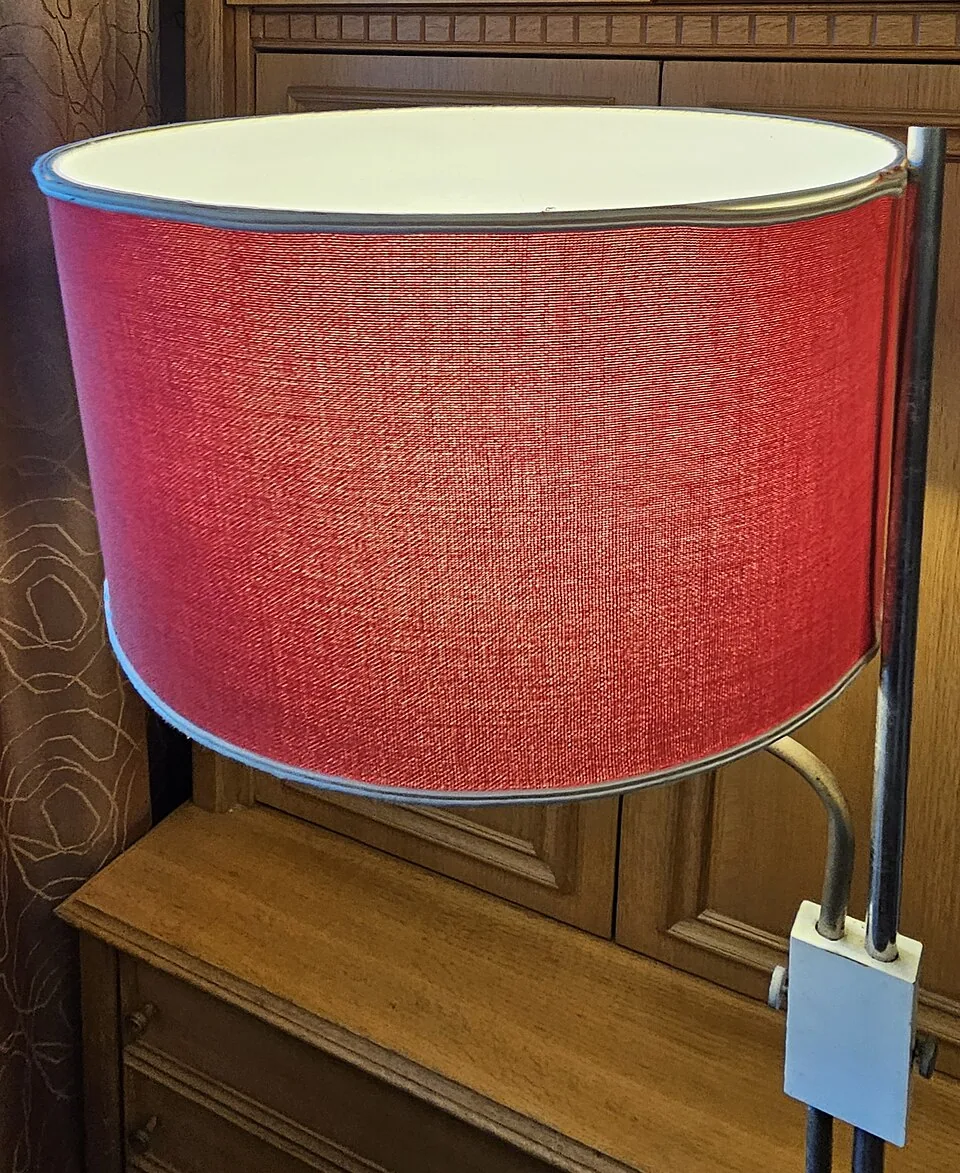
Glare comes from a bright source in your field of view, and both types can produce it. An uplight with an exposed bulb on a low floor lamp can shine into the eyes of someone sitting nearby, especially when the lamp is shorter than seated eye level. The fix is a torchiere with a bowl or a frosted diffuser, or a lamp that is tall enough for the bulb to sit above the eye line. Our roundup of best torchiere floor lamps compares designs.
Downlights cause glare when the bulb is visible from the seat. A recessed spot that is not deep enough, a pendant with a clear glass shade and a bare bulb, and a swing arm lamp aimed toward the face are all common offenders. Check each light from the seats at eye level, and fit a shade, a baffle or a snoot where you can see the bulb. Our guide to how high to hang a light covers pendant heights that avoid the problem.
Screen glare is a third issue. A bright ceiling uplight, or a downlight reflecting in a television, reduces contrast and makes the screen look washed out. Place lamps to the side of the screen, keep the uplight dim when watching, and avoid pointing a light at the wall behind the television, which causes a bright band that tires the eyes.
Where each one works best
Use uplight where you want a general level of soft light without a visible source: a corner behind a sofa, beside a bookcase, or on top of a tall cabinet. A torchiere lamp in a corner lights the ceiling and the two walls, making the corner feel part of the room instead of a dark gap. In a room with a low ceiling, avoid a strong uplight, because the bright spot above the lamp draws the eye to the low height.
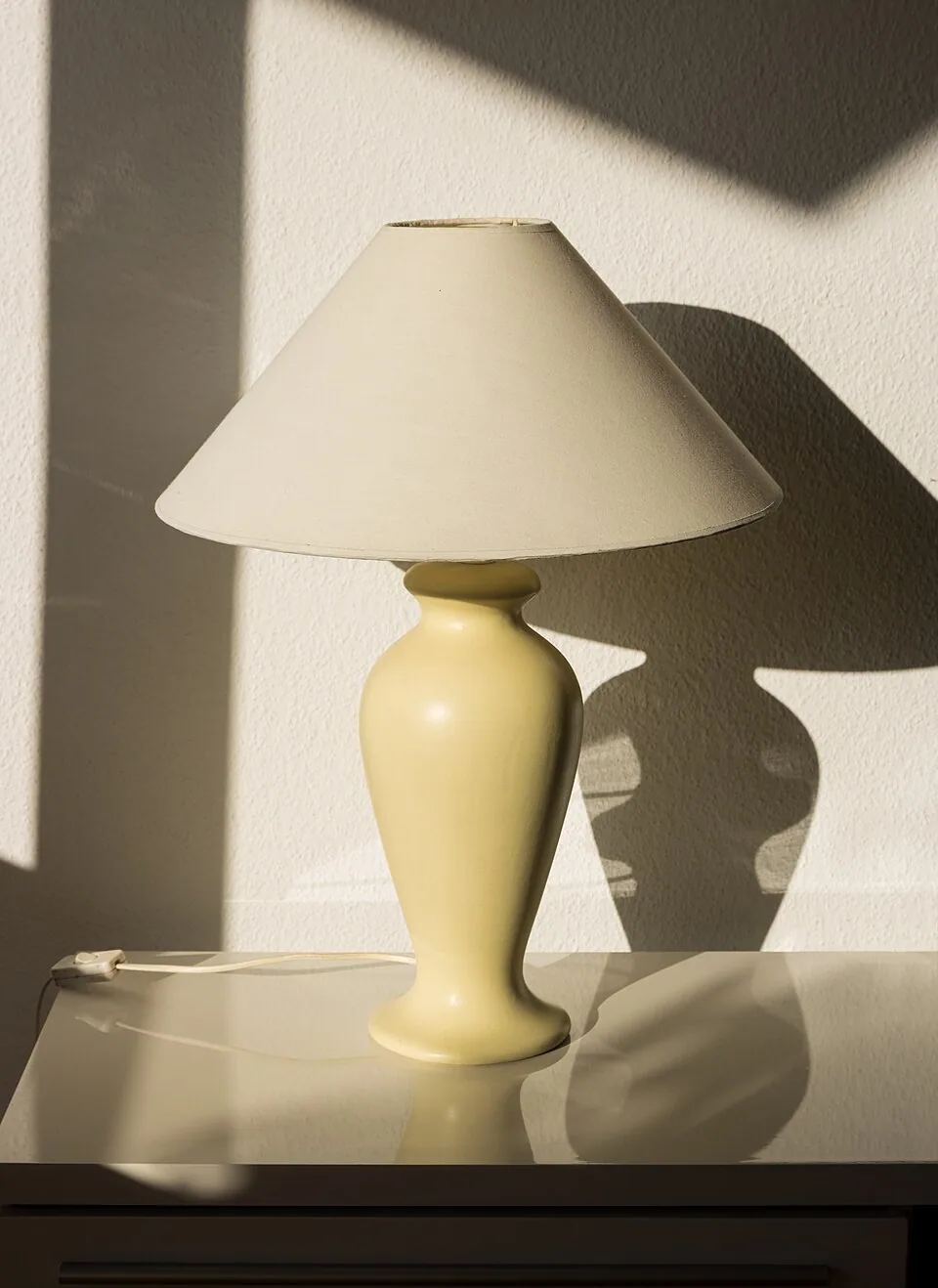
Use downlight where you need to see: beside a reading chair, over a side table, on a console and in front of a desk. A table lamp with a shade is a downlight and an uplight at once, since the open top and bottom of the shade throw light both ways, which is why it is such a useful single source. A lamp with a solid, opaque shade gives a more dramatic effect, with light only above and below.
For wall washing, a downlight from a ceiling track or recessed can aimed at the wall makes a vertical surface glow, and an uplight from a sconce or cove does the same from below. Each gives a different texture: downwash emphasizes the top of the wall and accents art, while upwash lifts the ceiling. In a living room with a feature wall, choose the one that suits the shape of the room.
Combining them in a plan
A simple plan for a typical living room has three parts. For the base, one or two uplights, such as a torchiere in a corner or an open sconce, provide the ambient light at roughly 200 to 400 lumens per piece, depending on the ceiling. For tasks, a downlight at each reading position supplies 800 to 1,100 lumens. For accents, a pair of small downlights on art or shelves, at a modest output, adds depth.
Put each layer on its own control. A single switch that turns on everything makes it impossible to set a mood, whereas separate switches or dimmers let you run only the uplight in the evening, or only the reading lamp when someone is up late. A smart plug on each lamp is a cheap way to do this. Dimming matters especially for downlights, which can be glaring at full output in the evening.
Keep color temperature consistent between the layers. Mixed warm and cool sources look wrong, particularly when the uplight washes a white ceiling, which shows every shift in color. Pick 2700K or 3000K for everything and read our guide to color temperature if you are unsure.
Ceiling, wall and floor finishes
The room itself is part of the lamp. Uplight lives or dies by the ceiling, but downlight is shaped by the floor and the furniture it lands on. A dark wood floor and a charcoal rug soak up a downlight, so the pool looks smaller and the room reads darker, while a pale oak floor and a light rug bounce part of the light back up, filling in shadows and making the same bulb seem brighter. Before adding more lumens, check whether a lighter rug or a paler lampshade would do the job.
Paint sheen matters too. A flat matte ceiling spreads uplight evenly, while a satin or gloss finish shows a bright oval over the lamp and makes every ripple in the plaster visible. If you rent and cannot repaint, move the uplight toward a corner so the hot spot falls near the wall, where it is less obvious, and choose a lamp with a frosted bowl. Our guide to paint sheen for living room walls explains how finishes reflect light.
Color affects the bounce in a way people rarely expect. An uplight reflected from a pale yellow ceiling will warm the whole room by several hundred Kelvin, while a ceiling that is slightly gray or blue cools it. If a room looks wrong even with matched bulbs, the ceiling tint is a likely cause, and a bulb of a slightly different color temperature can compensate.
Renters and small budgets
Uplight is the easiest layer for a renter, since a freestanding torchiere needs only an outlet. A single lamp of about 800 lumens in a corner changes a room with a harsh overhead fixture, because it gives a soft alternative that you can use instead of the ceiling light. Pair it with a plug-in dimmer or a smart plug and the overhead fixture can stay off for most evenings.
Downlight is just as easy with table lamps and clamp lamps. A clamp lamp on a bookcase shelf, aimed at the wall or down at a chair, gives a task light without drilling, and a lamp with an adjustable arm can be moved as the furniture changes. Avoid very cheap lamps with thin shades that let the bulb show through, since that creates exactly the glare you are trying to avoid.
If money is tight, spend on the lamp nearest your usual seat first, and make sure it can throw light both ways. A shaded lamp with a translucent shade gives you a little of each effect, and it costs less than two separate fixtures. Add a second lamp across the room later to balance the room, and the layered effect begins to build.
Frequently asked questions
Is uplighting bright enough to read by?
Usually not. The bounce spreads the light over the whole room, so the amount that reaches a page is modest. Use uplight for ambient light and add a downlight reading lamp for tasks, at 800 to 1,100 lumens.
Does uplighting work with a dark ceiling?
Poorly. A dark ceiling absorbs most of the light, so the bounce is weak and the lamp seems dim. If you have a dark ceiling, rely on downlights and side lighting, and add reflective surfaces such as a light wall behind the lamp.
Are torchiere lamps safe?
Modern LED torchieres are safe and cool running. Older halogen ones got very hot and caused fires, and they have mostly been withdrawn. If you own an old halogen model, replace it, and keep any lamp away from curtains and shelves.
Can downlights make a room look smaller?
Yes, if they are the only light, because the dark ceiling and walls recede and the room feels like a tunnel with bright spots. Adding an uplight or lighting a wall evens the room and opens it up.
What is the best placement for an uplight?
A corner or beside a sofa, away from the center of the ceiling, so the bounce spreads across the room. Keep it at least a few feet from the nearest seat to avoid glare and from the television to reduce screen reflections.
The bottom line
Use uplight for the soft base of the room and downlight for the places you read, work and look closely. Choose torchieres or open sconces for the first, and shaded lamps, pendants and spots for the second.
Put them on separate controls, match their color temperature and check each source from the seats for glare. If you have only one lamp to buy, choose a shaded table lamp that throws light both ways, and add the second layer when you can.