When you look at a sofa from the front, the first thing the back tells you is how much work it will want. A smooth, fixed back asks for nothing. A row of loose cushions leaning against the frame asks to be plumped, turned and straightened, and rewards you with a softer feel. That choice between a tight back and a loose back, sometimes called a pillow back, is one of the most consequential and least discussed decisions in a sofa purchase.
This guide explains how each construction works, what it means for maintenance, slouching and fluffing, pets and children, comfort and style, and how the seat cushions, attached or loose, add another layer to the decision. It is based on how sofas are built and on patterns in owner feedback, and it does not rely on brand claims.
What the two terms mean
A tight back sofa has its back upholstered directly onto the frame. The fabric is stretched over padding that is fixed to the structure, so the back is a single, smooth surface with no gaps between cushions. The shape is set by the maker and stays the same. A channel back, a tufted back and a sewn-in pleat are variations of a tight back, all fixed.
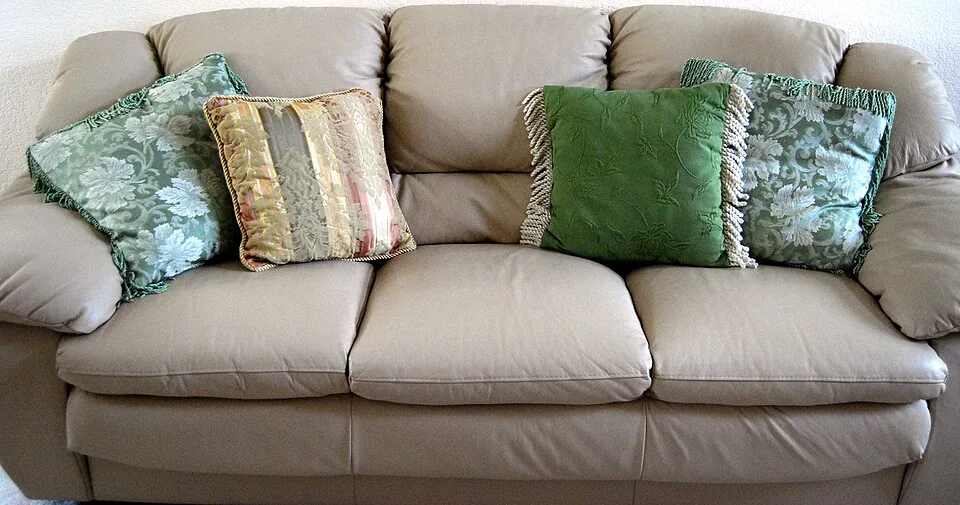
A loose back sofa, also called a pillow back or a loose-pillow-back sofa, has back cushions that are separate from the frame. They sit against a back rail, held by gravity, Velcro or a loop, and can be removed. The cushions are filled with foam, fiber or feathers, and often wrapped in a down-blend, so they are softer and more yielding than a fixed back.
Many sofas combine the two. A semi-attached back has cushions sewn along the bottom edge but loose at the top, so they can be pulled forward. A sofa may also have a tight back and loose seat cushions, which is the most common arrangement, or fixed seats with loose back pillows. Read the listing carefully, because the same word may be used for different constructions.
Maintenance: fluffing, turning and slouching
This is where the two diverge most. A tight back needs almost no daily attention. The back stays in place, so you do not have to arrange it, and the lines of the sofa remain neat. Over years, the padding can compress, usually at the spot where people lean most, but the compression is gradual and even.
A loose back needs regular handling. The cushions shift as people lean on them, and the filling settles, so the back develops a slumped, wrinkled look unless you reshape it. Cushions with a down or feather wrap are the most demanding, and may need fluffing daily, while foam-core cushions with a fiber wrap hold their shape longer. If you enjoy a casual, lived-in look, this is no problem, but if you want a sofa that looks tidy without effort, it can become a chore.
Rotation also matters. You can turn and flip loose cushions, spreading the wear, and replace a worn one without replacing the sofa. That extends the life of the back where it counts. For a deeper look at how filling affects shape, see our guide to sofa cushion fill types and our advice on fixing sagging sofa cushions.
Comfort and support
Loose back cushions are generally softer and more adjustable, because you can reposition them and add or remove pillows to suit your height. A person who is short can pull the cushions forward to fill the gap behind the lower back, while a tall person can push them back. That adjustability makes a loose back easier to fit to many different bodies.
A tight back is firmer and fixed, and the angle of the back is set by the frame. The support is consistent and does not slump, which suits people who like to sit upright and who want the same posture every time. The downside is that the back may be too reclined or too upright for you, and you cannot change it. If the sofa seat is deep, a tight back puts a lot of distance between your back and the support, and you need pillows to close the gap, as we explain in our guide to sofa seat depth.
Back height matters too. A low tight back offers less head and neck support, so check the height of the back above the seat, which is commonly 15 to 20 inches for a standard sofa. A high back of 22 inches or more supports the shoulders and head and suits tall people and those who nap sitting up.
Pets and children
Tight backs are easier to live with if you have pets or young children. There are no gaps behind the cushions where coins, crumbs, toys and pet hair can collect, and a single wipe or vacuum pass clears the surface. A fixed back also cannot be pulled off and dragged around, which matters if a child likes to build forts with the cushions or a dog likes to dig.
Loose backs create an extra cleaning task: the gap between the cushion and the frame. Hair and crumbs work their way into that crevice, and the cushions themselves can be a magnet for chewing or digging. On the other hand, a loose cushion with a removable cover can be washed, which is a real advantage if it gets soiled, and a ruined cushion can be replaced. Check that the covers can be removed and that replacement inserts are available.
For pets that claw, the weave of the fabric matters more than the back style, and our guide to protecting a sofa from pets covers fabric choice and covers. The back style changes one thing: with a loose back, a pet that jumps onto the top pushes the cushion forward and may knock it off, while a tight back stays put.
Attached versus loose seat cushions
The seat cushions add a second choice. Loose seat cushions can be flipped, turned and replaced, which spreads the wear. They are the usual choice on sofas of a higher quality, since a cushion that can be turned lasts longer. The drawback is a seam that can open, and the cushions can slide when you sit down and rise.
Attached seat cushions are sewn to the frame or to the deck. They stay in place, and the surface is smooth with no seam to catch crumbs. They cannot be flipped, so the wear is concentrated in one spot, and a sagging seat is harder to fix because the cushion is part of the structure. Lower-cost sofas often use attached cushions, and the visible gap between loose cushions and the frame makes them look more finished.
If you have to pick one place to have loose cushions, choose the seat, where the wear is greatest. A tight back with loose seat cushions is the most practical compromise: easy to maintain on the back, and the seat can be flipped and replaced.
| Factor | Tight back | Loose back |
|---|---|---|
| Daily upkeep | Minimal | Fluffing and straightening |
| Shape over time | Stays neat, compresses slowly | Slumps unless reshaped |
| Feel | Firmer, fixed angle | Softer, adjustable |
| Crumbs and hair | Few gaps | Collect behind cushions |
| Replace or wash cushions | Usually not possible | Often possible |
| Look | Tailored, formal or modern | Relaxed, casual |
| Best for | Pets, children, low-effort homes | Lounging, soft comfort |
Style and room fit
The look follows the construction. A tight back reads as tailored and structured, and suits modern, traditional and formal rooms. The smooth line makes the sofa look slimmer and more architectural, so it works well in a small room where a pile of cushions would add clutter. Tufting adds a classic or glamorous accent.
A loose back reads as casual and inviting. The soft, slightly rumpled shape suits family rooms, cottage and transitional styles, and gives a sofa a welcoming look. It also takes up more visual space because the cushions have volume. In a small room, a loose-back sofa with a high stack of pillows can feel bulky.
Depth is another factor. A loose back usually adds an inch or two to the depth because of the thickness of the cushion, so check the overall depth rather than the seat depth when you measure the room. For a small room, a tight back keeps the footprint down.
One more point concerns the move from showroom to home. A loose-back sofa photographed in a showroom has been styled, with every cushion set at the same angle, and it will not look like that after a week of use. When you judge a listing photo, imagine the cushions pushed back and slightly flattened, since that is how they spend most of the day. A tight back looks the same in the photo as it does in your room, which is part of its appeal for people who dislike surprises.
Quality signs to check in either style
In a tight back, press the back firmly and check that the padding is thick and even, without a hard frame edge. Look for padding of foam and fiber over a wood frame rather than a thin layer over a hard rail. In a loose back, feel the cushion for a core of foam and a wrap of fiber or down, and check that it is large enough to fill the frame without a gap. Cushions that are too small for the back slide and flop.
Check the covers and the seams. On loose cushions, the zipper should be hidden and sturdy, and the seams double-stitched at the corners. On a tight back, check that the fabric is pulled evenly, with no wrinkles near the arms or at the sides, which indicates poor tailoring. A sofa with a wrinkled tight back will not improve with use.
The final check is the frame behind the back. A back that is too soft with a weak rail will lean or bow outward over the years. Push on the top of the frame to check that it does not give or twist. If you can, sit and lean back hard, and listen for creaks.
Sofas that are delivered in a box deserve a note. A loose-back sofa shipped compressed arrives with flat, creased cushions, and the filling needs a day or two to recover, so judge the shape after that wait. A tight back arrives in its final form, with nothing to expand, which makes the first impression more reliable.
How to choose
Decide how much work you are willing to do and how you sit. If you want a sofa that looks neat without effort, if you have pets or young children, or if you like to sit upright, choose a tight back. If you like to sink in, move pillows around and enjoy a relaxed look, and you do not mind regular fluffing, choose a loose back.
There are middle options: a semi-attached back that keeps cushions in place but lets you lift them, a tight back with a few loose throw pillows, or a loose back with a firm foam core that holds its shape. If you cannot decide, try both in person if you can, since the difference in feel is easier to sense than to describe.
Remember that you can alter a tight back with pillows, but you cannot make a loose back stay put without effort. A sofa that is too firm can be softened with a topper or pillows, whereas a sofa that is too slumpy needs constant attention. That asymmetry favors a tight back for most households.
Frequently asked questions
Which lasts longer, tight back or loose back?
The frame lasts the same. A tight back wears evenly but cannot be repaired easily, while loose cushions can be turned or replaced, which can extend the life of the back. With good foam in both, either can last many years, so check the cushion core and the frame rather than the style.
How often do loose back cushions need fluffing?
Down and feather cushions need it every day or two, as the filling shifts. Foam with a fiber wrap needs it far less, perhaps once a week. If you do not want to fluff, choose a foam core or a tight back.
Are tight back sofas uncomfortable?
Not necessarily. A tight back has a fixed angle and a firmer feel, so it may be less plush, but a well-padded back can be very comfortable. Add a lumbar pillow if the fixed back feels too flat, and check the back height before buying.
Can I add loose cushions to a tight back sofa?
Yes. Throw pillows and lumbar cushions can soften a tight back and adjust the fit to your height. They are the easiest way to get some of the plushness of a loose back without the slumping, and they can be moved or removed as you like.
Which is better for a small living room?
A tight back is usually better. It has a smaller footprint, a cleaner line and fewer cushions to manage. A loose back adds depth and visual bulk, though a low-profile loose back can work if the room has enough width.
Bottom line
For most households, a tight back with loose, flippable seat cushions is the safest choice: easy to maintain, tidy, tolerant of pets and children, and with a seat that can be turned and replaced. Choose a loose back only if you value softness and adjustability over a neat look, and if you are happy to fluff and clean behind the cushions.
Whichever you choose, check the cushion core, the back height and the frame behind the back, and measure the full depth including the cushions. The style is a matter of taste, but the construction decides how the sofa will look in five years.