Everyone who owns a sofa for long enough meets the dip. It is usually in the middle seat or at the front edge, a shallow bowl that cushion plumping does not remove. The instinct is to buy new cushions or a new sofa, but the useful first question is which part has sagged, because three different failures produce the same dip and each has a different fix.
This guide shows how to diagnose a sag in five minutes, then walks through the repairs in order of effort: foam replacement, batting wraps, the plywood board trick, spring and webbing repair, and the point at which the frame is the problem and the sofa is done.
Three causes that look the same
A sag is a loss of support somewhere in the stack under your body. The stack has three layers: the cushion at the top, the suspension of springs or webbing beneath it, and the frame that holds the suspension. Each can lose support, and the feel of the dip differs slightly. A cushion that has gone flat feels like sitting on a thin slab with a firm base underneath. A failed suspension feels like sinking and then bottoming out, with a hollow or springy quality. A bending frame feels like a slow, wide sag along the front edge, often with creaks.
Foam fatigue is the most common cause, and the cheapest to fix. Foam rated at 1.5 pounds density can lose a large fraction of its support within two to three years, and our guide to cushion fill types explains why density matters. Spring or webbing failure is next, followed by structural failure, which is the least common but the most serious.
A five-minute diagnosis
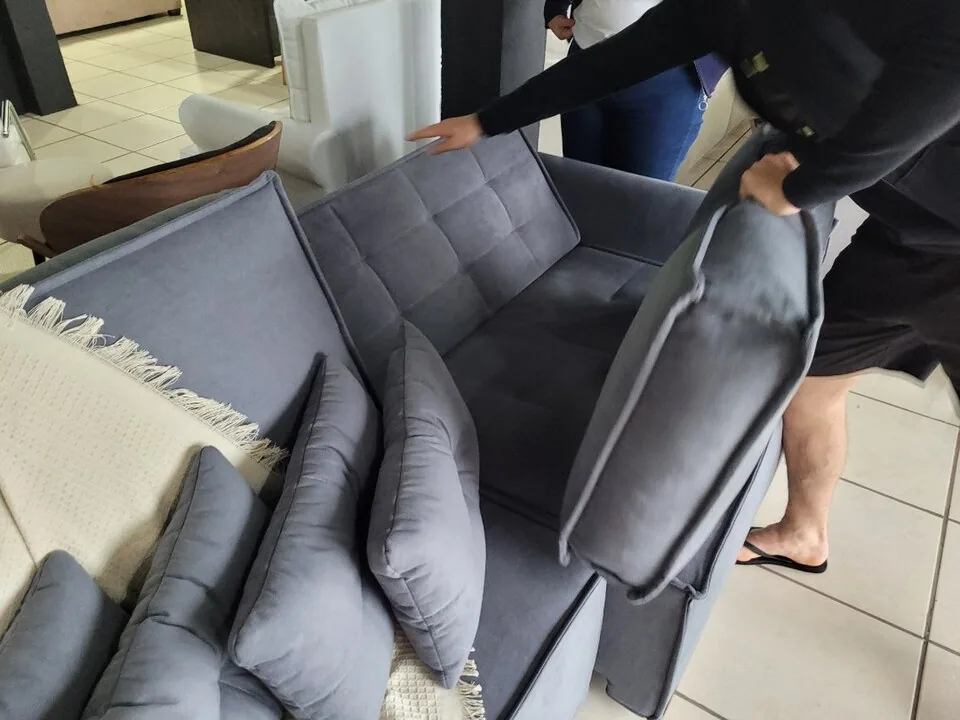
Remove the seat cushions. If they are fixed to the frame, run your hand across the seat and feel for the cushion's thickness. With the cushion off, press down on the deck with the heel of your hand, working from the back to the front and from one side to the other. A healthy deck feels firm and slightly springy, with even support from end to end.
If the deck feels solid and the dip is only visible with the cushion on, the cushion is the problem. Press the cushion with your fist: if you feel the foam compress to almost nothing, the core is spent. If a particular spot feels hollow or sinks without resistance, the suspension is the cause. Finally, sit on the front edge and look at the front rail from the side. A rail that curves downward in the middle, or a gap opening between the rail and the arm, points to a structural issue.
Replacing the foam
When the cushion is the culprit, new foam is the lasting repair. Measure the cover, not the old foam, because old foam shrinks. Order foam about 1 inch wider and longer than the cover, and the same thickness or slightly thicker, so the cushion fills the cover without wrinkles. Choose a density of at least 1.8 pounds, and 2.5 if the sofa is used heavily, and a firmness of 30 to 35 ILD for a medium feel.
Cut the foam with an electric carving knife or a long serrated blade, keeping the cut square. Wrap the new foam in a layer of polyester batting, a half inch to an inch thick, to round the corners and make it easier to slide into the cover. Fold the foam slightly to insert it and let it expand. Zip the cover and check that the corners are filled, because a half-empty corner makes the cushion look saggy even when the foam is new.
The cost of foam replacement is a fraction of a new sofa, and it can be done in an afternoon. The caveat is that if the suspension is also failing, the new foam will follow the dip within a few months.
Batting and the quick lift
If the foam is mostly intact but has lost loft, adding a layer of batting under the cover is a cheap short-term fix. Open the cover, lay one or two layers of polyester batting around the foam, and close it up. Each layer adds a half inch or so of loft. This will lift a flat surface and smooth the shape, but it does not restore firmness. It is a good fix for a back cushion and for a seat cushion on a sofa you plan to replace within a year or two.
A related trick is to flip or swap cushions. If the sag is in one seat, swap it with a less used seat, or rotate the cushion so the worn area sits at the back. This evens out the wear while you decide on a lasting fix.
The plywood board trick, and its limits
A common home fix is to slide a sheet of plywood, usually a quarter to a half inch thick, between the cushion and the seat deck. The board spreads the load across a wider area of the springs, bridges a hollow and makes the seat feel firm again. It costs little and takes minutes.
The limits are real. The board does not restore failed springs, it covers them. It makes the seat firmer, which may not suit anyone who liked a soft sofa. It can also create a hard edge at the front, so cut it to leave an inch or two of clearance from the front rail, and round the edges. If the springs are bent or broken, the board may press on a loose end and wear a hole in the fabric. Treat it as a stopgap for a sofa of modest value, or a diagnostic: if the board fixes the feel, the cushion or the suspension was the issue.
Repairing springs and webbing
Sinuous springs, the S-shaped wires running front to back, sag when the clips fail or the wire fatigues. A bent spring can sometimes be reshaped with pliers, and a loose clip can be reattached or replaced with a metal one. Hardware stores and upholstery suppliers sell spring clips and spring repair kits that work on most frames. If several springs have lost tension, a replacement set is a longer job that involves removing the dust cover and the staples.
Webbing, whether elastic or jute, stretches with age. Elastic webbing can be re-tensioned or replaced by stapling new strips across the deck, and some kits provide a row of replacement straps. The job needs a staple gun and patience, and it is within reach of a careful home repairer. If the sofa is high quality and you want to keep it, a local upholsterer can retie springs or rebuild the deck for a modest fee relative to a new sofa.
When the frame is the problem
If the front rail bows, a joint has loosened or a piece of the frame has cracked, the structure is failing and no cushion or spring fix will last. Look under the sofa for a split in a rail, for a wobble in a leg, or for a joint that opens when you push on the arm. A loose joint can sometimes be repaired by regluing and screwing in a corner block, as our guide to frame materials explains. A cracked particleboard rail is difficult to repair, and the sofa has probably reached the end of its life.
Weigh the repair cost against the value. A frame repair by a professional can cost a significant share of a new mid-range sofa, so it makes sense for a well-built sofa with sentimental or high replacement value, and not for an inexpensive one. Keep in mind that the fabric and the cushions of an old sofa are likely worn too, which adds to the case for replacement.
| Symptom | Likely cause | First fix | If it fails |
|---|---|---|---|
| Flat cushion, firm deck | Foam fatigue | New foam of 1.8 lb or more | Check the deck again |
| Hollow spot on the deck | Broken spring or clip | Replace clip, reshape spring | Plywood board or new webbing |
| Overall sinking feel | Stretched webbing | Restring with new webbing | Upholsterer rebuild |
| Front edge dips, creaks | Bowed rail or loose joint | Reglue and add corner blocks | Replace the sofa |
| Back cushion slumps | Fiber fill compressed | Add batting or refill | Replace insert |
Covers, throws and the cosmetic fixes
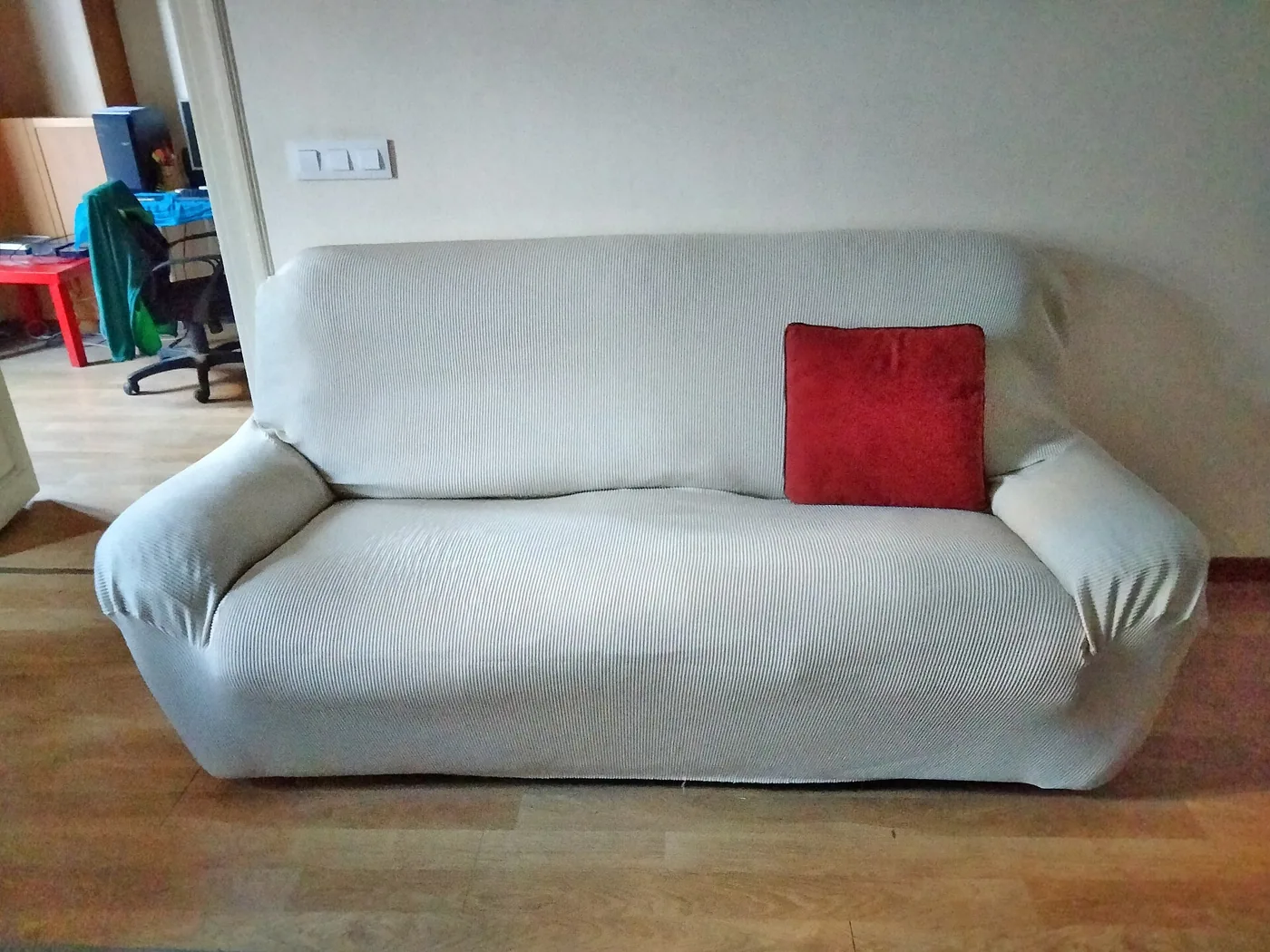
Cosmetic fixes change how a sag looks without changing how it supports you. A fitted stretch cover pulls the surface tight and hides a shallow dip, which is useful for a rental or a secondhand sofa. A thick quilted throw folded over the seat adds loft for a few weeks, but it slides and bunches. Rolled towels tucked under the cushion at the dip give a similar effect for free, and they let you test how much fill the seat needs before you buy foam.
These tricks are worth using when you are waiting for a delivery or deciding whether to replace the sofa, but they do not restore support. A sofa whose seat is propped by towels is telling you that the cushion has a limited life, and the sooner you fix the cause, the less the surrounding fabric and stitching suffer from the uneven strain.
Deciding between repair, partial repair and replacement
The decision comes down to the age and quality of the sofa and the number of failed parts. A sofa under five years old with a flat cushion and a sound deck is an easy repair, since foam is cheap relative to the sofa. A sofa of eight to ten years with a flat cushion and some loose springs is worth repairing if the frame is hardwood and the fabric is still good, and you can often get a second decade out of it.
If more than one layer has failed, the economics tip. A sofa with spent foam, a weak deck and a creaking frame needs three repairs, and the total approaches the cost of a new, better sofa. In that case, apply a quick fix to buy time, and put the budget toward a replacement whose frame, springs and cushion density you have checked. Use the plywood board and batting to stretch the old sofa through the search rather than as a permanent answer.
A last point on tools and skill: foam replacement and batting need only scissors and a knife, board fixes need a saw, and spring and webbing repair need a staple gun and pliers. If you are not comfortable removing the dust cover and working under the sofa, an upholsterer can do each of these jobs within a day, and the price of a spring retie or webbing replacement is usually modest.
Preventing the next sag
Rotate seat cushions every month or two so the wear spreads over all positions, and avoid sitting on the arms or the front edge, which loads the rail. Do not let children jump on the cushions, because impact loads damage foam and springs faster than steady sitting. Keep the sofa out of direct sun and away from heaters, since heat dries foam and weakens glue.
When you buy a sofa, ask about the density and the suspension, and look for a frame with a center support if it is wider than about 80 inches. The cheapest way to avoid a sag is to buy a seat that was built for the use, and our guide to choosing and sizing a sofa for a room pairs well with that advice.
Frequently asked questions
Can you fix a sagging couch without replacing the cushions?
If the cushion is not the cause, yes. A plywood board, a spring repair or new webbing can restore a sagging seat. If the cushion core is spent, though, the sag returns, and new foam is the only lasting fix.
How long should sofa cushions last?
Basic foam lasts roughly 2 to 4 years under daily use, mid-range foam 5 to 8, and high-resilience foam 8 to 12. Usage, body weight and rotation change these numbers. Feather and fiber cushions need regular plumping to keep their shape.
Is a sagging sofa a sign it is worn out?
Not always. If the problem is a flat cushion, the sofa can be revived cheaply. A bowed front rail or broken frame is a stronger sign that the sofa has reached the end of its life.
What if my situation is different, such as a sleeper sofa?
Sleeper sofas have a mechanism under the seat and a thinner cushion, and sagging often points to the mattress or the folding frame. Check the mechanism for bent bars. Our guide to sleeper sofa mechanisms covers the common failures.
Is it safe to put a board under the cushion?
Yes, as long as the edges are rounded and the board does not press on a loose spring end. Use a board of a quarter to a half inch, sized an inch or two smaller than the seat, and check the cover occasionally for wear.
Bottom line
Diagnose before you spend: cushion off, press the deck, look at the front rail. If the foam is spent, replace it with higher-density foam and a wrap. If the deck has failed, repair the springs or webbing, and use a board only as a temporary fix. If the frame is bending or cracked, plan to replace the sofa.
A well-chosen cushion and a sound frame make a sofa that lasts a decade, and a sag is a prompt to find out which of the two failed. For how we weigh durability when choosing what to recommend, see how we evaluate our picks.