Two sofas of the same overall length can offer very different seating. One has narrow, square arms and three full seats. The other has fat rolled arms that eat up the ends and leave a cramped middle. Arm style is the detail that most changes how a sofa sits and how it fits a room, yet it is often treated as a purely visual choice made after the color.
This guide explains the main arm styles, what each one costs in usable seat width, how each behaves for lounging and for sleeping on the sofa, how arms change the visual weight of the piece and which styles suit small rooms, pets and children. It is based on how sofas are built and sized, not on brand claims, and it uses plain measurements so you can compare listings.
Why the arm is not just decoration
The arm sets the overall width of the sofa without adding to the seating. A sofa listed at 84 inches long includes both arms, and the width of the arm comes out of that figure. An arm that is 3 inches wide leaves about 78 inches for seat cushions. An arm that is 8 inches wide leaves about 68 inches. That 10 inch difference is roughly a third of a seat, and it is the reason two sofas of the same length can seat three adults comfortably or only two and a bit.
The arm also affects the way you use the ends. A low, wide arm works as a head or elbow rest and can hold a small drink. A high, narrow arm is a back for the person leaning against it. A very tall arm acts as a side wall and makes a smaller sofa feel enclosed. The arm height relative to the seat is usually 6 to 10 inches above the seat cushion on a standard sofa, though it varies a lot.
Finally, the arm drives the style of the room. A thin, square arm reads modern. A rolled arm reads traditional. A flared arm reads mid-century, and a slope arm looks transitional. You can pair any with almost any decor, but a mismatch between the arm style and the rest of the room is the quickest way to make a sofa look out of place.
Track arms
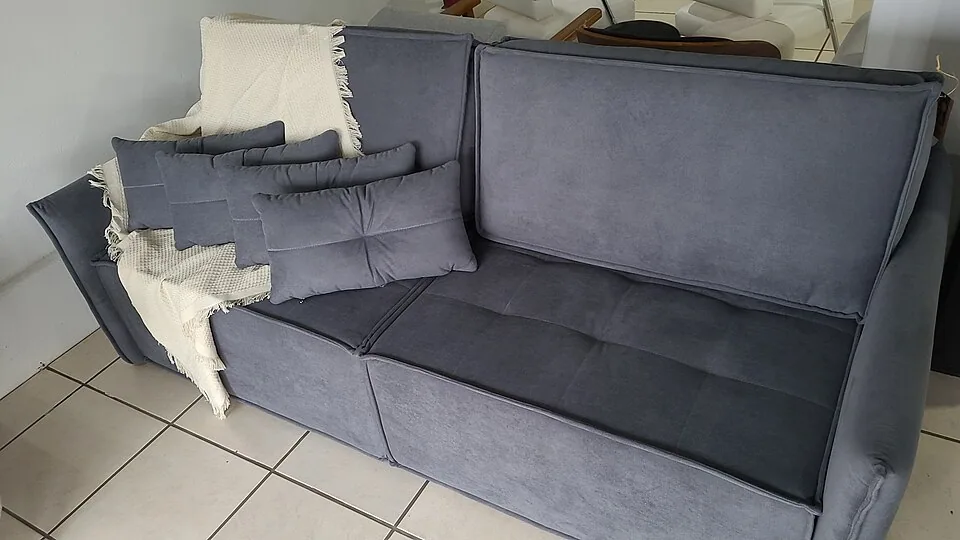
A track arm is square, straight and, as the name suggests, flat on top, with the sides and the front at right angles. It is the slimmest of the common styles, and the arm can be anywhere from 3 to 6 inches wide, depending on the padding. The look is clean and modern, and it pairs with tailored cushions and metal or wood legs.
The strength of the track arm is efficient use of length. Little width is lost, so the seats are wide and the sofa looks lighter. It also fits better against a wall or beside a side table, because the square form lines up with straight edges. For a small room where every inch matters, a track arm is often the sensible choice.
The weaknesses are comfort and forgiveness. A hard-edged arm is not a good pillow, and the top is narrow, so it is less suitable for resting a drink or an elbow for hours. A thin arm with minimal padding can be uncomfortable for lying sideways with your head on it. Check that the arm has some padding and that the top is wide enough to be useful. A very low track arm also gives less side support to the person sitting at the end.
Rolled and English arms
A rolled arm curves outward at the top into a cylinder shape, as if the arm were a rolled scroll. It is soft, wide and supportive, and the roll is often 6 to 9 inches across. It is the classic traditional arm, and it works as a comfortable place to rest a head or an elbow.
An English arm, sometimes called an English roll arm, is a variation: the arm rises to a lower, wider top than a regular rolled arm, and the outside is often straight and tailored, with the roll sitting on top. It is generally lower than a track arm and wider than a pure scroll arm. This design is popular for a relaxed, lounging profile and sits well with deeper cushions.
Both styles lose more seat width than a track arm, often 6 to 9 inches per side, so check the seat cushion widths in the listing. In return you get a comfortable lounging end. They also tend to add visual weight, which suits a large room and looks heavy in a small one. They can be a good choice for a sofa that will be used for naps, since the roll is a natural pillow.
Flared and slope arms
A flared arm, also called a sloped or angled arm, leans outward as it rises, so the top is wider than the base. The shape opens the seat toward the sides and gives a relaxed, welcoming look, and it is a common feature of mid-century and transitional sofas. Because the arm leans away from the body, the seat is roomier at shoulder height, which makes the sofa feel less restrictive.
A slope arm, sometimes called a pitched or sloped track arm, descends from the back to the front of the sofa, with the high point beside the back cushion and the low point at the front. It is a simple way to get a tall back and a low arm, which gives a neat profile and a support for leaning. Slope arms are also common on sectionals, where the lower front edge makes the sofa feel less massive.
The flare and the slope both use some width at the top, but the base is narrow, which means the usable seat is close to that of a track arm. The trade-off is that the angled surface is not a flat rest for a drink, and the arm is harder to fit snug against a wall because the top overhangs. If you are placing the sofa next to a table or a lamp, leave a few inches for the lean.
Other arm styles you will meet
Three more styles appear often enough to be worth naming. A pillow arm, sometimes called a pillow top, has a soft cushioned arm that looks like a pillow resting on the frame. It is very comfortable and very bulky, and it takes the most seat width of any style. A bun or cushion arm, common in a deep, casual sofa, is similar in effect.
A Lawson arm is a loose, separate cushion that sits on a low, tailored arm, a style often paired with loose back cushions. A camelback or Chesterfield arm is a rolled arm at the same height as the back, forming a continuous top line. This look is traditional and formal, with deep tufting, and it fits a larger room. A sofa with no arms at all, an armless or Lawson-free style, is a straight bench, which maximizes seat width but offers nothing to lean on.
When a listing uses a style name you do not recognize, look for the measured arm width in the specifications. Some manufacturers list arm width and the width between the arms, which is the figure that matters for seating.
| Arm style | Typical arm width | Seat width kept | Lounging | Visual weight |
|---|---|---|---|---|
| Track | 3 to 6 inches | Highest | Fair, can be hard | Light |
| Rolled | 6 to 9 inches | Lower | Good, soft roll | Heavy, traditional |
| English | 6 to 8 inches | Lower | Very good, low and wide | Medium to heavy |
| Flared | 4 to 6 inches at the base | High | Fair, angled top | Light to medium |
| Slope | 4 to 7 inches | High | Good, tall back with low arm | Light to medium |
| Pillow | 8 inches or more | Lowest | Excellent, very soft | Heavy |
Reading the listing for real seat width
The number to look for is the inside width, sometimes called the seat width or the width between the arms. A sofa advertised as 84 inches long with 3 inch arms has about 78 inches of seat, while the same length with 9 inch arms has about 66 inches. Spread across three cushions, that is 26 inches each against 22 inches each, a difference you will notice when three people sit down.
Use that figure with the seat depth, since the two together set how comfortable the sofa is for lounging, and see our guide to sofa seat depth for the other half of the calculation. For two-seaters, the same logic applies, and the choice between a loveseat and a sofa, covered in our guide to loveseat versus sofa, partly depends on how much each arm style costs in width.
A practical rule: allow roughly 22 to 24 inches of seat width per adult for comfortable shoulder room. Divide the inside width by that figure to see how many people the sofa really seats. If a listing says it seats three and the inside width is under 66 inches, it seats three only in the loosest sense.
Small rooms, pets and children
For a small room, choose a track or slim slope arm. They keep the footprint down and keep the seat width up, and the square profile fits tightly against a wall. Low arms also keep sight lines open across the room, which makes the space feel larger. Our guide to choosing a sofa for a small living room covers the other dimensions that matter.
For pets, the arm is a cat's favorite scratching post and a dog's headrest. Rolled arms collect hair in the crease under the roll, and a fabric arm with piping takes claw damage first. A leather or tightly woven arm is easier to wipe. Slim, flat arms are easier to clean with a brush attachment because there are fewer crevices.
For children, rounded arms are safer than sharp edges. A square track arm with a hard wooden edge can hurt in a fall, and a rolled arm cushions a bump. But a high arm lets a toddler climb and fall over the top, so check that the sofa is stable and that the arms are stable against a push. If the sofa will sit in a room where children run, place it with the arm against a wall, not in the walkway.
Arms, side tables and lamps
The arm sets the height for the table beside it. A side table should be about the same height as the arm, within an inch or two, so a drink can be placed without reaching up or down. A sofa with a high rolled arm of 26 inches or more needs a taller table than one with a low track arm of 22 inches. A table that is much lower than the arm is awkward to use, and one that is much taller blocks the shoulder of the person sitting at the end. Our guide to side table height covers the numbers.
Flared arms need a little extra gap, because the lean of the arm means a table pushed against the base will sit under the overhang, which can bump the top edge. Leave a few inches or choose a table with a smaller top. A wide pillow arm sometimes makes a side table unnecessary, since the arm itself becomes a small shelf, but it is a poor surface for anything that can spill.
Lamps are the other factor. A tall floor lamp at the end of a sofa looks best when its shade sits at about eye level of a seated reader, and a bulky arm pushes the lamp farther from the seat, which weakens the light on a book.
Frequently asked questions
Which sofa arm is most comfortable for lying down?
A wide, low rolled arm, an English arm or a pillow arm is the most comfortable, because the top is soft and wide enough to hold a head. A track arm is narrower and firmer, and a flared arm slopes away from you. Check the arm height too, since an arm above 26 inches can strain the neck for a person lying along the sofa.
Do armless sofas make sense?
They maximize seat width and look clean, which suits a small room or a bench-style sofa under a window. The drawback is that there is nothing to lean on or rest a drink against, and people tend to slide toward the end. Armless units are most useful as part of a modular set or as a bench.
How wide should a sofa arm be?
For most rooms, 4 to 6 inches suits a space-conscious choice and 6 to 9 inches suits a comfort-focused choice. The right answer depends on the room width and the number of people you need to seat, so calculate the inside width before choosing a style.
Which arm style is easiest to keep clean?
A smooth, slim arm with no piping and a tight weave or leather is easiest to wipe, and a track arm has fewer crevices than a rolled arm. Rolled arms collect crumbs and hair under the roll, so use a crevice tool regularly, and consider arm covers if the arms get heavy use.
Can I change the arm style on an existing sofa?
Not easily. The arm is part of the frame, so a change means reupholstering and rebuilding it, which costs a meaningful fraction of a new sofa. If you want a different arm, buy one that fits, and use arm covers or a throw to soften a hard track arm.
Bottom line
Decide how you sit before you decide how the sofa looks. If you want to seat three people in a smaller room, choose track or slope arms and check the inside width. If you lounge, nap and read on the sofa, choose a rolled, English or pillow arm and accept the lost seat width. If you want a lighter, open look, a flared or slope arm is the compromise.
Whatever you choose, read the inside width, not the overall length, and check the arm height against the side table you plan to use. Small differences in the arm change both the comfort and the layout.