A mirror does a lot for a living room: it brightens a dark corner, doubles a view and gives a wall a focal point. A large one also weighs far more than it looks, and the consequences of a poor fixing are worse than for a picture, since falling glass is dangerous. Many hardware packs include a single picture wire and a pair of tiny hooks, which are fine for a small frame and wrong for a heavy mirror.
This guide explains how to judge the weight, how to choose between wire, D rings, French cleats and other hardware, how to match anchors to the wall, how to find studs and mark the position, how to hang the mirror level with a helper, and when the safest answer is to lean it against the wall instead. It treats the job as a load calculation more than a decorating one.
Know the weight and the margin
Start by finding the weight. The listing often states it, and if not, weigh the mirror on a bathroom scale, holding it and subtracting your own weight, or ask the seller. Glass is heavy: a typical 1/4 inch mirror glass weighs about 3 pounds per square foot, so a 3 by 4 foot mirror has 12 square feet and about 36 pounds of glass before the frame. A solid wood frame adds more, so a large framed mirror can reach 50 pounds or more.
Choose hardware rated well above the actual weight. A safety factor of two is the minimum, and four is better for something that hangs over a sofa where people sit. A 50 pound mirror should hang on fixings with a combined rating of 100 to 200 pounds in the wall type you have. The ratings printed on packs describe ideal conditions, so use them as a ceiling and not a target.
Consider where the mirror will hang. Over a sofa or a bed, the risk of injury is higher, so use the strongest method. In a hallway or a place where nobody sits beneath it, a lower margin is less risky, but the cost of a good fixing is small compared with the cost of a broken mirror and a damaged floor. If the mirror is very large or very heavy, ask a professional installer.
Hanging hardware compared
A single wire stretched between two screw eyes on the back of the frame is the most common method and the weakest for a heavy mirror. The wire and the eyes concentrate the load at one point on the wall, and the mirror can swing and tilt. Wire is fine up to a modest weight, and a rating on the pack tells you the limit. For heavy mirrors, switch to a method with two fixing points.
D rings and straps, screwed into the back of the frame at each side, hang on two hooks or screws in the wall. Two points spread the load and keep the mirror level and stable. Use screws that go into the frame rather than into thin veneer, and check that the frame is strong enough to hold the rings. Metal D rings with a stated rating are a good choice, and you can use a pair of heavy hooks rated for the load.
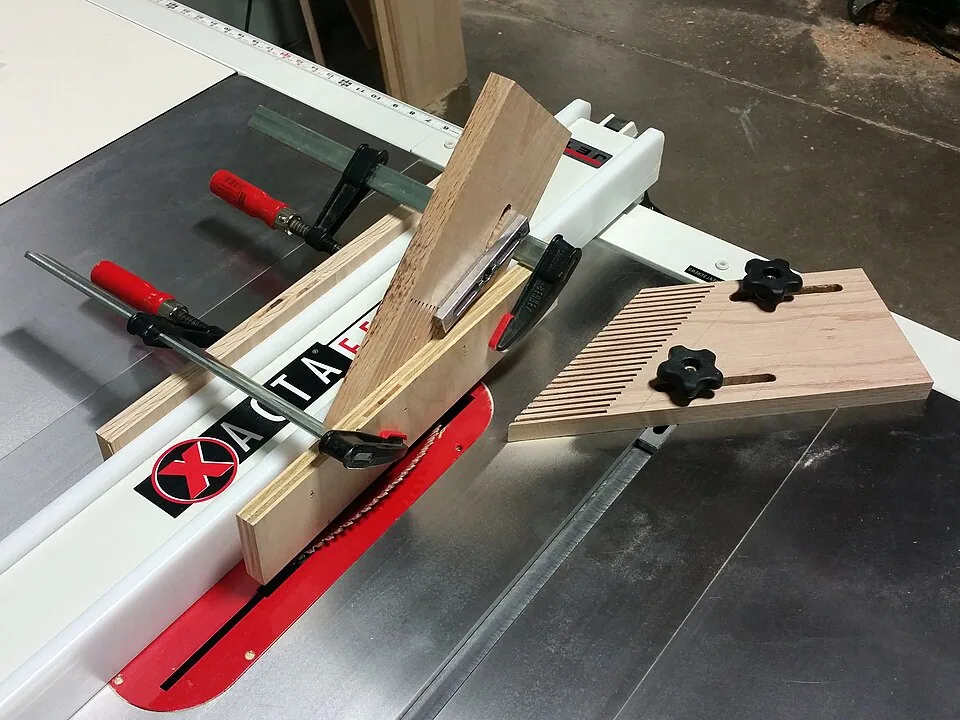
A French cleat is the best method for a heavy mirror. It is a pair of interlocking strips, each cut at 45 degrees, with one strip fixed to the wall and the other fixed to the back of the mirror. The mirror drops onto the wall strip and is held by gravity and the angle. The cleat spreads the load along its length, so it can span two or more studs, and it keeps the mirror flat against the wall. Ready made metal cleats have rated capacities, and wood cleats can be cut at home.
| Method | Points on wall | Best for | Limit |
|---|---|---|---|
| Picture wire and hook | One | Light mirrors | Weak, tilts easily |
| D rings and two hooks | Two | Medium to heavy frames | Needs studs or strong anchors |
| French cleat | Along its length | Heavy and large mirrors | Needs space behind the frame |
| Mirror clips (frameless) | Four or more | Frameless mirrors | Must be rated and well aligned |
| Lean on the floor | None | Very heavy floor mirrors | Needs anchoring against tipping |
Studs, anchors and wall types
Studs are the first choice. A stud finder locates the framing, usually 16 inches apart in many homes, and you mark the edges and the center. A screw driven into the stud holds far more than any anchor in drywall. For a mirror up to a modest size, two screws in the studs and a cleat or hooks may be enough. For a wide mirror, a cleat that spans two studs is ideal.
If the studs do not line up with the mirror, you have options. A French cleat can be longer than the mirror, so it lands on two studs while the mirror hangs where you want. A backer board of plywood, screwed to studs and then hidden behind the mirror, gives a solid base. Where neither is possible, use heavy duty toggle bolts rated for the weight, spaced out and into the drywall, with a wide cleat to share the load. Our guide to mounting a TV without studs explains toggles and the limits of drywall.
Different walls need different fixings. Plaster and lath needs screws into the framing behind it, since plaster alone is brittle. Brick, block and concrete need masonry anchors and a hammer drill. Tile needs a diamond bit, and you should avoid cracking the tile. A metal stud wall needs toggle bolts or fasteners designed for metal. If you do not know what is behind the wall, test with a small pilot hole, and avoid pipes and wires with a detector.
Marking the position
Decide the height first. The center of the mirror is usually at eye level, about 57 to 60 inches from the floor, though over furniture the bottom should sit about 6 to 10 inches above it, as with art. Our guide to art above a sofa explains the same gap. For a floor length mirror hung on the wall, think about the viewing height and the bottom edge, which should be clear of the floor or resting on a support.
Use paper to plan. Cut a piece of paper to the size of the mirror, tape it on the wall and look at it from the room. Move it until the position feels right, then mark the top corners. Tape is gentler than pencil on a delicate wall. Use a level, preferably a long one, to draw a line where the cleat or the hooks will go, and measure down from the top edge of the mirror to the fixings so that the final position matches the paper.
Measure twice. A mirror leaves no room for a small error, because the reflection shows every misalignment. Transfer the hanging points from the back of the mirror to the wall using a ruler, and check them against the paper. If you use a cleat, remember that the mirror will sit slightly lower than the position of the cleat's top edge, so account for the thickness of the strip.
Hanging it, step by step
- Lay the mirror face down on a soft surface, and fit the D rings or the back half of the cleat, screwing into the frame with the correct screws.
- Mark the wall at the planned height with a level line, and locate the studs with a stud finder.
- Fix the wall half of the cleat or the hooks into the studs with structural screws, checking the level before the final tightening.
- Ask a helper to lift the mirror, one person at each side, and lower it onto the wall mount.
- Check that the mirror sits firmly and level, and add rubber bumpers at the bottom corners to keep it flat and stop it swinging.
- Press gently on each side to test, then step back and look for tilt.
Never lift a heavy mirror alone. Glass edges are sharp, and a mirror that slips can cut or crush. Wear gloves, and tape the glass with an X of masking tape if you are worried about breakage, since tape helps to hold the pieces if the mirror cracks. Keep children and pets out of the room, and clear the floor below.
If the mirror has a wire as well as D rings, remove the wire when you use two hooks, since a wire can tangle. If it has a French cleat, check that the cleat angle faces the right way, with the wall piece sloping up toward the wall. A mistake here means the mirror slides off, so test with a light push before you let go.
Frameless mirrors, glass edges and special cases
A frameless mirror has no back structure to screw into, so it hangs on clips, a bonded hanger or a set of mounting pads. Use clips rated for the weight, set them at the points the maker recommends and cushion the glass with the supplied pads. Tighten gently, since overtightening can crack the glass at the edge. For a large frameless mirror, a rail along the bottom edge takes the weight, and the clips at the top only hold it against the wall, which is the safest design.
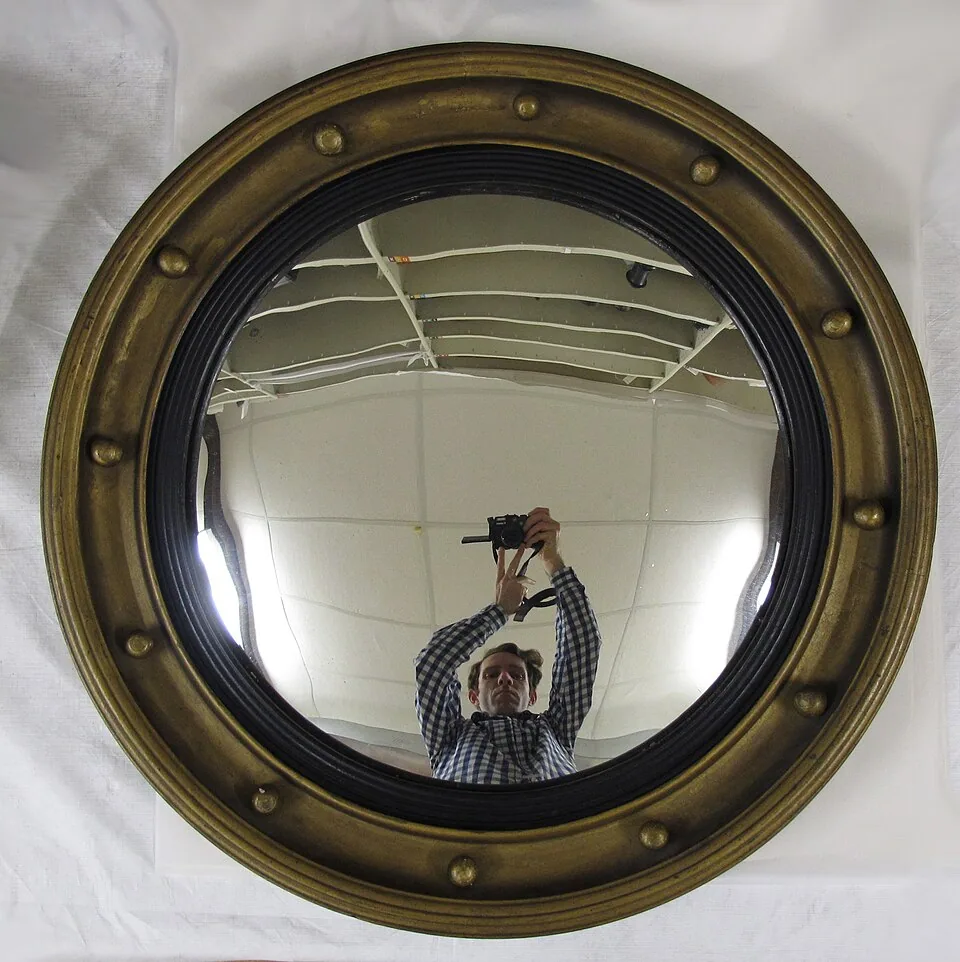
Bevelled and heavy plate glass needs the same care, with more weight per square foot. A mirror with a thick wooden frame can weigh as much as a small cupboard, and a heavy ornate frame is fragile at the corners, so lift it by the sides and never by the top rail. Old mirrors are a special case, because the backing may be loose and the frame joints may have weakened. Check the back and the corners before you trust an antique to a modern hanger.
Bathroom and humid areas add another factor. Moisture attacks the silvering at the edges of the glass and rusts metal hardware, so choose stainless steel fixings and a mirror with sealed edges. In a living room, humidity is rarely an issue, but a mirror near a kitchen opening or an unventilated bathroom door may need the same care. Check the hardware once a year, tightening screws and looking for rust or cracks.
Finally, remember reflections. A mirror opposite a window doubles the daylight, which is lovely, and a mirror opposite a television can double the glare and show the screen from the wrong side. Place it so that it reflects something pleasant, such as a window, a plant or a lamp, and keep it clear of bright lights that cause glare in the evening. A well hung mirror is both safe and useful, and the position is as important as the fixing.
Leaning and other alternatives
A large floor mirror leaning against a wall is a popular option, because it needs no drilling, and it works for a very heavy piece. The risk is tipping, especially with children and pets. Fix the top of the mirror to the wall with a small bracket or a strap, and place it on a non slip pad so the base does not slide. Our guide to anchoring furniture to the wall explains similar fixings for tall pieces.
For renters, a leaning mirror avoids holes, and a pair of adhesive mirror mounts can hold a light mirror, though they are not suitable for heavy ones. Check the lease before you drill, and fill any holes when you leave. If you cannot hang a very large mirror safely, consider a smaller one or several smaller mirrors in a group, which are lighter and easier to hang.
If you are tempted to use strong adhesive tape or glue on a heavy mirror, do not. Adhesives creep with heat and age, and a mirror that holds for a year can fall without warning. Mechanical fixings into the wall structure are the only reliable method for a heavy mirror. Our roundup of best floor mirrors includes designs with built in stands and safety straps.
Frequently asked questions
How much weight can a drywall anchor hold?
It depends on the type and the wall, and the figures on the pack are best case values. A toggle bolt is stronger than a plastic plug, but for a heavy mirror you should rely on studs and keep a margin of at least double.
Is a French cleat better than wire?
For a heavy mirror, yes. A cleat spreads the load along its length, keeps the mirror flat and can span studs. Wire concentrates the load at one point and lets the mirror tilt.
How high should I hang a mirror?
The center is usually at about 57 to 60 inches from the floor, and over furniture the bottom sits 6 to 10 inches above it. Our mirror size guide covers proportions.
What if there is no stud where I want the mirror?
Use a long cleat or a backer board that reaches studs, or heavy toggle bolts with a wide cleat to share the load. If you cannot do either, lean the mirror and secure the top.
Can I hang a heavy mirror above a sofa?
Yes, if it is fixed into studs with rated hardware and a good margin. Choose the strongest method, and avoid placing a heavy mirror where it could fall on someone sitting below if the wall is weak.
The bottom line
Weigh the mirror, double the margin and fix a French cleat or two rated hangers into studs. Use a backer board or heavy toggles only where studs are out of reach, and never rely on plastic plugs or a single wire for a heavy piece.
Plan the position with paper, hang the mirror with a helper and add bumpers so it stays flat. If the wall or the weight worries you, lean the mirror and strap it, or choose a lighter one.