An accent wall is a simple idea, one wall that differs from the rest, and an easy one to get wrong. Chosen well, it gives a room a focal point, adds depth, and makes a plain box feel designed. Chosen badly, it cuts the room in two, shrinks a space or fights with the furniture, and many are painted over within a year.
This guide explains how to pick the wall, how to choose between paint, wallpaper, paneling and other finishes, how to select a color that suits the light, how to make the wall work with furniture, art and a television, and when to skip the idea altogether. It aims to help you decide on paper, before you open a can of paint, since the cost of a wrong guess is mostly your own time.
Which wall to choose
The right wall is the one the eye reaches first. Stand in the doorway, and note where you look: that is the natural focal wall. In many living rooms it is the wall behind the sofa, the wall with the fireplace or the wall opposite the entry. A wall that is seen from the main seating and from the entry does the most work, and a wall in the corner of the room that is seen from only one place does little.
Prefer a wall with few interruptions. A plain wall, unbroken by windows, doors and radiators, shows the color or pattern as a clean field. A wall full of openings looks patchy, because the accent is cut into pieces and the eye jumps. If the only available wall has a window in it, consider a color that continues around the frame, or a lighter accent that does not make the window look dark by contrast.
Also avoid the wall that holds a television, unless you want it to sink into the background. A dark wall behind a TV reduces the contrast between the bright screen and its surroundings, which eases eye strain, and many people like it. A bold pattern behind a TV competes with the picture. The wall behind a sofa is a safer choice, since furniture and art stand out against a deep color. Think about how the room is arranged first, since the furniture decides where the eye lands.
Paint, wallpaper, paneling or tile
Paint is the simplest. It costs little, covers a wall in a day and can be changed when you tire of it. A deep color in a matte or eggshell sheen hides wall flaws, and a satin sheen gives a subtle glow. Our guide to paint sheen for living room walls explains which finish suits which wall. Test with a large sample, not a small chip.
Wallpaper adds pattern and texture that paint cannot match, from a small scale geometric to a large scale mural. It is more costly and harder to install, because patterns must be matched, and removal can damage the wall. Peel and stick versions are easier for a renter, though they have limits on surface and humidity, as explained in our guide to peel and stick wallpaper. A single wall of wallpaper is a good way to add pattern without overwhelming the room.
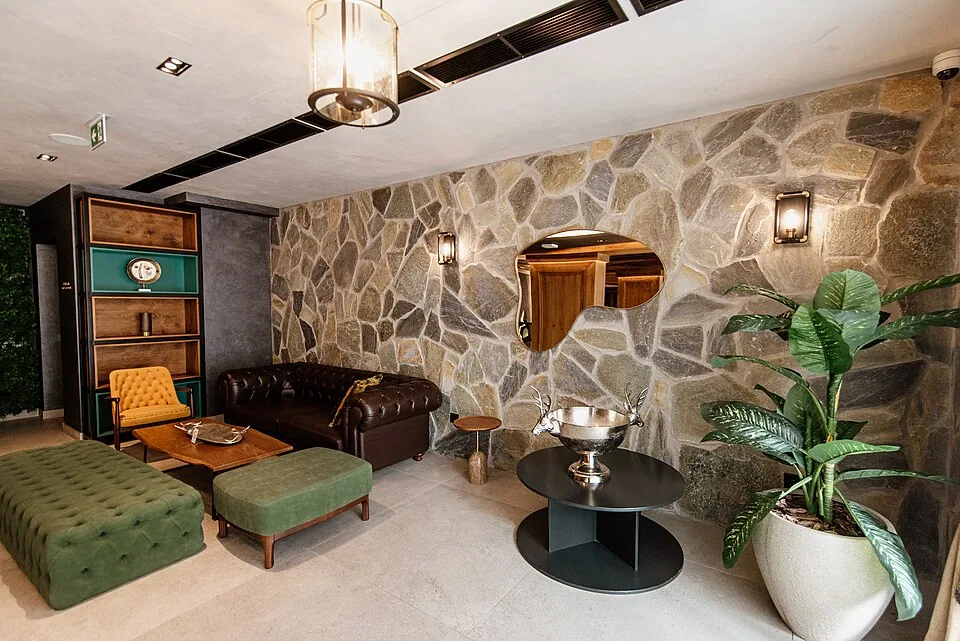
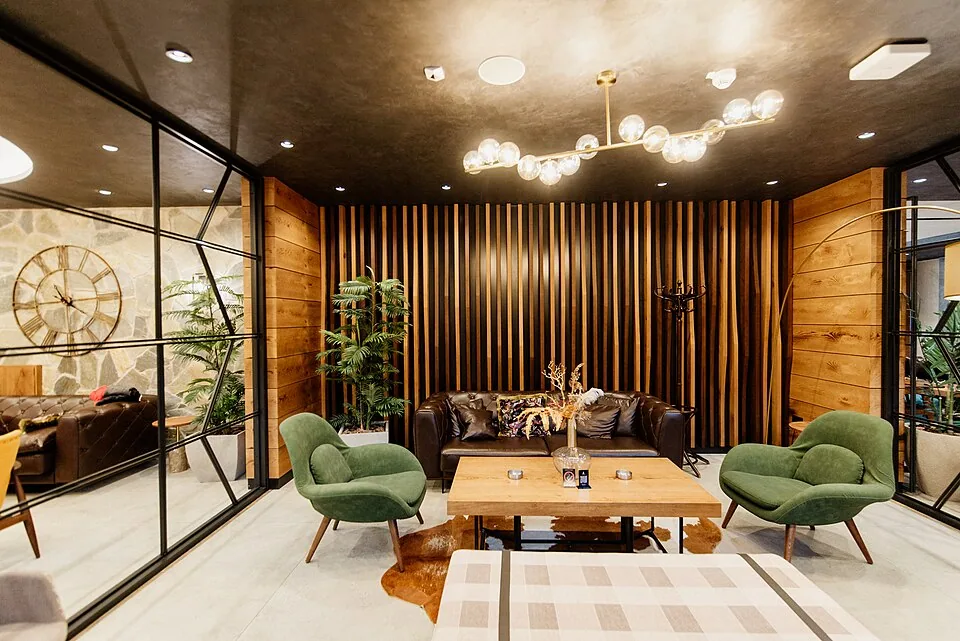
Paneling, whether wood slats, board and batten or molding, adds depth and can improve the sound of a room by breaking up flat surfaces. It is the most expensive and the most permanent option, and it gives an architectural result that looks built in. A painted paneled wall in a dark color is a popular choice. Stone, brick or tile veneer are others, but they are heavy styles and suit particular homes.
| Finish | Cost level | Effort | Best for | Drawback |
|---|---|---|---|---|
| Paint | Low | One day | Color, quick change | Shows flaws on flat walls |
| Wallpaper | Medium to high | One to two days | Pattern, texture | Harder to remove |
| Peel and stick | Medium | Half to one day | Renters, small walls | Surface and humidity limits |
| Wood or slat paneling | High | Several days | Depth, acoustics | Permanent, costly |
| Board and batten | Medium to high | Several days | Traditional or modern lines | Needs careful cutting |
Choosing the color
The best colors come from something in the room. Pick a shade from the rug, the art or the upholstery, and go deeper. That link makes the wall feel part of the scheme and not a random patch. If the room is neutral, the accent can be a deep neutral, such as charcoal or a warm taupe, and it adds depth without a color shock.
As a guide, go two to four shades deeper than the main wall color on a paint strip. A larger step feels dramatic, and a small step feels timid. In a small room, a dark accent wall can make a wall seem to recede, which can add depth, and a very bright color can make it feel closer. Our guide to making a small living room look bigger covers how color changes the sense of space.
Judge in your own light. A north facing room has cool light that makes colors look bluer and darker, while a south facing room has warm light that brightens and warms colors. Tape a large sample on the wall, and look at it in the morning, midday and evening, with lamps on. Check it next to your furniture and flooring, since undertones, such as a green or pink cast in a gray, show up in context. The 60-30-10 idea in the color rule guide helps keep the proportions in balance.
Light, room size and ceiling height
Dark colors absorb light, so a dark accent in a room with little daylight can make the space feel heavy. In a bright room it feels rich. If you want a deep color in a dim room, choose a wall that receives light from a window, and plan extra lamps. Light accents, such as a soft sage or a pale warm gray, work in any room and give a gentle change.
Room shape matters. A long narrow room can be balanced by painting a short end wall a deeper color, which seems to bring the wall closer and makes the room feel less like a corridor. Our article on decorating a long narrow living room covers this. A square room gains from an accent that gives it a front, and a room with a low ceiling can take a vertical pattern or stripe that draws the eye up.
Ceiling height changes the options. A tall wall suits a bold mural or a deep color that fills the vertical space, while a low wall feels crowded by heavy pattern. Paneling and picture rails can help to bring a tall wall into scale, and painting the ceiling in the same color as the accent wall can wrap the room in a cozy effect, at the price of losing the sense of height.
Furniture, art and television
A strong wall needs calm furniture. If the wall is patterned or dark, choose a sofa in a solid color with simple lines, and use art with plenty of space around it. A busy wall plus busy furniture is too much. A plain wall can be paired with bold pieces, and a gallery wall, as described in our gallery wall layout guide, works best on a plain or softly colored wall.
On a deep wall, light colored frames and pale artwork pop, and dark frames can vanish. Metal frames in brass or gold glow against a dark paint. Mirrors reflect the color and brighten the wall, and a large mirror can double the effect of a rich color. Check the placement of lamps and sconces, and avoid a bright glare on a glossy finish.
For a television, a dark wall helps the screen to look good in a room with lots of daylight, and it hides the black rectangle when the set is off. A wall painted in a color close to the TV's frame makes the screen less dominant. If you do not want the TV to be the focus, put the accent on a different wall, and let the television sit on a calm one.
Mistakes that lead to repainting
The first is choosing the color from a small chip. A two inch square tells you almost nothing, because the eye reads color against its surroundings and a large area looks stronger and darker than a chip. Paint a sample board of at least two feet square, or use a large peel and stick sample, and move it around the wall and across the day. The second is forgetting the ceiling and floor. A deep wall color reflects onto the ceiling and the floor, and a warm floor under a cool wall can look dirty.
The third is picking a color that fights the sofa. If the sofa is a strong color, a strong wall behind it makes both look worse, since neither has room to breathe. Use a calm contrast, such as a muted wall behind a bold sofa, or a bold wall behind a neutral one. The fourth is ignoring the light fittings. A glossy dark wall with a ceiling spot aimed at it will show hot spots, so aim lights away or use a matte finish.
The fifth is no plan for the edges. A paint line that wobbles at the ceiling or the corner draws attention, and an accent that ends at a random point looks accidental. Take time with tape, a steady hand and good light, or ask a professional painter to cut the lines. A tidy edge is half the charm of an accent wall, and it is the part that guests notice without knowing why.
The sixth is the wall that holds a heavy mirror, shelves or art, where the finish must withstand holes. Dark paint shows filler patches, and wallpaper tears at nail holes. Plan the hanging first, fill and sand any extra holes and then paint. Our guide to hanging a heavy mirror covers fixings, and the same planning applies to shelves.
How to do it well
Prepare the wall. Fill holes, sand lightly, clean and prime, since a dark color on a patched wall shows every flaw. Use quality painter's tape and cut in carefully at the edges, because the line between the accent and the neighboring wall is the most visible detail. Decide where the color stops: the best place is an inside corner, since a color change on a flat wall looks like a mistake.
If the accent wall meets an outside corner, such as a chimney breast, wrap the color around the corner for a clean look, or end it at the next inside corner. Do not stop the paint at an arbitrary line. Also think about trim. White trim against a dark wall gives a crisp frame, and trim in the same color as the wall gives a modern, enveloping effect.
Use two coats of a good paint, and let it cure before you move furniture back. Keep a little paint for touch ups. For wallpaper, hire a professional for expensive or large pattern papers, since a bad match shows. For a renter, test a small hidden area first. If you are changing your mind often, start with paint, which is the easiest to reverse.
When to skip an accent wall
Skip it if the room already has a strong feature, such as a fireplace in stone, a bold window wall or an open plan where walls blend into other spaces. Skip it if the walls are broken by many openings, or if the room is small and has no wall that stands alone. In those cases, add color through textiles, art and lamps, which are easier to change.
Skip it, too, if you are unsure and plan to sell soon. Strong colors may put off buyers, and a neutral room sells better. A good compromise is a removable accent, such as a large piece of art, a tapestry, a peel and stick panel or a wall of shelves with painted backs, which gives some of the effect without a commitment.
Frequently asked questions
Which wall should be the accent wall?
The one you face when entering or the one behind the seating, with few windows and doors. If the TV is on that wall, choose a calm color or a deep neutral.
Are accent walls out of style?
The single bright wall of past decades has faded, but a deep color or texture on one wall is still common. It looks current when it is a considered color, a paneled wall or a wallpaper that suits the room.
What color should an accent wall be?
Take a color from the room and go two to four shades deeper. Test it in daylight and lamp light, next to the furniture, before you commit.
Can I have more than one accent wall?
You can, but the effect weakens. Two walls of the same color on a corner can look planned, and a wall in a different color each looks busy. One is usually enough.
Does an accent wall make a room look smaller?
A deep color on the far wall can pull it closer, which makes the room feel cozier, while a light color keeps it open. Consider the size and the light, and test with a large sample.
The bottom line
Choose the wall the eye reaches first, with few interruptions. Pick paint for a simple change, wallpaper for pattern and paneling for depth, and take the color from the room, two to four shades deeper.
Test large samples in daylight and lamp light, end the color at an inside corner and keep the furniture calm. If the room already has a strong feature, skip the accent wall and add color in smaller ways.