A sofa with no pillows looks unfinished, and a sofa with too many looks like a pile of laundry. The skill lies in the middle: enough cushions to add color, texture and comfort, arranged so that there is still a place to sit. The principles are few, and once you know them you can arrange any sofa in a couple of minutes without a trip to a design magazine.
This guide gives starting counts by sofa size, explains how to choose and layer sizes and shapes, covers color and pattern repetition, shows symmetric and asymmetric layouts, and deals with the practical points that decide whether the result lasts: inserts, fill, plumpness and the habit of resetting the pillows each day. It also covers the common mistakes, from too many pillows to the wrong scale.
How many pillows
The count follows the size of the sofa. A three seat sofa of about 84 to 90 inches usually looks right with five to seven pillows in total, two or three at each end and sometimes one in the middle. A loveseat of 55 to 65 inches takes three or four. A sectional can take a pillow group at each end and at the corner, with a few extra along the back, but the sofa must still seat people comfortably.
Remember that pillows need to be moved. If you can only sit by removing five pillows, the arrangement is too big. A practical rule is that at least two thirds of the seat should be free. In a family room that is used daily, fewer pillows work better, and people will move them anyway. For a formal room that is seldom used, a fuller arrangement is fine.
Odd numbers look more natural than even ones, which is why groups of three feel relaxed and groups of two or four feel formal. Two matching pillows at each end give a symmetrical, traditional look, and three at one end with two at the other makes an informal balance. A single large pillow in the middle of a sofa back can feel like a plain choice, and it works when the sofa is small.
| Sofa | Typical length | Pillow count | Notes |
|---|---|---|---|
| Loveseat | 55 to 65 inches | 3 to 4 | Two at one end, one lumbar at the other |
| Three seat sofa | 80 to 90 inches | 5 to 7 | Two or three per end |
| Large sofa | 90 to 100 inches | 6 to 8 | Add a middle pillow only if it stays tidy |
| Sectional | Varies | 6 to 9 | Group at ends and corner |
| Accent chair | One seat | 1 to 2 | A lumbar or a single square |
Sizes, shapes and layering
Mix sizes, but keep them in a sensible range. The largest pillows, 22 to 26 inches square, sit at the back against the sofa arm or back and give the arrangement structure. Medium pillows of 18 to 20 inches layer in front of them, and a smaller pillow or a lumbar of about 12 by 20 inches goes at the front. A set of identical sizes looks flat, and the layering from big to small makes a shape that rises from the seat. Our throw pillow size guide covers the sizes in detail.
Shape adds variety. Squares are the base, a lumbar rectangle softens the group, and a round or bolster pillow adds an unexpected line. One shape that is different from the rest is enough, since too many shapes look fussy. A bolster at the arm of a sofa works as a headrest, and a lumbar at the center of a back supports the spine.
Scale matters. Pillows that are small relative to the sofa look lost, while very large ones can swallow a small sofa. For a standard sofa, 20 to 22 inch squares are the safe core, and 24 inch squares suit deep or oversized sofas. In a small apartment with a loveseat, 18 inch squares keep the proportions right. A sofa with a very deep seat can use a larger pillow at the back to fill the gap.
Color, pattern and texture
Choose pillows from the colors already in the room: the rug, the art, the curtains. Repeating a color in three places leads the eye around the room. The 60-30-10 idea in our guide to the 60-30-10 color rule applies, with the sofa and walls as the main color, a second color in the rug or the chairs, and an accent in the pillows. A single accent color in two or three pillows keeps the group focused.
For pattern, mix two or three at different scales. A large scale geometric, a small scale stripe and a plain texture create variety without clash. If all the patterns are the same size, they compete, and varying the scale solves this. Our guide on mixing patterns in a living room gives more advice, including how to use a plain pillow to rest the eye.
Texture adds depth even in a neutral room. Velvet, linen, boucle, knit and leather feel and look different, and a group of pillows in one color with different textures looks rich. A mix of a smooth fabric and a nubby one reads as expensive. Avoid combining many shiny fabrics, which compete for light, and keep at least one matte pillow in the group.
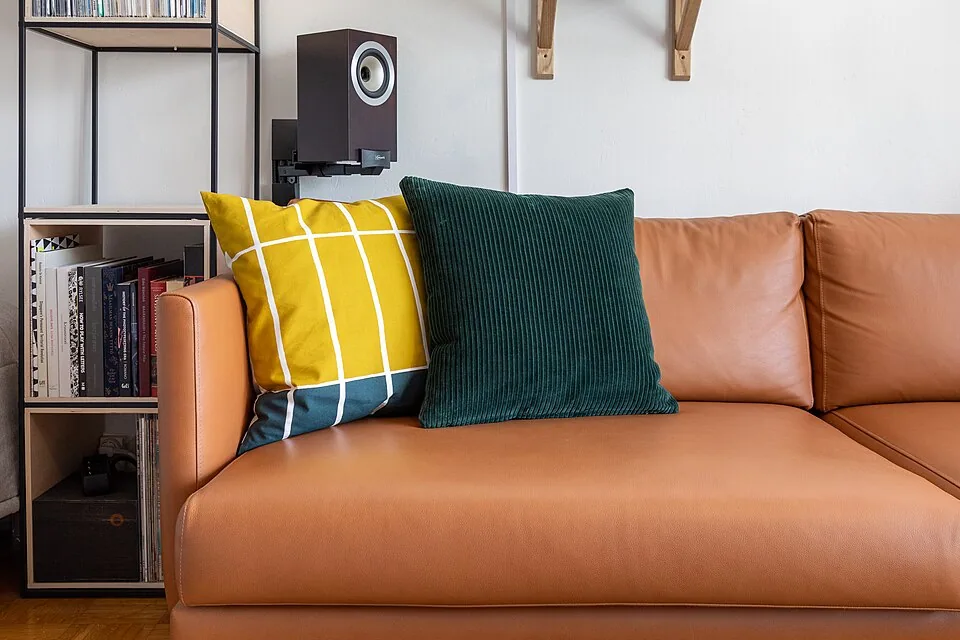
Symmetry or relaxed balance
A symmetrical arrangement places matching pillows at each end of the sofa, such as two identical squares with a smaller pillow in front. It reads as formal and calm, and it suits traditional rooms and sofas that sit in the middle of a wall. It is quick to arrange, and it looks tidy even when the pillows have been used.
An asymmetrical arrangement uses different groups at each end, balanced by weight and color. For example, three pillows at one end and two at the other, with the larger and darker pillows balancing smaller and lighter ones. It looks relaxed and modern, and it suits informal rooms. The rule is to balance the visual weight, so one side does not feel heavier.
A third approach is a single end arrangement, with all the pillows at one end of a sofa that sits against a wall or next to a side table. This leaves the rest of the sofa free for seating and suits a small room. The arrangement can include a throw blanket draped over the arm to complete the group, and our throw blanket size guide helps to choose the size.
Inserts, fill and fullness
A pillow cover is only as good as its insert. A cover filled with a flat, tired insert looks limp, and a plump insert gives sharp corners and a full look. The standard trick is to buy an insert one to two inches larger than the cover, so an 18 inch cover takes a 20 inch insert. The extra stuffing fills the corners and gives a crisp shape.
Fill types differ. Polyester fiberfill is cheap and light, but it flattens quickly. Feather and down blends are soft and mold into the classic karate chop shape, though they need fluffing and cost more. Down alternative fills try to match the feel without the allergens. A mix of feather and foam gives support and a good shape. Our guide on sofa cushion fill types explains similar choices for the seat cushions.
Plan to fluff the pillows each day, with a quick squeeze and a shake. Feather pillows need it most, and it takes seconds. Replace inserts that have gone flat, since the cover alone cannot fix them. Washable covers and removable inserts make care simple, so choose a cover with a hidden zip, and check the cleaning label before you buy a delicate fabric.

Choosing pillows for different sofas, budgets and seasons
A neutral sofa in gray, beige or cream is the easiest canvas. It lets you bring in a bold color or pattern, and it forgives mistakes. Use two or three pillows in your accent color, and balance them with neutrals in different textures, so the group looks planned. A sofa in a strong color, such as navy or forest green, calls for restraint: choose pillows in lighter tints of the same family, plus a neutral and a metallic or a pattern with a little of the sofa color in it.
A patterned sofa needs plain pillows. Pick solids in a color drawn from the pattern, and keep the textures varied. Leather sofas feel cold and slippery, so soft textiles such as wool, linen and velvet add warmth and give the pillows something to grip. On a dark leather sofa, light pillows stand out, and on a light sofa, a dark accent grounds the arrangement.
For a sectional, treat each section as a unit. Put a group at each end, and a pair at the corner, repeating one color across the three. Avoid placing pillows along the whole length of the back, which blocks the seats and looks like a wall of fabric. A sectional with a chaise can have a bolster or a lumbar pillow at the end of the chaise to give a place to rest the head.
Pillows are the cheapest way to change a room, and the covers are cheaper still. Buy good inserts once, and change the covers with the season: linen and light colors for summer, velvet, wool and deep tones for winter. Covers store flat in a drawer, and swapping them takes a few minutes. Keep one or two year round pillows in a neutral, so the sofa never looks bare in between.
If you are on a budget, spend on the inserts and on one or two statement covers, and fill in the rest with simple solids. A single well made pillow in an interesting fabric does more for a sofa than a dozen cheap printed ones. Look at fabric from a distance, since the effect of a pattern in a room is very different from its look in a photo.
Think about pets and children, who treat pillows as toys and beds. Choose covers that wash well, avoid delicate trims and tassels that tempt claws, and keep the inserts in washable casings. In a household with a cat, tightly woven fabrics resist snags better than loose knits and bouclé.
A step by step method
- Clear the sofa, and place the largest pillows at the back of each end, leaning against the arm or the back.
- Add the medium pillows in front, offset slightly, so they overlap the larger ones.
- Add a lumbar or a small pillow at the front or the center, depending on the sofa.
- Step back and check the color and pattern, and swap a pillow if two patterns compete.
- Give each pillow a karate chop at the top if it is a feather insert, and fluff the corners.
- Test the seat by sitting down, and remove a pillow if the sofa feels crowded.
Common mistakes
The first is too many pillows, which leaves no room to sit and makes the sofa a display. Edit until the sofa is comfortable. The second is matching everything, which can look like a set from a store and lacks depth. Choose pillows that relate but do not match. The third is scale, such as tiny pillows on a large sofa or very big ones on a small one.
The fourth is poor inserts, which make even good covers look tired. The fifth is ignoring comfort: stiff or spiky trims, hard zippers at the edge and cold slippery fabrics are annoying in daily use. A pillow should be pleasant to lean against, so test one before you buy. The sixth is leaving the sofa cushions in poor shape. If the seat is sagging, no pillow will hide it, and our guide to fixing sagging sofa cushions is a better place to start.
One last habit helps the whole arrangement last. When you sit, you will push pillows out of place, and the instinct is to rearrange them completely. Instead, keep a mental picture of the anchors: the two large pillows at the back. If those stay put, the smaller ones can be nudged back in a few seconds. Choose firm inserts for the back pillows, so they hold their position, and softer ones for the front, where you will lean on them. This simple difference in fill keeps the arrangement from collapsing after a single evening of use.
Frequently asked questions
How many throw pillows should a sofa have?
Five to seven for a standard three seat sofa, three or four for a loveseat. Fewer is better in a room that is used daily, since people need space to sit.
Should throw pillows match the sofa?
No, they should contrast or complement. If the sofa is a solid neutral, use color and pattern. If the sofa is bold, choose calmer pillows in related shades.
What size insert should I buy?
One to two inches larger than the cover. A 20 inch cover takes a 22 inch insert. This gives a full, sharp look, and a feather blend gives the best shape.
Should pillows be placed in odd or even numbers?
Odd numbers feel more natural, and even numbers feel formal. A group of three at one end and two at the other is a classic informal arrangement.
How often should I reset the pillows?
A quick fluff each day is enough, and a full reset when guests come. If the arrangement needs constant care, it is too complex, so simplify it.
The bottom line
Start with five to seven pillows on a standard sofa, large at the back and small in front, add one lumbar and one different shape. Choose two or three patterns at different scales, repeat a color from the room and use inserts a little larger than the covers.
Keep most of the seat free, fluff daily and edit when it feels crowded. If the sofa itself is tired, fix that first, because a good arrangement needs a good base.