Amazon affiliate links - we earn a commission.Affiliate disclosure
Guide·11 min read

How to Mix Patterns in a Living Room Without It Looking Chaotic

Mix patterns by varying scale, sharing one color, limiting the count to three and treating texture as pattern, with a clear order for where to start.

By Elena Hart · Updated 2026-11-20

Quick answer

To mix patterns, vary the scale so one pattern is large, one medium and one small, tie them with at least one shared color, and limit the room to about three patterns plus solids. Start with the largest piece, usually the rug or curtains, then add a medium pattern on the sofa or chairs and a small one in pillows. Count texture, such as a chunky knit or linen, as a quiet pattern, and give the eye solid areas to rest on.

Most people avoid mixing patterns because they have seen it go wrong: a striped sofa, a floral chair and a geometric rug, all in different colors, produce a room that looks like a flea market. They then retreat to solid colors and end up with a room that is safe and dull. The truth is that pattern mixing follows a few simple rules, and when you apply them, a room with five patterns can look calmer than one with two chosen at random.

This guide gives the rules in the order you can use them: how to vary scale, how to tie patterns together with a shared color, how many patterns a living room can carry, where to begin, how to treat texture as a pattern and how to start small if you are nervous. The advice works for rooms of any style, from traditional to modern, since the logic of scale and color does not depend on the taste of the room.

Rule one: vary the scale

The most important rule is to vary the size of the pattern. Two patterns of the same scale compete for attention, and the eye does not know where to look. A large pattern, a medium one and a small one form a hierarchy, with the large pattern as the main statement, the medium as support and the small as a fine texture. The result looks planned.

Use a rough scale guide. A large-scale pattern has a repeat of 12 inches or more, such as a large floral on curtains or a bold geometric on a rug. A medium pattern has a repeat of 3 to 8 inches, such as a classic stripe, a plaid or a mid-sized floral on a chair. A small pattern has a repeat of 1 to 2 inches, such as a pinstripe, a small check or a tiny print on a pillow. You do not need to measure each one. Look at them from across the room: the large pattern should read as a shape, the medium as a pattern and the small almost as a solid.

ScaleRepeat sizeTypical piece
Large12 in or moreRug, curtains, a feature chair
Medium3 to 8 inSofa, armchair, large pillows
Small1 to 2 inSmall pillows, throw, lamp shade

The size of the surface matters. A large pattern on a large surface, such as a rug or a pair of curtains, reads clearly. A large pattern on a small pillow is cropped, and it reads as a random fragment. Choose the scale of the pattern to suit the item, and keep the largest scale for the largest area.

Rule two: share at least one color

Patterns of different scales still clash if they have no colors in common. A shared color links them, and it can be a main color or a minor accent. If the rug has navy, rust and cream, the sofa pillows can have navy and cream in a stripe, and the curtains can have rust in a small leaf pattern. Each pattern has its own mix, and one or two colors repeat across them.

The easiest way is to pick a color story first, three to four colors, and choose every pattern from it. Take the colors from a piece you already own, such as a rug or a painting, and match patterns to it. The relationship between the proportion of each color and the room is described in the 60-30-10 color rule: a dominant, a secondary and an accent. Patterns should follow that split, with the dominant color appearing most in the largest patterns and the accent appearing in small touches.

Undertone matters as well as hue. A warm cream and a cool white, or a yellow-based green and a blue-based green, can look wrong together even though the colors are named alike. Place the patterns together and look at them in daylight and in lamp light. If one looks dirty or off next to another, the undertones are fighting, and one pattern should be replaced.
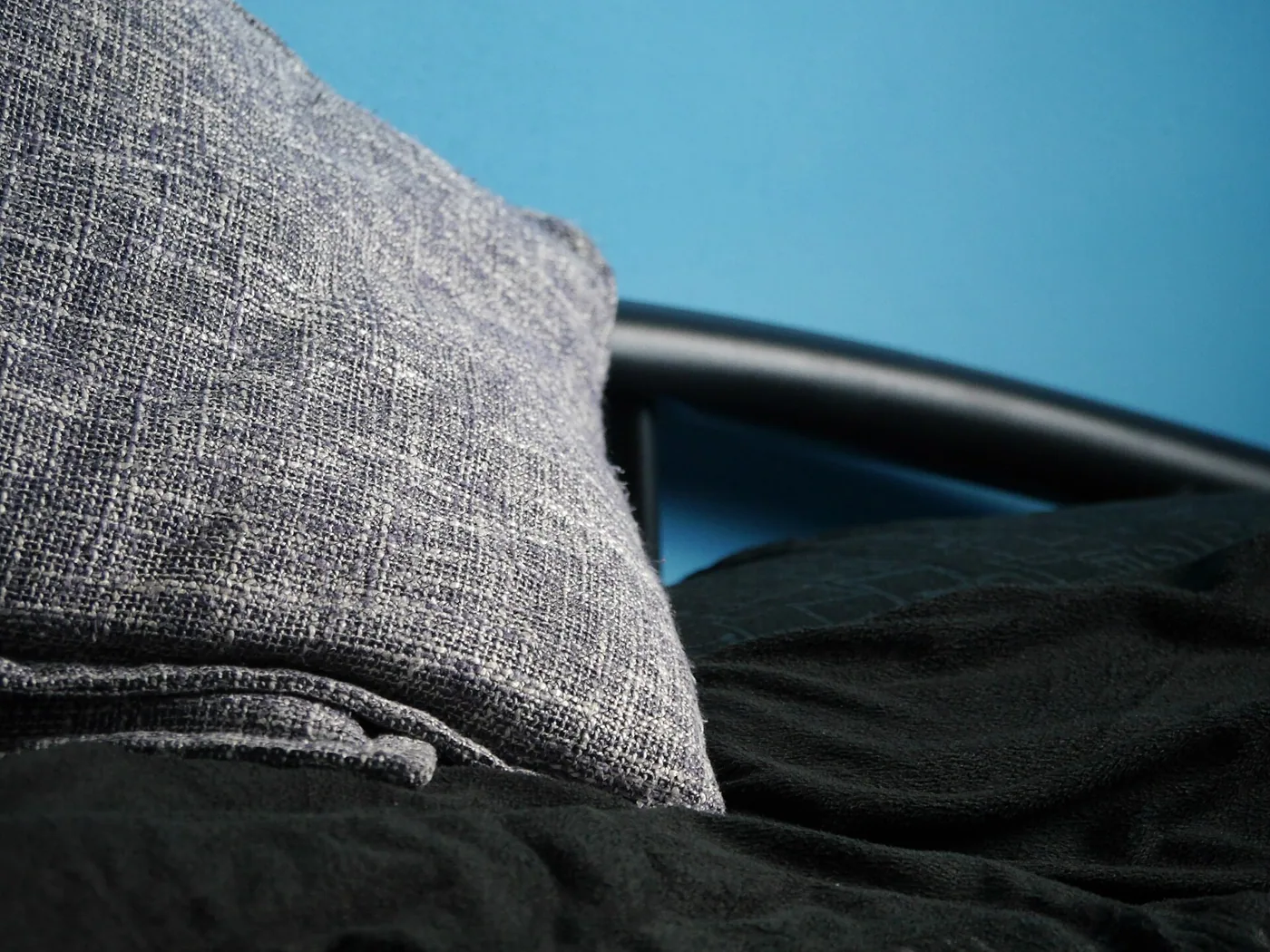
Several decorative pillows of different patterns arranged on a couch
Cushions in different patterns work together when they share a color and differ in scale.

Rule three: limit the count

A living room can carry about three patterns well, and up to five if the room is large and the patterns are quiet. The patterns do not have to be at full strength. A solid sofa, a solid chair, a patterned rug, patterned curtains and a patterned pillow count as three, and the solids give the eye a place to rest. A room with only patterns and no solids is exhausting.

Count by what the eye sees at a glance. A subtle pattern, such as a tone-on-tone damask, counts as a texture and not as a pattern. A strong stripe, a bold geometric or a large floral counts as one. A common recipe is one large-scale pattern, one medium-scale pattern and one small or textural pattern, with solids around them. Spread the patterns around the room rather than clustering them. A pattern on each side of the room, such as a rug on the floor, curtains on one wall and pillows on the sofa, draws the eye around the space.

If the room already has a lot of pattern in the architecture, such as a patterned tile floor, a wallpaper feature wall or a busy fireplace surround, reduce the count of patterns in the furnishings and keep them smaller in scale. If the room is plain, you can afford more.

Where to start

Begin with the largest and least movable piece, which is usually the rug or the curtains, and make it the anchor. A strong rug pattern sets the color story and the main scale. The size of the rug matters for the layout, as explained in the rug size guide. Then choose the sofa or the armchairs, either as solids or in a medium pattern, and add the pillows and the throws last, since they are small, inexpensive and easy to change.

If you are starting from an existing room, find the pattern that is the most dominant and treat it as the anchor, then work from it. If the sofa is a strong plaid, choose a solid rug and add small-scale patterns in the pillows that use a color from the plaid. If you are starting from nothing, choose a patterned fabric that you love, take it as the reference and build the scheme around it. A fabric with several colors gives a ready-made palette.

Use a mood board or a simple collage of swatches. Lay the fabric and rug samples side by side on the floor or on the sofa, and look at them from across the room. Take a photo, and look at the photo, which flattens the scene and shows the balance. Remove one item and see if it improves. Often the answer is to remove one pattern, not to add another.

Treat texture as a quiet pattern

Texture is pattern without color. A chunky knit throw, a nubby linen sofa, a woven jute rug, a velvet pillow and a smooth leather chair each add surface variety, and a room with several textures looks rich even if it has no printed pattern. In a neutral room, a mix of textures can do all the work of patterns, and the room feels warm and layered.

Use texture to calm a pattern-heavy room. A bold patterned rug with a plain, textured sofa and a woven basket gives the eye something to rest on. In a room with a lot of smooth surfaces, such as glass, painted walls and polished wood, add a few rough textures to avoid a flat look. The way fabrics behave under daily use is covered in the sofa fabric guide, and the throw sizes in the throw blanket guide help you choose a textured layer.

Combining types of pattern

Some pairings work almost every time. A stripe goes with a floral, because the regular lines balance the organic shapes. A plaid goes with a solid or a small geometric. A large abstract goes with a small stripe. A geometric goes with an organic shape, such as a leaf print. Two stripes can work if they differ in scale and direction, and two florals can work if one is large and loose and the other small and tight.

Be careful with pairs that are close but not the same. Two similar florals of slightly different colors look like a mistake, and two similar stripes look like a near miss. Either match them or make the difference clear. Avoid more than one pattern with a strong direction, such as a bold diagonal, in the same view, since the lines pull the eye in different ways.

Patterns on walls and in wallpaper

Wallpaper is the largest pattern in a room, since it covers a whole wall, and it changes the rules for everything else. A bold wallpaper on one feature wall acts as the anchor pattern, and the rest of the room should be quieter: solid or textured upholstery, a rug in a small-scale or a tone-on-tone pattern and a few small-scale pillows. A subtle wallpaper, such as a faint grasscloth or a small texture, behaves like a texture and leaves room for more pattern elsewhere.

Choose the wallpaper's colors from the room or choose the room's colors from the wallpaper. Take a swatch home, tape it to the wall and look at it beside the sofa and the rug. If one color in the wallpaper matches one in the furnishings, the link is made. If none matches, adjust the furnishings, not the wall, since a wallpaper is the harder thing to change. Place patterned wallpaper on the wall behind a plain sofa, rather than behind a patterned one, so the pattern has space around it.

Pattern and the mood of the room

The same method gives different moods depending on the patterns you choose. Traditional rooms use florals, stripes, plaids and damasks, in warm and rich colors. Modern rooms lean to geometrics, abstracts and simple stripes, in a limited palette. Coastal rooms use stripes and soft botanicals in blue and white. Bohemian rooms mix many global patterns, such as kilims, ikats and block prints, with a high pattern count and layered color, which works because the scale and the color link are still there.

The pace of the room matters. A calm room needs fewer patterns, in a close range of colors, and a lively one can have more, with higher contrast. If you want a calm room that still has pattern, choose patterns with low contrast between the colors in the print, such as cream on beige or navy on slate. High-contrast patterns, such as black on white, are strong and should be used sparingly.

Mistakes that make patterns clash

The first mistake is using patterns of equal scale and strength, so none leads. The second is no shared color, so each pattern looks like it belongs to a different room. The third is too many patterns with no solid areas, which tires the eye. The fourth is placing patterns in a straight row, for example, a striped sofa, a striped chair and a striped rug, which makes them fight, so spread them with solids between. The fifth is ignoring undertone, so a warm cream sits next to a cool white and looks dirty.

A sixth is forgetting the existing pattern in the room, such as a tile floor or a patterned fireplace, which counts as one of your patterns. The cure is the same each time: stand back, squint and look for the pattern that is too strong, then replace or remove it. A room often looks better after one item is taken away than after another is added.

Starting small and testing

If you feel uncertain, start with pillows. A sofa with three pillows in a stripe, a small print and a solid, in a shared color, is a low-risk way to practice. Add a patterned throw. If you like the effect, add a pattern in a larger piece, such as a chair or curtains. Pillows and throws are easy to change, and you will learn what works in your room's light.

Buy swatches or return-friendly items, and live with them for a few days. Check them in the morning and evening light. Think about what will last: a classic stripe or a simple botanical will stay in fashion, and a bold trend will date more quickly. Keep the large, expensive pieces simple, and put the bold pattern on items that you can replace cheaply.
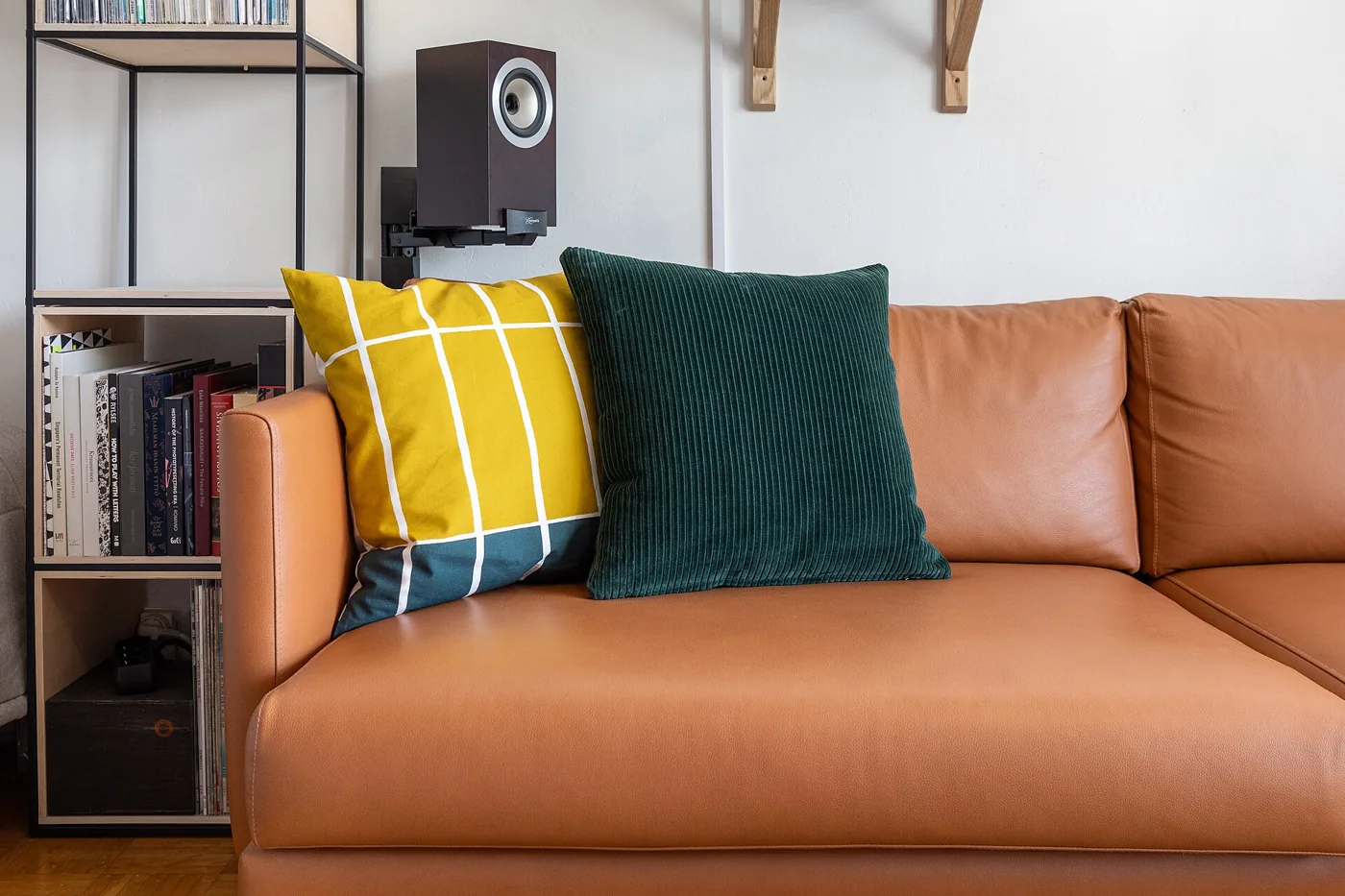
Patterned pillows arranged on a leather sofa
Patterned pillows against a plain leather sofa: the solid surface gives the patterns room to work.

Frequently asked questions

How many patterns can I use in one room?

About three, up to five in a large room, with solids in between. Count a strong pattern as one and a subtle texture as a quiet layer.

What is the easiest way to start mixing patterns?

Choose a large pattern first, then a medium one and a small one, all sharing a color. Start with pillows and a throw before committing to big pieces.

Can I mix stripes and florals?

Yes. A stripe and a floral balance each other, as long as they differ in scale and share a color.

Does pattern mixing work in a small room?

Yes, with smaller patterns and fewer of them. Keep the large surfaces calm and use pattern in small doses.

Do solids count as a pattern?

No, but they are important. Solids give the eye a place to rest and make the patterns stand out.

Bottom line

Vary the scale, share a color and limit the count to about three patterns with solids to rest the eye. Start with the biggest piece and work down to the pillows, and treat texture as a quiet pattern.

Try it on pillows first, and edit by removing, not adding. A room with patterns that relate to each other looks collected and confident.

Image credits

  • accent-chair-desk-corner.webp: JohnLEE Brothers, CC0, source
  • accent-chair-green-velvet.webp: Shixart1985, CC BY 2.0, source
  • accent-chair-hero.webp: Shixart1985, CC BY 2.0, source
  • anchor-built-in-bookcases-room.webp: Carol M. Highsmith, Public domain, source
  • anchor-small-bookcase-hall.webp: Steven Pavlov, CC BY-SA 4.0, source
  • anchor-white-bookcase-wall.webp: Egilus, CC BY-SA 4.0, source
  • arrange-living-room-hero.webp: Kotivalo, CC BY-SA 4.0, source
  • arrange-living-room-seating-group.webp: Neoclassicism Enthusiast, CC0, source
  • arrange-living-room-sofa-wall.webp: Adele Berenstein, CC BY 2.0, source
  • artsofa-pictures-on-wall-room.webp: Tudor Washington Collins, CC BY 4.0, source
  • artsofa-sofa-corner-mural.webp: G�nter Seggeb�ing, Coesfeld, CC BY-SA 3.0, source
  • artsofa-sofa-mural-wall.webp: G�nter Seggeb�ing, Coesfeld, CC BY-SA 3.0, source
  • blackoutcurtain-floor-length-pair.webp: Ounfs Robmmy 238, CC0, source
  • blackoutcurtain-olive-heavy-fabric.webp: Easysayg, CC BY-SA 4.0, source
  • blackoutcurtain-white-sheer-hotel.webp: HuiDongXLW RMDa, CC0, source
  • ceilingfan-five-blade-light.webp: CommandProMC, CC BY-SA 4.0, source
  • ceilingfan-pull-chain-light.webp: Hans Olav Lien, CC BY-SA 3.0, source
  • clean-fabric-sofa-blanket.webp: Shixart1985, CC BY 2.0, source
  • clean-fabric-sofa-hero.webp: Lear 21, CC BY-SA 4.0, source
  • clean-fabric-sofa-slipcover.webp: Enric, CC BY-SA 4.0, source
  • clean-rug-fringe-pattern.webp: Sununa, CC BY-SA 4.0, source
  • clean-rug-runner-hall.webp: Sununa, CC BY-SA 4.0, source
  • coffeetable-round-yellow-sofa.webp: Vaibhavratnaparkhi, CC BY-SA 4.0, source
  • coffeetable-tan-sofa-dark-table.webp: Shixart1985, CC BY 2.0, source
  • coffeetable-two-wood-tables.webp: Sophia Baboolal, CC0, source
  • color-temp-bright-bulb.webp: Xzantiyamoloy, CC BY 4.0, source
  • color-temp-gu10-spot.webp: Dmitry G, CC BY-SA 3.0, source
  • color-temp-hero.webp: LoMit, CC BY-SA 4.0, source
  • color603010-paint-swatches-wall.webp: Chris Rycroft, CC BY 2.0, source
  • color603010-rainbow-swatch-range.webp: Joyful spherical creature, CC BY 4.0, source
  • color603010-swatch-cards-neutrals.webp: Clean Wal-Mart, CC BY 2.0, source
  • cornertv-1960s-room-tv-window.webp: Kotivalo, CC BY-SA 4.0, source
  • cornertv-budapest-sofa-room.webp: Justin Sch�ler, CC0, source
  • cornertv-white-room-console.webp: Oliur Rahman, CC0, source
  • curtainfabric-heavy-olive-folds.webp: Easysayg, CC BY-SA 4.0, source
  • curtainfabric-hotel-floor-length-pair.webp: Ounfs Robmmy 238, CC0, source
  • curtainfabric-white-light-filtering.webp: HuiDongXLW RMDa, CC0, source
  • curtains-hk-window-stacked-open.webp: YSSKACH WFAMOACSH TUNGA, CC BY-SA 4.0, source
  • curtains-hotel-living-zone-floor-length.webp: Ounfs Robmmy 238, CC0, source
  • cushion-fill-hero.webp: Dalton Scavassa, CC BY-SA 4.0, source
  • cushion-fill-pillows-leather.webp: Aaaatu, CC BY-SA 4.0, source
  • depth-grey-sofa-cushions.webp: Dalton Scavassa, CC BY-SA 4.0, source
  • depth-grey-sofa-hero.webp: Lear 21, CC BY-SA 4.0, source
  • depth-sectional-living-room.webp: Shixart1985, CC BY 2.0, source
  • dimmer-rotary-wall.webp: Paolomarco, CC BY-SA 4.0, source
  • dimmer-slide-wall.webp: BrokenSphere, CC BY-SA 3.0, source
  • dimmer-wiring-box.webp: Kurtkaiser, CC0, source
  • door-hotel-living-room.webp: Adele Berenstein, CC BY 2.0, source
  • door-orange-sofa-hero.webp: Shixart1985, CC BY 2.0, source
  • echo-1960s-room-soft-furnishings.webp: Kotivalo, CC BY-SA 4.0, source
  • echo-fabric-acoustic-panels-wall.webp: 36N63, CC BY-SA 4.0, source
  • echo-panel-mineral-wool-core.webp: JoraK, CC BY-SA 4.0, source
  • entcenter-low-stand-devices.webp: William Hook, CC BY-SA 2.0, source
  • entcenter-old-tv-setup.webp: William Hook, CC BY-SA 2.0, source
  • entcenter-wood-wall-unit-living-room.webp: Casey Fleser, CC BY 2.0, source
  • fabric-green-velvet-hero.webp: Neoclassicism Enthusiast, CC0, source
  • fabric-grey-sofa-cushions.webp: Lear 21, CC BY-SA 4.0, source
  • fabric-sofa-blanket.webp: Shixart1985, CC BY 2.0, source
  • floatshelf-mixed-books-rows.webp: Roman Eisele, CC BY-SA 4.0, source
  • floatshelf-steel-support.webp: Fructibus, CC0, source
  • floatshelf-white-bookcase-wall.webp: Egilus, CC BY-SA 4.0, source
  • floor-lamp-height-hero.webp: Agbarto, CC0, source
  • floor-lamp-height-stained-glass.webp: Louis Comfort Tiffany / Tiffany Studios, CC0, source
  • floor-lamp-height-white-reading-lamp.webp: FASTILY, CC BY-SA 4.0, source
  • frame-black-leather-sofa.webp: www.Pixel.la Free Stock Photos, CC0, source
  • frame-green-velvet-sofa.webp: Neoclassicism Enthusiast, CC0, source
  • frame-grey-sofa-hero.webp: Dalton Scavassa, CC BY-SA 4.0, source
  • gallerywall-frames-bookcase-lamp.webp: Personal Creations, CC BY 2.0, source
  • gallerywall-frames-floor-tape.webp: Personal Creations, CC BY 2.0, source
  • gallerywall-frames-on-wall-home.webp: Personal Creations, CC BY 2.0, source
  • hang-light-hero.webp: Martin Falbisoner, CC BY-SA 4.0, source
  • hang-light-lamp-with-shade.webp: LoMit, CC BY-SA 4.0, source
  • hang-light-red-drum-lamp.webp: Agbarto, CC0, source
  • jute-sisal-combing-fibre.webp: Uncredited for Keystone View Company, Public domain, source
  • jute-sisal-hero.webp: B.navez, CC BY-SA 3.0, source
  • jute-sisal-plantation.webp: Forest & Kim Starr, CC BY 3.0, source
  • knotted-rug-cut-pile-carpet.webp: Daderot, CC0, source
  • knotted-rug-hero.webp: Daderot, CC0, source
  • knotted-rug-prayer-wool.webp: Daderot, CC0, source
  • lampshade-cream-base.webp: LoMit, CC BY-SA 4.0, source
  • lampshade-empire-lamp.webp: J.Dncsn, CC BY-SA 3.0, source
  • lampshade-paper-rect-lamp.webp: Zeitlupe, CC BY-SA 4.0, source
  • layer-rugs-armchairs.webp: PattayaPatrol, CC BY-SA 4.0, source
  • layer-rugs-conversation-pit.webp: Marsh Davis; Indiana Landmarks, CC BY 4.0, source
  • layer-rugs-hero.webp: BusterD, CC BY-SA 4.0, source
  • layered-light-hero.webp: FASTILY, CC BY-SA 4.0, source
  • layered-light-red-shade-lamp.webp: Agbarto, CC0, source
  • layered-light-table-lamp.webp: LoMit, CC BY-SA 4.0, source
  • leather-care-black-sofa.webp: www.Pixel.la Free Stock Photos, CC0, source
  • leather-care-burgundy-set.webp: Dominic's pics, CC BY 2.0, source
  • leather-care-hero.webp: Thomas Quine, CC BY 2.0, source
  • ledstrip-cove-fireplace.webp: Andrey Gvrv, CC BY-SA 3.0, source
  • ledstrip-spool-driver.webp: Dmitry G, CC BY-SA 3.0, source
  • ledstrip-tv-back.webp: Stilfehler, CC BY-SA 4.0, source
  • loveseat-sofa-armchair-room.webp: Adele Berenstein, CC BY 2.0, source
  • loveseat-sofa-hero.webp: Aaaatu, CC BY-SA 4.0, source
  • loveseat-sofa-leather-pair.webp: Dominic's pics, CC BY 2.0, source
  • lowlight-snake-plant-corner-pot.webp: Enzo Rippa, CC BY-SA 4.0, source
  • lowlight-snake-plant-window-table.webp: Martin Olsson, CC BY-SA 3.0, source
  • lowlight-zz-plant-potted.webp: Jamshid Nurkulov, CC BY-SA 4.0, source
  • lumens-bulb-hero.webp: R. Henrik Nilsson, CC BY 4.0, source
  • lumens-led-bulbs-group.webp: Geoffrey.landis at English Wikipedia, CC BY 3.0, source
  • measure-cabin-sofa.webp: Shixart1985, CC BY 2.0, source
  • measure-room-depth.webp: Shixart1985, CC BY 2.0, source
  • measure-sofa-hero.webp: Shixart1985, CC BY 2.0, source
  • mirror-above-mantel-living-room.webp: Tudor Washington Collins, CC BY 4.0, source
  • mirror-round-blue-wall-window.webp: Ciara N� Riain, CC BY-SA 4.0, source
  • mirror-round-over-wood-console.webp: Shixart1985, CC BY 2.0, source
  • mixpatterns-armenian-patterned-pillows.webp: Ararat Trvants, CC BY-SA 4.0, source
  • mixpatterns-couch-pillows-set.webp: Dawid Skalec, CC BY-SA 4.0, source
  • mixpatterns-leather-sofa-pillows.webp: Aaaatu, CC BY-SA 4.0, source
  • no-overhead-hero.webp: Gotogo, CC BY-SA 4.0, source
  • no-overhead-red-shade-lamp.webp: Agbarto, CC0, source
  • no-overhead-white-floor-lamp.webp: FASTILY, CC BY-SA 4.0, source
  • nodrillcurtain-hk-window-open.webp: YSSKACH WFAMOACSH TUNGA, CC BY-SA 4.0, source
  • nodrillcurtain-olive-rail-folds.webp: Easysayg, CC BY-SA 4.0, source
  • nodrillcurtain-white-light-panel.webp: HuiDongXLW RMDa, CC0, source
  • open-plan-rug-armchairs.webp: PattayaPatrol, CC BY-SA 4.0, source
  • open-plan-rug-hero.webp: NPS Photo, Public domain, source
  • open-plan-rug-sunken-living.webp: Marsh Davis; Indiana Landmarks, CC BY 4.0, source
  • ottoman-coffee-table-pair.webp: Sophia Baboolal, CC0, source
  • ottoman-leather-round-pair.webp: Olugold, CC BY-SA 4.0, source
  • ottoman-round-stool-top.webp: Olugold, CC BY-SA 4.0, source
  • paintsheen-open-paint-cans.webp: United Soybean Board, CC BY 2.0, source
  • paintsheen-paint-can-brush.webp: Shixart1985, CC BY 2.0, source
  • paintsheen-swatch-cards-range.webp: Chris Rycroft, CC BY 2.0, source
  • pets-sofa-kitten-cushions.webp: Feliciano Guimar�es from Guimar�es, Portugal, CC BY 2.0, source
  • pets-sofa-slipcover.webp: Enric, CC BY-SA 4.0, source
  • pillows-decorative-couch-set.webp: Dawid Skalec, CC BY-SA 4.0, source
  • pillows-leather-sofa-group.webp: Aaaatu, CC BY-SA 4.0, source
  • pillows-wooden-sofa-red-cushions.webp: Zohasheikh, CC BY-SA 4.0, source
  • readinglamp-adjustable-torchiere.webp: Agbarto, CC0, source
  • readinglamp-armchair-corner-lamp.webp: Kotivalo, CC BY-SA 3.0, source
  • readinglamp-cozy-sunlit-corner.webp: Shixart1985, CC BY 2.0, source
  • recessed-gimbal-trim.webp: Stilfehler, CC BY-SA 4.0, source
  • recessed-housing-display.webp: Stilfehler, CC BY-SA 4.0, source
  • recessed-led-can-trim.webp: Stilfehler, CC BY-SA 4.0, source
  • recliner-buying-armchair-room.webp: Virginia State Parks staff, CC BY 2.0, source
  • recliner-buying-hero.webp: Laura Stoinski, CC0, source
  • recliner-buying-leather-sofa.webp: Aaaatu, CC BY-SA 4.0, source
  • rug-curl-fringe-rug.webp: Sununa, CC BY-SA 4.0, source
  • rug-curl-hero.webp: Sununa, CC BY-SA 4.0, source
  • rug-curl-runner-patterns.webp: Sununa, CC BY-SA 4.0, source
  • rug-dents-hero.webp: ProjectManhattan, CC BY-SA 3.0, source
  • rug-dents-wool-medallion.webp: Daderot, CC0, source
  • rug-on-carpet-armchairs.webp: PattayaPatrol, CC BY-SA 4.0, source
  • rug-on-carpet-flat-weave.webp: Mervat, CC BY 4.0, source
  • rug-on-carpet-hero.webp: NPS Photo, Public domain, source
  • rug-pad-dense-carpet.webp: ProjectManhattan, CC BY-SA 3.0, source
  • rug-pad-hero.webp: Sununa, CC BY-SA 4.0, source
  • rug-pile-flatweave-stack.webp: Mervat, CC BY 4.0, source
  • rug-pile-sarouk-wool.webp: Daderot, CC0, source
  • rug-shedding-pile-closeup.webp: ProjectManhattan, CC BY-SA 3.0, source
  • rug-shedding-wool-rugs.webp: Mervat, CC BY 4.0, source
  • rug-size-armchairs-on-rug.webp: PattayaPatrol, CC BY-SA 4.0, source
  • rug-size-conversation-area.webp: Marsh Davis; Indiana Landmarks, CC BY 4.0, source
  • rug-size-hero.webp: NPS Photo, Public domain, source
  • runner-size-hero.webp: Sununa, CC BY-SA 4.0, source
  • runner-size-red-runner.webp: Sununa, CC BY-SA 4.0, source
  • runner-size-three-runners.webp: Sununa, CC BY-SA 4.0, source
  • sag-cushions-hero.webp: Durova, CC BY-SA 3.0, source
  • sag-cushions-slipcover.webp: Enric, CC BY-SA 4.0, source
  • sag-cushions-sofa-deck.webp: Dalton Scavassa, CC BY-SA 4.0, source
  • sconce-above-tufted-chairs.webp: Jedodo756, CC0, source
  • sconce-brass-opal-shade.webp: unknown (see Commons page), CC BY-SA 4.0, source
  • sconce-wall-lamp-side-table.webp: Atilla Taskiran, CC0, source
  • sectional-dark-hero.webp: Shixart1985, CC BY 2.0, source
  • sectional-room-arrangement.webp: Kotivalo, CC BY-SA 4.0, source
  • sectional-white-corner.webp: GardenKings, CC BY-SA 3.0, source
  • shelfsag-mixed-books-shelf.webp: Roman Eisele, CC BY-SA 4.0, source
  • shelfsag-packed-bookshelf.webp: Csferrie, CC BY-SA 4.0, source
  • shelfsag-wood-shelf-rows.webp: PeaceSeekers, CC BY-SA 4.0, source
  • sidetable-cozy-sofa-room.webp: Breather, CC0, source
  • sidetable-kentwood-sofa.webp: Kari Shea, CC0, source
  • sidetable-round-wall-lamp.webp: Atilla Taskiran, CC0, source
  • sleeper-sofa-bed-made-up.webp: Maniago, Public domain, source
  • sleeper-sofa-open-hero.webp: N509FZ, CC BY-SA 4.0, source
  • sleeper-sofa-sofa-mode.webp: N509FZ, CC BY-SA 4.0, source
  • small-room-slim-arm-sofa.webp: Lear 21, CC BY-SA 4.0, source
  • small-room-sofa-hero.webp: Shixart1985, CC BY 2.0, source
  • small-room-two-seat-layout.webp: Adele Berenstein, CC BY 2.0, source
  • smallbigger-finland-studio-bright.webp: Aaaatu, CC BY-SA 4.0, source
  • smallbigger-hk-curtains-open-window.webp: YSSKACH WFAMOACSH TUNGA, CC BY-SA 4.0, source
  • smallbigger-white-room-console.webp: Oliur Rahman, CC0, source
  • smallstorage-finland-studio-room.webp: Aaaatu, CC BY-SA 4.0, source
  • smallstorage-leather-sofa-shelving.webp: Sabri Tuzcu, CC0, source
  • smallstorage-wall-shelves-books.webp: Roger W, CC BY-SA 2.0, source
  • smart-bulbs-bulb-in-hand.webp: Xzantiyamoloy, CC BY 4.0, source
  • smart-bulbs-led-internals.webp: Loadmaster, Bech, CC BY-SA 4.0, source
  • soundbar-below-lg-tv.webp: Dinkun Chen, CC BY-SA 4.0, source
  • soundbar-philips-front-grille.webp: Philips Communications, CC BY 2.0, source
  • soundbar-samsung-single-bar.webp: Dinkun Chen, CC BY-SA 4.0, source
  • stylebooks-packed-shelf-wall.webp: Csferrie, CC BY-SA 4.0, source
  • stylebooks-philosophers-shelf.webp: Roman Eisele, CC BY-SA 4.0, source
  • stylebooks-wall-shelves-bottles-books.webp: Roger W, CC BY-SA 2.0, source
  • styletable-book-stack-candle.webp: Gabbybratcher, CC BY-SA 4.0, source
  • styletable-two-tables-mugs.webp: Sophia Baboolal, CC0, source
  • styletable-yellow-sofa-cups-flowerpot.webp: Shixart1985, CC BY 2.0, source
  • surround-home-theater-tv-seating.webp: NPat318, CC BY-SA 4.0, source
  • surround-rear-view-seats.webp: NPat318, CC BY-SA 4.0, source
  • surround-sectional-media-room.webp: Derek Jensen (Tysto), Public domain, source
  • table-lamp-size-antique-shade.webp: Amitbalani, CC0, source
  • table-lamp-size-hero.webp: Tess Mattew, CC BY-SA 4.0, source
  • table-lamp-size-measured.webp: Tess Mattew, CC BY-SA 4.0, source
  • throwblanket-blue-throw-kitten.webp: TudorTulok, CC BY-SA 4.0, source
  • throwblanket-striped-couch-cat.webp: Roman Eisele, CC BY-SA 4.0, source
  • throwblanket-yellow-blue-couch.webp: Roman Eisele, CC BY-SA 4.0, source
  • tvheight-flat-panel-wall.webp: BrokenSphere, CC BY-SA 3.0, source
  • tvheight-plasma-wall-room.webp: Pkepneriv, CC BY-SA 3.0, source
  • tvheight-white-living-room.webp: Oliur Rahman, CC0, source
  • tvmount-articulating-arm.webp: Ben Scholzen, CC BY 2.0, source
  • tvmount-vesa-adapter-plate.webp: Tony Webster, CC BY 2.0, source
  • tvmount-wall-panel-room.webp: Pkepneriv, CC BY-SA 3.0, source
  • tvsize-dark-room-big-screen.webp: Christian Collins, CC BY 2.0, source
  • tvsize-media-room-screen.webp: NPat318, CC BY-SA 4.0, source
  • tvsize-tv-on-stand.webp: PhotoPicker13, CC BY-SA 4.0, source
  • tvstand-low-stand-devices.webp: William Hook, CC BY-SA 2.0, source
  • tvstand-wall-unit-living-room.webp: Casey Fleser, CC BY 2.0, source
  • tvwires-cable-box-wires.webp: Tony Webster, CC BY 2.0, source
  • tvwires-hdmi-connectors.webp: Kreuzschnabel, CC BY-SA 3.0, source
  • tvwires-wall-mounted-panel.webp: BrokenSphere, CC BY-SA 3.0, source
  • washable-rugs-flatweave-stack.webp: Mervat, CC BY 4.0, source
  • washable-rugs-hero.webp: Mervat, CC BY 4.0, source
  • washable-rugs-loomed-stripes.webp: Gcarrillog, CC0, source
  • wool-poly-hero.webp: Mervat, CC BY 4.0, source
  • wool-poly-oaxacan-wool.webp: Gcarrillog, CC0, source
  • wool-poly-prayer-rug.webp: Daderot, CC0, source

Related Guides