A shag rug is the easiest type to love and the hardest to keep looking right. The long, soft pile that makes it feel luxurious also traps crumbs, lets hair sink out of sight and tangles in the wrong vacuum. A rug that looks fluffy on day one can look flat, matted and sparse in a few months if it is treated like a flat-weave runner.
This guide explains how to care for a shag rug in a way that fits the way it is made: how to vacuum it without damaging it, how to shake and groom it, how to handle spills and stains, how to prevent matting and why it sheds. It is based on how pile fibers and backings behave, and it keeps to what is well established. For any particular rug, the care label and the maker's instructions come first.
Why shag needs its own routine
Shag has a long pile, usually 1 to 2 inches or more, in loose, often twisted strands. Those strands stand up from the backing and lean in different directions. The space between them acts as a trap: crumbs, grit and hair fall to the base, where the pile hides them and the vacuum struggles to reach. A short pile gives up its dirt to a pass of the vacuum, while a shag keeps it in the depths.
The length of the fibers also makes them vulnerable. A rotating brush grabs a long strand and winds it around the roller, pulling it out of the backing or breaking it, which leaves bare patches. Shag also compresses and mats under traffic, because a long, soft fiber lies down when it is stepped on and does not always spring back. Understanding these two weaknesses explains most of the care steps below.
Materials matter. Polyester and polypropylene shags are the most common and are forgiving, while wool and viscose shags need more care, and a shag made of viscose or similar rayon fibers is especially sensitive to water. Check the label before you do anything. Our guide to rug pile height explains how the length of the pile changes the whole experience of owning a rug.
Vacuuming without wrecking the pile
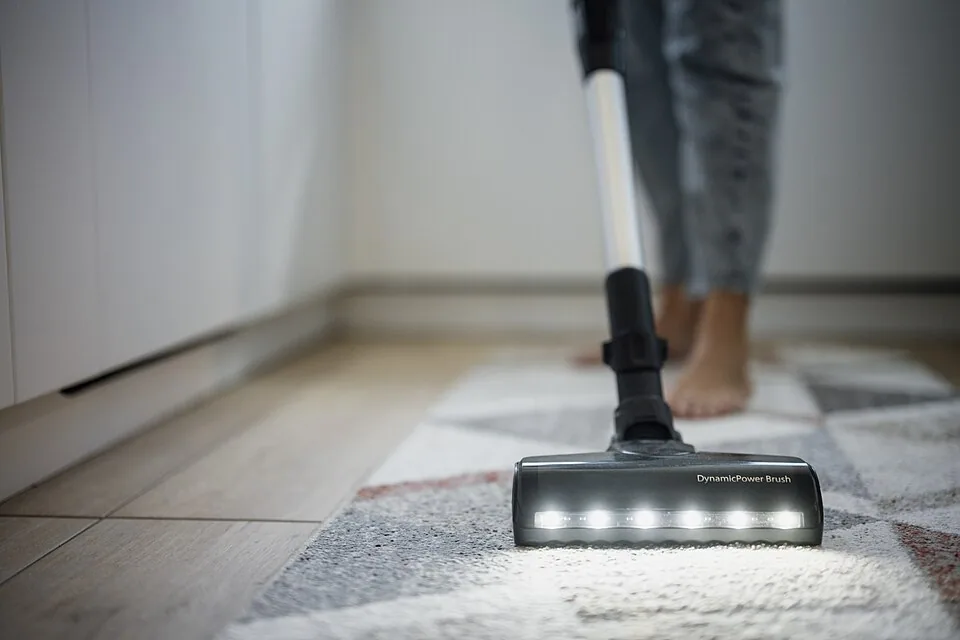
The most important rule is to switch off the beater bar or rotating brush. A suction-only attachment or a vacuum with a brush that can be turned off removes soil without winding the fibers. If your vacuum has no option to disable the brush, use the hose with a wide upholstery or floor tool instead, or a cylinder vacuum with a suction head.
Pass slowly. A shag needs more time for the air to pull dirt out of the depths, so move the head across the rug in slow, overlapping strokes, and go over each section several times, in two directions. Lift the head from time to time to let air rush in and loosen the debris. Raise the height setting of the vacuum so the head glides on the pile and does not press it flat.
Use a gentler tool for the edges. A crevice tool can pull the fringe, so keep it clear of any tassels, and vacuum along the length of the fringe, not across it. For a rug with a looped or braided base, such as some wool shags, check the maker's guidance before using any suction at all. Aim to vacuum high-traffic areas once or twice a week and the whole rug every week or two.
Shaking, raking and grooming
Because a vacuum cannot reach everything, shake the rug. Take it outdoors, drape it over a rail or a clean line, and shake it firmly or beat it gently with a broom handle or a carpet beater, working from the back. Loose grit, sand and crumbs drop out, and the pile loosens up and fluffs. Do this every few weeks, and more often if the rug is in an entryway or a home with pets.
Large rugs are awkward to shake, so you can roll them up with the pile facing out and tap, or lay them over a clean surface and beat the back. If the rug is too big, flip it over, vacuum the back with suction and let the loosened debris fall out of the pile onto the floor, then flip it again and vacuum the front.
Grooming restores the shape. A rug rake, a wide-toothed comb or a soft-bristled hand brush lifts flattened pile and aligns it. Work gently, in sections, with the teeth just below the tips of the fibers, so that you do not pull strands out. A tangled patch can be eased apart with fingers. Brushing in one direction creates a uniform look, and brushing against the pile gives a looser, more textured one.
Spills and stains
Speed and blotting matter more than any cleaner. Lift solid material with a spoon or a dull knife, then blot liquid with a clean white cloth or paper towel, pressing down and lifting, and working from the edge of the stain toward the center so it does not spread. Never rub, since rubbing pushes the liquid deeper into the pile and twists the fibers.
For water-safe synthetics, a mild solution of a few drops of clear dish soap in a cup of warm water, applied sparingly with a cloth and blotted, removes many stains. Rinse by blotting with a cloth dampened with plain water, then press with dry towels to draw out moisture. Test any solution on a hidden corner first, because dyes can bleed.
Be careful with wool, viscose and any rug with a jute or cotton backing. Too much water can swell a natural backing, cause browning and leave a damp base that smells. Viscose shag is particularly sensitive: water can leave permanent marks and make the fibers weak, so use the minimum of moisture and consider professional cleaning. Our guide to cleaning an area rug at home covers each fiber in more detail.
Pet accidents need prompt action. Blot as much liquid as possible, then use an enzyme cleaner according to the label, since enzymes break down the organic compounds that cause odor and repeat marking. Dry the rug thoroughly, because a damp shag can grow mildew in the base.
Preventing and fixing matting
Matting happens where weight and traffic press the pile down, usually in front of a sofa, under a chair or along a walking path. The fibers flatten and stick together, and dirt and moisture make it worse. Three habits reduce it: a good rug pad, regular rotation and keeping heavy furniture off the pile or using wide furniture cups to spread the load.
A rug pad adds cushion beneath the rug, so each step compresses the pile less, and it stops the rug from creeping, which matters because a moving rug grinds the pile into the floor. Choose a thick felt or a felt and rubber combination, and trim it a little smaller than the rug. Our guide to rug pads explains the options.
Rotate the rug every few months, a quarter or half turn, so the wear spreads across the surface. For existing mats, spray lightly with water, if the rug is water-safe, and then comb the pile up with a rake or a stiff brush while it is damp. A hair dryer on a cool or low setting can help the fibers recover after a gentle combing. For deep crushes under furniture, see our guide to getting dents out of a rug.
Shedding: normal or a problem
New shag rugs shed. Loose fibers that were cut during manufacturing remain among the pile, and they come out in the first weeks or months, in a quantity that surprises many owners. This is normal and usually tapers off, so vacuum with suction and do not pull at loose strands. Shedding is more noticeable in wool and in rugs with a high pile, and it does not mean that the rug is defective.
Continuous or heavy shedding after months, or bare patches where the backing shows through, is a different matter, and it may point to poor construction, a damaged backing, or abuse from a rotating brush. Check the backing by looking at the back of the rug, and look for gaps where tufts have come out in a clump. If the rug is new, contact the seller.
Our guide to stopping rug shedding explains the causes and what you can do. Never cut a loose strand that sticks out above the pile at the surface, since a cut at the base can leave a hole. Trim tall strands with scissors, to the level of the surrounding pile, without cutting into the base.
| Task | How often | Method | Avoid |
|---|---|---|---|
| Light vacuum of traffic areas | Once or twice a week | Suction only, slow passes | Beater bar or rotating brush |
| Full vacuum | Every week or two | Overlapping passes in two directions | Pulling at fringe |
| Shake or beat outdoors | Every few weeks | Shake, tap the back | Hard beating on delicate backings |
| Rake or comb the pile | As needed | Wide-toothed rake, gentle strokes | Pulling out strands |
| Rotate | Every few months | Quarter or half turn | Leaving it in one position |
| Deep clean | Once a year or as needed | Professional or fiber-appropriate method | Soaking viscose or jute backing |
Washing and deep cleaning
Some shag rugs are machine washable, usually small polyester ones with a non-slip backing. If the label allows, wash on a gentle cycle in cool water, with mild detergent, and air dry flat or hang, since a hot dryer can melt the backing and shrink the fibers. Large rugs often do not fit the machine, and a home washer's drum can bunch a rug and damage it.
For non-washable synthetic shags, a deep clean with a carpet cleaner or a hired extractor can work if the label allows water, but use as little water as you can and dry quickly with fans, since a thick pile holds moisture in the base. A damp shag left in a closed room can develop an odor within a day or two.
For wool, viscose and valuable rugs, use a professional cleaner who works with long-pile rugs. Ask how they dry the rug, since a slow or incomplete dry causes mildew in a shag. Avoid steam cleaning unless the label allows, as heat can distort fibers and backing.
Placement, pets and children
Where you put a shag affects how much care it needs. A bedroom or a low-traffic seating area keeps a shag looking good, and an entryway or a dining area under chairs does not. Chair legs and rolling chairs catch the pile and flatten it, and food spills collect, so avoid placing a shag under a dining table.
Pets make shag harder. Claws snag loops, hair works into the base, and accidents soak into the pile. A short-haired, well-trained pet in a low-traffic room can live with a shag, but a long-haired pet or a puppy will challenge it. Choose a shag with a dense, short-for-shag pile of around 1 inch, trim any loose strands before they snag, and keep nails clipped.
Children enjoy shag and cause the same problems, mostly food and drink. Place a shag in a room where eating is not allowed, or accept that you will be blotting and vacuuming more often, and choose a washable one if possible.
One more habit protects the rug and the floor: check the underside once or twice a year. Lift a corner and look for dampness, a gritty film under the pad or a backing that has started to flake. Grit trapped between the backing and the floor works like sandpaper, and a damp patch under a thick pile can stay hidden for weeks. Vacuum the floor beneath, let it dry fully and lay the rug back with the pile running in the same direction, which keeps the sheen consistent across the room.
Frequently asked questions
Can I vacuum a shag rug with a beater bar?
No. A rotating brush winds long fibers around the roller and pulls them out. Use suction only, turn the brush off, or use a hose attachment. If your vacuum cannot disable the brush, use a different tool.
How do I fluff a flattened shag rug?
Rake or comb the pile with a wide-toothed tool, gently, in sections. For stubborn flattening, lightly dampen a water-safe rug, comb, then dry with a fan. Rotate the rug and use a pad to avoid recurrence.
Why is my new shag rug shedding so much?
Loose fibers left from manufacturing come out in the first weeks. It is normal and usually tapers. Vacuum with suction, do not pull the strands, and contact the seller if heavy shedding continues for months or bare patches appear.
How often should I clean a shag rug?
Vacuum high-traffic areas once or twice a week, the whole rug every week or two, and shake it every few weeks. Deep clean once a year or when needed, according to the fiber and label.
Can I put a shag rug in a living room with pets?
You can, with care. Choose a shorter shag, trim loose strands and keep up with suction vacuuming. Avoid it if your pet is a heavy shedder or a chewer, or consider a washable shag that fits your machine.
Bottom line
The routine is short: suction only, slow passes, shake it outdoors, blot spills and groom the pile with a rake. Add a felt and rubber pad, rotate the rug each season and keep it away from the places where food and chairs live.
Accept the first months of shedding as part of the deal, and do not fight it with a beater bar. A shag that is cared for in these ways keeps its softness for years, and one that is vacuumed like a flat weave rarely does.