Performance fabric is one of the most used and least defined phrases in furniture marketing. It appears on sofas aimed at families, on outdoor cushions and on slipcovers, and it suggests a material that shrugs off wine, mud and a dog's claws. Sometimes it does something close to that. Sometimes it is a standard polyester with a spray-on finish and a confident name.
This guide explains what actually makes a fabric perform, how to read the numbers and codes that back up the claim, what the common treatments do and where each one stops working. It is based on how textiles are made and tested and on patterns in owner feedback, and it avoids brand claims. The aim is to let you read a listing and judge whether the promise matches the material.
What the term means, and what it does not
There is no legal or regulatory definition of performance fabric. The phrase is a marketing category that covers any upholstery designed to resist some combination of stains, abrasion, fading, moisture, mildew and odors. One maker may use it for a woven polyester with a stain-repellent finish, another for a solution-dyed acrylic that tolerates bleach cleaning. The performance may be inherent in the fiber, applied as a finish or bonded as a backing.
That is why two sofas both described as performance can behave quite differently. A fabric whose resistance comes from the fiber keeps it for the life of the cover. A fabric whose resistance comes from a coating may lose it with wear, washing or friction. When you read a listing, ask where the performance comes from, since that determines how long it lasts.
Also separate the claims. Stain resistance, abrasion resistance, fade resistance and water resistance are different properties. A fabric may be excellent at one and unremarkable at another. A fabric that resists red wine may still pill, and one that survives years of sun may still absorb body oils.
Fibers: where performance starts
The fiber sets the baseline. Polyester is the most common performance fiber. It is strong, resists abrasion, does not absorb water readily and holds color well, which makes it suited to stain resistance. Its weakness is oil: polyester attracts oily soils, so body oil and cooking grease can stain it more readily than water-based spills.
Acrylic is a softer, wool-like fiber that resists sun and mildew and is common in outdoor fabrics. Olefin, also called polypropylene, is the most stain-resistant common fiber and is also highly resistant to fading and moisture, but it can feel slightly waxy and may flatten or crush. Nylon is very strong and resists abrasion, though it can be affected by sunlight and some dyes. Natural fibers such as cotton and linen can be blended with synthetics to add comfort, and the blend resists less than a pure synthetic.
Microfiber is a construction, not a fiber: very fine polyester or nylon filaments woven closely, so the surface is dense and soil sits on top. Tight microfiber resists spills and is easy to clean, but it can show watermarks and attract pet hair through static. Our guide to sofa fabric types compared sets these against natural options.
Solution-dyed fibers
Solution dyeing is the most meaningful single feature in the category. In most fabrics, the fiber is made colorless and the dye is applied afterward, so the color sits on the surface of each strand. In a solution-dyed fiber, the pigment is added to the liquid polymer before the fiber is spun, so the color runs all the way through each filament, like the color in a crayon.
The benefits are practical. The color resists fading in sunlight, because there is no surface dye to bleach. It resists staining from many liquids because the dye is not available to be displaced, and the fabric can often be cleaned with a diluted bleach solution without losing color, which is why solution-dyed acrylic dominates outdoor furniture. It also keeps its color when it wears, since scuffing exposes more of the same color.
The limits are cost and feel. Solution-dyed fibers are more expensive to produce, and not all can be made in every color or finish. Solution-dyed acrylic can feel firm, and olefin can feel coarse, so soft hand-feel in living room upholstery often relies on other fibers. If a sofa sits in a bright window, solution-dyeing is the feature most worth paying for.
Finishes and coatings
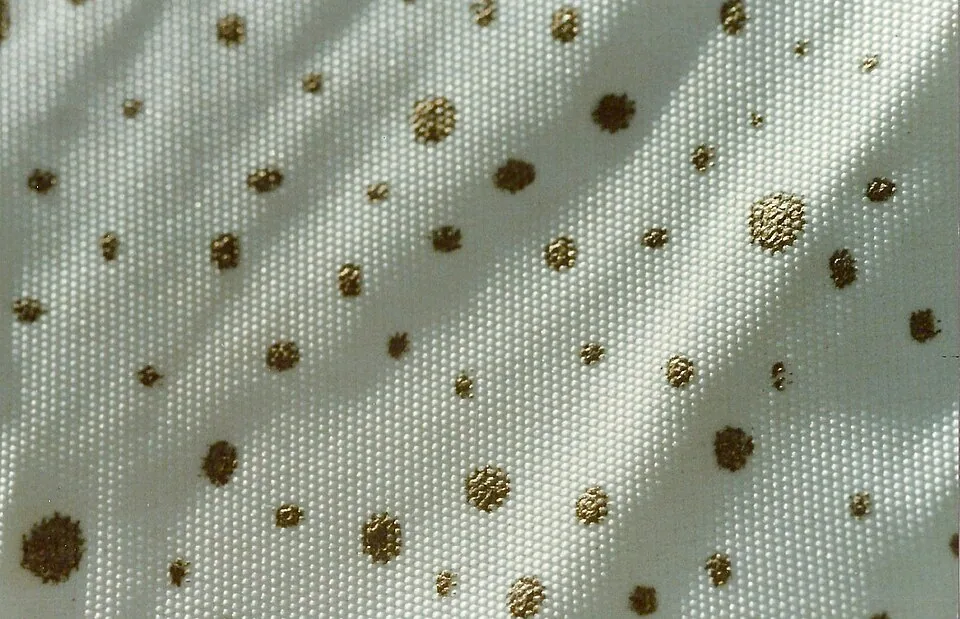
The second route to performance is a treatment applied after weaving. Stain-repellent finishes coat each fiber so liquids bead on the surface instead of soaking in. Many of these are fluorochemical finishes, and some makers have moved to alternatives free of the fluorinated compounds that have drawn scrutiny in recent years. Because the finish sits on the surface, it can wear off at high-friction points, such as the seat front and the arms, and can be reduced by harsh cleaning.
Back coatings are a different feature. A thin polyurethane or acrylic layer on the back of the fabric blocks liquid from passing through to the foam and adds stability. It protects the cushion, but it does not stop a stain on the face, and it can make the fabric slightly stiffer. Some fabrics are laminated to a membrane that makes them waterproof, which is useful for incontinence or pet accidents but can feel warmer and less breathable.
Antimicrobial treatments, silver-based or other, claim to reduce odor and mildew. They address microbial growth, not stains, and evidence for their lasting effect on upholstery is limited. Treat them as a minor extra, not a reason to buy.
Rub counts: how abrasion is measured
The number that most often backs a durability claim is the abrasion rating. Two methods are used. The Wyzenbeek test rubs a piece of cotton duck back and forth across the fabric, and the result is given in double rubs, one back-and-forth stroke. The Martindale test, common in Europe and increasingly elsewhere, rubs the fabric in a figure-eight pattern, and the result is given in cycles. The two scales are not directly comparable.
A general industry guide treats about 15,000 double rubs as a heavy-duty residential level, and 30,000 or more as commercial, though the exact thresholds vary by source. For Martindale, figures in the tens of thousands of cycles are considered suitable for heavy domestic use. Check that the figure is stated with the test method, and that the test stopped at the stated number without failure, not at the first sign of wear. A rating of 100,000 double rubs does not mean a sofa will last 100,000 sits.
Abrasion testing says nothing about pilling, snagging or the effect of claws. A fabric with a high rub count may still pill if the yarn is loosely spun, and a loop weave can catch a claw, which cuts the loop without wearing it. If the listing does not give a rub count, treat the claim as unproven rather than as bad. For pets, see our guide to protecting a sofa from pets.
| Feature | What it does | What it does not do | What to look for |
|---|---|---|---|
| Solution-dyed fiber | Resists fading and many stains | Resist oil or claws | Fiber named as solution-dyed |
| Stain-repellent finish | Makes liquids bead | Last forever on high-wear zones | Treatment named and care instructions |
| Back coating | Blocks liquid from the foam | Protect the face from stains | Coating type stated |
| High rub count | Resists abrasion wear | Prevent pilling or snags | Wyzenbeek or Martindale figure and method |
| Tight weave | Keeps soil on the surface | Resist static hair | Smooth, dense surface |
| Antimicrobial | May slow mildew | Stop stains | Treat as minor |
Cleaning codes: W, S, WS and X
The cleaning code on the tag tells you what to use. W means water-based cleaners are safe, S means use a water-free solvent cleaner, WS means either, and X means vacuum or brush only, with no liquid at all. Performance fabrics are most often W or WS, which is part of their appeal, since you can blot a spill with water and a mild soap.
Read the code literally. A fabric coded W is not a fabric that cannot stain. It means water will not damage it, which is a different claim from saying it will not mark. A fabric coded S may react badly to water and leave a ring. If the listing does not state a code, ask, because it is the single most useful instruction for owning the sofa. Our guide to cleaning a fabric sofa explains how to use each code.
Be careful with cleaning products. A strong solvent or bleach can strip a surface finish, and rubbing with a rough cloth can raise the surface on a tight microfiber. Blot, do not scrub, and test in a hidden spot first.
Where performance fabrics stop performing
Oil is the first limit. Body oil, hand lotion, sunscreen and cooking grease can darken polyester and microfiber at the arms and headrest over months, and the finish does not stop oil the way it stops water. Regular cleaning, and a throw on high-contact spots, helps.
Second, a performance finish wears. It is thinnest where the fabric is rubbed most, such as the seat edge and the arm, and repeated cleaning with detergent can strip it. A fabric that beads water in the first year may soak it up in the fifth. Reapplying a protector is possible on some fabrics, but not all, and it can change the feel.
Third, performance is not damage-proof. Claws can snag a loop or pull a yarn, a cut from a sharp object cannot be undone, and a fabric that resists stains may still hold a dye transfer from new denim. Sunlight can also degrade a finish and a non-solution-dyed color. Lastly, performance fabrics can feel different: some are slick, some are slightly stiff, and a few trap heat. Touch a sample before ordering.
How to judge a listing
Look for four facts: the fiber content, the abrasion rating with the method, the cleaning code and the source of the treatment. A listing that names the fiber, gives the rub count and states a code is making checkable claims. A listing that says only performance fabric and shows a photo of wine beading on a cushion is giving you marketing.
Ask for a swatch. Spill a little water and a little oil on it, rub it, look at it in your light and leave it in the sun for a few days. This costs almost nothing and tells you more than the listing. Check the label on the finished sofa, since the fabric on a sofa may be a different grade than the swatch.
Finally, match the fabric to the household. A home with children and a large dog benefits from a tight, solution-dyed weave and a code of W or WS. A home with light use and no pets may not need to pay for the full package, and may prefer a softer natural blend.
Slipcovers and removable covers change the equation in your favor. A cover that unzips can be machine washed according to its care label, which restores the surface far better than spot cleaning, and a worn cover can be replaced without replacing the sofa. If a model offers spare covers, a performance fabric on a removable cover gives you the strongest combination of resistance and recovery. Check the care label for the wash temperature and drying method, since heat can damage backings and finishes, and note that the foam and frame under the cover are not protected unless the cover has a liner.
Frequently asked questions
Is performance fabric stain-proof?
No. It resists many stains, mostly water-based ones, and makes cleanup easier, but oil, dye and old stains can still mark it. Blot spills quickly, and clean according to the code on the tag. A fabric that is stain-resistant is easier to clean, not immune.
Does performance fabric feel different?
Often, yes. Some feel soft and look like ordinary upholstery, and others are smoother, slicker or firmer. Tight microfibers can feel slightly slippery, and olefin can feel coarse. The feel depends on the fiber and weave, so touch a swatch rather than trusting the label.
How many double rubs is enough for a family sofa?
Industry guidance commonly treats about 15,000 double rubs as heavy-duty residential. A higher figure gives more margin, but the weave and fiber matter too. Check the method used, since Wyzenbeek and Martindale numbers cannot be compared directly.
Can I add a stain-resistant finish to my old sofa?
You can apply a fabric protector spray to many upholstery fabrics, though results vary with the fiber and it can change the feel. Test in a hidden spot and follow the cleaning code. A spray will not match a solution-dyed fiber or a factory finish.
Is performance fabric safe for pets and children?
Generally yes, though the finishes vary. If you are concerned about the chemicals in a finish, ask the maker what the treatment is and whether it is free of fluorinated compounds. The fabric itself is a standard textile.
Bottom line
Treat performance as a set of specific, checkable properties, not as a single quality. For a household with pets or children, choose a fabric with a solution-dyed or inherently resistant fiber, a stated rub count of 15,000 double rubs or more, and a W or WS cleaning code. For a sunny room, put solution dyeing first.
Be sober about the limits. No fabric is stain-proof, oil is the usual exception, and finishes wear in the places you sit most. Order a swatch, test it with your own household's worst case, and then buy the sofa.