Nesting tables solve a very specific problem: a room that needs a lot of surface some of the time and almost none the rest of it. A set of nested tables sits as a single compact coffee table on an ordinary evening, and when guests arrive the small tables slide out and become a drink spot for each seat. That flexibility is the whole appeal, and for the right room it is better than any single table.
This guide explains how nesting sets are built, what sizes and heights to expect, how stable they are, how to use them in a small living room, which materials hold up and where the idea fails. It is based on how these tables are made and used and on patterns in owner feedback, and it avoids brand claims. The aim is to help you decide whether a nesting set suits your room before you buy.
How nesting tables work
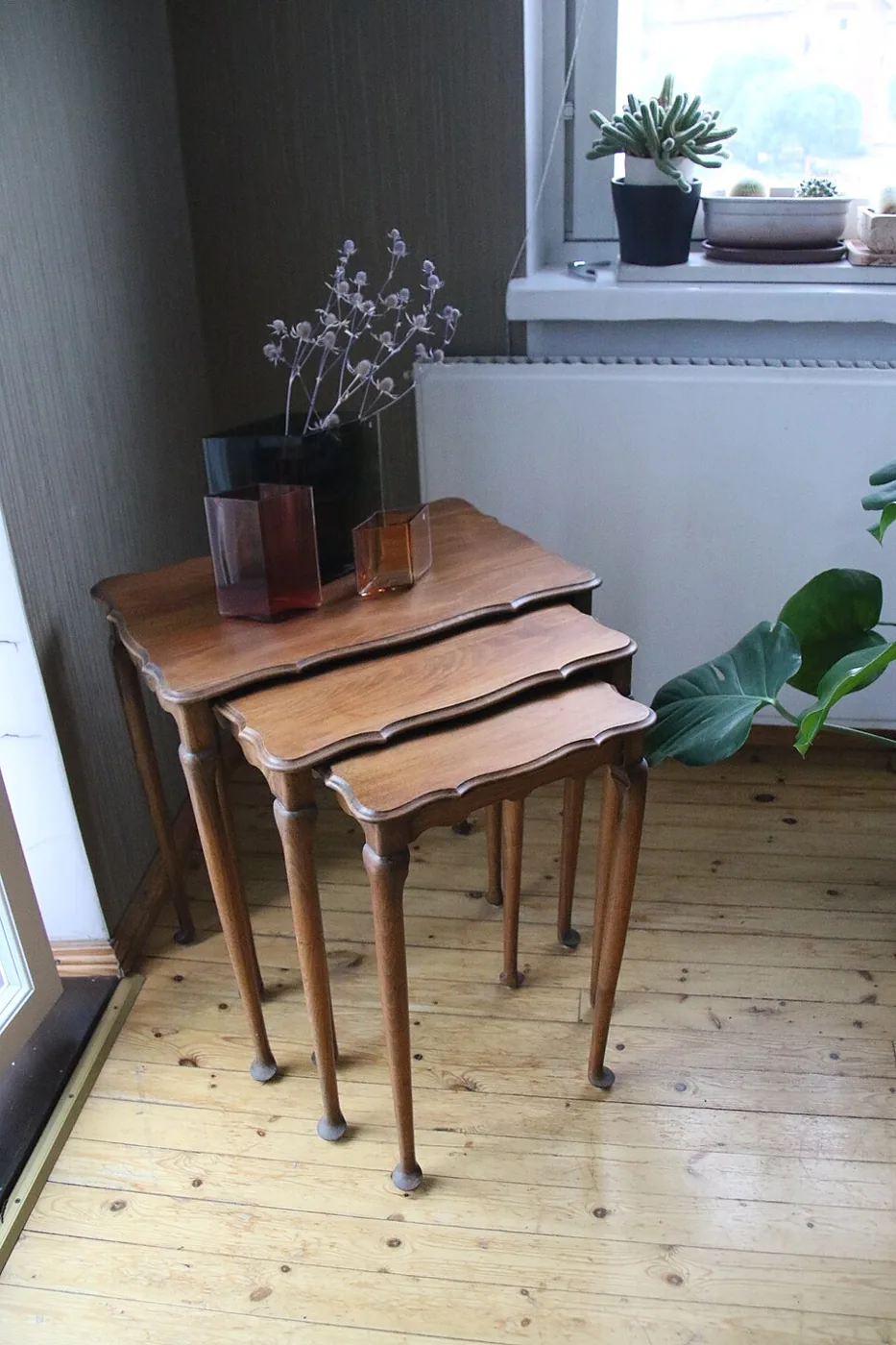
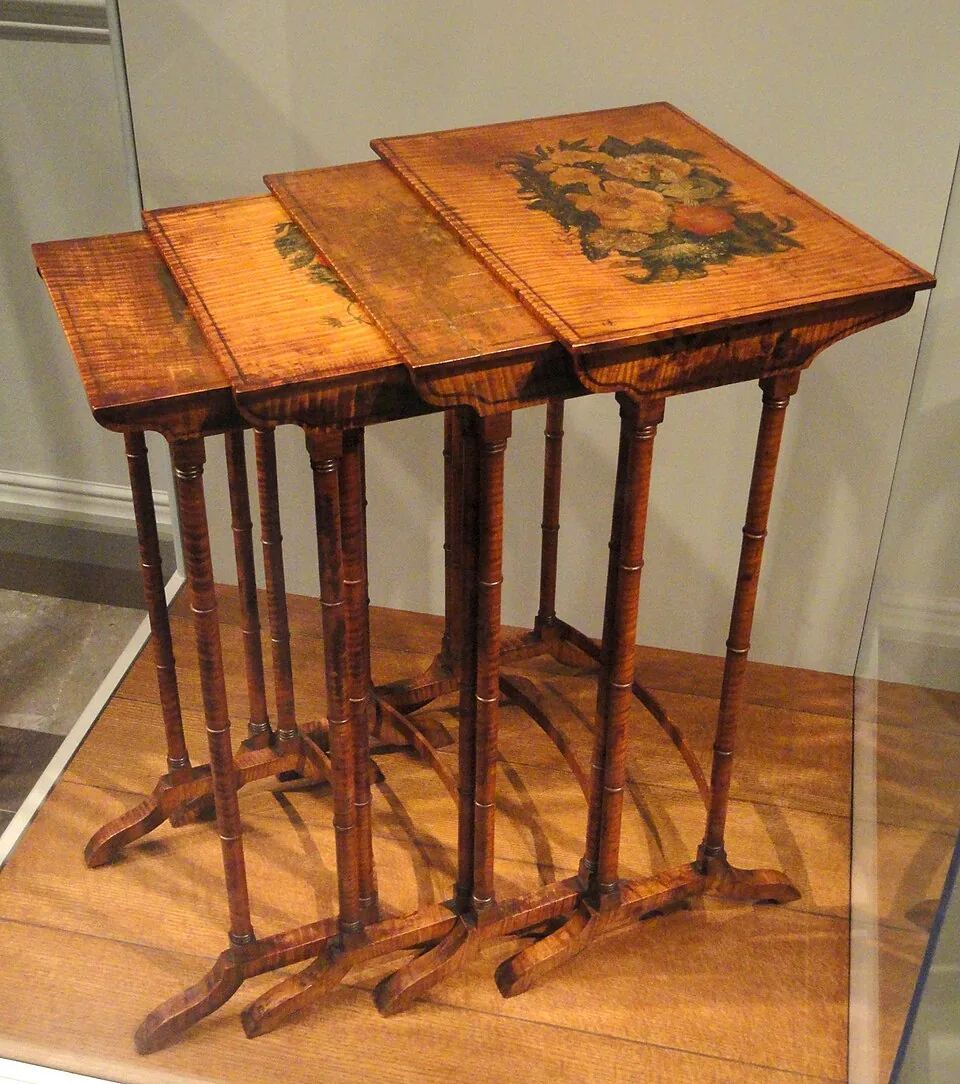
A nesting set is two or three tables, each slightly smaller than the one before it, designed so that the smaller table fits under the larger. The largest table has the widest and highest top and legs spaced far enough apart that the next table can slide between them, and the smallest sits under the second. When they are nested, the tops form a stepped or staggered surface, or sit flush, depending on the design.
The sizes are graduated in both footprint and height. A common arrangement is a large table that works as a small coffee table, a medium table that is a few inches lower and narrower, and sometimes a small third table that works as a side table or a stool. The heights usually step down by one to three inches, and the tops slide in and out with the legs passing under the larger table.
There are several shapes. Rectangular and square sets have tops that sit flush, and round and oval sets can be tucked in along a curved edge. Some sets have legs that are straight, and others splayed so the smaller tables angle out. The shape and the leg design affect how easily the tables slide and how much space the nested set takes.
What nesting tables do well
The first advantage is space. A stacked set occupies the footprint of its largest table, which is only a bit more than a single coffee table, but it gives you the surface area of two or three tables when spread out. In a small living room, where there is no space for a coffee table and two side tables, a set gives you the flexibility to add surfaces only when needed.
The second is flexibility. You can use the pieces together, pull one out to use beside the sofa, move one to another room or use one as a plant stand or a bedside table. The set adapts to changes in the room, including a move to a new home. Many people also like the layered look, which suits a casual or eclectic style and adds a bit of interest to the center of a seating group.
The third is that they are generally light and easy to move. A small table can be carried to where it is needed, such as beside a recliner, or tucked away when not in use. In a home with a reading chair, a guest seat or a sofa without a side table, the extra surfaces are useful. They also tend to be less costly than a large coffee table and two side tables.
Finally, they do not dominate. A set with thin legs and glass or light tops takes up little visual weight, which helps in a small room. The smaller footprint also reduces the risk of bumping into corners, since the tables can be moved out of the walkway.
The drawbacks
Small tops are the first. Each table has a surface smaller than a full coffee table, so a nested set offers less space for books, a tray and a lamp. A cluster of drinks and snacks can crowd a top, and a large item, such as a big vase or a tray, may not fit. If you use the coffee table for serving, a set with a generous top is better.
Stability is the second. Because the frames have to slide under each other, the legs are thin and the base is narrow, which means they can tip or wobble, especially if bumped or loaded with a heavy lamp. The smaller tables, with a narrow top and a small base, are the least stable. A child leaning on one or a pet knocking it can send a drink over. A set with a wider base and a lower center of gravity is steadier.
Weight capacity is limited. Small tables usually carry 20 to 60 pounds, and the capacity of a nested table may be lower than that of a solid piece, so a heavy lamp or a stack of books can overload a table. Check the rated weight for each table, not only the set.
The fourth drawback is that they do not offer storage. A nesting set has no drawer, shelf or lid, and when stacked, the space below the top is occupied by the nested tables. If you need to hide clutter, a lift-top or an ottoman is a better choice, as we discuss in our guide to storage ottomans versus coffee tables.
| Feature | Nesting set | Single coffee table | Coffee table plus side tables |
|---|---|---|---|
| Floor space when not in use | One table footprint | One table footprint | Three footprints |
| Surface area when spread | Two or three tops | One large top | Three tops |
| Stability | Fair to good, depends on frame | Good | Good |
| Storage | None | Sometimes | Sometimes |
| Flexibility | High | Low | Medium |
| Cost | Often lower | Varies | Higher |
| Moving and rearranging | Easy | Heavier | Several pieces |
Sizes, heights and clearance
Typical sizes vary by set. The largest table in a coffee-table set is often 20 to 36 inches across or long, with a height of 16 to 20 inches, and the smaller tables are a few inches narrower and a few inches lower. A set of two might include a table at 18 inches high and one at 15 inches, and a set of three adds a table at 13 or 14 inches.
Heights matter for use. A coffee-table height of 16 to 18 inches suits a typical sofa, while a side-table height of 22 to 26 inches matches the arm of most sofas, which nesting tables usually do not reach. A small nesting table that sits at 15 inches next to a sofa arm of 25 inches is too low to use as a drink spot, and a person has to reach down to it. If you want side-table use, check the height of the tallest table against the arm of your sofa. Our guide to side table height explains how to match them.
Clearance is the technical point that causes the most returns. The smaller table has to fit under the larger one, and the larger table needs enough height and width between its legs. Check the interior clearance of the large table, the width and height of the opening, against the dimensions of the small table, including its top. A set that jams, or whose legs hit each other, will scratch the finish. Look for photos of the nested set from the side and the front, and check the listing for the clearance dimension.
Also compare the heights with your sofa seat. The largest table should be close to the seat height, within an inch or two, for comfortable use, as we describe in our guide to coffee table height and clearance.
Using nesting tables in a small room
In a small room, keep the set nested most of the time, in front of the sofa, with the smaller tables pulled out only when needed. Leave 14 to 18 inches between the sofa and the large table for knees and walking, and keep the legs of the pulled-out tables away from the walkway. If you put one table beside the sofa as a side table, make sure it does not block the path.
A nesting set also works well as a pair of side tables. Place the large table by one end of the sofa and the smaller table by an armchair, or by the other end, and use them as separate pieces. This arrangement saves space and gives the room a more balanced look than a single coffee table. For a narrow room, place them along a wall, or use one as a bedside table in a studio.
Move the tables around. In a room that serves several functions, such as a living room and a home office, a nesting set can be used as a laptop table, a plant stand or a spot for a lamp. Keep the tables light so that you can move them easily, and check that they have felt pads on the feet to prevent scratches, particularly on a wood floor. For small-space ideas that go beyond tables, our guide to small living room storage ideas has more.
Materials and finish
Materials affect weight, durability and look. Metal frames with a wood, glass or marble top are the most common. A powder-coated steel or iron frame is strong and thin, and resists scratches, while a wooden frame is heavier and warmer. Solid wood is durable and can be refinished, and engineered wood, with a veneer or laminate, is the usual choice at lower prices, and the edges can chip, particularly on small tables that are bumped.
Glass tops look light and open, which suits small rooms, but they show fingerprints and dust and can chip at the edge. Tempered glass is stronger than ordinary glass and breaks into small pieces. Marble and stone tops are heavy and stain easily, and the weight makes a small table more stable but more difficult to move. A laminate top resists stains and is easy to clean. Our guide to coffee table materials compared covers how each behaves with children and cleaning.
Check the feet. Plastic or rubber feet can mark a floor, and bare metal can scratch it. Look for felt pads or adjustable levelers, which fix wobble on an uneven floor. A set that wobbles on a flat floor has a frame problem, and a set that wobbles only on an uneven floor can be fixed with levelers or a thin shim.
What to check before buying
Read the dimensions for each table, not only the set. You need the top size, the height, the clearance under the larger table and the weight capacity. Check whether the tables nest flush, which gives a clean look, or stepped, which shows the layers. Look at the base: wider and lower is steadier, and a diagonal brace or a lower shelf adds stiffness.
Look at the joints and the finish. Screws and bolts should be metal, not plastic, and the legs should join the top firmly. Look for reviews that mention wobble, chipping and the ease of assembly. Assembly takes 20 to 60 minutes for most sets, and the screws should be tightened again after a few weeks.
Finally, think about how you will use it. If you want one large surface for a tray or a board game, a single table is better. If you want flexibility and the ability to slide a table beside a chair, a nesting set is better. Our roundup of nesting coffee tables compares models by size and stability.
Frequently asked questions
Are nesting tables stable enough for drinks and lamps?
They can be if the base is wide and the frame is sturdy. The smaller tables are less stable, so avoid heavy lamps and tall vases on them. Check the weight rating and use a felt pad to stop sliding.
How do I know if the tables will nest?
Check the clearance dimensions in the listing: the width and height of the opening under the larger table must exceed the width and height of the smaller one, including its top. Photos of the set nested from the side help.
Can nesting tables be a coffee table?
Yes, in a small room. The larger table works as a coffee table, and the smaller tables can be pulled out. Check that the top is large enough for what you place on it, and that the height suits your sofa.
What height should nesting tables be?
For a coffee table, 16 to 18 inches, within an inch or two of the sofa seat height. For side use, 22 to 26 inches to match the arm, which most nesting sets do not reach, so check the tallest table.
Are nesting tables good for kids?
They can be, if the frame is sturdy and the corners are rounded. The small, lightweight tables can tip, so keep them away from areas where children climb, and nest them when not in use.
Bottom line
Buy a nesting set for a small or changing room, where the ability to use one table most days and several on occasion matters more than a large top or hidden storage. Check the clearance, the heights, the weight rating and the stability of each table, and choose a wide base.
If you need storage, a large surface or a table for children to climb around, choose a single sturdy coffee table or an ottoman. Whatever you choose, tighten the screws after a month and put felt pads under the feet.