The appeal of a modular sofa is easy to state: instead of buying one large object, you buy a set of smaller ones that can be arranged, expanded and moved. That flexibility is real, and for some households it is the deciding advantage. It also comes with costs that sales pages tend to play down, mostly at the joints between units, where a modular sofa behaves differently from a single frame.
This guide explains how modular pieces connect, what causes gaps and sliding, what reconfiguring and moving house really involve, and how an add-on modular system differs from a sectional that merely comes in pieces. It is based on how these frames are built and on patterns in owner feedback, not on any single brand.
What modular actually means
The word is used loosely. In its strict sense, a modular sofa is a system of standardized units, such as a corner, a middle seat, an armless seat, an end seat with an arm, a chaise and an ottoman, that attach to one another and can be bought separately. You can start with two seats and add a third later, or turn an L into a straight run.
The word is also applied to a conventional sectional that ships in two or three pieces for delivery. Those pieces connect, but there is usually only one way to assemble them, and the manufacturer may not sell extras. That is a knock-down sectional, not a true modular system. The difference matters when you read a listing: look for whether individual units are sold separately, whether the arrangement can be changed, and whether the maker will still sell matching units in a few years.
Modular sofas also differ in how the seat and the back relate. Some units are complete, with seat, back and arms built in. Others, often called a sofa-in-a-box or a cloud style, are a platform with loose back cushions that sit on the seat, which is easier to rearrange but gives less structure.
How the modules connect
Connection hardware is the weak point of the category, and it varies more than the fabric does. The common methods are metal brackets or plates that screw into the side of adjacent frames, hook-and-loop or snap straps under the seat, interlocking metal clips that drop into place, and hidden dowels or bolts. A few designs use a rigid under-frame rail that all units sit on.
The stronger systems clamp the two frames together at more than one point, usually two or three, so the units cannot rotate against each other. The weaker ones rely on a single strap or a pair of clips and depend on the weight of the cushions to hold the seam. A sofa with one clip per joint will open at the seam when someone sits on the corner of one unit and pushes the next one away.
Check what the connection does in three directions: sideways separation, front-to-back sliding and twisting. A good joint resists all three. If a listing only mentions the hardware type and not the number of points per joint, treat that as a question to ask before buying.
Gaps, shifting and the cushion seam
Almost every modular sofa has a visible seam where one unit meets the next, and cushions are usually made for each unit, so the seam is both a gap and a change of surface. A good design hides the gap under a welt or a slight overlap. A weak one lets the seam open as people shift weight, leaving a crack where crumbs, coins and remote controls disappear.
Shifting has several causes. On a hard floor, glides or plastic feet slide under load, and a long run of units can creep apart over weeks of use. On a rug, uneven pile can tilt one unit relative to another. Light units with thin frames move more than heavy ones, which is why low-cost modular systems have a reputation for drifting apart.
Practical fixes are inexpensive. Use a rug gripper or a thin rubber pad under the legs or feet so the whole sofa resists sliding. Tighten connection hardware after the first few weeks, since fasteners settle. Place the sofa so that one end is against a wall, which stops the run from spreading. Corner seams take the most stress, so check that the corner unit has the heaviest connection.
Reconfiguring: the real advantage
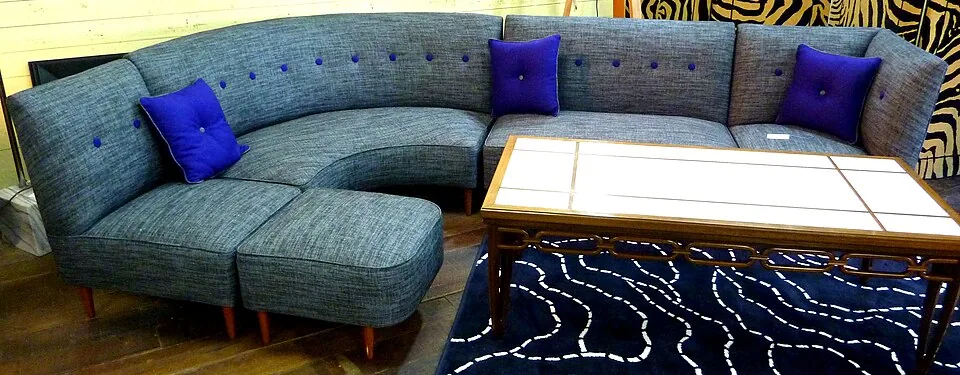
The strongest argument for a modular sofa is that the room changes more often than the sofa should. A reasonable family can go from a small apartment to a house, from one child to two, or from a small room to an open plan, and a modular system can follow. You can use an L shape against two walls, split it into a loveseat and a separate chaise, or run a straight three-seat sofa with an ottoman as a footrest.
That freedom has a practical limit: every configuration needs enough finished sides. A unit made for the end of a run has an arm and a finished side panel, while a middle unit is armless and may have a rough or unfinished side. If you turn a middle unit into an end, you expose that side. Check whether the system sells matching arm units and whether the arms are interchangeable, because a sofa whose pieces only work in one order is not really modular.
Reconfiguration also changes how the sofa feels. A chaise on the left versus the right changes traffic flow, which we discuss in our guide to arranging furniture in a living room. Before buying, sketch two or three arrangements to scale and confirm that each leaves at least 30 inches of walkway.
Moving, stairs and tight doors
Modular sofas win clearly on delivery. A single sectional can be 110 inches or more along its long side and awkward to pivot around a stairwell. Individual modules are typically much smaller, often in the range of 30 to 40 inches per unit, and one person can carry one. For an upstairs apartment, a narrow entry or a walk-up with a tight landing, modular construction can be the difference between a sofa that fits and one that has to be returned. Our guide to whether your sofa will fit through the door explains the measurements.
Moving house is easier for the same reason, but not trivial. Units need to be disconnected and reconnected, and the hardware must be kept together. Label the pieces, photograph the arrangement, and store small parts in a bag taped to the frame. Soft cushions that have been compressed in a box expand over a day or two, but rigid foam units do not compress at all, so they ship in a larger box.
Weight is the other consideration. A single unit with a hardwood frame and a seat full of foam can still weigh more than a person can easily lift, and the frame may be heavier than it looks. Check the weight per unit in the listing.
Add-on modular versus a fixed sectional
The choice between a true modular system and a fixed sectional comes down to stability against flexibility. A fixed sectional is usually built as one or two long frames, with hardwood or engineered rails running the length of the seat. That gives a stiffer, more solid structure with fewer seams, and it often costs less for the same seat count. If you are certain of your layout and room, it is a simpler and often sturdier choice, as we describe in our guide to sectionals versus sofas.
A modular system costs more per seat, mostly because of the duplicated parts: each unit has its own frame, sides and cushions, and the connection hardware adds weight and cost. In return, you can buy one unit when you need it, replace a damaged one rather than the whole sofa, and rearrange as often as you like.
| Factor | True modular | Knock-down sectional | Fixed one-piece frame |
|---|---|---|---|
| Rearrange layout | Yes, freely | Limited, often one or two ways | No |
| Add a seat later | Usually yes, if the line continues | Rarely | No |
| Replace one damaged unit | Often possible | Sometimes | No |
| Seams and gaps | Most | Some | Fewest |
| Stability at the joints | Depends on hardware | Generally good | Best |
| Fits a tight stairwell | Best | Good | Often not |
| Cost per seat | Highest | Middle | Lowest |
Comfort and durability over years
Comfort in a modular sofa depends on the seat structure more than on the modularity. A good unit has a rigid frame, a supportive suspension and dense foam, just like any other sofa, as covered in our guide to sofa frame materials. A poor unit is a thin box with a slab of foam, and it will flatten faster because the units are often lighter and less braced.
The cushions are a distinct issue. Because each unit carries its own cushions, a modular sofa often has more cushions to maintain, and the cushions may be rectangular blocks that do not hold their shape like a sewn cover on a firm core. Check that covers are removable and washable, and that the manufacturer sells replacements. A system whose individual covers cannot be replaced is expensive to maintain.
The longest-lasting risk is supply. A modular line that is discontinued leaves you unable to add or replace units, and a replacement unit from a new dye lot may not match the faded original. If expandability is your reason to buy, favor a maker with a long record of selling the same units and covers.
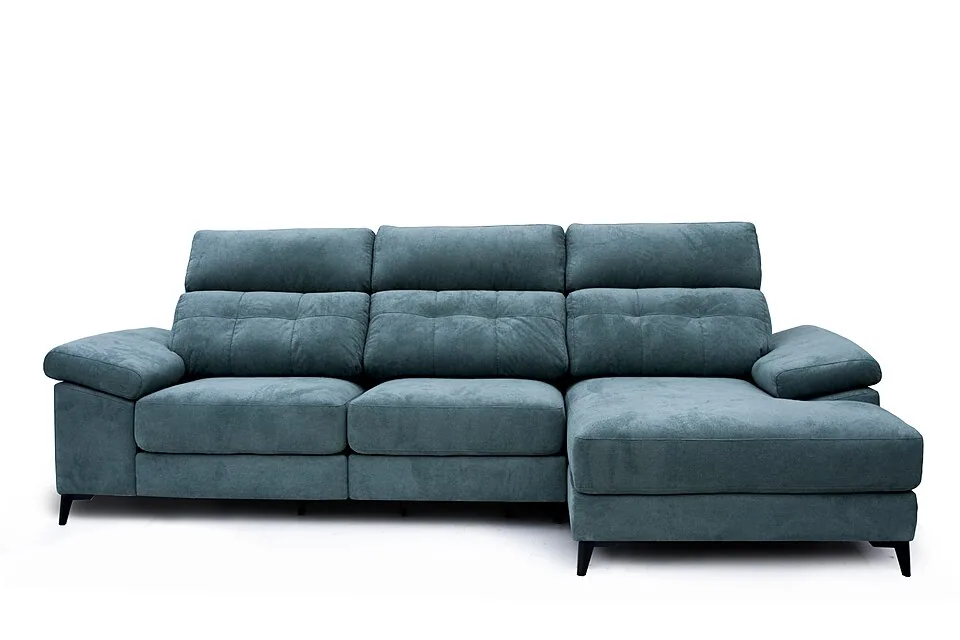
Two details are easy to miss when comparing listings. The first is seat depth per unit: a platform module designed for lounging can be 36 inches deep or more, which turns a small room's walkway into a squeeze, so compare the depth to your wall run using the method in our guide to measuring a room. The second is the ottoman. Many systems sell a matching ottoman that connects like any other unit, and it doubles as extra seating or a footrest, which makes a three-seat arrangement into a chaise without buying a corner piece. Confirm whether the ottoman is included in the set or sold on its own, because it is often the piece that makes the layout work.
Who should buy one, and who should not
A modular sofa is a good fit if you rent, expect to move within a few years, live in a walk-up or have a narrow entry, or want a seating layout that can change as your household does. It is also a sensible way to buy in stages, starting with a loveseat-sized arrangement and adding units when the budget and room allow.
It is a weaker fit if the sofa will sit in one position for ten years in a fixed room, if you want the sturdiest possible frame, or if you plan to lounge across the seams, for example lying across the corner. A fixed sectional has no joints to part under a sprawling body.
Households with small children or large dogs should check the joint design and the floor grip before buying. Children treat a sofa as a climbing frame, and a sofa that separates under a jump is a safety issue. If you cannot add a grip pad or anchor one end to a wall, choose a fixed frame.
Frequently asked questions
Do modular sofas fall apart?
The units do not fall apart, but the joints can open with use if the connectors are weak or the sofa slides on the floor. Choose a system with at least two connection points per joint, tighten the hardware after the first month, and use a grip pad under the legs. A sofa that stays against a wall resists creeping apart.
Can I add more modules later?
Only if the maker keeps selling matching units. Many brands do for several years, but covers and fabric lots change, and a discontinued line cannot be expanded. If expansion matters to you, ask whether the units are sold individually, and buy the extra pieces early if you are sure of the layout.
Are modular sofas comfortable for sleeping or lounging?
They can be, especially deep, low platform styles, but the seams are a limit. A body lying across a joint can feel a gap or a shift, and cushions may separate. For regular sleeping, a sleeper sofa with a dedicated mattress is a better tool than a modular configuration.
How much space does a modular sofa need?
The same as any sofa of its footprint, plus clear access around the units if you want to rearrange. Plan for at least 30 inches of walkway on any open side and test the layout with painter's tape on the floor. Corner units add extra depth in the corner of the room.
Is a modular sofa good for pets?
It can be, since removable covers can be washed or replaced. The seams are the weak point, because hair and crumbs collect in them and claws can catch the piping. Choose a tight weave, check that the covers are replaceable and consider a throw over the favorite seat.
Bottom line
Buy a modular sofa when its flexibility solves a real problem: a narrow stair, a likely move, a room that will change or a budget that has to be spread over time. In those cases the extra cost per seat and the extra seams are a fair price. Look for at least two connection points per joint, replaceable covers and a maker that sells individual units.
If none of those problems applies and you know the layout you want for the next decade, a fixed sectional gives you a sturdier frame with fewer seams for less money. Either way, measure the delivery path, sketch the layout at scale, and add a grip pad under the legs.