A tall ceiling is the feature many buyers want and many owners struggle with. The volume is dramatic, the light is generous and the room feels grand, but ordinary furniture looks small in it, the walls look bare above eye level, the sound bounces and the room can feel cold. The cure is not to hide the height. It is to give the space the scale, layers and warmth that a tall room needs.
This guide covers rooms with ceilings above about 9 feet, up to double height spaces. It explains how to size furniture and rugs, how to hang curtains and art, how to light a tall room at several levels, how to use color and texture to bring the walls in, how to tame echo, and how to handle features such as a tall fireplace, a staircase or a loft. It also notes the maintenance costs of height, since a bulb that is 14 feet up is a different problem than one at 8.
What changes with height
The first change is proportion. Furniture sized for an 8 foot room looks short in a 12 foot room, because the eye compares it with the tall walls. A low sofa, a small bookcase and a modest picture can look lost. The second is distance: light and sound travel farther before they meet a surface, so a single ceiling light gives a pool at the bottom and a gloomy upper wall, and voices carry and echo.
The third is temperature. Warm air rises, so a tall room can be cooler at head height in winter and hotter at the ceiling in summer. Ceiling fans help by moving air, and a fan with a downrod sized for the height keeps the blades at a working level. The fourth is access. Anything on the upper walls or the ceiling, such as a bulb, a smoke detector or a cobweb, is hard to reach, so plan for long life LEDs and a ladder or a pole.
The rule of thumb is to decorate to the full height in a few places, not everywhere. A tall room does not need every surface filled. It needs one or two vertical elements that connect floor and ceiling, a way to bring the light down, and enough soft surfaces to make the room feel cozy. The rest of the work is the same as in any living room, scaled up.
| Element | Standard 8 foot room | High ceiling (10 to 14 feet) |
|---|---|---|
| Curtain rod | 4 to 6 inches above frame | Near the ceiling, or 12 inches or more above |
| Art center | About 57 inches from the floor | Larger or grouped, center at 60 to 66 inches |
| Pendant bottom | 7 feet over a walkway | 7 to 8 feet, with longer rod or chain |
| Bookcase height | 6 feet | 8 feet or more, or built to the ceiling |
| Rug | 8 by 10 feet typical | Larger, often 9 by 12 feet or more |
Furniture, rugs and scale
Choose substantial pieces. A sofa with a taller back, deep seats and a generous arm holds its own in a tall room, and a low profile modern sofa can look dwarfed. Add height with tall pieces nearby: a large armchair with a high back, a console with a tall mirror above it and a floor lamp that reaches 65 to 75 inches. A tall bookcase or a cabinet on one wall gives the eye a ladder up the wall.
The rug should be larger than in a standard room, so that it anchors a big seating group. A 9 by 12 foot rug is a common choice, and a larger one for an open space. The usual rug layout rules apply, scaled up. A rug that is too small makes the furniture look like it is floating, and the height above makes the effect worse. A rug with texture or pattern adds visual weight at floor level.
Group furniture to bring the scale down. A seating group of a sofa, two chairs and a coffee table arranged around a rug forms a room within the room, and the ceiling is less noticeable. Place a console behind the sofa to mark the edge, and use a side table at each end. In a very large open space, define several such groups, rather than pushing all the furniture against the walls.
Windows and drapery
Tall windows and tall walls call for tall curtains. Mount the rod high, close to the ceiling, or at least 12 inches above the frame, and use panels that reach the floor. The extra height draws the eye up and makes the window look as grand as the room. Our curtain length and width guide covers fullness and rod width, and a high ceiling is where those rules count most.
Standard curtain lengths stop at 84, 96 or 108 inches, which may not reach the floor in a 12 foot room, so order long panels of 120 inches or more, or have them made. Join a valance or a pelmet at the top to fill the gap if the window is not at full height. Use a heavy fabric and a lining, which hang better in long drops and add warmth. A fabric with a little weight keeps the line straight.
For a very tall window, a pair of full panels on a strong rod with a center support, or a traverse track, is a better choice than a thin rod. Brackets must be fixed into studs or the header, since long curtains weigh a lot. If the window is a tall arch, a shade inside the frame and curtains on a rod above give both function and a graceful line. Also think about cleaning: long curtains need a wash or a steam, and a high rod needs a ladder.
Walls and art
A big wall needs more than one small picture. Use a large piece of art, at least two thirds of the width of the furniture below it, or group several pieces in a vertical arrangement, which uses the height. A gallery wall that rises toward the ceiling, with the center around 60 to 66 inches and pieces above and below, fills the wall without looking top heavy. Our guide on hanging art above a sofa explains the gap above the furniture and the center height.
Do not hang art high just because the wall is tall. Art hung near the ceiling looks disconnected, and viewers cannot see it. Keep the main center near eye level and use tall elements to fill the upper wall: a tall mirror, a tapestry, a pair of narrow vertical pieces, a leaning ladder or a long shelf. Paneling, picture rails, a wainscot or a color change at a chair rail height can bring the scale of the wall down.
A tall mirror reflects light and the height of the room, doubling the sense of space. Hang it with safe hardware, as explained in our guide to hanging a heavy mirror. Wall color also helps. A deeper color, such as a rich green, a warm gray or a muted terracotta, on the walls makes a tall room feel cozy, and painting the ceiling a pale, slightly warm color keeps it from feeling heavy.
Lighting a tall room
A single ceiling fixture leaves a tall room dark at the sides and glaring in the middle. Light the room at three levels: floor, table and ceiling or wall. Floor lamps and table lamps give pools of warm light at human height, sconces on the walls add light at mid level and a chandelier or large pendant gives presence at the top. Our guide to how high to hang a light covers the heights, and the chandelier size guide helps with scale.
Hang the main fixture lower than the ceiling, using a long rod or chain, so its bottom sits about 7 to 8 feet above the floor in a walkway. A fixture hung right at the ceiling in a 14 foot room does little for the seating area, and it looks lost. A tall, vertical fixture, such as a long pendant or a multi tier chandelier, fills the vertical space. Make sure the box can carry the weight, and plan how to change the bulbs.
Use uplights to wash the upper walls, a technique that makes the ceiling seem to glow and reduces the dark upper void. A torchiere or a wall washer aimed at the ceiling gives soft ambient light. Add dimmers throughout so the level can be set for the time of day. Together these give the layered effect that a single fixture cannot.
Warmth, texture and sound
A tall room has more hard surface, and it tends to echo. Soft furnishings reduce it: a thick rug, upholstered furniture, long curtains, tapestries, a bookcase full of books and a few large plants all absorb sound. Our guide to reducing echo in a living room lists more options, such as acoustic panels hung as art. A room that sounds calm also feels calmer.
Texture brings warmth. Use wool, linen, velvet, wood and woven materials, and layer them. A woven wall hanging, a large basket and a chunky throw all add softness. Plants help too: a tall fiddle leaf fig or a palm fills a corner and carries the eye upward, if the light is enough. Keep them in proportion to the room, and use a large pot.
Check the temperature. If the room feels cool, a ceiling fan on a low setting in reverse in winter pushes warm air down, and heavy curtains reduce heat loss through tall windows. A rug and a seating area near a fireplace or a heat source helps. In summer, a fan and blinds on south windows reduce the heat that collects under the ceiling.
Working with beams, coffers and features
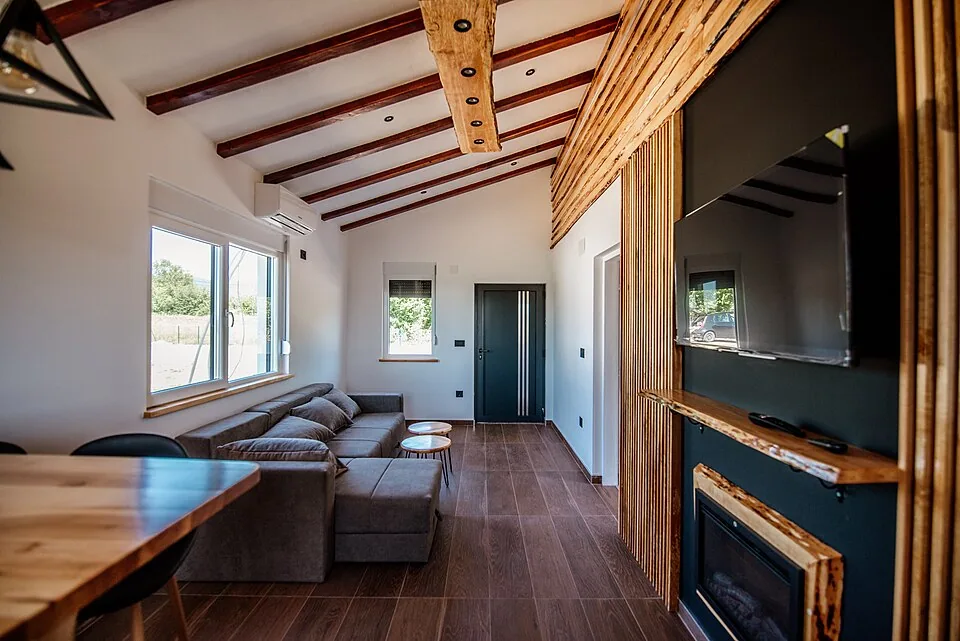
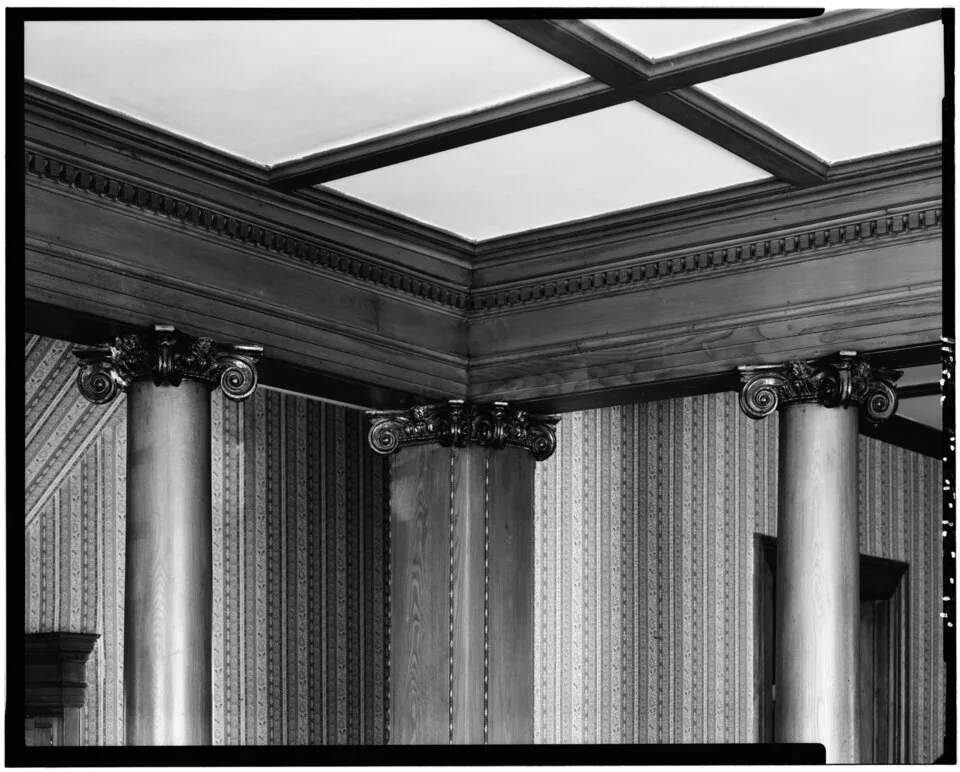
Many tall rooms carry architecture that deserves attention: exposed beams, coffered ceilings, tall fireplaces, built in shelves and staircases. Treat these as a gift. A coffered or beamed ceiling already breaks up the height, and it looks best with simple, warm lighting that grazes the beams, and furniture that respects its lines. Painting the ceiling a slightly deeper color than the walls on a beamed ceiling brings it down, and painting beams in a contrast color highlights them.
A tall fireplace is a natural focal point. Use the wall above it for a large mirror or art, and place a pair of tall lamps or sconces on each side. A TV above a tall fireplace is often too high for comfort, so check the angle before you commit.
Built in shelves that run to the ceiling are a strong way to use the height, since they store a lot and add warmth. Style them in layers, and put lighter or decorative objects on the high shelves, with the heavier items low. A rolling ladder is useful and looks the part, if the budget allows. Whatever the feature, keep a balance: let one dominant element lead, and keep the rest calm so the room does not feel busy.
If the room has a staircase or a balcony, remember the view from above. The rug, the furniture layout and the ceiling fixture are all seen from the landing, so tidy lines and a coherent rug make a difference. Treat the whole volume as one composition, and check it from the highest spot you can reach.
The practical side of height
Plan for access. Choose LED bulbs with a long rated life for high fixtures, and consider a lowering device for a chandelier. A long reach pole with a bulb changer and a duster, or a safe ladder, is a worthwhile purchase. Keep smoke detectors tested, since the sensor at a high point still works, but needs a pole or a ladder to test.
Painting and repairs cost more, because of scaffolding or a tall ladder. When you paint, use a good paint that lasts, and consider hiring for the highest areas. Cobwebs and dust collect on high shelves and fixtures, and a long duster does most of the work. A high ceiling is lovely, and a bit of planning keeps it from being a chore.
Frequently asked questions
How do I make a high ceiling room feel cozy?
Use deeper wall colors, a large rug, lamps at several levels, long curtains and soft textiles. Group furniture to form a smaller room within the space.
What size curtains for 10 foot ceilings?
Panels of 108 to 120 inches, hung from a rod near the ceiling, so they fall to the floor. For 12 foot ceilings, you may need custom lengths or a valance.
How high should I hang art on a tall wall?
The center stays near 57 to 66 inches from the floor, and you fill the height with larger pieces or a vertical group, not by hanging single pieces higher.
What lighting works best?
A mix: floor and table lamps for warmth at human height, sconces at mid level and a large pendant or chandelier hung lower. Add uplights to wash the upper walls and dimmers on every circuit.
Do high ceilings need a ceiling fan?
It helps to move warm air down in winter and cool the room in summer. Use a fan with a downrod sized to the ceiling, so the blades sit about 8 to 9 feet above the floor, and a DC motor for quiet running.
The bottom line
Scale up: larger rug, taller furniture, long curtains hung near the ceiling and art in groups. Light the room at three levels, hang the main fixture lower and add uplights and dimmers.
Warm the room with deeper color, textiles and plants, and soften echo with upholstery and bookcases. Add at least one tall element that links floor to ceiling, and plan for easy access to high bulbs before you install them.