Futons and sleeper sofas both promise the same trick, a sofa that becomes a bed, but they do it in different ways and they deliver different compromises. One treats the mattress as the sofa. The other tucks a mattress inside a sofa body. That single difference decides how each feels on a Tuesday evening, how easy it is to make the bed for a guest, how much floor you need and how long it lasts.
This guide compares the two on the sleep surface, daily sitting comfort, conversion effort, mattress options, weight and space. It is based on how each design is built and on patterns in owner feedback, and it avoids brand claims. If you are deciding which to put in a small room, a home office or a guest space, the answer usually comes from how often the bed function will be used.
How each one works
A futon is a mattress, usually between 6 and 10 inches thick, resting on a frame with a hinged seat and back. In the sofa position the frame holds the mattress in an L shape, with the back upright. To convert, you pull the seat forward and lower the back until the two form a flat surface. The mattress is the same one you sit on, and it bends at the hinge, which is why many futons are a single thick slab of foam or layered cotton and foam that can fold.
There are two common frame styles. A bi-fold futon frame folds in the middle with a simple slide, and a click-clack frame has a back that clicks into upright, lounge and flat positions. The click-clack style is sometimes called a sofa bed in listings, but it is a futon in structure, since the sleeping surface is a single folding cushion.
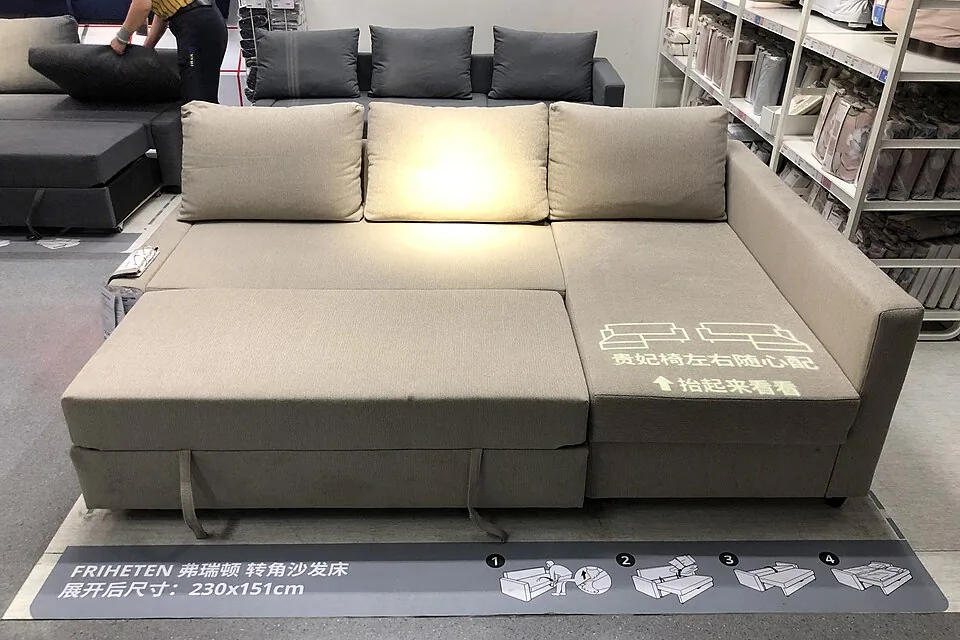
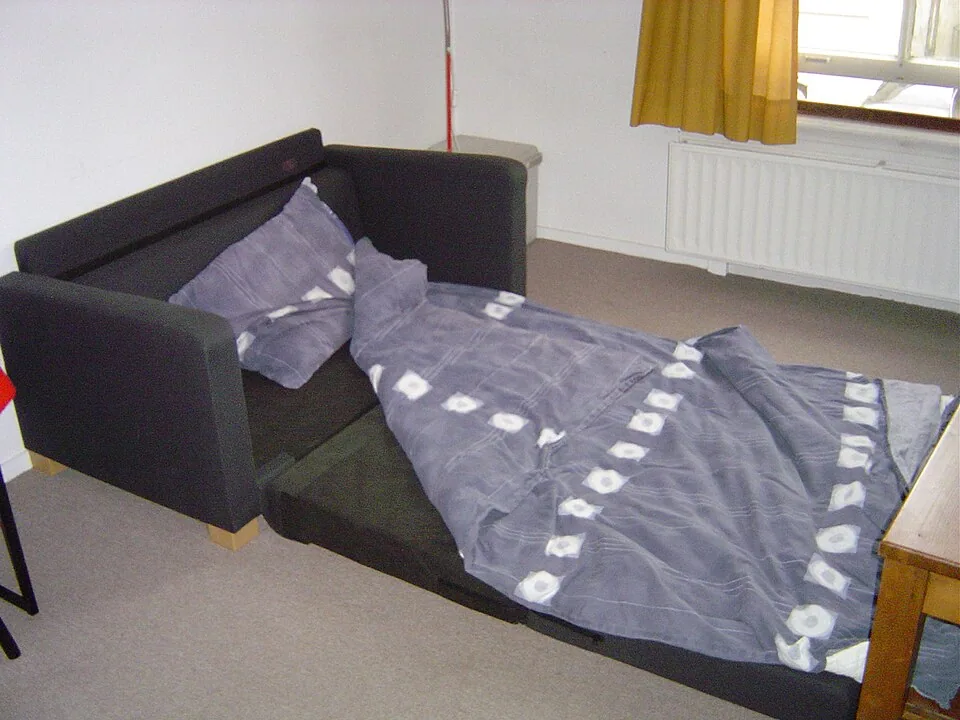
A sleeper sofa is a traditional sofa with a folding mattress and metal frame stored under the seat cushions. To open it, you remove the cushions, pull a handle and unfold the mattress, which typically folds in thirds, with a thin mattress, usually 4 to 6 inches thick, supported by a metal grid and springs. We explain the mechanisms in our guide to sleeper sofa mechanisms. A third type, a boneless or fold-out foam sofa, uses foam blocks that open into a low bed, and it sits on the floor.
The sleep surface
The mattress is where the two designs differ most. On a futon, the sleeping surface is the same thick mattress used for sitting, which gives it a body and a consistent firmness across the whole bed. A futon of 8 inches or more is comparable to a thin mattress, and no part of the sleeper's body rests on a bar or a spring grid. The weakness is that a futon mattress is a compromise material: firm enough to hold a seat and soft enough to sleep on, so it is neither as supportive as a bed nor as plush as a sofa cushion.
A sleeper sofa has a dedicated mattress that is thinner, because it has to fold into the sofa body. A mattress of 4 to 5 inches over a metal frame can feel adequate for a night or two. The classic complaint, especially with older or lower-cost units, is the bar across the middle, where the folding frame sits just beneath a thin mattress and can be felt through the foam. A sleeper with a thicker memory foam or gel foam mattress, usually in the 5 inch range, lessens this, and some mattresses are designed with a firmer layer over the folding point.
When comparing, check the mattress type and thickness, whether the stated size is a true mattress size and not an overall frame dimension, and whether the folding frame sits on a support system with slats or springs. A queen sleeper that is described as a queen may have a mattress of 60 by 72 inches, which is shorter than a standard queen of 60 by 80 inches, so a taller person may find their feet over the edge.
Daily sitting comfort
As seating, a sleeper sofa generally wins. It has a seat cushion over a frame and springs, a conventional back, and the sofa body hides the bed mechanism. The seat depth, the arm height and the cushion softness can be those of a normal sofa, and the sitting posture is similar. A sleeper that has a well-built sofa frame will feel like a sofa for years, although the bed mechanism adds weight and sometimes a hard spot at the front of the seat.
A futon is a firmer, lower seat. The mattress is thick but compressed against the frame, which makes the seat feel slab-like, and the back is often low. The depth of a futon seat is often around 20 to 22 inches and the seat height can be as low as 14 to 16 inches, which can be difficult to rise from if you have stiff knees. Cushioning with a high proportion of foam sits softer than a cotton-filled mattress, and cotton compresses into a flat, dense surface over time.
You can improve either. A futon benefits from a cover with a thin layer of padding, and a sleeper from a topper. For a deeper look at how fillings behave, see our guide to sofa cushion fill types.
Conversion effort
How easily the piece converts matters most if you plan to use it every day. A futon converts in a single motion with one hand and takes a few seconds, since the mattress stays in place and bedding can sometimes be left on, although most people strip it first. A click-clack frame is simpler still: you lift and drop the back. That makes a futon practical as a daily bed, for example in a studio apartment.
A sleeper sofa takes more effort. You remove the seat cushions, lift a handle, pull the frame out and unfold it, which can be heavy, and the mattress usually needs bedding made up. Closing it requires folding the mattress, which may have a retaining strap, and pushing the frame back in. The mechanism can pinch fingers and can be hard to operate for someone with limited strength. That is fine for an occasional guest and tiresome for a daily routine.
Wear follows effort. A sleeper's metal frame and hinges are the part most likely to bend or squeak, and a frame that is opened many times a year will show wear sooner than one used for a few nights annually. A futon frame is simpler, though the wooden slats and hinges can crack or loosen, and the mattress can lose shape if it is folded daily.
Mattress types and replacing them
A futon mattress is the item you can most easily replace. It is sold as a separate product in standard sizes, and you can swap a worn one for a thicker or firmer one. Types include cotton and polyester fill, foam, innerspring and combinations. Cotton-filled mattresses are firm and compress quickly. Foam futon mattresses are lighter and more resilient. Innerspring futon mattresses are the most like a conventional mattress but are heavier and need a frame designed to fold them.
A sleeper sofa mattress is often a specific size and shape designed for the frame, and replacement mattresses are sold, but with less choice. Memory foam, gel foam and innerspring types are common. Check that a replacement is available in the right size before you buy, since a sleeper with a discontinued mattress is difficult to repair. Adding a mattress topper over the existing one is a common way to improve it.
| Factor | Futon | Sleeper sofa |
|---|---|---|
| Typical mattress thickness | 6 to 10 inches | 4 to 6 inches |
| Sleep surface | Uniform slab, firm | Thin mattress on a folding frame |
| Sitting comfort | Firm, lower seat | Close to a normal sofa |
| Conversion | Seconds, one motion | Minutes, remove cushions and unfold |
| Weight | Lighter | Heavy, metal frame |
| Open length needed | Frame length plus a little | Often 80 to 85 inches clear for a queen |
| Mattress replacement | Easy, standard sizes | Model specific |
| Best use | Daily bed, small space | Occasional guests |
Weight, floor space and moving
A futon is the lighter option. A simple wooden or metal frame with a mattress can often be carried by two people and fits through a doorway and up a staircase without a problem. The folded sofa position is also compact, with a depth that is the seat depth plus the back. A sleeper sofa is heavy: a steel frame and a mattress can push the weight to well over 100 pounds, and the body is as long and as deep as a conventional sofa.
The deployed footprint matters as much. A futon opens by extending the seat forward by the length of the back, so it needs roughly the length of the bed in clear space in front of it, and a click-clack unit needs space for the back to drop. A queen-size sleeper sofa typically needs about 80 to 85 inches of clear floor from the wall to the open end of the bed, plus walking room. If the sofa sits against a wall with a coffee table in front, you will have to move the table before opening.
For delivery, a boxed futon is easier to maneuver, and a sleeper may need a wider doorway. Our guide to choosing a sofa for a small living room explains how to match the piece to a tight space.
Durability and where each fails
A futon's weak points are the mattress and the hinges. A cotton mattress compresses into hard, lumpy zones within a year or two of daily use, and foam futons can sag in the middle where the fold is. The frame's slats can crack if the seat is dropped, and wooden hinges can loosen. Faux leather covers, common on lower-cost futons, tend to peel after a few years, so choose a fabric cover if you expect long use.
A sleeper's weak points are the frame and the mattress. The metal frame can bend under uneven load, particularly if someone sits on the corner of the open bed, and the hinges can squeak or snag. Mattresses on lower-cost sleepers are thin and soften quickly. Check the weight rating of the open bed, which is often lower than the rating for the sofa position, and look for a frame with a mattress support that is more than a thin wire grid.
Both lose value if used beyond their design. Neither is made to be a primary bed for years, and a futon is the better of the two for daily sleeping because the whole mattress is a real thickness. If you need a bed every night, a bed frame and a real mattress is a better choice than either.
Which one fits which situation
Choose a futon for a studio, a dorm, a home office that doubles as a guest room, or a room where the sofa will be converted often. It is also the better option on a tight budget, and the easier one to move. Choose a sleeper sofa for a living room where the sofa is the main seat and a bed is needed a few nights a year, since it looks and sits like a sofa the rest of the time.
If guests are tall or heavier, or stay several nights, consider a sleeper with a thicker memory foam mattress, or a futon with a thick mattress, and test the sleep surface in person. If you want the sofa for movie nights and rarely have visitors, the sofa comfort of a sleeper will matter more than the bed. For occasional use, an air mattress can be a cheaper alternative, as it takes no space until needed.
Frequently asked questions
Is a futon comfortable enough to sleep on every night?
A thick, good-quality futon mattress of 8 inches or more can be comfortable for daily sleep, but it will be firmer and less supportive than a standard mattress. Cotton-filled mattresses compress, so rotate and fluff them. If back support is a concern, choose a foam or innerspring mattress and consider a regular bed for long-term use.
Do sleeper sofas hurt your back?
The thin mattress and the folding frame can feel uneven, and a bar across the middle can be felt on older or lower-cost models. A thicker foam mattress or a topper helps. For anyone with back pain, a sleeper is best for short stays, and a person who needs a firm, even surface should check the mattress before buying.
How much space does a futon need to open?
A futon needs roughly the length of the frame in front of it, usually about 54 to 80 inches depending on size, with a clear floor. A click-clack unit also needs space behind it for the back to drop, so it cannot sit tight against a wall in every case. Measure the open footprint and leave walking room.
Can I replace the mattress on either?
A futon mattress is easy to replace because standard sizes are sold separately. A sleeper sofa mattress is more specific to the frame, though replacements are available for many models. Before buying, confirm that the mattress is available as a spare, and check its exact dimensions.
Which is better for a small apartment?
A futon is usually the better fit, since it is lighter, more compact and converts quickly. A sleeper sofa takes more floor space to open. If you rarely host and want a conventional sofa the rest of the time, a compact sleeper loveseat can work, but measure the open length first.
Bottom line
Pick a futon if the piece will be a daily bed or if space and weight are tight, and accept a firmer, lower seat. Pick a sleeper sofa if the piece is mainly a sofa and the bed is for visitors, and accept a thinner mattress, a heavier frame and a longer conversion. In both cases check the real mattress dimensions and the open length.
For frequent use, put the money into the mattress. A futon with a good mattress or a sleeper with a thick foam mattress will do far better than a cheaper frame with a thin one. If the bed function will be used more than a few weeks a year, consider a daybed or a standard bed instead.