A cowhide rug sits somewhere between a rug and a piece of natural material. It does not have a repeat or a border, it is not a rectangle and no two are alike. That is part of the appeal, and it is also the source of most of the surprises: the size you get is approximate, the edges do not lie flat as a woven rug does and the care rules are those of leather, not carpet.
This guide explains how a real cowhide differs from a printed imitation, how sizes and shapes work, how to care for a hide, why the edges curl and what they can handle in a living room with traffic, pets and children. It is based on how hides are tanned and finished and on patterns in owner feedback. It does not make claims about any brand, and it flags where nobody publishes a standard.
Real hide versus printed rug
A real cowhide rug is a hide from a cow that has been tanned, which is a treatment that stabilizes the skin so it does not rot, and then finished with the hair left on. The pattern of black, brown, white and tan comes from the animal, and so does the irregular outline. The hair side is the top, and the back is smooth or lightly textured leather, sometimes with a suede-like finish.
A printed cowhide rug, sometimes called a cowhide print or faux cowhide, is a manufactured rug, woven, tufted or printed onto a backing, that imitates the pattern. It may be a wool or polyester pile with a printed design, or a flat weave. It has a regular shape, a consistent size and the same construction as other rugs, so it behaves like one. Some are convincing and some read as clearly artificial.
A third option is a patchwork cowhide rug, made of cut pieces of hide stitched together into a rectangle. It gives a regular shape and a larger size using real material, and the seams are visible and can be a weak point. These are made from offcuts and are often a better fit for a living room layout, though the pattern is busier.
There is no regulation that defines what a seller may call a genuine or premium hide, so words such as premium, A-grade and genuine on a listing mean little by themselves. Look at the listing for the type of hide, the tanning and the country of origin where given, and look at photos of the actual rug, since each hide differs.
| Type | Shape | Size control | Cleaning | Traffic |
|---|---|---|---|---|
| Whole real hide | Irregular, natural | Approximate | Dry brush, barely damp cloth | Moderate |
| Patchwork hide | Rectangle or square | Good | Dry brush, spot clean | Moderate, seams may wear |
| Printed or tufted imitation | Any | Exact | Vacuum, spot clean, by fiber | Moderate to high |
| Printed flat weave | Rectangle | Exact | Vacuum, may be washable | High |
Sizes and shapes
A whole hide is sized by the animal, so it is usually described as an approximate range. A typical hide measures roughly 5 to 7 feet in length and 4 to 6 feet in width, though the shape is irregular with narrow legs and a taper at the neck. Sellers often give a size as an approximate square footage. Treat it as a guide and check whether the listing is for a specific photographed rug, in which case you will receive the one you see, or for a type, in which case you will receive a similar one.
Because the shape is irregular, a hide does not fill a rectangle. A hide that measures 5 by 7 feet at its longest and widest points covers considerably less floor than a 5 by 7 foot rectangle, so a hide is a decorative layer and not a way to anchor a seating group. If you need the rug to sit under the front legs of a sofa and chairs, choose a patchwork or a printed rug, and read our guide on what size rug for a living room.
Hides come in cut shapes too: round, rectangular and runner-like shapes cut from hides or pieced from several. The shapes give you more layout options, but they have more seams and edges. For a hallway, a long patchwork runner is more practical than a whole hide.
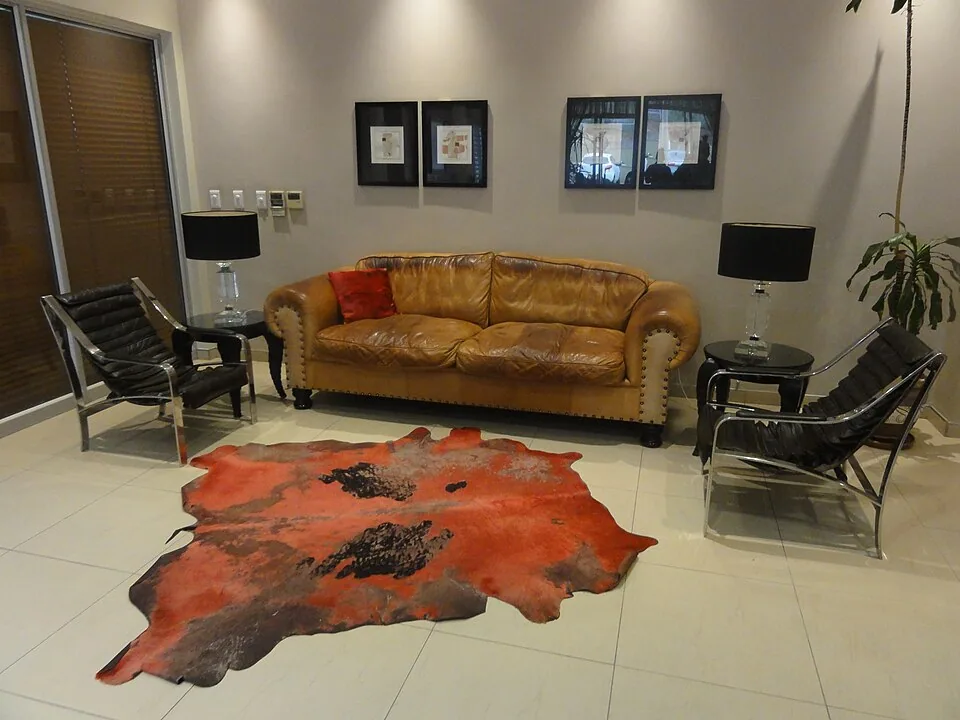
Using a hide in a living room
The most popular approach is to layer a hide over a larger flat-weave or low-pile rug, which gives you the size for the seating group and the character of the hide on top. The base rug anchors the furniture and keeps the hide from creeping, and the hide adds texture and a focal point. Our guide to how to layer rugs covers sizes and combinations.
On its own, a hide works best in a spot where the shape can be seen: in front of a sofa or a fireplace, beside a bed, in a reading corner or under a coffee table in an open space. A hide placed under a table loses its shape to the furniture, and the legs of a chair can crease the hide. Keep the heaviest furniture off the hide, or place only the front feet on it with a pad.
Color and pattern deserve a thought. A salt-and-pepper or a brindle hide hides dirt well and goes with most schemes, a black and white hide is a stronger statement, and a dyed hide, in gray, blue or metallic, is a different aesthetic altogether. Dyed and metallic hides are surface-treated and may wear unevenly, so check how the treatment holds up under feet.
Daily care and cleaning
Hide is easy to live with when you accept that it is leather with hair. For routine care, shake it outdoors or brush it with a soft brush, in the direction of the hair, to remove dust and hair. Vacuum with a soft brush attachment, in the direction of the hair, on a low suction setting, and avoid a rotating brush, which can pull out hair and mark the leather.
For spills, blot immediately with a dry cloth, then use a cloth that is barely damp, with a drop of mild soap if needed, and wipe in the direction of the hair. Do not soak the hide, because water can stiffen the leather as it dries, leave marks and cause the hair to shed. Let it dry flat, away from direct heat. For a stubborn stain, consult a leather or hide specialist, and never use harsh solvents, bleach or a steam cleaner.
Avoid direct sun and heat. Sun fades the color and dries the leather, and heat from a radiator or underfloor heating can make the hide stiff and brittle. Rotate the hide occasionally so that the fading and wear are even. Keep the hide from damp spaces, such as a basement, where it can develop a musty smell or mildew.
A few owners worry about insects. Natural hides, like wool and other animal fibers, can attract carpet beetles or moths if left unmoved and unclean in a dark corner for long periods. Regular vacuuming and shaking and occasionally lifting the hide and cleaning beneath it is enough for most homes.
Why the edges curl, and what to do
Curling is the most common complaint, and it is a property of the material. A hide is rolled for shipping, often for weeks, and the leather retains the curve. The edges of a hide are thinner than the center, so they dry faster and curl more. Low humidity makes the leather stiffer, and the hair, which is thicker at the spine, pulls the edges inward.
The first step is to relax the hide. Unroll it on a flat surface, hair side down, for a day or two, with a few heavy books on the corners. If a hide has been rolled for a long time, reversing the roll for a few days can help. Do not use heat or a steamer.
For a lasting fix, use a non-slip rug pad or double-sided rug tape on the back of the corners, which pin the edges to the floor. A pad also stops creeping and protects the floor. Choose a pad cut a little smaller than the hide, since the irregular outline means a rectangular pad can show. Our guide to stopping a rug from curling explains the methods, and our guide to rug pads covers the materials, including which ones are safe for floor finishes.
Durability, traffic, pets and children
A cowhide is tough leather, and it can last many years with care. The hair wears with traffic, and a hide in a heavily trafficked path will lose hair and thin out sooner than one beside a sofa. It is suited to moderate traffic: a living room, a bedroom or a study. A hallway or an entry is a heavier test, and a printed rug may last longer there.
Pets can be hard on a hide. Claws can snag the hair and scratch the leather, and a dog that chews will go for it. Accidents are also a risk, since urine soaks into the leather and is hard to remove without damage. If your pet is rough or unreliable, a printed rug is a safer choice. Children generally treat hides well, though spilled drinks need immediate blotting.
The hair itself sheds a little at first and then settles. Brushing gently and vacuuming with a soft attachment reduces the loose hair. A hide that sheds in clumps or has bald patches may have been poorly tanned or may be wearing out. In that case, check the seller's guarantee.
Finally, there is the matter of preference. Some buyers have ethical or religious reasons not to use animal products, and a printed or synthetic imitation is the obvious alternative. Many sellers state that hides are a by-product of the food industry, which is a claim you cannot verify from a listing, so treat it as a statement of the seller's position and not as a fact you have checked.
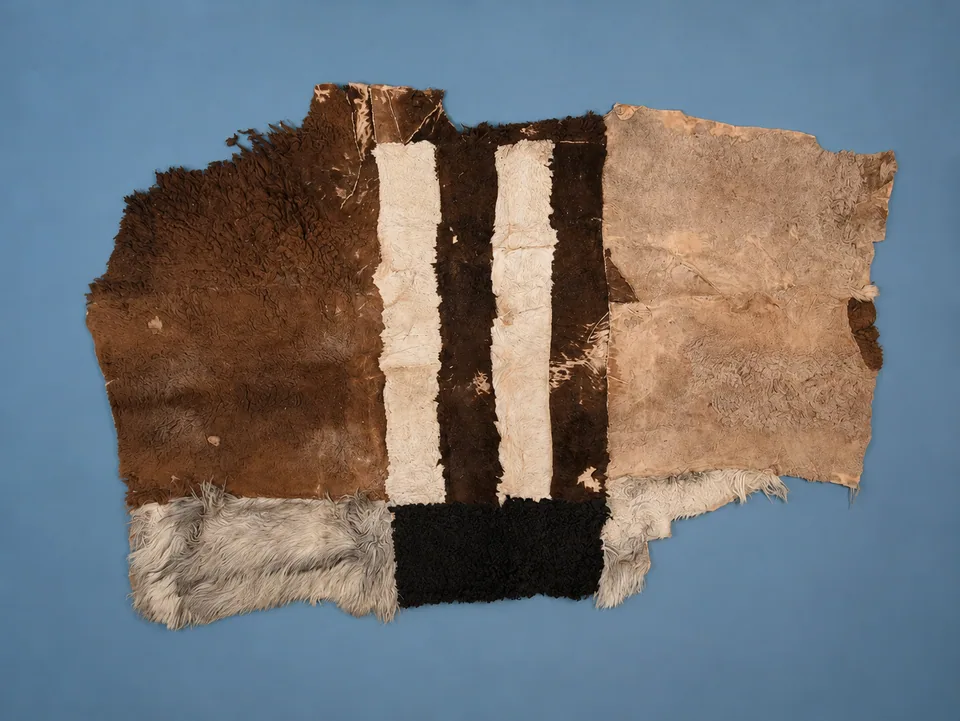
Underfloor heating deserves its own warning. Leather is a natural material that loses moisture when warmed from below, so a hide laid on a heated floor can stiffen, shrink slightly and crack along the spine over a few seasons. If your living room has radiant heating, check the floor's maximum surface temperature, use a breathable pad and consider a printed rug instead. The same caution applies to a hide placed in front of a wood stove or a fireplace, where radiant heat dries one side of the hide faster than the other and can warp the outline.
What to check before buying
Ask whether the rug is the one in the photograph. A hide listing that shows a stock image may deliver a hide with a different pattern, and if you care about the markings, look for a seller who photographs each hide and lets you choose. Ask about the size of that specific hide, the thickness and whether the back is lined with a non-slip fabric.
Check the smell and the finish on arrival. A new hide has a faint leather smell that fades, and a strong chemical odor suggests poor tanning. Run a hand over the hair, which should be even, with no bald patches, and check the edges for cracks or rough trimming. Look at the back for a uniform finish.
Finally, read the return policy, which for a natural item sold by size can be restrictive, and for a rolled hide shipped across a distance can be expensive.
Storage is the last practical point. If you need to put a hide away for a season or a move, do not fold it, which creases the leather permanently. Roll it with the hair outward, around a cardboard tube if you have one, and keep it in a breathable cover in a cool, dry place. Plastic wrapping traps moisture and can cause mildew, so avoid sealing it airtight.
Frequently asked questions
Do cowhide rugs shed?
A little, especially in the first weeks. The shedding is hair that was loose from tanning, and it settles with brushing and vacuuming with a soft attachment. Heavy shedding, clumps or bald patches suggest a poor-quality hide.
Can I use a cowhide rug in a high-traffic area?
It will take moderate traffic but is not ideal for a hallway or entry. Printed or flat-weave imitations are more suited to those spots, and a patchwork hide with strong seams is a middle option.
How do I clean a stain on a cowhide rug?
Blot at once, then use a barely damp cloth with a drop of mild soap, wiping in the direction of the hair. Do not soak or scrub. For stains that remain, use a leather or hide specialist, and avoid harsh chemicals.
Why does my cowhide rug smell?
New hides have a mild leather smell that fades in days or weeks, and airing the rug helps. A strong or persistent odor suggests poor tanning or damp. If a rug is damp, dry it flat in the air, away from direct heat.
Are cowhide rugs cruel or ethical?
That is a personal decision. Hides are commonly a by-product of the meat industry, but the sourcing is not verifiable from a listing. If you prefer to avoid animal products, choose a printed or synthetic imitation.
Bottom line
Buy a real cowhide if you want a natural, one-off accent in a low to moderate traffic spot, and accept an irregular shape, an approximate size and a little curling. Layer it over a larger rug if you need coverage, and use a pad or tape to keep the edges flat.
Choose a printed rug or a patchwork hide when you need exact dimensions, more durability or an easier cleaning routine. In either case, keep the hide out of direct sun and heat, brush it with the grain and blot spills quickly.