
Amazon affiliate links - we earn a commission.Affiliate disclosure

Buying guide · 13 min read · Updated 2026-11-21

Best Acoustic Panels for Living Rooms (2026)

Six acoustic panel sets compared on material, thickness, coverage and look, so you can tame echo in a living room or home office without a studio look.

Elena Hart, Lead Home EditorBy Elena HartLead Home Editor6 picks comparedSpec-sheet verified
Best Acoustic Panels for Living Rooms

At a glance

Our top picks

Side by side

Spec comparison

PiecePanelsSizeCoverageInstallUse
EVERECO 12 Pack Large Acoustic Wall Panels, 47.2 x 23.6 Inch, PolyesterBest OverallEVERECO 12 Pack Large Acoustic Wall Panels, 47.2 x 23.6 Inch, Polyester1247.2 x 23.6 x 0.4 in each92.8 sq ftSelf adhesive peel and stickn/a
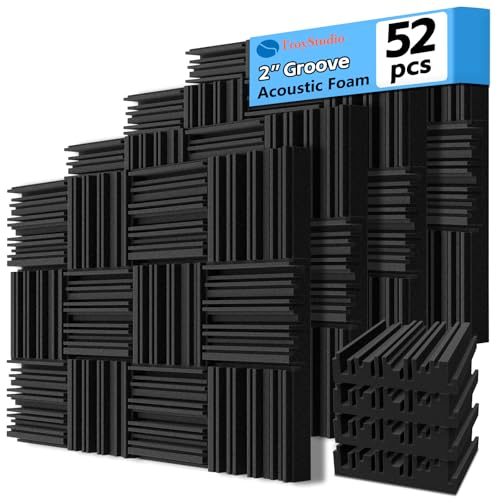
TroyStudio 2 Inch Acoustic Foam Panels, 12 x 12 Inch, 52 PackBest ValueTroyStudio 2 Inch Acoustic Foam Panels, 12 x 12 Inch, 52 Pack5212 x 12 x 2 in each52 sq ftn/aBroadband absorption
TONOR Wood Slat Acoustic Panels 4 Pack, 47.2 x 23.6 InchBest Wood LookTONOR Wood Slat Acoustic Panels 4 Pack, 47.2 x 23.6 Inch447.2 x 23.6 in each31 sq ftn/aInterior wall decor with noise reduction
AudioSilk Acoustic Panels 4 Pack Room Kit, 46 x 23 Inch, NaturalBest Room KitAudioSilk Acoustic Panels 4 Pack Room Kit, 46 x 23 Inch, Natural446 x 23 in eachn/aRemovable sticky stripsRehearsal and recording spaces
SD SODOCT 24 Pack 2 Inch Pyramid Acoustic Foam PanelsBest Pyramid FoamSD SODOCT 24 Pack 2 Inch Pyramid Acoustic Foam Panels24n/a24 sq ftn/aEcho control
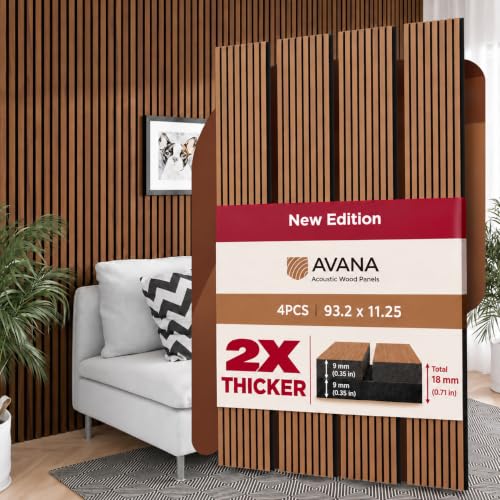
Avana Acoustic Wood Wall Panels 93.2 x 11.25 Inch, Rustic WalnutBest Long SlatAvana Acoustic Wood Wall Panels 93.2 x 11.25 Inch, Rustic Walnutn/a93.2 x 11.25 in eachn/aEffortless installationn/a

A living room with hard floors, bare walls and big windows can sound like a gymnasium. Voices bounce, the television gets muddy and a conversation becomes tiring. Acoustic panels absorb some of that reflected sound so the room sounds calmer.

It helps to separate two jobs: absorbing echo inside a room and blocking noise between rooms. Panels do the first well and the second poorly. Thickness, material and how much wall you cover decide the result.

Before you buy

6 Criteria to Look For Before Buying an Acoustic Panel for Living Rooms

  1. 01

    Absorption versus soundproofing

    Acoustic panels absorb reflections inside a room. They do not block sound passing through walls. For neighbor noise, you need mass and sealing, not panels. Choose panels for echo and clarity. If a neighbor's noise is the problem, a heavy curtain, a sealed door and a rug will do more than panels, and panels then handle the echo inside your room.

  2. 02

    Thickness and bass

    A 2 inch foam panel, like the TroyStudio, absorbs more low mid frequencies than a 0.4 inch polyester panel, like the EVERECO. Thin panels mostly tame speech and high frequencies. Choose thick panels if you want deeper control. A rule of thumb is that panels absorb sound well down to a frequency whose wavelength is about four times the panel thickness, so a 2 inch panel works far lower than a 0.4 inch one. Foam under 1 inch is mostly decoration for bass, so match thickness to the problem you hear.

  3. 03

    Coverage area

    A common starting point is to treat 15 to 25 percent of the wall area. The EVERECO covers 92.8 square feet, the TroyStudio 52 and the TONOR 31. Count your wall area before you buy. If your living room has a sofa, a rug and curtains, you already absorb a good amount, so the first panels may be enough.

  4. 04

    Look and material

    Foam looks like a studio. Polyester fiber and wood slat panels look like decor. Choose a look you will keep. Wood slats also scatter sound. Wood slat and fiber panels are easy to live with in a room where guests visit, while foam is better kept in a den. Check whether the material is dense enough that a hand pressed against it feels firm, not squishy.

  5. 05

    Placement

    Place panels at first reflection points on side walls and behind the speaker and listener. Corners help with bass. Spread them rather than clustering. Reflections from a bare wall opposite the television are the main cause of muddy dialogue, so put panels there first.

  6. 06

    Installation and wall damage

    Peel and stick can pull paint. Removable strips, as on the AudioSilk, are gentler. Wood panels may need studs. Always test adhesive in a hidden corner for a week before committing to a whole wall. A level and a pencil guide keep a grid of panels straight, which matters on a visible wall.

Detailed reviews

The 6 best acoustic panels for living rooms, explained

01
EVERECO 12 Pack Large Acoustic Wall Panels, 47.2 x 23.6 Inch, Polyester
12 panels47.2 x 23.6 in0.4 in thick92.8 sq ft
Check price on Amazon
Best for: Living rooms and offices that want echo control with a clean, flat look.

EVERECO packs 12 large polyester fiber panels, each 47.2 by 23.6 inches and 0.4 inches thick, for a stated 92.8 square feet of coverage. The panels are self adhesive, so they go up with a peel and stick backing. Polyester fiber is a flat, dense material that looks like fabric rather than studio foam.

Coverage is the key number. In a living room of 200 square feet, treating about 15 to 25 percent of the wall area is a common starting point, and this pack covers that. Compared with the TroyStudio 2 inch foam, the EVERECO is much thinner, so it absorbs mid and high frequencies and speech, not deep bass.

Peel and stick can pull paint when removed, so test a corner first. Press firmly and let the adhesive cure. For a modern living room that wants a calmer sound and a clean look, it is the most balanced choice. Because each panel is nearly four feet tall, six of them across a long wall makes a continuous band that looks like a fabric headboard behind a sofa.

What works

  • 92.8 square feet of coverage in one pack
  • Flat polyester fiber looks like fabric
  • Self adhesive installation
  • Large panels cover walls quickly

Watch out for

  • 0.4 inch thickness limits bass absorption
  • Adhesive can pull paint on removal

Specs

Panels
12
Size
47.2 x 23.6 x 0.4 in each
Coverage
92.8 sq ft
Material
Polyester fiber
Install
Self adhesive peel and stick
02
TroyStudio 2 Inch Acoustic Foam Panels, 12 x 12 Inch, 52 Pack
52 panels12 x 12 x 2 in52 sq ftOpen cell foam
Check price on Amazon
Best for: Media rooms and home offices that want strong absorption at a lower tier.

TroyStudio sells 52 foam panels in a 12 by 12 by 2 inch size, covering 52 square feet. The listing describes premium open cell foam with a groove structure for broadband absorption. A 2 inch thickness absorbs more of the lower mid range than a half inch panel.

Foam is the cheapest way to cover a lot of wall, and the thickness gives it real absorption for speech and music. The tradeoff is the look: foam reads as studio treatment, and it collects dust. Compared with the EVERECO, it is thicker and absorbs more, but it looks less like furniture.

Foam is best in a media room or home office. Use mounting strips instead of full adhesive if you rent, and check that the foam is fire retardant. It suits a theater or a podcast corner. Mount them in a checkerboard pattern rather than a solid block, which saves foam and still treats the room.

What works

  • 2 inch thickness absorbs more than thin panels
  • 52 panels cover 52 square feet
  • Open cell foam
  • Lowest tier for coverage

Watch out for

  • Looks like studio foam
  • Collects dust

Specs

Panels
52
Size
12 x 12 x 2 in each
Coverage
52 sq ft
Material
Open cell foam with groove structure
Use
Broadband absorption
03
TONOR Wood Slat Acoustic Panels 4 Pack, 47.2 x 23.6 Inch
4 panels47.2 x 23.6 in31 sq ftWood slat
Check price on Amazon
Best for: Feature walls that need a wood look and modest absorption.

TONOR sells four wood slat panels, each 47.2 by 23.6 inches, for 31 square feet of coverage. The slats are mounted over a backing that absorbs some sound, and the look is a modern wood feature wall.

Wood slat panels are the most decorative option here. They scatter reflections with the slats and absorb with the backing, which gives a balanced result for a living room. Compared with the EVERECO's flat fabric look, they add warmth and texture.

Coverage per pack is smaller, so you may need two packs. Install into studs or with mounting adhesive, and keep them away from damp walls. It is a smart choice for a feature wall. Pair two packs on a wall behind a sofa for a bold, symmetrical feature wall.

What works

  • Wood slat look is decorative
  • 31 square feet of coverage
  • Large 47.2 by 23.6 inch panels
  • Scatters and absorbs sound

Watch out for

  • Smaller coverage per pack
  • Thin backing absorbs less than thick foam

Specs

Panels
4
Size
47.2 x 23.6 in each
Coverage
31 sq ft
Design
Wood slat
Use
Interior wall decor with noise reduction
04
AudioSilk Acoustic Panels 4 Pack Room Kit, 46 x 23 Inch, Natural
4 panels46 x 23 inNaturalRemovable stickers
Check price on Amazon
Best for: Renters and small spaces that need a removable starter kit.

AudioSilk offers a four panel room kit of 46 by 23 inch panels in a natural color. The listing says the panels go up in seconds with removable sticky strips and claims better performance than equivalent foam. It is aimed at recording and rehearsal spaces as much as living rooms.

Removable strips are a plus for renters, because they reduce paint damage when the panels come down. A kit of four covers about 29 square feet, so it is a starter set for a corner or a small wall rather than a whole room.

Compared with the EVERECO, the AudioSilk offers fewer panels and lower coverage, but the larger panels hang quickly. Plan placement at first reflection points on the side walls, and test the strips on a small area first. It is a tidy starter kit for a small room. If you are treating a bedroom, place two panels beside the bed at ear height.

What works

  • Removable sticky strips
  • Large 46 by 23 inch panels
  • Natural color
  • Quick installation

Watch out for

  • Only four panels per kit
  • Limited coverage for a large room

Specs

Panels
4
Size
46 x 23 in each
Color
Natural
Install
Removable sticky strips
Use
Rehearsal and recording spaces
05
SD SODOCT 24 Pack 2 Inch Pyramid Acoustic Foam Panels
24 panels2 in thickPyramid24 sq ft
Check price on Amazon
Best for: Media rooms and small studios.

SD SODOCT offers 24 pyramid foam panels at 2 inches thick, for 24 square feet of coverage. The pyramid pattern increases the surface area, which is meant to help absorb echo. The listing describes a high noise reduction coefficient for echo control.

A 2 inch pyramid foam absorbs more than a thin flat panel, especially in the mid range. Compared with the TroyStudio, the SODOCT has fewer panels and a pyramid rather than a groove pattern, which is a bolder look.

Pyramid foam reads as studio treatment, so it suits a media room, a game room or an office more than a formal living room. Check for a fire retardant rating, and use mounting strips if you rent. It is a good option for a small studio. Cover the area behind a television, where reflections bounce straight back.

What works

  • 2 inch pyramid pattern
  • 24 panels
  • Strong absorption
  • Low cost per square foot

Watch out for

  • Studio look
  • Limited coverage

Specs

Panels
24
Thickness
2 in
Pattern
Pyramid
Coverage
24 sq ft
Use
Echo control
06
Avana Acoustic Wood Wall Panels 93.2 x 11.25 Inch, Rustic Walnut
93.2 x 11.25 inWalnutWood slatFits 94 x 12 layout
Check price on Amazon
Best for: Floor to ceiling feature walls.

Avana makes long wood slat panels at 93.2 by 11.25 inches in a rustic walnut finish. They are sized to fit a 94 by 12 inch layout, which suits a floor to ceiling wall in a standard 8 foot room. The listing describes an easy installation.

Long slats run from floor to ceiling and give a tall, linear look that makes a ceiling feel higher. Compared with the TONOR panels, the Avana planks are narrower and taller, so they build a wall in a different rhythm.

Check your ceiling height and plan the layout before you order. Wood slats scatter sound and the backing absorbs some, so the effect is mild but pleasant. It suits a feature wall behind a sofa or a television. Add a strip of LED lighting along the top for a gallery effect. Planks this long can bow if the wall is uneven, so shim the studs first.

What works

  • Long 93.2 inch slats
  • Rustic walnut finish
  • Floor to ceiling look
  • Slat design scatters sound

Watch out for

  • Needs an 8 foot wall
  • Absorption is modest

Specs

Size
93.2 x 11.25 in each
Finish
Rustic walnut
Layout
Fits 94 x 12 layout
Design
Wood slat
Install
Effortless installation

Spec decoder

What the listing measurements really mean

The numbers brands lead with, translated into what they tell you about fit, comfort and wear at home.

Thickness

Thickness affects which frequencies a panel absorbs. Thicker panels absorb lower frequencies.

Watch forThe TroyStudio and SD SODOCT are 2 inches thick, while the EVERECO is 0.4 inches.

Open cell foam

Open cell foam has interconnected pores that trap sound energy. It is the standard material for budget panels.

Watch forThe TroyStudio uses open cell foam with a groove pattern, so look for a fire retardant rating.

Polyester fiber

Polyester fiber panels are dense, flat and non itchy. They look like fabric and suit living rooms.

Watch forThe EVERECO uses polyester fiber at 0.4 inches, which is good for speech but limited for bass.

Wood slat

Wood slats sit over an acoustic backing. They scatter reflections and the backing absorbs some energy.

Watch forThe TONOR and Avana use slats, so the effect is milder than thick foam.

Coverage area

Coverage is the wall area the pack can cover. It decides how much of the room you treat.

Watch forThe EVERECO lists 92.8 square feet, the TroyStudio 52 and the TONOR 31.

Methodology

How We Evaluated These Acoustic Panels for Living Rooms

Absorption and thickness

We compared panel thickness and materials. The 2 inch TroyStudio and SD SODOCT foams absorb more than the 0.4 inch EVERECO. Thicker panels reach lower frequencies, so thickness carried real weight.

Coverage and value

We compared stated coverage per pack. The EVERECO's 92.8 square feet, the TroyStudio's 52 and the TONOR's 31 show a wide range. Coverage decides whether a pack treats a room or a corner.

Look and fit with decor

We judged how each panel looks in a living room. Wood slats and polyester fiber look like decor, while foam looks like studio treatment. A panel that you are happy to see on the wall earned more credit.

Installation

We compared adhesive, strips and mounting. The AudioSilk's removable strips and the EVERECO's peel and stick are easy, but they carry paint risk. Wood slats may need studs.

Ownership

We considered dust, fire rating and removal. Owner feedback patterns informed our advice to test adhesive in a corner and to check fire retardant labels on foam.

Decision guide

How to Choose the Right Acoustic Panels for Living Rooms

By Room

SituationPickWhy
Living roomEVERECO 12 PackCoverage
Media roomTroyStudio 2 InchThick
Feature wallTONOR Wood SlatWood
RenterAudioSilk KitRemovable
StudioSD SODOCT PyramidPyramid
Tall wallAvana Long SlatLong

By Budget

TierPickWhy
Lowest tierTroyStudioFoam
Low tierSD SODOCTPyramid
Middle tierEVERECOPolyester
Upper middle tierAudioSilkKit
Higher tierTONORWood
Top tierAvanaLong

Foam vs Fiber

Foam

The TroyStudio and SD SODOCT are thick and absorb more for the money. They look like studio treatment and collect dust, so they suit a media room or an office.

Fiber and wood

The EVERECO, TONOR and Avana look like decor. They absorb less per panel but suit a living room where appearance matters.

Choose fiber for decor.

Flat vs Slat

PreferencePickWhy
FlatEVERECOFabric
SlatTONORWood
Long slatAvanaTall
PyramidSD SODOCTFoam

For Echo Specifically

Look for

Enough coverage, a thickness that matches the problem and placement at first reflection points. Avoid a few thin panels in the middle of a wall. Treat a hard floor with a rug as well.

In this comparison

The EVERECO covers the most area, and the TroyStudio absorbs the most per panel. Use both if the room is very live.

When to Spend More

Spend more if

You want the panels to look like decor in a main living room. The TONOR and Avana wood slats justify the higher tier.

Save if

You want maximum absorption for the least money. The TroyStudio and SD SODOCT foams cost less per square foot.

Ownership

Maintenance schedule

The upkeep that decides whether a piece still looks good in year five.

TaskIntervalWhy it matters
Dust the panelsMonthlyDust collects in foam and in slat grooves. A soft brush or vacuum on low keeps them clean.
Check adhesive and mountsEvery 3 monthsAdhesive can weaken with heat and humidity. Re press edges or replace strips.
Inspect for sagging or curlingTwice a yearThin panels can curl at the corners. Re stick or replace curled panels.
Check the fire rating labelOnce at purchaseFoam should be fire retardant. Keep it away from heaters.
Re check placementYearlyFurniture changes alter how a room sounds. Move panels if echo returns.

FAQ

Frequently Asked Questions

Do acoustic panels block noise from other rooms?

No. Panels absorb sound inside the room and reduce echo. Blocking noise needs mass and sealing. For neighbor noise, add heavy drapes, rugs and sealed gaps. If you rent, removable mounting strips and a few panels at reflection points are the safest approach. Mass is what stops noise, so a thick wall or an added drywall layer is the real fix.

How many acoustic panels do I need?

A common starting point is to cover 15 to 25 percent of the wall area. A 200 square foot living room may need 30 to 60 square feet of panels. Start with first reflection points and add more if needed. A rug and a bookcase also help, because both break up echo. Count the square footage of the wall, then multiply by 0.2 for a quick target.

Is foam or fabric better for a living room?

Foam absorbs more per dollar but looks like a studio. Polyester fiber and wood slat panels look like decor and suit living rooms. Choose by how much you value the look. Wood slat panels also look good with a console and a lamp beneath. A neutral fiber panel in a color close to your wall is almost invisible.

Where should I place acoustic panels?

Place them at first reflection points on the side walls and ceiling, behind the listener and behind speakers. Corners help with bass. Spread them rather than clustering. A clap test in an empty room tells you whether echo persists.

Will peel and stick panels damage my walls?

They can pull paint when removed, especially on flat paint. Test a small area first, or use removable strips. Wood panels may need studs. Choose an adhesive designed for painted drywall, and avoid freshly painted walls.

Are acoustic foam panels flammable?

Untreated foam can burn. Look for a fire retardant rating and keep it away from heaters and lamps. Polyester fiber and wood panels are safer choices. A smoke alarm nearby is a good habit anyway in any room with foam.

Bottom line

The short version

Browse more acoustic panels for living roomson Amazon →
Elena Hart, Lead Home Editor

About the author

Elena Hart

Lead Home Editor, SweetLivingRoom

Elena Hart leads SweetLivingRoom's buying guides, turning product dimensions, material specs and owner feedback into clear verdicts on sofas, rugs, lighting, storage and decor.

More from Elena →

Keep reading

Related guides