
Amazon affiliate links - we earn a commission.Affiliate disclosure

Buying guide · 12 min read · Updated 2026-11-21

Best Terrariums (2026)

Six glass terrariums compared on size, lid and ventilation, base, glass type and kit contents, with honest notes on moisture, mould and sun scorch.

Elena Hart, Lead Home EditorBy Elena HartLead Home Editor6 picks comparedSpec-sheet verified
Best Terrariums

At a glance

Our top picks

Side by side

Spec comparison

A terrarium is a glass container that holds a miniature garden. Closed versions trap humidity and suit moss and ferns, while open ones suit succulents and cacti, and the container you choose largely decides which you can grow.

The glass is only hardware, and the plants and the lid decide how it behaves. A closed jar in full sun will scorch, and a succulent in a sealed jar will rot. This guide compares six containers and kits, and says what each one suits and where it will cause trouble.

Before you buy

6 Criteria to Look For Before Buying a Terrarium

  1. 01

    Closed, open or in between

    Closed terrariums trap humidity and suit moss, ferns and other moisture lovers, while open ones suit succulents, cacti and air plants. A semi-closed lid with a small vent sits between them. Match the container to the plants first. Never mix wet and dry plants in one jar. Good closed-jar choices include small ferns, fittonia, baby's tears and moss, while open containers suit haworthia, echeveria, small cacti and air plants. If you are not sure which side your plant falls on, check whether it grows in a rainforest understory or a dry, bright slope, and pick the container that matches that home.

  2. 02

    Lid and ventilation

    A swing lid or a loose lid lets you manage airflow, which is the main control over mould. A fogged jar that drips all day needs the lid open for a few hours. Fixed lids and tiny vents hold moisture. Choose the lid for your plant. A useful routine for a closed jar is to open the lid for an hour a few times a week and to wipe condensation from the glass so you can see the plants and spot early mould. A white fuzz on soil or bark is a sign to remove the affected material and open the lid for a day or two.

  3. 03

    Glass and light

    Clear glass lets in light, while tinted or cloudy glass cuts it and slows growth. Curved glass can focus light into hot spots that scorch leaves. Borosilicate resists heat shock better than soda-lime. Keep any terrarium out of hot, direct sun. A north or east window, or a spot a few feet back from a south window, gives enough light for most small plants without the heat spike that scorches leaves. If you have a dim room, a small full-spectrum LED on a timer can replace window light and keeps the temperature stable.

  4. 04

    Size and layers

    A drainage layer of about half an inch to two inches, a barrier layer and a layer of soil need depth. A 6 in dome holds one plant, while a 10 in jar holds a layered garden. Plants should not touch the glass, so size them to the container. Leave an inch or two of headroom above the tallest plant, and plan for growth, because moss and ferns fill a jar faster than you expect. A pair of long tweezers and a small spoon make planting and maintenance in a narrow opening far less frustrating.

  5. 05

    Base and frame

    Welded or soldered frames are not watertight, so avoid pouring water in. Wood bases and lids can swell with moisture. Metal frames add a finish to watch. A tray or a mat protects furniture. Lift a terrarium from underneath, never by the lid or the frame, because hinges and soldered corners are the weak points and a heavy planted jar can be several pounds. Check hinges for sharp edges and wipe any flux residue from the metal before planting.

  6. 06

    Kit versus empty container

    A kit with live moss gives you materials and tools but limits plant choice. An empty container gives freedom but needs you to source soil, stones and plants. Choose by experience. A kit saves you a trip to several shops and is a good way to learn how layers work, while experienced growers tend to prefer an empty container and their own plants. Whichever you choose, rinse the glass and stones before planting to remove dust and any residue from packing.

Detailed reviews

The 6 best terrariums, explained

01
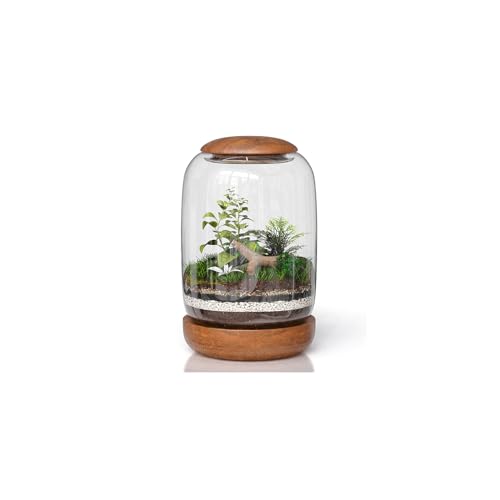
GWNF borosilicate glass terrarium jar, 10 in tall, condensation lid and dark wood base
10.04 in tallBorosilicate glassCondensation lidWood base
Check price on Amazon
Best for: Moss and fern gardens that want a semi-closed jar with controlled humidity.

The GWNF is a 10.04 in jar in borosilicate glass with a soft raindrop shape, set on a dark-finished wood base. The lid is recessed and guides condensation toward the centre, and a tiny through-hole plus small openings near the shoulder allow gentle air exchange. That makes it a semi-closed container, which suits moss, ferns and other humidity-loving plants.

The tradeoff is that borosilicate glass is clear and strong but the jar is still a sealed-ish space, so it can fog and grow mould if overwatered. Compared with the open house-style terrariums, it holds humidity better but is wrong for succulents. A curved glass jar can focus light, so keep it out of direct sun.

In ownership terms, use a drainage layer, a barrier and a light soil mix, and water sparingly. If the glass stays fogged all day, lift the lid for a few hours. It suits a desk, a shelf or a coffee table where a small, quiet garden is wanted. A layer of about one inch of gravel, a thin barrier of mesh or moss and a couple of inches of a peat-free mix is a sensible starting recipe, and a few pieces of bark and a small stone make the scene look natural. Lift the lid slowly so condensation does not drip onto the leaves.

What works

  • Recessed lid guides condensation to the centre
  • Small vent and shoulder openings allow gentle air exchange
  • Borosilicate glass is strong and clear
  • Dark wood base suits modern and natural rooms

Watch out for

  • Wrong for succulents and cacti that need dry air
  • Curved glass can focus light and scorch plants in sun

Specs

Height
10.04 in
Glass
Borosilicate
Lid
Recessed glass with small vent hole
Base
Dark-finished wood
Style
Raindrop curves
02
WHJY 6 in glass cloche with base, borosilicate mini terrarium dome
6 inBorosilicateDome with baseSmall plants
Check price on Amazon
Best for: Single small plants, moss or dried flowers on a desk or shelf.

The WHJY is a 6 in glass cloche made from high borosilicate glass, sold with a base. It is a dome that sits over a small plant, moss or a dried flower arrangement. The small size makes it the lowest cost tier in the lineup.

The tradeoff is scale: a 6 in dome fits one tiny plant, a piece of moss or a single moss ball, not a layered garden. A dome with a base is also an almost-closed space that can trap moisture, so choose humidity-tolerant plants. Compared with the larger terrariums, it is more of a display cover.

In ownership terms, lift the dome weekly to air the plant, and wipe the inside to avoid mould spots. It suits a desk, a bathroom shelf or a bookshelf where a single plant or a dried flower is the star.

What works

  • 6 in size fits shelves and desks easily
  • Borosilicate glass is clear and easy to clean
  • Dome and base come as a set
  • Lowest cost tier of the six

Watch out for

  • Holds only one tiny plant, not a layered garden
  • Dome traps moisture, so plant choice matters

Specs

Size
6 in
Glass
Premium high borosilicate
Form
Cloche dome with base
Use
Mini plants and flowers
Care
Easy to clean
03
House-shape 9.8 in glass terrarium with swing lid and black frame, for succulents
9.8 x 7.9 x 5.9 inSwing lidBlack frameClear glass
Check price on Amazon
Best for: Succulents and air plants in a bright spot that want an easy open lid.

This house-shaped terrarium measures 9.8 x 7.9 x 5.9 in, with a hinged swing lid for planting and care, a black frame and clear glass on all sides. The swing lid lets you open the top for airflow and misting, which makes it suited to succulents and air plants. The listing says to open the lid to let moisture out.

The tradeoff is that a frame with soldered or welded joins is not a water tank, and it is not designed to hold standing water, so avoid a deep watering. Compared with the borosilicate jar, it is more open and easier for succulents but gives less humidity for moss. Clear glass concentrates heat in direct sun.

In ownership terms, use a drainage layer, a barrier and a gritty cactus mix, and water with a spoon. Leave the lid open most of the time. It suits a bright window ledge with filtered light, a desk or a shelf.

What works

  • Swing lid opens for planting and airflow
  • Clear glass shows layers and plants from every angle
  • Black frame suits modern and industrial rooms
  • 9.8 in width gives room for a small layout

Watch out for

  • Not designed to hold standing water, so deep watering is out
  • Clear glass can overheat in direct sun

Specs

Size
9.8 x 7.9 x 5.9 in
Lid
Hinged swing lid
Frame
Black metal
Glass
Reinforced, clear all round
Use
Succulents, moss, stones
04
Tall 11.4 in brass-frame glass house terrarium with swing lid and wheeled tray
11.4 in tallBrass frameSwing lidWheeled tray
Check price on Amazon
Best for: Upright succulents and air plants that you want to move toward the light.

The tall brass-frame terrarium is 11.4 in high with a hand-welded brass frame, a swing lid for ventilation and a brass tray with four small wheels. The wheeled tray lets you roll it to a brighter spot and back. A taller house shape gives more vertical room for upright plants.

The tradeoff is that wheels on a tray can roll on a slick table, and welded joins are not watertight. Compared with the 9.8 in terrarium, it is taller and fancier, but costs more and takes more shelf room. A brass frame also adds a finish to keep an eye on.

In ownership terms, lock the tray in place if the table is sloped, and use a light mist rather than a pour. Open the lid in humid weather. It suits a window sill, a console or a plant stand where the plant is moved to follow the light.

What works

  • Wheeled tray makes it easy to move toward light
  • 11.4 in height suits taller plants
  • Hand-welded brass frame gives a quality look
  • Swing lid provides ventilation

Watch out for

  • Wheels can roll on a slick surface
  • Joins are not watertight, so avoid pouring water

Specs

Height
11.4 in
Frame
Hand-welded brass
Lid
Swing lid with ventilation
Tray
Brass with four small wheels
Use
Succulents and air plants
05
NoctisCorvus glass terrarium with pine wood lid and base, 8.7 x 6.3 in
8.7 x 6.3 inSoda-lime glassPine lidPine base
Check price on Amazon
Best for: Small shelves and seasonal displays that want a wood-framed mini garden.

The NoctisCorvus terrarium is 8.7 x 6.3 in, built from clear soda-lime glass with a pine wood lid and base. It can be set up as a closed or open miniature garden, or as a seasonal display with a holiday scene. The wood base protects a table and gives a warm frame.

The tradeoff is that a wood lid and base can absorb moisture and swell or mould if the container is kept damp. Compared with the borosilicate jar, soda-lime glass is less resistant to thermal shock, so avoid sudden temperature changes. The listing suggests succulents, air plants and mini gardens.

In ownership terms, put a plastic sheet or a layer of gravel between the plants and the wood, and avoid misting the base. It suits a small shelf or a seasonal display where a rustic frame is wanted.

What works

  • Pine lid and base give a warm, rustic frame
  • Works as a closed or open mini garden
  • Compact 8.7 x 6.3 in size fits shelves
  • Seasonal scenes are easy to swap

Watch out for

  • Wood can absorb moisture and swell or mould
  • Soda-lime glass handles temperature shocks less well

Specs

Size
8.7 x 6.3 in
Glass
Clear soda-lime
Lid and base
Pine wood
Use
Closed or open miniature gardens
Display
Year-round seasonal scenes
06
LuckyRunes DIY glass terrarium kit with live moss and mini tools
Glass globeLive mossLayering materialsMini tools
Check price on Amazon
Best for: Beginners who want a first terrarium with everything in the box.

The LuckyRunes kit includes a glass globe, live moss, layering substrates, sand, gravel and mini tools, so you can build a terrarium in one sitting. Unlike kits that use only artificial or decorative items, it contains real moss. The layering materials help you set up drainage and depth.

The tradeoff is that live moss still needs the right light and moisture, and a kit does not guarantee success. Compared with an empty jar, it is more convenient but offers less choice of plants. The globe shape focuses light, so keep it out of direct sun.

In ownership terms, assemble the layers, mist lightly and keep the globe in bright, indirect light. Open the lid for a few hours if the glass fogs heavily. It suits a beginner who wants a first terrarium and a small project.

What works

  • Includes live moss, not only decorative items
  • Layering materials set up drainage and depth
  • Mini tools help with a small space
  • One-sitting project for a beginner

Watch out for

  • Live moss still needs the right light and moisture
  • Globe shape can focus sunlight and scorch plants

Specs

Container
Glass globe
Plants
Real live moss included
Materials
Substrate, sand, gravel
Extras
Mini tools and decorative accents
Skill level
Beginner

Spec decoder

What the listing measurements really mean

The numbers brands lead with, translated into what they tell you about fit, comfort and wear at home.

Borosilicate glass

A heat-resistant glass that tolerates temperature change better than standard glass.

Watch forThe GWNF and WHJY use it; the NoctisCorvus uses soda-lime.

Condensation lid

A lid shaped to collect moisture and guide it to the centre.

Watch forThe GWNF lists a recessed condensation lid.

Swing lid

A hinged lid that opens fully for planting and airflow.

Watch forThe house-style terrariums have one.

Drainage layer

A layer of gravel or lava rock at the bottom that buffers excess water.

Watch forIt is a buffer, not a cure for overwatering.

Closed terrarium

A sealed or nearly sealed container that holds humidity.

Watch forA fogged jar may need ventilation.

Methodology

How We Evaluated These Terrariums

Container design

We evaluated lid types, ventilation and glass. A recessed condensation lid and a swing lid each suit different plants. This is based on published specifications.

Size and layers

We compared sizes from 6 in to 11.4 in against how many plants and layers they hold.

Materials

We weighed borosilicate, soda-lime, brass and wood construction.

Kit contents

We considered what the LuckyRunes kit includes and how well it suits a beginner.

Ownership signals

We researched owner feedback patterns on mould, fogging and scorch. Scores are editorial assessments.

Decision guide

How to Choose the Right Terrariums

By Plant Type

SituationPickWhy
Moss and fernsGWNF jarCondensation lid
SucculentsHouse-shape swing lidOpen airflow
Upright succulentsTall brass-frame11.4 in height
Single tiny plantWHJY 6 in clocheSmall dome

By Budget

SituationPickWhy
Lowest cost tierWHJY clocheSmall dome
Lower mid tierNoctisCorvusWood lid
Mid tierLuckyRunes kitMoss and tools
Upper tierTall brass-frameWheeled tray

Closed vs Open

Closed or semi-closed

The GWNF and WHJY hold humidity for moss and ferns.

Open with a swing lid

The house-style terrariums suit succulents and air plants.

Choose by plant and never mix wet and dry plants.

By Skill Level

SituationPickWhy
BeginnerLuckyRunes kitEverything included
IntermediateGWNF jarControlled humidity
Succulent growerHouse-shape 9.8 inEasy access
Seasonal displayNoctisCorvusWood frame

For Desks Specifically

Look for

A compact footprint, a stable base and a spot with bright, indirect light.

In this comparison

The WHJY and the NoctisCorvus suit desks best.

When to Spend More

Spend more if

You want a taller piece, a mobile tray or a semi-closed jar with a good lid.

Save if

You want a single small dome for a shelf.

Ownership

Maintenance schedule

The upkeep that decides whether a piece still looks good in year five.

TaskIntervalWhy it matters
Open the lid to ventWhen glass stays foggedHeavy fog and dripping signal excess moisture. A few hours of airflow prevents mould.
Mist or water sparinglyEvery 1 to 3 weeksOverwatering is the main cause of rot. A small spoon of water is enough.
Wipe the glassMonthlyFilm reduces light. A soft cloth removes marks.
Trim and remove dead growthMonthlyDead leaves rot and spread mould. Remove them with tweezers.
Rotate toward the lightWeeklyPlants lean toward light. A quarter turn keeps growth even.

FAQ

Frequently Asked Questions

Can I put a terrarium in direct sun?

Not usually. Glass heats up and scorches plants, especially closed or curved glass. Bright, indirect light is safer.

How often should I water?

Very little. Mist lightly or add a spoon of water every one to three weeks. Overwatering is the most common mistake, and the safest habit is to check the soil by eye or with a skewer before adding any water. Succulents in an open container may need water only once a month, while moss in a semi-closed jar may need a light mist every couple of weeks.

Why is my terrarium fogged and dripping?

Too much moisture. Open the lid for a few hours and reduce watering.

Do I need charcoal?

It is optional. Some use it in closed builds for odour. A drainage layer and a barrier matter more.

Can I mix succulents and moss?

No. Succulents need dry air and moss needs humidity, so the two will not thrive in one container.

Can the glass hold standing water?

Not if it has welded or soldered joins. Use a spoon and avoid pouring.

Bottom line

The short version

Browse more terrariumson Amazon →
Elena Hart, Lead Home Editor

About the author

Elena Hart

Lead Home Editor, SweetLivingRoom

Elena Hart leads SweetLivingRoom's buying guides, turning product dimensions, material specs and owner feedback into clear verdicts on sofas, rugs, lighting, storage and decor.

More from Elena →