
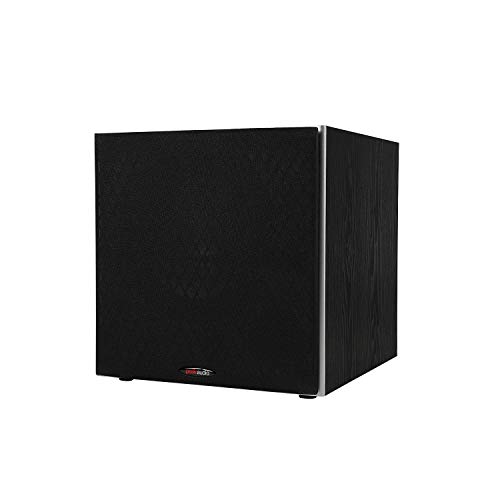
Amazon affiliate links - we earn a commission.Affiliate disclosure

Buying guide · 13 min read · Updated 2026-11-21

Best Subwoofers (2026)

Six powered subwoofers compared on driver size, sealed versus ported design, power, frequency extension, crossover control and room size for living rooms.

Elena Hart, Lead Home EditorBy Elena HartLead Home Editor6 picks comparedSpec-sheet verified
Best Subwoofers

At a glance

Our top picks

Side by side

Spec comparison

A subwoofer handles the lowest octaves that bookshelf speakers and TVs cannot, the rumble of a film score and the weight of a bass line. In a living room it often matters more than the main speakers for how a movie feels.

A sub is judged by how low it plays cleanly, how loud it gets and how well it behaves in your room, not by the watt number on the box. This guide compares six models on driver size, enclosure type, power and controls so you can match one to your room and neighbours.

Before you buy

6 Criteria to Look For Before Buying a Subwoofer

  1. 01

    Room size and driver size

    A general guide pairs 8 to 10 inch drivers with small rooms, a 12 inch with medium rooms and larger with big spaces. The Klipsch R-120SW at 12 inches suits a medium living room while the BESTISAN at 8 inches suits a small one. Oversized bass in a small room is a common mistake that makes the room boom.

  2. 02

    Sealed or ported

    Sealed boxes, like the SVS SB-1000 Pro, give tighter, faster bass with a gentle roll-off. Ported boxes, like the Klipsch models, play louder and deeper for the same size but can sound looser. Choose sealed for music and ported for big movie effects.

  3. 03

    Frequency extension

    Extension tells you how low the sub can play. The Klipsch R-120SW lists 29 Hz and the BESTISAN lists 35 Hz. Lower numbers reach the rumble of film effects, but only if the amplifier can drive the driver cleanly.

  4. 04

    Power and the watt myth

    RMS watts, as on the SVS at 325W, show continuous power, while peak watts, as on the Klipsch R-100SW at 300W peak, are marketing numbers. Two subs with the same watts can play very differently. Judge by driver size, enclosure and user reports.

  5. 05

    Controls and connections

    A crossover control sets where the sub hands over to the main speakers, and a phase control aligns timing. The SVS adds app tuning. Look for an LFE input for a receiver and a line-level input for a stereo amplifier.

  6. 06

    Placement and neighbours

    Bass travels through floors and walls. Corners increase output, so a small sub in a corner can match a bigger one in the open. In an apartment, a smaller sealed sub and a lower level protect neighbours.

Detailed reviews

The 6 best subwoofers, explained

01
SVS SB-1000 Pro 12 Inch Sealed Subwoofer, 325W RMS, App Control, Black Ash
12 in driverSealed325W RMSApp control
Check price on Amazon
Best for: Music and movie listeners who want tight bass and precise tuning in a living room.

SVS builds the SB-1000 Pro around a 12 inch high-excursion driver in a sealed cabinet, with a 325 watt RMS amplifier that peaks above 820 watts. A sealed design gives tighter, faster bass with a gentler roll-off than a ported box, and the app lets you tune the crossover, phase and room response from the sofa.

The tradeoff is cost and bass depth: it sits at the top tier of the group, and a sealed 12 inch cannot match the lowest extension of a larger ported sub. Compared with the Klipsch R-120SW, it plays tighter but goes less deep at the extreme end. Against the BESTISAN 8 inch, it is a different class in cleanliness and output.

Place the sub on the floor near a front corner or along the front wall, then try a few positions by playing a bass-heavy track and walking the room. Use the app to set the crossover around 80 Hz as a starting point. In year three, the cabinet finish and the binding of the foam surround are worth a glance, and the app firmware should be kept current.

What works

  • A sealed 12 inch design gives tight, controlled bass for music and films
  • A 325W RMS amplifier has plenty of headroom for loud scenes
  • App control tunes crossover and phase from the sofa
  • Compact for a 12 inch sub compared with ported rivals

Watch out for

  • Top cost tier is the highest in the group
  • A sealed box gives up some extreme low-end extension

Specs

Driver
12 in high excursion
Enclosure
Sealed cabinet
Amplifier
325W RMS, 820W plus peak
Control
App-based tuning
Cost tier
Top of the group
02
Klipsch R-120SW 12 Inch Subwoofer, 29 to 120 Hz, Spun-Copper Woofer, Black
12 in woofer29 to 120 HzPortedSpun copper
Check price on Amazon
Best for: Movie rooms that want deep, loud bass for a moderate cost tier.

Klipsch's R-120SW pairs a 12 inch high-excursion spun-copper woofer with a quoted response from 29 Hz to 120 Hz within 3 dB. The 29 Hz figure matters because it shows how low the sub can play at a usable level, which is where film effects and organ notes live.

The tradeoff is that the cabinet is large for a living room and ported designs can sound boomy if placed badly. Compared with the SVS SB-1000 Pro, it reaches a little deeper per cost but is less tight and has fewer tuning controls. Against the Klipsch R-100SW, it adds two inches of driver and more output.

Place it near a wall or corner, keep the port clear and adjust the volume and crossover to blend with your speakers. Test a few positions, since a few inches change the bass a lot in a small room. In year three, check that the cabinet does not buzz and that vents are dust-free.

What works

  • A 12 inch woofer and 29 Hz extension reach deep for the cost tier
  • A spun-copper driver handles high excursion with less distortion
  • A plain black finish blends into a media wall
  • Good fit for medium rooms and home theaters

Watch out for

  • A large cabinet takes real floor space in a small room
  • A ported design can sound boomy in a poorly placed spot

Specs

Driver
12 in high excursion spun-copper
Response
29 Hz to 120 Hz, plus or minus 3 dB
Type
Powered subwoofer
Finish
Black
Cost tier
Upper middle of the group
03
Klipsch R-100SW 10 Inch Subwoofer, All-Digital Amplifier, 300W Peak, Spun Copper
10 in woofer300W peakAll-digital ampFront-firing
Check price on Amazon
Best for: Medium living rooms that want solid, punchy bass without a huge cabinet.

Klipsch's R-100SW uses a 10 inch front-firing spun-copper woofer and an all-digital amplifier with 300 watts of peak power in a cabinet about 14.5 inches wide. The front-firing driver is easier to place than a down-firing one, and the 10 inch size suits medium living rooms.

The tradeoff is output: a 10 inch driver does not move as much air as a 12 inch, so it reaches less deeply and loudly than the R-120SW. Compared with the Polk PSW10, it has more power and a more rigid cabinet. Against the Yamaha NS-SW100, it favours output over the Yamaha's tight, quick sound.

Place it in a front corner or along the front wall, then adjust the crossover to blend with your speakers. Avoid putting it inside a closed cabinet, which muffles the output. In year three, check the amplifier fan or vents for dust and the foam surround for wear.

What works

  • A 10 inch front-firing driver is easy to place in most rooms
  • An all-digital amplifier delivers 300W peak in a compact body
  • Spun-copper construction gives a recognisable Klipsch punch
  • A compact footprint suits a media console corner

Watch out for

  • Reaches less deeply than the 12 inch models
  • Peak watt numbers are marketing and do not predict loudness

Specs

Driver
10 in front-firing spun-copper IMG
Amplifier
All-digital, 300W peak
Size
14.5 in wide by 12.5 in deep footprint
Type
Powered ported
Cost tier
Middle of the group
04
Yamaha NS-SW100BL 10 Inch 100W Powered Subwoofer with Twisted Flare Port
10 in woofer100WTwisted flare portYST II
Check price on Amazon
Best for: Small and medium rooms where clean, tight bass matters more than raw force.

Yamaha's NS-SW100BL is a 10 inch, 100 watt powered subwoofer with a twisted flare port and Yamaha Active Servo Technology II. The flared port reduces air noise at the opening, and the servo system keeps the cone controlled, so the bass stays clear and tight rather than loose.

The tradeoff is power: 100 watts is modest and the sub will not shake a large room the way a 300 watt model might. Compared with the Polk PSW10 it has more refined control, with similar power. Against the Klipsch R-100SW, it is more precise but less forceful.

Place it near the front wall or corner and use the volume and crossover to blend it with your speakers. Keep the port clear, and a modest listening level will give the best result. In year three, check the finish and the amplifier ventilation, and dust the port.

What works

  • A twisted flare port reduces port noise and keeps bass clear
  • Servo technology controls the cone for tight, quick bass
  • A 10 inch driver suits small and medium rooms
  • A well-known brand with simple controls and setup

Watch out for

  • 100 watts is modest for large rooms or loud movie nights
  • Upper middle cost tier for a 10 inch sub

Specs

Driver
10 in
Power
100W powered
Port
Twisted flare port for clear, tight bass
Technology
Yamaha Active Servo Technology II
Cost tier
Upper middle of the group
05
Polk Audio PSW10 10 Inch Powered Subwoofer, 100W, Power Port Technology
10 in woofer100WPower PortCompact
Check price on Amazon
Best for: Small living rooms that want a simple, compact sub at a lower cost tier.

Polk's PSW10 is a 10 inch powered subwoofer with up to 100 watts, a Dynamic Balance woofer and Power Port technology that reduces port noise at high volume. The compact cabinet fits beside a TV stand or behind a sofa, and the Polk brand pairs it easily with the T15 bookshelf speakers.

The tradeoff is depth and punch: 100 watts and a 10 inch driver reach less deeply than the 12 inch models. Compared with the BESTISAN 8 inch, it is larger and stronger, and costs more. Against the Yamaha NS-SW100, it is simpler and a little cheaper but less refined.

Place it near a wall, adjust the volume and the crossover and keep the port clear. A modest, even level is best in a small room. In year three, check the cabinet for buzzing and the surround for wear, and dust the port.

What works

  • Power Port technology reduces port noise at high volume
  • A compact cabinet fits small rooms and stands
  • Pairs well with Polk bookshelf speakers
  • Lower middle cost tier for a 10 inch powered sub

Watch out for

  • Reaches less deeply than 12 inch subs
  • 100 watts is modest in large rooms

Specs

Driver
10 in Dynamic Balance
Power
Up to 100 watts
Port
Power Port technology
Size
Compact cabinet
Cost tier
Lower middle of the group
06
BESTISAN Basscore 8 Inch Powered Subwoofer, 100W RMS, Side-Firing, 35 Hz Extension
8 in side-firing100W RMS35 HzAdjustable crossover
Check price on Amazon
Best for: Small rooms and first-time sub buyers who want light bass at a low cost tier.

BESTISAN's Basscore uses an 8 inch side-firing driver with a Class-D amplifier rated at 100 watts RMS and 150 watts peak, a 35 Hz extension and an adjustable crossover. At one of the lowest cost tiers in the group, it is aimed at small rooms and desktop or bedroom setups.

The tradeoff is output and brand support: an 8 inch driver cannot move as much air as a 10 or 12 inch, so the bass is lighter and less deep than the others. Compared with the Polk PSW10, it is smaller and cheaper but lighter in weight and presence. Against the Klipsch R-120SW, it is far less powerful.

Place it in a corner or near a wall, keep the side-firing driver unobstructed and set the crossover to match your speakers. In year three, check the build for buzzing and check the cables. It is a good choice for a small room or a first sub.

What works

  • Among the cheapest options in the group for a powered sub
  • An adjustable crossover blends with small speakers
  • A 35 Hz extension is respectable for an 8 inch driver
  • A compact side-firing design fits a small room

Watch out for

  • An 8 inch driver gives lighter bass than larger models
  • A newer brand with less service history

Specs

Driver
8 in side-firing
Power
100W RMS, 150W peak, Class-D
Extension
35 Hz
Control
Adjustable crossover
Cost tier
Among the cheapest in the group

Spec decoder

What the listing measurements really mean

The numbers brands lead with, translated into what they tell you about fit, comfort and wear at home.

Frequency response

The range of bass the sub plays, with a tolerance in dB. A lower first number means deeper bass.

Watch forThe Klipsch R-120SW lists 29 Hz to 120 Hz, plus or minus 3 dB.

RMS vs peak watts

RMS is sustained power. Peak is a short burst. Only RMS is useful for comparison.

Watch forThe SVS lists 325W RMS and 820W plus peak; the BESTISAN lists 100W RMS and 150W peak.

Sealed vs ported

Sealed boxes trade depth for tightness. Ported boxes trade tightness for depth.

Watch forThe SVS is sealed; the Klipsch and Yamaha models are ported.

Crossover

The crossover sets where the sub starts. A common starting point is 80 Hz.

Watch forThe BESTISAN lists an adjustable crossover; check others for one.

Front, down or side firing

This is the direction the driver points. It affects placement and sound.

Watch forThe Klipsch R-100SW is front-firing; the BESTISAN is side-firing.

Methodology

How We Evaluated These Subwoofers

Driver and enclosure

We compared driver sizes from 8 to 12 inches and sealed against ported cabinets. We matched them to room size. We did not measure any output.

Power and extension

We read RMS and peak watts and frequency response claims, such as 29 Hz on the Klipsch R-120SW. We noted that watts are not comparable across brands.

Controls

We looked at crossover, phase and app control. The SVS offers the most precise tuning. We favoured models that integrate easily with speakers.

Size and placement

We considered cabinet footprint and firing direction. A large box suits a corner, a compact box a console. We favoured flexible placement.

Owner feedback patterns

We researched common themes: boomy bass from poor placement, buzzing cabinets and underpowered small subs. These shaped our cons. We did not use ratings or review counts.

Decision guide

How to Choose the Right Subwoofers

By Room Size

SituationPickWhy
Small room or bedroomBESTISAN 8 inchLight bass in a compact body
Small living roomPolk PSW10 or Yamaha NS-SW10010 inch compact designs
Medium living roomKlipsch R-100SW10 inch with more power
Large living roomKlipsch R-120SW12 inch with deep extension
Music and moviesSVS SB-1000 ProTight 12 inch sealed design

By Budget

SituationPickWhy
Lowest tierBESTISAN 8 inchAmong the cheapest in the group
Lower middlePolk PSW10Compact 10 inch
MiddleKlipsch R-100SWMore power
Upper middleYamaha NS-SW100 or Klipsch R-120SWTight bass or deep extension
Top of the groupSVS SB-1000 ProSealed, app-tunable

Sealed vs Ported

Sealed

The SVS SB-1000 Pro gives tight, fast bass that suits music and smaller rooms. It costs more for the same output.

Ported

The Klipsch and Yamaha models play louder and deeper for the size. They can sound looser if placed badly.

Pick sealed for music and apartments and ported for loud movies in a larger room.

By Use

SituationPickWhy
Mostly moviesKlipsch R-120SWDeep extension at a middle tier
Mostly musicSVS SB-1000 ProTight and controlled
TV and streamingPolk PSW10Simple and compact
Apartment with neighboursYamaha NS-SW100Clean bass at a modest level
Desktop or bedroomBESTISAN 8 inchSmall and light

For Living Room Use Specifically

Look for

A sub that fits the room size, a cabinet you can place in a corner and controls that let you blend it with your speakers.

In this comparison

The SVS and Klipsch R-120SW suit larger living rooms, while the Polk, Yamaha and BESTISAN suit smaller ones.

When to Spend More

Spend more if

You want tight bass for music, app tuning or the deepest extension for film, like the SVS or Klipsch R-120SW.

Save if

Your room is small or you mainly watch TV, where the Polk PSW10 or BESTISAN is enough.

Ownership

Maintenance schedule

The upkeep that decides whether a piece still looks good in year five.

TaskIntervalWhy it matters
Dust the port and ventsQuarterlyDust blocks airflow and adds noise. A dry brush clears it.
Recheck placement and levelWhen the room changesNew furniture shifts bass. Re-tune the crossover and volume.
Inspect cables and connectionsTwice a yearLoose RCA cables cause hum. Re-seat them.
Check for cabinet buzzQuarterlyLoose parts and nearby shelves rattle. Fix them early.
Update app firmwareAs promptedUpdates fix bugs on app-controlled subs like the SVS.

FAQ

Frequently Asked Questions

Do I need a subwoofer for a living room?

For movies, a sub adds the deep effects that small speakers cannot play. For quiet music listening, a good pair may be enough.

How much does a subwoofer cost?

Prices move, so check the current listing. The BESTISAN sits at the low end and the SVS at the top. Driver size and enclosure drive cost.

Where should I put the subwoofer?

A common start is a front corner or along the front wall. Move it a little at a time while playing a bass-heavy track. A well-known trick is to put the sub at your listening seat, walk around the room and find where the bass sounds best, then place the sub there, because bass is reciprocal in most rooms.

Will a subwoofer annoy my neighbours?

Bass travels through floors and walls. A sealed sub at a modest level, on a rubber pad or a small isolation platform, reduces the problem. Lowering the sub's level and raising the speakers slightly often gives a better balance than turning the bass up, and a night mode on a receiver can help late at night.

Is a bigger subwoofer always better?

No. A 12 inch in a small room can boom. Match the driver to the room and use the crossover and level to blend.

Can I use a subwoofer with a soundbar?

Some soundbars have a sub output or wireless link. Check the model first, since many allow only their own sub.

Bottom line

The short version

Browse more subwooferson Amazon →
Elena Hart, Lead Home Editor

About the author

Elena Hart

Lead Home Editor, SweetLivingRoom

Elena Hart leads SweetLivingRoom's buying guides, turning product dimensions, material specs and owner feedback into clear verdicts on sofas, rugs, lighting, storage and decor.

More from Elena →