
Amazon affiliate links - we earn a commission.Affiliate disclosure

Buying guide · 12 min read · Updated 2026-11-21

Best Room Dividers (2026)

Six room dividers compared on width, height, wheels, fabric, no-drill hanging and stability, with honest notes on privacy, light, sound and tipping.

Elena Hart, Lead Home EditorBy Elena HartLead Home Editor6 picks comparedSpec-sheet verified
Best Room Dividers

At a glance

Our top picks

Side by side

Spec comparison

A room divider turns one open space into two zones: a bed from a work desk, a changing corner from a hallway or a dining area from a living room. It gives visual privacy, a place to hang something and, in a studio, a sense of arrival.

The options come in two families: freestanding folding screens that sit on the floor and hanging curtains that go up on a tension rod or a ceiling track. Each has strengths and honest limits on stability, light, sound and setup, which this guide sets out for six popular dividers.

Before you buy

6 Criteria to Look For Before Buying a Room Divider

  1. 01

    Freestanding versus hanging

    Freestanding screens sit on the floor and are easy to move, but they use floor space and can tip. Hanging curtains on a tension rod or a ceiling track use no floor, but they move when touched and need a solid ceiling. Pick by what your room can host. A good test is to tape out the footprint on the floor, a hand's width deeper than the screen when zigzagged, and live with the tape for a day to see whether it blocks a door, a path or a heating vent. If it does, a hanging curtain on a ceiling track or a tension rod is the better fit. The SUNALLY, MAYOLIAH and FDW are freestanding, while the AJAZZ hangs.

  2. 02

    Width, height and coverage

    Measure the opening, and add overlap so no gaps show. A 71 to 72 in screen blocks standing sightlines, but a taller tension curtain, up to 120 in with the AJAZZ rod, reaches the ceiling. Wider spans such as the 120 in MAYOLIAH cover big spaces but need floor room. Remember that a zigzag fold shortens the span: a screen that is 120 in wide fully flat might cover only about 90 to 100 in once angled for stability, so buy wider than the gap you want to fill. Leave a small gap at floor level if you need airflow or a heating vent.

  3. 03

    Stability and wheels

    A tall, light screen is only as stable as its base, so a wider footprint, a zigzag fold and locking wheels help. Wheels add mobility but also an easy tip if the brakes are off. Keep screens away from busy walkways and kids who like to lean. If you rely on a screen in a household with children or pets, press the top of each panel with a flat hand to see how easily it leans, and rest a heavy book or a bag of sand on the lower rail of a light frame to add ballast. Locking wheels should be locked every time, and not just when you remember.

  4. 04

    Opacity and fabric

    A 240gsm polyester panel blocks sight, while a woven mesh lets light through. Blackout curtains block light and sight but may leak at the edges. Decide whether you want privacy, light or both. New fabric can smell, so air it for a day. Light colours show a bed or a lamp behind them as a silhouette when the room behind is lit, while dark opaque fabrics hide it, so a lamp placed behind a pale screen will make the person next to it visible. Check this by standing a lamp behind the screen at night and looking from the other side.

  5. 05

    Sound and light

    A fabric divider reduces echo but not much noise, and no hanging fabric is soundproofing. A dense triple-weave curtain like the AJAZZ may dampen room echo. If you need real sound control, you need a wall. For a home office on video calls, hanging a heavy curtain behind your chair and a rug beneath it will cut echo in your own microphone far more than a divider between you and the room, and placing bookcases on a shared wall adds mass that fabric lacks.

  6. 06

    Installation and storage

    No-drill tension rods suit renters but need a solid ceiling. Folding screens need no tools but take floor space. Folded size matters for storage. Check how the item arrives and how it stores.

Detailed reviews

The 6 best room dividers, explained

01
SUNALLY 4 panel black room divider on lockable wheels, 88 in wide, 240gsm polyester fabric
88 in wide4 panelsLockable wheels240gsm fabric
Check price on Amazon
Best for: Studios and bedrooms that want a movable, opaque 88 in divider on wheels.

The SUNALLY is a four-panel folding divider that opens to 88 in wide, with silent PE wheels that lock and an upgraded 240gsm polyester fabric that is described as non-see-through. The wheels let you slide it across the floor, and the locks hold it when you want it still. The black fabric adds a dark, neutral backdrop.

The tradeoff is that fabric dividers block sight but not sound, and wheels make a screen easier to move and easier to push over if a child leans on it. Compared with the 9 ft MAYOLIAH, it is shorter in span but quicker to set up. The listing warns that a screen with stains should be aired in a ventilated space, which suggests a new-fabric smell on arrival.

In ownership terms, unfold it on a level floor, lock the wheels and give the fabric a day to air. Wipe with a damp cloth, and avoid dragging it on a rug. It suits a studio apartment, an office corner or a bedroom where a bed or a changing area needs privacy.

What works

  • 88 in width covers a typical doorway or sleeping area
  • Lockable silent wheels make it easy to move and hold
  • 240gsm fabric gives real visual privacy
  • Black finish suits most interiors

Watch out for

  • Fabric blocks sight but not sound
  • Wheeled bases can tip if someone leans on one end

Specs

Width
88 in
Panels
4, folding
Wheels
Silent PE, lockable
Fabric
240gsm polyester, non-see-through
Colour
Black
02
AJAZZ blackout room divider curtain, 100 x 84 in, with no-drill tension rod, black
100 x 84 inBlackoutTension rodTriple weave
Check price on Amazon
Best for: Renters who want a quick, no-drill, floor-to-ceiling partition with a blackout curtain.

The AJAZZ set pairs a 100 x 84 in black curtain with a no-drill tension rod that adjusts from 43 to 120 in in height and from 35 to 100 in in width. The listing describes the fabric as 100 percent blackout and a dense triple weave that absorbs echo and room noise. Because it needs no drilling, it suits renters.

The tradeoff is that a tension rod holds a heavy curtain only so far, and a curtain moves when someone passes, so it gives less privacy than a rigid screen. Compared with the SUNALLY, it is cheaper and easier to store, but a blackout curtain is not soundproofing. The sound claim means less echo, not a quiet room.

In ownership terms, set the rod square between floor and ceiling and tighten until it holds, then hang the curtain. Check the tension every few weeks. It suits a studio, a podcast corner or a dorm where an instant partition is wanted. Ceilings that are textured, popcorn or very high can defeat a tension rod, so press a hand against the ceiling first and look for a firm, flat surface, and avoid hanging a heavy curtain from a rod that is stretched near its maximum length.

What works

  • No-drill tension rod suits rented homes
  • Blackout triple-weave fabric blocks sight and light
  • Lower cost tier than the freestanding screens
  • Folds small for storage

Watch out for

  • Tension rod may slip with a heavy curtain or an uneven ceiling
  • Curtain moves when someone passes, so privacy is less firm

Specs

Curtain
100 x 84 in, 1 panel
Light
100 percent blackout, per listing
Rod
No-drill tension rod, 43 to 120 in high
Fabric
Dense triple weave, sound dampening
Colour
Black
03
MAYOLIAH 6 panel folding privacy screen, 9 ft wide, 6 ft tall
120 in wide6 panels71 in tallFolding
Check price on Amazon
Best for: Large open rooms that need a wide partition to hide a workspace or a mess.

The MAYOLIAH is a six-panel folding screen that opens to 120 in wide, 17.7 in deep and 71 in tall. It ships with all hardware and instructions. The wide span can cut a large room in two or hide a messy corner, and the folding design lets you shape zigzags that add stability.

The tradeoff is footprint and stability: at 9 ft wide it needs a lot of floor, and a tall, light screen can tip if it is opened flat. Compared with the 4 panel SUNALLY, it spans more but lacks wheels. The listing advises a specific way of using it, so follow the instructions for the fold.

In ownership terms, open it in a zigzag, not a straight line, which widens the base. Keep it away from heaters and walkways. It suits an open-plan office, a family room or a large studio.

What works

  • 120 in expanded width covers a wide opening
  • 71 in height gives privacy at standing eye level
  • All hardware and instructions are included
  • Folding design allows zigzag shapes for stability

Watch out for

  • Large footprint needs plenty of floor space
  • Tall panels can tip if opened in a straight line

Specs

Expanded size
120 in W x 17.7 in D x 71 in H
Panels
6, folding
Hardware
All included
Use
Office, family room, closets
Assembly
Easy, with instructions
04
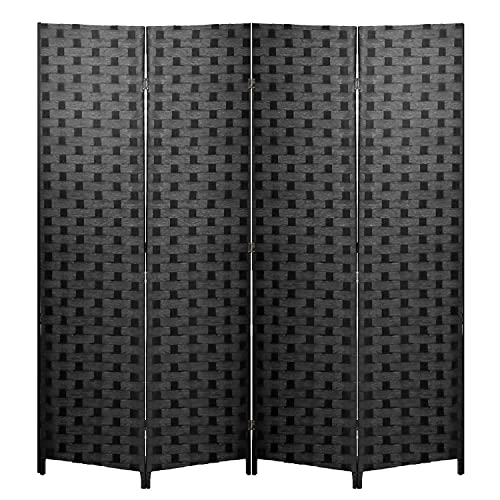
FDW 4 panel folding room divider, 6 ft, black wooden frame with hand woven mesh
4 panels6 ft tallWood frameWoven mesh
Check price on Amazon
Best for: Living rooms and dining corners that want a decorative, light-permeable screen.

The FDW divider has four equal panels in a black wooden frame with hand-woven mesh infill, standing 6 ft tall. The woven mesh lets some light and air through, so it divides a space without making it feel closed. The frame is light and portable.

The tradeoff is privacy: a woven mesh screen gives a partial view and is not a solid wall. Compared with the SUNALLY fabric panels, it is more decorative and less private. A light wooden frame can wobble if the panels are not unfolded fully.

In ownership terms, unfold it in a gentle zigzag and keep it on a flat floor. Dust the weave with a soft brush. It suits a living room, a dining corner or a bedroom where a lighter, more decorative divider is wanted.

What works

  • Woven mesh lets light and air pass through
  • Wooden frame is light and portable
  • Decorative look suits living spaces
  • 6 ft height covers most sightlines

Watch out for

  • Partial view means less privacy than a solid screen
  • Light frame can wobble if not fully unfolded

Specs

Panels
4 equal panels
Height
6 ft
Frame
Wooden
Infill
Hand woven mesh
Weight
Light and portable
05
6x6 ft single panel room divider on caster wheels with brakes, black, 72 x 72 in
72 x 72 inSingle panelCaster wheelsBrakes
Check price on Amazon
Best for: Offices and workspaces that want a flat 6 ft by 6 ft partition on lockable wheels.

This is a 6 x 6 ft single-panel divider on caster wheels with brakes, in black. A single panel gives full-coverage privacy with no hinges or gaps, and the casters let you reposition it and lock it in place. The large format suits an office, a classroom or a restaurant booth.

The tradeoff is that a 6 ft wide panel is bulky to store and to move through doors, and a single flat panel has a narrow base, which makes it more prone to tip than a zigzag screen. Compared with the SUNALLY, it is simpler but less flexible. It does not fold.

In ownership terms, lock the brakes, keep it away from edges and check the base for wobble. Wipe the fabric with a damp cloth. It suits an office cubicle, a clinic area or a studio where a flat, solid partition is needed.

What works

  • Single large panel gives full-coverage privacy
  • Caster wheels with brakes make it mobile and stable
  • 72 x 72 in size covers a desk or booth
  • No hinges or gaps to leak sight lines

Watch out for

  • Does not fold, so storage and doorways are awkward
  • Flat base is more prone to tipping than a zigzag screen

Specs

Size
72 x 72 in
Panel
One large panel
Wheels
Casters with brakes
Colour
Black
Use
Cubicles, classrooms, restaurants
06
VEVOR 4 panel folding privacy screen in Oxford fabric, 136.4 in wide when open
136.4 in wide4 panelsOxford fabric72.4 in tall
Check price on Amazon
Best for: Wide openings and offices that want a tough Oxford fabric screen with a long span.

The VEVOR is a four-panel folding screen in an upgraded Oxford fabric, measuring 136.4 x 72.4 x 20.4 in when open. Oxford fabric is a tough, tightly woven polyester that resists tearing and wipes clean. At about 11 ft wide when fully opened, it covers more length than most four-panel screens.

The tradeoff is that a screen this wide and this light is a sail: opened flat it can tip, and it needs a zigzag fold and a spot out of drafts. Compared with the SUNALLY, it has no wheels but a wider span. The listing gives the panel width but no weight, so expect to move it with two hands.

In ownership terms, open it in a zigzag, keep it away from a window that is regularly opened and wipe the fabric with a damp cloth. It suits a bedroom, a living room or an office where a wide, tough fabric screen is wanted.

What works

  • 136.4 in open width covers a very wide opening
  • Oxford fabric is tough and wipes clean
  • 72.4 in height blocks standing sightlines
  • Folds flat for storage behind a door or wardrobe

Watch out for

  • Wide and light, so it tips if opened flat or left in a draught
  • No wheels, so moving it needs two hands

Specs

Open size
136.4 x 72.4 x 20.4 in
Panels
4, folding
Fabric
Upgraded Oxford fabric
Use
Bedrooms, living rooms and offices
Storage
Folds flat

Spec decoder

What the listing measurements really mean

The numbers brands lead with, translated into what they tell you about fit, comfort and wear at home.

GSM

Grams per square metre, a measure of fabric weight. Higher means thicker and more opaque.

Watch forThe SUNALLY lists 240gsm polyester.

Tension rod

A rod held by spring pressure between floor and ceiling or two walls, with no drilling.

Watch forThe AJAZZ rod adjusts from 43 to 120 in in height.

Caster wheels with brakes

Wheels that roll and lock to hold the divider in place.

Watch forThe 6x6 panel and SUNALLY have lockable wheels.

Zigzag fold

Opening a folding screen in alternating angles to widen its base and add stability.

Watch forThe MAYOLIAH and FDW stand best this way.

Triple weave

A dense, three-layer fabric structure that blocks light and absorbs some echo.

Watch forThe AJAZZ lists it.

Methodology

How We Evaluated These Room Dividers

Size and coverage

We evaluated stated widths and heights, from the 71 in MAYOLIAH to the 120 in tension range. This is based on published specifications.

Stability

We weighed bases, wheels, brakes and fold shape, favouring wide or lockable designs.

Fabric and privacy

We compared 240gsm polyester, blackout triple weave and woven mesh for sight and light.

Installation

We looked at no-drill and no-tool options for renters and small homes.

Ownership signals

We researched owner feedback patterns on wobble, smell and fabric stains. Scores are editorial assessments.

Decision guide

How to Choose the Right Room Dividers

By Space

SituationPickWhy
Studio bed areaSUNALLY 4 panelMobile and opaque
Large open roomMAYOLIAH 6 panel120 in span
Office cubicle6x6 single panelFlat coverage
Rented flatAJAZZ curtainNo drilling

By Budget

SituationPickWhy
Lowest cost tierAJAZZ curtain and rodSimple hanging set
Lower mid tierFDW wood and meshLight screen
Mid tierSUNALLY 4 panelWheels
Upper tierMAYOLIAH 6 panelWidest span

Screen vs Curtain

Freestanding screen

SUNALLY, MAYOLIAH, FDW and the 6x6 panel are movable but use floor space.

Hanging curtain

The AJAZZ uses no floor, but needs a solid ceiling and moves when touched.

Choose a screen for flexibility and a curtain for floor-to-ceiling privacy.

By Privacy

SituationPickWhy
Full privacySUNALLY 240gsmOpaque fabric
Light blockingAJAZZ blackoutBlackout weave
Light-permeableFDW meshWoven infill
Flat partition6x6 panelNo hinges

For Studios Specifically

Look for

A divider that folds, locks and stores easily, with enough opacity to hide a bed.

In this comparison

The SUNALLY and AJAZZ suit studios best.

When to Spend More

Spend more if

You need a wide span, wheels and a sturdy base.

Save if

You only need a quick, no-drill curtain partition.

Ownership

Maintenance schedule

The upkeep that decides whether a piece still looks good in year five.

TaskIntervalWhy it matters
Air new fabricOn arrivalNew polyester can carry a smell. A day in a ventilated room clears it.
Check hinges and wheelsEvery 3 monthsHinges loosen and wheels collect hair. A quick check keeps a screen stable.
Wipe the fabricMonthlyDust and marks build up. A damp cloth or a lint roller works.
Check tension rod gripEvery few weeksTension rods can slip. Re-tighten if the curtain sags.
Store folded and dryWhen not in useDamp storage can mark fabric and warp frames.

FAQ

Frequently Asked Questions

Do room dividers block sound?

Not really. Fabric reduces echo and hides the view, but noise travels through. A real wall is needed for soundproofing.

Will a divider tip over?

It can if the base is narrow or the screen is opened flat. A zigzag fold, a wide base and locked wheels reduce the risk.

Can I use a tension rod in a rental?

Yes, because it needs no drilling. It needs a solid ceiling and floor and may slip under a heavy curtain.

How tall should a divider be?

At least 6 ft for privacy at standing height. Floor-to-ceiling curtains give the most complete separation.

Can a divider hide a bed?

Yes. A 240gsm opaque fabric or a blackout curtain will hide a bed and a desk from the rest of a room.

How do I clean a fabric divider?

Vacuum with a brush or wipe with a damp cloth. Check the care label before washing, since frames and panels are usually not machine washable.

Bottom line

The short version

Browse more room dividerson Amazon →
Elena Hart, Lead Home Editor

About the author

Elena Hart

Lead Home Editor, SweetLivingRoom

Elena Hart leads SweetLivingRoom's buying guides, turning product dimensions, material specs and owner feedback into clear verdicts on sofas, rugs, lighting, storage and decor.

More from Elena →