
Amazon affiliate links - we earn a commission.Affiliate disclosure

Buying guide · 13 min read · Updated 2026-11-21

Best AV Receivers (2026)

Six AV receivers compared on channel count, power per channel, 8K HDMI, Dolby Atmos, room correction and streaming for living room home theaters.

Elena Hart, Lead Home EditorBy Elena HartLead Home Editor6 picks comparedSpec-sheet verified
Best AV Receivers

At a glance

Our top picks

Side by side

Spec comparison

PieceChannelsPowerHDMICost tier
Denon AVR-X1800H 7.2 Channel AV Receiver, 80W x 7, 8K HDMI, Wi-Fi and BluetoothBest OverallDenon AVR-X1800H 7.2 Channel AV Receiver, 80W x 7, 8K HDMI, Wi-Fi and Bluetooth7.280W per channel, 7 channels3 dedicated 8K inputs and 1 outputUpper end of the group
Denon AVR-S570BT 5.2 Channel AV Receiver, 70W x 5, 8K, BluetoothBest Value 5.2Denon AVR-S570BT 5.2 Channel AV Receiver, 70W x 5, 8K, Bluetooth5.270W per channel, 5 channelsn/aLower middle of the group
Yamaha RX300A 5.2 Channel AV Receiver, Dolby Atmos, 4K120 and 8K HDMI, BluetoothBest Atmos StarterYamaha RX300A 5.2 Channel AV Receiver, Dolby Atmos, 4K120 and 8K HDMI, Bluetooth5.2n/a4K120 and 8KLower middle of the group
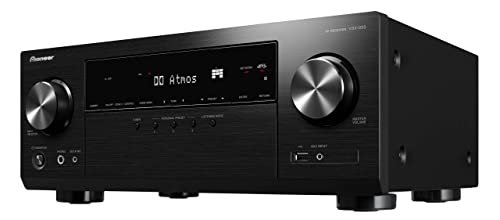
Pioneer VSX-935 7.2 Channel Network AV Receiver, 80W per ChannelBest Mid-Power NetworkPioneer VSX-935 7.2 Channel Network AV Receiver, 80W per Channel7.2n/an/aUpper middle of the group
Onkyo TX-NR6100 7.2 Channel THX Certified Network AV Receiver, 210W per ChannelBest High-Power THXOnkyo TX-NR6100 7.2 Channel THX Certified Network AV Receiver, 210W per Channel7.2, 5.2.2 Atmos playback210W per channel, THX Certified Selectn/aUpper end of the group
Yamaha RX-V6A 7.2 Channel AV Receiver with MusicCast, 8K HDMI and eARCBest Multi-RoomYamaha RX-V6A 7.2 Channel AV Receiver with MusicCast, 8K HDMI and eARC7.2n/aHDCP 2.3, eARC, 7 in 1 out, three 8KMiddle of the group

An AV receiver is the control centre of a home theater: it takes video from every source, sends it to the TV and sends the sound to your speakers with its own amplifiers. It lets you add a subwoofer, surround speakers and a streamer, and use one remote for it all.

Choosing one is mostly about how many speakers you plan to drive, the HDMI features you need and how the room will be corrected. This guide compares six receivers on channel count, power and connectivity so you can match one to your room and speaker plan.

Before you buy

6 Criteria to Look For Before Buying an AV Receiver

  1. 01

    Channel count

    Channel numbers describe speakers and subs. A 5.2 receiver like the Denon AVR-S570BT drives five speakers and two subs, while a 7.2 like the AVR-X1800H adds two more channels for surrounds or height speakers. Plan the speaker count first, then buy the channels.

  2. 02

    Real power per channel

    Compare continuous watts at 8 ohms, not burst numbers. The Pioneer lists 80W at 8 ohms but 170W at 6 ohms with high distortion, which shows how numbers differ. A room under about 300 square feet rarely needs more than 80 to 100 watts with efficient speakers.

  3. 03

    HDMI and video features

    Look for HDMI 2.1 with eARC, 4K120 for gaming and enough inputs. The Yamaha RX300A lists 4K120 and the Denon X1800H lists three 8K inputs. Make sure the receiver has enough HDMI inputs for your consoles, streamer and player.

  4. 04

    Atmos and room correction

    Atmos needs height speakers or upfiring modules and at least 5.2.2 channels. Room correction uses a microphone to tune levels and distances, and it is one of the best reasons to own a receiver. Run it after any furniture change.

  5. 05

    Streaming and multi-room

    Built-in Wi-Fi and Bluetooth reduce the need for extra boxes. Denon uses HEOS, Yamaha uses MusicCast, and each links to its own speakers. Pick the ecosystem you will actually grow into.

  6. 06

    Cabinet and ventilation

    Receivers run warm. They need open space above and at the sides, and a closed cabinet shortens their life. Measure your cabinet before you buy, and check the depth for cables behind.

Detailed reviews

The 6 best av receivers, explained

01
Denon AVR-X1800H 7.2 Channel AV Receiver, 80W x 7, 8K HDMI, Wi-Fi and Bluetooth
7.2 channels80W x 78K HDMIWi-Fi and Bluetooth
Check price on Amazon
Best for: Living rooms with 5 to 7 speakers that want 8K HDMI and streaming.

Denon's AVR-X1800H is a 7.2 channel receiver rated at 80 watts across seven channels, with three dedicated 8K HDMI inputs and one output, Wi-Fi and Bluetooth. That channel count covers a 5.1.2 Atmos system or a 7.1 layout, and 8K support future-proofs the video path for new consoles and TVs.

The tradeoff is that 80 watts per channel is modest, so large rooms with inefficient speakers may want more power. Compared with the Denon AVR-S570BT, it adds two channels and more inputs but costs more. Against the Onkyo TX-NR6100, it has less raw power but an easier setup and well-known streaming.

Plan a clear shelf with several inches above for ventilation, and run the room correction routine with its microphone at the main seat. Label every HDMI cable before closing the cabinet. In year three, expect to update the firmware, dust the vents and re-run room correction after moving furniture.

What works

  • 7.2 channels cover a 5.1.2 Atmos layout or a 7.1 setup
  • Three dedicated 8K inputs suit new consoles and TVs
  • Wi-Fi and Bluetooth stream music without extra gear
  • A well-known brand with a large user community for help

Watch out for

  • 80W per channel is modest for large rooms or hungry speakers
  • Upper end cost tier for a mid-level receiver

Specs

Channels
7.2
Power
80W per channel, 7 channels
HDMI
3 dedicated 8K inputs and 1 output
Streaming
Wi-Fi, Bluetooth, wireless streaming
Cost tier
Upper end of the group
02
Denon AVR-S570BT 5.2 Channel AV Receiver, 70W x 5, 8K, Bluetooth
5.2 channels70W x 58K supportBluetooth
Check price on Amazon
Best for: Small and medium rooms with a 5.1 system and a modest budget.

Denon's AVR-S570BT is a 5.2 channel receiver with 70 watts across five channels, 8K video support, HDR and HLG, plus Bluetooth. It handles a standard 5.1 living room system with two front speakers, a centre, two surrounds and a subwoofer.

The tradeoff is expansion: five channels means no height speakers for Atmos beyond a virtual approach, and 70 watts suits small and medium rooms. Compared with the AVR-X1800H, it has fewer channels and less power but costs much less. Against the Yamaha RX300A, it matches the channel count but offers a different feature set.

Place it in a ventilated cabinet and label the speaker wires as you connect them. Run the supplied room calibration and keep the microphone at ear height. In year three, check HDMI port firmness and dust the vents. It suits a first receiver for a small room.

What works

  • 5.2 channels cover the standard 5.1 living room layout
  • 8K and HDR support keeps the video path current
  • Bluetooth streams music from a phone
  • Lower middle cost tier for a name brand receiver

Watch out for

  • No channels for height speakers or Atmos layouts
  • 70W per channel limits large rooms

Specs

Channels
5.2
Power
70W per channel, 5 channels
Video
8K Ultra HD and HDR support
Wireless
Bluetooth
Cost tier
Lower middle of the group
03
Yamaha RX300A 5.2 Channel AV Receiver, Dolby Atmos, 4K120 and 8K HDMI, Bluetooth
5.2 channelsDolby Atmos4K120 and 8KBluetooth
Check price on Amazon
Best for: Gamers and small rooms that want 4K120 and Atmos processing from five channels.

Yamaha's RX300A is a 5.2 channel receiver with Dolby Atmos and DTS Virtual:X processing, 4K120 and 8K HDMI and Bluetooth. With only five channels, Atmos works through virtualisation rather than true height speakers, but it does widen the sound and gives a taste of the format.

The tradeoff is that real Atmos with overhead speakers needs more channels than five. Compared with the Denon AVR-S570BT, it adds Atmos processing and 4K120 gaming support for similar money. Against the RX500A in the same Yamaha family, it has fewer channels.

Place it with several inches clear above, and run its room calibration with the supplied microphone. Use eARC from the TV for lossless audio. In year three, keep the firmware current and dust the vents. It suits console gamers who want 4K120 and a simple living room speaker set.

What works

  • Dolby Atmos and DTS Virtual:X processing add width from five channels
  • 4K120 HDMI suits modern consoles and PC gaming
  • Bluetooth streams from a phone with no extra gear
  • Lower middle cost tier is easy on a first system

Watch out for

  • Only five channels, so Atmos height is virtual rather than true
  • Fewer streaming features than the Denon X series

Specs

Channels
5.2
Audio formats
Dolby Atmos and DTS Virtual:X
HDMI
4K120 and 8K
Wireless
Bluetooth
Cost tier
Lower middle of the group
04
Pioneer VSX-935 7.2 Channel Network AV Receiver, 80W per Channel
7.2 channels80W at 8 ohm170W at 6 ohm 10% THDNetwork
Check price on Amazon
Best for: Buyers who want a 7.2 channel network receiver at a middle cost tier.

Pioneer's VSX-935 is a 7.2 channel network receiver whose listing quotes two power figures: 80 watts per channel at 8 ohms with 0.08 percent distortion across 20 Hz to 20 kHz, and 170 watts per channel at 6 ohms with 10 percent distortion and one channel driven. That pairing shows how marketing power numbers can differ from continuous power.

The tradeoff is that the 170 watt figure is a best-case burst number, and the 80 watt figure is the honest continuous rating. Compared with the Denon AVR-X1800H, it has a similar 7.2 layout but an older platform. Against the Onkyo TX-NR6100, it has less power and a less modern feature set.

Place it in a ventilated cabinet and run room calibration. Compare any receiver by its 8 ohm continuous rating and not by its burst numbers. In year three, check the fans or vents for dust and firmware updates for network features.

What works

  • 7.2 channels give room for a 5.1.2 or 7.1 layout
  • A clear 80W per channel figure at 8 ohms allows honest comparison
  • Network streaming expands music options
  • Upper middle cost tier for a 7.2 channel unit

Watch out for

  • An older platform than the latest Denon and Yamaha models
  • The 170W headline is a burst figure, not continuous power

Specs

Channels
7.2
Power at 8 ohm
80W per channel, 20 Hz to 20 kHz, 0.08 percent THD, 2 channels driven
Power at 6 ohm
170W per channel at 10 percent THD, 1 channel driven
Connectivity
Network streaming
Cost tier
Upper middle of the group
05
Onkyo TX-NR6100 7.2 Channel THX Certified Network AV Receiver, 210W per Channel
7.2 channels210W per channelTHX CertifiedAtmos and DTS:X
Check price on Amazon
Best for: Larger rooms with demanding speakers that want 210W per channel and Atmos.

Onkyo's TX-NR6100 is a THX Certified Select receiver rated at 210 watts per channel, with 5.2.2 channel Dolby Atmos and DTS:X playback and network streaming. THX Select certification means the unit has met a set of performance requirements for rooms of a particular size, and 210 watts is a headline that suits demanding speakers.

The tradeoff is cost and bulk: it sits at the upper end of the group and is a heavy unit that needs a roomy cabinet and good ventilation. Compared with the Denon AVR-X1800H, it has more power but costs more. Against the Pioneer VSX-935, it adds THX certification and Atmos layouts.

Place it with at least a hand's width above and around it, since powerful receivers run warm. Run room calibration and set speaker distances carefully. In year three, dust the vents and check the firmware. It suits a larger room with speakers that need power.

What works

  • 210 watts per channel suits large rooms and demanding speakers
  • THX Certified Select signals meeting performance requirements
  • 5.2.2 Dolby Atmos and DTS:X support true height speakers
  • Network streaming adds music services

Watch out for

  • Upper end cost tier and heavy to place
  • Runs warm and needs a ventilated cabinet

Specs

Channels
7.2, 5.2.2 Atmos playback
Power
210W per channel, THX Certified Select
Formats
Dolby Atmos and DTS:X
Connectivity
Network
Cost tier
Upper end of the group
06
Yamaha RX-V6A 7.2 Channel AV Receiver with MusicCast, 8K HDMI and eARC
7.2 channelsMusicCast8K HDMIeARC
Check price on Amazon
Best for: Households that want multi-room audio with Yamaha MusicCast.

Yamaha's RX-V6A is a 7.2 channel receiver with MusicCast multi-room audio, HDMI 2.1 with HDCP 2.3 and eARC, seven inputs and one output, with three inputs that handle 8K. MusicCast links the receiver to other Yamaha speakers around the home, so the living room system can feed the kitchen or the patio.

The tradeoff is that the interface has a lot of options, and the setup takes time. Compared with the Denon AVR-X1800H, it offers MusicCast instead of HEOS and a similar channel count. Against the RX300A, it has two more channels and more inputs.

Place it in a ventilated cabinet and run its YPAO room calibration. Use eARC for lossless TV audio. In year three, keep the firmware current and dust the vents. It suits a household with a Yamaha multi-room setup.

What works

  • MusicCast multi-room links other Yamaha speakers in the home
  • Seven HDMI inputs and eARC suit a busy media cabinet
  • 7.2 channels give room for height speakers
  • HDMI 2.1 supports 4K120 and 8K60 on selected inputs

Watch out for

  • Menus and setup have many options and take time
  • Multi-room benefits only if you buy more MusicCast gear

Specs

Channels
7.2
Multi-room
MusicCast
HDMI
HDCP 2.3, eARC, 7 in 1 out, three 8K
Video
4K60, 4K120 and 8K60
Cost tier
Middle of the group

Spec decoder

What the listing measurements really mean

The numbers brands lead with, translated into what they tell you about fit, comfort and wear at home.

Channels such as 7.2

The first number is the speakers the amplifier drives and the second is the subwoofer outputs.

Watch forThe Onkyo lists 5.2.2 Atmos playback from 7 amplifier channels, so some channels are shared.

Watts per channel

The power each amplifier channel can deliver, with a distortion figure and an impedance. Lower impedance needs more current.

Watch forThe Pioneer lists both 80W at 8 ohm and 170W at 6 ohm with 10 percent distortion.

HDMI 2.1 and eARC

HDMI 2.1 adds 4K120 and 8K. eARC carries lossless audio from the TV.

Watch forOnly some inputs support 8K; the Yamaha RX-V6A lists three.

THX certification

THX certification means the receiver passed a set of performance tests for a given room size.

Watch forThe Onkyo is THX Certified Select, which suits mid-size rooms.

Room calibration

A microphone-based setup tunes distances, levels and equalisation to the room.

Watch forDenon and Yamaha use their own systems, while some Onkyo models offer Dirac.

Methodology

How We Evaluated These AV Receivers

Channels and power

We compared channel counts from 5.2 to 7.2 and power ratings from 70W to 210W per channel. We noted when numbers are burst figures. We did not measure any amplifier output.

HDMI and gaming

We read HDMI input counts, 8K, 4K120 and eARC support. The Denon X1800H and Yamaha RX300A lead on gaming features. We favoured current HDMI.

Audio formats

We checked Dolby Atmos and DTS support and what channel count each needs. The Onkyo supports true height layouts, the Yamaha RX300A virtualises. We matched formats to rooms.

Streaming and control

We compared Wi-Fi, Bluetooth, HEOS and MusicCast. Each suits a different ecosystem. We favoured simple setup.

Owner feedback patterns

We researched common themes: heat in closed cabinets, confusing setup menus and HDMI handshake problems. These shape our cons. We did not use ratings or review counts.

Decision guide

How to Choose the Right AV Receivers

By Speaker Count

SituationPickWhy
5.1 systemDenon AVR-S570BT5.2 channels at a modest tier
5.1 with gamingYamaha RX300A4K120 and Atmos processing
5.1.2 AtmosDenon AVR-X1800H7.2 channels
7.1 or large roomOnkyo TX-NR6100210W per channel
Multi-room homeYamaha RX-V6AMusicCast

By Budget

SituationPickWhy
Lower middleDenon AVR-S570BT or Yamaha RX300A5.2 channel entry
MiddleYamaha RX-V6A7.2 channels and MusicCast
Upper middlePioneer VSX-9357.2 channel network receiver
Upper endDenon AVR-X1800H or Onkyo TX-NR6100Streaming or power
Best value overallDenon AVR-S570BTName brand at a modest tier

5.2 vs 7.2 Channels

5.2 channels

The Denon S570BT and Yamaha RX300A fit a standard living room layout. They cost less but cannot add height speakers.

7.2 channels

The Denon X1800H, Pioneer, Onkyo and Yamaha RX-V6A leave room for height speakers or rear surrounds. They cost more.

Pick 5.2 for a first system and 7.2 if you want Atmos or plan to grow.

By Use

SituationPickWhy
Console gamingYamaha RX300A4K120 HDMI
Movies with AtmosOnkyo TX-NR61005.2.2 playback
Music streamingDenon AVR-X1800HWi-Fi and Bluetooth
Multi-roomYamaha RX-V6AMusicCast
Small roomDenon AVR-S570BT70W is enough

For Living Room Use Specifically

Look for

Enough channels for your speakers, a cabinet with ventilation, the HDMI features your devices need and room correction you will run.

In this comparison

The Denon X1800H and Yamaha RX-V6A suit most living rooms, while the Onkyo suits large spaces.

When to Spend More

Spend more if

You want height speakers, a large room with power-hungry speakers or a future-proof HDMI setup.

Save if

You have a small room and a 5.1 system, where the Denon S570BT or Yamaha RX300A is enough.

Ownership

Maintenance schedule

The upkeep that decides whether a piece still looks good in year five.

TaskIntervalWhy it matters
Dust the ventsQuarterlyDust traps heat. A dry brush or air puff keeps airflow clear.
Re-run room calibrationWhen furniture or speakers moveRoom changes shift bass and levels. A rerun resets distances.
Update firmwareAs promptedUpdates fix HDMI and streaming issues.
Check speaker wire connectionsTwice a yearLoose wire causes crackle or a dead channel.
Keep space around the unitAlwaysVentilation protects the amplifier. Never stack items on top.

FAQ

Frequently Asked Questions

Do I need an AV receiver if I have a soundbar?

No. A receiver drives separate speakers. A soundbar is a self-contained alternative that suits smaller rooms. A receiver makes sense once you want real surround speakers, a bigger sub or several sources switched through one box, and it rewards patience with a better, more upgradeable sound than a bar can give.

How much does an AV receiver cost?

Prices move, so check the current listing. The Denon S570BT and Yamaha RX300A sit lower and the Denon X1800H and Onkyo at the top. Channels and power drive cost, and the receiver is only part of the bill, since speakers, cables and a subwoofer usually cost as much again and decide most of how the system sounds.

How many watts do I need?

For most living rooms, 80 to 100 watts per channel with efficient speakers is enough. Larger rooms and demanding speakers benefit from more. Remember that doubling the power adds only a small step in loudness, so speaker efficiency and room size matter more than the headline watt number on the box.

Do I need 8K support?

Not for now, since 8K content is rare. It does future-proof your setup, and 4K120 matters more for gaming. If you do not own a console or PC that outputs 4K120, you can safely buy on audio features first and treat 8K as a bonus rather than a requirement.

What is Dolby Atmos?

Atmos adds height sound from ceiling or upfiring speakers. It needs enough channels, and small receivers use virtualisation instead. A flat ceiling of roughly 8 to 10 feet works best for upfiring modules, while vaulted ceilings weaken the effect, so ceiling shape is worth checking before you commit to more channels.

Can I connect a record player to a receiver?

Only if the receiver has a phono input. Many AV receivers do not, so check the specs or use a separate preamp. A turntable with a built-in preamp can instead plug into any line input, which avoids the problem and works with every receiver listed here.

Bottom line

The short version

Browse more av receiverson Amazon →
Elena Hart, Lead Home Editor

About the author

Elena Hart

Lead Home Editor, SweetLivingRoom

Elena Hart leads SweetLivingRoom's buying guides, turning product dimensions, material specs and owner feedback into clear verdicts on sofas, rugs, lighting, storage and decor.

More from Elena →