The choice between fitted carpet and an area rug is usually framed as a matter of taste, soft and cozy against clean and modern. In practice it is a matter of how you want to live with the floor over the next ten or fifteen years. The two options differ in what they cost when you buy them, what they cost to keep clean, how they sound, how they treat allergies and how easy they are to change.
This guide compares them on cost of ownership, cleaning and maintenance, acoustics, allergens, comfort and warmth and flexibility, then suggests which suits which room and household. It is based on how floor coverings are made and used, and it avoids prices and brand claims, since prices vary by region and change. Where the evidence is mixed, such as on allergens, it says so.
What each option is
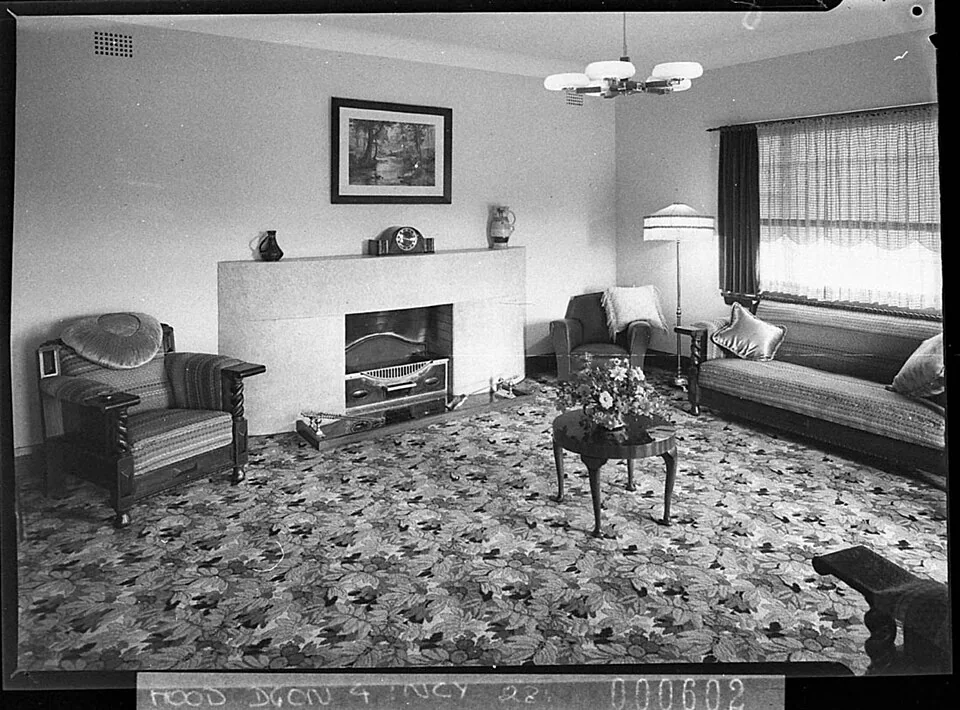
Wall-to-wall carpet, also called fitted carpet or broadloom, is a continuous roll of carpet cut to the shape of the room, stretched over padding and fixed to the floor along the edges with tack strips or glue. It covers the floor to the walls, hides the subfloor and becomes part of the room's finish. It is made from nylon, polyester, polypropylene or wool, in cut or loop pile, and is installed by a fitter.
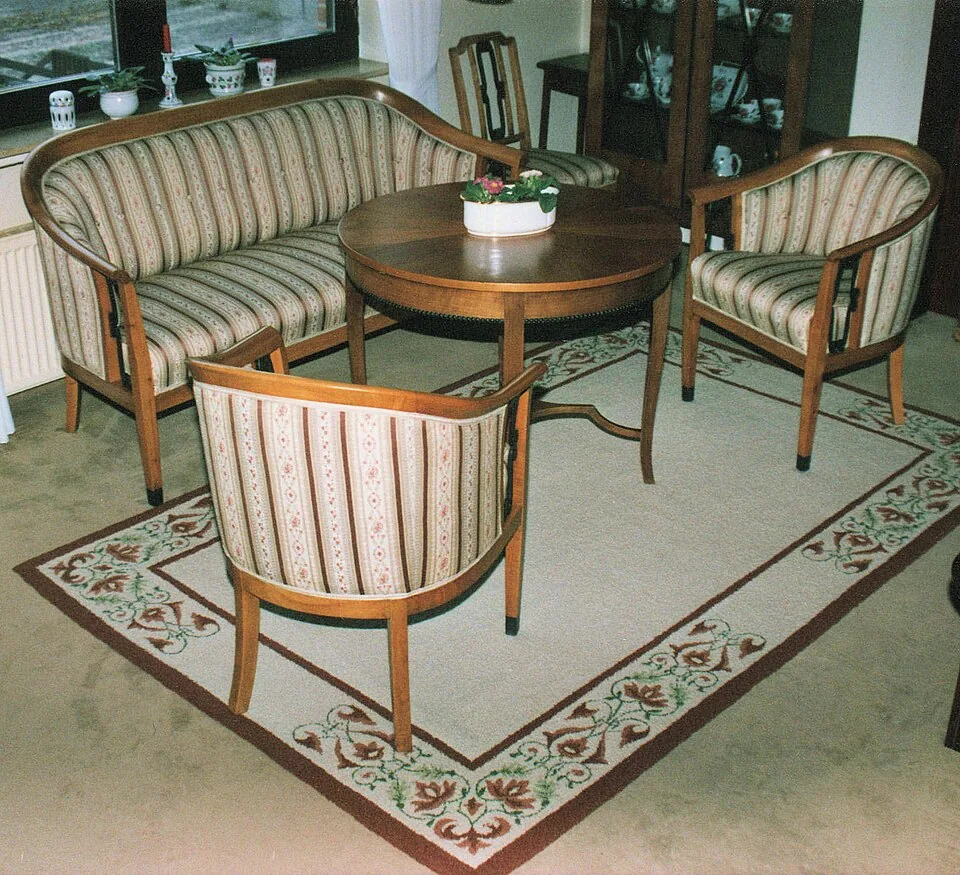
An area rug is a loose, finished piece of floor covering that sits on top of another floor, usually hardwood, tile, vinyl or laminate, though it can also be laid over carpet. It is not fixed, it has finished edges and it can be moved, rolled up and replaced. Rugs come in hundreds of sizes, materials and constructions, from a thin flatweave to a deep shag, and can be placed to define a zone.
The two are not exclusive. Many homes combine them, with carpet in the bedrooms and rugs in the living areas, and a rug can be layered on carpet. Our guide to putting a rug on carpet explains how to do that without slipping or bunching.
Cost of ownership over time
The cost of a floor covering has several parts: the material, the underlay or pad, the installation, the cleaning and the replacement. For a whole room, wall-to-wall carpet is generally cheaper per square foot to buy and install than covering the same floor with rugs of similar quality, since carpet is made in volume and sold by the roll. The install adds labor and the disposal of the old carpet.
The picture changes over time. A fitted carpet is a single piece, so a stain, a worn path or a pet accident in one corner affects the whole. It can be patched, but a repair can show, and when it is worn out, the whole room must be replaced. Carpet in a busy living room often needs replacement sooner than in a bedroom, and a quality carpet and pad, in a low-traffic room, can last a long time.
An area rug costs more per square foot for the area it covers, but you only buy what you need. A rug can be replaced when it wears, moved to another room, rotated, cleaned off the floor or taken with you when you move, so its cost can be spread over several homes. The hard floor underneath is not worn by traffic, which protects its value. A rug also lets you change the look of the room without replacing the floor.
The lowest-cost combination for many households is a good hard floor, a few well-chosen rugs and pads, and replacing a rug when it is worn. The lowest-cost option for a quiet bedroom is fitted carpet. There is no universal winner, and the better value depends on how long you will stay and how hard the room is used.
| Factor | Wall-to-wall carpet | Area rug on hard floor |
|---|---|---|
| Cost to cover a whole room | Lower per square foot, plus installation | Higher per square foot, no installation |
| Replacement | Whole room at once | One rug at a time |
| Cleaning | Vacuum, periodic deep clean in place | Vacuum, shake, wash or send out |
| Sound absorption | High across the room | Moderate, only where the rug is |
| Warmth underfoot | High | Moderate, rug only |
| Flexibility | Fixed | Movable and changeable |
| Floor protection | Hides and protects subfloor | Exposes floor, a pad protects |
| Rental friendly | No, unless already fitted | Yes |
Cleaning and maintenance
Carpet holds soil. The pile and the pad act as a filter, collecting dust, crumbs, pollen, hair and skin flakes, and as long as it is vacuumed, a good carpet retains much of it without showing. It needs vacuuming at least weekly, more in busy areas, and a periodic deep clean, with a hot water extractor or a professional, every year or two, depending on traffic. Spills soak into the pile and the pad, and a large accident can penetrate to the subfloor, which is hard to treat in place.
A hard floor with a rug is easier to clean in several respects. The floor can be swept or mopped, and spills on bare floor wipe up. The rug can be vacuumed, taken outside and shaken, flipped, sent out for cleaning and, if it is small and synthetic, washed. If it is ruined, it can be thrown away without touching the floor. Our guide to cleaning an area rug at home explains the options.
Pets and children change the equation. Carpet in a home with pets traps hair and odors, and urine soaks into the pad, and a stain that is not fully removed can persist. A hard floor with a washable rug is often simpler. But carpet can be more forgiving to falling toddlers and more comfortable for crawling babies, so the balance is not one-sided.
Acoustics: sound and echo
Soft, porous materials absorb sound, and carpet is one of the best floor treatments for it. A fitted carpet with a thick pad absorbs reflections across the whole floor, which reduces echo and reverberation in a room, and it dampens impact noise, such as footsteps, that would otherwise travel to the room below. In an upstairs apartment, a fitted carpet can make a noticeable difference to the neighbor below.
A hard floor reflects sound, and a living room with hard floors, bare walls and large windows can sound echoey. A rug helps, but only over the area it covers, so a rug in the middle of a large hard-floored room reduces the reflections from the part of the floor it sits on and leaves the rest. A large, thick rug with a felt pad gives a much better effect than a thin one, as does covering a larger portion of the floor. Our guide to reducing echo in a living room explains how the floor, walls and furnishings work together.
For impact noise in a building, check the rules. Some apartment buildings and leases require a minimum proportion of the floor to be covered with soft material, and a rug and pad may or may not satisfy the requirement. Ask your landlord or building management before relying on rugs.
Allergens and air quality
The evidence on carpet and allergies is mixed, and the conclusions in popular advice are often stronger than the data. Carpet holds more dust, mites and pollen than a hard floor, and those particles can be released into the air when the carpet is walked on or vacuumed. A hard floor does not hold them, but it can leave them on the surface, where they can be stirred up by a broom or a draft.
Some people with allergies or asthma are advised to avoid carpet, and some do better with a hard floor that is damp-mopped, while others find no difference. The most important factor is cleaning: a carpet vacuumed regularly with a vacuum with a well-sealed filter, such as a HEPA type, can be managed. Rugs can be treated the same way, and they can be taken outdoors and cleaned more thoroughly. If you have a medical condition, ask your doctor, and do not assume that either option solves it.
New carpet releases volatile organic compounds (VOCs) as it airs out, from the carpet, the pad and the adhesive, usually for several days. Ventilate the room when installing, and look for low-emission labels if you are sensitive. A new rug may also have a smell, and it fades in days. Natural fiber rugs and carpets are often preferred for emissions, but no material is free of all issues.
Comfort, warmth and safety
Carpet is warm and soft across the whole room, which makes it comfortable for sitting on the floor, playing and walking barefoot, and it insulates a floor, reducing heat loss. A hard floor is cold, particularly tile, and a rug adds warmth only where it lies. A thick rug and a felt pad give a similar feel in the area they cover.
Carpet also provides grip and cushioning, which reduces the risk of slipping and the impact of a fall, one reason it is common in homes with older adults and young children. A hard floor is more likely to cause injury from a fall, and a rug that slides is a hazard, so use a pad and secure the corners. Our guide to rug pads covers the grip and thickness.
Thermal comfort also depends on the system. Underfloor heating works better with a thin rug than a thick carpet and pad, since the insulation reduces the heat that reaches the room. Check the manufacturer's rating if you have radiant heat.
Flexibility, style and resale
An area rug gives you freedom. You can change it when your taste changes, place it to define a seating area or a dining zone, move it to another room and take it with you. Layering and mixing are possible, and a rug can bring color and pattern to a neutral room. For a renter, it is the only practical choice. Our guide to choosing a rug size explains how to match the rug to the seating.
Carpet is fixed, and the choice you make stays for years. A neutral color and a durable fiber keep your options open. Carpet is liked in some markets and disliked in others, and in some regions, buyers prefer hard floors, so wall-to-wall carpet in a living area can affect resale. Hardwood under carpet is often a selling point, and removing old carpet can reveal it.
If you inherit carpet that is in good shape, you can add a rug on top to define a space, or replace it later. If it is worn or stained, replacing it with a hard floor and rugs is a common upgrade.
Which rooms suit which
Bedrooms are the strongest case for carpet. You step out of bed onto it, the sound is quiet and the traffic is low, so the cleaning burden is small. Stairs and landings also suit carpet for grip and noise. A basement family room or a playroom benefits from the softness and warmth, though moisture is a risk in a damp basement.
Living rooms and dining rooms are better served by a hard floor with rugs for most households. The traffic is higher, spills are more likely and the layout may change. A rug under the seating group gives softness where you need it and keeps the floor easy to clean. Entryways and kitchens need a hard floor, with a washable mat.
Households with pets or allergies, renters and people who move often should lean to rugs. Households that want a quiet, warm, uniform floor in a low-traffic space, and that will clean regularly, can choose carpet. A mixed approach, carpet in the bedrooms and rugs in the living areas, gets the benefits of both.
Do not overlook the pad. Under a fitted carpet, the pad is a large share of what you feel and hear, and a thin, cheap pad under a good carpet is a false economy that wears the carpet faster and feels hard. Under an area rug, a felt or felt-and-rubber pad does the same job in a smaller area. In both cases, ask about the density and the thickness of the pad, and match them to the traffic in the room. A thick, soft pad under a carpet on a staircase, for instance, can make the treads feel spongy and unsafe.
Frequently asked questions
Is wall-to-wall carpet cheaper than area rugs?
For covering a whole room, usually yes per square foot, plus installation. Over time the comparison depends on wear and replacement, since a fitted carpet must be replaced as a whole, while rugs are replaced individually.
Which is better for allergies?
The evidence is mixed. Carpet holds more particles, but a clean carpet with regular HEPA vacuuming can be managed, and rugs on a hard floor are easier to clean. Ask your doctor if you have a medical condition.
Which is quieter?
Wall-to-wall carpet, because it covers the whole floor and absorbs more sound. A large, thick rug with a felt pad reduces noise in the area it covers, but it does not match a full carpet.
Can I put an area rug on wall-to-wall carpet?
Yes. Choose a rug with a flat weave or a low pile, use a thin, non-slip pad made for carpet, and secure the corners so it does not bunch. A heavy rug sits better than a light one.
Which is better for pets?
A hard floor with washable rugs is usually easier to keep clean, since accidents do not reach the pad or subfloor. Carpet traps hair and odors, though a stain-resistant carpet can work in a low-risk home.
Bottom line
Choose wall-to-wall carpet for bedrooms, stairs and quiet, low-traffic rooms where warmth, softness and sound absorption matter. Choose a hard floor with area rugs for living rooms, dining areas and homes with pets, allergies or frequent moves, where cleaning and flexibility matter more.
Whichever you choose, invest in the pad, since it affects comfort, sound and the life of the covering. Keep up with vacuuming and replace worn pieces before they harm the floor underneath.